Information & Resources

Find information and resources to help manage your pain.

Get Help & Support

Find the tools you need to
help you manage your pain.

Get Involved

Help make a real difference to people
in the UK living with chronic pain.

About Us

Find out about Pain Concern and how
we can help you.

Patient and clinician perspectives on living with Sickle cell disease and the importance of a multidisciplinary approach

To listen to the programme, please click here.

This edition has been funded by donations from Pain Concern’s friends and supporters.

An estimated 15,000 people in the UK are living with Sickle Cell disease and at least 250,000 are carriers. Dr Elizabeth Rhodes explains the causes and symptoms of the genetic blood disorder, the areas where it is most prevalent and who is affected.

One such patient is Khadijat Jose, who describes her experiences growing up in Nigeria and why being a carrier of the disease is an advantage in countries with Malaria. For those with the condition however, each day can bring severe pain often requiring admission to hospital. Dr Oliver Seyfried highlights the life-limiting effects of this pain, especially on young people, and the challenges it poses in all spheres of life.

Self-management is therefore hugely important for those with Sickle Cell disease, whether the pain experienced is mild or severe. Paul discusses the different approaches taken by the Red Cell Pain Management team at St George’s Hospital with clinical psychologist Dr Jenna Love and specialist physiotherapist Rebecca McLoughlin. Both emphasize the importance of being able to tackle sickle cell pain from an emotional and psychological perspective as well as a physical one.

Issues covered in this programme include: Sickle cell disease, the multidisciplinary approach, young people, anaemia, bone pain, sharp pain, flare-ups, triggers, stress, relaxation, vascular necrosis, activity-rest cycle, psychology and mental health.

Paul Evans: This is Airing Pain, a programme brought to you by Pain Concern, the UK charity providing information and support for those of us living with pain and for healthcare professionals. I’m Paul Evans, and this edition has been funded by donations from Pain Concern’s friends and supporters.

Khadijat Jose: There was one time I went to North Wales and I wanted to climb Snowdonia, and I told them that I couldn’t. And then they said ‘Why? Why can’t you climb Snowdonia mountain? C’mon it’s just a thousand/ eight hundred and something metres’ and I said I couldn’t that I had a condition called sickle cell disease.

Dr Elizabeth Rhodes: Sickle cell disease is an inherited disorder, so it’s a disease or disorder that people are born with. Basically your haemoglobin structure is different to what it should be when you’re born, and this means that your red blood cells don’t work in the same way. They don’t live as long and so you’re often very anaemic.

Dr Oliver Seyfried: I don’t think there’s a condition that quite creates such suffering from cradle to grave as sickle cell disease.

Paul Evans: It’s very difficult to assess the number of people who live with sickle cell disorder in the UK. But based on available data, the Sickle Cell Society estimate that there are around 15,000 people living with the it in the UK, and there are at least 250,000 carriers.

Sickle cell disease is a disorder of the blood. Dr Elizabeth Rhodes is a consultant haematologist at St. George’s Hospital in London. She specialises in looking after people with sickle cell disease.

Dr Elizabeth Rhodes: Within your blood, you’ve got white blood cells that fight infection; platelets that are the small sticky cells that make sure you don’t bleed or clot too much if you’ve got the right number; and then red blood cells carry the oxygen and the iron around. So they take the oxygen to your tissues that need oxygen.

Paul Evans: So if they’re not functioning correctly what happens?

Dr Elizabeth Rhodes: So what happens in sickle cell is that they don’t live for very long, they get destroyed very early. So a normal red blood cell will live for about 120 days, about three months, and in sickle cell disease it can be as short as two weeks. And so you get all sort of the broken down bits of red blood cell in your blood, and also the red blood cells are a funny shape. And so they don’t work as well and they get a bit stuck, and your blood flow’s quite sticky. So what happens is you bone marrow, which is the factory that makes blood, is working many many times harder than it might do otherwise. So you’re always producing red blood cells to carry enough oxygen around, and then your body has to process and dispose of the bits that are broken down as well, so you pass that out through your kidneys and your feces as well.

Paul Evans: And what does it mean to the patient?

Dr Elizabeth Rhodes: What they often notice is they’re anaemic, so they feel quite tired or short of breath at certain times. But the main problem that patients with sickle cell disease get is they get problems with pain. And that’s probably because the blood flow is so disrupted and those blood cells don’t work the blood is stickier, you get less oxygen delivered to the tissues that need it, particularly in bones, and so patients can experience very very severe at times episodes of pain that sometimes require them to go into hospital for treatment.

Paul Evans: So who gets it?

Dr Elizabeth Rhodes: You inherit it so you will need to have inherited two genes that don’t work properly and you’ve taken one from your mother and one from your father. And we see it mostly in patients that have got a family background from western Africa or the Caribbean, and it’s the geographical areas actually where malaria is most prevalent. In the UK patients tend to be centred in the big cities, so London and Birmingham, but as, y’know, people move and jobs move and universities move and lives change we’re seeing it more and more all around the UK.

Paul Evans: Consultant haematologist Dr Elizabeth Rhodes. Now one of those areas in West Africa where malaria is prevalent is Nigeria. That’s where Khadijat Jose is from. She’s currently a PhD student at Cardiff University and she has sickle cell disease.

Khadijat Jose: I got the sickle genes from my parents who are carriers. I fall sick quite a lot, it causes pain in my bones, maybe if I don’t have good flow. Because sickle cell disease you probably won’t have good flow of your cells because your cells are kind of like the letter ‘C’ and they don’t flow properly in your veins, and sometimes they get stuck and that causes episodes of pain. So for me that happens when I’m stressed out, or I’m cold, or I have malaria, which happens to me quite a lot when I’m in Nigeria. So I fall sick, I’m in a lot of pain for days or weeks.

Paul Evans: I was going to ask how long you’ve had this, you’ve had this from birth, but when did it become an issue?

Khadijat Jose: According to my Mum, I fell sick the first time when I was about 3 months old. And while I was growing up as far as I remember I used to go to the hospital a lot – I was always in pain from when I was aged 4 to 13 or something. Then it got a bit better. When I was a child it was more intense for me.

Paul Evans: I’m interested in that you said that maybe it showed itself when you were 3 months old, now you won’t remember this but what would your mother remember of that?

Khadijat Jose: They thought that my Dad was AA – that’s a genotype – and my Mum was a carrier of sickle cell, meaning that they were not going to have a child who had sickle cell disease. As far as they [knew] they would only have a child that was a carrier. But they genetic tests were done wrong for my father: he was a carrier as well. So my Mum’s side when they found out that I had sickle cell they were really shocked about it cause they weren’t expecting something like that to happen.

She just said I used to fall sick quite a lot, and, well, in school I know couldn’t do much of the physical activities. If you’re a carrier you probably would need to take a few medicines, maybe folic acid, but you can be a carrier and you don’t need any medical care because the sickle gene itself was basically a way to be resistant to malaria. So it’s actually a good thing! Because the genotypes, we have AA and AS – the S was kind of like the genetic mutation of the body in Africa to fight malaria. So I you have AS genotype then you’re fine, you’re basically resistant to malaria. But if you are AA, which is when you don’t have any sickle gene, you’re very healthy but sometimes you fall sick when mosquitoes bite you. But otherwise you’re fine. But then if you are sickle cell you have no protection from malaria and then you fall sick all the time. So being AS is the ideal thing, but not being sickle cell.

Paul Evans Let me get that right, so if you’re a carrier, you have some sort of immunity against malaria?

Khadijat Jose: Yes you do.

Paul Evans: Khadijat Jose. Now St. George’s Hospital, one of the largest in South West London, established a sickle cell pain management programme just a few years ago. The team includes consultant haematologist Dr Elizabeth Rhodes who we heard earlier, a psychologist, a physiotherapist and Dr Oliver Seyfried a consultant in pain medicine and anaesthesia.

Dr Oliver Seyfried: For people who have the serious version of this disease – there is a gradation it’s not quite heterogeneic in it’s make up, there are people who have it really really badly and there are people who don’t have it so badly. Even if you don’t have it badly it can really interrupt your school life and your work life, but if you have it badly you are in, ‘agony’ iss not too bad a word on a daily basis from morning ‘til night. And so a serious situation that needs addressing, and people need to realise that when they meet someone with sickle cell disease not only are they holding down their job, bringing up their children, interacting with society in different ways, they’re living with this on a day-to-day basis. Now I don’t know about you but when I get a tooth ache I become pretty useless, but my toothache has an end – either with antibiotics or the dentist. Sickle cell disease is incurable, it doesn’t have an end. And managing it as best we can and enabling people to function is our drive.

Khadijat Jose: The pain feels like someone taking a nail and hitting you with a hammer, with a nail and a hammer like you know when they crucify someone basically [laughter] that’s how I feel. I’m not sure if that’s the general thought[s] about it but that’s how I feel when I’m having pain. Like someone’s hitting me with a hammer.

Paul Evans
: So it’s a sharp pain?
Khadijat Jose: It’s a sharp pain, yes.

Paul Evans: And that’s continuous?

Khadijat Jose: It’s continuous, yes. It’s continuous for days, but once I have pain relief then that helps to take it away. And sometimes it comes back but I need to completely clear the flow in my veins before I can say ‘I am in no pain at all’, so it’s not just about pain relief for me.

Paul Evans: So when you have an episode how long does that last?

Khadijat Jose: My worst episode was 3 weeks but on average one week, or a few days. If I go to the hospital when I’m having a crisis then I am connected to intravenous fluids. So that helps to hydrate my body, which helps proper flow of the cells in the veins that are probably stuck.

Paul Evans: You go into hospital for every episode?

Khadijat Jose: No, I don’t go to the hospital for every episode. There are some episodes that I can manage by myself at home. It depends how bad the pain is for me, then I decide [whether or not] to go to hospital.

Paul Evans: Do you get any warning when these episodes are going to come?

Khadijat Jose: Sometimes I get a warning, but sometimes I don’t know that anything is going to happen – I just wake up in the morning and I’m in pain.

Dr Oliver Seyfried: Sickle cell pain comes in all sorts of formats. The common ones as we mentioned are the bones. And when a patient feels sickle cell pain they feel it in their lower back, their arms, their legs, their chest and their abdomen. The fact that it affects their lungs it doesn’t tend to be painful, but it can cause all sorts of disability: pulmonary hypertension, high blood pressure in the blood circulation of the lungs is something that [also occurs]. That’s not typically pain but it has serious [consequences] on how people can go and live their lives. They get short of breath up half a flight of stairs, and when you’re a young person that’s very limiting.

Dr Elizabeth Rhodes: Some people actually never get any pain or get very, very rare episodes of pain. Some people manage their pain, if they’re moderate pains, at home, and we try and educate patients as to when that’s a good thing to do and how to manage it, and to support them doing that, but also making sure they know when they should be coming into hospital if there’s – you know – the pain is too severe or there’s any other concerns, if there’s sort of, sickle affecting lungs and things like that, or infection.

So, some people are fine, some people have every day, or chronic, pain that doesn’t need an inpatient admission. So it’s trying to identify what the pain is, what the triggers are, what makes it worse, as well, so we know, for example, that people who are very stressed at various times; you might have other things going on in your life that makes pain difficult to manage. When it’s difficult to deal with pain, that can make the pain worse. If [you’ve] got a busy job or if you’re looking after children, if – you know – Wednesdays are always a busy [day], so trying to identify things like that, trying to identify if mood plays a role, how we can help with that – you know – pain makes mood difficult, mood makes pain difficult. And looking at things like relaxation techniques and distraction and all those other things that can work together, and making sure that the medication that you’re taking is the right one for that situation as well, so we’re trying to get sort of the best pain relief with the least amount of medicine, really.

Paul Evans: So self-management is important as in any chronic pain condition.

Dr Elizabeth Rhodes: Absolutely.

Paul Evans: They talk about, or you talk about, or we talk about the pain cycle where the condition makes you depressed or anxious – this, that, and the other – that feeds back into the pain so it’s a spiral that just keeps going and going.

Dr Elizabeth Rhodes: That’s definitely one role, but also the different thing, probably, with sickle cell disease is because there are these crises going on, so making sure that also you’re safe and it’s not affecting you in such a way that it does need a doctor and medicine in hospital.

Dr Oliver Seyfried: Part of the syndrome of sickle cell is what’s called a vascular necrosis, and that’s where the sickle cell blood shapes cause blockage and inflammation to the blood vessels that travel to the bone, and it causes the bone to collapse. It does occur most commonly in the hips, apart from the spleen which is an organ in the tummy, the hips are the next most commonly destroyed organ by sickle cell disease. The knees are partially affected, but to a much lesser extent, and the shoulders perhaps more than the knees but less than the hips. The vertebrae, the bones that make up the back, they also have a pretty poor blood supply and they can collapse, and you can imagine if a bone collapses it can have profound impacts on function and pain.

Paul Evans: Can that sort of damage be prevented?

Dr Oliver Seyfried: From the bone pain point of view – again, it affects different types of the disease in a different way – we know that fifty percent of people with the homozygous variant, which means they’ve got the serious [variation] of haemoglobin SS, at thirty five years of age fifty percent of people will have their hips severely affected by a vascular necrosis.

Can it be prevented? Well yes, if spotted and diagnosed early, there is a small place for prophylaxis, some surgical operations are available to prevent the head of the femur, the hip, from breaking down. Otherwise, you’re looking at good physiotherapy, bed rest if needed, to allow, perhaps, some of the bone to regenerate a little bit. But no, prophylaxis is largely absent.

Paul Evans: Dr Oliver Seyfried of St George’s Hospital London’s multi-disciplinary Red Cell Pain Management team. And the term ‘prophylaxis’ means prevention.

Two other members of the team are clinical psychologist Dr Jenna Love and specialist physiotherapist, Rebecca McLoughlin. Rebecca first.

Rebecca McLoughlin: Within a really good multi-discipline team there’s a huge amount of overlap with roles, but then there are aspects of the roles that each profession will have more expertise and more knowledge about. So a physiotherapist working in pain management might mainly focus on the impact of pain on movement and activity, and physical function, and understanding of pain mechanisms, the way that pain influences our body and our movement and our activity.

Dr Jenna Love: Where the psychologist and the team tends to focus more on the impact that pain will have on moods and emotion, might be working with people exploring particularly unhelpful thoughts that they have about pain or their condition, thinking about communication and the impact of pain on relationships and families. And I think what’s really nice about Rebecca and I is that we’re able to be in the same room at the same time, a lot of the time with the people that we work with. And so you’ll hear that the things dovetail together really nicely. So Rebecca, for example, might be talking to somebody about increasing activity or movement, but what she’ll also be doing is helping them to explore what thoughts and beliefs are getting in the way of them doing that activity. So we’re very much always talking about physical and psychological in a very integrative way, so if we’re able to identify what the beliefs are that stop them making that change, then we can help them to change those beliefs to more helpful ideas. So it really is a very integrated way of working.

Paul Evans: So, for instance, just telling somebody that they need to do more exercise is ignoring the fact that it’s not just the condition that might stop them doing the exercise, but it’s the thought processes: “What happens if…?”, “Why…?”

Rebecca McLoughlin: Yeah, yeah absolutely. And those things are always unique to the individual. So a population of people with the same condition may have very different beliefs about what that condition means in terms of their ability to move, or the consequence of movement, or the consequence of activity. So part of our role is to really unpick, for the individual, what does having this condition mean and what impact does that have on the choices you feel able to make, on the beliefs that you have, on the thoughts you have about, say, movement and activity.

Dr Jenna Love: We focus quite a lot on people with chronic pain; so thinking about, not necessarily the type of pain that might bring them into hospital with a crisis, but the kind of everyday, or regular, pain that is there a lot of the time. And often that’s a sort of pain that people just struggle with at home. And that’s quite an expectation, “Well you have sickle, you will have pain”. Often, if people do a lot of movement they might find that that flairs up their pain significantly, so they get worried about doing movements, and think, “Oh, I better not do that because I’ve got to be able to pick the children up later.” So they often limit movement, and then of course the impact of that is that they become, you know, lose a bit of fitness and become a little bit deconditioned, so that if they then do more activity again it can increase pain. So people can get into really unhelpful patterns with activity, very understandably, where it actually feels quite difficult to do activity and movement.

Paul Evans: You call that “the cycle of pain”, don’t you?

Dr Jenna Love: Yeah, quite often, or thinking – people talk about different words, so “boom and bust of activity”, or…

Dr Jenna Love and Rebecca McCloughlin: “Over and underactivity”

Rebecca McCloughlin: And I think all of those patterns, as Jenna said, are very understandable; it makes sense in the short term that if something feels painful and if something has a really difficult consequence, it make sense to avoid it. But if we have a condition where lots of things aggravate pain and lots of things have an unpleasant consequence and we start avoiding them all, quality of life gets significantly reduced and then we start to hit more and more problems.

Paul Evans: The “boom and bust” that you mentioned, that’s when you’re feeling good, when you’re feeling well, you try and do everything, and you bust.

Rebecca McCloughlin: Yeah, you pay for it.

Paul Evans: And you go further back even, sometimes.

Dr Jenna Love: Absolutely. And one of the things that we’ve noticed is that sometimes, because people with sickle cell have that history of regular crises, that what can happen is, again, their thoughts get in the way and they think, “Ah, pain’s increasing, does this mean a crisis is coming? I better rush around, get everything done, because who knows what’s going to happen. Might I end up in hospital?” So I think the “boom and bust” can even be exacerbated in sickle cell because there is that history of, perhaps, needing to be hospitalised with pain that can mean that, actually, the pressure to get things done is quite significant.

Paul Evans: How do people feel when they’re told that “a psychologist is going to manage your pain”?

Dr Jenna Love: There’s a psychologist also based in our service called Dr Penelope Cream, and she’s been working with the sickle cell patients for about four, maybe five, years. One of the very helpful things she’s done is help to normalise the sense of seeing a psychologist, and actually we’ve not come across as much resistance to psychology as we might have anticipated. There’s always the people we don’t see, of course, but I think we’re very, very careful to explain that we’re never referring to a psychologist because we don’t believe the person’s pain, because we think that they’re – it’s all in their mind. We are very much of the idea that psychology is important because pain affects our thoughts and our emotions, and it can lead to a whole host of really difficult psychological conditions. It’s very understandable why people with very significant ongoing pain can start to feel anxious, start to feel worried about doing things like activity, that they can start to feel low in mood, can start to feel angry, and there’s a lot about sickle cell about, “why me?”, and the injustice of the condition as well. So I think we help to give a clear rationale for why psychology might be involved, in that it’s about helping you cope with the emotional impact of the condition and nothing to do with being seen as – in any way that they’re not coping in a helpful way.

Paul Evans: I suppose a lot of that is down to education as well. I mean, getting people to understand that pain is a biopsychosocial thing.

Rebecca McCloughlin: Yeah, and I think that’s one of the really important reasons why we work within a multidisciplinary team, and that we work mainly in the outpatient setting, but that our team spreads across inpatient and outpatient settings. And that some of that education comes – kind of filters down from all sources and it’s really about trying to help people to see a very physical condition like sickle cell that’s often traditionally been treated very medically isn’t just going to have a medical, physical impact; it is going to have that broader impact. And our consultants like Dr Rhodes do a huge amount in terms of helping to educate patients about the broader impact of pain and hooking them in to more biopsychosocial founded interventions.

Paul Evans: That’s clinical psychologist Dr Jenna Love. Dr Elizabeth Rhodes again.

Dr Elizabeth Rhodes: What we should be doing in the UK is identifying all children born with sickle cell disease or sickle cell anaemia before they’re born, actually. So we’ve managed to educate the parents who are at risk and then making sure we make that diagnosis at birth. So from the very beginning you know that you get to meet your sickle cell team and you get to see your paediatric haematologist, so the haematology doctor that’s going to be looking after your child, you know, at sort of three months of age, and so we start that education process right at the very beginning. And then it’s really key to remember to do that as that child gets older, so as they take on their own condition, and as they come into adulthood that we don’t just assume that it’s all remembered from when their parents were told.

We run workshops where we educate patients on their disease but also on their pain and different types of self-management and hospital management as well.

Paul Evans: For somebody who’s just found that they have sickle cell disease, what advice would you give?

Dr Elizabeth Rhodes: One important thing is to make sure that you are known to a specialist centre that looks after – so, you know, either via either the GP or something like that, to get yourself referred to the hospital. That doesn’t mean you have to spend all your time in hospital, but it’s important that we see you as an outpatient as well, so we try and see patients at least once a year, some patients need more, and then we can make sure that all the complications are being looked for and managed. And therefore, you also get into the system where we’ve got the nursing support and psychology support and everything else you needed if you need it. So trying to make sure that you’re in with a hospital team that’s looking after sickle cell disease is really important cause they’ll have the access to the other support systems that you’ll need as well.

Paul Evans: So I guess in that it’s a genetic illness, there’s a good start for you that you know who will get or who might get it.

Dr Elizabeth Rhodes: Yes

Paul Evans: And getting that help into the family in one generation might pass all the way through.

Dr Elizabeth Rhodes: Yes. So it’s picking up who’s a carrier, because people who are carriers usually have no symptoms, so it’s trying to make sure we identify those people who are carriers so that – and we usually do that in pregnancy so then they know that they’re at risk of having a baby who might be affected. And then once we know that that child’s affected, throughout their life we will talk about partner testing and genetics as well.

Khadijat Jose : For me being not just a carrier but I have sickle cell disease, it affects my relationships a lot, because it’s not just about meeting and liking someone, I have to ask, “What’s your genotype?”, because you can’t be a carrier, you have to be someone who doesn’t have the sickly genotype at all.

Paul Evans: Khadijat Jose. I mentioned at the start of this programme that exact figures for the instance of sickle cell disease were hard to come by. Does this mean that there’s been a lack of interest or awareness by the medical profession, or indeed by society itself?

Dr Oliver Seyfried.

Dr Oliver Seyfried: The life expectancy of sickle cell disease in the early part of last century was teens; if you survived infancy, you were lucky to make young adulthood. We now, through medical and social advances – longevity is almost normalised, so we can now concentrate on how we manage this. There’s another side of it, I think, that people expect sickle cell disease to come with pain. And so you say to your patient, “You’ve got sickle cell disease, are you in pain?”, they say, “Yes”, you go, “Right you are”; it’s almost expected that people live with it, and I think maybe that’s the attitude that’s changing. Don’t also forget that, rightly or wrongly, people in this country, in the United Kingdom, with sickle cell disease, either black or from the Indian subcontinent are part of an ethnic minority and with that comes all sort of social issues that, I hope, are starting to dispel, but may have suffered at the hands of being an ethnic minority and all that comes with that.

Paul Evans: So, it’s education to the communities themselves, to the potential patients, to the carriers.

Dr Oliver Seyfried: Absolutely. I meet many patients who could be carriers of the disease, and you ask them, “Do you have sickle cell disease or sickle cell trait?”, and they look at you blankly. It’s got to be spread; people have to know, I think on a general level, especially in the black and Indian subcontinent community about the thalassemias as well. This is another type of haemoglobin disorder that’s important, that can create pain. They’ve got to be aware because it does affect them and their family if their unlucky; if two people with sickle cell trait meet, have a child, one in four of those children will have this serious version of sickle cell disease. And NHS England are running the sickle cell and beta thalassemia programme with a view to getting people prior to conception, through pregnancy, and in to get early diagnosis in there because early diagnosis might lead to earlier intervention, and a healthier person throughout their life.

Paul Evans: Dr Oliver Seyfried, consultant anaesthetist at St. George’s hospital, London. He mentioned the national sickle cell screening programme in the UK. Dr Elizabeth Rhodes again.

Dr Elizabeth Rhodes: If you’re in an area of high prevalence, so for example if you’re pregnant in central London, we’ll test all women, and then if you’re affected we’ll offer to test the father of the baby. If you’re in an area of low prevalence, so perhaps where sickle cell isn’t as very common, we do a family origin questionnaire and we look at your full blood count; so to look to see if you’re anaemic, and if there’s some suggestion that you might need screening we’ll screen you then as well. So we should be trying to pick up everyone in pregnancy.

Paul Evans: Are there specialist centres throughout the UK?

Dr Elizabeth Rhodes: Yeah. Throughout the UK but not in, sort of, absolutely every area, so again the areas of low prevalence may not have a specialist centre, but they should be able to link to a specialist centre. There are several in London, Manchester, and Birmingham.

Paul Evans: Dr Elizabeth Rhodes, consultant Haematologist at St George’s in London.

You can find more information about sickle cell disease at the Sickle Cell Society website, and the address is http://sicklecellsociety.org

I’ll just remind you that whilst we in Pain Concern believe the information and opinions on Airing Pain are accurate and sound based on the best judgements available, you should always consult your health professional on any matter relating to your health and wellbeing. He or she is the only person who knows you and your circumstances and therefore the appropriate action to take on your behalf. Don’t forget that you can download all editions and transcripts of Airing Pain from Pain Concern’s website which is www.painconcern.org.uk . There you’ll find information and support for those of us with chronic pain, our families and carers, and for healthcare professionals. There’s also information on how to order Pain Concern’s magazine, Pain Matters.

Last words to Khadijat Jose.

Khadijat Jose : You don’t want to meet someone and then, you know, you are hitting it off and next thing you’re asking, “what’s your genotype?”, it’s kind of weird. But it’s something that has to be done.

Paul Evans: And, pardon me if I’m prying, have you done that with people?

Khadijat Jose: Oh my god, several times. All my boyfriends I’ve asked, “what’s your genotype?”, and to be honest I think that has been a good thing for me cause I have a son now, and maybe if I didn’t ask or we didn’t do tests then I would have a son who is having the sickle cell disease just like me. Because if I marry someone who’s a carrier then my child has a seventy five percent probability of being someone with a sickle cell disease, and I don’t want to have to put my child through what I’m going through. I want a child that will be healthy and happy to do whatever he wants to do, whenever he wants to – everything. So yeah, it’s quite important you ask those questions.

Paul Evans: So is your son a carrier?

Khadijat Jose: My son is a carrier. All my children are going to be carriers.

Paul Evans: But he doesn’t have sickle cell disease.

Khadijat Jose: But he doesn’t have sickle cell disease. So he’s just a carrier.

Paul Evans: So you’ll be passing that information on to him.

Khadijat Jose: Yes.

Paul Evans: And that affects the whole of his life to come as well.

Khadijat Jose: Yes, that does. It’s quite important that we all educate ourselves on this issue. If you have sickle cell disease or you’re just a carrier, it’s important that they know and when they’re dealing with their life issues, relationships, that they also ask those questions, because it would be nice if a lot more people knew about this condition, and then that way, maybe, there’ll be a little more empathy as well.

Paul Evans: Empathy not sympathy?

Khadijat Jose: Empathy.


Contributors:

  • Dr Elizabeth Rhodes, consultant haematologist at St. George’s Hospital in London
  • Khadijat Jose, PhD student at Cardiff University
  • Dr Oliver Seyfried, consultant in pain medicine and anaesthesia at St. George’s Hospital in London
  • Dr Jenna Love, clinical psychologist at St George’s Hospital in London
  • Rebecca McLoughlin, specialist physiotherapist at St George’s Hospital in London.

More information:

Peer Support. Join the community

“Having chronic pain is very lonely.”

Join the community

Subscribe to Pain Matters

Everything you need to know about how to live with chronic pain

Subscribe


In pain? Don’t understand what’s happening?

“Having someone to help you prepare for your life through pain”

Our Pain Education Sessions

Fundraise for Pain Concern

Help us to help others

Fundraise


Patient and clinician perspectives on living with Sickle Cell disease and the importance of a multidisciplinary approach

This edition has been funded by donations from Pain Concern’s friends and supporters.

An estimated 15,000 people in the UK are living with Sickle Cell disease and at least 250,000 are carriers. Dr Elizabeth Rhodes explains the causes and symptoms of the genetic blood disorder, the areas where it is most prevalent and who is affected.

One such patient is Khadijat Jose, who describes her experiences growing up in Nigeria and why being a carrier of the disease is an advantage in countries with Malaria. For those with the condition however, each day can bring severe pain often requiring admission to hospital. Dr Oliver Seyfried highlights the life-limiting effects of this pain, especially on young people, and the challenges it poses in all spheres of life.

Self-management is therefore hugely important for those with Sickle cell disease, whether the pain experienced is mild or severe. Paul discusses the different approaches taken by the Red Cell Pain Management team at St George’s Hospital with clinical psychologist Dr Jenna Love and specialist physiotherapist Rebecca McLoughlin. Both emphasize the importance of being able to tackle sickle cell pain from an emotional and psychological perspective as well as a physical one.

Thanks to progress in medical training and increased awareness, the quality of life for Sickle Cell patients continues to improve. Dr Oliver Seyried and Dr Jenna Love mention the national sickle cell screening programme and parent education, on which more information can be found here: https://phescreening.blog.gov.uk/category/sct/

Issues covered in this programme include: Sickle cell disease, the multidisciplinary approach, young people, anaemia, bone pain, sharp pain, flare-ups, triggers, stress, relaxation, vascular necrosis, activity-rest cycle, psychology and mental health.


Contributors:

  • Dr Elizabeth Rhodes, Consultant Haematologist at St. George’s Hospital in London
  • Khadijat Jose, PhD student at Cardiff University
  • Dr Oliver Seyfried, Consultant in Pain Medicine and Anaesthesia at St. George’s Hospital in London
  • Dr Jenna Love, Clinical Psychologist at St George’s Hospital in London
  • Rebecca McLoughlin, Specialist Physiotherapist at St George’s Hospital in London.

More information:

Peer Support. Join the community

“Having chronic pain is very lonely.”

Join the community

Subscribe to Pain Matters

Everything you need to know about how to live with chronic pain

Subscribe


In pain? Don’t understand what’s happening?

“Having someone to help you prepare for your life through pain”

Our Pain Education Sessions

Fundraise for Pain Concern

Help us to help others

Fundraise


Pain Concern Research Workshop – supporting people with chronic pain develop self management approaches

When:
14/12/2016 at 01:00pm

Pain Concern invite you to join them for an afternoon workshop exploring new ways to support people with chronic pain develop approaches to improved self management.

Pain Concern have recently received funding to undertake a pilot research project of a ‘navigator tool’ which could be used a by a number of primary healthcare professionals during their consultation with people with chronic pain.

This is a two year project which will test the tool at various primary care sites. However, prior to the pilot study Pain Concern intend to hold a consultation event where they present the navigator tool in it’s draft form and get feedback from both primary healthcare professionals (a mixture of GPs, physiotherapists, practice nurses and pharmacists) and people living with chronic pain.

This workshop will involve trying the new navigator tool within several small groups and reporting back to the wider team. Refreshments and a light lunch will be provided at the beginning.

Places are free but limited. To book your space please contact shonasinclair@work-4-me.co.uk.

For more information, please contact:
Shona Sinclair on shonasinclair@work-4-me.co.uk

Peer Support. Join the community

“Having chronic pain is very lonely.”

Join the community

Subscribe to Pain Matters

Everything you need to know about how to live with chronic pain

Subscribe


In pain? Don’t understand what’s happening?

“Having someone to help you prepare for your life through pain”

Our Pain Education Sessions

Fundraise for Pain Concern

Help us to help others

Fundraise


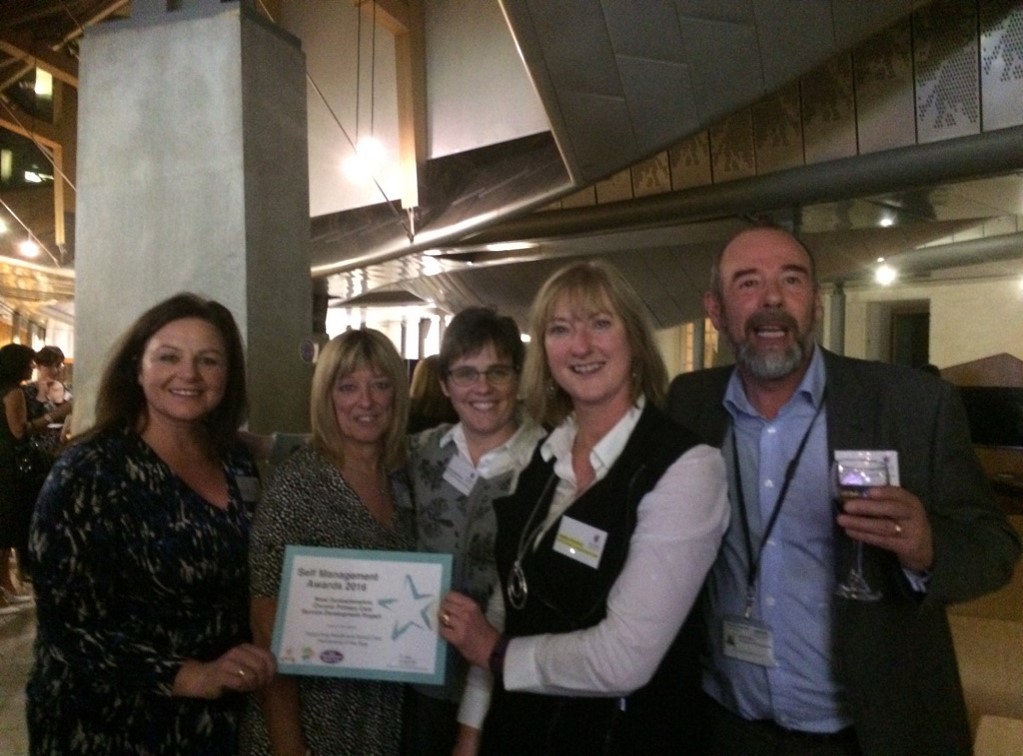
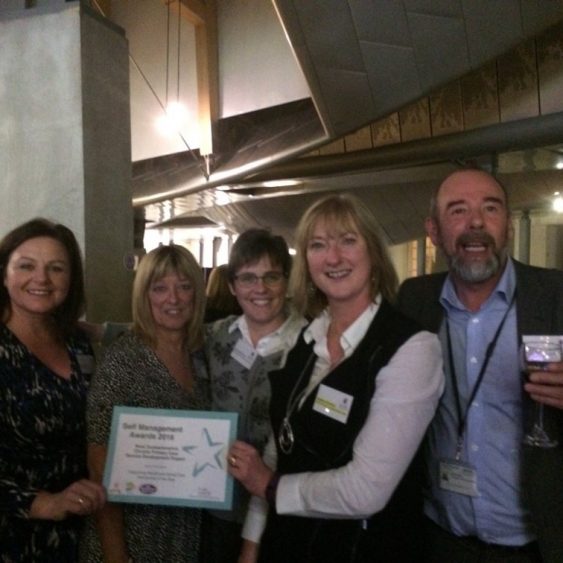
Pain Concern’s collaboration with Greater Glasgow and Clyde (GGC) NHS was a winner last night at the Alliance Scotland’s Self Management Awards. The project won in the Self Management Supporting Health and Social Care Partnership of the Year category.

The winning team!

The pilot project nominated for the award ‘West Dunbartonshire Chronic Pain Primary Care Service Development Project’ sought to find a new way to provide education sessions on pain to the public. Pain Concern and GGC NHS have now expanded the project to locations across the Greater Glasgow and Clyde area.

The pain education session is for anyone who has had pain for more than 12 weeks and people can self-refer or be referred by their GP, physiotherapist or other healthcare or social care professional. The sessions aim to give participants a better understanding of their pain to help them to manage their condition more effectively in the long term.

You can find out more about the Pain Education Session and how to book a place here and see the full list of award winners here.

Peer Support. Join the community

“Having chronic pain is very lonely.”

Join the community

Subscribe to Pain Matters

Everything you need to know about how to live with chronic pain

Subscribe


In pain? Don’t understand what’s happening?

“Having someone to help you prepare for your life through pain”

Our Pain Education Sessions

Fundraise for Pain Concern

Help us to help others

Fundraise


An Early Day Motion on Chronic Pain (Number 195) has been posted in the House of Commons and currently has the signatures of over 50 MPs.

The Motion urges MPs to recognise the burden chronic pain places on individuals and society and the decrease in life expectancy linked to poorly managed chronic pain.

Pain Concern supports the Early Day Motion. You too can help the campaign by sending this letter to your local MP urging them to sign the Motion.

You can send the letter to your MP’s constituency office. Or post it, addressed to your MP at House of Commons, London SW1A 0AA. Please act now!

Peer Support. Join the community

“Having chronic pain is very lonely.”

Join the community

Subscribe to Pain Matters

Everything you need to know about how to live with chronic pain

Subscribe


In pain? Don’t understand what’s happening?

“Having someone to help you prepare for your life through pain”

Our Pain Education Sessions

Fundraise for Pain Concern

Help us to help others

Fundraise


Following our shoe shopping tips might help you to reduce or prevent foot pain

1. Try before you buy

Avoid buying online unless you’ve tried on in store first or you’ve checked the site has a good returns policy.

2. Rule of thumb

You should have a thumb’s width between the end of the shoe and your toes.

3. Wriggle room

The toe of the shoe should be deep enough that you can comfortably wriggle your toes around.

4. What about width?

Some retailers measure and fit shoes by width as well as length. If either side of the ball of your foot is pressed hard against the side of the shoe, look for a wider size or a different model.

5. How high?

For shoes you’ll wear regularly, aim for heels no more than two finger widths high. Higher heels are ok occasionally, but just for a few hours.

6. Materials matter

Go for breathable, temperature-regulating materials – leather, Gore-Tex or mesh on sports shoes.

7. Fastenings

Laces, buckles, Velcro, elasticated… whatever the fastening, make sure the shoe fits snugly and securely over the top of the foot and back of the ankle.

8. Get a grip

A good, grippy outer sole helps maintain balance and reduce the risk of strain or injury from slipping.

Peer Support. Join the community

“Having chronic pain is very lonely.”

Join the community

Subscribe to Pain Matters

Everything you need to know about how to live with chronic pain

Subscribe


In pain? Don’t understand what’s happening?

“Having someone to help you prepare for your life through pain”

Our Pain Education Sessions

Fundraise for Pain Concern

Help us to help others

Fundraise


Why pain is a matter of life and death, the struggle for diagnosis and challenging misperceptions of palliative care

This edition is funded by Grünenthal.

Around 20 per cent of Europe’s adult population live with chronic pain and the consequences for individuals and society are devastating. In this edition of Airing Pain we head to the Societal Impact of Pain meeting in Brussels to hear from the patients, healthcare professionals and policy makers coming together to improve the lives of people in pain across the continent.

Dr Chris Wells explains why pain management is a matter of life and death and how to put pain higher up the political agenda. MEP Theresa Griffin takes up the baton with a call to make the workplace accessible to those living with pain.

Jane Moejlink describes the challenges of getting a diagnosis for interstitial cystitis and Sjögren’s syndrome in the face of sceptical doctors and the language barrier, while Professor Ilora Finlay makes the case for a different view of palliative care. Plus: an update from Ireland and bursting balloons to raise awareness.

Issues covered in this programme include: Misconceptions, palliative care, policy, educating healthcare professionals, epidemiology of pain, funding of pain services, accessibility in the workplace, GP, neuropathic pain, raising awareness, chronic pain as a condition in its own right, patient voice and cancer.


Contributors:

  • Dr Chris Wells, President of the European Pain Federation (EFIC®)
  • Jane Meijlink, Chairman of the International Painful Bladder Foundation
  • Dr Martin Johnson, Chronic Pain Lead at the Royal College of General Practitioners and Co-Chair of the Chronic Pain Policy Coalition
  • Ilora Finlay, Professor of Palliative Medicine, Cardiff University
  • John Lindsay, Chairperson, Chronic Pain Ireland
  • Joop van Griensven, President, Pain Alliance Europe
  • Theresa Griffin, MEP for the North West of England.

More information:

Peer Support. Join the community

“Having chronic pain is very lonely.”

Join the community

Subscribe to Pain Matters

Everything you need to know about how to live with chronic pain

Subscribe


In pain? Don’t understand what’s happening?

“Having someone to help you prepare for your life through pain”

Our Pain Education Sessions

Fundraise for Pain Concern

Help us to help others

Fundraise


Why pain is a matter of life and death, the struggle for diagnosis and challenging misperceptions of palliative care

To listen to this programme, please click here.

Around 20 per cent of Europe’s adult population live with chronic pain and the consequences for individuals and society are devastating. In this edition of Airing Pain we head to the Societal Impact of Pain meeting in Brussels to hear from the patients, healthcare professionals and policy makers coming together to improve the lives of people in pain across the continent.

Dr Chris Wells explains why pain management is a matter of life and death and how to put pain higher up the political agenda. MEP Theresa Griffin takes up the baton with a call to make the workplace accessible to those living with pain.

Jane Moejlink describes the challenges of getting a diagnosis for interstitial cystitis and Sjögren’s syndrome in the face of sceptical doctors and the language barrier, while Professor Ilora Finlay makes the case for a different view of palliative care. Plus: an update from Ireland and bursting balloons to raise awareness.

Issues covered in this programme include: Misconceptions, palliative care, policy, educating healthcare professionals, epidemiology of pain, funding of pain services, accessibility in the workplace, GP, neuropathic pain, raising awareness, chronic pain as a condition in its own right, patient voice and cancer.

Paul Evans: This is Airing Pain, a programme brought to you by Pain Concern, the UK charity providing information and support for those of us living with pain and for healthcare professionals. I’m Paul Evans, and this edition has been funded by a grant from Grunethal.

Now at the time of recording this edition of Airing Pain, that’s the end of June 2016, the people of the United Kingdom have just voted to leave the European Union. That doesn’t get away from the fact, however, that around 20 per cent of Europe’s adult population, that’s 80 million people, suffer from chronic pain, and this costs, directly and indirectly, one and a half to three per cent of Europe’s total GDP – that’s gross domestic product.

Those are the stark statistics presented to delegates at the European Pain Federation’s Societal Impact of Pain Symposium, or SIP, held in Brussels in May of 2016. It’s the sixth such symposium to discuss the socioeconomic impact of pain for individuals and societies. And it went under the banner headline Time for Action, calling for the prioritisation of pain as a disease in its own right in the EU health programme. It brought together over 200 pain experts, patient representatives and policy makers representing 28 European countries.

Back in 2011 the symposium launched its roadmap for action at the European Parliament, and initiative to make pain more visible at the level of national and international policy makers. Tom Green, editor of Pain Concern’s magazine Pain Matters, was there to meet delegates, starting with Dr Chris Wells, who is a pain relief specialist in Liverpool. He’s also president of the European Pain Federation, EFIC.

Dr Chris Wells: The roadmap to action is really an assessment of how we’re doing. We take policy decisions that we think are important and we identified that five years ago. So we look at the roadmap and we can see in some countries some things are being instituted and, unfortunately, in other countries very little has been instituted. But at least it flags up where there are weaknesses so we can now try and mover forward to addressing that, which is something that we’re going to do.

To all people, they just think that pain is a nuisance and usually people have had pain, so they had a toothache and it was upsetting but it went away the next day. So they don’t really understand the misery of chronic pain, Politicians have no idea about the cost to society. They are beginning to be aware of the problem in restriction of quality of life. Quantity of life is a new issue and we’ve now got data to show people with chronic pain have a reduction in quantity of life – they die sooner. And the corollary of that is also information that shows us that if their pain is adequately treated, for instance with a non-steroidal, their quality of life and their quantity of life both improve. And this is hugely important, so people can live longer in a more healthy way.

Tom Green: How much life is being lost, how much life could people expect to lose if they have untreated chronic pain?

Wells: The data is not good enough to really put that across the whole population of, in Europe a hundred million chronic pain patients. But we just know that some are losing their lives through immobility, through despair, through problems with their treatments that they have and just being ignored. I started doing cancer pain work and there’s no question to me, you can see people that fought and fought against their cancer and did ever so well, and eventually there came a time when they just thought, ‘no, the pain is too much. What’s the point in going on living?’ And I could see people just quietly giving up and saying ‘this is it’. So we’ve not been able to prove that one yet, but we all know it as clinicians.

But the data that we have on disability from pain, for instance, in osteoarthritis, that is very solid.

Green: So that’s a strong message to take to the European Parliament and also to the UK national parliament.

Wells: We can’t afford to ignore pain, although the politicians are frightened because we go along and we say we want more of this, we want more of that and they understand that there isn’t more. However, if we can show that we want more of this and it saves money in the long term, then I think we have got an important message and that’s what I think we should be doing.

There’s no point in us doctors just being shroud-wavers and saying our patients need this, because we’ve all got vested interests. Even there’s no point in patients just saying that, but we can say, look, this is the cost, we could reduce that. And we need to look at better treatment but as a specialist coming out here, better prevention, better education for doctors and better education for patients. And that’s one of EFICs strong points, education, that’s what we do.

Green: How close do you think we are to really transforming education for doctors, and perhaps for the general public as well?

Wells: Well it’s improving and you can see that from the roadmap. And, again, in the UK now one third of medical schools use pain in the curriculum for medical students, and that’s good. Two years ago I think it was none. So if we’re rolling that out and in another six years it’s all of them, fantastic. Then we’re going to have doctors in the future who understand more about pain.

Green: And from the patient’s point of view what does that mean?

Wells: From the patient’s point of view that means that hopefully they can see their GP and get a sensible answer. And I think that, we’ve already had discussions on that, it’s not just me, it’s not just the patient groups, the GPs accept, first of all, they don’t have the time; secondly, they don’t have the experience to teach things like self management, they don’t know how to do that.

And this is by far the best SIP we’ve had because we’ve got much more patient involvement and much more MEP involvement, which of course matters. There is no point in healthcare professionals sitting around talking about what wonderful ideas we have. It’ll never happen unless we get the patients and the politicians on board and I think we truly have. So that’s why it’s very exciting to me.

Jane Moejlink: I’m Jane Moejlink and I’m chairman of the International Painful Bladder Foundation, which is for patients with interstitial cystitis, which is today mainly known as bladder pain syndrome and we cover all the comorbidities, chronic pelvic pain and everything related to that.

I’m here as a patient advocate and by profession I was a translator, writer and editor, and I’ve been able to use that now in the voluntary work for the patients. So I try to write a kind of report, not only for patients, patients can understand, but it’s also read by various health professionals.

Green: So what will you be reporting back from this meeting?

Moejlink: There’s been an awful lot of talk about what should be done but I’m still waiting to see something actually being done. And I must say I was rather concerned to see the European Parliament does not have a section dedicated to health, that health is hidden somewhere under environment, which sounds utterly ridiculous today. It’s vital that we ensure that people are healthy because our whole system, certainly in Western Europe, depends on people working paying into the system before they can take out, so you’ve got to have a kind of balance between the two. Because if you’ve got too many sick people and they’re not paying taxes into the system and you’ve got a lot of people, far more people, taking out, the economy is simply going to crash. So I would have thought it was a priority to have health as a very important section.

Green: So you’re a passionate advocate and that comes partly from personal experience?

Moejlink: Yes, it certainly does, because I’m a patient with interstitial cystitis, but I also have Sjögren’s syndrome and many other comorbidities, but it took me 29 years to get a diagnosis of interstitial cystitis and actually almost 40 years to get the right diagnosis of Sjögren’s syndrome.

I got first of all the diagnosis for IC and I then discovered that there was no information available in the Netherlands, where I was living, I am British but I live in the Netherlands married to a Dutchman. And there’s no information, and so together with a couple of other people we set up a patient movement which ultimately led to a patient association.

And I felt that I couldn’t turn the clock back, when it’s taken so long to get a diagnosis you tend to feel very angry: ‘why didn’t they give me the diagnosis? why did they allow these diseases to wreck my life, really?’ I had to change my whole ideas of a profession completely. And my whole family suffered under it because I didn’t have any treatment, and not only that, if you don’t know what’s causing your problems, and I was sometimes very ill, you become extremely stressed and you start to doubt yourself.

Now, I wanted to avoid this happening to other people as far as I could. Well I’m now in my seventies and I’m hoping I can carry on for a bit longer because there is still so much to do, people are still not getting a diagnosis and as Joop van Griensven said today, patients are often not believed by the doctors and even I face this. That the favourite word of, for example, neurologists, is ‘somatisation’ and that stresses patients even more if they feel the doctor isn’t believing them, and stress makes many illnesses worse.

Green: By ‘somatisation’ what do you think they mean?

Moejlink: ‘Psychological’ – in the past they would say it, they would write it to your family doctors, psychological. Now they’ve changed the word. ‘Somatisation’ is the favourite word but it means the same, they don’t believe you.

And I found a particular difficulty in the fact that I’m English but live in the Netherlands, so when I go and see a doctor I’m speaking a foreign language. And describing pain, especially neuropathic pain, which I have, is extremely difficult in your own language let alone a foreign language. It’s so difficult to find the right words, and I find that doctors often are very impatient about this and they don’t even help you to find the right words. They just say, ‘oh that’s not possible it doesn’t exist’, when it’s simply because you’ve chosen the wrong words.

We’ve now got Europe full of migrants so I hate to think what is going to happen in hospitals when these people with a very limited knowledge, if any, of the host country’s language are trying to explain their health problems. And this should be taken into consideration very seriously.

Green: So, in English, how would you describe your neuropathic pain symptoms?

Moejlink: Stabbing, burning, tingling and just horrible sensations sometimes. And sometimes it’s in one place and sometimes it’s in another place and trying to explain that to a doctor, that this pain is moving around. And one day it’s very bad and another day you might not feel it at all and it comes suddenly, it may be short and stabbing, or it may be long and nagging, or it might be quite different, that you sort of have half sensation. Now describing that to a doctor is very difficult, they say ‘you can either feel it or you can’t feel it’. I say ‘no, I half feel it’. ‘That doesn’t exist in our book.’

Evans: Being understood as a patient is one thing, but when health professionals can’t even agree amongst themselves on the simple definition for chronic pain, what hope is there for the rest of us?

Dr Martin Johnson was at the 2016 Societal Impact of Pain Symposium representing the Chronic Pain Policy Coalition and the Royal College of GPs and he chaired the session to discuss the definition of chronic pain. Is it a disease in its own right, or a symptom of some other disease? Now to the layman and even some health professionals I guess, this may be pure semantics, so Tom asked him why it really matters.

Dr Martin Johnson: I think that’s one of the first questions, does it matter? One of the things we’ve done quite a lot of work in, in the UK and we had a big debate about it, was it three or four years ago. That probably from our perspective it didn’t matter, just purely from a clinical point of view, what it mattered was to make it into a condition, which is what we managed to achieve.

Whether it matters for patients – and this is something that I always… I’m always sitting on the fence with this – I actually personally think it does matter. I think it’s very important for patients to know that they’ve got a diagnosis, ‘cos it them gives them a way forward. Now actually some patients don’t necessarily agree with that but it’s going to be an interesting debate.

Green: Have you had discussions with patients that you can call to mind who’ve been aware that this has been a particular problem?

Johnson: For some patients as long as you’ve managed to give them some sort of management plan that to me is the important thing. But there’s the occasional patients where I see where they’ve not been handled in the right way and it’s simply because a diagnosis of some description has not been given as part of their plan. And I’m well know for saying that it has to be assessment, assessment, assessment, because if you don’t get the right the journey – it’s like if you don’t get your ticket right at the start of a journey you end up in the wrong place – and it’s exactly the same if you don’t get the right diagnosis.

And I think there is potential that – we’re still in early days there is no international consensus, and maybe SIP can help us do that – because then we can translate it through. There’s a very interesting article that Ann Taylor and colleagues produced earlier this year. They’ve done a complete review article on whether or not pain is a disease or symptom.

Evans: That’s a debate which seems to go on and on, even though EFIC, that’s the European Pain Federation, and IASP, the International Association for the Study of Pain, made a declaration to the European Parliament as far back as 2001, that pain is a major health problem worldwide. Although acute pain may reasonably be considered a symptom of a disease or injury, chronic or recurrent pain is a specific healthcare problem, a disease in fact in its own right.

If you’ve got an hour and a half to spare you can watch and listen to Doctors Ann Taylor and Martin Johnson supporting the motion, chronic pain a disease in its own right, in a debate recorded in 2012. You can find the debate by going to the website paincommunitycentre.org and putting the words masterclass 2012 into the search box in the top right hand corner.

Ilora Finlay: I’m Ilora Finlay, Baroness Finlay of Llandaff, and I’m Professor of Palliative Medicine in Cardiff and Palliative care lead for Wales. I chair the National Council for Palliative Care.

Green: From the Societal Impact of Pain meeting here in Brussels what’s your sense of how pain management is going to get taken forward at a European level, and what can Europe really do for pain management?

Finlay: Well I’m very glad to see that there’s been a lot of talk about integrating palliative care into mainstream cancer services, and integrating rather than having it as a tack on, an add on. I’m also glad to see that there’s been a stress on the assessment of pain and then appropriate management.

In the group that I was in we discussed the impact on carers as well and on the family witnessing somebody in pain. I think I’ve also been quite shocked actually at the number of stories of really bad clinical decision making that I’ve heard, for instance, the concept that consent is not valued unless it is fully informed really seemed to come as a bit of a surprise to some people. It was almost as if consent to treatment was a given and people just signed on the dotted line. And in the group that I was in I was stressing the ability of patients to refuse treatments if they didn’t want them, if they didn’t feel they were working. And that they still must receive all care, including ongoing monitoring of pain and pain relief.

So this meeting has been very important in bringing people together, in raising awareness of the need for integration and actually bringing pain as the fifth vital sign into mainstream cancer treatment and thinking.

Green: And what does that mean, ‘pain is the fifth vital sign’ in cancer treatment? What would that change?

Finlay: I think what that would change is that it is everybody’s duty at all times to listen to the person in distress, to listen to their pain and to do something about it. And it doesn’t matter whether you’re the therapeutic radiographer or whether you’re a care assistant, a nurse, a physio or a porter, let alone if you’re the doctor or a nurse on the ward, if the person is in pain, then they must be listened to. Pain is where the patient says it is, you need to look at the different components, the different causes and remembering that the acute unrelieved pain that goes on and on becomes chronic pain. But also that in the cancer patient pain is often a sign of something that may be reversible, because it’s a signal of disease in itself. So if you ignore pain you ignore the very essence of the warning lights that are there.

Green: What is different about pain management in cancer care?

Finlay: I would like to say something about the model that we’ve in Wales and the Llandaff cancer centre, because we have totally integrated palliative care with oncology. That means that all the patients are automatically under palliative care, whatever stage of treatment they’re at. So that we look at symptom control, distress, if they’re doing really well with their chemotherapy, that’s great – we don’t see them again when things are sorted. However, if they are in the unlucky group where things aren’t going well and disease progresses, we’ve already got to know them, we link them to services outside, into the community when they go home, into other hospitals.

We’re part of the acute oncology meeting that happens in the hospital and often lead that meeting. We’re supporting the juniors in training and we’re supporting other staff across the hospital. At the end of the day the oncologist carries the final responsibility for the patients’ care – we’re responsible for everything we do but we report to them. And over all the years that we’ve been running that system we haven’t had any problems, thank goodness, in relationships with other people, but we’ve had an awful lot of patients who we’ve helped improve their symptoms and improve their quality of life who, otherwise, if we’d been waiting for a referral, we probably would have never heard about.

Green: When I hear, as a layperson, the words ‘palliative care’, it makes me think that’s for people who are dying.

Finlay: That’s really sad, the end of life story has taken over from actually the helping people live well until they die story, which is what palliative care is all about. We’re all going to die, we all have to plan for the worst, but we can hope for the best and in whatever time we’ve got left – and let’s face it none of us know when that is – in that time we can do all we can to improve patient’s quality of life. And if we do that, and we support the carers, then when that person dies the impact on the carers and the family will be far less damaging if they have prepared for their death, if people know what they want.

So I would hope everybody listening to this will make sure that they personally have made a will, they have told their family what they want when they become ill and when they die, they’ve thought about being an organ donor perhaps. All kinds of things that if they’re not sorted out when somebody dies their family is left with a terrible, terrible burden.

Evans: That was Baroness Ilora Finlay talking to Pain Concern’s Tom Green.

John Lindsay is chair of the patient information and support group Chronic Pain Ireland.

John Lindsay: When you travel to Europe, mainland Europe in particular, and you hear what’s happening in other countries you then appreciate that what you have back home is not that bad after all. So I don’t think there’s any particular country in Europe that could put its hand up and say we are doing extremely well for people living with this horrendous condition.

Green: And what would you say would be what you would hope would come forward out of the Societal Impact of Pain meeting we’ve had today?

Lindsay: I think the most important thing is creating awareness among the medical profession to start with, particularly GPs, and at consultant level maybe neurologists and rheumatologists, who still don’t quite get this whole chronic pain condition. So I think educating all the members of the medical profession. And I think everybody has to have a look at their medical schools and change the curriculum and have pain medicine as a module and I think that should be absolutely number one priority.

Green: Where has Ireland got to?

Lindsay: Pain medicine has been declared a medical specialty and as a result of that our six medical schools are now looking at the curriculum for trainee doctors and they’re going to have pain modules for all of them. Because at present I think for every hour that a medical student spends on pain a vet spends five hours. So that needs to be addressed. It is changing and hopefully it will change throughout Europe. So that’s the first thing coming out of today. And then generally to create awareness, but there’s no point in creating an awareness and getting people’s expectations up if there are no services there to back up what is required to treat somebody with chronic pain and there is no doubt they need a multi-disciplinary team approach.

Evans: Now creating awareness is the aim of the red balloon project launched at the 2016 Societal Impact of Pain symposium. As its headline says 100 million people suffer from chronic pain, help turn statistics into voices.

Joop van Griensven: My name is Joop van Griensven, I’m the president of Pain Alliance Europe, and we’re starting today with the awareness campaign called the red balloon project. You can find it on the hashtag #Releasethepain, you can find all the information over there, or on the website www.theredballoonproject.eu.

Green: So what’s the idea?

Van Griensven: The idea of the project is to raise awareness for chronic pain, it’s about a red balloon which stands for the pain you have and you try to release the pain, so get rid of the balloon. You can do that by popping it, or leave it in the air – for pollution reasons better not put it in the air. It’s raising awareness for chronic pain.

Green: So the idea is to get how many people to do this?

Van Griensven: We would like to get one million people having a picture with a red balloon on one of the instagram, facebook or twitter accounts and then we can in Brussels, here, to the European politicians say, ‘well, so many people want to have something done on chronic pain, now it’s time for you to do something’.

Evans: And to do something, get involved in the red balloon project go to #Releasethepain on social media sites like twitter and instagram, or the website which is theredballoonproject.eu.

Just to remind you that whilst we in Pain Concern believe the information and opinions on Airing Pain are accurate and sound based on the best judgements available, you should always consult your health professional on any matter relating to your health and wellbeing. He or she is the only person who knows you, your circumstances and therefore the appropriate information to take on your behalf.

Don’t forget that you can download all editions and transcripts of Airing Pain from Pain Concerns website, which is Painconcern.org.uk. There you will find information and support for those of us with chronic pain, our families and carers and for healthcare professionals. There is also information on how to order Pain Concern’s magazine Pain Matters.

Now before we end this edition of Airing Pain at the European Pain Federation’s Societal Impact of Pain 2016 symposium I’ll just remind you of what Dr Chris Wells, the president of the European Pain Federation said to Pain Matters editor Tom Green at the start of this programme.

Wells: There is no point in healthcare professionals sitting around talking about what wonderful ideas we have. It’ll never happen unless we get the patients and the politicians on board and I think we truly have. So that’s why it’s very exciting to me.

Evans: So you’ve heard from the patients and their representatives, last word to the politicians.

Theresa Griffin: My name’s Theresa Griffin and I’m with the European Parliament for the North West of England. What I hope comes out of today, Tom, is real recommendations that we can take forward as members of parliament, in terms of putting chronic pain and acute pain higher on the agenda, but also enabling people to have the wherewithal to return to work if they wish to by being treated as a whole person. Four hundred million citizens in the EU suffering from this kind of pain, they have to be able to play a full part in society, we’ve got to be able to support them. It’s not just that bit of your body, it’s the contribution you can make as a person to society, it’s your family, it’s your work colleagues, it’s what you do in your local community, this is too important, it’s got to be holistic.


Contributors;:

  • Andy Anderson, Cancer Nurse, Maggie’s Western General Hospital, Edinburgh
  • Dr Chris Wells, President of the European Pain Federation (EFIC®)
  • Jane Meijlink, Chairman of the International Painful Bladder Foundation
  • Dr Martin Johnson, Chronic Pain Lead at the Royal College of General Practitioners and Co-Chair of the Chronic Pain Policy Coalition
  • Ilora Finlay, Professor of Palliative Medicine, Cardiff University
  • John Lindsay, Chairperson, Chronic Pain Ireland
  • Joop van Griensven, President, Pain Alliance Europe
  • Theresa Griffin, MEP for the North West of England.

More information:

Peer Support. Join the community

“Having chronic pain is very lonely.”

Join the community

Subscribe to Pain Matters

Everything you need to know about how to live with chronic pain

Subscribe


In pain? Don’t understand what’s happening?

“Having someone to help you prepare for your life through pain”

Our Pain Education Sessions

Fundraise for Pain Concern

Help us to help others

Fundraise


How cancer survivors can manage long term pain and creating a home from home at the hospital

To listen to this programme, please click here.

More people than ever before survive cancer, but the disease and treatment can have long-lasting effects on health, including chronic pain. In this edition of Airing Pain we visit Maggie’s Centre, Edinburgh, which pioneers a compassionate, personalised approach to supporting those with cancer and survivors of the disease.

Cancer Nurse Andy Anderson explains how the tranquil, homely environment at Maggie’s gives service users a chance to regain control. Claire Tattersall speaks about her long struggle with bone cancer, the stigma surrounding the ‘C word’ and the pain resulting from her life-saving treatment.

While Claire takes her pain as a reminder that she’s ‘still here’, the immense gratitude many survivors feel can lead to their pain going unreported, says cancer pain specialist Dr Lesley Colvin. She explains why cancer and its treatment can lead to chronic pain and how we can improve pain management in palliative care and for survivors.

Issues covered in this programme include: Cancer, chemotherapy, palliative care, neuropathic pain, family and relationships, hospital environment, communicating pain, post-surgical pain, CBT: cognitive behavioural therapy, mental health, breathing exercises and primary care.

Paul Evans: This is Airing Pain, a programme brought to you by Pain Concern, the UK charity providing information and support to those of us living with pain and for healthcare professionals. I’m Paul Evans and this edition is funded by the Agnes Hunter Trust.

It is good that we are curing more people of cancer but we have to recognise that not dying is not the same as being well. No one should face the often severe long term effects of cancer. That was the foreword to the charity Macmillan Cancer Support’s 2013 report ‘Throwing light on the consequences of cancer and its treatment’. In this edition of Airing Pain I’ll be looking at one of those long term effects, that is chronic pain. Lesley Colvin is a consultant in Pain Medicine in the Lothian Pain Service. She’s run a combined clinic with palliative care for the last 16 years. So how prevalent is long term pain following cancer treatment?

Lesley Colvin: I think it depends on the cancer treatment, so if you have had chemotherapy it depends on the type of chemotherapy you’ve had. So there are particular types of chemotherapy where your risk of having a long term neuropathy effect in your hands and your feet might be up to 50 per cent. Globally, if you look at all chemotherapies, in the published literature it’s round about 30 to 33 per cent, who’ll still have some form of neuropathic damage a year down the line. And then after cancer surgery it depends on the type of surgery, so after thoracotomy up to about 70 per cent of patients might have horrible pain afterwards. After a mastectomy round about 30 per cent. So it also depends on how hard you look for it. And I think that goes back to… it’s really important to assess pain properly, but also to enable patients to ask for help when they need it.

Evans: Lesley Colvin. One source of help is provided in 20 hospital locations across the UK by the charity Maggie’s. In Edinburgh it’s in the grounds of the Western General Hospital where I met Andy Anderson. He’s a cancer nurse working full time for Maggie’s.

Andy Anderson: Maggie’s is a support resource for anybody affected by any type of cancer at any stage. So, many people who come to the centre are people newly diagnosed with early stage bowel cancer, early stage breast cancer, looking to fully recover from their diagnosis, but understandably in the flux of upset and confusion and distress about their diagnosis. So a lot of the support we provide for those people is helping them through treatment and importantly helping them in their recovery back to whatever their new normality is.

But we also support a lot of people for whom their diagnosis means that they won’t recover from their experience of cancer. And it’s supporting them through that experience and supporting them to whatever it is that they wish to be supported to. Importantly also, the support is for family members as well, the children of, the siblings of, the partners, family members of somebody with a cancer diagnosis.

Evans: You used the word ‘normality’. Just getting here, to describe it, it’s a large general hospital in a residential area, quite an upmarket residential area I would think. But we’ve come through a fantastic scented garden. There is nothing hospital-ish, if that’s such a word, about Maggie’s Centre.

Anderson: That’s exactly right, and that’s a very deliberate process, you’re right. This is a huge, overdeveloped hospital, with a massive general hospital but also a cancer centre bolted on to that. As most hospitals in the UK are, they’ve grown from a very small cottage hospital or general hospital and then major bolt ons. So it’s a big hospital campus. But we’re a very small domestic scale building on that big hospital campus, with a beautiful garden surrounding us, an environment that feels nothing like a hospital. When you walk into the centre you walk straight into a kitchen, with a kitchen table, an opportunity to have a cup of tea or coffee, to sit and to meet other people in a similar situation. But also the space offers an opportunity to meet healthcare professionals and to talk through what that experience means for you, or for your family as well.

Maggie’s aim was to try and personalise this building, to make sure that when you stepped in you came in as a human being, rather than a number and a name associated with a cancer diagnosis. And that’s exactly what the building and the built space offers the centre.

One of the fundamental things that Maggie’s offers is people a space to start to regain control, when they’ve felt very vulnerable, very overwhelmed, either because of a diagnosis or because of the complexity of the symptoms or side effects that come with that diagnosis.

Evans: Just go back to the beginning of what a person might feel when they get that diagnosis.

Anderson: So what people describe to us is often there’s been a lead up to the diagnosis process itself, they’ve had some concerning symptom, they’ve been to their GP. So they have an awareness that something’s not right.

But most people try really hard not to acknowledge that that could be the case, they’re very fearful of acknowledging that reality. And when it’s described to them often there’s a massive state of shock, overwhelm, fear. Some of that fear is associated with historic reference points, so the fact that their mum, or their father, or their uncle died a difficult death associated with cancer and they assume that’s going to be their own story.

Interestingly though, for some people there is a sense of relief because they’ve been wrestling with a difficult symptom, a difficult process for a while and at least now there’s a name to it. And, importantly, there’s a treatment plan, there’s a strategy for dealing with my diagnosis. But most people definitely require some advice, some guidance, some translation and some support associated with that.

Evans: And going back once again to that word ‘normality’. How does what you describe those feelings – and I’m sure there are many different feelings – how does that affect the world around them, their family, their colleagues, their siblings?

Anderson: What a lot of people describe as somebody with a diagnosis in the centre, is that their family members, their friends, their colleagues, their peers, their neighbours, are all equally shocked, but sometimes feel even more out of control because they’ve got no vehicle to actually do anything tangible to make a difference. The individual with a diagnosis has a treatment plan and although they’re going to have to deal with surgery, radiotherapy, chemotherapy, there’s a structure. And that’s their job, that’s their job for the next six months. So they know they’ve got something tangible to do.

Often what they describe is that they’re having to pick up the pieces of their husband, or their wife, or their children, or their neighbours, or their colleagues, because their colleagues’ expression of upset and love and distress for them can often be overwhelming. So a lot of people talk about not only managing their own reaction and upset, but having to spend a lot of time managing other people’s upset as well. So that is often described in this centre.

Claire Tattersall: My name is Claire Tattersall, I’m 39 and I’m at Maggie’s Centre because just before I turned 21 I was diagnosed with a very rare form of bone cancer. I had a year and a bit of treatment, I’ve had 30 odd operations over the last 18 years, so Maggie’s have supported me all the way through that.

Evans: Andy was just telling us about the emotional journey of having cancer, that first thing and the effect on the family, can you tell me how that affected you?

Tattersall: At the time I was playing semi-professional hockey, so when I was diagnosed, for months they had put it down to a sporting injury, so when the diagnosis came it was a complete shock. I thought I had my career in the ambulance service, a paramedic, my hockey career, which I would retire when I chose. And in one foul swoop that was all changed.

So the effect on my family was even worse, because I tended to joke my way through it, whereas they were the ones that were coming at home at night time and not knowing exactly what was going on, because obviously I was there and it was happening to me. So they only had my word to go on and the doctors’ word to go on. And I suppose as parents, and for my brother, it’s the last thing that you expect. It really affected our whole family greatly.

Anderson: A lot of family members come to the centre, so last year 40 per cent of the visitors to Maggie’s were family members. And they’re all coming to say, this is upsetting for me, but how can I be the best resource for my husband, my wife, my dad, my sibling, to help them through their experience? Partly so they can come here and name their upset without then upsetting the person with the diagnosis, but also that they can come with more of a constructive approach to be the alongside person through that.

We try often to provide support separately, but quite often we’re supporting families as a whole family as well. Yesterday I met eight members of a family who came together to think about how the mum could be best supported by the parents, the siblings and the children, and it was a really constructive conversation.

Evans: What did you tell them?

Anderson: So some of it is knowing that cancer is something that can be spoken about, being honest and being real, trying not to obscure your own emotional response, speaking about your emotional response and being honest as a family about that. So each person having a responsibility to account for their own needs, but also some of the family members stepping up to the mark a bit more.

So the mum in this situation was the rock of the family, but also the chief cook, the chief bottle washer, the chief cleaner upper. So some of the children’s role was actually to step up to the mark and make sure they picked up their socks. Some of it also was parents knowing what would be valuable in terms of chauffer servicing, in terms of providing pre-cooked meals, but also being there as that resilient emotional support for the individual affected.

Evans: Did the cancer define you as a person?

Tattersall: Yeah it did. I can remember saying to a couple of doctors, ‘I’m a person with cancer, I’m not cancer with a person attached’. And that happened out in the world as well, people would… ‘there’s Claire with cancer’ – ‘no, I’m just Claire’. I wasn’t a walking tumour. I wasn’t a ticking time bomb. In my head, I was still me.

But some people found it really difficult to dissociate the cancer and me, whereas I found it very easy, because I was so fit then I had not so much side effects as some people have. So I could, for the first six months at least, I could get on with my life, the two weeks that I was at home out of every three, pretty much as normal. I was still going and playing hockey, I was still working, I was still doing youth work. I never lost my identity, but I think other people struggled to realise who I was anymore.

Evans: People still don’t like using the work ‘cancer’, it’s the ‘C word’ or it’s the word we don’t talk about. I guess 18 years ago it would have been even more like that?

Tattersall: It was. I remember on a Friday afternoon being told from a rheumatologist that I had a tumour. Now a 20-year-old, on my own, Friday afternoon in a clinic. I don’t remember much about the drive home, but I do remember thinking, should I tell people? Because there was still a massive stigma to having had cancer, it was still classed as dirty and you know, you must have done something to cause the cancer. And that really played on my mind as to should I tell people.

And then, actually, if people can’t deal with it, then that’s something that they’ve got to work out, I just have to be me. Alright, the illness has had a massive impact on my life, in a way that I would never have wished on my worst enemy, but it’s just a word. You know if you say it, you’re not going to catch it. I know a few people who have had cancer and are scared to talk about it once they’ve got the all clear, in case it comes back. Well it doesn’t work like that.

Evans: Do you have cancer now?

Tattersall: No, I don’t. I have the all clear from the cancer. The only thing I have to live with is the after effects of all the treatment and the surgery that I had. Because the surgery was to save my life, so there wasn’t any thought of what will happen down the line, so there was a lot of nerve damage done. So now I have to live with the pain and the constant surgeries, but no I don’t have cancer. As much chance as anyone else now.

Evans: That’s Claire Tattersall, speaking to me at Maggie’s Centre in the grounds of the Western General Hospital in Edinburgh. Andy Anderson again.

Anderson: Sadly, we see a lot of people for whom their diagnosis, although it may have been fully surgically removed and fully treated with chemotherapy or radiotherapy, because of the area presented in its left them with ongoing nerve-related issues or nerve-related problems. Or because of the surgery itself – it’s left them with ongoing complex pain issues.

Some of those can be very well managed, and some are much more complex and require high level skilled symptom control specialists to be able to be involved with. Often an oncologist is well equipped to be able to prescribe a range of analgesics, often GPs are very good at providing good analgesic support, but for the most part the population we support, who have more complex pain issues, require the specialist support of sub-specialist pain control teams, either within the hospital or within the community.

Evans: Pain consultant Lesley Colvin again:

Colvin: I think the other issue – and I do see a lot of these both in the combined clinic and in the chronic pain clinic – is that cancer treatment itself, to do the job it has to do, is quite toxic, but there are side effects, and one of those side effects is pain. Chemotherapy, very effective chemotherapies, but depending on the chemotherapy you get, at least half of people may have ongoing neuropathic type pain.

Evans: So I just asked Claire the question, ‘do you have cancer?’ And she said ‘no’. And I said, ‘do you have pain?’ And she said ‘yes’. So what’s going on there?

Colvin: Obviously some patients are cured of their cancer, they go to the oncology follow up clinic for a number of years, they’re discharged at five years cured of their cancer, but what they may still have is ongoing pain, either as a result of what the cancer did to their body in the first place, or often due to the treatment. So either the chemotherapy or surgery is the other major one. So cancer surgery by definition is not minor surgery and there can be long term problems with that and one of those is pain.

Evans: I know every case is different, where do you start, how do you start to manage that?

Colvin: Every case is different – and I think that’s really important actually, you know, assessing patients individually and working out a management plan with the patient, so that they’re involved in it, I think is the basis for successful management. The other thing that is also very important, is when you see a patient and you make changes to try and improve their pain, is having some way that you can reassess the pain effectively, to reassess what has happened as the result of the things that you’ve changed.

And sometimes I think our healthcare system is set up with this huge pressure on us not to follow up with patients, and that can actually be quite challenging. And often, particularly patients with complex pain related to their cancer, you need to see them quite frequently to make sure that things are fine-tuned and that they’re as good as you can get them.

Evans: You have a beaming smile across your face, but you’re still in pain?

Tattersall: Yeah, as one of my consultants said the other week, I turn 40 in December and no one thought I was going to make it. I shouldn’t have really even turned 22. So pain, as much as it drives me insane and sometimes I’m climbing the walls, I’m still here. And pain kind of reminds me that I’m alive.

Evans: Claire said that ‘the pain reminds her that she’s alive’. Now, I find that an extraordinary glass half full statement.

Colvin: Yes, and I think that that’s a very good point because often you feel humbled with some of the patients that you meet, who’ve been through cancer and have ended up with really quite dreadful problems actually, pain problems, that are long term, that are probably not going to go away. And it is one of the things that you think, ‘gosh, I don’t know if I would be like that in the same situation’. They are so uncomplaining. That’s important, actually.

And, again, I think that – not willingness, but lack of saying ‘what can you do for me?’ – is a bit sad, actually, because often there’s quite a lot we can do for people but it takes people maybe a long time to get there. Maybe that’s part of the process, but maybe we could change things a little bit.

So, for instance, we talked about thoracotomy, and 70 per cent of patients will have pain a year down the line, actually, when you assess them at six weeks, when they’re assessed by the surgeon six weeks afterwards, or by the oncological team, if they’ve got difficult pain at that point they will probably still have pain a year later. So maybe at that point, instead of waiting for them to complain, we should be saying, ‘actually, let’s get you to see a pain specialist, or a palliative care specialist with a particular interest in pain and symptom control’.

One of the things that has struck me about the difference between patients who’ve been through the cancer journey, to maybe a patient who’s got chronic back pain, is that patients are so grateful that they’ve had this huge amount of input and that they’re still alive, is that they will put up with an enormous amount of really unpleasant pain, before they ask for help. And I do see patients who, seven years down the line, they’ve ended up coming to the pain clinic and we’ve done something that’s helped them, but they’ve put up with it for seven years.

So it’s finding a way to enable patients to ask for help and maybe part of that is early on in the cancer journey. So, for instance, if they’re coming to Maggie’s Centre and someone in Maggie’s Centre realises that they’re sore, having them flag up that there’s something that can be done about it, rather than just putting up with it.

Evans: And that’s one of the advantages of a place like Maggie’s Centre, a drop-in centre, if you like [Colvin: that’s right], that they can talk to people who know what’s going on and can reassure them that that’s just an ache and a pain, or, on the other hand, say, ‘actually, I think you ought to just have a word with somebody about that’.

Colvin: Yeah, because one of the things that I do notice is that quite a lot of the oncological follow up is done by experienced clinical nurse specialists. And they’re actually – I would say – sometimes better. Maybe they’ve got a little bit more time, maybe the patients talk to them a bit more, but they’re maybe better than medical staff at directing patients towards the pain clinic, or the combined pain clinic with palliative care.

Anderson: Most people describe at the end of their treatment, whether it’s with curative intent or whether it’s with maintenance, that their radar is incredibly highly-tuned and every new ache, every new pain, every new cough, every new mole is cancer before it’s anything else, in their emotional response. It takes a while for them to bring in their good, logical, calm, rational thinking.

And often their logical, calm, rational thinking is accelerated by being able to come back to the Centre, or by being able to check in with their nurse specialist in the hospital, the nurse specialist that was that fortnightly check in through the whole treatment. They could give the nurse a call and say, ‘listen, this is going on for me today – is that something to be worried about?’ And it can be talked through and a relief point given. That alarm bell process is very difficult and I think that lasts with people for a good two to three years after the completion of treatment.

A lot of the conversation is normalising, a lot of the conversation is giving people a different perspective on their experience and also helping them to bring in their good, rational, calm thinking. The fear that they have diminishes that logical thinking, but when they’ve sat with us for ten or fifteen minutes, then themselves they start to say, ‘actually, you know what, on reflection I know that I’m able to do x, y and z to work my way through this, thanks for your guidance and thanks for your support’. So, often we’ve not given a definitive direction, it’s the individual who’s made that decision, but we’ve helped them get to that position of decision making.

Colvin: I think patients, when they have a diagnosis of cancer, there’s obviously the shock of initial diagnosis, there’s a whole complicated and often unpleasant journey of the cancer treatment and thereafter and throughout that, having somewhere where you can maybe step aside from the very clinical environment, have the support but also the expert understanding and expertise that exists in Maggie’s Centre is enormously helpful for patients.

In oncology centres there’s a huge pressure to manage patients who have active cancer, and often patients say that they get a huge amount of input during the time that their cancer is being treated and then chemotherapy finishes, what do they do next, where do they go for support? And Maggie’s Centre actually fills a gap there. It’s actually a really nice example of working between the NHS and charitable organisations, which I think provides an enormous amount of benefit for patients.

Evans: It must feel like an incredible relief to walk into something on hospital grounds that doesn’t look like a hospital, there are no white walls, there are no people in white coats, it’s like a cafe out there. That must be like a haven of peace.

Colvin: I think you’re absolutely right and one of the things we know about pain is that stress and fear will make pain worse, not through imagining it, but just that is the way that pain works, so anything that can support patients to alleviate that will not only help their general quality of life, but actually potentially help manage their pain. Obviously, medication has a role in that, but there are side effects to medication, there’s no side effects coming to Maggie’s Centre.

Evans: Do you manage your pain not just by drugs, but with what we call talking therapies, the psychology, all done these days through pain management programmes?

Tattersall: Yup, I see a psychiatric nurse who does CBT (cognitive behavioural therapy), to try and work on relaxation methods and taking yourself out of that moment when your pain is really bad. If you can catch it before it gets really bad, then it can help, because if you distract your mind for long enough, then it’s got to take it away from the pain. It’s only when you concentrate on the pain that it takes over you.

And, obviously, some days the pain are so bad that those things don’t work, but a lot of the time they do. And the mental health team, as part of the pain team, have been amazing, because I wouldn’t like to be treating me, because I’m a bit stubborn [laughs], mental health I struggle with because I’m a fixer. Give me a physical challenge, like I’m in a wheelchair I hope to walk again, no problem, I will spend seven days a week at physio. Ask me to talk about what’s going on in my head, then I struggle. Ask me to think about how I feel when the pain is really bad, I struggle. But I’m getting better, because people work with me and have patience.

Evans: Even though you say, ‘I don’t like the mental stuff’, you obviously manage it very well. Do you use techniques? Visualisation…?

Tattersall: Yeah, visualisation and breathing exercises. Most of my pain is in my shoulder and my neck, so I try to visualise that these parts of my body that are causing me so much pain aren’t actually part of my body, try and detach them from who I am.

Colvin: Not everyone will go on to develop chronic pain, but what we need to try and do is flag up the people who are likely not to have pain that gets better. And if they have pain at six to eight weeks after surgery that’s not really getting better maybe we should be trying to catch them at that point. The onus is on the patient at the moment to ask for help, rather than us actively saying we know this is a problem, how can we identify who has the problem, and make sure they get the help early, rather than waiting until the patient actually feels strong enough maybe to ask for help?

Because I think that’s one thing that’s important – when you go through cancer treatment you’re maybe not able to ask for things, you’re vulnerable, you’re a patient. And it’s maybe only when you’ve got through the cancer treatment and things have settled – and that might take a whole number of years, actually, before they say ‘actually, this is not good enough, I have to get some help with this’. And I think the other thing with cancer patients, is sometimes they’re just sick of coming to hospital, so maybe we should be trying to get the help out there into the community.

Evans: When you say getting help out there into the community, what do you mean?

Colvin: Making sure that GPs, those working in primary care, are aware that it’s a potential problem, so that when they go to their GP their GP is asking about it. Or maybe it’s the physio, or the practice nurse. And if they ask about it they know what to do, how to direct the patient, either with some basic self management, or maybe just start some basic medication that might help manage things.

Evans: We’re in Edinburgh today, but Maggie’s Centres are around the United Kingdom?

Anderson: That’s right. So you’re sitting in the first Maggie’s Centre which this year is 20 years old. And in 20 years we’ve developed 20 centres across the UK or internationally. So by the end of 2016 there will be 20 built centres, which is completely extraordinary for me to be able to say. I’m fortunate enough to have been involved with Maggie’s for the last 18 years and to see that growth has been hugely refreshing and rewarding, but incredibly surprising as well. All of our aim and ethos is about making sure that people affected by cancer have access to the best level practical and psychological and emotional support that they can have during and beyond their experience of cancer.

Evans: I live in Swansea in West Wales – the Maggie’s Centre is a fantastic looking building underneath the maternity ward. Could anybody go in there just for the experience?

Anderson: Without question! So although all of Maggie’s Centres are cancer support facilities, they’re also community resources and a lot of people just out of interest, to look at what is an extraordinary beautiful building, designed by Japanese architect Kisho Kurokawa. Go see it, go see the space outside, go see the space inside. Sarah and the team who work there would welcome you with open arms.

It’s a beautiful space and it’s a space that is designed to support the Swansea and West Wales community in whatever way they wish. It has a direct relevance to cancer, but the more people that know about the centre the more able they are to signpost friends, family, colleagues, people around to the centre, if they are affected by a diagnosis. So my encouragement would be, go visit.

Evans: And also just going to see and talk to people in any of the Maggie’s Centres, I guess, goes quite a long way to dispel some of those myths about cancer.

Anderson: I completely agree. And as you walked in today you would have felt an atmosphere that you may not have expected to feel. It’s a very up, very alive, very bright environment, which doesn’t have the assumed heaviness and distress of what most people have an imagination of what cancer might mean. So for that reason it’s worth going to any of the centres.

Evans: And you can find out more about Maggie’s Centres and their locations at their website which is maggiescentres.org. I referred to Macmillan Cancer Support earlier, their website is macmillan.org.uk. And I’ll just remind you that whilst we in Pain Concern believe that the information and opinions on Airing Pain are accurate and sound based on the best judgements available, you should always consult your health professional on any matter relating to your health and wellbeing. He or she is the only person who knows you, your circumstances and therefore the appropriate action to take on your behalf.

Don’t forget that you can download all editions and transcripts of Airing Pain from Pain Concern’s website which is painconcern.org.uk.

Now, we talk a lot in pain self-management about the glass that’s half full as opposed to the glass that’s half empty. Last words to Claire Tattersall:

Tattersall: You know I can have my down days like everybody, but as long as I wake up every morning, I have to take a disgusting amount of painkillers and medications, I’ve got a niece and a nephew who are three and one and they just make everything worthwhile. They make me smile, they make me get out of bed every morning and I try and ignore the pain. If I’m having a down day then my pain is worse. This morning I spent with my niece and nephew, so my pain wasn’t too bad, ‘cos they made me smile and gave me cuddles and told me they loved me. And if I hadn’t been through all the pain and treatment that wouldn’t happen.


Contributors:

  • Andy Anderson, Cancer Nurse, Maggie’s Western General Hospital, Edinburgh
  • Claire Tattersall
  • Dr Lesley Colvin, Consultant/Reader in Pain Medicine in the University department of Anaesthesia, Critical Care and Pain Medicine, Western General Hospital, Edinburgh.

More information:

Find out more about the organisations featured in this programme:

maggiesLogo

Peer Support. Join the community

“Having chronic pain is very lonely.”

Join the community

Subscribe to Pain Matters

Everything you need to know about how to live with chronic pain

Subscribe


In pain? Don’t understand what’s happening?

“Having someone to help you prepare for your life through pain”

Our Pain Education Sessions

Fundraise for Pain Concern

Help us to help others

Fundraise


How cancer survivors can manage long term pain and creating a home from home at the hospital

This edition is funded by the Agnes Hunter Trust.

More people than ever before survive cancer, but the disease and treatment can have long-lasting effects on health, including chronic pain. In this edition of Airing Pain we visit Maggie’s Centre, Edinburgh, which pioneers a compassionate, personalised approach to supporting those with cancer and survivors of the disease.

Cancer Nurse Andy Anderson explains how the tranquil, homely environment at Maggie’s gives service users a chance to regain control. Claire Tatterstall speaks about her long struggle with bone cancer, the stigma surrounding the ‘C word’ and the pain resulting from her life-saving treatment.

While Claire takes her pain as a reminder that she’s ‘still here’, the immense gratitude many survivors feel can lead to their pain going unreported, says cancer pain specialist Dr Lesley Colvin. She explains why cancer and its treatment can lead to chronic pain and how we can improve pain management in palliative care and for survivors.

Issues covered in this programme include: Cancer, chemotherapy, palliative care, neuropathic pain, family and relationships, hospital environment, communicating pain, post-surgical pain, CBT: cognitive behavioural therapy, mental health, breathing exercises and primary care.


Contributors:

  • Andy Anderson, Cancer Nurse, Maggie’s Western General Hospital, Edinburgh
  • Claire Tattersall, patient
  • Dr Lesley Colvin, Consultant/Reader in Pain Medicine in the University department of Anaesthesia, Critical Care and Pain Medicine, Western General Hospital, Edinburgh.

Further information:

Find out more about the organisations featured in this programme:

maggiesLogo

Peer Support. Join the community

“Having chronic pain is very lonely.”

Join the community

Subscribe to Pain Matters

Everything you need to know about how to live with chronic pain

Subscribe


In pain? Don’t understand what’s happening?

“Having someone to help you prepare for your life through pain”

Our Pain Education Sessions

Fundraise for Pain Concern

Help us to help others

Fundraise


Getting moving with tai chi, staying in work and why arthritis pain is not all about the joints

This edition is funded by the Agnes Hunter Trust.

Over ten million people in the UK live with arthritis and it is the most common cause of pain. Professor David Walsh of Arthritis Research UK explains what causes the different types of arthritis, why the nervous system is the main culprit in arthritis pain and he updates us on the most promising lines of current research into drug treatments.

But there is much more to living well with arthritis than taking medication as producer Paul Evans finds out at an Arthritis Care Wellbeing Day in Renton, Scotland. He joins a specially adapted tai chi lesson and finds out from Sharon MacPherson about what to eat and drink and what to avoid when managing the condition: ‘Sassy Water’ is in, alcohol is out.

The workplace can be a challenge for anyone managing pain with 50 per cent of those with rheumatoid arthritis leaving work within a year. Hazel Muir explains the importance of knowing your rights and being able to explain about your pain to employers and colleagues.

Issues covered in this programme include: Arthritis, medical research, tai chi, employment, exercise, fibromyalgia, joint pain, brain signals, gabapentinoids, elderly people, diet, breathing exercise, alternative therapies, and accessibility in the workplace.


Contributors:

  • David Walsh, Professor of Rheumatology, University of Nottingham and Director, Arthritis Research UK Pain Centre
  • Sharon MacPherson, Project Officer – Joint Activity, Arthritis Care
  • Hazel Muir, Employability Officer, Arthritis Care.

More information:

Peer Support. Join the community

“Having chronic pain is very lonely.”

Join the community

Subscribe to Pain Matters

Everything you need to know about how to live with chronic pain

Subscribe


In pain? Don’t understand what’s happening?

“Having someone to help you prepare for your life through pain”

Our Pain Education Sessions

Fundraise for Pain Concern

Help us to help others

Fundraise


Getting moving with tai chi, staying in work and why arthritis pain is not all about the joints

To listen to this programme, please click here.

Over ten million people in the UK live with arthritis and it is the most common cause of pain. Professor David Walsh of Arthritis Research UK explains what causes the different types of arthritis, why the nervous system is the main culprit in arthritis pain and he updates us on the most promising lines of current research into drug treatments.

But there is much more to living well with arthritis than taking medication as Producer Paul Evans finds out at an Arthritis Care Wellbeing Day in Renton, Scotland. He joins a specially adapted tai chi lesson and finds out from Sharon MacPherson about what to eat and drink and what to avoid when managing the condition: ‘Sassy Water’ is in, alcohol is out.

The workplace can be a challenge for anyone managing pain with 50 per cent of those with rheumatoid arthritis leaving work within a year. Hazel Muir explains the importance of knowing your rights and being able to explain about your pain to employers and colleagues.

Issues covered in this programme include: Arthritis, medical research, tai chi, employment, exercise, fibromyalgia, joint pain, brain signals, gabapentinoids, elderly people, diet, breathing exercise, alternative therapies, and accessibility in the workplace.

Paul Evans: This is Airing Pain, a programme brought to you by Pain Concern, the UK charity providing information and support for those of us living with pain, and for healthcare professionals. I’m Paul Evans and this edition is funded by the Agnes Hunter Trust.

[Background conversation]

Loudspeaker announcement: Good morning ladies and gentlemen. Just a wee reminder that our wellbeing day is going on downstairs in the lounge, if you’d like to join us.

Sharon MacPherson: Hi everyone. What I’m going to do today is just do a wee demonstration and maybe get you to do a bit of the warm up of the tai chi. So, I’m just going to start off by showing you the salute that we do at the beginning and the end of the class. So if everyone takes their left hand, and put your four fingers together, this signifies friendship and when you put your thumb in like that’s humility. So you then get your right hand and you make a fist, and then you put the two together like this and that’s your salute. So at the beginning and the end of the session we always do that and it’s a sign of mutual respect.

Evans: Now, according to Arthritis Care UK, Arthritis is the biggest cause of pain and physical disability in the UK. Around ten million people live with the condition. And according to a survey carried out by Arthritis Research UK with the Daily Telegraph, three quarters of those living with arthritis and joint pain say the pain stops them living life to the full. That’s why I’ve come along to Waterside View Residential Home in Renton in Scotland, where residents are taking part in a wellbeing day. But, before we join them – what is arthritis? David Walsh is Professor of Rheumatology at the University of Nottingham, and he’s Director of the Arthritis Research UK Pain Centre.

David Walsh: The commonest form of arthritis is osteoarthritis. It’s something which increases with age. People sometimes call it ‘wear and tear’ arthritis, although I tend to think of it as an ongoing repair process that’s going on in the joints. Less common than that – a major problem for those that have it – is the inflammatory forms of arthritis, things like rheumatoid arthritis, psoriatic arthritis. Those are characterised by the body’s reaction against itself if you like, which is damaging the joints. They often come on much earlier in life. But sadly for none of these forms of arthritis do we have cures.

And then there’s another group of conditions called crystal arthritis, for example, gout, which we have good treatments to control, but again not everybody gets on with those treatments and there are still problems with those. They are typically characterised by intermittent episodes of pain.

And then there is another very big group of people who are experiencing musculoskeletal pain for which there’s no clear immediate drive coming from the joints or the muscles. And there’s a condition that people often refer to as ‘fibromyalgia’, where despite intensive research it’s been difficult to pinpoint exactly what’s going on in the periphery in the joints and the muscles and it seems the main changes are going on within the nervous system.

MacPherson: My name is Sharon MacPherson. I work for the charity Arthritis Care and I’m the Project Officer for Joint Activity, which involves various activities including tai chi for arthritis and health walking. So I support the volunteers. All our services are delivered by volunteers, so I’m there to help them deliver the service.

Evans: So tell me where we are and what we’re doing?

MacPherson: Today we are in Renton and this is a Wellbeing Day and I’m here to support my colleague Hazel, who works with the Working Well with Arthritis Programme. And within my work they have helped me with a referral to Access to Work, which helps me stay in work with arthritis.

Evans: So you have arthritis?

MacPherson: I do, I have an inflammatory arthritis called rheumatoid arthritis.

Evans: And how does that affect you?

MacPherson: Generally it affects your whole body, and there’s an element of fatigue with it, and pain, that’s the two main features. But because I work for the organisation and I look after myself it’s fairly well managed.

Evans: So how do you manage it?

MacPherson: Various things. Activity is one of the main things. I need to keep moving or I stiffen up, so I walk with the volunteers, ‘cause we do the Health Walking project, and I’m trained to deliver tai chi, so I do tai chi every day as well. And it’s tai chi for arthritis so it’s a nice high stance, there’s no big expansive movements so it’s easy on your joints.

So we recruit the volunteers, we train the volunteers and then I support them to go out into the community and deliver the services. We also have self-management volunteers that I support and they deliver self management workshops which have different topics and one of them being understanding pain, which is a main feature of arthritis and the conditions.

Evans: Understanding pain, that might confuse many people because you don’t need to understand pain you just feel pain, it hurts.

MacPherson: Well, it does hurt, but you do need to understand it to help yourself because if you can understand it you can manage it better.

****

Walsh: A lot of the pain in people with active rheumatoid arthritis is being driven by inflammation of the joints, and when the joint is inflamed it’s producing chemicals which are not only setting up that inflammatory response, they are also making the nerves sensitive to movement and pressure and so on. So if you can in those situations damp down the inflammation, you can substantially relive the pain. The difficulty we have in rheumatoid arthritis is that actually once you’ve suppressed all that inflammation people often still have significant, important pain. And the mechanisms of that ongoing pain after the inflammation has been settled is much less clear and, again, seems to be more related to the way that the nervous system is working, rather than any residual inflammation or damage in the joint.

So, if the joint is damaged or inflamed then it sends signals to your brain to tell you that something’s going on. Of course, your joints are sending signals all the time, so even if you don’t have any pain, if you’re walking, your brain knows where your leg is – called proprioception, joint position sense. And part of what can happen is that the nervous system can start switching those signals, those normal experiences in the joints, into the pain pathways, so instead of feeling something as being pressure, or as movement, you feel it as pain. So it’s not just that the nerves are being irritated or sensitised in the joints, but actually the whole network through which those signals are getting to the brain can change.

Evans: How do you treat the nervous system side of that then, rather than just inflammation?

Walsh: There are treatments which are targeting the nervous system, the oldest one is probably opiates, they actually block pain signalling within the nervous system. But treatments which may have been developed for other purposes, depression or epilepsy, because of the way in which the nervous system uses common signalling pathways in a number of different areas, some of those drugs can be helpful for pain. So drugs like amitriptyline, duloxetine, gabapentin, pregablin, have been repurposed for ‘nerve mediated pain’, if you like.

Obviously there are other ways of changing the way the nervous system works, psychological treatments actually primarily work through the nervous system, they aren’t working on the joint itself. And there’s quite a lot of evidence that it’s not just what you think you feel, but actually psychological treatments do change what you feel, it is real. So I don’t think we’re necessarily just talking about drugs in terms of the way the nervous system processes things.

****

Hazel Muir: My name’s Hazel Muir, I’m an employability officer with Arthritis Care, specifically with the Working Well with Arthritis Joint Working Service. We’re here today, we’ve been asked along today to provide some information on some of the services that we provide throughout Scotland.

Evans: Well a lot of the services I can see laid out on your stall, your table in front of you at this wellbeing event. Explain to me, I can see coping with pain there, now pain and arthritis, tell me if I’m wrong, they go hand in hand?

Muir: Oh yeah you’re definitely right, and I would say that’s one of our most popular leaflets. We’ve got a lot of useful information on there, some hints and tips on some of the things that you can do to cope with pain and pain management. We’ve brought a sort of selection of some of the information leaflets that we provide. I’ve also got just a few things on living with osteoarthritis, living with rheumatoid arthritis, exercise and arthritis, and healthy eating.

Evans: Sharon it’s coffee break, you are holding a flask of something that looks absolutely disgusting to me [laughter], what is it?

MacPherson: Well I call it ‘sassy water’. It’s not disgusting, it’s actually quite pleasant to drink, but it’s just water with cucumber, ginger and lemon and it’s an anti-inflammatory water, so it helps with my arthritis. I actually gave the recipe to my neighbour, he has gout and he’s never been able to control his gout, and I gave him this recipe and he went on holiday for five days and didn’t drink the water for five days and his gout came back. As soon as he came back and he got back on the sassy water and his gout’s away.

Evans: So how important is diet?

MacPherson: Diet’s really important with arthritis, because it’s an inflammatory condition, there’s lots of food you can eat to help your condition. The girls in the centre here brought us beetroot juice earlier, that’s another thing that’s really good for your joints and your bones.

Evans: It was lovely.

MacPherson: It was nice, it was very pleasant, it is nice. So I sometimes put that in. I’ve got a juicer at home, that juices the juice out of everything, it’s a cold press juicer so it’s really good.

Evans: So what should people with arthritis avoid, are there no-no foods?

MacPherson: Well it’s about finding what works for you. And we do have information leaflets available that will guide you with diet and drink. But there’s obviously things that are inflammatory. Alcohol is inflammatory so you should avoid that. But there’s lots of good foods, pineapple has got something in it called bromelain and it’s really good, it’s an anti-inflammatory so pressed pineapple juice is good as well. It’s high in sugar so you just need to watch your intake is not too high.

Real foods are always good, so when you think of real foods it’s something that’s grown from the ground, so natural foods and fresh foods. Usually the bright colours are full of antioxidants – so lots of vegetables and some fruit.

Evans: Well it’s getting busier and busier and we’re stopping people getting at your stall. Let’s go somewhere just a little bit quieter.

Let’s go back to your ‘Coping with Pain’ leaflet. Many people might think that coping with pain means drugs from the doctor.

Muir: That’s certainly one thing. Obviously we promote self-management, we include a number of things that you can do in the way that you’re taking control of your own condition and how you want to maintain and manage that condition.

Evans: There are lots of changes, not just to the person with arthritis, work, office situations, family, [Muir: Yes.] siblings, parents.

Muir: Absolutely, a huge support network sometimes. Communication is key there. Often it’s about getting across how you’re feeling and what’s going on with you to the other people around you. You mentioned employers and colleagues and so on, Working Well with Arthritis Joint Working Service that I actually work with, that started in 2014. And it kind of came off the back of a lot of research that we had in the UK about the challenges people were facing that had arthritis, when they were in the workplace or trying to return to work.

Evans: What are those challenges then?

Muir: There was a piece of research done in 2010 by the National Rheumatoid Arthritis Society. And there’s some really good information that came out of that. That’s kind of key to what we took on board when we were developing this service. And one of the pieces of information from the participants that took part was that within one year of people being diagnosed with rheumatoid arthritis over 50% of them had left work; within a six year period 80% had left work.

Evans: That’s astonishing.

Muir: It is quite staggering figures. And some of the other things from that same piece of research people with rheumatoid arthritis had identified a number of areas as the most important factors that would help them remain in work and from that we introduced this service.

Currently, at the moment the service is delivered in Glasgow and Greater Clyde and also in Grampian and we work very closely with the NHS in both areas, hopefully with the aim to complement the service from the NHS. But some of these areas that we talked about from the report as what was most important to the person with arthritis was a better awareness of their own rights at work, to have increased knowledge and flexibility from their employer and better awareness of schemes to assist people in work. These are fundamental to the service that we’ve developed to address some of these areas.

Evans: In many ways you say being aware of one’s rights at work, there is a danger there isn’t there, that that sounds confrontational, you’re table thumping, ‘I want my rights’. The ideal situation is that you wouldn’t need those rights written down, that employers and employees would be able to work together, how do you get around that?

Muir: Well I think the main thing is that people that get in touch with us for the Working Well with Arthritis, quite a number of people are not aware that there is protection from the law, mainly the Equality Act 2010. And I think that’s a big key thing, because a lot of the concerns from themselves is around their absences and what’s going to happen when they go back to work, is there going to be issues around discipline and so on. And that’s quite common that we see through the people we work with.

So getting across this is what the law states and this is what’s there to protect you and it’s ok to expect certain things and to have that conversation with your employer and that they have a duty of care as well. And really just getting that across in a way where the individual doesn’t feel like it’s too much or they’re being treated differently or specially, they’re entitled to it. That’s a key thing that we try and get across and that was one of the areas that came up from pieces of research saying that’s what people wanted to know. What are the things that are there to help protect them and to allow them to continue in work?

Evans: One of the issues I guess as well for people with arthritis, as with many chronic pain conditions, is that many people don’t look unwell, they don’t look as if they’re in pain.

Muir: Again that’s a common thing, people often say that ‘if I was wearing a bandage, if I had a plaster on, then people maybe wouldn’t look at me the same way, or ask me the same questions’.

Again arthritis, if you look at rheumatoid arthritis and various other fluctuating conditions, one day will be totally different from the next and, again, that’s something where we hear people say their colleagues don’t always understand it, or their employer, because ‘you managed to do that yesterday, so how can you not do it today’. That’s back to the individual understanding their condition and how that affects them, and maybe then having a look at who else needs to know that, and how do I share that information, so that they’re aware and they can understand that ‘I may not look in pain, but I’m dealing with pain’.

And the other thing is, pain is a big part of it, but there is other aspects to look at. Fatigue is one that we commonly get, people saying the fatigue is a real struggle, a real challenge when you’re working and to get other people to understand that fatigue is not, ‘I just feel tired because I never slept properly last night’, there’s a lot more to it. And then there’s other things that come off the back of that, so people that are coping with pain each day they’ve got so many challenges and changes in their life and that can affect people’s mental health as well. So there’s things like anxiety and depression and all that can go into it. So the whole load of stuff around that, and coping with pain is a massive challenge, but it’s part of it, so it’s looking at addressing the other issues as well.

Evans: Another thing, another aspect of that is also, I suppose, that people in those situations where you cannot see the pain, they will work doubly hard to prove themselves, or to prove to their colleagues that they can cope.

Muir: Absolutely, yes, that’s a common one. And speaking with someone recently who said that, they were basically battling themselves, because as much as they knew this was going on, they felt they were letting themselves down and letting other people down, so they were actually making them self worse by doing more than they should have and not pacing. And pacing is a massive thing here, which helps you self-manage your condition. That’s another thing that people have to get to that point when their accepting of, this is my condition this is how it’s going to affect me.

But there is things, it doesn’t mean that my life is over and that I have to totally change everything, there’s things that I can do and I maybe have to look at doing things I did in a different way, or changing from that particular route to another route. Once people accept that and realise that they can live well with arthritis, they can work well with arthritis, they may have to work at it and you will probably need more support, but there is support and resources out there.

****

Evans: So we’ve come outside on a grey Scottish day, there’s a term Scots use for it, the Welsh term is ‘miserable’.

MacPherson: It’s a bit dreich.

Evans:Dreich’, that’s the word I was thinking of. So right, I’m newly diagnosed with arthritis because the doctor says I’m a certain age and that’s what’s expected.

MacPherson: So, would I be right in saying that you’ve been diagnosed with osteoarthritis?

Evans: He said osteoarthritis.

MacPherson: So, general wear and tear. That is fairly common as you get older and sometimes if you’ve done sports you can be susceptible to that. It’s the most common condition and then rheumatoid arthritis after that, they’re the biggest numbers.

Tai chi for arthritis would be fine for you, you would enjoy it, and it would be ok for your knee Shall I give you a wee demonstration?

Evans: Yes, please.

MacPherson: Ok.

Evans: So you’re standing with your feet slightly apart, shoulders dropped yeah?

MacPherson: Yup, nice and relaxed, and you want to just move your weight from the right to the left and then get yourself centred so you feel as if you’re rooted to the ground. So you’re nice and solid on the ground. Your knees want to be loose, you don’t want your knees to be locked. Just feel you’re weight going straight down through both your feet.

Evans: So I’m just rocking side to side, back and forth, just…

MacPherson: Just to get your balance and to get your central point and I’ll need you to stand back a bit.

Walsh: I tend to think of osteoarthritis and back pain as being an ongoing repair process rather than wear and tear, I don’t see it as an aging problem. It’s inevitably true that anything that we don’t have a cure for will get more prevalent the older you get, because you collect things as you go through life. I collect scars on my skin as I go through life, but I don’t see the scars on my skin as being a disease, or necessarily a problem.

The problem with osteoarthritis is the pain, the stiffness, and the disability that is causes. And that isn’t necessarily something that increases with age, even though what you see on the x-rays will change, will increase with age. We’re struggling at the moment I think to identify what is the difference between normal ageing and a disease called osteoarthritis. And my feeling is that that’s probably meaningless, that actually we all have changes in osteoarthritis as we get older, if you look at people’s x-rays or you look in the joints with an arthroscope you’ll see furring of the cartilage or some loss of the cartilage, all these things that we recognise as being part of osteoarthritis.

But it doesn’t necessarily cause you a problem and really the clinical problem of osteoarthritis is more about pain, rather than about what you see on an x-ray. And there have been advances in what are the imaging or biochemical correlates of that pain. So although we’ve often thought of osteoarthritis as being non-inflammatory actually there is inflammation in the lining of the joint which is associated with the pain that people experience in osteoarthritis, or at least some of those people. There are changes underneath the cartilage, underneath the cushioning of the joints, changes in bone turnover, which are associated with pain.

And actually that’s leading to new types of treatment. Hitting those changes in structure and function in the joints which are causing the pain, which are beginning to show good promise as treatments to relieve pain and to prevent the progression of pain in osteoarthritis.

****

MacPherson: You open and close your hands and if you breathe in and then breathe out.

Evans: And I close my eyes to get the best benefit of good breathing exercises.

MacPherson: Yes that’s when you close your eyes, because in tai chi if you can’t actually do the movement because of pain you can visualise the movement. And they’ve done studies that the visualisation of the movement is almost as good as doing the actual movement.

Evans: I have to say I have fibromyalgia as well and I did a course in tai chi, and I had to give it up because it was hurting me too much [MacPherson: Ok.]. It was very, very hard on the knees in fact, and the warm up exercises were actually causing me a lot of problems [MacPherson: Ok]. So there are different types of tai chi?

MacPherson: Yes, there’s over two hundred different types, there’s lots and lots of different ones. The one we do was designed by doctor Paul Lam – he’s a doctor from Australia – and he designed Tai Chi for Health, which incorporates all different health issues and arthritis is one of them. So it comes from the Sun Style and it’s a very high stance, non expansive movements and it’s specifically for people with arthritis. And there’s nothing that’s too strenuous on your knees.

Evans: That’s right, it’s just gentle moving [MacPherson: Yeah] and balance as you say.

MacPherson: Yeah, and there’s a lot of qigong in the tai chi for arthritis, which is like a healing therapy, and it’s connected with your breath.

Evans: What I remember about qigong is I seem to remember putting my hands above my head and moving round as I breathe in from my diaphragm [MacPherson: Yes], I’m sure there’s more to it than that, but it is incredibly relaxing.

MacPherson: Chi means your energy. And your chi point is three fingers below your tummy button and three fingers in the way, so that’s where your chi centre is. So that’s where all your energy comes from, so you’re wanting to work it from there all the time. And gong means work, so it’s like energy work, so you’re working your energy.

Evans: I gave the clue away that I’m nearly sixty and my doctor says, ‘well, that will be osteoarthritis’. How practical is it for people to go to tai chi classes?

MacPherson: So long as they’re appropriate tai chi classes, the tai chi for arthritis would be fine because of the style that it is. It’s for people with arthritis so it’s nice and gentle.

Evans: But be careful which form of tai chi you chose?

MacPherson: Yeah, be careful which form. It needs to be gentle and it needs to be appropriate for your condition.

Evans: I have to say that having been put off by an inappropriate tai chi method [MacPherson: yeah] and feeling this one today, I’d very much like to go along to another class.

MacPherson: And you could try seated first of all, to build up the muscles around your knee ‘cause it will take time to do that. And just kinda go easy on yourself, don’t be too hard on yourself, because it takes time.

Evans: No pain no gain, doesn’t count with arthritis,

MacPherson: No, no don’t use that adage, just take care. Self care, look after yourself. Pitching it at the right level, pacing it so that you’re not doing it too much.

****

Evans: What’s over the horizon if you like, or just visible over the horizon for arthritis pain research?

Walsh: In terms of new drugs, the most impressive thing that I’ve seen being developed over the last few years are drugs targeting the growth factor. So nerve growth factor is produced by the joints during inflammation. It’s also actually produced by other parts of the joints as well, but think of it as being produced by joints in inflammation. And it’s one of the main drivers to the nerve endings in the joints becoming sensitive. So you can imagine that if you block that then they should be less sensitive, you should be able to do more without it being painful.

So there’s a number of drug companies which have developed antibodies which block nerve growth factor. And they are consistently showing very impressive improvements in pain in people with osteoarthritis, or people with back pain. It’s very difficult to find drugs that work in back pain so this is really quite impressive. As with all drug developments there may be concerns about possible side effects, and these are in early stage of development. But I would see these things coming through in the next few years.

We already have a lot of treatments that show some effect in some people for arthritis pain and one of the challenges I think we have is bringing them together so that people can get the best out of what’s already there. At the moment typically what happens is that you go to your doctor where you try one thing, it doesn’t work so you try something else, doesn’t work you try something else. And, actually, each time your treatment fails the more challenging it is to get benefit from another treatment.

And if we could target treatments to those people at the right time, when they’re most likely to benefit from them, it could reduce a lot of suffering already with existing treatments. And I think understanding how we can work out who is most likely to respond to which treatment is one of those areas which is moving very quickly at the moment.

Evans: That was Professor David Walsh, director of the Arthritis Research UK Pain Centre. Their website is arthritisresearchuk.org.

I’ll just remind you that whilst we in Pain Concern believe the information and opinions on Airing Pain are accurate and sound based on the best judgements available, you should always consult your health professional on any matter relating to your health and wellbeing. He or she is the only person who knows you, your circumstances and therefore the appropriate action to take on your behalf.

Don’t forget that you can download all editions and transcripts of Airing Pain from Pain Concern’s website, which is painconcern.org.uk. And you can find out more about living well with arthritis at arthritscare.org.uk.

I’ll leave you to finish off the tai chi session with residents of Waterside View Residential Home in Scotland.

MacPherson: Turn your palms towards you, bring your energy towards you. Breathing out, going back the way, tucking your chin in against your chest, nice and slow. And then you want to breathe in again to come back up.

Do you feel any different after you’ve done it? Sometimes you feel relaxed after you’ve done it. Thank you everyone, well done. [applause].


Contributors:

  • David Walsh, Professor of Rheumatology, University of Nottingham and Director, Arthritis Research UK Pain Centre
  • Sharon MacPherson, Project Officer – Joint Activity, Arthritis Care
  • Hazel Muir, Employability Officer, Arthritis Care.

More information:

Peer Support. Join the community

“Having chronic pain is very lonely.”

Join the community

Subscribe to Pain Matters

Everything you need to know about how to live with chronic pain

Subscribe


In pain? Don’t understand what’s happening?

“Having someone to help you prepare for your life through pain”

Our Pain Education Sessions

Fundraise for Pain Concern

Help us to help others

Fundraise


1 26 27 28 29 30 49