Information & Resources

Find information and resources to help manage your pain.

Get Help & Support

Find the tools you need to
help you manage your pain.

Get Involved

Help make a real difference to people
in the UK living with chronic pain.

About Us

Find out about Pain Concern and how
we can help you.

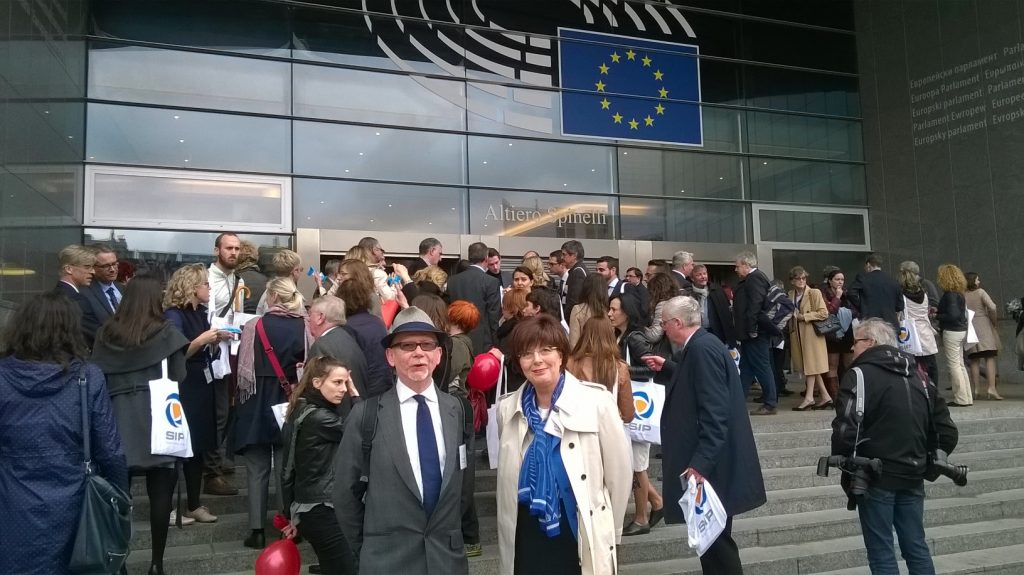
Pamela Bell of Pain Concern and Neil Betteridge of the Chronic Pain Policy Coalition outside the EU Parliament

On Thursday 23 June millions of Britons go to the polls to decide whether to leave or remain in the European Union. Of course that’s not an issue Pain Concern should or will take sides on and whatever the outcome we’ll continue to keep in touch with patient groups and healthcare professionals from across the continent and beyond.

Back in May I attended the Societal Impact of Pain (SIP) symposium in Brussels as a representative of Pain Concern. It’s an annual event that brings together the European pain community, so that we can speak with one voice in making pain an issue that European decision makers cannot ignore. This year’s SIP event went under the heading ‘Time for action’ – but what kind of action and will your average European living with pain see any difference?

On the agenda

At the European level – just as it is in the UK – a major priority is to push pain up the agenda. The presence at the event of several Members of the European Parliament (MEP) with a passionate commitment to improving the lives of people in pain shows there has already been success at reaching out to politicians.

MEPs from Spain to Romania came to show their support of the struggle to reduce the devastating impact of pain on individuals and society. Ireland’s Marian Harkin spoke especially movingly of the stigma and accusations of malingering faced by people in pain, while Finland’s Sirpa Pietikäinen stressed the debilitating psychological impact of pain and the problem of social marginalisation.

Chris Wells, President of the European Pain Federation (EFIC) and a pain specialist at the Walton Centre in Liverpool was enthusiastic about the success of SIP 2016: ‘it’s by far the best SIP we’ve had because we’ve got much more patient involvement and MEP involvement’.

Pain at work

For Theresa Griffin MEP for the North West of England a particular priority area should be improving access to employment. Speaking to Pain Concern, Griffin emphasised the importance of holistic support to help the 44 million people in Europe living in pain ‘to play a full part in society’.

The SIP recommendations call for the EU and its members to recognise that managing pain effectively can prevent people from losing their jobs and to make it easier for people to stay in or return to work.  They also demand that laws requiring employers to make ‘reasonable adjustments’ for employees with chronic pain are enforced across the EU.

Future research

The EU cannot force member states to change their healthcare policies, so some of the recommendations coming out of SIP 2016 will not benefit patients without the cooperation of our national governments. However, the EU does have the power to fund research, so the hope is that we can make chronic pain a research priority for the future.

Fernando Cervero, Past President of the International Association for the Study of Pain, called for research focusing on how acute pain becomes chronic. Prevention of chronic pain and the resulting suffering and burdens on individuals and society should be seen as a sound investment rather than an unaffordable expense, said Theresa Griffin. To make the case to politicians across Europe research is needed to put a figure on the financial cost of pain and the savings we could make by improving access to pain management.

Patients united

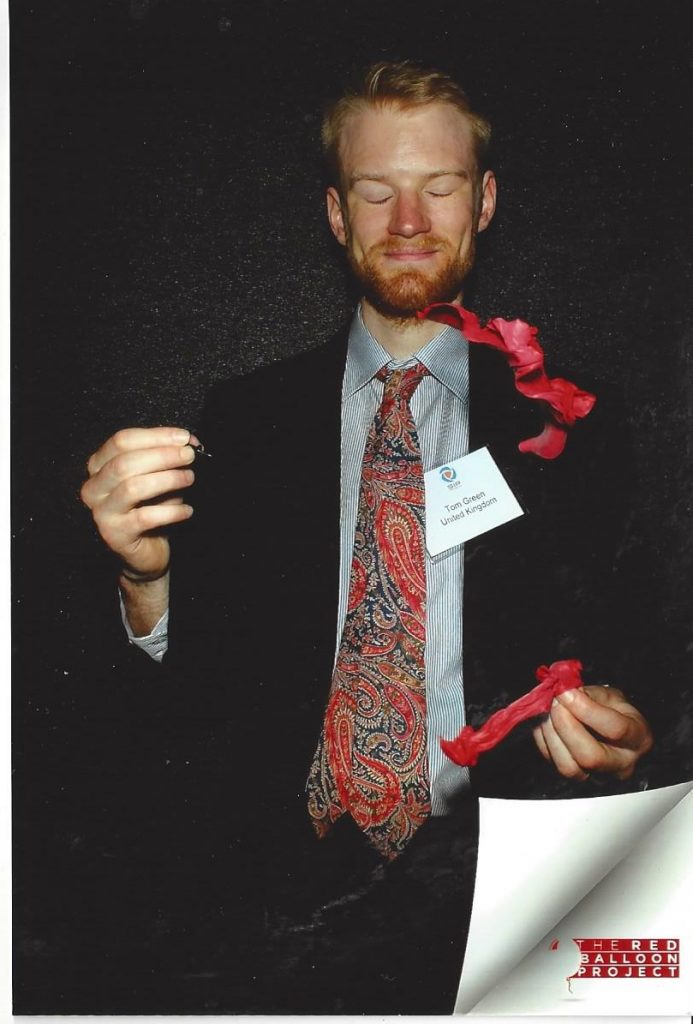
While healthcare systems and levels of care differ across Europe, patient advocacy groups and healthcare professionals were united in supporting SIP 2016’s eight recommendations. Joop van Griensven, President of Pain Alliance Europe (PAE) – an organisation uniting Europe’s pain charities – spoke of the importance of raising awareness: ‘pain is not taken seriously by people in the street, most healthcare professionals or policy makers’. The Red Balloon Project, launched in Brussels, aims to give visibility to the hidden epidemic of chronic pain through a social media campaign. Below you can see my efforts in the photo booth. To find out how to take part, visit www.theredballoonproject.eu.

Peer Support. Join the community

“Having chronic pain is very lonely.”

Join the community

Subscribe to Pain Matters

Everything you need to know about how to live with chronic pain

Subscribe


In pain? Don’t understand what’s happening?

“Having someone to help you prepare for your life through pain”

Our Pain Education Sessions

Fundraise for Pain Concern

Help us to help others

Fundraise


The emotional and physical impacts of injury and how to cope with them

To listen to this programme, please click here.

In the third instalment of our Airing Pain miniseries on military veterans living with pain we focus on the relationship between pain and psychological wellbeing. Anxiety, fear and anger are common responses to pain, but guilt and post-traumatic stress disorder (PTSD) can also be heavy burdens for ex-service personnel, explains clinical psychologist Dr Alan Barrett.

Gabriel Gadikor was caught in a rocket attack while serving in Iraq and has since suffered chronic pain and psychological trauma. He describes the coping strategies he has learnt while a patient at Dr Barrett’s clinic, including using a favourite perfume to ‘ground’ himself when troubled by pain and difficult thoughts or emotions.

Although attitudes in the military have begun to change, it can still be difficult for servicemen and women to admit to psychological distress and many may not be coming forward to get the support they need. Gabriel urges his former colleagues facing the same issues to seek help: ‘the longer you keep your problem, the more difficult it is to treat’.

Issues covered in this programme include: PTSD: post traumatic stress disorder, veterans, psychology, mental health, stress, anxiety, depression, scent memory, olfactory visualisation and  intrusive thoughts.

Paul Evans: This is Airing Pain, a programme brought to you by Pain Concern, the UK Charity providing information and support for those of us living with pain and for Healthcare professionals. I’m Paul Evans and this is the third in a series of programmes to support Military Veterans living with chronic pain. It’s funded by the MacRobert Trust and Forces in Mind Trust.

Now, by definition, the biopsychosocial model of pain implies that the biological, psychological and social environment all feed into a person’s perception of pain. This means that the physical injury or trauma, that’s the biological element which can led to chronic pain cannot be treated in isolation from a psychological trauma, such as many soldiers on active service might experience.

So, what help is available for those service personnel who’ve been damaged by both physical and psychological trauma when they leave the armed forces? There are of course services throughout the UK that provide psychological support to ex service personnel. In the North West of England The Pennine Military Veteran Service for Greater Manchester and Lancashire is in Bury. Psychologists Dr Alan Barratt is its clinical lead.

Dr Alan Barrett: We see people for psychological problems, such as depression, anxiety and trauma. However, at any one time about a third of our clients have experience of a long term health condition the most common of which is pain management. Things like early onset muscular skeletal conditions from just the exercise and activity from being in the military entails and obviously injuries, people with combat related injuries. So pain, although is not a specialty of a service like ours, is something we can’t ignore and is something we have to incorporate into the management of. And as a psychologist, I’m particularly interested in the psychological aspect of what makes pain an individual experience, you know there’s so many elements of pain that we can’t really measure physically, so we very much rely on the subjective feedback.

Evans: That’s Dr Alan Barrett Clinical Lead of the Pennine Military Veteran Service. We were joined by former service user army veteran Gabriel Gadikor. In 2007 Gabriel was serving in Iraq when he injured his back in a fitness exercise, two days later his tent was hit by a rocket.

Gabriel Gadikor: I just came out off night shift, went through the cookhouse which is where we eat, the dining hall, picked up an egg, straight to my tent for a few hours of sleep and then the rocket hit. Normally when the rocket is about to hit and it’s definitely coming inside the hospital complex, there is this defence mechanism that shoots down the rockets and the mortars as a defence. It makes some sound, out of experience because we’ve been there for some time, when you hear that squeaky sound, you know that definitely it is in, there’s nothing you can do about it, yes, so when I heard that thing, that was it.

I remember when I first got into Iraq and the rockets were coming in, I was kind of like scared from the beginning, but as time went on it became normal. If there was no rocket attack it is abnormal, yeah, so it was like ‘Okay we’re here now, when we die we die’. But then it had the opposite effect had happened now after we have had combat. The way I felt when I first went into Iraq for being scared, now I am scared, this is how I am feeling and by kind courtesy of this service – the Military Veterans Service – I’ve got the tools and the coping strategies that help me go along with life, which is very important to me.

Evans: Just explain to me just what those coping strategies are.

Gadikor: The coping strategies are the tools that I use to stop me thinking about my pain, to direct my mind off the pain because what I have been taught is if you have chronic pain, outside factors feed into it, the pain becomes worse. And one way of managing that pain is coping strategies, then for example, like this ball I’m holding I use it as a coping strategy to momentarily take my mind off the pain. As I am talking to you, I have got pain from the back of my right leg, it’s sciatic pain that I’m having, because I want to concentrate so much on what we are doing and not to be distracted I’m using this to help me stay focused rather than the pain actually taking over whatever I’m talking about.

Evans: You’re holding a squeeze ball, a golf ball-sized squeeze ball.

Gadikor: Yes, that’s right.

Evans: That helps focus the pain away from you.

Gadikor: That’s right yes. Another mechanism I use is a grounding mechanism. Dr Barrett was my doctor who treated me for my psychological issues and help for the chronic pain, he described this as a grounding technique. Also that one is basically it helps you take your mind off the pain. It’s a perfume.

He said I should choose a perfume that I like best. He described it as when you smell a perfume, how do you feel? And my answer was some form of happiness, okay, momentarily. So it’s like if I’m having happiness, that happiness is taking away the pain for some moments. He described it as grounding, now it was up to me to decide which perfume I will use.

There is this perfume that I like which I wear most of the time Jean Paul Gautier but when you wear perfume for a long time you become nose blind with that perfume, so I have to choose another perfume that I like that I don’t use often. So I remember going to a shop and I saw this perfume called Hollister Jake I liked it so much. A small bottle is quite expensive but anytime I smell it, that sense of joy occurs to me, you see right now, straight away I’m smelling it and my expression is all changed, so he used that to ground me so that I could pay attention or concentrate on the treatment he was giving me, which indeed helped so much.

Evans: So that’s like – I don’t know what the term for it is – so that’s visualisation but olfactory visualisation or something like that. It’s smell rather than…

Gadikor: Smell, That’s right, yes. Another way I manage my pain is when I’m going on the computer, I like information rather than fiction and those things, so they keep my mind actively involved so I can capture whatever information I want to listen to or learn from. Even though the pain is in the background, my mind is more on those programmes rather than the pain itself.

Another useful tool that he taught me was anytime I am stressed it feeds into the pain cycle and it will make the pain worse. I remember telling him that I’ve got a lot of bank accounts and I’ve got passwords but because of my psychological issues, I am unable to remember those passwords. I become so frustrated, it feeds into the pain cycle and then messes me up, so he came up with a very simple tool.

Actually, it’s a coincidence, I’ve not seen him for some time, he told me to buy a small key ring that holds money – a coin holder utility – instead of money going in that, I have copied my passwords and then put them in there. I go to the bank or cash machine and I forget all I’ve got to do is open it up [jangle of keys] and then get a password that I want. Nobody knows what’s in there, it hasn’t got any identity, all it’s got is numbers and that’s it. I know what I have written is just to aid me to remember. It is helping so much that I don’t have to worry about thinking about me forgetting my passwords and pins thereby making me not worry and become frustrated that will feed into my pain cycle.

And it helps me so much, every time I’ve been thinking about it I said ‘I’m going to buy one and since it has been a good help to me, when I see Dr Barrett, I’ll give it to him to pass on to another patient that would need it, so ‘There you are doctor, please pass it on to someone who needs it’.

Barrett: That’s a really kind thought there Gabriel.

Evans: Alan, Dr Barrett, you’re sitting next to us very, very quietly. It seems to me that a lot of the success that Gabriel has had has been nothing to do with medicine, it’s been to do with sorting out little, little things in his life.

Barrett: In Gabriel’s treatment the primary difficulty was psychological trauma around an incident which also involved physical trauma and what tends to happen is individuals whose pain flares up, it can trigger a psychological memory and sometimes when a psychological memory is triggered, such as watching a news item whatever, it can reconnect them with the pain experience.

So, what was happening was that I was losing Gabriel’s attention sometimes in clinic because the pain was causing a cognitive distraction and causing him to ruminate or have a kind of have an intrusive thought or an intrusive image. So the perfume was a particular grounding technique, because it doesn’t rely on your cognitive ability, the nose doesn’t stop smelling so, if you can put something underneath it, it’s very good at bringing you back to the room, the here and now to focus on what we are trying to achieve.

Gabriel mentioned about stress levels impacting on one’s experience of pain and we know that psychological issues go hand in hand with pain and it’s a bit chicken and egg. So, for example, having chronic pain can induce lots of emotional states. It can induce anxiety where people are fearful that ‘what happens if I have an attack while out with my child or a collapse’, so there’s a lot of fear and anxiety.

Sometimes there’s a lot of anger and irritability, some of that is in relation to sort of ‘why me’ and to being quite begrudging as to the circumstances of how the injury may have occurred, but some of it may be just be in the pain itself. Pain impacts on sleep and we know we become a little less tolerant and we become a bit more irritable. And then, feelings such as guilt, guilt that we might be on a burden onto those that care about us.

And something I’ve noticed a lot in the Veteran Community in particular is almost like punishment, so there are some people who we see in the Service who may regret things they have taken part in or witnessed or maybe have failed to do in their role as a protective force. They almost maybe don’t look after themselves as well as they could or should because they feel they are a bit deserving of the punishment. So we can never kind of ignore the fact that at any one time that one in three of our clients has probably got a pain related condition.

There’s one further point I’d like to comment on and that’s the non-psychological approaches to pain. Obviously we rely quite heavily on medications and analgesic medication and we do see a lot of people who are on very high doses and that does manage the pain for many of them quite successfully, however, it can impact on their cognitive processing. So we find it might slow down their thinking a little bit, their concentration might not be as good as we need it to be for therapy to be effective.

Though in fact, some work we did with Gabriel before we did the trauma focused element of the therapy was, we spent quite a lot of time mapping the pain and we had a bit of a pain diary, an electronic SMS text message type situation where Gabriel would get prompted at certain times of the day to kind of codify his pain and also document what kind of PRN medication etc. he had taken. And from that we got a real pattern as to what would be the optimal time for therapy to occur. So, he wasn’t affected so badly cognitively from having had a large dose of pain killers so he could think clearly but the pain wasn’t so bad it was interfering with the therapy. So we actually ended up picking a time of day which is quite close to the time of day we are now, which is why we also scheduled the interview for now, as being almost like an optimal time for Gabriel to be able to concentrate and focus.

Gadikor: Something I learnt as well, if you stay at home for a long time with inactivity your disability becomes worse. So, I tried to get myself involved in activities as much as I can, even if it is just coming out of the house and come and talk, like I’m talking there, it is a form of therapy I am receiving. It is keeping me mobile and it is making me meet people, which in turn takes my mind off the pain momentarily, which is helping me, yes.

I’m travelling abroad on Tuesday, when I purchased the tickets I was alright but as the time was getting closer, I started getting anxious because I kind of like relate my trauma in Iraq to flights because when rockets are coming, they sound like aircrafts. Now, that the time is coming for me to fly, I’m having bad dreams, because I’m having bad dreams I have increased my activities about going out so that it will help me so, I go to Manchester Airport to look at the planes land and take off, just try to convince myself that that plane is not going to crash.

Anything that is out of my control, then I become anxious, so I try to do things to try to gain some control of it. Because I am thinking about all these issues, the plane and things like that, I have also noticed that my pain is also going up a bit. This confirms my psychological issues fits into the pain cycle to make it worse so, I have made everything possible to try to minimise all these effects on me. Basically, Dr Barrett has laid down the foundation and I’m building up on it.

Evans: Alan, Dr Barrett, it seems to me that Gabriel’s pain is no longer ruling him, he’s ruling the pain, how far has he come?

Barrett: I think he’s come incredibly far. When we first met it was touch as to whether or not a trauma-focused psychological therapy was going to help with his psychological difficulties, because it was very difficult to maintain concentration during the session. Sessions might have only been 20 minutes instead of the usual 50 minutes, so we played around with a kind of pacing of sessions. So the fact that we invested the time to create an optimal opportunity for therapy to be beneficial was a good investment.

And I think what we found we did with some of the psychological difficulties which were quite pronounced and then once they lessened in severity and chronicity, we switched over and did some sessions looking at the pain and kind of try to titrate down the pain and then when the trauma became the bigger thing again we went back to the psychological and then we went back to the physical and gradually in a kind of stepped way we got to a stage where the pain was manageable and the psychological therapy had gone as far as we could have expected it could at that stage.

And what I’ve just heard Gabriel talking quite a lot about is about attention and I guess we think a lot about pain, we think it’s very good at drawing our attention. And, obviously, if we attend to it too much, we get drawn into it and we start ruminating about it and we start remembering we can’t do certain things, etc.

So it sounds like from a behavioural point of view and also from a cognitive distraction point of view, Gabriel has become quite expert in noticing that the pain has got his attention and become aware that’s what’s happening and made an active decision to then switch his mind to, rather than focusing on the pain for half an hour, he’s going to go online and look at some news stories and topics that interest him and at the end of that half an hour, he’s got some added benefit. He’s not really thought about the pain and he also maybe learned so new information which helps him greatly anyway.

Evans: What I’m thinking is that for Gabriel and other military veterans who are recommended to go for psychological support – I may be doing them a great injustice – but I wouldn’t have thought they’re touchy-feely people and to be offered support from a psychologist might make them… it takes a bit of time to get that into your head, that you’re not mad.

Barrett: It does. I think we know the reason a service such as ours exists is because we don’t really see the number of ex-military personnel in mainstream mental health or psychology services in numbers we might expect.

So, there is a problem in accessing services and we’ve done a lot of engagement work with the armed forces community and it’s a combination. It’s a combination of, there are service factors so, if you’ve been self-medicating to manage your difficulties by maybe drinking too much alcohol, for example, then some mainstream services may exclude you from accessing their therapy.

But there’s also a lot of barriers located within the individual veteran themselves and that is sometimes not really understanding what psychological therapies is all about and kind of maybe making ill-informed associations with maybe some bad TV programmes about mental illness. But also there is also the pride and stigma issue in terms of if you’ve enlisted to one of the armed forces and you very much identify yourself with being a very physically powerful, fit, potent individual who helps others, it’s a real shift in identity to even accept that you are no longer that person and the fact that maybe (a) you might need help and (b) you might now be vulnerable.

So we do see a number of veterans struggling with the new identity of what it is to be somebody living with long term pain, because they can feel physically vulnerable. We heard Gabriel mention that, when you go out of the house, you don’t feel as confident as you used to feel. You feel vulnerable, you feel like ‘what would I do if maybe somebody attacked me? What would I do if some incident happened now and I wouldn’t be able to perform to keep my children safe?’ and things like that.

So, I understand that’s it’s difficult for ex-military personnel to come forward and consider a psychological approach. But as I said earlier the side effects of pain does cause a lot of psychological difficulties, such as low mood, anxiety, irritability and they in turn can magnify the perception of pain. So, therefore, to treat pain successfully I think really individuals should always seek a psychological component because even things such as social support available in the house or modifications that your employer is willing to make, they’re not medical interventions, they are social interventions and psychological interventions and we do know from people’s subjective feedback, they do actually help people to manage their pain.

Evans: Gabriel, what would you say to your former colleagues who don’t know about this service, what advice would you give?

Gadikor: The first thing I’d like to say is, indeed, it’s very difficult to own up and say you’ve got psychological difficulties because, one, the military and psychological issues go at loggerheads. The moment the military knows you have a mental health problem it is automatic discharge, no compromise with that. So soldiers who are fighting psychological issues within the army, they tend to hide it because they want to stay on within the army.

The other issue is, you are trained as a soldier: even if you are broken, you have to keep going. I’ve experienced this myself, I was having this issue in Iraq and doctors were seeing this, I was in serious denial: ‘there’s nothing wrong with me’. They wanted to send me back and I didn’t want to come back I was forced to. Even when I was forced back I wasn’t admitting psychological issues because it was my physical problems that was overshadowing the whole thing.

My advice to the military veterans or people who are still serving, who have got psychological issues or pain issues that are psychologically affected, all I can tell them is, the longer you keep your problem, the more difficult it becomes to treat.

Barrett: Gabriel mentioned about when the military find out that you’ve got a mental health problem, their reaction isn’t always ideal. I have to say now in their defence that certainly recently there’s a lot more attention given to the mental wellbeing of forces personnel. If you go on the MOD (Ministry of Defence) website there’s lots of links now saying things like ‘It’s okay to talk’ and stress management courses, so the culture, I’d like to think, is shifting.

We see people from all kinds of conflicts, from historic conflicts where maybe that wasn’t their experience at the time but there are mental health services within the MOD. You know, some people don’t have good experience of them, some people get a great service. It’s a bit like any other service where there is good and bad. There’s some barriers in the individual or the infrastructure locally which might not be represented somewhere else in the country.

Gadikor: I tried to hide my disability. I had insurance but this is why I don’t blame the insurance company anymore because I was hiding my condition. I was presenting it a bit like I was alright, so the insurance company was thinking that I was faking my issue, eventually, the case was in my favour because this is me suffering but I tried to present myself outside as if I was not.

Even now at home, I don’t like to present myself as if I am disabled because I don’t want anybody to capitalise on my vulnerability. I’ve got blue badge, I never display my blue badge at home, I will never do it. The car I drive they put mobility stickers and everything there, I removed all of them because I do not want to present myself as a vulnerable person. I only use it when I have to use it, when there is no way of hiding it, I will not, that’s how it is, it’s a stigma but I want people to see me as normal, yes.

Barrett: I think it is a good idea if you’re certainly a military veteran with a physical injury that can be attributed to your service. As Gabriel has pointed out, it’s a really good idea to keep very good records and copies of documents, letters, reports because you will be required to provide them if you are seeking any kind of compensation or insurance claim, which obviously you have to have before you get deployed because the people who are supposed to keep these reports, don’t always produce them at these hearings. So it’s a very good tip to keep a hold of copies of your own medical records.

Gadikor: Because I did not complete my tour, I have still not got any closure, proper closure of the situation. Even though I’m hearing the news that the conflict is over, my head is not accepting that and the only way I think I will be able to have proper closure of this is to go to Iraq myself and then see it for myself that there is peace, the rockets are not coming any more. But at the same time I am scared of going, but I’m not having these nightmares of rockets coming in and things like that now.

Evans: That’s Gabriel Gadikor speaking to me at the Pennine Military Veterans Service. I’ll just remind you that whilst we in Pain Concern believe the information and opinions on Airing Pain are accurate and sound based on the best judgements available, you should always consult your health professional on any matter relating to your health and wellbeing, he or she is the only person who knows you, your circumstances and therefore the appropriate action to take on your behalf. Don’t forget that you can download all editions and transcripts of Airing Pain from Pain Concern’s website, which is painconcern.org.uk

Now there are services like the Pennine Military Veterans Service throughout the UK and there are links to help you find them and other non NHS Services on Pain Concern’s website. Once again it’s painconcern.org.uk.

So who’s eligible for these services? Dr Alan Barrett:

Barrett: The primary aim of a service like ours is to support the psychological needs of anybody who is a military veteran. Now the Department of Health definition of a veteran is anybody who has served in the services for a minimum of one day. So, that’s actually a very large proportion of people, including those older adults who’ve taken part in National Service, they would also be included. Those that are in the reserves, formally the Territorial Army, they are all eligible to come forward and seek specialist services like ours.

As I said in the beginning, we don’t specialise in pain but we specialise in psychological difficulties that are attributable to your service. So, for example, if you’ve got a psychological injury because of things you may have witnessed or experienced in a war zone, then you’re very much eligible for a service like ours. But equally, if you’ve got a physical pain injury as a consequence of your military service, which in turn is now manifest in a constellation of psychological difficulties, we will offer help for that and people can literally self-refer, have any professional make a referral on their behalf and they can do that either on the website or via telephone, just put into a search engine, Pennine Care Military Veteransand we cover the North West of England and we’re happy to point people to their local service nationally.


Contributors:

  • Dr Alan Barrett, Clinical Lead, the Pennine Care Military Veteran Service for Greater Manchester and Lancashire
  • Gabriel Gadikor, army veteran.

More information:

  • Anyone who has served in the British armed forces can be referred or self-refer to any of the Military Veteran Services across the UK. Visit the Pennine Care Military Veteran Service website to find out more.

Peer Support. Join the community

“Having chronic pain is very lonely.”

Join the community

Subscribe to Pain Matters

Everything you need to know about how to live with chronic pain

Subscribe


In pain? Don’t understand what’s happening?

“Having someone to help you prepare for your life through pain”

Our Pain Education Sessions

Fundraise for Pain Concern

Help us to help others

Fundraise


The emotional and physical impacts of injury and how to cope with them

This edition has been funded by the Forces in Mind Trust and the MacRobert Trust.

In the third instalment of our Airing Pain miniseries on military veterans living with pain we focus on the relationship between pain and psychological wellbeing. Anxiety, fear and anger are common responses to pain, but guilt and post-traumatic stress disorder (PTSD) can also be heavy burdens for ex-service personnel, explains clinical psychologist Dr Alan Barrett.

Gabriel Gadikor was caught in a rocket attack while serving in Iraq and has since suffered chronic pain and psychological trauma. He describes the coping strategies he has learnt while a patient at Dr Barrett’s clinic, including using a favourite perfume to ‘ground’ himself when troubled by pain and difficult thoughts or emotions.

Although attitudes in the military have begun to change, it can still be difficult for servicemen and women to admit to psychological distress and many may not be coming forward to get the support they need. Gabriel urges his former colleagues facing the same issues to seek help: ‘the longer you keep your problem, the more difficult it is to treat’.

Issues covered in this programme include: PTSD: post traumatic stress disorder, veterans, psychology, mental health, stress, anxiety, depression, scent memory, olfactory visualisation and  intrusive thoughts.


Contributors:

  • Dr Alan Barrett, Clinical Lead, the Pennine Care Military Veteran Service for Greater Manchester and Lancashire
  • Gabriel Gadikor, army veteran.

More information:

  • Anyone who has served in the British armed forces can be referred or self-refer to any of the Military Veteran Services across the UK. Visit the Pennine Care Military Veteran Service website to find out more.

Peer Support. Join the community

“Having chronic pain is very lonely.”

Join the community

Subscribe to Pain Matters

Everything you need to know about how to live with chronic pain

Subscribe


In pain? Don’t understand what’s happening?

“Having someone to help you prepare for your life through pain”

Our Pain Education Sessions

Fundraise for Pain Concern

Help us to help others

Fundraise


Supporting amputee veterans to rebuild their lives, and psychological techniques beyond words

To listen to this programme, please click here.

Hundreds of veterans of the conflicts in Iraq and Afghanistan sustained injuries leading to the loss of one or more limbs. In the second of this Airing Pain miniseries on pain management for ex-service men and women we look at the support available to help amputees rebuild their lives.

At the Specialist Mobility Rehabilitation Centre (SMRC) in Preston Gregg Stevenson tells Producer Paul Evans about his two-year journey towards regaining mobility and adjusting to civilian life after losing his lower legs in an explosion. Thanks to prosthetic legs, a dedicated team of healthcare professionals and his own determination, Gregg is now a personal trainer helping others in similar situations.

Dr Fergus Jepson, who oversees the medical care at SMRC, explains why getting a prosthetic limb is just the first step on the road to recovery. Candy Bamford, the Centre’s Counselling Psychotherapist, describes how she helps veterans to control their pain and confront traumatic memories by using psychological techniques better suited to the military background of her patients than the more typical ‘talking therapies’.

Issues covered in this programme include: Amputation, veterans, psychology, PTSD: post traumatic stress disorder, hypnotherapy, EMDR: eye movements, desensitisation and reprocessing, talking therapy and psychotherapy.

Paul Evans: This is Airing Pain, a programme brought to you by Pain Concern, the UK charity providing information and support for those of us living with pain and for healthcare professionals. I’m Paul Evans, and this is the second of a series of programmes to support military veterans living with chronic pain. It’s funded by the MacRobert Trust and Forces in Mind Trust.

In the last programme we talked to Dr Dominic Aldington, a pain doctor now with the NHS and, formerly, as an army doctor in the Defence Medical Rehabilitation Centre at Headley Court in Surrey. You’ll hear it referred to as the ‘DMRC’.

In this programme we’ll be looking at what happens when veterans, in particular, amputees, leave Headley Court and the army and continue their rehabilitation treatment as civilians, for the most part, within the NHS.

In England, there are nine enhanced centres for war veterans with regards to prosthetics. Dr Fergus Jepson is a consultant in amputee rehabilitation in the Preston centre.

Fergus Jepson: The services that we offer are prosthetics – predominantly – orthotics and wheelchair services, and this is for veterans, but the majority of what we do is with regards to prosthetics. What we would then anticipate doing is maintaining the high standard of prosthetic care that they’ve had in Headley Court and maintaining that into civilian life.

I think initially, there was an awful lot of concern by a lot of the ex-servicemen as to what sort of standard they would get in the NHS and we try to allay those fears initially by holding meetings here and inviting servicemen who we are going to discharge in conjunction with our local personal recovery unit here in Preston – in Fulwood, in Preston. And we held joint meetings here to show them around, to meet the team, so that they would feel confident that they knew where they were going, the sort of people they were going to see and we gave them an idea of how we intended to treat ex-servicemen and how we’d already treated ex-servicemen.

So I think that allayed a lot of those fears for patients coming up to Preston, who were about to be discharged [from Headley Court].

Over the years we’ve changed how we manage war veterans because they have an increased demand – not just amputations, but a lot of the other complex injuries that occur with the amputation [such as] blast injuries.

So being able to engage with them prior to coming here, so when they do come here as a patient, they know where they’re coming. I think it’s also important to mention that a lot of patients have been within the community for many months, if not a year or so, prior to being discharged from DMRC. So a lot of the patients were still undergoing rehab and discharge protocols for quite a long time, but living either at home or wherever they were making their home and back in very much civilian life for several months prior to being officially discharged from the army.

Evans: You were saying that there are more complex injuries – or obviously different injuries to civilian people – what sort of things are we talking about here?

Jepson: We’re talking about multiple limb loss; we’re talking about very complex associated injuries to other limbs or even to the same limb, so we’re talking a great deal more scar tissue than you would anticipate finding in, say, for example, a diabetic or dysvascular patient. Where you have blast injuries, you’ve often had infection being present and then the sequelae of the treatment for that infection. And also, don’t forget the impact of the blast can often lead to fractures in other areas of the body as well, so this all leads to quite a complex patient caseload.

Evans: I would think an important thing is stopping that initial injury becoming a chronic pain condition.

Jepson: My experience of that with the ex-servicemen is probably quite limited. And I say that because most of the patients who come here have been through DMRC and thus their pain has been managed down there, usually extremely well. I would say that the cohort of patients that I see who are ex-servicemen, where they have been discharged from the army with painful conditions, then have struggled to live with the disability associated with that pain or that injury and then go on to have amputations – that I think we have a lot more experience in seeing.

Evans: So the amputation comes at the very end of the treatment, if you like, and only if it’s desperate to do.

Jepson: Well, it’s difficult for me to comment on the patients who come here as amputees, in the sense that they’ve had all their surgery done in Queen Elizabeth [Hospital Birmingham], and some of it in wherever the initial injury was, whether it be in training or, more likely, as a result of an improvised explosive device, which an awful lot of the patients are.

Certainly, limb salvage is always tried – that’s my understanding of the way that teir initial treatment and their treatment on return back to England is always at the forefront, because amputation can always be done any time after that, so limb salvage is always attempted first.

But there are also this cohort of patients, not a huge cohort, of patients who have been discharged, but then have a chronic pain issue, which they find that living with this chronic pain and the disability and impairment that comes with that and their lack of participation in the things they want to participate in, whether it be aspects of sport, or whether it be lifestyle with their children at home, or whether it be work, means that amputation is a way forward for them within civilian life. But the amputation is from a service-attributable injury, which I think is also an important delineating factor.

But I think, like [for] all patients, you have to be extremely careful [when considering] who would benefit from an amputation, and that involves meeting amputees, meeting other patients, a lot of in-depth discussion with the team, and also quite a bit of psychology input as well to make sure that someone’s prepared for that loss, because losing a limb is very much the same as other grief reactions. The trauma of going through losing your limb is a very significant one.

Evans: Somebody who hasn’t been through this might say, ‘oh, once you get your prosthetic [or] your false leg, everything will be back to normal. You’ll be walking again, you’ll be playing football, you’ll be running in the Paralympics and things like that’. It’s not like that. There’s much more to it.

Jepson: Yeah, I couldn’t express enough how true that is. You know, I saw a patient earlier on today and his words to me were, ‘I can do everything – I can run, I can walk, I can walk up and down stairs, I can box, I can keep up with everyone, but when I take my leg off, all I see is a disabled man’.

That brings it home, really, about how you can do all the prosthetics and a man can achieve, or a woman can achieve, all the things and more, that they were doing prior to the amputation, but when the prosthesis comes off, then they feel vulnerable and they feel the same level of loss that they felt initially. And that can be very psychologically difficult to deal with.

Evans: From what you’re saying, then, the psychological support you give, as in all chronic pain conditions, is important.

Jepson: Psychology is extremely important in any patient with pain, especially chronic pain, because although we focus very much on the severe injuries that the war vets have, I don’t think we should overlook – and I think we should also include – all the patients with chronic pain who haven’t been injured in that manner because there are a great deal of reasons why patients may be in chronic pain. But psychology input, I think is extremely important and should be offered as a means of helping a patient with chronic pain cope with that pain.

Evans: Dr Fergus Jepson – and the support offered to his patients at the Specialist Rehabilitation Centre in Preston is given by counselling psychologist Candy Bamford.

Candy Bamford: How well people can adjust to wearing an artificial limb is determined by how comfortable they are wearing it – whether they’ve got any pain or not; it’s determined by how confident they are in themselves to do it and it’s to do with dealing with any trauma that they may have gone through.

All patients that are amputees – you can’t have an amputation and it not be traumatic – the thing that makes it different perhaps for them is that they’ve had a totally different life to the one they’ve got now and it’s a life that they haven’t chosen. They’re coming here from Headley, their prosthetics are being done here and sometimes they’re coming with pain. We use hypnosis here for pain, so out of potentially 800 people that I’ve seen in this building, over 400 use hypnosis CDs to control their pain, so that’s an option that we go down at the beginning.

Sometimes it’s about counselling to help them to adjust to not being in the military and just moving around and being civilian again. Sometimes that’s as much as they can cope with at this time.

We also use EMDR, which stands for eye movements, desensitisation and reprocessing, and it’s a form of psychotherapy that’s used in the military. It’s used [in] Afghanistan, Bosnia… because it isn’t a talking therapy. It’s a very quick therapy. Psychotherapy usually takes a long time; this takes a few weeks.

And what we’re doing is reprocessing the traumas and by the reprocessing, we’re desensitising them so that they don’t forget what’s happened, but it’s not upsetting in the same way. So a lot of the military veterans have had EMDR here, but they won’t sort of walk through the door and immediately have it. They need to be quite settled first before we start going back, because psychotherapy works on the principle that everybody is a product of their past, so it’s not just what’s happened to you in the military, there may be other stuff before that. But when they’re ready, they’ll come – they’re not forced to do it. It’s very much about what they need when they come in here, so it could be counselling, it could be hypnosis, it could be psychotherapy.

Evans: Just explain EMDR. Eye movement…

Bamford: …desensitisation and reprocessing.

Evans: Where does the eye movement come into this?

Bamford: Francine Shapiro, who devised EMDR, apparently se was quite stressed about something at work and she walked down a tree-lined avenue. And as she was walking down, she was looking left to right at the trees and noticed when she got to the end that she felt better. And that’s really wacky, but as a result of that, she came back and started using principles [of EMDR] and researching it.

EMDR is probably the most researched therapy that there is because it appeared so strange. And so she started doing research on it and from that, EMDR evolved into what it is now. It’s used worldwide in war situations, by therapists in hospitals. And it’s really good for military veterans because they don’t have to talk about things – it’s not a talking therapy, and so it works much easier.

Evans: Explain that – it’s not a talking therapy, so what is the process?

Bamford: The process is that we use the eye movements and we’ll start perhaps with a traumatic event that they’ve been through and how it makes them feel – they might feel that they don’t trust people or that they’re not good enough. So we start at that point and we use the eye movements going backwards and forwards in front of the eyes, so that they’re going left, right, left, right, and then every so often we’ll stop and say, can you just give me one sentence on what you’re feeling at the moment? And they just say whatever’s in their head.

And doing that, strangely, seems… because they’re going with emotions, they’re bringing up how they’re feeling, they’re bringing up the emotions… Trauma is an emotional response to an event. EDMR is an emotional therapy that matches that emotional response.

Evans: And how would you sort of judge the success of that then?

Bamford: I judge it by doing psychometric tests. So before somebody starts working with me, I’ll give them one test to do that tells me how traumatised they are and another test that tells me how anxious or stressed they are at that time. I’ll do a hypnosis session with them and give them a CD of that to calm them and to help them to cope while they go through it. When I see them on the second week, I’ll retest them. And it will have dropped quite a bit just because the hypnosis is calming them. And then at the end of the EMDR, I’ll retest again and you can see that the scores may have gone from 60-odd out of 80-odd to single figures.

Evans: I may by completely wrong here but my idea of what a military man, as a soldier in the frontline in Afghanistan or anywhere else in the world, is that they’re not touchy-feely people.

Bamford: No. And that is the advantage of EMDR, because they don’t have to sit and talk endlessly about things. They’re not trained to do that. They’re trained to… whatever’s happened, just get on with it and just keep going. They are reluctant, initially, to come for EMDR and that’s why they’re not pushed. They come when they’re ready. I see people at the moment that perhaps it’s been five years since the incident that they were in – now they’re ready to do it and they do it in 8 weeks, it’s over, they’re done. It has to be when the person’s ready. And sometimes their family and friends want them to do it long before they’re ready and it’s about the office or themselves. You can’t force people to do psychotherapy… You can’t force people into counselling, let alone psychotherapy.

Evans: As many people with chronic pain conditions know – not just military veterans, but the 8.7 million with chronic pain conditions in the UK – if you go to your doctor with a chronic pain condition… If you’re pain and he sends you to a psychologist [Bamford: yes], there’s a danger of you thinking that he thinks you’re mad.

Bamford: Yes, and I think that’s the benefit of having psychology here, because the physios can talk to people about it, the doctor can, the people in the gym, Gregg and everybody else.

The staff here [have] experienced hypnosis, for instance, so they know what it’s like. They’re not sent somewhere to somebody that they don’t know and they’ve never seen. And our patients here are sat in the waiting room waiting for their appointments, and they’re all chatting together, or they’ve come in ambulances together. And so they talk to each other. They also have the amputee forums that they go on, so they know what each other are doing and they meet each other here. The military lads will meet each other here when they’re all coming in.

They support each other – it’s not just the staff supporting them here, they can all go in the gym in the morning and they’ll all be supporting each other. And they’re all amputees, so they don’t feel like they’re being stared at or that people don’t understand what they need. If you go to a normal gym as an amputee, it’s very difficult to get a programme together, because nobody knows what they should do. Here, they’re all amputees.

Evans: What advice would you give to amputees who don’t get to places like this? What should they be shouting for or thumping the table for?

Bamford: They need to be comfortable at the limb centre that they’re at. If they need a psychology service, then they need to ask for that help, because so many times, I see people and they say, ‘oh, I didn’t know that you were here’, and I say, ‘well, if you need help, ask for it’. At most limb centres, there isn’t a psychologist that’s dedicated to the limb centre, but they do take psychology from the hospital that the limb centre’s at, so they can ask for help, for counselling, they can ask for psychotherapy if they need it, for trauma. Because what being an amputee does, if you’re a new amputee, that feeling that you have of being a new amputee, of feeling vulnerable that life’s over – that might be triggering things from the past. They need help, they need psychotherapy – some trauma therapy to help them get through that so that they can have a positive outcome being an amputee and not stuck at home getting more depressed.

There was a white paper [that] came out in the 1990s that said all limb centres should have a counselling facility. So every limb centre since that white paper’s come out should have counselling facilities available.

Evans: I think a very, very important thing to remember is there’s much more to losing a limb, being injured, than just losing a limb.

Bamford: Yes. There’s a psychological backlash to it. And people don’t appreciate that. Very often, they’ll think that they’re going mad (a) because they can feel the leg that’s not there, they can feel the phantom. And so they think they’re going mad especially when they say to people, ‘I can feel my toes, my toes are hurting and people say, you’re stupid’. So nobody says anything. And it’s not until they come to a limb centre here that they hear it talked about all the time that they realise that’s why they need to access counselling, so that they know that what they’re going through is perfectly normal.

All the feelings they’re going through – the pain that they’re getting, the phantom pain that seems odd when it’s not there and it’s moving around, the feelings that are coming up, the anger that’s coming up. And when people are emotionally disturbed like they are being an amputee, where their whole life changes – it’s like somebody’s got their life and turned it upside down – that is a huge emotional trauma that they’ve been through, so their emotions are going up and down like a rollercoaster on a daily basis: anger, sadness, anger, sadness. And they don’t know why one minute, they’ll burst into tears; the next minute, they’re throwing something across the room.

That level of unease, that up and down, is perfectly normal for all amputees. You can’t go through having a limb removed and it not bother you. I’ve never had anybody come in here and think, ‘it’s nothing, this’. I’ve seen people who’ll say ‘I’m fine, I’m fine’, but then you see them six months later and they’ve crashed. Not everybody goes through it the same way – some people will come in and say, ‘oh yeah, I’m fine, I just need to get a leg, and that’s it’. And then we make them a limb and that’s when they realise how difficult it is. It hits people at different times.

Evans: Psychologist Candy Bamford. Now, as you’d expect, the Specialist Mobility Centre in Preston has its own gym for amputees. Army veteran Gregg Stevenson, himself a double amputee, is a personal trainer there.

Gregg Stevenson: On a foot patrol in Afghanistan in 2009, I lost one leg above the knee and one below the knee [from] stepping on an IED.

Evans: Can you tell me what the process was from getting injured to getting treated?

Stevenson: The army, after obviously many conflicts, realised that it was all about speed, so from point of injury, this helicopter was sent very quickly. It scooped me up off the ground, thanks to the fantastic care – immediate care – from my section. The helicopter then took me to Camp Bastion, which I’m sure you’ve heard of on the news. There’s a huge camp out there, where the surgeons were waiting to prevent any infection and get me treated as quickly as possible.

Evans: And from there?

Stevenson: Once I was stable-ish, they then make a decision on whether you can fly, flew me back to Birmingham and then straight into Selly Oak Hospital, as it was called then, and dealt with – further operations, cleaning the wounds and whatnot.

Evans: So from point of injury to, let’s say, being mended or being physically mended, how long would that have taken?

Stevenson: 48 hours?

Evans: That’s absolutely incredible…

Stevenson: Oh it is, yeah, and I think that’s why there are so many veterans still alive and living fulfilled lives now, because of the immediate care and the speed at which it was given… There’s a reason why, you know, things like infection and whatnot would [have] come in if we hadn’t been dealt with so quickly.

I was injured in 2009 on [Operation] Herrick 9, so that was a very active year in Afghanistan. There were quite a few of us, so we had specialist nurses on the wards, family support for the guys who wanted it. And then when I moved down to Headley Court, which is more of a rehabilitation centre [for] resetting, so once you’ve dealt with your immediate care, that’s then when you progress to then think about things like learning how to walk or things like learning how to adapt to disability and that’s where you can access psychological support, counselling, hypnosis and an array of things that the consultant can take you through.

Once I was discharged from the military, I became a service user, as well as a now employee [laughs] of this place. Candy is sort of our in-house guru of psychological support.

Evans: How long did you spend in Headley Court?

Stevenson: Just less than two years, yeah.

Evans: That’s an incredibly long period to my mind.

Stevenson: Yeah. Yeah, yeah, it didn’t feel like it because it wasn’t a two years constant. It was sort of six weeks and then two weeks at home and then five weeks and then two weeks at home. And, obviously, I did not maybe realise it at the time but that was preparing me for life away from the military, as well as adapting my life at home, which is very important for people with disabilities… to realise, living in a northern town, that two up, two down might not be the best house to live in and the cobbled streets are going to take some getting used to. It was a way of me developing my life from going from relatively fit commando on the frontline to learning how to adapt my life to suit my needs now.

Evans: So how did you manage adaptation?

Stevenson: It was difficult at first. I think once I understood that perhaps everything I wanted to do wasn’t attainable, wasn’t a realistic goal, once I actually realised how to change my mindset that there were just as challenging goals… Maybe I had to learn not to relate everything to physical ambition as I did in my military career. But, yeah, just things like my job now – I still managed to pass the course as a personal trainer with a disability so that was quite a challenge but a huge achievement which I enjoyed doing.

Evans: So you deal with veterans here?

Stevenson: Yeah. We are a veteran-funded gym but it’s accessible by all our patients who come here, so, yep, I see veterans, I see NHS patients, so it’s a really nice mix and it’s a fantastic facility to have an on-site gym. In those early days of rehab, it’s important to perhaps develop muscle in areas that you haven’t for a while for whatever reason – maybe you’ve been stuck in a wheelchair for a long time, or perhaps you haven’t had a prosthesis for a while, or for whatever reason. So it’s nice at that early stage we can get in the gym and develop the strength needed to operate a prosthetic or just maintain good core posture in the wheelchair, right through to perhaps someone who is further down the line who now wants to be a 100-metre sprinter and needs to develop some power and some speed in the gym.

So we see a real mixed bag of goals and again, it’s often my job to rein in those goals into sensible ideas, but I’m guilty of it myself. I got my running legs and I thought, that’s it, I’m going to go and run a marathon – maybe it was just about learning how to effectively run first and then achieving a kilometre and then 10 kilometres. So that’s a big deal in the disabled community, I think, to set realistic ambitions and goals.

Evans: And that’s the same within the chronic pain community for everybody, not just veterans. It’s learning how to pace yourself [Stevenson: yeah] and the psychological help you get [Stevenson: yeah] not to burn yourself out.

Stevenson: I couldn’t agree more. It’s what I see regularly and I’ve gone through it in my personal experience as well.

Evans: You seem incredibly well-balanced now. Are the veterans you see here and help tem go through the paces in different stages of their rehab?

Stevenson: Oh yeah, massively. I mean we’re all different – maybe if you’d spoken to me two years ago, I wouldn’t have been quite as well-balanced, but people are different and people take to disability differently. It might take someone… Just like every aspect of life, what to one person is a big deal, to another person is water off a duck’s back, so there doesn’t seem to be a set pattern of what affects people in what way, which makes us all weird and wonderful, which is brilliant [laughs].

Evans: That was army veteran and Personal Trainer at the Specialist Rehabilitation Centre in Preston, Gregg Stevenson.

I’ll just remind you that whilst we at Pain Concern believe the information and opinions on Airing Pain are accurate and sound, based on the best judgment available, you should always consult your health professional on any matter relating to your health and well-being. He or she is the only person who knows you, your circumstances and therefore the appropriate action to take on your behalf.

Don’t forget that you can download all editions and transcripts of Airing Pain from Pain Concern’s website, which is painconcern.org.uk. You’ll also find links and information on further support for military veterans.

In the next edition of Airing Pain, I’ll be visiting one of the NHS services that provides psychological support to ex-service personnel suffering with PTSD – that’s post-traumatic stress disorder.

For those who also have chronic pain as a result of experiencing physical trauma, treating the one without or in isolation from the other can lead to both conditions spiralling out of control.

But finally, for this edition of Airing Pain, I’ll leave the last words to Candy Bamford and Gregg Stevenson.

After two years in Headley Court, when you left regimental life, when you left the army and got into civilian life, how did you find the transition moving from Headley Court – the army, if you like – to the NHS?

Stevenson: I think Dr Jepson and the team here have a fantastic set-up. I’ve been given a lot of empathy, I’ve been given a lot of time, I’ve been given a lot of funding to get my life to this level and I think it was quite a smooth transition. I know there are a lot of horror stories out there [laughs] and the veteran community can get a bit of a rap, expecting us all to be grumpy squaddies.

I’m not saying I haven’t had a few surprises because at Headley Court, everything is a one-stop shop almost, so you get used to things getting done pretty quickly. So it was a little eye-opening, moving to the NHS and just maybe having to learn how to be patient. But I’m very fortunate to see it from both sides, as a service-user and an employee, and I can tell you that it’s fascinating to see how so many people get such amazing care in one building. I don’t know how it happens, to be honest – it’s down to Dr Jepson’s skills and people management and the way he is with us all that it runs so smoothly.

Evans: What advice would you give to veterans who aren’t getting this help? What should they ask for? What should they demand?

Stevenson: I think veterans understand that there is support out there. I think it’s not being ashamed to ask for it because I come across that very regularly in my job and also in my military connection network, that actually sometimes it’s about the veteran being big enough to say, this is the support I need and actually doing the research, finding out where to go. I would also say trying to keep yourself physically conditioned and giving yourself the best shot – limiting alcohol, eating well, training hard. If you can do the things we know we can and we’ve been shown how to do, you give yourself the best shot.

Bamford: I spoke to a military veteran this morning. When he’d come from Camp Bastion to Birmingham and was lying in bed waiting for surgery, he thought he was never going to walk again. He didn’t know about prosthetics. The army guys don’t know any of that because they’re active young men. And when that happens to them, they don’t know about anything, they just think they’re going to be stuck in a wheelchair for the rest of their lives. So information is important – people getting the information they need – because otherwise they lie awake at night worrying, because nobody’s there to tell them that it’s okay. But somebody being there when they get to Birmingham to sit and talk to them and say there is life after being blown up; there is life as an amputee.


Contributors:

  • Dr Fergus Jepson, Consultant in Amputee Rehabilitation Medicine, Specialist Mobility Rehabilitation Centre (SMRC), Preston
  • Candy Bamford, Counselling Psychologist, SMRC, Preston
  • Gregg Stevenson, Personal Trainer, SMRC, Preston.

Peer Support. Join the community

“Having chronic pain is very lonely.”

Join the community

Subscribe to Pain Matters

Everything you need to know about how to live with chronic pain

Subscribe


In pain? Don’t understand what’s happening?

“Having someone to help you prepare for your life through pain”

Our Pain Education Sessions

Fundraise for Pain Concern

Help us to help others

Fundraise


Supporting amputee veterans to rebuild their lives, and psychological techniques beyond words

This edition has been funded by the MacRobert Trust and the Forces in Mind Trust.

Hundreds of veterans of the conflicts in Iraq and Afghanistan sustained injuries leading to the loss of one or more limbs. In the second of this Airing Pain miniseries on pain management for ex-service men and women we look at the support available to help amputees rebuild their lives.

At the Specialist Mobility Rehabilitation Centre (SMRC) in Preston Gregg Stevenson tells producer Paul Evans about his two-year journey towards regaining mobility and adjusting to civilian life after losing his lower legs in an explosion. Thanks to prosthetic legs, a dedicated team of healthcare professionals and his own determination, Gregg is now a personal trainer helping others in similar situations.

Dr Fergus Jepson, who oversees the medical care at SMRC, explains why getting a prosthetic limb is just the first step on the road to recovery. Candy Bamford, the Centre’s Counselling Psychotherapist, describes how she helps veterans to control their pain and confront traumatic memories by using psychological techniques better suited to the military background of her patients than the more typical ‘talking therapies’.

Issues covered in this programme include: Amputation, veterans, psychology, PTSD: post traumatic stress disorder, hypnotherapy, EMDR: eye movements, desensitisation and reprocessing, talking therapy and psychotherapy.


Contributors:

  • Dr Fergus Jepson, Consultant in Amputee Rehabilitation Medicine, Specialist Mobility Rehabilitation Centre (SMRC), Preston
  • Candy Bamford, Counselling Psychologist, SMRC, Preston
  • Gregg Stevenson, Personal Trainer, SMRC, Preston.

Peer Support. Join the community

“Having chronic pain is very lonely.”

Join the community

Subscribe to Pain Matters

Everything you need to know about how to live with chronic pain

Subscribe


In pain? Don’t understand what’s happening?

“Having someone to help you prepare for your life through pain”

Our Pain Education Sessions

Fundraise for Pain Concern

Help us to help others

Fundraise


Improving treatment for veterans in pain and facing the challenges of civilian life

To listen to this programme, please click here.

‘Pain is inevitable, but suffering is optional.’ A motto tattooed onto the arm of a wounded veteran which, although easier said than done, is good advice for anyone living with pain. But how can ex-service personnel get the support they need to manage the pain and psychological trauma resulting from what are often horrific injuries?

Producer Paul Evans finds out in this the first edition of Airing Pain’s miniseries on former members of the armed forces who live with pain. Infantry veteran Michael Clough, whose injuries left him with complex regional pain syndrome (CRPS) and requiring the amputation of his leg, shares his story of the difficult transition from military hospitals to NHS care. Claire Stephens, CEO of the charity Wound Care for Heroes, and herself medically-retired after injury, outlines how care can be improved.

We also hear from pain management specialists with military backgrounds about the challenges faced by this patient group. Vincent De Mello explains why ex-servicemen in pain often feel abandoned and says that the effects reach beyond the individual to the whole family, while Dominic Aldington discusses the problem of veterans feeling their pain is disbelieved by civilian clinicians.

Issues covered in this programme include: Veterans, CRPS: complex regional pain syndrome, health policy, availability of pain services, primary care, physiotherapy, PTSD: post traumatic stress disorder, misconceptions, GPs and transition from military healthcare to civilian healthcare.

Paul Evans: This is Airing Pain, a programme brought to you by Pain Concern, the UK charity providing information and support for those of us living with pain and for healthcare professionals.

I’m Paul Evans and this edition is the first in a series of programmes to support military veterans living with chronic pain. It’s funded by the MacRobert Trust and Forces in Mind Trust.

Now, how do military personal who’ve suffered injury and chronic pain resulting from it, cope with that transition from army life and healthcare to the outside world. Dr Winston De Mello is a retired colonel in the army with twenty years of service behind him, now he’s Pain Consultant at Wythenshawe Hospital in Manchester.

Dr Winston De Mello: To answer that question I need to give you an example of how a patient within the military set up would be treated. If a soldier in a battalion is ill, he goes to the medical centre. But attached to the medical centre would be a physiotherapist, so if he has a back injury, that back injury would be treated quickly, because as far as the commanding officer is concerned, he wants a full strength of fit men. So there is a quick response and, if they need specialist help, they will go to the secondary care facility that’s closest to that battalion. So the chronological chronic development of pain is minimised because you tackle it early.

If you come in to civilian practice it’s a bit of a lottery: will your GP triage you to somewhere else, what kind of quality. But you don’t have control because in the military your employer is also your provider, also your doctor, also your cook, also your provider of uniform and also gives you a job and looks after your welfare. So that whole holistic coverage is lost when you come into the NHS.

So a soldier adjusting to NHS life after a period of time within the military realises he’s now just in the queue. And if you miss the opportunity right at the beginning, you can see how the chronicity and the psychological sequelae of that, plus perhaps financial when you’re not fit for work, or because somebody assumes that you’re able to do a job of some kind because you’re physically able. So ex-soldiers with emotional scars, or psychological trauma would find it hard to adjust to this narrow minded approach to what is fit and what is unfit.

Evans: So those emotional traumas will feed into the chronic pain?

De Mello: Very much so. It’s self-propelling. It’s like putting petrol on a fire, it’s just going to make it worse and worse and worse. And as a general rule, say, for back pain, we reckon your best chances of recovery are within the first six months from initial trauma. By two years you’re unlikely, this is for plain backs, remember some of the soldiers that get wounded you’re talking about horrific injuries. Some of them.

So it is complex and the secret is getting in early and getting a multidisciplinary approach. So it’s not just the doctors, but the physiotherapists, the social worker, the psychologist, the rehab expert, the social worker to get the benefits that he needs. And also the emotional support, working with others also in the same conditions so they feel they’re not alone and abandoned.

Evans: But feeling alone and abandoned is something I’m sure many military people who are pensioned off, if you like, after some horrific injuries, feeling abandoned I’m sure is something many people feel.

De Mello: Well forget about the soldiers wounded, just take somebody like myself who’s done some time in the military, and then comes into civilian practice. I found that adjustment very difficult. When I was in the military everything was structured and I knew my chain of command and everything was set in stone. When you come into civilian practice that is a huge change. Now imagine a soldier is also wounded and that therefore compounds the situation even further. That makes the adjustment hugely difficult, not just for the soldier, but for the partner, for the family, the children. So it’s like a cancer, it spreads across the whole family and social fabric. It is very, very frightening.

Evans: Dr Winston De Mello.

Michael Clough was injured in a parachute exercise in Afghanistan in 2012. An accident that eventually would cause him to lose a leg.

Michael Clough: When I was actually in Afghanistan I was selected to be part of an elite unit called the Brigade Reconnaissance Force, but I didn’t have my parachute wings because it’s generally Parachute Regiment soldiers that are in that particular force. So I was actually doing my P[egasus] Company jumps when I was injured. When I came into land I actually hit the floor at an awkward angle and I sustained an open fracture to my left tibia and fibula on my left limb.

So I had reconstructive surgery, which was what they call an ‘ex fix frame’, which was an exterior fixation which screwed into the bone to basically hold the leg back together. And that was the first procedure that I had done. Unfortunately, it really didn’t work, I developed a lot of infection problems with it and also chronic [complex] regional pain syndrome from the scar sites, from where my injury was.

Evans: Where were you treated? Within the force, within the army, or by the NHS?

Clough: I was treated by the armed forces, so I was treated at Birmingham Queen Elizabeth Hospital by military surgeons. They did all my procedures, all my operations that I had, from the start through to the very finish.

Evans: Once you’d had the procedure, putting your leg back together, what happened then? Was the pain gone? Did it get better?

Clough: From the actual injury perspective, the mechanics of my injury, that actually repaired quite well, as in the break sites repaired quite well. But the problems that I was left with was more like infection, because I had an open fracture to my left leg and the bones were exposed for quite a while before I was actually picked up by the ambulance and taken to a clinical environment, I obviously contracted a lot of viruses from that, a lot of infections, just generally down to the environment what my bones were exposed to. And the infection type that I got was the bone infections called osteomyelitis, which is the main infection what I’ve had problems with ever since.

Evans: And what problems have you had?

Clough: So osteomyelitis would have been like a blood borne infection into the bone, it causes severe pain into the area where the breaks were. And it causes the skin to become sort of untouchable, so you struggle to be able to touch the site area whatsoever, whether it be soft touch or hard touch. And it also becomes quite responsive to cold as well, so I really did struggle in winter time and just with any sort of touch on the actual problem area that I had.

Evans: What treatment did you have for that?

Clough: At the start off point, when I was diagnosed with [complex] regional pain syndrome, the first procedure they do at Headley Court, which is the military rehabilitation centre, is they send you to see the occupational therapy team, before they pump you full of medication, which is one of the solutions, they do try a lot of the mirror therapy procedures, desensitisation techniques that they use. Unfortunately, none of these techniques seemed to work for me and unfortunately I ended up going down the medication route, which was obviously done under consultation, after trying two weeks of different therapies under occupational reasons.

Evans: Did the medicinal route work?

Clough: Yeah, the medications that I took definitely seemed to block the signal of pain that I had. It was six months of trial and error, depending on what types of medication and types of dosages work for me, some of them had serious side effects. The sort of drug what seemed to be the best balance for side effects and to relieve my pain, its main side effect is it does make you feel very drowsy in the morning, you can’t function once you’ve taken the medication, which made it quite hard to do rehabilitation through the daytime.

Evans: What sort of psychological support did you have going through all this?

Clough: Psychological support was more from the lads who were going through the same experience as me at Headley Court. At Headley Court they have a unit called the MTBI unit, which is relation to your psychological state of mind, but I didn’t really feel that I wanted to go down that path and talk to people in relation to that side of my feelings as such you could call them. I just preferred to talk to the pain consultant about that, because he actually understood more than anybody the types of pains that I was suffering from. He was one of the only people who I felt sort of believed the pain that I was in as well.

Evans: That pain consultant was Doctor Dominic Aldington, who for almost 25 years with the army medical corps, provided the specialist pain services at the Defence Medical Rehabilitation Centre at Headley Court. He was expert advisor on pain to the Surgeon General for eight years. So from the time and place of injury, what’s the process of getting the casualty back to Headley Court?

Dr Dominic Aldington: The chain of care goes from the pre-hospital environment, where the individual looks after themselves and their buddy comes to help them and the combat medic will come along and then various other assets, depending on what’s available in that location, will be called upon. They’ll then be evacuated back to somewhere like a field hospital and then from the field hospital they’ll come back, usually to the UK via a flight, particularly the Royal Air Force. At the moment our casualties go to the Queen Elisabeth Hospital in Birmingham, where the more acute side of their care will be dealt with. Although low level rehabilitation will start even whilst they’re in Birmingham, the mainstay of it will occur when they get to Headley Court.

Evans: So at what point would they get to see you, a pain doctor?

Aldington: They would first come across a consultant anaesthetist who should be quite well versed in management of acute pain, on the MERT (medical emergency response team) helicopter then at Camp Bastion. They would also have consultant anaesthetists available on many of the flights back to the UK, and when they get to Birmingham they’ll be more available. So the acute management of their pain by experts should not be a significant problem.

Consultants in pain management tend to be called upon for more persistent type pains, or awkward ones. So we would visit the patients on the wards in Birmingham when they got there, but of course many of them we wouldn’t need to see again, they’ve been managed well. So within Headley Court the pain clinic existed and its role was very clearly to support rehabilitation, so we would have patients referred to us if our rehabilitation colleagues felt that pain was impeding the patients progress.

Evans: That was Colonel Aldington? [Aldington, yeah] What was different about him?

Clough: The difference with him is he actually listens to you, so he starts the session off by asking you what kind of pain you’re in. And I noticed that while he’s asking you these questions in relation to the pain he’s also looking at your body language to see if you’re fidgeting, if you’re in discomfort. And he’d actually say to you, ‘I’ve noticed that you are fidgeting a lot, so therefore there is signs of pain there, not just from what you’re telling me but based on your body language as well’.

He’ll then go through the medications that you’re on, what types of therapy you’ve considered, what you actually believe in. If you don’t believe in something, it’s very difficult then to accept that type of therapy. So I’ll use hypnosis as a type of therapy: I don’t believe in hypnosis as a person, so when I try to go to a therapy session that is based around hypnosis straight away I’ve got a barrier up against it and I can’t relax or settle down when I’m with a hypnotherapist.

Evans: So Colonel Aldington, he was managing you, you tried a hypnotherapist, what else was he doing?

Clough: Before they go down the medication route he did try every other option, from mirror therapy, hypnotherapy, discussion groups, desensitisation courses, he tries all them types of routes first, because they do know that medication is the last resort before they do surgical procedures. And we did discuss things like root stimulators, to cause another signal to block out the pain signal that you’re receiving at the moment. But for me, unfortunately medication was the one that worked for me out of them, the whole list.

And I think one of the good things, like we say with Colonel Aldington is that he does listen to you, if you do say medication is the thing that works for me then he will try and come up with the best medication package to suit you and what you want to achieve. So rather than just saying to him, ‘I just need medication’, he’ll try and found out what you want to achieve from your rehabilitation and then he’ll give you medication to suit what you want to achieve.

Evans: So the treatment for your pain, within the army, was first class?

Clough: Very, very good yeah, first class.

Evans: Now how did you find it when you came into the civilian world?

Clough: My first appointment with my GP, the first thing that he looked at was the level of medication that I was on. In my opinion he didn’t really read my notes from the military, because what he tried to do was refer me straight on to doing desensitisation courses and mirror therapy. And if he’d have read my notes he’d have seen that I’ve already been through all these procedures before and they didn’t work for me.

And I understand that some people believe you need to revisit these things every so often to see if they do work for you, but with my level of CRPS (complex regional pain syndrome), if somebody asks you to revisit something that you’ve already done, it can cause you quite, I don’t know, not a form of anxiety but it can cause you to be quite frustrated with these people that are asking you to do these things again. When you’re frustrated your pain does increase, and it just becomes like a vicious circle.

So in my opinion I think your GPs do need to read your medical notes from the military a little bit more carefully and understand that you have already been through these pathways before, that the military just aren’t throwing you out because you’ve got pain, they’ve tried to resolve the problem, but it hasn’t worked and then you’ve ended up in civilian life with the pain problems still attached to your body really.

Evans: I haven’t been in the military life, but I’m guessing that having worked in the military life, attitudes and mindsets are completely different to civilian life?

Clough: They are yeah, I mean, in relation to the military I think it’s, if you say that you are in pain, especially coming from like an infantry background where it’s embedded into you from the day that you join the military that you’re a fighting soldier, people carry on with broken bones, sprained ankles, it’s just a part of the way of life that’s embedded into you that you continue to fight. That is installed into you from the day you walked through the door at training camp. So if you turn round to a clinician at Headley Court and say you have got severe pain, they know that you have got severe pain, that you’re not just sort of saying you’ve got severe pain for the sake of it, you have actually got severe pain of some type.

Evans: Michael told me that in the army you’re trained to go through pain barriers. The actual training, as far as he was concerned, was that you just keep going, if you’ve broken your ankle you keep going and going and going. So the point he was making was, when he said ‘I have pain’, army doctors like yourself believed him. Getting to be believed in civilian life is very, very difficult, whereas there was no problem in the army.

Dr Aldington: Isn’t that disgusting? What a terrible thing for anyone to say of doctors anywhere, that we don’t believe people. But it’s true. One of the problems we have is most UK doctors have less training in pain than a vet, so is it any wonder most of them aren’t very good at it.

Evans: Now you’re a pain consultant in the hospital in Winchester, how does that differ from your job in military?

Aldington: That’s a very good question and gets to the nub of many things. Very few of my patients are in the military and being in the military isn’t just a different job it’s a way of life. Patients in the military who have pain will also have a threat to that way of life. If you have pain, you’re often not able to fulfil the fitness regimes required. So there’s this threat to your fitness and thus your continued employment, that adds a dimension that we rarely see within civilian practice. There are obvious differences over average age, we tended to see a lot more young men within the military than you would normally do as a civilian.

But there are also differences in what it means to the patients to have these pains and what the effect of the pains are going to be. Because pain isn’t just ouch, that’s the easy bit, it’s the unhappiness, the anxiety and the frustration that goes with pain that is the bit that ruins everyone’s lives.

Evans: At some point some of your patients would have to leave the forces, they might not be able to carry on with their careers, or maybe not in the way that they joined for. [Aldington: Yeah, yeah.] What is the transition from military pain care, to civilian pain care?

Aldington: The military do not provide healthcare for veterans, so their healthcare requirements are expected to be met by the local civilian infrastructure, which for many is the national health service, but of course it’s different between England, Wales and Scotland. Their primary care is taken over by their local GP and the GP would then arrange forward referral to the local pain service, if that’s what they wish to do.

Evans: Was there much communication between your pain doctor in the army, and your new GP?

Clough: I believe that the pain team in the military, Colonel Aldington and Sarah Lewis, the nurse, I think they will have provided the GP with enough information. The only trouble is that I think that the transfer of information is all done paperwork wise. I know it’s probably very difficult for the GPs and the military doctors to do this, but I believe a phone call would represent far better than paperwork being submitted via email would be, because you can’t tell a story via written paper, I think it’s very difficult for them to explain somebody’s pain condition via a written text format. I think it would be better for them to ring them up and say, ‘I’ve got a soldier who is leaving the military now, he’s got a severe pain condition, this is what we’ve tried, these are the paths we’ve gone down with him and his pain condition is real’. I think that ten seconds of talking there says more than two thousand words would do on a written text page.

Evans: That was Michael Clough. He’s being helped in his recovery by a charity called Wound Care for Heroes. It was co-founded by its CEO Claire Stevens and Professor Lieutenant Colonel Steve Jeffrey to develop a national network of complex wound management services to support the NHS in providing lifelong support and care for those discharged from the armed forces.

Claire joined the Queen Alexandra’s Royal Army Nursing Corps as a Captain, however an injury brought a premature end to her military career. The transition from army to NHS was not smooth.

Claire Stevens: My notes were not transferred, ultimately there’s this hole within your medical records and I started to actually think ‘ok, I’m from a medical background, I know how to fill this gap’. What happens to people who’ve been fairly critically injured, how is this transition occurring. So the second gap that we noticed with care is, particularly the Afghanistan conflict, the military have developed excellence in their skill, knowledge and progression of how things are managed and, of course, the NHS have not necessarily been geared up to accept some of those patients back into civilian life. And by nature of what they’ve been through, the injuries they have sustained, where, and some of the underlying issues with the injuries, the NHS needs support to give them the knowledge, skill, to enable them to look after, particularly the traumatically injured veterans.

And what evidently was really missing was a single point of contact. So if you’ve had any level of trauma, whilst you’re in a system it’s absolutely fine, but when you’re discharged out it’s very difficult to get back into that system, so you’d have to have a GP referral. And what we did in a retrospective audit was find out that sometimes it was up to 18 months that people were having to wait. By that point of time your wound requires a lot more repair, and it’s a lot more costly. So by having a single point of contact, which is what Wound Care for Heroes provides, it means that we are able to refer and get people into clinics within 48 hours, straight into the military expertise, where they’ll be seen by some of the Colonels and Surgeons at RCDO. And what that means to the veteran is that they’re seen very quickly, their wounds are addressed, their pain issues are addressed and they have bypassed all of that being passed and referred and referred and referred. And once they’re on our radar they’re on our radar for life.

Evan: What I thought was the big issues with military veterans was PTSD, post-traumatic stress disorder, that’s the big thing that seems to get all the headlines, but not wounds.

Stevens: No, absolutely I couldn’t agree with you more on that. There’s been a lot of media coverage for PTSD for many years now and I think generally the public recognise that PTSD is an issue. But wounds, I think from a general public perspective, people know that if people are injured in active service or even if you’re injured during training – because some very nasty traumatic injuries occur during training exercises – but generally you know that they are taken from battlefield into Camp Bastion and then were evacuated out to Birmingham, that the care they received was excellent.

But the perception is they’re healed, they’re put back together, then they’re discharged. And very often the public will say to me, ‘oh do they have wounds then?’ And I think some of the wounds, they’re not visible, that is a little bit like PTSD in one respect. So if you have an amputee, that visual aspect, you tend to see that in the media a lot, but there are many, many types of wounds that have lifetime consequences. Patients who have suffered burns require scar management and more reconstructive surgery.

It’s about recognising that there is an ongoing need. Some people might be healed for three years, five years, ten years and then suddenly bang, something occurs. As Wound Care for Heroes we can monitor that process by putting them in one of our triage pathways and try to prevent some of those wounds from occurring. But when wounds do occur they can come straight to us and we can get that process moving much quicker.

You know it would be actually quite interesting to see if we addressed all of the pain issues correctly and if we addressed the physical injury properly, would we actually see a reduction in PTSD.

Evans: That’s Claire Stevens of Wound Care for Heroes. Further information can be found on their website which is woundcare4heroes.org.uk

So, from our two ex-army pain consultants now working within the NHS, what’s the advice to colleagues?

De Mello: In the British Journal of Pain there have been recently, in the last two years, articles on military aspects of pain problems and in those articles they have crystallised into a summary a checklist. Why is a soldier different? What resources were available to him in the military and what are available outside? So I think anyone who’s interested in this can either speak to one of his colleagues in the reserves and get this information. If they do just that it would make a huge difference.

Evans: And to those facing life out of the army?

Aldington: I keep being reminded of one of my patients who had tattooed on his forearm, ‘pain is inevitable but suffering is optional’. I think you need to try and make sure you become that survivor and not the victim of what’s happened. And you need to recognise that no matter what it feels like, it’s not the end, it’s just the start of a new chapter. There will be resources you can call upon for support, and it’s probably a good idea to get those arranged or at least make your introductions now, so whether that’s unit welfare, or whether it’s the Legion or one of the other benevolent funds.

Evans: Doctor Dominic Aldington. He’s now Consultant in Pain Management and Clinical Lead for the Hampshire Hospitals NHS Foundation Trust pain services. He points out that he is still able to see veterans through the NHS if they get referred to him and the best and quickest way to be seen is through the choose and book system at the private hospitals in Winchester or Basingstoke. Although run through private hospitals the cost to the taxpayer is the same as being referred to any NHS pain clinic. Look on their website, which is thepainteam.com and contact the practice managers for details.

As always I’ll just remind you that whilst we in Pain Concern believe the information and opinions on Airing Pain are accurate and sound based on the best judgement available, you should always consult your health professional on any matter relating to your health and wellbeing. He or she is the only person who knows you, your circumstances and the appropriate action to take on your behalf

Don’t forget that you can download all editions and transcripts of Airing Pain from Pain Concern’s website, which is painconcern.org.uk, where you’ll find links and further information and support for military veterans.

In the next edition of Airing Pain I’ll be looking at issues faced by veteran amputees, but I’ll end this edition with a story that Doctor Winston De Mello told me about one of his patients:

De Mello: He was a man in his forties, I had no idea that he was an ex-soldier, he came onto the burns unit having set himself on fire and it’s only through chatting one day one of the nurses brought to my attention he was an ex warrant officer, which is a very high ranking position to be in, I think it was the engineers.

And when I got to know him a bit, after the second or third visit to him on the burns unit, I just let him know that I was then still serving in the military. And I pointed out that he had given up and had gone down to such a low level, even though his daughter did everything she could possibly do to help him, was for me the catalyst for change and I said to him, ‘you could at least do me the courtesy, when we next meet, you give me the courtesy that I think I’ve earned and that you’ve earned and I will show you the same respect’. And he had a think about it, and he said ‘fair one’.

And the next time I met him he was more positive, he was well dressed, he had shaven, the physiotherapist now found him very compliant, but over the period of his last six weeks of his two month stay he sat down, worked out a strategy, how he was going to help his daughter’s sandwich making business. So from being half empty he was now half full and for me that was so pleasant, because actually there was no medicines involved, it wasn’t medical, it was just trying to switch the cognition of my glass being half empty, it’s actually half full.

So we focused on his daughter and how it was impacting on her, the business could have been better run if he turned up at work on time and that kind of thing. So small goals, achievable targets and he’s achieved it. So he’s turned his life around.

Evans: So giving back to him that responsibility, or the pride of what he was doing when he was in the forces. Giving all that back to him was what he needed.

De Mello: Correct. But I’ll also tell you that’s what I needed, because the last time I saw him to discharge I asked him one favour: I said ‘I would like to see your medals’. And when he came in he had his corps blazer, with his medals pinned in and he’s even marched in and gave me the due courtesy of a salute and for me that was a chapter that I will always value and I think that is why I’m so proud of the military.


Contributors:

  • Dr Winston De Mello, Consultant in Anaesthesia and Pain Medicine, Wythenshawe Hospital, Manchester
  • Michael Clough, army veteran
  • Lt Col Dr Dominic Aldington, Consultant in Pain Management and Clinical Lead, Hampshire Hospitals NHS Foundation Trust
  • Claire Stephens, CEO, Wound Care for Heroes.

More information:

  • Lt Col Dr Dominic Aldington is able to take NHS referrals of ex-servicemen at his pain clinics in Basingstoke and Winchester. Visit thepainteam.com to find out more.

Peer Support. Join the community

“Having chronic pain is very lonely.”

Join the community

Subscribe to Pain Matters

Everything you need to know about how to live with chronic pain

Subscribe


In pain? Don’t understand what’s happening?

“Having someone to help you prepare for your life through pain”

Our Pain Education Sessions

Fundraise for Pain Concern

Help us to help others

Fundraise


Improving treatment for veterans in pain and facing the challenges of civilian life

This edition has been funded by the MacRobert Trust and the Forces in Mind Trust.

‘Pain is inevitable, but suffering is optional.’ A motto tattooed onto the arm of a wounded veteran which, although easier said than done, is good advice for anyone living with pain. But how can ex-service personnel get the support they need to manage the pain and psychological trauma resulting from what are often horrific injuries?

Producer Paul Evans finds out in this the first edition of Airing Pain’s miniseries on former members of the armed forces who live with pain. Infantry veteran Michael Clough, whose injuries left him with complex regional pain syndrome (CRPS) and requiring the amputation of his leg, shares his story of the difficult transition from military hospitals to NHS care. Claire Stephens, CEO of the charity Wound Care for Heroes, and herself medically-retired after injury, outlines how care can be improved.

We also hear from pain management specialists with military backgrounds about the challenges faced by this patient group. Vincent de Mello explains why ex-servicemen in pain often feel abandoned and says that the effects reach beyond the individual to the whole family, while Dominic Aldington discusses the problem of veterans feeling their pain is disbelieved by civilian clinicians.

Issues covered in this programme include: Veterans, CRPS: complex regional pain syndrome, health policy, availability of pain services, primary care, physiotherapy, PTSD: post traumatic stress disorder, misconceptions, GPs and transition from military healthcare to civilian healthcare.


Contributors:

  • Dr Winston de Mello, Consultant in Anaesthesia and Pain Medicine, Wythenshawe Hospital, Manchester
  • Michael Clough, army veteran
  • Lt Col Dr Dominic Aldington, Consultant in Pain Management and Clinical Lead, Hampshire Hospitals NHS Foundation Trust
  • Claire Stephens, CEO, Wound Care for Heroes.

More information:

  • Lt Col Dr Dominic Aldington is able to take NHS referrals of ex-servicemen at his pain clinics in Basingstoke and Winchester. Visit thepainteam.com to find out more.

Peer Support. Join the community

“Having chronic pain is very lonely.”

Join the community

Subscribe to Pain Matters

Everything you need to know about how to live with chronic pain

Subscribe


In pain? Don’t understand what’s happening?

“Having someone to help you prepare for your life through pain”

Our Pain Education Sessions

Fundraise for Pain Concern

Help us to help others

Fundraise


Champion of pain self-management and Co-creator of the Pain Toolkit Pete Moore speaks to Airing Pain‘s Paul Evans after being made an honorary member of the British Pain Society at the 2016 Annual Scientific Meeting.
 

Many congratulations, Pete, from all of us at Pain Concern.

Peer Support. Join the community

“Having chronic pain is very lonely.”

Join the community

Subscribe to Pain Matters

Everything you need to know about how to live with chronic pain

Subscribe


In pain? Don’t understand what’s happening?

“Having someone to help you prepare for your life through pain”

Our Pain Education Sessions

Fundraise for Pain Concern

Help us to help others

Fundraise


Making sense of side effects, the power of placebo, and the improving treatment of neuropathic pain

To listen to this programme, please click here.

Tens of thousands of soldiers in the First World War survived with limb amputations, but doctors and wider society were unprepared for and often unsympathetic to the long term pain they experienced. Professor Andrew Rice brings us up to date with developments since then in treating pain caused by nerve damage and explains what makes neuropathic pain different from everyday pain.

Although the drugs used to treat neuropathic pain may have improved, side effects are still a major problem for many. Researcher Sheena Derry discusses how we can balance out the risks and benefits.

Understanding the harm caused by a drug can be challenging because even research study participants given sugar pills rather than real drugs may experience adverse effects. Psychologist Lena Vase explains that the latest research on the placebo effect shows that it’s always worth a doctor’s time to listen sympathetically to a patient.

Issues covered in this programme include: Medication, neuropathic pain, side effects, placebos, medical history, medical research, comorbidities, psychology, amputation and veterans.

Paul Evans: This is Airing Pain, the programme brought to you by Pain Concern, the UK charity providing information and support for those of us living with pain and for healthcare professionals. I’m Paul Evans and this edition is being supported by friends and supporters of Pain Concern.

Now, the eminent neuroscientist Patrick Wall was one of the founding fathers of pain research. One of his legacies was that he trained many of the leaders in pain research today – so it comes as no surprise that the annual Patrick Wall Lecture in his memory is awarded to established senior clinicians, academic experts – all pioneers who have advanced the science or art of pain medicine practice. The 2015 Patrick Wall Lecture took place at The British Pain Society’s Annual Scientific Meeting in Glasgow. It was given by Andrew Rice, who is Professor of Pain Research at University College London.

Andrew Rice: I first entered pain research because of a particular patient. I was doing oncology as a very junior doctor and we had a patient who was dying – a young man who had a tumour invading… a lung cancer invading the nerves that go down to the arm (the brachial plexus). And there was nothing that could really touch his pain and it was a horrible way for him to die and a great lesson.

So, I started to read about pain research and that was at the time that Patrick Wall was really in his pomp and making huge contributions. So, I had this intractable clinical problem on the one side and this hugely exciting area of basic research on the other and they just seemed to marry up to me and that has remained my stimulus ever since.

Paul Evans: Now, I’m not going to ask how old you are but let’s say that that patient was 20 years ago.

Rice: [laughing] Considerably more!

Evans: Twenty years plus, then. Can I ask what has changed since then – how would you view that patient today?

Rice: Some things have changed; other things have not changed. Our understanding of neuropathic pain in particular has changed unrecognisably – we understand a huge amount about the mechanisms and the different types of diseases that can cause neuropathic pain – it is not only cancer – we can see it, for example, in diabetes or areas I work in particularly which is infection. We have more techniques to be able to treat the pain in those patients.

They are mainly drugs-based – there is very little evidence to support other techniques for relieving neuropathic pain in particular. Those drugs are certainly better than they were, some 35 years ago but they are still rather modest in their efficacy and they give people side effects so there is a long way to go.

Evans: Explain to me what neuropathic pain is. ‘Neuro’ is the nervous system…

Rice: Yes, so neuropathic pain is pain that is directly caused by damage to the nervous system. So that could be trauma, for example, an injury to a nerve or it can be damage to nerves caused by diabetes.

What distinguishes neuropathic pain from any other – in fact, Patrick Wall was one of the first people to point this out – is that most sorts of pain are useful to us in a perverse sort of way. If you have got an inflamed joint, the pain tells you that perhaps you shouldn’t be moving that joint as much as you should. If you stick your hand on a hot coal, the pain will tell you to take your hand away.

Neuropathic pain is a disease of the pain system – something has gone wrong with pain processing. There is no painful stimulus, but people feel this spontaneous pain and often for many, many years, so it has no biological function – it is a sort of disease of the pain system if you like and you see it in the context of many, many different diseases. My own area of particular interest is infectious diseases.

Evans: So it’s the brain pain signal working in overdrive, when it shouldn’t be working at all?

Rice: Yes, exactly – but, it is not just the brain, it is also the nerves that go out to your skin, it is the whole passage of painful information from the very tips of your finger right up through the spinal cord to the brain – all aspects of that are involved.

In fact, one of the downsides of Patrick Wall’s massive contribution was that he focused mainly on the spinal cord and it has taken us some 30 or 40 years to wake up to the fact that there is quite an important part of pain that sits above the spinal cord called the brain. We couldn’t look at the brain 30 years ago – there were no real techniques. Now with modern brain scanning techniques – the people who do that kind of work are telling us huge amounts about the brain and pain and we know that there are profound changes in the brain in people who have had nerve injury.

Evans; So what’s going on do you think?

Rice: One of the biggest questions is why not everybody with a nerve injury doesn’t develop neuropathic pain. It’s only about 25% of them – it’s absolutely dreadful for that 25%. Why only about 20% of people with diabetes develop a painful neuropathy or nerve damage and it’s trying to understand those differences – what differentiates that person from that person, why someone gets pain, is important.

What we think is going on pathologically if you like, in terms of the people who do get pain is, we think, an attempt by the nervous system to repair itself and it goes wrong and you get short circuits and things like that to put it crudely. One of great mysteries is that it doesn’t seem to happen very often in children, very young children – I’m not an expert in that area – but it certainly seems to be the case – maybe their nervous system is more able to change itself correctly.

Evans: I’m trying to think about how that works. If I had an electrician to mend or change a light bulb and he did something very fancy that took out the whole electrics in the house, for no reason – that could be neuropathic pain?

Rice: Yes, in a way and the light bulb starts coming on when it shouldn’t come on. I think one of the best examples of neuropathic pain that most people can understand is something we have been quite interested in this year particularly, with the anniversary of the first world war, is people who get pain following amputations of legs or arms – so called ‘phantom limb pain’ – that is a type of neuropathic pain – they are feeling pain in a leg which isn’t there anymore. That is quite a graphic way of describing what neuropathic pain is. Another feature of it is – some people feel pain where they are numb which is counter-intuitive – it doesn’t make any sense to some people. A lot of our patients find difficulty in finding the right words to describe their pain because it fits outside your normal experiences – but to feel pain where you are also feeling numb seems to be very odd but that is exactly what is going on.

Evans: A friend of mine describes it as like putting your hand in hot water, a burning sensation that he can’t move away from.

Rice: Yes, that is exactly the description that many of our patients give particularly the ones who have diabetes or nerve damage associated with HIV infection – continuous burning sensation – never leaves them, particularly bad at night, often.

One of the best descriptions of it came from a source that we have only recently found – someone who was way ahead of his time, a man called Weary Dunlop who was an Australian doctor and soldier and he was a prisoner of war in Malaya. Those people got neuropathic pain because their nerves were damaged by starvation, essentially. He gives a very succinct and evocative description of it which I still use in all my lectures to introduce it.

The people that had it (of course they had no shoes) they felt a continuous burning sensation that never left them and they suddenly also got attacks, lightning attacks of pain. Their feet were so sensitive they couldn’t even sleep.

One of the things that has happened over the last few years is – we have come to both in laboratory research into neuropathic pain and clinical research and clinical practice – we have come to regard neuropathic pain as a single entity whatever disease is underlying it – whether it is diabetes or an injury or a side-effect of being treated with certain drugs to treat cancer and we have tended to lump them all together and that is the way we have done the clinical trials of new treatments. That may be a huge over-simplification because most people in clinical practice and many of our patients will tell us that we know that certain drugs have an effect in some people but they seem to be ineffective in others and we can’t understand why that patient responds very well to this drug and this patient has no response at all – to exactly the same drug.

So, one of the important things in the field at the moment is to try and understand how patients with the same disease differ in the characteristics of their neuropathic pain – whether it is the symptoms they tell you about – some patients report this continuous burning sensation – other patients can say ‘I feel numb and I get these lightning attacks of pain that last a few seconds and then they go away and I don’t have the long term burning’. So, you can do it with symptoms perhaps or there are various measurements we can make and see how numb they are, see what they can feel. And that may enable us to predict which drugs work in some patients and which drugs won’t in others.

At the moment it is trial and error – we try that drug, if it works then we’ve got that. But usually we have got to go through two or three drugs before we find one that best suits our patient. The other problem is that although we have got a lot of new drugs and they are somewhat effective – they are only modestly effective. If I tell you that the best of the drugs we have only gives 50% of pain relief in every three or four patients treated – that is not very impressive to be honest – there is a long way to go in terms of developing new drugs. One of the ways that might do that is to target them to specific patient groups and there is emerging research to tell us that that might be important.

Evans: One of the issues that people with neuropathic pain face is that sometimes the treatment is worse than the disease or not worse than the condition but makes life unbearable.

Rice: You are absolutely right. Most of the drugs we have in our ammunition pouch if you like, have side effects – usually you get side effects at the dose that we need to treat the pain and they are not ideal.

Take a drug called amitriptyline, for example, which is commonly used for neuropathic pain – it is quite effective but most people tend to get side effects particularly the elderly and it may stop someone driving a car, for example. Now, we may have made their pain a bit better but if someone is no longer able to drive their car, that makes them much more socially isolated, so the balance may be that they would stop taking the drug because having the pain relief put them in a worse situation than not having the pain relief.

Evans: Professor Andrew Rice. Now I am just reading through the patient leaflet that comes in each packet of amitriptyline and the possible side effects that range from dizziness, confusion, fits, hepatitis, diarrhoea, high blood pressure, low blood pressure and on and on – enough to frighten the living daylights out of anyone who fails to read the caveat that as the leaflet says, ‘all medicines can cause side effects although not everybody gets them’.

I certainly experienced several of those side effects – a medicines review with my local pharmacist helped me identify them and put my mind to rest – but it is a bit of a conundrum isn’t it? Too much information, which could lead the patient to forgo a highly effective and generally safe treatment or too little information that I suspect the lawyers would have something to say about. Sheena Derry is Senior Scientific Officer in the Pain Research Unit in Oxford. I met her at the 2015 British Pain Society Annual Scientific Meeting, where she was speaking about problems in identifying harm from medical interventions and how best to present information on harm to the user.

Sheena Derry: The dictionary definition of the verb ‘to harm’ is to damage or injure somebody or something. There is a clear implication of cause and effect there and in medicine it isn’t always that simple. And one of the problems that we have in looking at harm with medical interventions is determining what adverse symptoms, adverse events are caused by the intervention and which are naturally occurring.

People can experience adverse symptoms even if they are not taking medication and some of those symptoms are the same as the symptoms that people experience as a result of taking medication. And one of the problems when we are trying to assess harm in medicine is trying to work out which of the events are due to the intervention and which would happen anyway. It is not always easy to do, in fact, it is usually not easy to do. There are other factors which can influence the harm that people experience.

Evans: In what way?

Derry: Well, for example, we know that participants in blinded clinical trials report adverse events even when they are taking an inert placebo. Now they have to be told about potential adverse events when they enter the trial – they receive the same information as the people who get the active treatment and there are studies that show that people [given the placebo] report – experience and report – precisely the adverse events they have been led to believe they might experience if they were taking the active treatment.

Evans: So at a very basic level, if I opened my packet of whatever I might be taking and looked through all the side effects that it could give me – if that was a placebo, it should have no effect on me whatsoever, I could experience the drowsiness, the whatever.

Derry: You could but we wouldn’t necessarily know whether you would have experienced the drowsiness anyway or whether you are experiencing the drowsiness because you have seen it written down and it has been suggested to you.

Evans: The trick would be not to suggest it to me.

Derry: It would and that is the dilemma that doctors have. There are doctors who say to me that they sometimes think, because they legally have to tell their patients about potential adverse events, they worry sometimes that they are actually causing events that the patient may otherwise not experience.

Evans: That actually is very pertinent because when you do read the list of possible risks of adverse events, you begin to wonder in real life – is this caused by the tablet? am I drowsy because I am tired? am I feeling nauseous because I’ve had some bad food or something? You could become a hypochondriac just by reading the booklet.

Derry: You could and there are patients who look at the list of adverse events in patient information leaflets and say ‘I’d rather have the problem [laughing] and not bother with the medication and have this whole set of other things to deal with’.

They have to be listed there by law. People have to be informed. It doesn’t mean that you will experience them, but clearly some people do if it is suggested.

There is some very interesting work going on at the moment, on how well adverse events are reported in clinical trials, which is badly, I have to say, and there are initiatives to try to improve that. Beyond that, there are attempts to, for example, start collecting core outcome data for specific therapeutic areas so that in clinical trials people are collecting the same information in the same way, so that we can then combine the trials together in a meta-analysis and get more robust answers. Because at the moment what is happening is that – a lot of the time different trials may be measuring the same thing, they are measuring a slightly different thing or they are measuring it in a slightly different way which then makes it impossible to combine it for meta-analysis or even just to compare it with another trial.

Evans: Somebody once told me that the perfect drug would have no side effects, would hit the spot for whatever it was taken and you wouldn’t need the little slip inside that says you’re going to have diarrhoea, you are going to be constipated all in the same go and this that and the other.

Derry: Or even that it probably won’t work [laughing].

Evans: [laughing] Or even that it won’t work, yes.

Derry: …which is the likelihood, that you won’t get the benefit either. It’s all about putting it into perspective and there’s no point in considering harm on its own unless whatever you are doing is so rare that you can just dismiss it.

I had one slide up today where I had the risk of death from a gastro-intestinal bleed and risk of death from a heart attack that was associated with the use of an NSAID and that risk was coming in at round about the same as the risk of dying from any accident. I then put up the risk, the chance of the benefit, in this case it was 50 per cent pain relief and that was coming in very high at about 1 in 2. When you see it visually like that you might think, ‘well, that seems worthwhile’ but if that benefit was way down, near where those risks were – those risks take on a whole new dimension don’t they? You can’t consider one without the other really. There’s always going to be a trade-off – one against the other.

I had another slide that looked at how patients do that trade off – what do they decide is an acceptable risk? So they looked at patients with osteoarthritis and they asked them what maximum risk increment would you be prepared to accept for each of a number of different adverse events in a trade-off for increased pain relief.

So they were offered an increase in pain relief for 2 out of 10 or 5 out of 10 and they were asked how much risk increment would you accept and as you would expect, they were prepared to accept a bigger risk increment for the less severe adverse events so oedema and dyspepsia were the two I had up. And they were also prepared to accept a bigger risk increment for a bigger amount of pain relief. So they were prepared to go higher for 5 out of 10 than they would for 2 out of 10.

But within those general observations, there was a huge variation between individual patients and what they felt was an acceptable risk increment. So, it is impossible to tell where any individual patient is going to balance that benefit and harm and where they decide to balance it now may change six months down the line. You know, it changes with time, it changes with circumstance so, it is a very fluid thing and it is a very individual choice as well.

Evans: Sheena Derry, Senior Scientific Officer in the Pain Research Unit in Oxford. She brought up the topic of the placebo effect and the psychological influence it can have on a patient’s pain. Dr Lena Vase is a psychologist based in Denmark and placebo and pain is her area of expertise.

Now, I thought that a placebo used in blind clinical trials or even to placate a demanding patient by prescribing an inert medicine relied on deception – if the subject or the patient thinks it is the real thing, it may or may not have the same outcome as the genuine article.

Lena Vase: It has been a common understanding that a placebo only works if patients are fooled and they don’t know it is a placebo but no-one had actually tested that, up until recently. So a group led by Ted Kaptchuk, located at Harvard – they have conducted studies both within pain and antidepressive medicine where they have told patients ‘what we are giving you now is a sugar pill. It is what we call a “placebo”. There is no active ingredient in it but we know that if people believe that this may have an effect, they may be able to activate their own descending pain regulating system’. And then they took time to talk with the patient and ask how they felt and express empathy and it turned out that even though people knew it was a placebo, it did have a pain relieving effect.

Evans: That’s astonishing.

Vase: Yeah [laughing]!

Evans: You’re a psychologist [laughing] – what’s going on?

Vase: It’s simply that the patient’s perception of the treatment does influence the pain experience to a high extent.

Evans: But the patient knows that there is no treatment…

Vase: Yeah, but still they are in a good treatment context, meeting a nice doctor, who takes time to talk about their symptoms and express empathy and tell them that this might be something that might help someone and that it might even help them.

Evans: The fact that a patient is speaking to a doctor, who may have a white coat or whatever, he may be in a hospital situation – the fact that he is there says something to him – I am being taken seriously.

Vase: Exactly, yeah. And we also have the opposite effect. Ulrika Bingel has conducted a very nice study where she gave active pain medication – remifentanil – to patients, which is known in a dozen studies to reduce pain, but she told the people that this is going to increase their pain, which was actually a lie, because the pharmacology of remifentanil works on reducing pain, but there she saw that the pain was increased.

So it simply tells us that the patient’s perception of the treatment situation is also working on either reducing or enhancing the pain. What we want really want is to have their own perception work along with the pain treatment we are giving and not work against it.

Evans: So as a psychologist, how do you do that?

Vase: Well, first of all it is important to know that patient’s perception of a treatment actually matters. Sometimes when you are in a hospital setting and you are very busy and you have a lot on your schedule and you only see a patient for a short period of time, then it is important to know that the patient’s perception of this treatment actually also matters. So, all the basic things taking time to talk with the patient and hear how they are feeling and tell them what this treatment is going to do for them – that matters.

Evans: What does that mean for the health professional? How can she or he use that?

Vase: A lot of clinicians are really good at this and if they had good time, most of them would do it naturally. But sometimes they are under pressure and they don’t have a lot of time and then we can be so focused that we think that the medicine is going to do all of the work by itself. So we just prescribe some medicine, give it to the patient and then they are out of the door.

We should try to avoid that and instead always have time to talk with the patient, hear how they are feeling, hear about their expectation and their emotions and try to optimise them in a realistic manner, so the patient’s own pain regulation can work alongside the pain medication that we are prescribing.

Evans: So, it is a matter for the doctor to sit down, just take an interest in the patient rather than be clicking away on his computer screen and looking over this, that and the other.

Vase: Yeah.

Evans: It’s common sense isn’t it?

Vase: Yeah, absolute common sense, but now we can show it on brain imaging and all other stuff – that it actually matters.

Evans: That’s the great thing about science, that common sense isn’t believed [laughing] until you see it on a computer.

Vase: Yeah [laughing].

Evans: That was Dr Lena Vase. And I’ll just remind you that whilst we at Pain Concern believe the information and opinions on Airing Pain are accurate and sound based on the best judgements available, you should always consult your health professional on any matter relating to your health and wellbeing. He or she is the only person who knows you and your circumstances and therefore the appropriate action to take on your behalf.

Don’t forget that you can download all editions and transcripts of Airing Pain from Pain Concern’s website and that is painconcern.org.uk.

Now, cast your mind back to the beginning of this edition of Airing Pain and you will remember that Professor Andrew Rice raised the topic of phantom limb pain. He is collaborating with medical historian Dr Emily Mayhew of Imperial College to see what can be learnt from the cases of British soldier amputees in the first world war.

Rice: After the first world war there were 41,000 surviving amputees. That’s actually enough to fill Stamford Bridge, Chelsea Football’s Club ground to give you some idea of the magnitude of it. These people lived – they were young men at that time, they had pretty much normal life expectancies and there was a lot of focus on artificial limb technology and that improved dramatically over the course of their rehabilitation. At the beginning of the first world war you had artificial limbs that were little more than wooden peg legs. By the end of the first world war you actually had ones with joints, they were articulated – a huge technological advance.

But their pain was largely ignored. Now, we know that a large proportion of them must have had phantom limb pain and others of them had a type of pain in the amputation stump where anything that touched a damaged nerve in the amputation stump – it would give them a lot of pain and obviously that means fitting their false leg was quite difficult. Their pain was ignored and there are two points to this which are relevant to modern day life: the first is that all the systems for assessing pensions, disability pensions… were based on what they could measure physically. So, if you had one leg missing you got less pension than if you had two legs missing. If you had an amputation above the knee, you got a higher pension than someone who had had one below the knee. So, it was an easy way of assessing the disability. They didn’t assess pain at all as a disability and I think to some regard, we are often actually in that position still today, because pain is difficult to measure.

The second aspect of it is that damage to limbs and amputations and damage to nerves and things was the single most survivable injury, the biggest survivable injury of the first world war. If you were injured in the head or the chest, your chances of survival were quite poor. Most of the people who survived with injuries had damage to their legs or arms. That is exactly the same today with respect to conflict.

We see it both in victims of landmines in places like Cambodia and Sierra Leone, but we also see it in returning soldiers from Afghanistan. And what has changed through doctors in the military particularly – Dominic Aldington is one of them – they recognise pain much more as a disability now, than they did. So these soldiers are more likely to tell you about their pain and they are more proactive about managing it than they were 100 years ago, so we have learnt something about it then. But it is still the same injuries as it was 100 years ago – nothing has changed from that point of view.

Evans: That was Professor Andrew Rice – now taking up the point he was making, the next two editions of Airing Pain along with articles in our sister magazine Pain Matters will be devoted to supporting the needs of veterans injured in service. I will leave you with the words of army veteran Michael Clough whose horrific injuries following a parachute accident in Afghanistan resulted in an amputation and CRPS – that’s complex regional pain syndrome.

Michael Clough: It’s embedded into you from the day that you join the military that you are a fighting soldier. People carry on with broken bones, sprained ankles – it is just a part of the way of life that is embedded into you – that you continue to fight – that is installed into you from the day that you walk through the door at training camp. So if you turn around to a Clinician at Hedley Court and say that you have got severe pain – they know that you have got severe pain, that you are not saying you have got severe pain for the sake of it – you have actually got severe pain of some type.

Evans: Do you think that GPs in civilian life don’t understand that?

Clough: Yeah, I think some of them believe that you are in the pain that you say that you are in. The pain team in the military Colonel Aldington and Sarah Lewis, the nurse – I think they will have provided the GP with enough information. The only trouble is that I think that the transfer of information is all done paperwork wise – a phone call would represent far better than paperwork being submitted via emails and things like that – because you can’t tell a story via written paper – I think it is very difficult for them to explain someone’s pain condition via a text format. I think it would be better for them to ring up and say ‘I’ve got a soldier who’s leaving the military now, he’s got severe pain conditions – this is what he has tried – these are the paths that we have gone down with him and his pain condition is real’ Ten seconds of talking there says more than 2,000 words would do on a written text page.


Contributors:

  • Andrew Rice, Professor of Pain Research, University College London
  • Sheena Derry, Senior Scientific Officer, Pain Research Unit, University of Oxford
  • Leena Vase, Professor of Psychology, Aarhus University
  • Michael Clough, army veteran.

Peer Support. Join the community

“Having chronic pain is very lonely.”

Join the community

Subscribe to Pain Matters

Everything you need to know about how to live with chronic pain

Subscribe


In pain? Don’t understand what’s happening?

“Having someone to help you prepare for your life through pain”

Our Pain Education Sessions

Fundraise for Pain Concern

Help us to help others

Fundraise


Making sense of side effects, the power of placebo, and the improving treatment of neuropathic pain

This edition has been funded by friends and supporters of Pain Concern.

Tens of thousands of soldiers in the First World War survived with limb amputations, but doctors and wider society were unprepared for and often unsympathetic to the long term pain they experienced. Professor Andrew Rice brings us up to date with developments since then in treating pain caused by nerve damage and explains what makes neuropathic pain different from everyday pain.

Although the drugs used to treat neuropathic pain may have improved, side effects are still a major problem for many. Researcher Sheena Derry discusses how we can balance out the risks and benefits.

Understanding the harm caused by a drug can be challenging because even research study participants given sugar pills rather than real drugs may experience adverse effects. Psychologist Lena Vase explains that the latest research on the placebo effect shows that it’s always worth a doctor’s time to listen sympathetically to a patient.

Issues covered in this programme include: Medication, neuropathic pain, side effects, placebos, medical history, medical research, comorbidities, psychology, amputation and veterans.


Contributors:

  • Andrew Rice, Professor of Pain Research, University College London
  • Sheena Derry, Senior Scientific Officer, Pain Research Unit, University of Oxford
  • Lena Vase, Professor of Psychology, Aarhus University
  • Michael Clough, army veteran.

Peer Support. Join the community

“Having chronic pain is very lonely.”

Join the community

Subscribe to Pain Matters

Everything you need to know about how to live with chronic pain

Subscribe


In pain? Don’t understand what’s happening?

“Having someone to help you prepare for your life through pain”

Our Pain Education Sessions

Fundraise for Pain Concern

Help us to help others

Fundraise


Today, February 6 marks the 10th annual Day of Zero Tolerance for Female Genital Mutilation. It’s an awful thing to have to commemorate. According to the World Health Organization, about 140 million women and girls are living with the consequences of FGM–the vast majority (about 101 million) in Africa but is being carried out globally; from Iran to Northern Ireland.

Female genital mutilation (FGM) comprises all procedures that involve altering or injuring the female genitalia for non-medical reasons. It reflects deep-rooted inequality between the sexes, and constitutes an extreme form of discrimination against women and girls. The practice also violates their rights to health, security and physical integrity, their right to be free from torture and cruel, inhuman or degrading treatment, and their right to life when the procedure results in death.

The practice is mostly carried out by traditional circumciser’s, who often play other central roles in communities, such as attending childbirths.

Female genital mutilation is classified into four major types.

  1. Clitoridectomy: partial or total removal of the clitoris (a small, sensitive and erectile part of the female genitals) and, in very rare cases, only the prepuce (the fold of skin surrounding the clitoris).
  2. Excision: partial or total removal of the clitoris and the labia minora, with or without excision of the labia majora (the labia are “the lips” that surround the vagina).
  3. Infibulation: narrowing of the vaginal opening through the creation of a covering seal. The seal is formed by cutting and repositioning the inner, or outer, labia, with or without removal of the clitoris.
  4. Other: all other harmful procedures to the female genitalia for non-medical purposes, e.g. pricking, piercing, incising, scraping and cauterizing the genital area.

Here at Pain Concern, and like many health and wellbeing organisations we take a zero tolerance stance towards FGM. We were also awarded funding from Rosa: the UK Fund for Women and Girls to create a project and raise awareness of the long term effects of female genital mutilation (FGM) on survivors, including the often overlooked issue of persistent pain in later life. As a result, we created ‘Protect our girls’, in which Janet Graves (a former producer of BBC Women’s Hour) hears from FGM survivors (including Mojatu’s Valentine Nkoyo) and the specialist midwives and health-care professionals treating them about this culturally-embedded practice and the steps needed to uproot it.

Paul’s entry was engaging throughout, but it included a ‘stop what you’re doing’ moment with Airing Pain – a podcast for Pain Concern about Female Genital Mutilation. This incredibly powerful production dealt with the subject with great honesty and sensitivity. This is really important programme making.

The judges notes from the 2015 Radio Productions Awards in which our producer Paul Evans won the Best Nations & Regions Producer prize for his work with Pain Concern

Key Facts:

  • Over 140 million girls and women alive today have undergone some form of FGM.
  • If current trends continue, about 86 million additional girls worldwide will be subjected to the practice by 2030.
  • FGM is mostly carried out on young girls sometime between infancy and age 15.
  • FGM cause severe bleeding and health issues including cysts, infections, infertility as well as complications in childbirth increased risk of newborn deaths.
  • FGM is a violation of the human rights of girls and women.

For more information on other charities and organisations that deal more specifically with FGM please have a look at these websites:

  • The Majatu Foundation: The group led by Valentine Nkoyo works with young people in media oriented activities by training, engaging and enabling them to progress towards employment, further education and volunteering thus improving their lives. They also run and support girls and women empowerment initiatives both in the UK and Africa.
  • The Girl Generation: A global campaign that supports the Africa-led movement to end FGM.
  • FORWARD (Foundation for Women’s Health Research and Development): By working through partnerships in the UK, Europe and Africa the campaign aims to transform lives through tackling discriminatory practices that affect the dignity and wellbeing of girls and women.
  • FGM Aware: A Scottish based anti FGM group which features SARA’S STORY, a short animated film which has been developed in consultation with women survivors of FGM, and experienced practitioners.
  • Roshni: A Glasgow based group working extensively with minority ethnic communities and currently does a range of work related to FGM in Scotland and regularly collaborate with the Scottish Government, third sector organisations and leading academics on this issue.

We still have a long way to go, but this harmful practice is on its way out, though not soon enough. #EndFGM.

Peer Support. Join the community

“Having chronic pain is very lonely.”

Join the community

Subscribe to Pain Matters

Everything you need to know about how to live with chronic pain

Subscribe


In pain? Don’t understand what’s happening?

“Having someone to help you prepare for your life through pain”

Our Pain Education Sessions

Fundraise for Pain Concern

Help us to help others

Fundraise


Interested in trying out acceptance and commitment therapy (ACT)?
Check out this trial of an online ACT programme for people living with long term pain. It’s FREE!

To find out more about ACT for people living with pain, listen to our interview with David Gillanders.

Peer Support. Join the community

“Having chronic pain is very lonely.”

Join the community

Subscribe to Pain Matters

Everything you need to know about how to live with chronic pain

Subscribe


In pain? Don’t understand what’s happening?

“Having someone to help you prepare for your life through pain”

Our Pain Education Sessions

Fundraise for Pain Concern

Help us to help others

Fundraise


1 27 28 29 30 31 49