


Getting It Right First Time
GIRFT: A New National Focus on Chronic Pain

A major change is underway for people living with chronic pain. NHS England’s Getting It Right First Time (GIRFT) programme has launched a dedicated workstream to improve pain services across the country. The aim is better care for patients and better support for the professionals delivering it.
“We know that chronic pain affects millions of people in this country and that many thousands are unable to work or attend school as a result,” says Professor Tim Briggs, GIRFT programme lead and NHS England National Director for Clinical Improvement and Elective Recovery. “This workstream has long been a goal for GIRFT and I look forward to seeing the short and long term consequences of the work these clinicians will lead.”
Why this matters
The scale of chronic pain is significant:
- One in three adults live with chronic pain
- One in five children and young people are affected
- Twenty percent of adults with high-impact pain say it prevents them from working
This contributes to millions of lost working days, financial pressure, school disruption, and strain on families.
You may also like …

If you want to hear expert voices and lived-experience stories about pain services and self-management, explore our Airing Pain podcast.
A whole-system review
To address this need, GIRFT has brought together experts across pain medicine, primary care and paediatric pain. The leadership team includes:
- Dr Helen Makins, consultant in pain medicine and clinical lead
- Dr Jacqui Clinch, consultant in paediatric and adolescent rheumatology
- Dr Graham Syers, GP and system transformation lead
Helen Makins describes the programme as “an exciting and long-awaited opportunity for the field of chronic pain management. I know that there is much excellent work and innovation occurring in all parts of the system and we will be looking to highlight best practice and share this equitably around the country.”
What the workstream will cover
GIRFT will carry out peer reviews with pain services across England to identify variation, opportunities and barriers. Focus areas include:
- Inequality in access
- Personalised care
- Pain education for patients and professionals
- Digital support
- Work and school participation
- Safer prescribing
- Access to multidisciplinary pain management programmes
This work will be informed by the Faculty of Pain Medicine’s 2025 gap analysis, which highlights variation in service delivery against national standards.
Why this approach matters
GIRFT has influenced change before. Earlier work on spinal care reduced inappropriate use of repeat facet joint injections for back pain. Repeat procedures fell sharply, releasing funds for rehabilitation-based support near home. Costs dropped from £27.6 million in 2015 to £7.9 million in 2020.
Professor Briggs notes that this reflects GIRFT’s purpose of “addressing challenges in the system and consequently improving the patient experience.”
What this could mean for patients
People living with chronic pain may benefit from:
- Earlier access to support
- Care that reflects their needs at any age
- More consistency between regions
- Better guidance on options
- A shift toward rehabilitation and education rather than repeated procedures.
Dr Makins says the programme will “provide recommendations for improvement which benefit the large number of people of all ages experiencing chronic pain.”
What this could mean for clinicians
Professionals may gain:
- Clearer national expectations
- More reliable pathways
- Greater focus on evidence-based practice
- Peer review support
- Shared learning across settings
Looking ahead
This workstream sits within NHS England and aligns with long term health priorities on early intervention, community access and workforce support. With one in three adults affected by chronic pain, progress here could shift outcomes on a national scale.
You may also like …
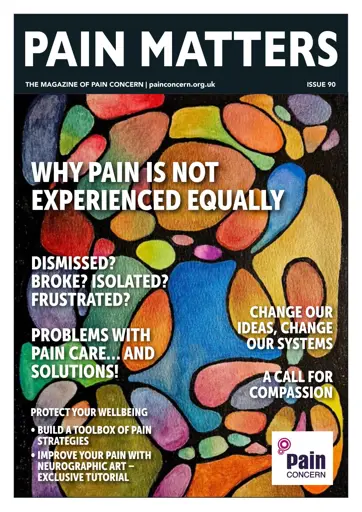
For deeper insight into lived experience and clinical practice, you can read Pain Matters magazine via PocketMags.