Information & Resources

Find information and resources to help manage your pain.

Get Help & Support

Find the tools you need to
help you manage your pain.

Get Involved

Help make a real difference to people
in the UK living with chronic pain.

About Us

Find out about Pain Concern and how
we can help you.

Fibromyalgia management’s revised recommendations, walking as self-management, and one person’s journey with living with FM

To listen to this programme, please click here.

This edition has been supported by the Women’s Fund for Scotland.

In 2016, EULAR (European League Against Rheumatism) published its Revised Recommendations for the Management of Fibromyalgia. In this edition Paul Evans speaks to Dr Gareth Jones, reader in epidemiology at the University of Aberdeen who was part of the study group.

Paul also speaks to Dr Kathryn Martin and Fiona Rennie about their work with Walk With Ease, a programme that encourages walking as a self-management technique for arthritis and musculoskeletal conditions like FM. He even has a go himself!

We also hear from Diane about her experiences being diagnosed with FM and her journey using swimming, yoga, and mindfulness as self-management techniques.

Issues covered in this programme include: Abdominal pain, arthritis, epidemiology of pain, exercise, fatigue, fibromyalgia, gender, hypersensitivity, IBS: irritable bowel syndrome, insomnia, menopause, mindfulness, stiffness, neuropathic pain, online course, stomach cramps, stretching, swimming and Walk with Ease.

Paul Evans: This is Airing Pain, a programme brought to you by Pain Concern, the UK charity providing information and support for those of us living with pain, and for healthcare professionals.

I’m Paul Evans. And this edition of Airing Pain has been supported by the Women’s Fund of Scotland.

Diane Edwards: It’s a pain that can just appear out of the blue at any particular moment, in any particular part of the body. And it’s not just the pain, it’s the other symptoms that go along with it.

Evans: Fibromyalgia affects around two per cent of the population, and of those who have it, 80 to 90 per cent of them are women. And just some of those other symptoms that go along with the pain are fatigue, muscle stiffness, difficulty sleeping, problems with memory and concentration, and the list goes on and on and on. As Diane Edwards, a long time sufferer, explains.

Edwards: My first symptom of course was the irritable bowel syndrome, and that was when I was 18 years old. I used to get a lot of stomach cramps, a lot of diarrhoea and constipation, and I was tested for lots of different conditions at that point, and it was called irritable bowel. It all sort of came a bit to a head when I went through the menopause. That was 12 years ago now. And everything just sort of kicked off, everything just went a bit wild. I started experiencing lots of other symptoms, acute abdominal pain – I’ve got three children, of course – but it actually felt like I was in labour, the pain was as extreme as that.

Evans: Gosh it was as bad as that?

Edwards: Yes. In fact I actually got taken into the hospital in the middle of the night by ambulance. My blood pressure had gone up, my heart rate had gone up, I was in such excruciating pain it was like spasms. There was something gynaecological going on, that’s what it felt like. That was at the stage where I was going through the menopause. After that there was all the things like night sweats, and those are quite indistinguishable from the symptoms you would get with the menopause. So you get a lot of sweating, a lot of freezing cold, hot cold kind of thing. Also got hypersensitivity to things, that’s a very big issue, bright lights, strong smells, loud sounds.

Evans: It’s a very strange illness or syndrome, because people can ask you, ‘how does it feel, how do you feel?’ And I’m speaking for myself now, and I’ll just say, ‘well I feel awful, you know’. ‘How do you feel awful?’ ‘just feel awful, I’m aching in every joint in my body, my brain doesn’t function, I get absolutely exhausted’. And then people say, ‘oh yeah I get tired as well’ I say to them, ‘no this isn’t tired, I described it as like being hit by a torpedo, it comes from nowhere’.

How did you get a diagnosis?

Edwards: I had all these symptoms where I was getting the very severe pain and they were putting it down to the IBS, they did lots of different tests for like Crohn’s disease, celiac disease, and it came up that it said normally if you want to get a diagnosis you need to see a consultant, usually a rheumatologist. And he said nothing shows up in the blood you’ve had done with your GP and things like that. And then he said, I’m going to press some points on your body and I want you to tell me how it feels. So he pressed certain points in my shoulders, my neck and various places, and they were really sore, really tender, even with the slightest pressure on them. And he said the fact that these points are really tender, he actually called it pain amplification disorder, because I think at that time a lot of people were quite sceptical about this term fibromyalgia.

He didn’t give me any leaflets, any advice about any medication, any advice about what I should be doing to help myself. He didn’t give me any leaflets about how to cope with it. He said, ‘I’m going to tell you if you don’t go out’ – I remember this because it was quite upsetting at the time – ‘if you don’t go out and get a life you will end up in a wheelchair for the rest of your life’. That was the only information he gave me, so I thought I’m going to have to work out for myself what to do here.

Evans: That’s Diane Edwards.

Well, in 2016 EULAR, that’s the European League Against Rheumatism, an umbrella organisation of national rheumatology societies, including the British Society for Rheumatology, published its revised recommendations for the management of fibromyalgia. Revised that is from the previous study of 2005.

So, a multi-disciplinary group from 12 countries assessed research studies into the management of fibromyalgia – pharmacological and non-pharmacological – and graded them, percentage wise, from weak to strong.

Doctor Gareth Jones, who is a reader in Epidemiology at the University of Aberdeen was part of that study.

Gareth Jones: The previous incarnation of these guidelines was largely expert opinion, there actually wasn’t a big scientific evidence base. So a lot of the guidelines were based on what people thought, albeit experts in the field, or what they thought was appropriate management. Since then there has been quite a lot of randomised trials demonstrating that treatment A is more effective than treatment B, or not.

Evans:  It goes through just about everything I’ve ever heard about fibromyalgia, all the medications and things like that, hypnotherapy, massage, meditation, everything. It seems to me, to cut to the quick, that there is only one positive view of what is good for fibromyalgia, and that is exercise.

Jones: Yeah, so exercise was the only treatment that we looked at for which we came up with a recommendation of strong for, as in the recommendation strongly for exercise. That’s not to say there aren’t other therapies for which there are trials that have shown benefit. Actually, there are so many trials, we were looking for reviews of randomised trials, so we were reviewing the literature that has already pulled together a lot of evidence. And so when we came up with a recommendation for being strongly for something we were satisfied that there was enough of a body of evidence demonstrating that this treatment is effective. Where we didn’t recommend strong for, it might have been that there was evidence suggesting it wasn’t effective, or it might have been that there wasn’t evidence. For a number of therapies, especially newer therapies, it’s the same with new drugs, actually it takes a while for that evidence to build up.

Evans: But there’s exercise and there’s exercise. Now I remember when I was diagnosed with fibromyalgia 25 plus years ago, I was told to go and buy a pulse monitor watch that sportsman wear and really max out on exercise, make sure that I really thrashed it, if you like. It didn’t work for me, and others have said exactly the same thing.

Jones: And obviously I can’t comment on precisely the advice that you were given. You’re absolutely right, there’s exercise and there’s exercise. And so what we found is that there is good evidence that patient outcomes in fibromyalgia, and they may be pain, they may be function, they may be whatever, are improved with exercise versus not.

The trials that have looked at exercise, some of them have done aerobic exercise, some of them have looked at strength and conditioning, some of them have looked at exercise on land versus in water, hydrotherapy exercises and so on. And that’s where it gets a little bit more difficult to determine whether there is a benefit or not. When planning a trial of course the expected benefit, or how you might power the trial and determine how many people you need in the trial, is based on what you expect the difference might be. And to say “let’s assume people’s pain scores might improve by two out of ten in the exercise group compared to a non exercise group”. But if you’re comparing one kind of exercise with another kind of exercise, then the improvement is going to be much smaller, and so actually the trials would have to be bigger, they tend not to get done.

So actually there’s very little good evidence comparing different kinds of exercise. So it’s not possible to say it’s strengthening which is beneficial, as opposed to aerobic exercise, or the other way around, because that evidence is just not there.

Evans: I think the danger is with advice like that, I’m not the only person who has had advice like that, I think many people have had advice like that, the only danger is that it could be, and I suspect it might be very beneficial; but exercise as a prescription is not enough. There is cognitive behavioural work that needs to be done to help you get there, you don’t go straight at it, it’s not a therapy in itself.

Jones: I think having the psychological support, where necessary, is absolutely important. It’s not a treatment such as taking a drug, where if you take a tablet you have ingested the chemical that has the beneficial effect. What’s exercise, is it walking, is it running, is it swimming, is it doing it for five hours a day is it for 20 minutes? So the dose of exercise that you can take, or that you can do, is highly variable. And not only variable in terms of what’s possible, but probably also variable between what people require, and indeed what they are able to do.

Evans: That’s doctor Gareth Jones.

Doctor Kathryn Martin, also at the University of Aberdeen, focuses her research around physical activity for people with arthritis and musculoskeletal conditions like fibromyalgia.

Kathryn Martin: Exercise is something that’s structured. And it’s marked by things like what type of exercise you do, what type of movement. Usually it’s around moving large muscles and joints, doing it for a certain amount of time and thinking about the intensity level; so not all activity or lifestyle activity that you do can be considered exercise. And people often find that from wherever they are, whatever their baseline is, they are able to do more or less of a different type of activity or exercise.

Evans: Well you’ve been working on a project called Walk with Ease?

Martin: Yes.

Evans: Explain that to me.

Martin: Walk with Ease is the Arthritis Foundation’s activity programme that was developed specifically for individuals with arthritis. And it is a six week community based walking programme. And when I say it was designed specifically for folks with arthritis and musculoskeletal conditions, it takes into consideration the barriers that individuals often have around fear of movement, fear of pain on exercise. It tends to some of the concerns that people have about reengaging with activity, if they’ve been inactive for a while.

And so individuals can do this either in a group with an instructor who’s been trained in Walk with Ease, and leading the Walk with Ease programme, or they can do it on their own with a guidebook. The guidebook is there for all individuals taking part in walk with ease, but there is that element where you are able to do it on your own, in case you maybe have care giving responsibilities, or if you’re still working, and so if you aren’t able to take part in a group, especially since it’s meant to be three times a week for about an hour or so, so it can be quite a time commitment. But folks really enjoy being part of a group and having that social aspect. So there’s both elements, individual or instructor led.

Evans: Well, I don’t have arthritis, but I do have fibromyalgia, and I’m going to join a Walk with Ease group. What do I need to know, will I start at a sprint, or a crawl?

Martin: You won’t start at a sprint. It depends, I suppose, whether or not you’d like to start at a crawl. But we’ll do a small warm up, getting limbered up, getting the muscles warmed up, so taking just a little bit of a walk, stopping and doing some stretching exercises, cause that’s really important. And that’s not often found in other heath walks or walks. And then once the stretches are done, there’s a set of five that we’ll do, we’ll get into the main bit of the walk. And that’s really to get up to a moderate pace, as well as you can do. But we’ll probably aim for at least 10 to 15 minutes, and if you need to have a slower pace you can hang back, there’s always another person who is willing to walk alongside you. But then once we’ve finished with the main walk we’ll do a little bit of a cool down, and then do some stretches at the end.

Fiona will probably also at the beginning talk a little bit about the goals for the day and she’ll bring along her lecturettes, so just a bit of a conversation about activity – so each of the sessions has a different topic to focus on and get the group thinking about for the day.

Evans: But I won’t be embarrassed if I have to slow down or stop, that’s the important thing.

Martin: No, that’s the important thing, absolutely, that’s part of it. It’s recognising the limits and knowing where you are able to set your goals to for that day, in terms of your intensity and the amount of time that you’re able to walk for.

Evans: Alright, let’s go for it, be gentle with me.

Martin: Absolutely.

Evans: This seems like an appropriate time to remind you that whilst we in Pain Concern believe the information and opinions on Airing Pain are accurate and sound, based on the best judgments available, you should always consult your health professional on any matter relating to your health and wellbeing. And that of course includes starting a new exercise regime. He or she is the only person who knows you, your circumstances and therefore the appropriate action to take on your behalf.

Ok Katherine, we’ve left your sumptuous office in Aberdeen University, just tell us where we are now?

Martin: Right now we’re in the Westburn Outdoor Sports Center, that’s run by Sport Aberdeen. It was a location where we held our physical performance assessments and it was also one of the areas where a walk, for Walk with Ease, actually went out from. So, it’s a nice community centre, there’s a nice size park, it’s a great, beautiful day out. And with us is Fiona Rennie, she was one of the Walk with Ease leaders that we trained to deliver the Walk with Ease walk as part of the research study. She also does health walks as part of volunteering with Sport Aberdeen.

Evans: Fiona, you’re going to put me through my paces today are you?

Fiona Rennie: Yes, I’ll just get started?

Evans: Yup, please do.

Rennie: Ok, so we usually start with a lecturette, so I’d just like to make you aware of making a doable personal walking plan with realistic goals for improved fitness. And this is a very important one – the two hour pain rule. So your pain should not be worse two hours after you exercise than before you started. If it is, cut back. So that’s saying, like today when you go away from here you might have pushed yourself just a little bit, you might get home and you’re fine. But you might still be sore in two hours time. So, next time please come and say to me, or if you’re out for a walk and you do too much, calm down for the next day. It’s a build up rather than ‘I’ve got to do this now’.

Evans: You say two hours for arthritis, two hours for maybe other conditions. For me personally it might be two days later. But as long as I can read those signs, then it should be fine.

Rennie: It’s to do with awareness. So now we go on to exercise dos and don’ts because we will be doing exercises before we start our walk. So do build a programme that includes the three different exercises of flexibility, strengthening and cardiovascular. Cardiovascular is when we are walking. Do walk when you have the least pain and stiffness. Do walk when you are not tired. Do walk when your medicine, if you are talking any, is having its greatest effect. Do always include a warm up and a cool down whenever you walk. Do start at your own ability level, move slowly and gently and progress gradually. Do avoid becoming chilled or overheated when walking, like today we’ve got a brisk cold.

Evans: Brisk?

Rennie: [laughing] Up here in the North-East. Do use heat, cold and other strategies to minimise pain. So when you go home and you are having that pain. Do use aids, this is the most important thing I would say, cause you’re coming to a group you might be embarrassed to use your walking stick or your poles to help, but you normally have them.

So that’s all the dos, but we’ve always got don’ts. Don’t do too much too soon, start slowly and gradually. Don’t hold your breath when doing anything – because that’s when people count to thirty and take a deep breath in. Don’t take extra medicine before walking, unless prescribed by your healthcare provider. Don’t walk so fast so far that you have more pain, and as by now I think you’ll get, two hour pain barrier. And that’s all your exercise dos and don’ts. So the next thing will be we’ll go out and it’ll be like a slow walk, then we’ll have our exercises, then we’ll have our walk, we’ll kind of pace it up a bit, then we’ll slow it down, then we’ll have our exercises. And that’s the programme ahead.

Evans: Well I’m looking forward to it. It’s a lovely day in Aberdeen, ice on the pavement, so we should be a little bit careful of that, shouldn’t we? It’s very cold for my soft, southern body, so we wrap up warm.

Rennie: And the other thing that we do is we chat and have a laugh.

Evans: Chat and have a laugh.

Rennie: Yes, because like we said, it’s fun as well.

Use your surrounding area for the exercises, so as you see we’ve got a bench, if people wanted to do that there.

Martin: So you can do them seated, is that what you’re suggesting? Some of the exercises can be done seated?

Rennie: And a lot of people like going up against a tree. People wonder how we’re outside doing exercises, but it’s to be at the same temperature. If we did it inside you’d be too warm coming out into the cold.

Evans: So we’ve done a short walk, just to acclimatise to the temperature, get our muscles into the cold if you like. [laughter]

Martin: So shall we grab a tree then?

Rennie: Yup, wherever you want to.

Evans: On the same subject, of the revised recommendations for the management of fibromyalgia, I’d be very cautious as a patient in reading this, because the medicine that I take it says is not particularly effective, although it does some stuff for me. I’d be very cautious as a patient, for other patients to read through something like this, just in case it skews your mind into something that has been working for a long time.

Jones: I would caution patients about reading it and I’m not saying that they shouldn’t read it, it is not written as a patient facing document, if you like. There are other documents that are written specifically for patients. To say that certain treatments don’t work is difficult. Clearly, in a study where you’re testing a new drug, let’s say, you want to test it against a placebo, you want to test it against existing therapies. And if you’re testing it against an existing therapy, and maybe in that existing therapy 50 per cent of people show improvement, and with your new drug 60 per cent of people show an improvement, then this would be heralded as an enormous success. But you have to remember that there is still 40 per cent of people who are not showing an improvement with the drug.

So a lot of the trials are really just looking at is it better than a placebo, is it better than what’s already there. But of course if you give the drug to 100 people and 60 are responding, there is still 40 who are having inadequate pain relief, and will need something else. Even drugs and therapies that we say are effective, there are still people for whom they won’t work. And there will be therapies that we say actually the evidence isn’t great that they are effective, but there will be a sub group of them for whom it does work.

Evans: We’re using the tree, which could be anything really, just to support us, and we have one leg in front of the other, and we’re just gradually stretching what feels like to me my calf and my upper thigh.

Rennie: As long as it’s not just your calf, that’s good it’s your upper thigh.

Evans: See I’m falling into the trap again, I’m really pushing hard to get it to, almost to hurt. I shouldn’t do it.

Martin: Do you find sometimes Fiona people get impatient with waiting their 30 seconds on each side?

Fiona: No, they’re impatient if they don’t feel that stretch.

Evans: Ahhh.

Maybe I was a little bit negative about patients reading this. The plus side is that many patients, myself included, with something like this, is many people have expressed surprise to me that there is so much work going on into fibromyalgia. Somebody just this morning said, ‘I didn’t know anybody was working on it, it’s like we’re a condition in a vacuum’. There is a lot of work going on with it.

Jones: There is an enormous amount of work, internationally. It’s a sad fact that some conditions will, I don’t want to say become ‘in vogue’, that sounds terribly patronising, but money that charities, research, councils, that fund this work have finite pots of money, and this year money will be going towards x, next year money will be going a bit more towards y. But across the board there’s quite a lot of work going into chronic pain and fibromyalgia for a number of funding bodies.

Evans: So we’re at a decent pace for me now, but we’re not ambling. Watch the ice. Too much time talking, not looking where I’m going.

Martin; It is an important feature, thinking about where are you going to walk, what are the conditions like. Especially if you were to fall, walk with these programmes and walk independently, so when you’re with a group you have other people around, but you always want to make sure that you’re safe and you understand the conditions of the pavement and if there’s any trip hazards and things in your local area, wherever you like to walk.

Evans: It’s not the responsibility of a researcher or a healthcare professional to manage somebody’s pain for life. People with pain have to take ownership of something at that point, and that’s the important thing isn’t it, that they have to take ownership of it?

Martin: Absolutely. I think that a lot of individuals want to be able to self-manage their condition, and have those skills to be able to do so. We operate in a world where there are a lot of different medicines or things that can be given to cure things instantly. But being active even without any condition like fibromyalgia is important to be able to maintain good physical health. So that is one element that all individuals can take ownership of and try and increase their activity over time and maintain it as well. So yes, I think that that’s an important aspect of self-management of a long term condition.

Evans: Kathryn Martin, of the University of Aberdeen. She’s the researcher behind the Walk with Ease programme in the UK, which is funded by the Arthritis Foundation and Arthritis Research UK, now going under its new name Versus Arthritis.

You can find out more about how to Walk with Ease, be it in a group or by yourself, from the website arthritis.org. Just put Walk with Ease into the search box at the top of the page, all the resources are there.

And don’t forget that you can download all editions of Airing Pain, including videos and resources on self-management, from Pain Concern’s website, which is painconcern.org.uk.

Now, on that subject of self-management, you’ll remember that I spoke to Diane Edwards at the start of this edition of Airing Pain. I’ll just remind you of what the doctor who diagnosed her fibromyalgia told her.

Edwards: He said, ‘I’m going to tell you if you don’t go out’ – I remember this because it was quite upsetting at the time – ‘if you don’t go out and get a life you will end up in a wheelchair for the rest of your life’.

Evans: And her response.

Edwards: So I thought ‘I’m going to have to work out for myself what to do here’. So I went back to my GP and she said ‘we’re going to try and work out how we can help you’. So she started me on the amitriptyline, but I just felt like a zombie so I decided, no I’m going to find another way to get round this.

We then tried hydrotherapy, and that was lovely, it was really nice, nice warm water in the pool’ and we did gentle exercises, I would say, in the pool. And then I thought, I always used to go swimming a lot when I was younger, I really enjoyed swimming, so I thought ‘I’m going to try and keep this up’. So I started going swimming just once a week after the hydrotherapy sessions had finished. The water is really good because it supports your body, so you’re not putting a lot of pressure on it. And I now going swimming once a week. And I thought I’ll build up, I did a couple of lengths and went up to five lengths after a little while, up to ten lengths, and I can swim up to 40 lengths now in one session. Takes me about 35 minutes.

Evans: You’ve built up to that 40 lengths?

Edwards: Oh yeah, over the years. From the hydrotherapy that I had to start with I guess. And then I thought, right I’m going to explore other things that might help. First of all, we went and got a dog. That gave me the encouragement to go out for short walks. Not hikes up mountains or anything like that. Just like round the block kind of walks, at my own speed. At one stage I was doing three walks a day, but I’m down to two now, cause the dog’s got quite old and she doesn’t like walking as much anymore.

Evans: Your dog can’t keep up with you.

Edwards: [laughing] Not quite. And then the other thing I explored was yoga, because I know yoga is very good for gentle stretching your muscles, but it’s not intense like running on a treadmill or lifting weights or anything like that. It’s called Hatha Yoga, which I think is the gentlest form of yoga.

Evans: Ah, ok yeah.

Edwards: It’s not these things where you tie yourself up in knots, it’s very gentle. Maybe I’ll do five or ten minutes at home every evening as well. I force myself, maybe if the televisions on I’ll just think ‘I can do these things’. I can still touch my toes and my daughter can’t do that. [laughing]

Evans: I didn’t know I had toes.

Edwards: So, yoga’s been really good because it keeps you very flexible, very supple. Even though some evenings I might think ‘I don’t want to do this’. I don’t force myself, but I think, ‘this is good for me, I’ll do this, this is good’. So it is about managing your time doing all these things. You wouldn’t go on a three mile hike, you wouldn’t go and run 20 miles or anything like that. So I don’t pretend that I’m particularly good at anything, but I just maintain a balance that my body can manage at this particular stage in my life.

Evans: So you’ve learnt how to self-manage your condition?

Edwards: Oh, definitely, yes. And I also think it’s not just the physical exercise, it’s also mental exercise as well. I think you’ve got to keep your mind quite active. So I like to do things like sudoku puzzles, crosswords, there’s an online site where you can do courses which are set up by different universities. And you can enrol on them. Some of them are four week courses, some are six week courses. You don’t get any qualifications at the end of them, but they are really interesting, and you can interact with your fellow learners. So that keeps my mind quite active too.

Evans: Exercise for the mind and body?

Edwards: Yeah.

Evans: For more information about fibromyalgia I suggest you go to the Fibromyalgia Action UK website, that’s at fmauk.org.

So, to Fiona Rennie, my personal Walk with Ease leader.

Rennie: Back here just to see how you got on, how you’re feeling just now before you go. Is there pain just now?

Evans: No more pain than I had when I started.

Rennie: That’s good to hear.

Evans: And I’m very surprised, because the walk I normally try and do is more physical than this, and I found this better today, because I’ve been held back.

Rennie: Yeah. What will you be doing before the next time I see you, so I don’t want you to just do the walk today and then the next time it’s the walk then, what are you doing in between?

Evans: Well, the one thing I’ve learnt today is the stretching, the warming up and cooling down, the stretches are really worthwhile. And they are the things that really go, that you would ignore completely, come on let’s just get at it.

Rennie: Just think, professional football players, they warm up, they warm down.

Martin: They do their stretches.

Rennie: Yup, so let’s be professional, we’re walking.


Contributors:

  • Diane, Person living with fibromyalgia
  • Dr Gareth Jones, Reader of Epidemiology, Epidemiology Group, University of Aberdeen
  • Dr Kathryn R Martin, Lecturer in Epidemiology, Epidemiology Group, University of Aberdeen, Walk With Ease Programme
  • Fiona Rennie, Walk With Ease leader.

More information:

Peer Support. Join the community

“Having chronic pain is very lonely.”

Join the community

Subscribe to Pain Matters

Everything you need to know about how to live with chronic pain

Subscribe


In pain? Don’t understand what’s happening?

“Having someone to help you prepare for your life through pain”

Our Pain Education Sessions

Fundraise for Pain Concern

Help us to help others

Fundraise


How men and women experience pain, arming yourself with the right information, and not being embarrassed about your condition

To listen to this programme, click here.

This edition’s been part funded by the Women’s Fund for Scotland.

Do women and men experience pain differently, or is it only our attitudes towards pain that differ? In this edition of Airing Pain, Paul speaks to healthcare professionals about their findings with the literature surrounding chronic pain and the changing outlooks when it comes to seeking help.

Deputy Director of the Bath Centre for Pain Research, Professor Ed Keogh, speaks about his review of men’s health literature in the context of chronic pain, and found that women are more likely to report pain in more body regions in their lifetime compared to men. He considers whether this is due to biological or social/emotional reasons, but emphasises that the variation within males and females is much greater than the variation between the sexes.

Can the gender roles society pushes on us affect how we deal with our pain? Senior clinical psychologist of the National Specialist Pain Service in Bath Dr Gauntlett-Gilbert talks to Paul about how the societal expectations of how we handle pain can feed into depression and guilt.

Specialist physiotherapist at UCL Hospitals’ Pain Management Centre Katrine Petersen discusses the lack of literature on men’s pain, especially pelvic pain, as well as her experiences in using physiotherapeutic strategies in the context of chronic pain syndromes.

Issues covered in this programme include: CBT: cognitive behavioural therapy, chronic prostatitis, difference, urogenital pain, pelvic pain, chronic primary pain, depression, men and women, men’s pain, menstruation, prostate cancer, prostatitis, relationships, research, sex difference, social factors, testicular pain and women’s pain.

Paul Evans: This is Airing Pain, a programme brought to you by Pain Concern, the UK charity providing information and support for those of us living with pain, and for healthcare professionals.

I’m Paul Evans. And this edition has been funded by the Women’s Fund of Scotland.

Jeremy Gauntlett-Gilbert: Men will very often speak of their loss of a role in the family, the fact that they can’t provide anymore, they can’t be a breadwinner anymore. That they can’t go out to work or provide that kind of leadership or physical help around the house that they hope to.

Katrine Petersen: If you consider how women have accessed healthcare for pelvic issues such as menstruation, first sexual encounter, contraception, pregnancy, smear tests. Women are just used to talking about the abdominal pelvic area.

Evans: Do men and women experience pain differently? In terms of understanding, what’s known about men’s pain falls short of what we understand about women’s pain? In 2015, psychologist Professor Ed Keogh, who is the deputy director of the Bath Centre for Pain Research at the University of Bath, completed a selective review of men’s health literature to consider them within the context of men’s pain. Under the heading ‘Men, Masculinity and Pain’, its purpose in taking a men’s health approach to pain was to view existing evidence in a different way, and to identify potential gaps in our understanding, not just of men’s pain, but of women’s pain too.

Ed Keogh: There are sex and gender differences, for example we know that men are different in terms of the amount of pain they experience and report. Here we know that, for example women tend to report more pain, in more body regions over their lifetime in comparison to men. So we know that there are these differences, and we are quite interested in some of the reasons why there are differences.

Evans: So you’re talking about the occurrence of pain, rather than the severity of pain?

Keogh: Well it’s all types of pain, so it’s actually pain conditions. So, if you look at some pain conditions and look at men and women, how represented are they in the clinic, we know for some conditions women are coming in with more pain, so headache and lower back pain, those sorts of pains. We typically find numbers are higher in women in comparison to men in the clinic. In addition to that we also know for example, in laboratory pain induction type environments, so inducing pain, there are differences in the amount of pain reported. The pain thresholds, the pain tolerance levels tend to be different in men and women. I think the key question is why are there differences?

Evans: Well first of all, we men, as no doubt you’ll say, we feel pain more than women.

Keogh: Well the evidence is actually contrary to that. In fact if you look at the amount of pain that’s being reported then certainly women are reporting more pain in comparison to men. Now that’s not to say that men aren’t experiencing pain. Men are in pain, they are suffering and we certainly do need to do things about this.

Evans: So what’s going on there then?

Keogh: I think this comes back to the explanations around why there might be these sex and gender differences in pain. So we know there are differences, why are there differences? Some of the explanations are very biological, so we know there may be sex hormones may be involved in mediating some of the differences.

But as we also know, sex and gender, there are more biological factors, but also social and emotional factors, and psychosocial factors are also important. So we are quite interested in the way these psychological and social factors have an impact on, both the experience and also the reporting of pain, and we think that might be particularly important for both men and women.

Evans: I would take a stab at it and say we don’t like going to the doctors, we are not as open about our own bodies as women are?

Keogh: Yes, the whole men’s health agenda around how men are not going to the doctors, not explaining to others, things about their pain, about their health conditions. We’ve sort of moved into the pain area and asked, if there are limitations in how well men are reporting health experiences, does that then translate into pain clinics as well? Are men not very good at reporting pain? Men’s health literature is beginning to highlight that there are these differences, and there are possible explanations around why men may be under-reporting health conditions. When we start looking at pain, relatively little research has actually looked at men and the way in which they report pain itself.

Evans: Could something to do with it be that, if I sit in the waiting room of my GP practice I’m bombarded with posters about women in pain, there are only two posters that I can think of about male only pain: testicular cancer, and I can’t even think of the second one?

Keogh: Yeah I think there’s a lot of expectations around pain and who experiences pain. In fact women are much better at going to their GPs and talking about health conditions including pain. Pain is much more regular, of course for a number of women, so menstrual cycle related pain, for example, is very common. Of course, women then are therefore more able to discuss this more regularly. When it comes to males and male pain, it’s not as normalised if that makes sense. And so therefore there maybe inhibition around discussing these sort of experiences.

Evans: The interesting thing about what you said earlier, is the word masculinity, which is – well, masculinity’s being a man.

Keogh: Exactly, this is what’s interesting, we’re not talking about sex differences, differences between men and women. We know there are differences between men and women. But the variation that occurs within males, and within females, is much greater than the variation between the sexes. So we need to understand this, and one of the explanations could be something along the lines of gender. Which is the social norms, the conceptualisation of what it means to be masculine, what it means to be feminine. We think some of these are very important in terms of how people discuss, and how they behave in front of others when it comes to pain.

Evans: And I said tongue in cheek, that we feel pain worse than women do, well of course, that was tongue in cheek. But there is the expression man-flu, and the general feeling that a man will stay in bed, it will be flu and not a cold. Do we confine our pain to the people we know?

Keogh: There’s a couple of things embedded within that. I’ll start off with how media, society, represents the expression of pain. I think this is a very good example of the way in which the expression of emotions, the expression of pain can actually be inhibited in some ways. So, actually, if you think about the way in which we develop as children, whether or not crying as a boy is punished in some ways, through saying “don’t act like that”, etc. Whether that’s being played out in the way in which men actually express their emotions, express painful conditions. That might be reflected there.

Again, from the men’s health literature, what we actually know is that in terms of social support there do seem to be differences, especially as we age. So the men’s health literature certainly indicates that later on in life, in terms of the support networks that are around, women have very good social support networks outside of the home. Whereas men on the other hand tend to restrict it more within the home. So the problem is, if you lose your partner then for women there is actually a social support network around them, but for men it’s not there as much. So we have to think about ways in which we can get men that sort of help. One of the examples that is being used and developed in a number of countries has been the men’s shed movement, which is a way of getting men together, through activities, but actually that could be a very good medium by which you could actually start talking about other sorts of issues, such as health related issues, of which we can of course include pain.

Again, in terms of men’s health literature, where you’ll see lots of emphasis now on recognising how there might be differences in how you might approach men and women, especially around health conditions and getting men to actually go to their GPs to talk to people about their concerns, especially around pain and other health conditions. Talk about it, don’t leave it to the last moment, which of course can sometimes happen. So I think by making it much more acceptable to talk about emotions and feelings, and the way in which pain affects you in going to be good for men and women.

Evans: That’s Professor Ed Keogh, Deputy Director of The Bath Centre for Pain Research at the University of Bath.

Now, he talked about pain being an expression of hurt and vulnerability, and that maybe men are less likely than women to come to terms with those feelings. But what about other self-conscious emotions, like shame, embarrassment or humiliation? Jeremy Gauntlett-Gilbert is a Senior Clinical Psychologist at The National Specialist Pain Service in Bath.

Jeremy Gauntlett-Gilbert: Historically in chronic pain research and practice, people have always been interested in understanding things like depression in pain, things like anxiety. But it also really seems true that people with chronic pain live with a condition that is poorly understood, they don’t always get nice, encouraging responses from other people. And therefore they’re very often in a position where they’re constantly feeling embarrassed, self-conscious. “What’s wrong with you?” “I’ve got a bad back”. It’s a rubbish answer. And so we just became interested in that from our clinical experience, and then wanted to do some research on it.

Evans: From my own experience, I have chronic pain, I have fibromyalgia, sometimes you’re embarrassed to smile in company, just in case people think you’re better, or they judge you.

Gauntlett-Gilbert: I think it’s true isn’t it, because all of these conditions, they fluctuate in their severity, so people have better days and worse days. And one of the risks of that is, people see somebody on a good day, and they say, “What’s wrong with you then, you’re obviously fine”. And so it’s that kind of incomprehension which does make people very nervous. They’re just not well understood conditions, they’re not seen as legitimate. Fibromyalgia being a case in point, people don’t take it seriously, it’s not leukaemia.

Evans: You have to look ill to be ill.

Gauntlett-Gilbert: Yes, this is true. One of the other things that happens around trying not to feel embarrassed, or trying not to feel ashamed, is people trying desperately not to look ill. Lots of people spent a lot of their time trying to put on a good face, or only going out when they feel fine. And it’s the flip side of what you were just saying, the embarrassment drives people to either try and make damn sure that people understand how ill they are, or because they feel so misunderstood they put a terribly brave face on things and only go out when they feel well.

Evans: Embarrassment, I’ve never felt embarrassed about my condition. But I can see what you’re saying, that if I don’t look ill enough then I will be judged as a shirker, a malingerer.

Gauntlett-Gilbert: I think it’s a real problem for people with pain, cos you’re damned if you do and damned if you don’t. People might well see you looking in pain, looking visibly uncomfortable and judge you as hamming it up. Or people see you on a good day, or when you’re trying to put a good face on things, and say “Well, what’s wrong with him?”

Evans: And I think for people who are in work with chronic pain, there is the impression if you take sick leave you are sick, but when you go back to work you are better.

Gauntlett-Gilbert: Completely, yeah, for some reason we’ve got this model, which probably does work for the flu, that you’re either sick or you’re well. Which just doesn’t apply to the kind of conditions you see in chronic pain. And it’s a real shame because very often people are almost punished for getting back to work, people who struggle back to work, half time, do a graded return. Instead of being treated with respect for their effort, they are almost hurried along, “Why can’t you improve it quicker?”

Evans: “If you can’t do all the work then why are you here?”

Gauntlett-Gilbert: [laughing] That has a ring of authentic and painful truth about it, yes. That’s one of those things, and I think that people end up being implicitly punished and then employers say some things which can’t be legitimate or legal sometimes about health and safety, not sure we can have you around here cos you don’t look terribly safe on that chair. And the upshot is, although probably nobody is trying to do the bad thing, is that people with chronic pain end up almost getting a little bit punished for their very brave attempts to go back as much as they can and do as much as they can, which isn’t perfect.

Evans: The flip side of somebody in that situation is that they punish themselves, because they don’t want the employers to manage their condition, they want to keep their employers at arm’s length, if you like, because “I can manage this myself, don’t get involved. Because if you get involved you’re going to cut my work down to half, and somebody else will look at me and say, what’s he doing here”. So it’s not just employers.

Gauntlett-Gilbet: People can, as you say, keep employers at arm’s length because they are trying to self-manage, though possibly trying to self-manage in a worried way. Like you say, worried what the employer will do. But also a lot of people with chronic pain are just, before they ever had pain they were people with very high standards, people who want to do a good job, they’re people who dislike the idea of half measures. And these are temperamental things, human beings were human beings before they got pain. And a lot of people with chronic pain have really strong values for themselves, and strong values for their working lives, and actually genuinely hate having to do what they feel is a half effort because of pain. So either because of fear of what their employer will do, or because of their own standards for themselves, they can end up really flogging themselves I think.

Evans: Is there a gender difference for people with chronic pain? Do men act differently from women?

Gauntlett-Gilbert: I think it differs in form. Men will very often speak, and it’s a little stereotypical, but a little true, of their loss of a role in the family, the fact that they can’t provide anymore, they can’t be a breadwinner anymore. That they can’t go out to work, or provide that kind of leadership, or physical help around the house that they hope to. In many ways that’s not a million miles from women, who are used to having, again stereotypically, these are stereotypes, more of a caring role, who value their ability to look after other people, to be a mother, to help other people, and who have strong values around nurturing other people, they feel pretty ghastly too. So I think the form is different, but I don’t know if underneath it’s all that different.

Evans: Perhaps men and women seek help in different ways?

Gauntlett-Gilbert: I think so, I mean it’s a legendary issue in the broader literature, of men’s terrible healthcare seeking behaviour, and tendency to avoid things.

Evans: The shame, and the guilt, and the anxiety, for someone who has chronic pain, depression and guilt, they all feed into the chronic pain and the chronic pain feeds into all that, it’s that cycle of pain, isn’t it? And you need to break that cycle. So which comes first do you say?

Gauntlett-Gilbert: Another question is which can you change easiest? None of these things are easy to change, but if a person has got chronic pain then the chances are they have a pretty nasty, unpredictable set of symptoms which comes and goes, and there’s not a right lot you can do about it. Perhaps it’s just my bent as a psychologist, it always seems to me that perhaps you could get in there with the emotions, using some psychological techniques that we use. It’s not easy because people were able to feel shame, or were able to feel low long before they had chronic pain, these are things which everybody feels a little bit of their whole lives. So I don’t think you can ever wave a magic wand and get people to a point where they never feel shame or guilt, and I’m not sure it would be a good idea if you did. I rather think that’s what psychopaths are like, so shame and guilt is probably not necessarily a bad thing. But, yes we’re certainly experimenting with using fairly established, nothing radical, but established psychological techniques and current psychological therapies to see if we could target those things directly.

Evans:  So what are those therapies?

Gauntlett-Gilbert: You’ve got to ask yourself, if people are living with an obviously visible condition, somebody who is using a stick, has chronic pain, and they’re living in a society which isn’t always kind to people with disabilities, I certainly wouldn’t go down the line of thinking we could get people to some lovely positive thinking world, in which they never feel embarrassed. I think that’s probably unrealistic. Instead we tend to use more acceptance based approaches, which kind of acknowledges that these unpleasant emotions are there, and they will be there. And until there’s a revolution and everybody becomes nice to people with disabilities, and I don’t know when that’s coming, until that happens then people may have to find ways to carry their embarrassment with them, whilst they get on with the stuff they care about. You can tell there is not a should in that, I don’t think people should put up with their embarrassment, but very often these are the bargains which are in front of people with long term conditions. Either do it and risk feeling embarrassed, or don’t risk feeling embarrassed but never do it.

So we’re looking at acceptance based, and mindfulness based techniques in the psychological therapies that might, if a person chooses it, help them be able to be a little bit more embarrassed and carry on doing what they care about as well. It’s not an easy sell, it would be a great deal easier to sell the lovely positive idea that you could walk around your life free from shame, but I’m not sure that’s always realistic. And so that’s one of the ways we tend to go at things.

Evan: The acceptance side of things I guess is accepting you have a condition, and that it’s something you have to live with, but the condition isn’t the driver of your life?

Gauntlett-Gilbert: I think that’s right. I think there’s accepting that you have the condition. And the other thing, when you’re talking about what drives your life, and what makes you do things, and what stops you doing things, is that if you can accept that you might feel a bit rotten while you are doing this, you might blush, you might feel like a bit of an idiot, people aren’t really taking you seriously, but that is something you aren’t happy with but are willing to take as the price of doing something that you care about. Then that’s the kind of acceptance that we’re talking about. It’s a tricky business, but it’s an honest, psychological approach. And also one that makes it clear that difficult emotions aren’t dangerous themselves, they’re just uncomfortable. And if we choose to then sometimes we can make the choice to do more of our lives and have that discomfort.

Evans: Jeremy Gauntlett-Gilbert senior clinical psychologist at the National Specialist Pain Service in Bath.

We’re talking about gender differences in the experience of chronic pain, and we’ve talked about emotional or psychological differences between the sexes, but physically and biologically – and this is not new science – men and women are different. We also differ in our willingness to discuss or own up to problems, particularly if those problems are leading to pain in the pelvic region.

Katrine Petersen is specialist physiotherapist at the University College London Hospital’s pain management centre. So what do we men suffer from that women don’t?

Katrine Petersen: That’s a really good question, because there’s so little literature on it. We’ve got some data ourselves on the service we run for chronic abdominal pelvic pain. That’s a definition and term that we have developed because it fits the population that we see, but when you actually look at the literature it’s very difficult to define exactly, but we have a list of syndromes, pain syndromes, based around the pelvic area and the abdominal area that we see.

So typically male pelvic pain will be described in the literature often as chronic prostatitis, so men will get pain in that area affecting potentially their bladder and urinary frequency and sexual function. And often they will go to urology and have their prostates checked.

Evans: There’s a gender difference here isn’t there? Men don’t talk about their private parts, or anything below their navel at all.

Petersen: Absolutely. So it used to be quite difficult to get men coming forward, but I recently looked at our data on patients attending our chronic abdominal pelvic pain clinics and it turns out that we nearly have a third of patients who are men. So they are starting to come forward. One of the reasons why men don’t come forward is if you consider how women have accessed healthcare for pelvic issues, such as menstruation, first sexual encounter, contraception, pregnancy, smear tests, women are just used to talking about the abdominal pelvic area, whereas men really have no particular reason to go unless they have a problem.

Chronic prostatisis or chronic prostate pain syndrome is one of the typical syndromes that we see, but we also penile pain, testicular pain, non-specific pelvic pain and rectal pain, lots of different conditions all affect that particular area.

Evans: Now prostate is something that possibly many men will recognise, through tests for prostate cancer and things like that.

Petersen: Exactly. So typically patients will go to urology for that particular concern of prostate cancer, because that’s something that gets talked about. What doesn’t get talked about is when patients have pain from an unidentifiable cause, or non-pathology, non-bacterial symptoms that they are getting that very much look like an infection, for example.

Evans: So who do you see?

Petersen: So that’s also a very good question. I have men come into my clinic with very specific pain such as testicular pain, penile pain, and I have had patients come through the door looking at me, saying “I have no idea what you could possibly do for me”. Because in the traditional sense physiotherapy would be about working from a musculoskeletal model of exercise and potentially some manual therapy to stretch and relieve muscles, whereas I much more come from a chronic pain model. So once we have excluded any bacterial infection, anything cancerous, any form of pathology, we’re now working with a chronic pain model. So I use the same strategies that I would use for any other pain condition, I just have to include things like urinary frequency and urgency, bowel movement and sexual function, but again using the same strategies as I would do for any other pain condition as a pain management physiotherapist.

Evans: So as a physio, what do you do?

Petersen: Good question again [laughter], because once it comes to pain management people get a bit more confused. So we are trained in cognitive behavioural therapy, most of us who work in pain management. Because the traditional medical model where you look at the end organ and trying to fix something doesn’t tend to work. So we need to look at a much more complex model in terms of chronic pain, first of all working out why the patient is here to see us, and often it’s because they have some real, good questions about why am I pain. And they have some good questions about what can I do, is it ok for me to exercise, is it ok for me to bend, am I going to cause any further damage. And I think physiotherapists are very well placed because they’ve got the credibility of assessing risk in terms of movement and damage to tissues versus what can you get back to in terms of activity.

So, a lot of what I do is talking about how does pain work in your body, why is it ok for you to have sexual intercourse, why is it ok to let your bladder fill even though it’s painful, why is it ok for you to get on with your life basically.

Evans: It seems like a reassurance thing, rather than treatment, perhaps the treatment is the reassurance?

Petersen: Well, absolutely. So the newest research that’s coming out in terms of what you might term as reassurance, what we might call explained pain, or helping the patient to reconceptualise pain as not being due to damage or a pathology or a bacteria, but actually due to a dysfunction in the nervous system. That can really help patients to shift the way they live their life, or improve the quality of their life. But the newest research also show that it probably has a real impact on neuroplasticity, so we can potentially actually change the nervous system by providing those explanations and getting the patient thinking differently about their pain.

Evans: Now neuroplasticity, that’s a fancy term for rewiring the brain?

Peterson: Rewiring the whole nervous system. So we tend to not just talk about the brain, but the brain’s influence on the spinal cord, and on the peripheral nervous system, so the hypersensitivity in the peripheral receptors is important. So we shouldn’t just be talking about the brain, we should also be talking about the connection between the brain and the painful structure and all the connections that could be affected by neuroplasticity

Evans: So as a man, as in many men, if I had enough courage to come to you, a woman as well, about problems down below and you started on at me and said, “This is all in the mind, this is all in the head” – I mean how do you bridge that gap?

Petersen: It very much depends on the patient and what knowledge and beliefs they already have. By the time they come to see me they’ve already seen one of our pain consultants, who will have introduced them to the concept of chronic pain. Often they will have seen one of our pain nurses, talking about medication, they will also have introduced them to the concept of chronic pain. They may also have attended what we call an information session for people with chronic abdominal pelvic pain, which is this unique opportunity for men to be in a forum with other men with similar problems. And again we talk about chronic pain mechanisms, practical strategies to manage pain long term. And that really means that by the time they come to see me I can sit them down individually and ask them, what do you think of that model, does that fit with your symptoms, does that fit with what you’ve been told, is there anything we need to reconceptualise so to speak, or help you understand? Of course some patients will say “This is not for me, I’m still looking for a medical solution”.

Evans: I know very few men who would admit to having pelvic pain.

Petersen: I think you’re absolutely right and hence why it’s so important to air it today for example, but also get the information out there, that there are services that can help, there are a large proportion of men out there with chronic pelvic pain and abdominal pain, and it can be treated in the same way as any other chronic pain condition. And it should be recognised, and hopefully if we can validate it and normalise it for men, they’re much more likely to come forward and talk about it.

Evans: What advice would you give to men who have pain who are perhaps too shy to talk about it?

Petersen: Well, one of the things that Doctor Williams, one of our research psychologists, did was look at what’s available on the internet. So my first advice is don’t go on the internet, because unfortunately there is very little out there and the information is not good, and not really in line with current practice.

In the study that Williams did she also asked men, after they’d had consultations, what were their main concerns. And I was interested to hear that men weren’t necessarily overly concerned about a sinister disease such as cancer, they were actually just more concerned about a proper explanation. And that does require in the first instance an examination and ruling out any sinister disease. But then it does require probably a pain specialist to enable patients to fully understand the mechanisms, because the last thing we want is going straight from, “You haven’t got cancer, it’s all in your head”, that’s not helpful.

I also have to say that lots of GPs will not know what to do with pelvic pain. They wouldn’t know where to send them. But there is a pelvic pain network, which is a charity, which I would recommend people look at as well, because that will list pelvic pain services that you can say to your GP, I know there’s a pelvic pain service here, please could I at least have a chance of being assessed there and see what’s going on.

Evans: So being forearmed with a little bit of good information to help your GP help you is a good idea?

Petersen: Yes, most certainly. The GP will be mainly concerned with ruling out any serious underlying pathology or disease, after that it is hard for GPs to know exactly what to do because these services for chronic male pelvic pain are few and far between. But there are services out there that will see men and support them with what is essentially a very difficult condition.

Evans: Katrine Peterson, specialist physiotherapist at University College London Hospital’s pain management centre.

I’ll just remind you that whilst we in Pain Concern believe the information and opinions on Airing Pain are accurate and sound, based on the best judgments available, you should always consult your health professional on any matter relating to your health and wellbeing. He or she is the only person who knows you, your circumstances and therefore the appropriate action to take on your behalf.

Don’t forget that you can download all editions of Airing Pain from Pain Concern’s website, which is painconcern.org.uk. For Pain Concern’s YouTube channel, just put Pain Concern and YouTube into your search engine, and the same applies to Facebook.

Now at the start of the programme we heard Professor Ed Keogh talking about gender differences in the experience of chronic pain, and so to end this edition of Airing Pain how relevant is this study of men, masculinity and pain to women?

Keogh: When you start thinking about gender and you start talking about masculinity and femininity, well actually these are very fluid terms. They apply equally to both men and women, ok quite clearly when we think about men we’ll be thinking about masculinity, but these ways of thinking, the beliefs we have, the norms we have, they’re relevant to both men and women. So I think by looking at the men’s health literature this really does apply to women’s pain as well as men’s pain. There’s a lot we can learn here that will hopefully help both men and women who are in pain.


Contributors:

  • Dr Ed Keogh, Deputy Director of Bath Centre for Pain Research, Bath University
  • Katrine Petersen, Specialist Physiotherapist at University College London Hospital’s Pain Management Centre
  • Dr Jeremy Gauntlett-Gibert, Senior Clinical Psychologist of the National Specialist Pain Service in Bath.

More information:

Peer Support. Join the community

“Having chronic pain is very lonely.”

Join the community

Subscribe to Pain Matters

Everything you need to know about how to live with chronic pain

Subscribe


In pain? Don’t understand what’s happening?

“Having someone to help you prepare for your life through pain”

Our Pain Education Sessions

Fundraise for Pain Concern

Help us to help others

Fundraise


How men and women experience pain, arming yourself with the right information, and not being embarrassed about your condition

This edition’s been part funded by the Women’s Fund for Scotland.

Do women and men experience pain differently, or is it only our attitudes towards pain that differ? In this edition of Airing Pain, Paul speaks to healthcare professionals about their findings with the literature surrounding chronic pain and the changing outlooks when it comes to seeking help.

Deputy Director of the Bath Centre for Pain Research, Professor Ed Keogh, speaks about his review of men’s health literature in the context of chronic pain, and found that women are more likely to report pain in more body regions in their lifetime compared to men. He considers whether this is due to biological or social/emotional reasons, but emphasises that the variation within males and females is much greater than the variation between the sexes.

Can the gender roles society pushes on us affect how we deal with our pain? Senior clinical psychologist of the National Specialist Pain Service in Bath Dr Gauntlett-Gilbert talks to Paul about how the societal expectations of how we handle pain can feed into depression and guilt.

Specialist physiotherapist at UCL Hospitals’ Pain Management Centre Katrine Petersen discusses the lack of literature on men’s pain, especially pelvic pain, as well as her experiences in using physiotherapeutic strategies in the context of chronic pain syndromes.

Issues covered in this programme include: CBT: cognitive behavioural therapy, chronic prostatitis, difference, urogenital pain, pelvic pain, chronic primary pain, depression, men and women, men’s pain, menstruation, prostate cancer, prostatitis, relationships, research, sex difference, social factors, testicular pain and women’s pain.


Contributors:

  • Dr Ed Keogh, Deputy Director of Bath Centre for Pain Research, Bath University
  • Katrine Petersen, Specialist Physiotherapist at University College London Hospitals’ Pain Management Centre
  • Dr Jeremy Gauntlett-Gilbert, Senior Clinical Psychologist of the National Specialist Pain Service in Bath.

More information:

Peer Support. Join the community

“Having chronic pain is very lonely.”

Join the community

Subscribe to Pain Matters

Everything you need to know about how to live with chronic pain

Subscribe


In pain? Don’t understand what’s happening?

“Having someone to help you prepare for your life through pain”

Our Pain Education Sessions

Fundraise for Pain Concern

Help us to help others

Fundraise


Cannabis and Chronic Pain

The journal Pain recently published an important study on the use of cannabis, and medicines based on cannabis (cannabinoids), for chronic pain conditions (chronic pain in cancer patients was specifically excluded). Researchers were from institutes in Sydney, Brisbane and London specialising in substance abuse and addiction. The study involved reviewing published data from trials and clinical reports where cannabinoids had been used in patients with neuropathy, fibromyalgia, rheumatoid arthritis, multiple sclerosis, visceral pain or undefined pain. The researchers looked at the results for 30% or 50% reduction in pain and the proportion of patients who obtained that benefit. In summary 29% of patients receiving cannabinoids reported a 30% reduction in pain compared with 26% receiving placebo. Statistical analysis showed that this difference was real, but 24 patients have to be treated for there to be one who gets this benefit. When 50% reduction in pain was looked at there was no significant difference between patients receiving cannabinoids and placebo. Furthermore, there were no measurable benefits in emotional or physical functioning. Side effects included dizziness, difficulty in concentration or comprehension, confusion or disorientation. They were commonly observed and only 6 patients needed to be treated for there to be one who experienced side effects. The studies reviewed by these researchers collectively involved nearly 10,000 patients. They found that 24 patients need to be treated for there to be one experiencing a benefit and that for every 6 treated there is likely to be one with harmful side effects. And so, they conclude that it is unlikely that cannabinoids are an effective medicine for chronic non-cancer pain. The researchers point out that many of the studies were very small, many were with patients who were already on other pain medicines, some were short term studies despite dealing with a chronic condition and finally, chronic pain itself is highly complex condition. They state that long term large-scale well-designed trials will be needed to provide definitive evidence on any benefit for cannabinoids in chronic pain.

Read the full article here


Letter to The Times

A recent letter to The Times signed by more than 150 pain medicine consults including Pain Concern’s medical advisor raised concerns about a recent decision by the UK government to allow specialist pain doctors to prescribe cannabinoids for chronic pain, describing the decision as premature.

Pain Concern’s Medical Advisor, Dr Cathy Price commented that she signed it as she fully shared the concerns of virtually all pain clinic consultants in the UK:

Firstly, the people who benefit the most are not clear with a very small number who benefit substantially compared to the number who are harmed by cannabis. A very recent systematic review published in Pain this month provided scientific evidence to justify our concerns. Secondly, the number of people with chronic pain is very large and potentially there could be many people wanting cannabis but likely to benefit very little. This could potentially have denied other more effective treatment to patients.

While other doctors have written to The Times disagreeing with the letter it remains true that there is near unanimity among pain consultants that there is little evidence to support the use of cannabinoids in chronic pain.

The Faculty of Pain Medicine has issued a position statement broadly supportive of this position pointing out the lack of evidence of benefit and clear evidence of potential harm from cannabis. The pain profession seems united in wanting more evidence but for the moment remaining doubtful that cannabinoids have a role in the treatment of non-cancer chronic pain.

FPM Cannabis Position Statement

Peer Support. Join the community

“Having chronic pain is very lonely.”

Join the community

Subscribe to Pain Matters

Everything you need to know about how to live with chronic pain

Subscribe


In pain? Don’t understand what’s happening?

“Having someone to help you prepare for your life through pain”

Our Pain Education Sessions

Fundraise for Pain Concern

Help us to help others

Fundraise


Full text:

“Prescription drugs pregabalin and gabapentin are to be reclassified as class C controlled substances from next April, the government announced today (15 October).

Today’s move comes after experts highlighted rising numbers of fatalities linked to the drugs. The change means it will be illegal to possess pregabalin and gabapentin without a prescription and it will be illegal to supply or sell them to others.

The drugs, which are used to treat nerve pain, epilepsy and anxiety, can bring about an elevated mood in users but can also have serious side effects, particularly when used in combination with other drugs.

In 2016, the Advisory Council on the Misuse of Drugs (ACMD) raised concerns over medicinal misuse, illegal diversion of the drugs and addiction, and recommended that pregabalin and gabapentin should be controlled as class C Drugs under the Misuse of Drugs Act.

The government accepted the ACMD’s advice and launched a public consultation to assess the impact on the healthcare sector. Pharmacies, doctors, pharmaceutical companies and patients responded to the consultation, which has been published today, backing the tighter controls of the drugs under the Misuse of Drugs Regulations.

Regulations implementing the change in law to control the drugs will be laid in Parliament on Wednesday.

Minister for Crime, Safeguarding and Vulnerability Victoria Atkins said:

Any death related to the misuse of drugs is a tragedy. We accepted expert advice and will now change the law to help prevent misuse of pregabalin and gabapentin and addiction to them.

While drug misuse is lower now than it was 10 years ago, we remain committed to reducing it and the harm it causes.

That is why we have published a comprehensive strategy to tackle the illicit drug trade, protect the most vulnerable and help those with drug dependency to recover and turn their lives around.

The law change will mean the drugs are still available for legitimate use on prescription, but there will be stronger controls in place to ensure accountability and minimise the chances of pregabalin and gabapentin falling into the wrong hands or being stockpiled by patients.

Doctors will now need to physically sign prescriptions, rather than electronic copies being accepted by pharmacists. In addition, pharmacists must dispense the drugs within 28 days of the prescription being written.

To ensure that there is enough lead-in time for those in the health care sector to adapt to the new measures, they will come into force in April 2019.”

Announcement

Peer Support. Join the community

“Having chronic pain is very lonely.”

Join the community

Subscribe to Pain Matters

Everything you need to know about how to live with chronic pain

Subscribe


In pain? Don’t understand what’s happening?

“Having someone to help you prepare for your life through pain”

Our Pain Education Sessions

Fundraise for Pain Concern

Help us to help others

Fundraise


How Pain Concern’s Navigator Tool can help focus pain appointments

This edition has been funded by funded by the Health and Social Care Alliance and Edinburgh and Lothians Health Foundation.

In 2015 Pain Concern released its report, ‘Breaking barriers to self-management of chronic pain in primary care’, marking the end of the first part of its ‘Breaking Barriers’ project. Its aim was to highlight the commonly occurring barriers that patients faced during one-to-one appointments with healthcare professionals, and to advance the primary care management of chronic pain.

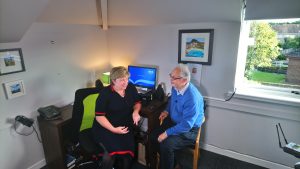
Dr Louise Bailey and Paul at St Triduana’s Medical Practice

Phase two of the project was to produce a ‘navigator tool’ to break down those barriers and prepare patients and GPs in order make the most out of their appointments. Phase two is now complete, and in this edition of Airing Pain, Paul Evans speaks to the researchers, patients, and healthcare professionals that allowed this project to happen.

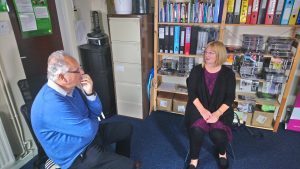
Paul speaks to Lucy

Reneé Blomkvist, Pain Concern’s researcher heading the project’s second phase, explains the established barrier in phase one, as well as the methodology used in preparing the navigator tool.

Paul speaks to GP study participant Dr John Hardman, who has a particular interest in chronic pain, about his experience piloting the tool and how it allows both patients and GPs to focus their appointments. We then visit the University of Dundee to hear from the Scottish Government’s Lead Clinician on Chronic Pain and member of the research steering group, Professor Blair Smith, about his views on the role the navigator tool could play in helping people conceptualise and discuss their pain.

At St. Triduana’s Medical Practice in Edinburgh, Lucy and her GP Dr Louise Bailey talk about their experiences in using the tool, and how the practice is trying to use supported self-management to further help its patients.

Issues covered in this programme include: Appointments, managing consultations, primary care, availability of pain services, communicating pain, educating healthcare professionals, GP, Navigator Tool, feedback, patient experience, pre-consultation, primary care and research.


Contributors:

  • Dr John Hardman, GP, Navigator Tool study participant
  • Professor Blair Smith, Scottish Government Lead Clinician for Chronic Pain, Professor of Population Heath Science, University of Dundee
  • Dr Louise Bailey, GP, Navigator Tool study participant
  • Renee Blomkvist, Pain Concern researcher for the Navigator Tool
  • Lucy Murphy, Patient, Navigator Tool study participant.

More information:

To find out more about the history of Pain Concern’s Navigator Tool project and to try it out for yourself, please click here.

Peer Support. Join the community

“Having chronic pain is very lonely.”

Join the community

Subscribe to Pain Matters

Everything you need to know about how to live with chronic pain

Subscribe


In pain? Don’t understand what’s happening?

“Having someone to help you prepare for your life through pain”

Our Pain Education Sessions

Fundraise for Pain Concern

Help us to help others

Fundraise


How Pain Concern’s Navigator Tool can help focus pain appointments

To listen to this programme, click here.

This edition is funded by the Health and Social Care Alliance and Edinburgh and Lothians Health Foundation.

In 2015 Pain Concern released its report ‘Breaking barriers to self-management of chronic pain in primary care’, marking the end of the first part of its ‘Breaking Barriers’ project. Its aim was to highlight the commonly occurring barriers that patients faced during one-to-one appointments with healthcare professionals, and to advance the primary care management of chronic pain.

Phase two of the project was to produce a ‘Navigator Tool’ to break down those barriers and to prepare patients and GPs to allow them to make the most of their appointments. Phase two is now complete, and in this edition of Airing Pain, Paul Evans speaks to the researchers, patients, and healthcare professionals who allowed this project to happen.

Renée Blomkvist, Pain Concern’s researcher heading the project’s second phase, explains the established barrier in phase one, as well as the methodology used in preparing the ‘Navigator Tool’.

Paul speaks to GP study participant Dr John Hardman, who has a particular interest in chronic pain, about his experience piloting the tool and how he found it allowed both patients and GPs to better focus their appointments. We then visit the University of Dundee to hear from the Scottish Government’s Lead Clinician on Chronic Pain and member of the research steering group, Professor Blair Smith, who explains his views concerning the role the ‘Navigator Tool’ could play in helping people conceptualise and discuss their pain.

At St. Triduana’s Medical Practice in Edinburgh, Lucy and her GP Dr Louise Bailey talk about their experiences using the too., They discuss how the practice is trying to use supported self-management to further help its patients deal with their pain.

Issues covered in this programme include: Appointments, managing consultations, primary care, availability of pain services, communicating pain, educating healthcare professionals, GP, Navigator Tool, feedback, patient experience, pre-consultation, primary care and research.

Paul Evans : This is Airing Pain, a programme brought to you by Pain Concern, the UK charity providing information and support for those of us living with pain and for healthcare professionals. I’m Paul Evans.

Louise Bailey: It’s a revelation, to use something like this in the consultation.

Lucy Murphy:  I actually felt my appointment was longer than the normal 10 minutes. I felt that I was given more time.

Evans: In 2015, Pain Concern published its report ‘Barriers to Self-Management of Chronic Pain in Primary Care’. It marked the end of phase one of its ‘Breaking Barriers’ research project, funded by the Health and Social Care Alliance and Edinburgh and Lothians Health Foundation.

You can find all the details of the project, including our series of self-management videos at Pain Concern.

Having identified the barriers to self-management of chronic pain in primary care, phase two was to develop and pilot a ‘Navigator Tool’ to prepare patients and their healthcare professionals for their consultations. This phase is now complete.

Renée Blomkvist, Pain Concern’s researcher for phase two, will now remind us of what those barriers identified in phase one were

Renée Blomkvist: After interviewing health care professionals, their patients and carers from across primary care they described the barriers as themed around the consultation, patient experience, limited treatment options and organizational constraints. For example, during the consultation, individuals often found that the timing of the self-management discussion, and the communication within this discussion, was challenging. Even though the study found that both parties wanted to discuss self-management, it was something they both found difficult to talk about. Patients expressed that they sometimes wanted to speak about self-management but observed that the healthcare professionals were not up to speaking about it and likewise the healthcare professionals found it awkward to bring this up with patients. The ‘Navigator Tool’ therefore tries to bridge this perceived gap in communication by preparing both parties for the conversation.

Evans: How did you do the research?  Who were your subjects?

Blomkvist: We wanted to try out the ‘Navigator Tool’ broadly in primary care.  So we used two GPs, two pharmacists and one physiotherapist and they in turn recruited a handful of their chronic pain patients (roughly any patient who had experienced pain for over three months). We instructed the healthcare professionals to ask these patients whether they wanted to participate in the study and we ended up with a sample of thirty five patient participants.

We wanted a randomized control trial structure; this meant that half of the participants would not receive intervention, so that we could compare the results between the two groups. Around sixteen and seventeen patients used the tool.

We administered some questionnaires to them which sought to measure their confidence in pain management, their perceived shared decision-making (how much they felt that the health care professional was enabling to them and letting them share in their decisions) and the consultation quality index; a holistic marker for how enabling healthcare professionals are perceived to be by their patients. We also had a feedback sheet that was specifically feedback about the tool itself asking:

  • How easy was it to use?
  • Was it too long?
  • Which parts did you use?

We asked for specific comments as well:

  • How can it be made better?
  • What did you like about it?

I also did eight interviews with a random selection of patient participants across the sites and I interviewed all the healthcare professionals as well, in order to get a more in-depth and individualized understanding of what they thought of the ‘Navigator Tool’ and how they used it.

Evans: John Hardman is a GP in Dunbar on the east coast of Scotland. He has a special interest in chronic pain and was one of the GPs involved in assessing the ‘Navigator Tool’. So John, explain what the ‘Navigator Tool’ is?

John Hardman: The ‘Navigator Tool’ a document that is designed to help health professionals and patients to understand the range of treatment options that are available to them, to help them with chronic pain and to help focus the professional consultation in a way that aids both the professional and the patient in understanding the many complex factors which can contribute to chronic pain problems.

Evans: I’ve got the ‘Navigator Tool’ in front of me.  It starts with a questionnaire, is this to be done by the patient or the doctor?

Hardman: The way I’ve used the tool is to post it out to the patient prior to the consultation, which is different from how most GP consultations work where the patient comes in fresh and describes their problem to us. By posting the ‘Navigator Tool’ out to the patient this allow them to really think about what’s going on before we meet them.

Evans: In what way?

Hardman:  The tool raises a whole range of questions. It starts with some very open questions that ask patients to think about how pain affects them in their life and different elements of their life that it might be affecting.  Then, it asks some more focused questions, prompting patients to think about whether they might have other issues surrounding their medication, their mental health or activities of daily living that are impaired by their pain.

Evans: Considering how the tool could be used. Suppose I came to you as a patient with chronic pain, would you then say to me: “Right, I’ve got this form for you – in a week, or a month’s time, bring the form back to me and tell me what’s on your mind”.

Hardman:   Absolutely. Another option is that some GPs may be able to go through their list of patients, who are coded with chronic pain, identify the ones that might respond well to this tool and send it out to them proactively.

Evans:  How did it work in the pilot you were involved with?

Hardman: I went through a list of patients who I knew had chronic pain problems and selected them to ensure that they met the qualification criteria for the study.

Evans:  Was the qualification criteria just simply ‘if you have chronic pain, then you can take part’?

Hardman:  It required that participant patients not have severe mental health problems that would preclude them from completing the form and engaging in appointments in a constructive way.

They would not be able to have, for instance, a severe learning disability and they would have to be able to read and speak in the English language to be able to use the tool. But these are all factors that could be overcome if the tool is developed further.

Evans:  Thankyou GP John Hartman.

Blair Smith is the Professor of Population Health Science at the University of Dundee. He’s a consultant in NHS Tayside’s Pain Service with most of his clinical career spent as a GP. He was part of the steering group behind the ‘Navigator Tool’.

Blair Smith:  Chronic pain is a very complex condition, it’s difficult to understand, let alone to explain and this is true both for patients and professionals. Where I see one of the main roles of the ‘Navigator Tool’ is in allowing patients time to reflect on how this complex condition affects them in all the multi-dimensional ways, and to give them a structure and language to conceptualize this and allow an understanding of that to the healthcare professional. It work the other way round too, because the time that a GP has to discuss chronic pain with a patient, consulting them is very limited and so maximal time efficiency is beneficial to both parties. The ‘Navigator Tool’ has the potential to provide that.

If you’ve got chronic pain, you don’t understand precisely what’s going on, you are aware that so much is going on and it’s all going around in your head. I know this because I’ve experienced it personally and it’s difficult to express or understand. The ‘Navigator Tool’ enables you to pull these separate entities in and to attach labels to them and also to let you see that these are common things that people who are in similar situations to you experience.  Therefore, it’s perfectly ok for you to consider them as part of your condition.  Then you can begin to formulate your conversation with your healthcare professional.

Evans: What sort of things are on the minds of people with chronic pain, before they’ve been taken into the system, if you like?

Smith: My main experience is that they probably haven’t given it a great deal of thought.  People are aware that they have a painful condition and they come to the GP requesting it to be got rid of, without necessarily consider what aspects of it are causing the greatest problems, what aspects are amenable to being mended and what may be more appropriate to come to terms with, understand and move ahead with managing. The effect of this lack pre-consultation thought is that the patient comes to the GP expecting to get a tablet and go away with their condition ‘mended’. Equally, the GP, because that’s the easiest thing to do in a ten minute consultation, will very often prescribe a tablet and say “go away”, perhaps they might say “come back”, perhaps they might not.

I think one of the advantages of the ‘Navigator Tool’ is that it helps to emphasize that medicines, so-called “painkillers”, are only one part of the overall treatment strategy. They rarely cure the problem, they’re called painkillers, but they rarely kill the pain. Painkillers don’t address all the other important aspects of the pain, for example  the psychological, the self-management, the movement, exercise and activity and coming to terms with having a long-term condition. Unless all these things are addressed, whether or not there is painkiller prescribed, the chronic pain is rarely going to improve.

Evans:  Thankyou Professor Blair Smith.  Lucy Murphy has had chronic fatigue and pain for around ten years. Her GP at St. Triduana’s Medical Practice in Edinburgh is Dr. Louise Bailey.

Louise Bailey: We’ve done a lot of work in the practice recently thinking about the ways we care for patients with long term conditions. We’ve looked at all sorts of trying to improve communication with patients in the consultation with patients and really support patients to self-manage their conditions. When the opportunity to be involved with the ‘Navigator Tool’ came about, it seemed a very natural thing for us to get involved with, it sat well with the ethos of our practice and the way we were trying to support and care for our patients.

Evans: So tell me how you use it.

Bailey:  Well, this was part of a research project so it was done under controlled conditions.  Some patients were randomly selected to be issued with the ‘Navigator Tool’ and they were told to bring that to consultations. We met monthly for normal length appointments within the surgery. Chronic pain patients which were not participating in the study continued to have standard consultations.

Evans: So how did you find it to use?

Bailey:  The document itself is interesting. It has a lot of incredibly helpful, information for patients. I would be a little concerned for some patients whose, health literacy is not quite as good as others as they might find it quite difficult to navigate. Nevertheless it had a lot of useful information.  Essentially, where patients came to the consultations and had completed the main page of the document, it really helped set the agenda for the consultation because they’d given thought to what they wanted to discuss prior the appointment.

Evans: Lucy, the first part of the ‘Navigator Tool’ involves you filling out a form…

Lucy Murphy: I found that really interesting because it was all the questions that were relevant and it focused my thoughts on exactly what I was coming to the appointment for. So when I was coming to the appointment, I wasn’t rambling trying to get across. It wasn’t just “Oh, my ankles are really sore this week”. Instead, I was homing in more on exactly what was bothering me.  Was it that I was unsure about the diagnosis? Was I worried that I was on the wrong medication? It allowed me to look at exactly what I was coming in the doctors to understand.

Evans:  So it’s focused you to come along to the consultation, but were you able to focus on those things before doing this?

Murphy:  For me, with a long-term condition, sometimes if I get a pain in a different place or a different symptom, I find it quite hard to turn up to the appointment because I feel like “oh it’s me, just turning up, being a bit… well this has happened now”. I actually felt that the ‘Navigator Tool’ made me focus in on exactly what it was: “right, so that ankle’s hurting, but, does that mean there’s something else wrong? Does that mean my medication’s not right? Is this is something I just put up with?” So it allowed me to consider the reason for having the appointment.

Evans: That’s really interesting. I have fibromyalgia as well and it’s so easy to go to your doctor and just say “listen, I feel absolutely awful”, without actually thinking “what is making me feel awful? How am I awful? Am I just miserable?”.

Murphy:  And “why am I here? What am I asking you to do about it?”. Something that came out of this was having a three monthly appointment, which probably isn’t good news for the GP, but it was actually quite reassuring that you didn’t have to have something wrong with you just to come back and have a five-minute chat about where you were at with your condition.

Evans: So you’re being treated as a whole person if you like, you don’t have to be in a particular state to go to your doctor, it’s a continuous process.

Murphy:   Yes.

Evans: That’s Lucy Murphy and her GP, Doctor Louise Bailey.

The third part of the ‘Navigator Tool’ comes under the heading ‘Self-Management Options’.  Now, the term ‘self-management’ in itself, if not introduced correctly, could well be one of those barriers to successfully managing one’s chronic pain.

John Hartman explains.

Hartman: Firstly, we’re trying to reframe ‘self-management’ as ‘supported self-management’, because a very important aspect this is that you’re not on your own, you’re doing it with the support of your GP, your physiotherapist, your pharmacist, maybe your counsellor as well and a whole range of different health professionals.

Secondly, broaching the issue of self-management is important.  A useful way of doing this is to talk to patients about the obvious thing that patients are often visiting their GP regarding; their drugs, their medicines and how that’s helping.  For many people who’ve travelled a long way along the journey of chronic pain management, they might come and see me on a whole range of different drugs and it’s usually pretty obvious that a good few of these drugs aren’t making any difference at all. Patients are coming in to see me because their pain is bad and they’re on a whole bunch of drugs, this pretty much immediately tells me that actually, many of these probably aren’t working terribly well.

For many patients, it doesn’t take much to have that discussion and say “if all these tablets so far haven’t made a difference, we’re running out of options, we don’t have many other drugs that we can safely try, so what we need to think about are the things that we know work”.  For instance, for chronic back pain, we know that exercise is the most effective intervention, far more effective than most drugs.

We know that for most chronic pain, one of the things that really does work is supported self-management, whatever that means for the individual patient and it will mean different things for everybody. So I think framing it in that kind of context, I often see a little light bulb going off just above patients’ heads when they realize that actually, there are other things that they could do.

Evans: It just seems a shame to me the way you describe it, with patients stacking up on drugs which often don’t work, it seems as if self-management should have come before that.

Hartman: Absolutely, 100%.

Evans: Lucy, how did your pain journey start?

Murphy:  Over ten years ago, I had a flu type illness for over a month, I tried to recover, going back to the gym and things but I just had complete fatigue, I couldn’t do anything and so I came along to the GP.  She did lots of blood tests and initially diagnosed me with an underactive thyroid, which masked what was really going on. I think it took quite a few months until I got the diagnosis of Chronic Fatigue Syndrome.

Evans:  How did the management of that start?

Murphy:  It wasn’t a very positive experience. I was simply told I had it, given a printout and that was that really, no more advice than that.

Evans:  Coming on this trial, or on this research project, was that a changing point?

Murphy:   I think about a year before, I had been referred to a chronic pain and ME clinic, so that’s why I was interested in taking part in this, because I’d already experienced something like it before.  I found with the clinic, it was actually talking to somebody, acknowledging the difficulties I was having and them telling me that other people have the same experience as well. That put it into perspective and helped me accept it and start to deal with it more effectively.

Evans:   Louise, the fact that Lucy had been on a pain management programme, does that mean that she was a member of the converted anyway, preaching to the converted?

Bailey: No, I don’t think that’s necessarily true, because it’s a continual process of reviewing and reflecting.  What you want to do is try and optimize the quality of life that patients have and I think there were things that Lucy and I had in our consultation, that we discussed, which were very specific to her, her family and her condition.

With some patients that I used the tool with, it actually affirmed the progress they’ve made and that was a really positive thing, to say “well, actually, we’ve looked at this and you don’t have any concerns in this particular area” and that’s really promising.

With one of my patients who was a bit dubious about how helpful it had been, we actually used it as a way to illustrate the progress that she had made in managing her condition. We drew other information out, which I don’t think would have come out, without using the ‘Navigator Tool’. So that was a very positive and affirming thing, which showed the progress that she had made.

I think Lucy has a huge amount of insight into her condition, but we still managed to look at other areas and consider other things that she might do, which perhaps wouldn’t have been drawn out of a standard 10-minute consultation, for which she hadn’t prepared in the way she had done whilst using the tool.

Evans:  Were there patients who it didn’t work for?

Bailey: The effectiveness for individual patients varies, just as their condition, where they are in self-management, understanding their pain and how best to manage it, varies too. So for some it was, I think, very useful. For some, it was less useful.

As a clinician, I found every contact really helpful.  I don’t think I have any doubt that for every patient that was engaged in this project, I feel I have a better understanding of their condition and their situation in general, so should they come back in the future to see me,  we’ve gathered a lot more important information than I had before.

One of the great values of my job is continuity and I put a high price on that for my patients. Using a tool like this and then seeing them again, means that you’re layering your knowledge and understanding of the patient and their condition, so you can be more effective as a clinician.

Evans:  The final section of the ‘Navigator Tool’ is “Goals” and that’s where the healthcare professional and the patient agree on the goals are.

Hartman:  I think that exemplifies the challenge there, because often goal-setting has traditionally been the doctor saying “Well, by next appointment, you’ve got to do this” but that’s not what it’s about. Goal setting is about the patient deciding what they want to do, where they want to be, what they want to get out of this and then choosing that as an end point. Then, between the doctor and the patient, working out, “Well, how are we going to get there together?” and deciding something that is realistic and achievable, maybe less than what the patient perhaps expected to achieve in the first place, but which the doctor in their experience thinks: “Yeah, you know we could maybe get there within four weeks or twelve weeks or whatever”. Thus setting a goal that is achievable and then working out how to get there.

Evans: GP Dr John Hartman.

So, Pain Concern’s research project to identify the barriers to self-management of chronic pain in primary care and develop a tool to break down those barriers (that is the ‘Navigator Tool’) is at a stage where it can be rolled out, albeit with a little tinkering around the edges.   Professor Blair Smith.

Blair Smith: Ultimately what I would like and part of the education that we would like to facilitate across the whole patient/professional population is that chronic pain isn’t necessarily a medical problem. Actually, it’s a social problem and it’s a psychological problem. What this tool does is, is help people to reflect on that before they come for the ten-minute consultation and it means that some of those previously unrecognized associations, will be recognized, even during the first consultation.  It may even mean that if a patient takes this through to its logical conclusion, that they will be able to address some of their most important and challenging issues on their own, without coming to a GP and I would certainly like to see that people who have chronic pain will not necessarily consider the GP as the sole, most important or even the first port of call.

Evans: One of the things that came out from the patients results on phase one of the project, which was “Barriers to Supported Self-Management in Primary Care” was that doctors didn’t believe them, or at least they think that doctors don’t believe them. Now, we’ve talked about how patients might use this, how would doctors use it?

Smith:  That’s a very good point. I guess there are occasions in which doctors won’t believe somebody telling them they’re distressed. Though it is perhaps more of a misperception and often a result of, the sense of complicity in seeking and providing analgesia as the most straightforward approach.

It can be difficult for our healthcare professionals to find the language to introduce the concept of self-management, if the patient either isn’t, or the GP thinks they’re not, ready to engage in a discussion about self-management, because it’s a difficult concept to present. Sometimes, the GP might feel that by discussing relationships between pain and modes of thinking or methods of living, that the GP is implying to the patient that it’s all in their head. It’s a challenging conversation to have at the best of times, but when the consultation time is so brief, it’s extremely difficult to have these conversations, to find a common language. That’s exactly what this ‘Navigator Tool’ addresses; providing the common language from the start.

Evans: How would you envisage this being rolled out?

Smith: One of the things that’s clear from what I understand from Pain Concern, is that it’s only used by healthcare professionals who have been trained, to some extent, in its use.

Evans: Professor Blair Smith.

Here’s project researcher Renée Blomkvist again.

Blomkvist:  The intervention as a whole is actually training for the healthcare professionals and the tool for patients. The training session was preparing the healthcare professionals for the types of questions that the patients would come in with and the types of responses that would facilitate self-management.

Evans: In one of your documents, you have terms like, in part of the consultation techniques, “EPE – Elicit, Provide,  Elicit,  Explore”… what’s that?

Blomkvist:  “Elicit,  Provide,  Elicit,  Explore” – the idea is that if you ask someone on a scale of 1 to 10 “How confident are you in self-management?”,  then they’ll say maybe “2”,  if they’re really unconfident, but then you can ask them why  a 2,  why not a 1, so there’s always something that they know themselves that they’re doing well. So, you try and enhance what it is that they already know and then, from what they’re already telling you, you can give them more advice and then that will get the conversation going and you elicit and provide information that way.

Evans: So, in layman’s terms, I say “I’m miserable”. On a miserable scale, I’m 2 out of 10. You would want to know ok, at least he’s not 1 out of 10, so could we call that glass half-full and glass half-empty?

Blomkvist:  Yeah and a lot of people forget that they do have strategies or ways that they are managing their pain, that they are making themselves feel better and they’re just focusing on the eight points that are bad, but if you bring the attention to the one point that is good that can often help.

Evans: Now, I’m obviously talking to the converted here.  How do you spread the good news?

Bailey:  What I now feel using this toolkit in my consultation, is now I need to share this with my partners and for wider use, in a way that is accessible and convenient and easily put within the consultation tools that we have already. So pages from the ‘Navigator Tool’, I’ve now saved on the computer, can be printed out if I see a patient with chronic pain, if I want them to come back and give some thought or prepare for an appointment. So that’s a very easy way that any GP could allow a patient to go away and think about how the conversation or the discussion will go for a next appointment.

It varies how you use the tool for different patients and one of the things I learned about was that different patients will use different parts of it, in different ways, at different times and so having a flexible tool that you can use for patients when they find themselves in different places or in different situations, adds value to it.

Evans: How do your colleagues take that on board?

Bailey: Well, I find, as with any clinical change, it’s the process of refreshing minds, of discussion and of people using things, of practicing with them. When they get some success with it, that builds confidence and so if there are problems, you identify them and discuss them. We do that with any new thing that we implement in the surgery, so I would be hopeful this would be taken up in a similar way.

Evans: That’s Dr. Louise Bailey.

All the information and resources on the ‘Navigator Tool’ and the Breaking Barriers project are on Pain Concern’s website, which is www.painconcern.org.uk and you can download all editions of Airing Pain from there, as well as from Pain Concern’s YouTube and Facebook channels.

Now before I end this edition of Airing Pain, I’ll just remind you that whilst we in Pain Concern believe the information and opinions on Airing Pain are accurate and sound based on the best judgements available, you should always consult your health professional on any matter relating to your health and wellbeing. He or she is the only person who knows you and your circumstances and therefore the appropriate action to take on your behalf.

Bailey: I’ve been a GP for over 25 years and the revelation about managing pain 25 years ago was the World Health Organization steps to visualize increasing pain relief, so that you started with paracetamol,  anti-inflammatories,  codeine and you got stronger and stronger painkillers.  As more and more patients have presented with pain, if you adopt that model and you don’t recognize the value of the enormous amounts of research that’s been done in the management of chronic pain conditions and that the holistic approach to both prescribing, supporting patients and helping patients self-manage, you’ve absolutely missed a trick.

One of our main jobs as a doctor is to do no harm and what it is really easy to do when you see somebody with pain is to give them a stronger painkiller.  Actually, I think what the ‘Navigator Tool’ helped me to do was to look much more effectively at the patient’s life, how it was affecting them and how I could specifically support them to make changes.

Evans: You and your colleagues are still up against this barrier of 10 minutes for consultation?

Bailey:  That’s exactly right, but the value of having a patient who’s prepared for a consultation and is setting the agenda on arrival, means that those 10 minutes are used to valuably support the patient. The agenda is set by them, not by the doctor and of course when you’re managing a long-term condition, it’s about what matters to the patient, not the doctor.

Murphy: I actually felt my appointment was longer than a normal appointment. I had no awareness it was just a 10 minutes, actually felt I was given more time.


Contributors:

  • Dr John Hardman – GP, Navigator Tool study participant
  • Professor Blair Smith – Scottish Government Lead Clinician for Chronic Pain, Professor of Population Heath Science, University of Dundee
  • Dr Louise Bailey – GP, Navigator Tool study participant
  • Renée Blomkvist – Pain Concern researcher for the Navigator Tool
  • Lucy Murphy – Patient, Navigator Tool study participant.

More information:

To find out more about the history of Pain Concern’s Navigator Tool project and to try it out for yourself, please click here.

Peer Support. Join the community

“Having chronic pain is very lonely.”

Join the community

Subscribe to Pain Matters

Everything you need to know about how to live with chronic pain

Subscribe


In pain? Don’t understand what’s happening?

“Having someone to help you prepare for your life through pain”

Our Pain Education Sessions

Fundraise for Pain Concern

Help us to help others

Fundraise


New research from Pain Concern offers the prospect of better care for those living with chronic pain.

The specially-developed Self-Management Navigator Tool encourages positive communication between people seeking to manage debilitating pain and their healthcare professionals.

Coming out of the Breaking Barriers to Chronic Pain in Primary Care research project, the Self-Management Navigator Tool is designed to improve communication between patients and healthcare professionals in primary care. The video series below explains all.


Further Resources:

  • Read all about the Self-Management Navigator Tool here
  • Read about the Breaking Barriers research project here
  • Airing Pain 107: Easing Appointments with the Navigator Tool
  • Download or order the Self-Management Navigator Tool printed booklet at our online shop.

Navigator Tool Video Series:

Peer Support. Join the community

“Having chronic pain is very lonely.”

Join the community

Subscribe to Pain Matters

Everything you need to know about how to live with chronic pain

Subscribe


In pain? Don’t understand what’s happening?

“Having someone to help you prepare for your life through pain”

Our Pain Education Sessions

Fundraise for Pain Concern

Help us to help others

Fundraise


What can be done to implement better pain education for doctors, patients and parents, and trusting your pharmacist when in doubt

To listen to this programme, please click here.

This edition has been funded by Pain Concern supporter and cyclist Ade and The Sackler Trust.

According to the British Pain Society, doctors and other healthcare professionals (HCPs) receive less training in pain management than veterinarians.[1] With pain being one of the major presenting factors for a large number of medical problems, this edition of Airing Pain looks into what programmes are being implemented to alleviate this knowledge gap.

Dr Helen Lakins, deputy lead for the UK Essential Pain Management Course, describes how the course developed from being taught to HCPs in developing countries to being used in Australia and the UK. The predominant aim of the course is in response to the majority of medical undergraduates believing they are not receiving adequate pain training.

Swansea University is currently undertaking a research study into patients’ beliefs and expectations of pain medications. Paul speaks to Dr Sherrill Snelgrove and Sarah Long about how the study has found evidence that people’s beliefs about their medication and illness can feed into how they manage their pain.

Finally, Paul speaks to psychologist Dr Jo McParland of Glasgow Caledonian University about her involvement in a study focusing on parent appraisals of injustice when their child has chronic pain. Dr McParland emphasises the importance of highlighting the child’s experience, as well as validation from both HCPs and parents themselves.

Issues covered in this programme include: Children and young people, beliefs about pain, healthcare in developing countries, educating healthcare professionals, family, health beliefs, policy, medication, older people, painkillers, parents, polypharmacy, side effects and research.

Paul Evans: This is Airing Pain, a programme brought to you by Pain Concern, the UK charity providing information and support for those of us living with pain, and for healthcare professionals.

I’m Paul Evans, and this edition has been funded by the Sackler Trust, and cast your mind back to edition 102 of Airing Pain when I spoke to cyclist Ade about how long distance cycling offers him considerable relief from the grind of his daily constant pain. He was about to embark on his 21 Days of Pain challenge, with a target of cycling 60 miles each day for 21 consecutive days. And that’s a mind blowing 1,260 miles.

Ade: It’s not just a fundraising thing, this is a way of showing people that by doing something physical you can manage your own pain.

Evans: Well Ade’s 60 miles a day was a rather conservative target, check out his ride reports on 21daysofpain.org.uk. They’re a really good read, a really informative read on how self-management of your chronic pain really can work.

Ade: Once you find something that helps you ease the pain, you kind of latch on to it. It was doing more than the pain medication.

Evans: And you’ll notice that he exceeded his target by 550 miles, a staggering 1,810 miles in total. We can only thank him for donating the money he raised to help support this edition of Airing Pain, in which I’m going to look at three areas of knowledge building, affecting the young…

Joanna McParland: Within a school context, a child was reported to be having pain and saying they couldn’t participate in activities because they had pain at a particular time, but they were informed by the teacher, according to the parent, to get on with it, suck it up and just get on with it.

Evans: The old…

Sherrill Snelgrove: Sometimes people of a certain generation are reluctant to question the medical regime that they’re on. We’re interested in how we can help people to question or think about the medications they are on themselves and the side effects.

Evans: But we’re going to start with the health professionals who treat us. Helen Makins is a pain consultant in Gloucestershire Hospitals NHS Trust. She also has a role in The Royal College of Anaesthetists’ Faculty of Pain Medicine as deputy lead for the essential pain management course in the UK.

So what is that?

Helen Makins: It’s a course to teach healthcare professionals about the basis of pain. So it follows an algorithmic approach, a bit like when we do resuscitation, we follow an ABC approach, with this we follow something called RAT, which stands for recognise, assess and treat. And through those three parts of the teaching we investigate all the different options available for recognising, assessing and treatment of pain.

Evans: ABC I know from my first aid course is airways, breathing, circulation. And what’s the one you were saying?

Makins: RAT, so it spells rat. And we like to say that pain is a bit like a rat, in other words most people don’t like pain, it’s a really unpleasant thing, but often you can’t see it, so it’s relevant in that respect as well. And it happens to stand for recognise, assess and treat.

So originally the course was developed in Australia and at that time it was devised as a course to teach healthcare professionals in developing countries how to manage pain. And then the team who had started teaching it abroad realised that actually their own local medical students didn’t have such effective teaching. And so they started using it in medical schools in Australia initially, and then the Faculty of Pain Medicine worked collaboratively with them and brought it over to the UK. And since 2014, when we did our pilot at Bristol Medical School, we’ve been rolling it out across medical schools in the UK. And the next phase, which we’re just embarking on at the moment, is to take it to other healthcare professionals, non-doctors.

Evans: I mean the British Pain Society often quote this, this business, that doctors in the UK get less training in pain management than a vet. So this is something to address that shortfall?

Makins: Absolutely, and that’s not just the case for doctors in the UK, there was work done a few years ago by Emma Briggs and her colleagues which showed that all undergraduates in healthcare in the UK had a really severe lack of pain training, and that, yes, this is certainly trying to address that.

Evans: OK, recognise, what does that mean? I think I know what it means, but what do you tell the doctors, or the undergraduates about recognition?

Makins: So it’s about the healthcare professionals recognising the patient has pain, but also making sure their family and their friends and their colleagues and the rest of society recognise that they have pain. And also recognising the impact of that on society as well as on the individual.

Evans: Surely, they don’t have to recognise pain because a person would go to a health professional because he has pain. So I don’t understand that you have to train somebody to recognise it.

Makins: There are a variety of different presentations for pain, sometimes people don’t necessarily say that they have pain, particularly cultural influences can affect that, especially when we’re teaching this abroad or indeed to patients who are not necessarily British, but they may be living in Britain, they may be very reluctant to talk about pain, because they perceive it as a sign of weakness, or perhaps because they think nobody can do anything about it.

Evans: Okay, so we’ve recognised it. Assessment.

Makins: So we look at pain in quite a simplistic way in terms of assessing, so we ask the healthcare professional to ask questions of the patient, and we will be looking for the type of pain in the first instance. So we break it down into either nociceptive or neuropathic pain, so that pain that’s either coming from damage to tissues directly or from the nerves. Then we look at whether it’s chronic or acute pain, acute pain being pain that’s short-lived, and recent onset chronic pain being pain that’s been there for more than three months. And then we look at whether it’s cancer or non-cancer pain. So we try to categorise the pain as the first thing.

Evans: I’m intrigued to know what the students think about pain before being introduced to pain.

Makins: So one of the things that we’ve brought in recently is an evaluation spreadsheet, or form, for seeing how effective this pain training is. And we were looking at what things we wanted to assess when we devised that, and one of the things we wanted to know was how much people felt that there was a need for this training at the beginning of the course. Partly as a way of sort of showing them why we’re doing it. And that has always revealed when we’ve asked the questions, have you had adequate pain training in the past? The answer is pretty much always no. Would you like more pain training? The answer is pretty much always yes. And do you feel that all undergraduates have adequate pain training? The answer is pretty much always no.

Evans: I guess that’s part of the pain problem, if you like, that it’s not considered a condition in its own right. Does that affect the way the young doctors, the undergraduates, feel about it?

Makins: I think that’s the way they’ve often thought of it prior to doing this course. Because pain training up until that point is very fragmented. They tend to get a bit of the physiology and the physiology lectures at medical school and then a bit of the pharmacology in that section of medical school. And it’s never brought together. So it’s sort of seen as part of many things rather than, as you say, its own entity. And this is very much bringing everything together. So all the theoretical knowledge that they already have, putting it together to translate that into how you would manage a patient.

Evans: Okay, we’ve recognised, we’ve assessed, and now we want to treat. What do you tell them about that?

Makins: We always talk about medicine options and non-medicine options. So we try and take a holistic approach to the patient. So we talk a lot about alternative therapies which may be available depending on the climate or where the patient is living. We also talk a lot about pain self-management, which is one of the key things that I think we do in the UK for management of patient particularly with chronic pain. And we explain how that helps and what that involves, because a lot of professionals haven’t ever come across that before in their working lives. And then obviously we cover the pharmacological aspects and the treatments with medications.

Evans: Are you surprised that a lot of health professionals haven’t come across self-management techniques?

Makins: I suppose I’m not surprised, because before I’d done pain, myself, I haven’t come across it. So it’s not surprising in that respect. But I do think it’s quite shocking that when you consider that pain is one of the major presenting factors for such a large number of problems in medicine, that it doesn’t have a larger component in the undergraduate curriculum.

Evans: And that may come from the fact that the treatments you have to treat pain, that maybe the undergraduates, the people go into the profession thinking they’re going to treat pain, with drugs, pain is something that we can cure.

Makins: And I think that is the case, people think about the pharmacology and which medication they can give, whether they’re not aware, or they just don’t think of all the other simple things that we can do like elevating a swollen leg, for example, or putting an ice pack on it. These things frequently get forgotten.

Makins: That’s Dr Helen Makins. Well that pharmacology or pain medication is the subject of a research study being carried out at Swansea University at the moment. Dr Sherrill Snelgrove is Associate Professor at the University’s Department of Public Health Policy and Social Studies. The study, which is funded by the Welsh Pain Society is confined to people living within the Abertawe Bro Morgannwg University Health Board, that’s in South Wales, but the findings could have universal significance.

Snelgrove: The research study is about exploring people’s expectations and beliefs about the medications. People who are receiving multiple medications may have side effects and we’re interested in their understanding of the medications and the side effects. And whether perhaps some people will accept the side effects as the norm if you like and not question them, or believe that there’s no opportunity for change, and become a little bit unquestioning about the medications.

There’s a lot of evidence to suggest that people’s beliefs, their health beliefs, their beliefs about their medications, their beliefs about their illnesses, feed into the way people manage their own condition. We’re trying to engage with people who perhaps aren’t being engaged with, in terms of the literature, the academic literature, and in terms of knowledge as much as previously.

So what we decided to do was to ask people who are having medication reviews, about their medications and their experiences of chronic pain. And we’ve been trying to do this through inviting them to an interview, a face-to-face interview where they can talk quite freely and confidentially about their experiences. And we’ve also given them a short questionnaire. So we have been in care homes, residential nursing homes, to interview people, and we’re also interested in people who live in their own homes or visit the GP.

Evans: Talking about beliefs, I would think that many people of a certain generation would think that if doctor prescribes a medicine, it’s going to work. And that’s it, full stop.

Snelgrove: And that’s what we’re really interested in is the degree of compliance of people, of individuals. People might think that because that medication was prescribed, that it can’t be changed, and that they have to accept it for a number of years. But, sometimes, people of a certain generation are reluctant to question the medical regime that they’re on. And so we’re interested in how we can help people to question or think about the medications they are on themselves and the side effects.

Evans: Collaborating with Sherrill Snelgrove in this study, at the coalface, if you like, is Sarah Long. She’s a primary care pharmacist working for the Abertawe Bro Morgannwg University Health Board in South Wales, and she works across three GP practices in the region.

Sarah Long: We work within the GP practice, so we can access patients’ notes, and discuss with the doctors any particular issues. We also make sure that people are having the right blood tests if they’re on particularly toxic medications, to make sure there’s a cycle of blood tests going on.

Evans: But what can you as a pharmacist tell a patient the doctor couldn’t?

Long: Well, generally we have more time. Generally, when the doctor is called, they’re dealing with one particular single issue. Whereas we look at the whole of the medication list and the whole of the different chronic diseases that a patient may have, of which pain maybe one. So we look at the combinations of the drugs, make sure that they’re in context with how the patient’s feeling at that particular time. So I’d say the main benefit is that we can spend a bit more time; also it’s bit like being a detective, you can look into the past notes and records and work out whether something that the patient is now taking is really advisable. Because the evidence base may have changed and when they were started, perhaps 20 years ago, that might have been the best drug, but science may have moved on. They may be alternatives, perhaps fewer side effects that they can be usefully switched to.

Evans: Because many people, especially with chronic pain, and maybe the elderly take cocktails of drugs, don’t they? Each one may be perfectly good for what it was intended for but may react differently with another drug that they’re taking.

Long: Yeah, we call that polypharmacy. And polypharmacy isn’t necessarily a bad thing, because if you’ve got lots of conditions and symptoms and disease, you will need a lot of drugs. But sometimes other drugs started to combat the effects of the main drugs, and it all, in sort of the mists of time, becomes a bit confusing. And obviously people’s bodies change over time. And during even a year, people may experience less or more of a particular side effects so their medication will need to be tweaked. So I would say we’re looking after this a bit like an MOT, in that we’re looking at not just the evidence base for the drugs and the patient notes, but we’re also finding out what the patients themselves are currently experiencing and making modifications with that in mind.

Evans: You deal a lot, you were saying, with more elderly people. What, without pre-empting the study, what do you think the general beliefs are about medicines?

Long: Some people come at it from different angles in that I come across elderly people who take the prescriptions religiously, as per the directions on the boxes. And there are other people who pick and mix a bit depending on how they are on different days. Sometimes people I’ve come across are not keen to divulge to their GP that they’ve decided not to take something because perhaps they’re having a side effect. Sometimes people also buy things over the counter or online and don’t think to mention it, which sometimes can interact with the prescription medication.

And the other element is that some of the patients are being seen by multiple professionals with different specialties. So sometimes they get into a bit of a muddle and some people will then at that point use a medication review as a good time to question whether all these things go together and whether any symptoms that they’re experiencing are due to the medication clashes, whereas other people might not use the opportunity. So it’s about questioning them, how have they been since perhaps they started a new medication and dropped another one off.

Evans: If I, or somebody else did want to drop my medication, or just to see what life is like without it, who’s the best person to talk to?

Long: Well, as a pharmacist, I would say speak to your pharmacist. Of course, if the GP is present with you at the time, talk to the GP, or the nurse, but if you’ve suddenly woken up thinking, this is what I want to do, then your community pharmacist that supplies your medication if you’re living at home, would be ideal. Or if you’re going to have a medication review, or perhaps you might want to request a medication review of any pharmacist in order to discuss the best way to stop some of the medication.

Evans: Sherrill, your research project that you’re both involved with, is confined to this part of South Wales but the results will be universally important. It affects everybody, doesn’t it?

Snelgrove: Well, it does affect everybody. And because it’s in one particular area, it probably would be difficult to generalise but if we get enough results, it would give us a good indication of trends, patterns, people’s opinions, and will be a start to doing a much larger study.

Evans: The questionnaire is very easy, although you have to think before you answer. When I did it, it made me think much more about what’s going on. Just simple beliefs. Questions like: my health at present depends on my medication, having to take medications worries me, my life would be impossible without my medication. And this is pick one of these. But actually, you have to think quite carefully about it. I mean, does my health really depend on medication? Could I be without it? How have I ever tried being without it? What should I do if I wanted to try and live without it? You know, it’s a good thought-provoking questionnaire.

Snelgrove: Well, maybe, yeah, maybe completing the questionnaire has a side effect in itself of enabling you to think a little bit more about your medications. My health at present depends on my medication, having to take medications worries me. These are all questions which have been validated in other studies. But we can find out more about those answers through an interview. And when I say interview, it’s not a formal interview, it’s like a discussion, it’s a chat. I’m very happy for the person to tell me about their experiences, their worries, their concerns. And as I said before, it’s confidential, it’s anonymous.

Evans: That’s Sherrill Snelgrove of Swansea University. Now if you do live within the area covered by the Abertawe Bro Morgannwg University Health Board, that’s roughly from Bridgend to Swansea and all points in between in South Wales. If you’ve been taking medications for at least three months and you’ve discussed your medications with a GP or pharmacist within the last 12 months, then do get in touch with Sherrill. Just put her name Sherrill Snelgrove, followed by Swansea University into a search engine, and all her contact details should come up. And if all that fails, just get in touch with us at Pain Concern, and we’ll pass on your details.

Now if, as seems apparent, the participants in that study will be predominantly in the older age group, Dr Jo McParland, who’s a senior lecturer in psychology at Glasgow Caledonian University is involved in the study at the other end of the age spectrum. The study she’s involved with is looking at parental appraisals of injustice when their child has a chronic pain condition.

McParland: We were interested to find out about what it was that really mothers thought was unfair in the context of having a child with pain, both from their own perspective, and from their view of their child’s experience of their pain condition and the impact that it has on their child. What we found was that the mothers tended to focus on their child’s experience, not their own experience, and the interactions that they had with various people to try and support their child.

The key themes that I’m kind of finding is that there’s an element of taking perspective, they acknowledged that their child’s situation, their child’s condition, was unfair, but they tended to think that’s not useful to think in that way. That’s not helpful to helping me to support my child. And so instead, what they did was they took perspective, by saying things like, it could be worse, there are a lot of families who have circumstances worse than ours, so we’ll get through whatever it is that we’re experiencing. And attached to that, related to that, is a sense of just deal with it. There’s a fatalistic perspective that everybody just has to deal with the cards life hands to you. So they kind of thought, well, it’s not great, but we have our struggles at times but, you just get on with it. That was very much a kind of key theme. This whole taking perspective, imagining things could be worse, just deal with what life hands to you. And this was at times used to reject the idea that the experience their child’s pain is unfair. So that was one of the themes that kind of emerged across the groups.

The second key theme that emerged was a lack of validation. Now, this is quite a big theme across the groups. And I kind of define this in relation to the fact that the parents talked about how other people, such as family, friends and healthcare professionals, kind of almost didn’t believe necessarily that the child had as much pain as they were reporting that they had. Because it was difficult to understand. To kind of illustrate that, one of the sub-themes within this lack of validation superordinate theme was, he looks like a big strong boy. This is a statement that comes from one of the mothers in one of the groups and this mother reported that people just look at her child and found it difficult that her child found it tough going to school, and being able to participate in activities, because he had this pain condition, but he looked so well. So there was a difficulty from other people in trying to understand the child’s condition.

There was also the parent reporting that they felt as if they were classed being an overanxious parent, because they kept taking their child to healthcare professionals for treatment. But the healthcare professional might say: ‘Well you know it can’t be as bad as all that, they can’t be in as much pain surely as they’re reporting.’ The parent then felt like they were being questioned in terms of, they were maybe being overanxious in taking their child for care, when the child didn’t actually need to be there. And they were starting to wonder, is it me, is it me being overanxious? Am I making my child’s pain out to be worse than it is? Am I overreacting by taking my child for treatment? So this was all kind of part of this, again, lack of validation theme.

And one of the other themes that I took, well sub-themes within the lack of validation theme that I took, was from one of the groups and I titled it ‘Suck it up, buttercup’. And this was from within a school context, their child was reported to having pain and saying that they couldn’t participate in activity because they had pain at a particular time. But they were informed by the teacher, according to the parent, to get on with it, suck it up and just get on with it. And within this sub-theme, parents are reporting that their child’s pain is not well recognised and understood as other conditions. And they wouldn’t wish another condition on the child, but they just felt like their child’s pain was not supported or validated as well as other conditions. Related to that, they also reported that their child’s situation wasn’t treated the same as other people, who may have had injury. They were recognised as having harmed themselves and were given appropriate support, whereas their child is told to get on with it, when they have this long-term pain condition.

Evans: It’s really interesting because lots of the things you say now relate to anybody with chronic pain, you can’t see pain, you don’t know how other people are viewing you. But for the healthcare professional, and the child actually, taking the parent, well the mother in your case, taking that out of things, how does a health care professional work out the extent of a child’s pain, but leaving the mother out of it, the mother has to be there.

McParland: It’s interesting what you’re saying there because, not reported here, but one of the things that did appear in the transcripts was, I think at least one or two mothers would say their child would present to the healthcare professional and would look to the mother, for the mother to tell the healthcare professional about their condition. Because it was almost a sense of, I don’t know whether it was the child was unable to articulate for themselves what their position was, how they felt about the situation, what the reality of their situation was.

And there were also mothers who reported that their child would be so ill and having terrible troubles at home and the child would be in pain at home. She kind of saw the real child at home, the real state of their condition at home. But then when they would sit in front of the healthcare professional, their child would tell the professional that that they were ok and have a big smiley face. And the mother would then naturally be frustrated that the child didn’t actually tell the healthcare professional the reality of how they’ve been suffering and been unable to participate in activities etc.

Mothers equally also say that there were days when, because pain is so variable, sometimes their child could go and climb trees or a go outside and participate in activities. Then a little while later come in and say they can’t do their homework because they’re in too much pain. And it’s like, how can this be possible, you were able to participate in activity and now you can’t. So there was almost some small element of struggle amongst the mothers to try and gauge the reality of their child’s pain, and one or two of the mothers did actually say they do kind of understand that it can be difficult for other people to understand the reality of the child’s condition, because they too sometimes wonder whether or not the child’s actually in pain, or how much pain, whether they’re in so much pain that they can’t undertake activity like go to school or something like that.

We had one third theme that kind of emerged, that our analysis so far indicates, has come out, that I’ve called fight for a normal life. So within this, the mother refers to the forgotten child. So when the child can’t go to school, for instance, mothers reported that they weren’t getting support, sufficient support from school. One mother reported that her child was off for four weeks before the school even contacted her to ask where her child was. And then when the child goes back to school, the mother reported that there wasn’t sufficient support, the child was almost sometimes left to catch up by themselves. There wasn’t sufficient support in place to help the child merge back into normal life at school and be part of the school. So this was kind of the bigger theme, the bigger injustice was around the mothers’ fight to give the child a normal life.

And there’s also kind of themes around the child’s perspective. The parent’s view of the impact of the pain on the child in relation to the fact that their child couldn’t do things. The child couldn’t go to a social club necessarily, because some organisation wouldn’t take responsibility for a child with a chronic illness, so the child couldn’t go, couldn’t take responsibility for the management of the child’s condition. So there were issues attached to that, so the child would be excluded from engaging with friends, participating in normal life and other activities. And the child also found it difficult and started to feel kind of alienated too, within that.

Evans: I think this will resonate with many parents or carers of children with chronic pain issues. But how would you envisage your research being used?

McParland: To our knowledge, this is the first investigation of its kind, working with parents who have a child with chronic pain. We plan to take this forward to help us to design studies that will help us to understand the impact of parental appraisals of injustice on the child’s pain outcomes such as the child’s pain behaviour. We’re in the very early stages of kind of starting to think about this and understand these processes. But this is the first point hopefully that will lead to in subsequent research in this area.

Evans: That’s Dr Jo McParland, Senior Lecturer in Psychology at Glasgow Caledonian University.

I’ll just remind you that whilst we in Pain Concern believe the information and opinions on Airing Pain are accurate and sound, based on the best judgments available, you should always consult your health professional on any matter relating to your health and well-being. He or she is the only person who knows you, your circumstances and therefore the appropriate action to take on your behalf.

Don’t forget that you can download all editions of Airing Pain from Pain Concern’s website which is painconcern.org.uk or from Pain Concern’s YouTube channel, just put Pain Concern and YouTube into your search engine, or from Pain Concern’s Facebook site. I’ll leave you with primary care pharmacist Sarah Long on the benefits of having a medicines review.

Long: Some people are very aware of what each medication does, and they perhaps tweak it, depending on how they feel. Whereas at the other extremes, people have forgotten why they’re taking medication. So they welcome having a discussion about medication and perhaps are made aware that some of the effects that they’re having or some of the symptoms that they’re displaying, could well be due to the side effects of the medication, or indeed that they’ve got a particular condition that’s exacerbated by certain of the medication. So generally, people are very pleased to discuss medication and link perhaps what they’re feeling to the medication and to know that there can be some tweaks made.

Evans: Just use your pharmacist.

Long: Yes, use your pharmacist.


Contributors:

  • Dr Joanna McParland, Senior Lecturer in Psychology, Glasgow Caledonian University
  • Dr Helen Makins, The Essential Pain Management Course, Consultant in Pain Medicines and Anaesthesia, Gloucestershire Hospitals and Dilke Memorial Hospital
  • Dr Sherrill Snelgrove, Associate Professor, Public Health, Policy and Social Sciences, Swansea University
  • Sarah Long, Pharmaceutical Advisor, NHS Wales.

More information:


[1] Andrew Baranowski, BPS President.

Peer Support. Join the community

“Having chronic pain is very lonely.”

Join the community

Subscribe to Pain Matters

Everything you need to know about how to live with chronic pain

Subscribe


In pain? Don’t understand what’s happening?

“Having someone to help you prepare for your life through pain”

Our Pain Education Sessions

Fundraise for Pain Concern

Help us to help others

Fundraise


What can be done to implement better pain education for doctors, patients and parents, and trusting your pharmacist when in doubt

This edition has been funded by Pain Concern supporter and cyclist Ade and The Sackler Trust.

According to the British Pain Society, doctors and other healthcare professionals (HCPs) receive less training in pain management than veterinarians.[1] With pain being one of the major presenting factors for a large number of medical problems, this edition of Airing Pain looks into what programmes are being implemented to alleviate this knowledge gap.

Dr Helen Lakins, deputy lead for the UK Essential Pain Management Course, describes how the course developed from being taught to HCPs in developing countries to being used in Australia and the UK. The predominant aim of the course is in response to the majority of medical undergraduates believing they are not receiving adequate pain training.

Swansea University is currently undertaking a research study into patients’ beliefs and expectations of pain medications. Paul speaks to Dr Sherrill Snelgrove and Sarah Long about how the study has found evidence that people’s beliefs about their medication and illness can feed into how they manage their pain.

Finally, Paul speaks to psychologist Dr Jo McParland of Glasgow Caledonian University about her involvement in a study focusing on parent appraisals of injustice when their child has chronic pain. Dr McParland emphasises the importance of highlighting the child’s experience, as well as validation from both HCPs and parents themselves.

Issues covered in this programme include: Children and young people, beliefs about pain, healthcare in developing countries, educating healthcare professionals, family, health beliefs, policy, medication, older people, painkillers, parents, polypharmacy, side effects and research.


Contributors:

  • Dr Joanna McParland, Senior Lecturer in Psychology, Glasgow Caledonian University
  • Dr Helen Makins, The Essential Pain Management Course, Consultant in Pain Medicine & Anaesthesia, Gloucestershire Hospitals and Dilke Memorial Hospital
  • Dr Sherrill Snelgrove, Associate Professor, Public Health, Policy and Social Sciences, Swansea University
  • Sarah Long, Pharmaceutical Advisor, NHS Wales.

More information:


[1] Andrew Baranowski, BPS President.

Peer Support. Join the community

“Having chronic pain is very lonely.”

Join the community

Subscribe to Pain Matters

Everything you need to know about how to live with chronic pain

Subscribe


In pain? Don’t understand what’s happening?

“Having someone to help you prepare for your life through pain”

Our Pain Education Sessions

Fundraise for Pain Concern

Help us to help others

Fundraise


The Glasgow Pain Education Sessions are from 23/08/2018 to be managed and administered ‘in-house’ by the NHS.

To enquire about the pain education sessions or to book to attend a pain education session please phone as previously 0300 323 9966 or text 0754 822 9958. The pain education session’s can also be booked via paineducation@ggc.scot.nhs.uk and this new email address is available to all now for any enquiries.

Pain Concern continues to support the pain education sessions with information leaflets and other assistance as required.

Peer Support. Join the community

“Having chronic pain is very lonely.”

Join the community

Subscribe to Pain Matters

Everything you need to know about how to live with chronic pain

Subscribe


In pain? Don’t understand what’s happening?

“Having someone to help you prepare for your life through pain”

Our Pain Education Sessions

Fundraise for Pain Concern

Help us to help others

Fundraise


Are you living with chronic pain? Swansea University are conducting a research study to assess people’s understanding and experiences of long term medication for chronic pain.

If you live in Swansea, Bridgend, or Neath Port Talbot and would like to get involved, please click here.

Peer Support. Join the community

“Having chronic pain is very lonely.”

Join the community

Subscribe to Pain Matters

Everything you need to know about how to live with chronic pain

Subscribe


In pain? Don’t understand what’s happening?

“Having someone to help you prepare for your life through pain”

Our Pain Education Sessions

Fundraise for Pain Concern

Help us to help others

Fundraise


1 21 22 23 24 25 49