Information & Resources

Find information and resources to help manage your pain.

Get Help & Support

Find the tools you need to
help you manage your pain.

Get Involved

Help make a real difference to people
in the UK living with chronic pain.

About Us

Find out about Pain Concern and how
we can help you.

How men and women experience pain, arming yourself with the right information, and not being embarrassed about your condition

This edition’s been part funded by the Women’s Fund for Scotland.

Do women and men experience pain differently, or is it only our attitudes towards pain that differ? In this edition of Airing Pain, Paul speaks to healthcare professionals about their findings with the literature surrounding chronic pain and the changing outlooks when it comes to seeking help.

Deputy Director of the Bath Centre for Pain Research, Professor Ed Keogh, speaks about his review of men’s health literature in the context of chronic pain, and found that women are more likely to report pain in more body regions in their lifetime compared to men. He considers whether this is due to biological or social/emotional reasons, but emphasises that the variation within males and females is much greater than the variation between the sexes.

Can the gender roles society pushes on us affect how we deal with our pain? Senior clinical psychologist of the National Specialist Pain Service in Bath Dr Gauntlett-Gilbert talks to Paul about how the societal expectations of how we handle pain can feed into depression and guilt.

Specialist physiotherapist at UCL Hospitals’ Pain Management Centre Katrine Petersen discusses the lack of literature on men’s pain, especially pelvic pain, as well as her experiences in using physiotherapeutic strategies in the context of chronic pain syndromes.

Issues covered in this programme include: CBT: cognitive behavioural therapy, chronic prostatitis, difference, urogenital pain, pelvic pain, chronic primary pain, depression, men and women, men’s pain, menstruation, prostate cancer, prostatitis, relationships, research, sex difference, social factors, testicular pain and women’s pain.


Contributors:

  • Dr Ed Keogh, Deputy Director of Bath Centre for Pain Research, Bath University
  • Katrine Petersen, Specialist Physiotherapist at University College London Hospitals’ Pain Management Centre
  • Dr Jeremy Gauntlett-Gilbert, Senior Clinical Psychologist of the National Specialist Pain Service in Bath.

More information:

Peer Support. Join the community

“Having chronic pain is very lonely.”

Join the community

Subscribe to Pain Matters

Everything you need to know about how to live with chronic pain

Subscribe


In pain? Don’t understand what’s happening?

“Having someone to help you prepare for your life through pain”

Our Pain Education Sessions

Fundraise for Pain Concern

Help us to help others

Fundraise


Cannabis and Chronic Pain

The journal Pain recently published an important study on the use of cannabis, and medicines based on cannabis (cannabinoids), for chronic pain conditions (chronic pain in cancer patients was specifically excluded). Researchers were from institutes in Sydney, Brisbane and London specialising in substance abuse and addiction. The study involved reviewing published data from trials and clinical reports where cannabinoids had been used in patients with neuropathy, fibromyalgia, rheumatoid arthritis, multiple sclerosis, visceral pain or undefined pain. The researchers looked at the results for 30% or 50% reduction in pain and the proportion of patients who obtained that benefit. In summary 29% of patients receiving cannabinoids reported a 30% reduction in pain compared with 26% receiving placebo. Statistical analysis showed that this difference was real, but 24 patients have to be treated for there to be one who gets this benefit. When 50% reduction in pain was looked at there was no significant difference between patients receiving cannabinoids and placebo. Furthermore, there were no measurable benefits in emotional or physical functioning. Side effects included dizziness, difficulty in concentration or comprehension, confusion or disorientation. They were commonly observed and only 6 patients needed to be treated for there to be one who experienced side effects. The studies reviewed by these researchers collectively involved nearly 10,000 patients. They found that 24 patients need to be treated for there to be one experiencing a benefit and that for every 6 treated there is likely to be one with harmful side effects. And so, they conclude that it is unlikely that cannabinoids are an effective medicine for chronic non-cancer pain. The researchers point out that many of the studies were very small, many were with patients who were already on other pain medicines, some were short term studies despite dealing with a chronic condition and finally, chronic pain itself is highly complex condition. They state that long term large-scale well-designed trials will be needed to provide definitive evidence on any benefit for cannabinoids in chronic pain.

Read the full article here


Letter to The Times

A recent letter to The Times signed by more than 150 pain medicine consults including Pain Concern’s medical advisor raised concerns about a recent decision by the UK government to allow specialist pain doctors to prescribe cannabinoids for chronic pain, describing the decision as premature.

Pain Concern’s Medical Advisor, Dr Cathy Price commented that she signed it as she fully shared the concerns of virtually all pain clinic consultants in the UK:

Firstly, the people who benefit the most are not clear with a very small number who benefit substantially compared to the number who are harmed by cannabis. A very recent systematic review published in Pain this month provided scientific evidence to justify our concerns. Secondly, the number of people with chronic pain is very large and potentially there could be many people wanting cannabis but likely to benefit very little. This could potentially have denied other more effective treatment to patients.

While other doctors have written to The Times disagreeing with the letter it remains true that there is near unanimity among pain consultants that there is little evidence to support the use of cannabinoids in chronic pain.

The Faculty of Pain Medicine has issued a position statement broadly supportive of this position pointing out the lack of evidence of benefit and clear evidence of potential harm from cannabis. The pain profession seems united in wanting more evidence but for the moment remaining doubtful that cannabinoids have a role in the treatment of non-cancer chronic pain.

FPM Cannabis Position Statement

Peer Support. Join the community

“Having chronic pain is very lonely.”

Join the community

Subscribe to Pain Matters

Everything you need to know about how to live with chronic pain

Subscribe


In pain? Don’t understand what’s happening?

“Having someone to help you prepare for your life through pain”

Our Pain Education Sessions

Fundraise for Pain Concern

Help us to help others

Fundraise


Full text:

“Prescription drugs pregabalin and gabapentin are to be reclassified as class C controlled substances from next April, the government announced today (15 October).

Today’s move comes after experts highlighted rising numbers of fatalities linked to the drugs. The change means it will be illegal to possess pregabalin and gabapentin without a prescription and it will be illegal to supply or sell them to others.

The drugs, which are used to treat nerve pain, epilepsy and anxiety, can bring about an elevated mood in users but can also have serious side effects, particularly when used in combination with other drugs.

In 2016, the Advisory Council on the Misuse of Drugs (ACMD) raised concerns over medicinal misuse, illegal diversion of the drugs and addiction, and recommended that pregabalin and gabapentin should be controlled as class C Drugs under the Misuse of Drugs Act.

The government accepted the ACMD’s advice and launched a public consultation to assess the impact on the healthcare sector. Pharmacies, doctors, pharmaceutical companies and patients responded to the consultation, which has been published today, backing the tighter controls of the drugs under the Misuse of Drugs Regulations.

Regulations implementing the change in law to control the drugs will be laid in Parliament on Wednesday.

Minister for Crime, Safeguarding and Vulnerability Victoria Atkins said:

Any death related to the misuse of drugs is a tragedy. We accepted expert advice and will now change the law to help prevent misuse of pregabalin and gabapentin and addiction to them.

While drug misuse is lower now than it was 10 years ago, we remain committed to reducing it and the harm it causes.

That is why we have published a comprehensive strategy to tackle the illicit drug trade, protect the most vulnerable and help those with drug dependency to recover and turn their lives around.

The law change will mean the drugs are still available for legitimate use on prescription, but there will be stronger controls in place to ensure accountability and minimise the chances of pregabalin and gabapentin falling into the wrong hands or being stockpiled by patients.

Doctors will now need to physically sign prescriptions, rather than electronic copies being accepted by pharmacists. In addition, pharmacists must dispense the drugs within 28 days of the prescription being written.

To ensure that there is enough lead-in time for those in the health care sector to adapt to the new measures, they will come into force in April 2019.”

Announcement

Peer Support. Join the community

“Having chronic pain is very lonely.”

Join the community

Subscribe to Pain Matters

Everything you need to know about how to live with chronic pain

Subscribe


In pain? Don’t understand what’s happening?

“Having someone to help you prepare for your life through pain”

Our Pain Education Sessions

Fundraise for Pain Concern

Help us to help others

Fundraise


How Pain Concern’s Navigator Tool can help focus pain appointments

This edition has been funded by funded by the Health and Social Care Alliance and Edinburgh and Lothians Health Foundation.

In 2015 Pain Concern released its report, ‘Breaking barriers to self-management of chronic pain in primary care’, marking the end of the first part of its ‘Breaking Barriers’ project. Its aim was to highlight the commonly occurring barriers that patients faced during one-to-one appointments with healthcare professionals, and to advance the primary care management of chronic pain.

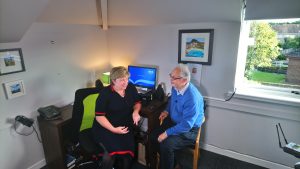
Dr Louise Bailey and Paul at St Triduana’s Medical Practice

Phase two of the project was to produce a ‘navigator tool’ to break down those barriers and prepare patients and GPs in order make the most out of their appointments. Phase two is now complete, and in this edition of Airing Pain, Paul Evans speaks to the researchers, patients, and healthcare professionals that allowed this project to happen.

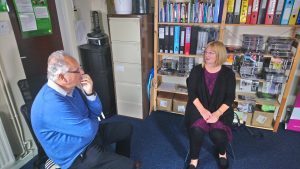
Paul speaks to Lucy

Reneé Blomkvist, Pain Concern’s researcher heading the project’s second phase, explains the established barrier in phase one, as well as the methodology used in preparing the navigator tool.

Paul speaks to GP study participant Dr John Hardman, who has a particular interest in chronic pain, about his experience piloting the tool and how it allows both patients and GPs to focus their appointments. We then visit the University of Dundee to hear from the Scottish Government’s Lead Clinician on Chronic Pain and member of the research steering group, Professor Blair Smith, about his views on the role the navigator tool could play in helping people conceptualise and discuss their pain.

At St. Triduana’s Medical Practice in Edinburgh, Lucy and her GP Dr Louise Bailey talk about their experiences in using the tool, and how the practice is trying to use supported self-management to further help its patients.

Issues covered in this programme include: Appointments, managing consultations, primary care, availability of pain services, communicating pain, educating healthcare professionals, GP, Navigator Tool, feedback, patient experience, pre-consultation, primary care and research.


Contributors:

  • Dr John Hardman, GP, Navigator Tool study participant
  • Professor Blair Smith, Scottish Government Lead Clinician for Chronic Pain, Professor of Population Heath Science, University of Dundee
  • Dr Louise Bailey, GP, Navigator Tool study participant
  • Renee Blomkvist, Pain Concern researcher for the Navigator Tool
  • Lucy Murphy, Patient, Navigator Tool study participant.

More information:

To find out more about the history of Pain Concern’s Navigator Tool project and to try it out for yourself, please click here.

Peer Support. Join the community

“Having chronic pain is very lonely.”

Join the community

Subscribe to Pain Matters

Everything you need to know about how to live with chronic pain

Subscribe


In pain? Don’t understand what’s happening?

“Having someone to help you prepare for your life through pain”

Our Pain Education Sessions

Fundraise for Pain Concern

Help us to help others

Fundraise


How Pain Concern’s Navigator Tool can help focus pain appointments

To listen to this programme, click here.

This edition is funded by the Health and Social Care Alliance and Edinburgh and Lothians Health Foundation.

In 2015 Pain Concern released its report ‘Breaking barriers to self-management of chronic pain in primary care’, marking the end of the first part of its ‘Breaking Barriers’ project. Its aim was to highlight the commonly occurring barriers that patients faced during one-to-one appointments with healthcare professionals, and to advance the primary care management of chronic pain.

Phase two of the project was to produce a ‘Navigator Tool’ to break down those barriers and to prepare patients and GPs to allow them to make the most of their appointments. Phase two is now complete, and in this edition of Airing Pain, Paul Evans speaks to the researchers, patients, and healthcare professionals who allowed this project to happen.

Renée Blomkvist, Pain Concern’s researcher heading the project’s second phase, explains the established barrier in phase one, as well as the methodology used in preparing the ‘Navigator Tool’.

Paul speaks to GP study participant Dr John Hardman, who has a particular interest in chronic pain, about his experience piloting the tool and how he found it allowed both patients and GPs to better focus their appointments. We then visit the University of Dundee to hear from the Scottish Government’s Lead Clinician on Chronic Pain and member of the research steering group, Professor Blair Smith, who explains his views concerning the role the ‘Navigator Tool’ could play in helping people conceptualise and discuss their pain.

At St. Triduana’s Medical Practice in Edinburgh, Lucy and her GP Dr Louise Bailey talk about their experiences using the too., They discuss how the practice is trying to use supported self-management to further help its patients deal with their pain.

Issues covered in this programme include: Appointments, managing consultations, primary care, availability of pain services, communicating pain, educating healthcare professionals, GP, Navigator Tool, feedback, patient experience, pre-consultation, primary care and research.

Paul Evans : This is Airing Pain, a programme brought to you by Pain Concern, the UK charity providing information and support for those of us living with pain and for healthcare professionals. I’m Paul Evans.

Louise Bailey: It’s a revelation, to use something like this in the consultation.

Lucy Murphy:  I actually felt my appointment was longer than the normal 10 minutes. I felt that I was given more time.

Evans: In 2015, Pain Concern published its report ‘Barriers to Self-Management of Chronic Pain in Primary Care’. It marked the end of phase one of its ‘Breaking Barriers’ research project, funded by the Health and Social Care Alliance and Edinburgh and Lothians Health Foundation.

You can find all the details of the project, including our series of self-management videos at Pain Concern.

Having identified the barriers to self-management of chronic pain in primary care, phase two was to develop and pilot a ‘Navigator Tool’ to prepare patients and their healthcare professionals for their consultations. This phase is now complete.

Renée Blomkvist, Pain Concern’s researcher for phase two, will now remind us of what those barriers identified in phase one were

Renée Blomkvist: After interviewing health care professionals, their patients and carers from across primary care they described the barriers as themed around the consultation, patient experience, limited treatment options and organizational constraints. For example, during the consultation, individuals often found that the timing of the self-management discussion, and the communication within this discussion, was challenging. Even though the study found that both parties wanted to discuss self-management, it was something they both found difficult to talk about. Patients expressed that they sometimes wanted to speak about self-management but observed that the healthcare professionals were not up to speaking about it and likewise the healthcare professionals found it awkward to bring this up with patients. The ‘Navigator Tool’ therefore tries to bridge this perceived gap in communication by preparing both parties for the conversation.

Evans: How did you do the research?  Who were your subjects?

Blomkvist: We wanted to try out the ‘Navigator Tool’ broadly in primary care.  So we used two GPs, two pharmacists and one physiotherapist and they in turn recruited a handful of their chronic pain patients (roughly any patient who had experienced pain for over three months). We instructed the healthcare professionals to ask these patients whether they wanted to participate in the study and we ended up with a sample of thirty five patient participants.

We wanted a randomized control trial structure; this meant that half of the participants would not receive intervention, so that we could compare the results between the two groups. Around sixteen and seventeen patients used the tool.

We administered some questionnaires to them which sought to measure their confidence in pain management, their perceived shared decision-making (how much they felt that the health care professional was enabling to them and letting them share in their decisions) and the consultation quality index; a holistic marker for how enabling healthcare professionals are perceived to be by their patients. We also had a feedback sheet that was specifically feedback about the tool itself asking:

  • How easy was it to use?
  • Was it too long?
  • Which parts did you use?

We asked for specific comments as well:

  • How can it be made better?
  • What did you like about it?

I also did eight interviews with a random selection of patient participants across the sites and I interviewed all the healthcare professionals as well, in order to get a more in-depth and individualized understanding of what they thought of the ‘Navigator Tool’ and how they used it.

Evans: John Hardman is a GP in Dunbar on the east coast of Scotland. He has a special interest in chronic pain and was one of the GPs involved in assessing the ‘Navigator Tool’. So John, explain what the ‘Navigator Tool’ is?

John Hardman: The ‘Navigator Tool’ a document that is designed to help health professionals and patients to understand the range of treatment options that are available to them, to help them with chronic pain and to help focus the professional consultation in a way that aids both the professional and the patient in understanding the many complex factors which can contribute to chronic pain problems.

Evans: I’ve got the ‘Navigator Tool’ in front of me.  It starts with a questionnaire, is this to be done by the patient or the doctor?

Hardman: The way I’ve used the tool is to post it out to the patient prior to the consultation, which is different from how most GP consultations work where the patient comes in fresh and describes their problem to us. By posting the ‘Navigator Tool’ out to the patient this allow them to really think about what’s going on before we meet them.

Evans: In what way?

Hardman:  The tool raises a whole range of questions. It starts with some very open questions that ask patients to think about how pain affects them in their life and different elements of their life that it might be affecting.  Then, it asks some more focused questions, prompting patients to think about whether they might have other issues surrounding their medication, their mental health or activities of daily living that are impaired by their pain.

Evans: Considering how the tool could be used. Suppose I came to you as a patient with chronic pain, would you then say to me: “Right, I’ve got this form for you – in a week, or a month’s time, bring the form back to me and tell me what’s on your mind”.

Hardman:   Absolutely. Another option is that some GPs may be able to go through their list of patients, who are coded with chronic pain, identify the ones that might respond well to this tool and send it out to them proactively.

Evans:  How did it work in the pilot you were involved with?

Hardman: I went through a list of patients who I knew had chronic pain problems and selected them to ensure that they met the qualification criteria for the study.

Evans:  Was the qualification criteria just simply ‘if you have chronic pain, then you can take part’?

Hardman:  It required that participant patients not have severe mental health problems that would preclude them from completing the form and engaging in appointments in a constructive way.

They would not be able to have, for instance, a severe learning disability and they would have to be able to read and speak in the English language to be able to use the tool. But these are all factors that could be overcome if the tool is developed further.

Evans:  Thankyou GP John Hartman.

Blair Smith is the Professor of Population Health Science at the University of Dundee. He’s a consultant in NHS Tayside’s Pain Service with most of his clinical career spent as a GP. He was part of the steering group behind the ‘Navigator Tool’.

Blair Smith:  Chronic pain is a very complex condition, it’s difficult to understand, let alone to explain and this is true both for patients and professionals. Where I see one of the main roles of the ‘Navigator Tool’ is in allowing patients time to reflect on how this complex condition affects them in all the multi-dimensional ways, and to give them a structure and language to conceptualize this and allow an understanding of that to the healthcare professional. It work the other way round too, because the time that a GP has to discuss chronic pain with a patient, consulting them is very limited and so maximal time efficiency is beneficial to both parties. The ‘Navigator Tool’ has the potential to provide that.

If you’ve got chronic pain, you don’t understand precisely what’s going on, you are aware that so much is going on and it’s all going around in your head. I know this because I’ve experienced it personally and it’s difficult to express or understand. The ‘Navigator Tool’ enables you to pull these separate entities in and to attach labels to them and also to let you see that these are common things that people who are in similar situations to you experience.  Therefore, it’s perfectly ok for you to consider them as part of your condition.  Then you can begin to formulate your conversation with your healthcare professional.

Evans: What sort of things are on the minds of people with chronic pain, before they’ve been taken into the system, if you like?

Smith: My main experience is that they probably haven’t given it a great deal of thought.  People are aware that they have a painful condition and they come to the GP requesting it to be got rid of, without necessarily consider what aspects of it are causing the greatest problems, what aspects are amenable to being mended and what may be more appropriate to come to terms with, understand and move ahead with managing. The effect of this lack pre-consultation thought is that the patient comes to the GP expecting to get a tablet and go away with their condition ‘mended’. Equally, the GP, because that’s the easiest thing to do in a ten minute consultation, will very often prescribe a tablet and say “go away”, perhaps they might say “come back”, perhaps they might not.

I think one of the advantages of the ‘Navigator Tool’ is that it helps to emphasize that medicines, so-called “painkillers”, are only one part of the overall treatment strategy. They rarely cure the problem, they’re called painkillers, but they rarely kill the pain. Painkillers don’t address all the other important aspects of the pain, for example  the psychological, the self-management, the movement, exercise and activity and coming to terms with having a long-term condition. Unless all these things are addressed, whether or not there is painkiller prescribed, the chronic pain is rarely going to improve.

Evans:  Thankyou Professor Blair Smith.  Lucy Murphy has had chronic fatigue and pain for around ten years. Her GP at St. Triduana’s Medical Practice in Edinburgh is Dr. Louise Bailey.

Louise Bailey: We’ve done a lot of work in the practice recently thinking about the ways we care for patients with long term conditions. We’ve looked at all sorts of trying to improve communication with patients in the consultation with patients and really support patients to self-manage their conditions. When the opportunity to be involved with the ‘Navigator Tool’ came about, it seemed a very natural thing for us to get involved with, it sat well with the ethos of our practice and the way we were trying to support and care for our patients.

Evans: So tell me how you use it.

Bailey:  Well, this was part of a research project so it was done under controlled conditions.  Some patients were randomly selected to be issued with the ‘Navigator Tool’ and they were told to bring that to consultations. We met monthly for normal length appointments within the surgery. Chronic pain patients which were not participating in the study continued to have standard consultations.

Evans: So how did you find it to use?

Bailey:  The document itself is interesting. It has a lot of incredibly helpful, information for patients. I would be a little concerned for some patients whose, health literacy is not quite as good as others as they might find it quite difficult to navigate. Nevertheless it had a lot of useful information.  Essentially, where patients came to the consultations and had completed the main page of the document, it really helped set the agenda for the consultation because they’d given thought to what they wanted to discuss prior the appointment.

Evans: Lucy, the first part of the ‘Navigator Tool’ involves you filling out a form…

Lucy Murphy: I found that really interesting because it was all the questions that were relevant and it focused my thoughts on exactly what I was coming to the appointment for. So when I was coming to the appointment, I wasn’t rambling trying to get across. It wasn’t just “Oh, my ankles are really sore this week”. Instead, I was homing in more on exactly what was bothering me.  Was it that I was unsure about the diagnosis? Was I worried that I was on the wrong medication? It allowed me to look at exactly what I was coming in the doctors to understand.

Evans:  So it’s focused you to come along to the consultation, but were you able to focus on those things before doing this?

Murphy:  For me, with a long-term condition, sometimes if I get a pain in a different place or a different symptom, I find it quite hard to turn up to the appointment because I feel like “oh it’s me, just turning up, being a bit… well this has happened now”. I actually felt that the ‘Navigator Tool’ made me focus in on exactly what it was: “right, so that ankle’s hurting, but, does that mean there’s something else wrong? Does that mean my medication’s not right? Is this is something I just put up with?” So it allowed me to consider the reason for having the appointment.

Evans: That’s really interesting. I have fibromyalgia as well and it’s so easy to go to your doctor and just say “listen, I feel absolutely awful”, without actually thinking “what is making me feel awful? How am I awful? Am I just miserable?”.

Murphy:  And “why am I here? What am I asking you to do about it?”. Something that came out of this was having a three monthly appointment, which probably isn’t good news for the GP, but it was actually quite reassuring that you didn’t have to have something wrong with you just to come back and have a five-minute chat about where you were at with your condition.

Evans: So you’re being treated as a whole person if you like, you don’t have to be in a particular state to go to your doctor, it’s a continuous process.

Murphy:   Yes.

Evans: That’s Lucy Murphy and her GP, Doctor Louise Bailey.

The third part of the ‘Navigator Tool’ comes under the heading ‘Self-Management Options’.  Now, the term ‘self-management’ in itself, if not introduced correctly, could well be one of those barriers to successfully managing one’s chronic pain.

John Hartman explains.

Hartman: Firstly, we’re trying to reframe ‘self-management’ as ‘supported self-management’, because a very important aspect this is that you’re not on your own, you’re doing it with the support of your GP, your physiotherapist, your pharmacist, maybe your counsellor as well and a whole range of different health professionals.

Secondly, broaching the issue of self-management is important.  A useful way of doing this is to talk to patients about the obvious thing that patients are often visiting their GP regarding; their drugs, their medicines and how that’s helping.  For many people who’ve travelled a long way along the journey of chronic pain management, they might come and see me on a whole range of different drugs and it’s usually pretty obvious that a good few of these drugs aren’t making any difference at all. Patients are coming in to see me because their pain is bad and they’re on a whole bunch of drugs, this pretty much immediately tells me that actually, many of these probably aren’t working terribly well.

For many patients, it doesn’t take much to have that discussion and say “if all these tablets so far haven’t made a difference, we’re running out of options, we don’t have many other drugs that we can safely try, so what we need to think about are the things that we know work”.  For instance, for chronic back pain, we know that exercise is the most effective intervention, far more effective than most drugs.

We know that for most chronic pain, one of the things that really does work is supported self-management, whatever that means for the individual patient and it will mean different things for everybody. So I think framing it in that kind of context, I often see a little light bulb going off just above patients’ heads when they realize that actually, there are other things that they could do.

Evans: It just seems a shame to me the way you describe it, with patients stacking up on drugs which often don’t work, it seems as if self-management should have come before that.

Hartman: Absolutely, 100%.

Evans: Lucy, how did your pain journey start?

Murphy:  Over ten years ago, I had a flu type illness for over a month, I tried to recover, going back to the gym and things but I just had complete fatigue, I couldn’t do anything and so I came along to the GP.  She did lots of blood tests and initially diagnosed me with an underactive thyroid, which masked what was really going on. I think it took quite a few months until I got the diagnosis of Chronic Fatigue Syndrome.

Evans:  How did the management of that start?

Murphy:  It wasn’t a very positive experience. I was simply told I had it, given a printout and that was that really, no more advice than that.

Evans:  Coming on this trial, or on this research project, was that a changing point?

Murphy:   I think about a year before, I had been referred to a chronic pain and ME clinic, so that’s why I was interested in taking part in this, because I’d already experienced something like it before.  I found with the clinic, it was actually talking to somebody, acknowledging the difficulties I was having and them telling me that other people have the same experience as well. That put it into perspective and helped me accept it and start to deal with it more effectively.

Evans:   Louise, the fact that Lucy had been on a pain management programme, does that mean that she was a member of the converted anyway, preaching to the converted?

Bailey: No, I don’t think that’s necessarily true, because it’s a continual process of reviewing and reflecting.  What you want to do is try and optimize the quality of life that patients have and I think there were things that Lucy and I had in our consultation, that we discussed, which were very specific to her, her family and her condition.

With some patients that I used the tool with, it actually affirmed the progress they’ve made and that was a really positive thing, to say “well, actually, we’ve looked at this and you don’t have any concerns in this particular area” and that’s really promising.

With one of my patients who was a bit dubious about how helpful it had been, we actually used it as a way to illustrate the progress that she had made in managing her condition. We drew other information out, which I don’t think would have come out, without using the ‘Navigator Tool’. So that was a very positive and affirming thing, which showed the progress that she had made.

I think Lucy has a huge amount of insight into her condition, but we still managed to look at other areas and consider other things that she might do, which perhaps wouldn’t have been drawn out of a standard 10-minute consultation, for which she hadn’t prepared in the way she had done whilst using the tool.

Evans:  Were there patients who it didn’t work for?

Bailey: The effectiveness for individual patients varies, just as their condition, where they are in self-management, understanding their pain and how best to manage it, varies too. So for some it was, I think, very useful. For some, it was less useful.

As a clinician, I found every contact really helpful.  I don’t think I have any doubt that for every patient that was engaged in this project, I feel I have a better understanding of their condition and their situation in general, so should they come back in the future to see me,  we’ve gathered a lot more important information than I had before.

One of the great values of my job is continuity and I put a high price on that for my patients. Using a tool like this and then seeing them again, means that you’re layering your knowledge and understanding of the patient and their condition, so you can be more effective as a clinician.

Evans:  The final section of the ‘Navigator Tool’ is “Goals” and that’s where the healthcare professional and the patient agree on the goals are.

Hartman:  I think that exemplifies the challenge there, because often goal-setting has traditionally been the doctor saying “Well, by next appointment, you’ve got to do this” but that’s not what it’s about. Goal setting is about the patient deciding what they want to do, where they want to be, what they want to get out of this and then choosing that as an end point. Then, between the doctor and the patient, working out, “Well, how are we going to get there together?” and deciding something that is realistic and achievable, maybe less than what the patient perhaps expected to achieve in the first place, but which the doctor in their experience thinks: “Yeah, you know we could maybe get there within four weeks or twelve weeks or whatever”. Thus setting a goal that is achievable and then working out how to get there.

Evans: GP Dr John Hartman.

So, Pain Concern’s research project to identify the barriers to self-management of chronic pain in primary care and develop a tool to break down those barriers (that is the ‘Navigator Tool’) is at a stage where it can be rolled out, albeit with a little tinkering around the edges.   Professor Blair Smith.

Blair Smith: Ultimately what I would like and part of the education that we would like to facilitate across the whole patient/professional population is that chronic pain isn’t necessarily a medical problem. Actually, it’s a social problem and it’s a psychological problem. What this tool does is, is help people to reflect on that before they come for the ten-minute consultation and it means that some of those previously unrecognized associations, will be recognized, even during the first consultation.  It may even mean that if a patient takes this through to its logical conclusion, that they will be able to address some of their most important and challenging issues on their own, without coming to a GP and I would certainly like to see that people who have chronic pain will not necessarily consider the GP as the sole, most important or even the first port of call.

Evans: One of the things that came out from the patients results on phase one of the project, which was “Barriers to Supported Self-Management in Primary Care” was that doctors didn’t believe them, or at least they think that doctors don’t believe them. Now, we’ve talked about how patients might use this, how would doctors use it?

Smith:  That’s a very good point. I guess there are occasions in which doctors won’t believe somebody telling them they’re distressed. Though it is perhaps more of a misperception and often a result of, the sense of complicity in seeking and providing analgesia as the most straightforward approach.

It can be difficult for our healthcare professionals to find the language to introduce the concept of self-management, if the patient either isn’t, or the GP thinks they’re not, ready to engage in a discussion about self-management, because it’s a difficult concept to present. Sometimes, the GP might feel that by discussing relationships between pain and modes of thinking or methods of living, that the GP is implying to the patient that it’s all in their head. It’s a challenging conversation to have at the best of times, but when the consultation time is so brief, it’s extremely difficult to have these conversations, to find a common language. That’s exactly what this ‘Navigator Tool’ addresses; providing the common language from the start.

Evans: How would you envisage this being rolled out?

Smith: One of the things that’s clear from what I understand from Pain Concern, is that it’s only used by healthcare professionals who have been trained, to some extent, in its use.

Evans: Professor Blair Smith.

Here’s project researcher Renée Blomkvist again.

Blomkvist:  The intervention as a whole is actually training for the healthcare professionals and the tool for patients. The training session was preparing the healthcare professionals for the types of questions that the patients would come in with and the types of responses that would facilitate self-management.

Evans: In one of your documents, you have terms like, in part of the consultation techniques, “EPE – Elicit, Provide,  Elicit,  Explore”… what’s that?

Blomkvist:  “Elicit,  Provide,  Elicit,  Explore” – the idea is that if you ask someone on a scale of 1 to 10 “How confident are you in self-management?”,  then they’ll say maybe “2”,  if they’re really unconfident, but then you can ask them why  a 2,  why not a 1, so there’s always something that they know themselves that they’re doing well. So, you try and enhance what it is that they already know and then, from what they’re already telling you, you can give them more advice and then that will get the conversation going and you elicit and provide information that way.

Evans: So, in layman’s terms, I say “I’m miserable”. On a miserable scale, I’m 2 out of 10. You would want to know ok, at least he’s not 1 out of 10, so could we call that glass half-full and glass half-empty?

Blomkvist:  Yeah and a lot of people forget that they do have strategies or ways that they are managing their pain, that they are making themselves feel better and they’re just focusing on the eight points that are bad, but if you bring the attention to the one point that is good that can often help.

Evans: Now, I’m obviously talking to the converted here.  How do you spread the good news?

Bailey:  What I now feel using this toolkit in my consultation, is now I need to share this with my partners and for wider use, in a way that is accessible and convenient and easily put within the consultation tools that we have already. So pages from the ‘Navigator Tool’, I’ve now saved on the computer, can be printed out if I see a patient with chronic pain, if I want them to come back and give some thought or prepare for an appointment. So that’s a very easy way that any GP could allow a patient to go away and think about how the conversation or the discussion will go for a next appointment.

It varies how you use the tool for different patients and one of the things I learned about was that different patients will use different parts of it, in different ways, at different times and so having a flexible tool that you can use for patients when they find themselves in different places or in different situations, adds value to it.

Evans: How do your colleagues take that on board?

Bailey: Well, I find, as with any clinical change, it’s the process of refreshing minds, of discussion and of people using things, of practicing with them. When they get some success with it, that builds confidence and so if there are problems, you identify them and discuss them. We do that with any new thing that we implement in the surgery, so I would be hopeful this would be taken up in a similar way.

Evans: That’s Dr. Louise Bailey.

All the information and resources on the ‘Navigator Tool’ and the Breaking Barriers project are on Pain Concern’s website, which is www.painconcern.org.uk and you can download all editions of Airing Pain from there, as well as from Pain Concern’s YouTube and Facebook channels.

Now before I end this edition of Airing Pain, I’ll just remind you that whilst we in Pain Concern believe the information and opinions on Airing Pain are accurate and sound based on the best judgements available, you should always consult your health professional on any matter relating to your health and wellbeing. He or she is the only person who knows you and your circumstances and therefore the appropriate action to take on your behalf.

Bailey: I’ve been a GP for over 25 years and the revelation about managing pain 25 years ago was the World Health Organization steps to visualize increasing pain relief, so that you started with paracetamol,  anti-inflammatories,  codeine and you got stronger and stronger painkillers.  As more and more patients have presented with pain, if you adopt that model and you don’t recognize the value of the enormous amounts of research that’s been done in the management of chronic pain conditions and that the holistic approach to both prescribing, supporting patients and helping patients self-manage, you’ve absolutely missed a trick.

One of our main jobs as a doctor is to do no harm and what it is really easy to do when you see somebody with pain is to give them a stronger painkiller.  Actually, I think what the ‘Navigator Tool’ helped me to do was to look much more effectively at the patient’s life, how it was affecting them and how I could specifically support them to make changes.

Evans: You and your colleagues are still up against this barrier of 10 minutes for consultation?

Bailey:  That’s exactly right, but the value of having a patient who’s prepared for a consultation and is setting the agenda on arrival, means that those 10 minutes are used to valuably support the patient. The agenda is set by them, not by the doctor and of course when you’re managing a long-term condition, it’s about what matters to the patient, not the doctor.

Murphy: I actually felt my appointment was longer than a normal appointment. I had no awareness it was just a 10 minutes, actually felt I was given more time.


Contributors:

  • Dr John Hardman – GP, Navigator Tool study participant
  • Professor Blair Smith – Scottish Government Lead Clinician for Chronic Pain, Professor of Population Heath Science, University of Dundee
  • Dr Louise Bailey – GP, Navigator Tool study participant
  • Renée Blomkvist – Pain Concern researcher for the Navigator Tool
  • Lucy Murphy – Patient, Navigator Tool study participant.

More information:

To find out more about the history of Pain Concern’s Navigator Tool project and to try it out for yourself, please click here.

Peer Support. Join the community

“Having chronic pain is very lonely.”

Join the community

Subscribe to Pain Matters

Everything you need to know about how to live with chronic pain

Subscribe


In pain? Don’t understand what’s happening?

“Having someone to help you prepare for your life through pain”

Our Pain Education Sessions

Fundraise for Pain Concern

Help us to help others

Fundraise


New research from Pain Concern offers the prospect of better care for those living with chronic pain.

The specially-developed Self-Management Navigator Tool encourages positive communication between people seeking to manage debilitating pain and their healthcare professionals.

Coming out of the Breaking Barriers to Chronic Pain in Primary Care research project, the Self-Management Navigator Tool is designed to improve communication between patients and healthcare professionals in primary care. The video series below explains all.


Further Resources:

  • Read all about the Self-Management Navigator Tool here
  • Read about the Breaking Barriers research project here
  • Airing Pain 107: Easing Appointments with the Navigator Tool
  • Download or order the Self-Management Navigator Tool printed booklet at our online shop.

Navigator Tool Video Series:

Peer Support. Join the community

“Having chronic pain is very lonely.”

Join the community

Subscribe to Pain Matters

Everything you need to know about how to live with chronic pain

Subscribe


In pain? Don’t understand what’s happening?

“Having someone to help you prepare for your life through pain”

Our Pain Education Sessions

Fundraise for Pain Concern

Help us to help others

Fundraise


What can be done to implement better pain education for doctors, patients and parents, and trusting your pharmacist when in doubt

To listen to this programme, please click here.

This edition has been funded by Pain Concern supporter and cyclist Ade and The Sackler Trust.

According to the British Pain Society, doctors and other healthcare professionals (HCPs) receive less training in pain management than veterinarians.[1] With pain being one of the major presenting factors for a large number of medical problems, this edition of Airing Pain looks into what programmes are being implemented to alleviate this knowledge gap.

Dr Helen Lakins, deputy lead for the UK Essential Pain Management Course, describes how the course developed from being taught to HCPs in developing countries to being used in Australia and the UK. The predominant aim of the course is in response to the majority of medical undergraduates believing they are not receiving adequate pain training.

Swansea University is currently undertaking a research study into patients’ beliefs and expectations of pain medications. Paul speaks to Dr Sherrill Snelgrove and Sarah Long about how the study has found evidence that people’s beliefs about their medication and illness can feed into how they manage their pain.

Finally, Paul speaks to psychologist Dr Jo McParland of Glasgow Caledonian University about her involvement in a study focusing on parent appraisals of injustice when their child has chronic pain. Dr McParland emphasises the importance of highlighting the child’s experience, as well as validation from both HCPs and parents themselves.

Issues covered in this programme include: Children and young people, beliefs about pain, healthcare in developing countries, educating healthcare professionals, family, health beliefs, policy, medication, older people, painkillers, parents, polypharmacy, side effects and research.

Paul Evans: This is Airing Pain, a programme brought to you by Pain Concern, the UK charity providing information and support for those of us living with pain, and for healthcare professionals.

I’m Paul Evans, and this edition has been funded by the Sackler Trust, and cast your mind back to edition 102 of Airing Pain when I spoke to cyclist Ade about how long distance cycling offers him considerable relief from the grind of his daily constant pain. He was about to embark on his 21 Days of Pain challenge, with a target of cycling 60 miles each day for 21 consecutive days. And that’s a mind blowing 1,260 miles.

Ade: It’s not just a fundraising thing, this is a way of showing people that by doing something physical you can manage your own pain.

Evans: Well Ade’s 60 miles a day was a rather conservative target, check out his ride reports on 21daysofpain.org.uk. They’re a really good read, a really informative read on how self-management of your chronic pain really can work.

Ade: Once you find something that helps you ease the pain, you kind of latch on to it. It was doing more than the pain medication.

Evans: And you’ll notice that he exceeded his target by 550 miles, a staggering 1,810 miles in total. We can only thank him for donating the money he raised to help support this edition of Airing Pain, in which I’m going to look at three areas of knowledge building, affecting the young…

Joanna McParland: Within a school context, a child was reported to be having pain and saying they couldn’t participate in activities because they had pain at a particular time, but they were informed by the teacher, according to the parent, to get on with it, suck it up and just get on with it.

Evans: The old…

Sherrill Snelgrove: Sometimes people of a certain generation are reluctant to question the medical regime that they’re on. We’re interested in how we can help people to question or think about the medications they are on themselves and the side effects.

Evans: But we’re going to start with the health professionals who treat us. Helen Makins is a pain consultant in Gloucestershire Hospitals NHS Trust. She also has a role in The Royal College of Anaesthetists’ Faculty of Pain Medicine as deputy lead for the essential pain management course in the UK.

So what is that?

Helen Makins: It’s a course to teach healthcare professionals about the basis of pain. So it follows an algorithmic approach, a bit like when we do resuscitation, we follow an ABC approach, with this we follow something called RAT, which stands for recognise, assess and treat. And through those three parts of the teaching we investigate all the different options available for recognising, assessing and treatment of pain.

Evans: ABC I know from my first aid course is airways, breathing, circulation. And what’s the one you were saying?

Makins: RAT, so it spells rat. And we like to say that pain is a bit like a rat, in other words most people don’t like pain, it’s a really unpleasant thing, but often you can’t see it, so it’s relevant in that respect as well. And it happens to stand for recognise, assess and treat.

So originally the course was developed in Australia and at that time it was devised as a course to teach healthcare professionals in developing countries how to manage pain. And then the team who had started teaching it abroad realised that actually their own local medical students didn’t have such effective teaching. And so they started using it in medical schools in Australia initially, and then the Faculty of Pain Medicine worked collaboratively with them and brought it over to the UK. And since 2014, when we did our pilot at Bristol Medical School, we’ve been rolling it out across medical schools in the UK. And the next phase, which we’re just embarking on at the moment, is to take it to other healthcare professionals, non-doctors.

Evans: I mean the British Pain Society often quote this, this business, that doctors in the UK get less training in pain management than a vet. So this is something to address that shortfall?

Makins: Absolutely, and that’s not just the case for doctors in the UK, there was work done a few years ago by Emma Briggs and her colleagues which showed that all undergraduates in healthcare in the UK had a really severe lack of pain training, and that, yes, this is certainly trying to address that.

Evans: OK, recognise, what does that mean? I think I know what it means, but what do you tell the doctors, or the undergraduates about recognition?

Makins: So it’s about the healthcare professionals recognising the patient has pain, but also making sure their family and their friends and their colleagues and the rest of society recognise that they have pain. And also recognising the impact of that on society as well as on the individual.

Evans: Surely, they don’t have to recognise pain because a person would go to a health professional because he has pain. So I don’t understand that you have to train somebody to recognise it.

Makins: There are a variety of different presentations for pain, sometimes people don’t necessarily say that they have pain, particularly cultural influences can affect that, especially when we’re teaching this abroad or indeed to patients who are not necessarily British, but they may be living in Britain, they may be very reluctant to talk about pain, because they perceive it as a sign of weakness, or perhaps because they think nobody can do anything about it.

Evans: Okay, so we’ve recognised it. Assessment.

Makins: So we look at pain in quite a simplistic way in terms of assessing, so we ask the healthcare professional to ask questions of the patient, and we will be looking for the type of pain in the first instance. So we break it down into either nociceptive or neuropathic pain, so that pain that’s either coming from damage to tissues directly or from the nerves. Then we look at whether it’s chronic or acute pain, acute pain being pain that’s short-lived, and recent onset chronic pain being pain that’s been there for more than three months. And then we look at whether it’s cancer or non-cancer pain. So we try to categorise the pain as the first thing.

Evans: I’m intrigued to know what the students think about pain before being introduced to pain.

Makins: So one of the things that we’ve brought in recently is an evaluation spreadsheet, or form, for seeing how effective this pain training is. And we were looking at what things we wanted to assess when we devised that, and one of the things we wanted to know was how much people felt that there was a need for this training at the beginning of the course. Partly as a way of sort of showing them why we’re doing it. And that has always revealed when we’ve asked the questions, have you had adequate pain training in the past? The answer is pretty much always no. Would you like more pain training? The answer is pretty much always yes. And do you feel that all undergraduates have adequate pain training? The answer is pretty much always no.

Evans: I guess that’s part of the pain problem, if you like, that it’s not considered a condition in its own right. Does that affect the way the young doctors, the undergraduates, feel about it?

Makins: I think that’s the way they’ve often thought of it prior to doing this course. Because pain training up until that point is very fragmented. They tend to get a bit of the physiology and the physiology lectures at medical school and then a bit of the pharmacology in that section of medical school. And it’s never brought together. So it’s sort of seen as part of many things rather than, as you say, its own entity. And this is very much bringing everything together. So all the theoretical knowledge that they already have, putting it together to translate that into how you would manage a patient.

Evans: Okay, we’ve recognised, we’ve assessed, and now we want to treat. What do you tell them about that?

Makins: We always talk about medicine options and non-medicine options. So we try and take a holistic approach to the patient. So we talk a lot about alternative therapies which may be available depending on the climate or where the patient is living. We also talk a lot about pain self-management, which is one of the key things that I think we do in the UK for management of patient particularly with chronic pain. And we explain how that helps and what that involves, because a lot of professionals haven’t ever come across that before in their working lives. And then obviously we cover the pharmacological aspects and the treatments with medications.

Evans: Are you surprised that a lot of health professionals haven’t come across self-management techniques?

Makins: I suppose I’m not surprised, because before I’d done pain, myself, I haven’t come across it. So it’s not surprising in that respect. But I do think it’s quite shocking that when you consider that pain is one of the major presenting factors for such a large number of problems in medicine, that it doesn’t have a larger component in the undergraduate curriculum.

Evans: And that may come from the fact that the treatments you have to treat pain, that maybe the undergraduates, the people go into the profession thinking they’re going to treat pain, with drugs, pain is something that we can cure.

Makins: And I think that is the case, people think about the pharmacology and which medication they can give, whether they’re not aware, or they just don’t think of all the other simple things that we can do like elevating a swollen leg, for example, or putting an ice pack on it. These things frequently get forgotten.

Makins: That’s Dr Helen Makins. Well that pharmacology or pain medication is the subject of a research study being carried out at Swansea University at the moment. Dr Sherrill Snelgrove is Associate Professor at the University’s Department of Public Health Policy and Social Studies. The study, which is funded by the Welsh Pain Society is confined to people living within the Abertawe Bro Morgannwg University Health Board, that’s in South Wales, but the findings could have universal significance.

Snelgrove: The research study is about exploring people’s expectations and beliefs about the medications. People who are receiving multiple medications may have side effects and we’re interested in their understanding of the medications and the side effects. And whether perhaps some people will accept the side effects as the norm if you like and not question them, or believe that there’s no opportunity for change, and become a little bit unquestioning about the medications.

There’s a lot of evidence to suggest that people’s beliefs, their health beliefs, their beliefs about their medications, their beliefs about their illnesses, feed into the way people manage their own condition. We’re trying to engage with people who perhaps aren’t being engaged with, in terms of the literature, the academic literature, and in terms of knowledge as much as previously.

So what we decided to do was to ask people who are having medication reviews, about their medications and their experiences of chronic pain. And we’ve been trying to do this through inviting them to an interview, a face-to-face interview where they can talk quite freely and confidentially about their experiences. And we’ve also given them a short questionnaire. So we have been in care homes, residential nursing homes, to interview people, and we’re also interested in people who live in their own homes or visit the GP.

Evans: Talking about beliefs, I would think that many people of a certain generation would think that if doctor prescribes a medicine, it’s going to work. And that’s it, full stop.

Snelgrove: And that’s what we’re really interested in is the degree of compliance of people, of individuals. People might think that because that medication was prescribed, that it can’t be changed, and that they have to accept it for a number of years. But, sometimes, people of a certain generation are reluctant to question the medical regime that they’re on. And so we’re interested in how we can help people to question or think about the medications they are on themselves and the side effects.

Evans: Collaborating with Sherrill Snelgrove in this study, at the coalface, if you like, is Sarah Long. She’s a primary care pharmacist working for the Abertawe Bro Morgannwg University Health Board in South Wales, and she works across three GP practices in the region.

Sarah Long: We work within the GP practice, so we can access patients’ notes, and discuss with the doctors any particular issues. We also make sure that people are having the right blood tests if they’re on particularly toxic medications, to make sure there’s a cycle of blood tests going on.

Evans: But what can you as a pharmacist tell a patient the doctor couldn’t?

Long: Well, generally we have more time. Generally, when the doctor is called, they’re dealing with one particular single issue. Whereas we look at the whole of the medication list and the whole of the different chronic diseases that a patient may have, of which pain maybe one. So we look at the combinations of the drugs, make sure that they’re in context with how the patient’s feeling at that particular time. So I’d say the main benefit is that we can spend a bit more time; also it’s bit like being a detective, you can look into the past notes and records and work out whether something that the patient is now taking is really advisable. Because the evidence base may have changed and when they were started, perhaps 20 years ago, that might have been the best drug, but science may have moved on. They may be alternatives, perhaps fewer side effects that they can be usefully switched to.

Evans: Because many people, especially with chronic pain, and maybe the elderly take cocktails of drugs, don’t they? Each one may be perfectly good for what it was intended for but may react differently with another drug that they’re taking.

Long: Yeah, we call that polypharmacy. And polypharmacy isn’t necessarily a bad thing, because if you’ve got lots of conditions and symptoms and disease, you will need a lot of drugs. But sometimes other drugs started to combat the effects of the main drugs, and it all, in sort of the mists of time, becomes a bit confusing. And obviously people’s bodies change over time. And during even a year, people may experience less or more of a particular side effects so their medication will need to be tweaked. So I would say we’re looking after this a bit like an MOT, in that we’re looking at not just the evidence base for the drugs and the patient notes, but we’re also finding out what the patients themselves are currently experiencing and making modifications with that in mind.

Evans: You deal a lot, you were saying, with more elderly people. What, without pre-empting the study, what do you think the general beliefs are about medicines?

Long: Some people come at it from different angles in that I come across elderly people who take the prescriptions religiously, as per the directions on the boxes. And there are other people who pick and mix a bit depending on how they are on different days. Sometimes people I’ve come across are not keen to divulge to their GP that they’ve decided not to take something because perhaps they’re having a side effect. Sometimes people also buy things over the counter or online and don’t think to mention it, which sometimes can interact with the prescription medication.

And the other element is that some of the patients are being seen by multiple professionals with different specialties. So sometimes they get into a bit of a muddle and some people will then at that point use a medication review as a good time to question whether all these things go together and whether any symptoms that they’re experiencing are due to the medication clashes, whereas other people might not use the opportunity. So it’s about questioning them, how have they been since perhaps they started a new medication and dropped another one off.

Evans: If I, or somebody else did want to drop my medication, or just to see what life is like without it, who’s the best person to talk to?

Long: Well, as a pharmacist, I would say speak to your pharmacist. Of course, if the GP is present with you at the time, talk to the GP, or the nurse, but if you’ve suddenly woken up thinking, this is what I want to do, then your community pharmacist that supplies your medication if you’re living at home, would be ideal. Or if you’re going to have a medication review, or perhaps you might want to request a medication review of any pharmacist in order to discuss the best way to stop some of the medication.

Evans: Sherrill, your research project that you’re both involved with, is confined to this part of South Wales but the results will be universally important. It affects everybody, doesn’t it?

Snelgrove: Well, it does affect everybody. And because it’s in one particular area, it probably would be difficult to generalise but if we get enough results, it would give us a good indication of trends, patterns, people’s opinions, and will be a start to doing a much larger study.

Evans: The questionnaire is very easy, although you have to think before you answer. When I did it, it made me think much more about what’s going on. Just simple beliefs. Questions like: my health at present depends on my medication, having to take medications worries me, my life would be impossible without my medication. And this is pick one of these. But actually, you have to think quite carefully about it. I mean, does my health really depend on medication? Could I be without it? How have I ever tried being without it? What should I do if I wanted to try and live without it? You know, it’s a good thought-provoking questionnaire.

Snelgrove: Well, maybe, yeah, maybe completing the questionnaire has a side effect in itself of enabling you to think a little bit more about your medications. My health at present depends on my medication, having to take medications worries me. These are all questions which have been validated in other studies. But we can find out more about those answers through an interview. And when I say interview, it’s not a formal interview, it’s like a discussion, it’s a chat. I’m very happy for the person to tell me about their experiences, their worries, their concerns. And as I said before, it’s confidential, it’s anonymous.

Evans: That’s Sherrill Snelgrove of Swansea University. Now if you do live within the area covered by the Abertawe Bro Morgannwg University Health Board, that’s roughly from Bridgend to Swansea and all points in between in South Wales. If you’ve been taking medications for at least three months and you’ve discussed your medications with a GP or pharmacist within the last 12 months, then do get in touch with Sherrill. Just put her name Sherrill Snelgrove, followed by Swansea University into a search engine, and all her contact details should come up. And if all that fails, just get in touch with us at Pain Concern, and we’ll pass on your details.

Now if, as seems apparent, the participants in that study will be predominantly in the older age group, Dr Jo McParland, who’s a senior lecturer in psychology at Glasgow Caledonian University is involved in the study at the other end of the age spectrum. The study she’s involved with is looking at parental appraisals of injustice when their child has a chronic pain condition.

McParland: We were interested to find out about what it was that really mothers thought was unfair in the context of having a child with pain, both from their own perspective, and from their view of their child’s experience of their pain condition and the impact that it has on their child. What we found was that the mothers tended to focus on their child’s experience, not their own experience, and the interactions that they had with various people to try and support their child.

The key themes that I’m kind of finding is that there’s an element of taking perspective, they acknowledged that their child’s situation, their child’s condition, was unfair, but they tended to think that’s not useful to think in that way. That’s not helpful to helping me to support my child. And so instead, what they did was they took perspective, by saying things like, it could be worse, there are a lot of families who have circumstances worse than ours, so we’ll get through whatever it is that we’re experiencing. And attached to that, related to that, is a sense of just deal with it. There’s a fatalistic perspective that everybody just has to deal with the cards life hands to you. So they kind of thought, well, it’s not great, but we have our struggles at times but, you just get on with it. That was very much a kind of key theme. This whole taking perspective, imagining things could be worse, just deal with what life hands to you. And this was at times used to reject the idea that the experience their child’s pain is unfair. So that was one of the themes that kind of emerged across the groups.

The second key theme that emerged was a lack of validation. Now, this is quite a big theme across the groups. And I kind of define this in relation to the fact that the parents talked about how other people, such as family, friends and healthcare professionals, kind of almost didn’t believe necessarily that the child had as much pain as they were reporting that they had. Because it was difficult to understand. To kind of illustrate that, one of the sub-themes within this lack of validation superordinate theme was, he looks like a big strong boy. This is a statement that comes from one of the mothers in one of the groups and this mother reported that people just look at her child and found it difficult that her child found it tough going to school, and being able to participate in activities, because he had this pain condition, but he looked so well. So there was a difficulty from other people in trying to understand the child’s condition.

There was also the parent reporting that they felt as if they were classed being an overanxious parent, because they kept taking their child to healthcare professionals for treatment. But the healthcare professional might say: ‘Well you know it can’t be as bad as all that, they can’t be in as much pain surely as they’re reporting.’ The parent then felt like they were being questioned in terms of, they were maybe being overanxious in taking their child for care, when the child didn’t actually need to be there. And they were starting to wonder, is it me, is it me being overanxious? Am I making my child’s pain out to be worse than it is? Am I overreacting by taking my child for treatment? So this was all kind of part of this, again, lack of validation theme.

And one of the other themes that I took, well sub-themes within the lack of validation theme that I took, was from one of the groups and I titled it ‘Suck it up, buttercup’. And this was from within a school context, their child was reported to having pain and saying that they couldn’t participate in activity because they had pain at a particular time. But they were informed by the teacher, according to the parent, to get on with it, suck it up and just get on with it. And within this sub-theme, parents are reporting that their child’s pain is not well recognised and understood as other conditions. And they wouldn’t wish another condition on the child, but they just felt like their child’s pain was not supported or validated as well as other conditions. Related to that, they also reported that their child’s situation wasn’t treated the same as other people, who may have had injury. They were recognised as having harmed themselves and were given appropriate support, whereas their child is told to get on with it, when they have this long-term pain condition.

Evans: It’s really interesting because lots of the things you say now relate to anybody with chronic pain, you can’t see pain, you don’t know how other people are viewing you. But for the healthcare professional, and the child actually, taking the parent, well the mother in your case, taking that out of things, how does a health care professional work out the extent of a child’s pain, but leaving the mother out of it, the mother has to be there.

McParland: It’s interesting what you’re saying there because, not reported here, but one of the things that did appear in the transcripts was, I think at least one or two mothers would say their child would present to the healthcare professional and would look to the mother, for the mother to tell the healthcare professional about their condition. Because it was almost a sense of, I don’t know whether it was the child was unable to articulate for themselves what their position was, how they felt about the situation, what the reality of their situation was.

And there were also mothers who reported that their child would be so ill and having terrible troubles at home and the child would be in pain at home. She kind of saw the real child at home, the real state of their condition at home. But then when they would sit in front of the healthcare professional, their child would tell the professional that that they were ok and have a big smiley face. And the mother would then naturally be frustrated that the child didn’t actually tell the healthcare professional the reality of how they’ve been suffering and been unable to participate in activities etc.

Mothers equally also say that there were days when, because pain is so variable, sometimes their child could go and climb trees or a go outside and participate in activities. Then a little while later come in and say they can’t do their homework because they’re in too much pain. And it’s like, how can this be possible, you were able to participate in activity and now you can’t. So there was almost some small element of struggle amongst the mothers to try and gauge the reality of their child’s pain, and one or two of the mothers did actually say they do kind of understand that it can be difficult for other people to understand the reality of the child’s condition, because they too sometimes wonder whether or not the child’s actually in pain, or how much pain, whether they’re in so much pain that they can’t undertake activity like go to school or something like that.

We had one third theme that kind of emerged, that our analysis so far indicates, has come out, that I’ve called fight for a normal life. So within this, the mother refers to the forgotten child. So when the child can’t go to school, for instance, mothers reported that they weren’t getting support, sufficient support from school. One mother reported that her child was off for four weeks before the school even contacted her to ask where her child was. And then when the child goes back to school, the mother reported that there wasn’t sufficient support, the child was almost sometimes left to catch up by themselves. There wasn’t sufficient support in place to help the child merge back into normal life at school and be part of the school. So this was kind of the bigger theme, the bigger injustice was around the mothers’ fight to give the child a normal life.

And there’s also kind of themes around the child’s perspective. The parent’s view of the impact of the pain on the child in relation to the fact that their child couldn’t do things. The child couldn’t go to a social club necessarily, because some organisation wouldn’t take responsibility for a child with a chronic illness, so the child couldn’t go, couldn’t take responsibility for the management of the child’s condition. So there were issues attached to that, so the child would be excluded from engaging with friends, participating in normal life and other activities. And the child also found it difficult and started to feel kind of alienated too, within that.

Evans: I think this will resonate with many parents or carers of children with chronic pain issues. But how would you envisage your research being used?

McParland: To our knowledge, this is the first investigation of its kind, working with parents who have a child with chronic pain. We plan to take this forward to help us to design studies that will help us to understand the impact of parental appraisals of injustice on the child’s pain outcomes such as the child’s pain behaviour. We’re in the very early stages of kind of starting to think about this and understand these processes. But this is the first point hopefully that will lead to in subsequent research in this area.

Evans: That’s Dr Jo McParland, Senior Lecturer in Psychology at Glasgow Caledonian University.

I’ll just remind you that whilst we in Pain Concern believe the information and opinions on Airing Pain are accurate and sound, based on the best judgments available, you should always consult your health professional on any matter relating to your health and well-being. He or she is the only person who knows you, your circumstances and therefore the appropriate action to take on your behalf.

Don’t forget that you can download all editions of Airing Pain from Pain Concern’s website which is painconcern.org.uk or from Pain Concern’s YouTube channel, just put Pain Concern and YouTube into your search engine, or from Pain Concern’s Facebook site. I’ll leave you with primary care pharmacist Sarah Long on the benefits of having a medicines review.

Long: Some people are very aware of what each medication does, and they perhaps tweak it, depending on how they feel. Whereas at the other extremes, people have forgotten why they’re taking medication. So they welcome having a discussion about medication and perhaps are made aware that some of the effects that they’re having or some of the symptoms that they’re displaying, could well be due to the side effects of the medication, or indeed that they’ve got a particular condition that’s exacerbated by certain of the medication. So generally, people are very pleased to discuss medication and link perhaps what they’re feeling to the medication and to know that there can be some tweaks made.

Evans: Just use your pharmacist.

Long: Yes, use your pharmacist.


Contributors:

  • Dr Joanna McParland, Senior Lecturer in Psychology, Glasgow Caledonian University
  • Dr Helen Makins, The Essential Pain Management Course, Consultant in Pain Medicines and Anaesthesia, Gloucestershire Hospitals and Dilke Memorial Hospital
  • Dr Sherrill Snelgrove, Associate Professor, Public Health, Policy and Social Sciences, Swansea University
  • Sarah Long, Pharmaceutical Advisor, NHS Wales.

More information:


[1] Andrew Baranowski, BPS President.

Peer Support. Join the community

“Having chronic pain is very lonely.”

Join the community

Subscribe to Pain Matters

Everything you need to know about how to live with chronic pain

Subscribe


In pain? Don’t understand what’s happening?

“Having someone to help you prepare for your life through pain”

Our Pain Education Sessions

Fundraise for Pain Concern

Help us to help others

Fundraise


What can be done to implement better pain education for doctors, patients and parents, and trusting your pharmacist when in doubt

This edition has been funded by Pain Concern supporter and cyclist Ade and The Sackler Trust.

According to the British Pain Society, doctors and other healthcare professionals (HCPs) receive less training in pain management than veterinarians.[1] With pain being one of the major presenting factors for a large number of medical problems, this edition of Airing Pain looks into what programmes are being implemented to alleviate this knowledge gap.

Dr Helen Lakins, deputy lead for the UK Essential Pain Management Course, describes how the course developed from being taught to HCPs in developing countries to being used in Australia and the UK. The predominant aim of the course is in response to the majority of medical undergraduates believing they are not receiving adequate pain training.

Swansea University is currently undertaking a research study into patients’ beliefs and expectations of pain medications. Paul speaks to Dr Sherrill Snelgrove and Sarah Long about how the study has found evidence that people’s beliefs about their medication and illness can feed into how they manage their pain.

Finally, Paul speaks to psychologist Dr Jo McParland of Glasgow Caledonian University about her involvement in a study focusing on parent appraisals of injustice when their child has chronic pain. Dr McParland emphasises the importance of highlighting the child’s experience, as well as validation from both HCPs and parents themselves.

Issues covered in this programme include: Children and young people, beliefs about pain, healthcare in developing countries, educating healthcare professionals, family, health beliefs, policy, medication, older people, painkillers, parents, polypharmacy, side effects and research.


Contributors:

  • Dr Joanna McParland, Senior Lecturer in Psychology, Glasgow Caledonian University
  • Dr Helen Makins, The Essential Pain Management Course, Consultant in Pain Medicine & Anaesthesia, Gloucestershire Hospitals and Dilke Memorial Hospital
  • Dr Sherrill Snelgrove, Associate Professor, Public Health, Policy and Social Sciences, Swansea University
  • Sarah Long, Pharmaceutical Advisor, NHS Wales.

More information:


[1] Andrew Baranowski, BPS President.

Peer Support. Join the community

“Having chronic pain is very lonely.”

Join the community

Subscribe to Pain Matters

Everything you need to know about how to live with chronic pain

Subscribe


In pain? Don’t understand what’s happening?

“Having someone to help you prepare for your life through pain”

Our Pain Education Sessions

Fundraise for Pain Concern

Help us to help others

Fundraise


The Glasgow Pain Education Sessions are from 23/08/2018 to be managed and administered ‘in-house’ by the NHS.

To enquire about the pain education sessions or to book to attend a pain education session please phone as previously 0300 323 9966 or text 0754 822 9958. The pain education session’s can also be booked via paineducation@ggc.scot.nhs.uk and this new email address is available to all now for any enquiries.

Pain Concern continues to support the pain education sessions with information leaflets and other assistance as required.

Peer Support. Join the community

“Having chronic pain is very lonely.”

Join the community

Subscribe to Pain Matters

Everything you need to know about how to live with chronic pain

Subscribe


In pain? Don’t understand what’s happening?

“Having someone to help you prepare for your life through pain”

Our Pain Education Sessions

Fundraise for Pain Concern

Help us to help others

Fundraise


Are you living with chronic pain? Swansea University are conducting a research study to assess people’s understanding and experiences of long term medication for chronic pain.

If you live in Swansea, Bridgend, or Neath Port Talbot and would like to get involved, please click here.

Peer Support. Join the community

“Having chronic pain is very lonely.”

Join the community

Subscribe to Pain Matters

Everything you need to know about how to live with chronic pain

Subscribe


In pain? Don’t understand what’s happening?

“Having someone to help you prepare for your life through pain”

Our Pain Education Sessions

Fundraise for Pain Concern

Help us to help others

Fundraise


Singing, laughing and the feel good factor. Pain Management, the fun way

To listen to this programme, please click here.

This edition has been funded by the Charles Wolfson Charitable Trust.

The British Pain Society’s (BPS) Annual Scientific Meeting (ASM) allows the multidisciplinary nature of the society to be reflected through seminars, scientific programmes, lectures and workshops. Participants can attend various exhibitions, social events and seminars to have well-rounded experiences on the subject of pain.

In 2017, the BPS presented their Wellness Zone, coordinated by the Dorset Community Pain Service, to allow ‘wellbeing’ focused topics to have a platform. At the Wellness Zone, Paul speaks to Sarah Sturman, Dorset Community Pain Service physiotherapist, about Laughing Yoga. Sturman proposes that we are increasingly finding that emotional health is just as important as physical health, and that Laughing Yoga allows us to celebrate socialising and the natural human attributes of silliness and fun.

Paul also speaks to Pain Concern’s own Renée Blomkvist about how pain can affect the way we project ourselves into the world, and how self-management can help find an identity.

Going even further back to the BPS ASM 2016, Paul talks to psychologist Dr Brock Bastion on the nature of happiness and pain. Dr Bastion speaks about his work looking into the nuances of pain and negativity, and how society’s view that you ‘should’ be happy creates more pressure and stress.

Issues covered in this programme include: Anxiety, arts and crafts, breathing exercises, cannabinoids, depression, laughing yoga, mental health, mindfulness, opioids, physiotherapy, alternative therapies, psychology, stress, seminar, singing, group support, wellbeing and workshops.

Paul Evans: This is Airing Pain, brought to you by Pain Concern, the UK charity providing information and support for those of us living with pain and for healthcare professionals. I’m Paul Evans, and this edition’s been funded by the Charles Wolfson Charitable Trust.

[People singing and laughing in the background]:Where are we going to go? What are we going to do?…

Renée Blomkvist: If you think about people who, when they get nervous can’t speak, that feeds into them being unable to kind of project themselves into the world. And then, when they learn through different breathing techniques and different kind of physical exercises to use their voice, that means that they can then project themselves into the world.

Brock Bastian: When people feel that kind of pressure to be happy it means that when you experience non-happy states like sadness, pain, depression, anxiety, that you actually feel in some way you’re failing in life; that you should be happy, we all should be happy.

*           *           *

Evans: [chuckles] The British Pain Society is the largest multidisciplinary professional organisation in the field of pain within the UK. Each year they hold their annual scientific meeting, where leading experts from all over the globe share their expertise with colleagues and patient groups to the benefit of over a third of the population who live with chronic pain. So, all in all, it’s a pretty serious event. Not exactly a laugh a minute. But then…

Sarah Sturman: My name’s Sarah Sturman and I’m a physio working in the Dorset Community Pain Service. Laughter Yoga was started in 1995 by a medical doctor, Dr Madan Kataria, and basically he looked at why medicine misses out on laughter, and why laughter is thought to be really medicinal, and was there any science? And having found that there was a lot of science about the medicinal impact of laughter, he decided to create a form of exercise or activity that could actually bring laughter into a sort of…a packaged way that you could deliver it to people.

Evans: You’ve gathered a crowd around you of people not wholly willing, maybe bulldozed into it. What are you going to do with them?

Sturman: It’s said that laughter’s contagious – it takes one or two people who are enjoying themselves, even just a smile, and naturally humans will be drawn to that and want to think ‘Well, what is it that they know about that I don’t?’ and ‘Why are they laughing and smiling?’ So, there’s that natural inclination to come towards the lighter side of life, and so, if you see a group of people laughing, it’s quite hard to resist, to be honest. If you’ve got some eye contact between the participants it becomes even more contagious. So, silliness, fun, laughter – they are natural human attributes, and it does tend to spread, even with those who are…take a bit of persuading.

Evans: Even with cynical healthcare professionals?

Sturman: I think so, and I think there’s a lot of…a lot less cynicism in healthcare nowadays. We’re becoming more human, I think, and understanding that there’s more to being healthy and well than just a lack of illness.

[Outside a session] Don’t know if these people are coming this way, maybe not. Are you coming this way?

Person: Yeah!

Sturman: Oh, yes! Come and have a seat!

[To Laughter Yoga group]

Have any of you heard of Laughter Yoga? Yes. OK.

[To Airing Pain]

So, lots of useful quotes that you’ll see in literature about laughter…you know, the general thing about everyone saying, ‘Well, laughter’s the best medicine’, but is it really? And throughout time, from 2000 years ago, people were already talking about the benefits of laughter; lots of literary people talking about laughter. There’s not a lot of humour in medicine, but there’s a lot of medicine in humour. And all of these sorts of things that we instinctively know about; various religious groups and different cultural groups have always talked about laughter as being therapeutic – ‘A merry heart doeth good like medicine’; from Judaism, ‘Soap is to the body, so laughter is to the soul’; and then this one, which I think is really nice, ‘We don’t stop playing because we’re old, but we grow old because we stop playing’.

So, this idea of laughter’s good for us – laughter and playfulness, they’re really the same thing, and we don’t do as much of it as an adult. Is it because we’re grown? No, it’s probably not. We grow old and we think differently because we’re not engaging in that childlike playfulness. So, is there any truth to this phrase about laughter [being] the best medicine? Well, there is. We all feel it; we all feel if we had a good belly laugh. But physiologically, well, it can be quite exhausting. So we know it does things physiologically to us, and there [are] a lot of researches that have gone a lot further and really just taken that phrase ‘Laughter’s the best medicine’ and said, ‘Well, is it? What is it about laughter that’s medicinal?’

So, there’s lots of research. Laughter, we know we feel good, we feel mentally uplifted and that’s because there are endorphins and serotonin that’s being released. If it’s a full-on belly laugh, not just a little snigger, then it is aerobically active. William Fry from Stanford did some research and, apparently, it worked out that ten minutes on a rowing machine is the equivalent of one minute full-on belly laughter, when you’re looking at it from an aerobic point of view. So, you can really get good value exercise out of laughter.

It unleashes inhibiters and it breaks barriers. It’s great for communication because laughing is…there [is] no separating out of sexes or people. Laughter – and humour – is a universally understood experience. It’s great for team-building, partly again because there’s this sort of connectedness with laughter and laughter actually pre-dates human language. People who look at the evolution of the human species say that laughter was used as a form of bonding communication between early humans. And in actual fact, even in the animal world there are versions of laughter – with chimps, for example. And it tends to be a form of vocalisation which brings people together – or animals together. So, [it’s] great for team-building.

Helps boost your immune system, loads of really interesting studies – again, mostly in America, but some in Japan, where they’ve had people reading different magazines – a comedy magazine versus a fighting magazine or a serious magazine. And then they’ve looked at things like natural killer cells in their blood samples – they used Saving Private Ryan versus a comedy film, I forget which – and they looked at the levels of the natural killer cells, and it was seen that you watch Saving Private Ryan and your immunity goes down; you watch something of humorous value and your immunity goes up. And this has been repeated, these same sorts of studies. So, we know that it can boost your immune system. Obviously it tones the muscles, which is why, if you’ve had a good belly laugh, you will feel tummy-achy.

The idea is that Laughter Yoga is using simulated laughing exercises, so you’re not expected to laugh genuinely – or at least not to begin with. The motto is ‘Fake it, fake it until you make it’. So you start with pretend laughing, and because essentially it’s so silly it can generate genuine laughter. It’s helpful if you have eye contact, [be]cause when you’re doing something silly and you’ve got eye contact, it spreads – laughter is contagious, isn’t it? If you use motion, again, that tends to help more; as you move around it releases some of the inhibitions. I’m naturally a very shy and quiet person, so this is hugely stressful to do but, actually, once it gets going, for me, it’s unbelievable, and the movement can just help make it that much easier. You want to bring to it an element of playfulness, and as they say, ‘Fake it until you make it’.

The Laughter Yoga, the laughter is your laughter exercises; the yoga is the kind[s] of breathing that you use, so with yogic breathing there’s a lot of breathing in through the nose, doing long exhalations, for all of the physiological effects that that can bring. And when you laugh, you have a lot of forced expiration. Your diaphragm is kind of pumping away and you’re having a forced long exhalation. You’re tending to go into wider than your tidal volume as well, so you’re emptying out more oxygen than you normally would and bringing in more fresh oxygen.

We normally do a full-blown warm-up and everything, and some silly exercises. Within the exercises, we do some deep breathing. When we do the deep breathing, we take a breath in through our nose and we bring our hands towards our chest, clenching our fists. And, as we breathe out [exhales], we’re opening up the body, so it’s giving us an element of a stretch as well. We have two…chants, if you like. The first chant we’re clapping our hands, and we’re saying, [claps the rhythm] ‘Ho, ho, ha-ha-ha; ho, ho, ha-ha-ha; ho, ho, ha-ha-ha’. And it starts to get the facial muscles doing the same kind of thing that you’re going to do with laughter. The other – kind of like a chant – is, ‘Very good, very good, yay!’ which is taking that kind of childlike playfulness. Children are just happy about everything! And if they do something well, even if it’s just stand up well, they will just celebrate it and ‘Yay, I’m so good!’ So this ‘Very good, very good, yay!’ is just to encourage us to be more silly and playful.

[To Laughter Yoga group]

So, we’re going to move – we’re going to just do a couple of these deep breaths. If anyone has got a hernia or viruses or unstable angina, please take it easy. Otherwise, it’s safe. So, we’re going to take a deep breath in…and breathe out…breathe in…and breathe out. You’re going to be copying and joining as best you can. We’re going to start with ‘Very good, very good, yay; very good, very good, yay!’ The first pretend laugh we’re going to do is a mobile phone laugh. So you’re on the phone to your friend, they’ve just told you a funny story and [voice gets higher] it’s so funny! [Laughs] Oh, it’s so funny!  [Claps] ‘Ho, ho, ha-ha-ha. Ho, ho, ha-ha-ha. Ho, ho, ha-ha-ha’. The next one is we’re going to [low] “ho [high] ho” if we can – this is swinging laughter, so it’s a little bit like the hokey-kokey. So, we’re going to come in with a [makes high pitched noise][Everyone laughs][Makes another high pitched noise][Everyone laughs again][Makes another high pitched noise][Everyone laughs again]…and, ‘Very good, very good, yay!’

Evans: Very good, very good, yay, indeed. I’m all for it. That was Sarah Sturman, physiotherapist with the Dorset Community Pain Service. And I suggest that you don’t try Laughter Yoga whilst driving.

[This] brings me neatly to the small print; whilst we in Pain Concern believe the information and opinions on Airing Pain are accurate and sound, based on best judgements available, you should always consult your health professional on any matter relating to your health and wellbeing. He or she is the only person who knows you and your circumstances, and therefore the appropriate action to take on your behalf.

Now, here’s something else that might have surprised you to find at the British Pain Society’s scientific meeting. If, like me, you can think of any number of benefits to not having pain, then a talk on the benefits of pain might have raised an eyebrow. Brock Bastian is a social psychologist working at the University of Melbourne in Australia. His area of research is into the relationship between pain and happiness.

Bastian: The key idea is that, actually, we need pain to be happy, and it’s very hard to experience any kind of happiness if we don’t have some kind of contrasting experience. It’s interesting to be at this conference because I’m not really talking about endless chronic terrible pain – at all, in fact. I’d sort of notice that our view of pain is pretty much a blanket kind of…pain equals bad. I guess I want to look at it in a more nuanced way and also realise that it provides an important contrast in life to the rest of our good experiences too.

Evans: I mean…the contrast thing is interesting because I think if you ask most people with chronic pain what their research subject would be, it wouldn’t be pain and happiness, it would be pain and misery.

Bastian: We’ve written a review paper looking at…let’s call them ‘positive consequences’ of pain, and we tried to work out what are the sorts of differences between what we’re talking about and the sorts of pain where you wouldn’t expect there to be any positive consequences. And I think the key thing here is also to note the title of the paper involves the word ‘consequences’, so it’s what happens after pain a lot of the time. Pain has to stop. And that’s the key thing in all of the sort of work that we do, and I think that’s probably the key difference in pain which can have some benefits, some upside, than pain which doesn’t. And that is effectively whether or not it stops at some point, or even if you know it will stop. I think if you feel that you’re in endless pain, or you are experiencing endless pain, there are not very many benefits there.

Evans: So, what message are you going to get across to these worthies of the British pain world?

Bastian: We talk about a lot of different sorts of things that pain can do. So, we talk about the fact that often pain brings people together. Painful experiences are a very powerful driver of community and bonding and also population – we’ve done some studies showing this. Painful experiences also lead people to often connect with each other through empathy or seek out support or affiliation with others. So, there’s a lot of social sort of benefits there. The other sorts of benefits like the kind of offset and pain leading to increases sometimes in experiences of pleasure. But, I suppose the bigger picture, hopefully, from all of the different bits and pieces of evidence is that it’s worth just stepping back and taking a second look at the way we view pain. It’s very hard to deal with something that…if you see it as only bad. If something is just this big black box of badness, it’s very hard to know how to cope with that; what tools to use to regulate it or manage it better. And so, in some ways, changing the viewpoint on pain, making a more nuanced understanding, rather than just this big black kind of cross, and allowing people to look at it from different perspectives. I mean, we do know that managing anything from depression to pain to anything else, when you can look at it from different perspectives, it greatly enhances your capacity to manage even those unwanted pain.

There’s also some very direct work showing that simply how people think about pain directly changes how they experience it. So, framing pain as positive…there is even some good work showing that framing pain as positive reduces the amount of pain people experience. That’s actually right down at the biological level. It increases the release of opioids and cannabinoids in response to pain. So, there is a lot of emerging evidence that the way we think about, our beliefs about pain, the way we frame pain is fundamentally important for how we experience it. So, if we frame pain as just this big bad thing, then that suggests that we’re not doing a good job of understanding pain. And so, if we could understand in a more nuanced way, see the bad but also the good sides to it, surely that might then even help people who have unwanted pains – chronic pain – to see it differently, take different perspectives to approach their pain management in new ways, maybe even ways they hadn’t thought of before.

Evans: That’s a real ‘glass half-full’ attitude, isn’t it? That you can use pain for meeting people, for getting together to discuss things; the glass really is half full if you want to be like that.

Bastian: Well, that’s right. We never set out to compare pain to pleasure. We just wanted to see ‘Could good things come from pain?’ We never wanted to say that pain was necessarily better than pleasure. I mean, you would never want to say that, that would be a bit silly. But it is noteworthy that, I think, pain is sometimes a more powerful driver of these things. So you often see that, for example, there’s evidence showing that the levels of volunteerism after 9/11 in the United States spiked massively across the country. Not just for tragedy-related causes, for a whole range of causes. People suddenly…I was in Brisbane in 2011 during the floods and there was some 55 000 volunteers turned up. A big outpouring of, I guess, kindness and generosity and there was a real bonding there. If anyone’s from Australia, Brisbane had won the State of Origin multiple times, which is a really big deal if you’re from Sydney or Brisbane. (Not so much if you’re from Melbourne, but if you’re from Melbourne you go for Brisbane.) That was a great source of pride and, I guess, pleasure in some sort of way, but it didn’t bond people in the way that the floods did. That’s obviously, we’re not talking about physical pains – partly there – but certainly we’ve got work showing that the same things occur in response to physical pain.

And I suppose also, in group treatment for chronic pain you would see these sorts of effects – I would presume, I don’t know the evidence and I haven’t done the studies myself. But I presume that that sort of connection that people feel when they are enduring something difficult is often quite a lot deeper than if you’re simply indulging frivolous pleasure, I suppose.

Evans: The altruism, that’s very interesting itself. But getting together with other people within a place; allowing yourself or being given permission, if you like, to discuss with other people openly is very, very good for you.

Bastian: Yeah, that’s right. It’s a powerful source of shared experience, and when you share experiences you become more open and you connect more with people through shared experiences. But pain is a particularly powerful one.

Evans: It would be very interesting to find out how you get from that glass half-empty feeling to get to the half-full thing. Where you can change your mind-set and think, ‘Well, actually, this pain isn’t such a bad thing. It could do me good’.

Bastian: One of the other things that we talk about is how sometimes pain can lead to, I guess, perceptions of virtue. So, often if you see sportspeople pushing through pain, or doing something that’s quite painful but they push through nonetheless, they become heroes. So, often people who push themselves against pain – overcome pain – are seen as having certain virtues and qualities, even heroic sort of qualities. But I think, again, people who deal with high levels of chronic pain daily…that may be a perception which, if they deal well with that, if they’re coping – even if they’re not, whatever – there is some perceived virtue there, perhaps. I know it also goes the other way often as well, and quickly too. So, it’s very tricky with chronic pain, but I think those sorts of ‘glass half-full’ attitudes are much easier if the pain has an end; if you know that it’s going to stop. So, I think it’s important to kind of put that caveat on it.

But it could also be there if people are particularly capable, it could be there for even chronic pain, I suppose. But I would imagine, for myself, it would be much easier to look at it positively if I knew it was going to stop at some point too.

Evans: There’s a big thing these days about measuring the wellbeing or the happiness of a nation. Maybe they should be trying to measure the happiness and the misery of a nation.

Bastian: There was a move to measure the happiness in the UK. I guess the flipside of the pain research is some of the other stuff that we do, looking at how valuing happiness – over-valuing happiness – actually has the opposite effect, often. When people feel pressured to be happy in life, and I guess in our largely Western – perhaps more broadly than Western – but in our cultures today, happiness is sort of heralded as a great virtue. When people feel that kind of pressure to be happy it means that when you experience non-happy states like sadness, pain, depression, anxiety, that you actually feel in some way you’re failing in life; that you should be happy, we all should be happy. And if we’re not happy, then this is somehow a failure. But of course it’s kind of a crazy notion because we evolve with all of these different emotional states, and in fact the negative ones are the ones that kept us alive for all these years, not the positive ones. They’re the more valuable ones, actually. Somehow we’ve put this overlay of value of, ‘Positive is good, negative is bad’ and that’s not a biological or an evolutionary thing, that’s just simply a social thing that we’ve decided that happiness was a great place to be and we should all be happy. And I suppose, as soon as a ‘should’ comes into that, then people experience their pains and their sadnesses as a failure in life.

So yeah, that work was used to criticise this move to measure happiness in the UK, as to whether it might actually have the opposite effect of…if you’re in pain or feeling sad and your happiness levels go down, well, now it’s a big bummer because not only are you unhappy, but you’re bringing your entire nation’s gross domestic happiness down as well [chuckles].

Evans: That’s Brock Bastian of Melbourne University in Australia. I’d just like to point out that the UK gross domestic happiness index has not been affected in the making of this edition of Airing Pain. So there we are. Now, staying with a voice – or vocal expression – Renée Blomkvist is a researcher and medical anthropologist. Her interest in self-management and strategies for people with long-term conditions led her in what – to me, anyway – was a surprising direction.

Blomkvist: I became really interested in stuttering and stammering and being unable to speak, and with the people that I studied, that speaking and the way that they use their voice was a way for them to create their own identity and to create a sense of who they were.

Evans: I don’t quite understand that, you say the way they use their voice creates their identity? What do you mean by ‘using their voice’?

Blomkvist: If you think about people who…when they get nervous can’t speak, that feeds into them being unable to, kind of, project themselves into the world. And then, when they learn through different breathing techniques and different kind of physical exercises to use their voice that means that they can then project themselves into the world; so that means that they can be who they want to be, or they can have a different sense of who they are – so these physical exercises of being able to use your voice kind of feeds into how you experience yourself in the world.

Evans: You use the world ‘normal’, I think. Is it doing something different to conform to somebody else’s view of what is normal?

Blomkvist: Yeah, that’s quite possible as well. Let’s say if you have a very squeaky voice, for example, and you’re uncomfortable with that – being able to shape your voice so that…I guess you can question what’s normal or not but, if you want to be normal, then experiencing yourself as abnormal would kind of have an effect on how you feel.

Evans: So, how does that relate to self-management?

Blomkvist: I think it relates to self-management in the way that…if you’re unable to do the things that you find normal, so if you’re unable to stay up all night drinking with your friends, for example, because you know you’re going to have a flare-up the next day, then you have to sort of create a new identity.

Evans: So, for somebody, say, with a speech impediment or speech abnormality – call it what you will – that process of trying to conform or imagine what other people think of you can hold them back.

Blomkvist: An example from one of the participants in my Masters study, he’d gone through severe bouts of depression and that had really taken hold of his voice. He was so drained that, for him, it just made him unable to speak to his friends or to his parents. And he always used to sing – but he couldn’t speak so much. And so for him, being able to sing every morning kind of opened up his airways, is how he described it. He kind of…he knew that if he didn’t sing in the morning he wouldn’t be using his voice the whole day so, for him to have these practices of singing in the morning, he described it as a bridge from his inner world to the outer world, because he knows he has an impact on the outer world and the environment when he creates these sounds. Even today, he has a ritual of just singing in the morning because it makes him feel more confident; it makes him feel more present.

Evans: That was researcher Renée Blomkvist. Now, what follows will demand your full co-operation and participation. Refusal to join in is not an option.

Anne Smith: …Good afternoon, sir!

Man: Hello.

Smith: How do you feel about doing some singing for your general health and wellbeing?

Man: General health and wellbeing?

Smith: Yeah! Singing-

Man: Singing is good for health?

Smith: It is very good for health! There is evidence that it’s good for our psychological health, our mental health, but also our physical health as well. There [are] so many health benefits. And we’re just doing a little workshop over there if you’d like to join us for ten minutes?

Man: I will, yeah.

Smith: Excellent! Come this way! Come this way!

[To Airing Pain]

Smith: Hi, I’m Anne Smith, I’m a specialist physiotherapist with the Dorset Community Pain Service, and I’ve been working with people with persistent pain for about 23 years now. And I talk to them about singing and they’re very keen!

Evans: But the thing is you’re used to dealing with patients. We’re here at the British Pain Society annual scientific meeting…

Smith: Yeah.

Evans: So, you’re trying to get health professionals into your singing group. Now, how difficult is that?

Smith: Very difficult because it’s sort of, ‘Do as I say, not as I do’, so I am going to keep smiling at people; trying to grab them. I’m going to talk to those people who are sat in my seats…

Evans: Come on, then. Come on, let’s go and get them.

[To man]

Smith: Have you come for the singing workshop?

Man: No…

Smith: [Be]cause you’re actually sitting where I’m about to do a singing workshop. You’re welcome to stay! Would you stay?

Man: I can’t sing though, that’s the drawback.

Smith: Singing is so good for your general health and wellbeing!

Man: It is, isn’t it?

Smith: Our psychological and physiological benefits…

Man: You can’t sing with your mouth full, though, can you?

Smith: No, well–

Man: [laughs]

Smith: Can’t I persuade you to stay? [Be]cause it’s going to be such fun, we’re going to move, we’ve been sat around too much this morning, we’re going to move.

Man: Right. OK, well…alright, I’m game.

Smith: You’re game?

Man: Yeah.

Smith: So, that’s three of us. And that’s how we persuade these ladies [laughs].

Woman: Oh, no.

Smith: OK. How do you feel about coming doing some singing for your general health and wellbeing?

Woman: I’m really camera-shy – extremely camera-shy. I can help you with somebody who does like it.

Smith: Who likes it?

Woman: Well, follow me.

Smith: Oh, two good-looking guys, even better. Ten minutes out of your life, come on, for your general health and wellbeing. It’s going to be really good–

Man: I am completely tone-deaf–

Smith: No! It doesn’t matter! It’s fun! It’s…you produce endorphins, you breathe, you improve your posture. It’s good for so many things, come this way! I’m dragging people kicking and screaming! Yes, you can talk – we’re just over there, where that gentleman is.

Evans: How to clear a room.

Smith: [laughs] How to clear a room.

[Singing workshop starts]

Smith: OK guys, thank you so much for staying for my singing workshop. I am not a musician, I’m not an expert, I just love singing and I know the benefits are huge. Psychologically, physiologically, mentally – there is research to show that it’s so good for so many things. So, we’ve only got a few minutes left now, so if you want to empty your mouths – I don’t want anybody choking, I don’t want to have to do the Heimlich manoeuvre on anybody. And we’ll just do a few little exercises first. So, if you’d like to just stand up for me. And we’re just going to…just shake out a bit. We’ve been sat far too long. Not good for us, we’re not meant to sit around. Man was meant to move. And just a little bit of shoulder shrugging.

Right, now we’re going to do some breathing. Everybody know where their diaphragm is? It’s just two or three nice diaphragmatic breaths, where you breathe in and you try to imagine that you’re filling your tummy with air. So, your tummy comes out as you breathe in. So, breathe in…and out.  So, you’re getting the air right down to the bottom of your lungs.

Now, just feel yourself stand really strong. Imagine that you’re being pulled up from the ceiling, pulled up by a string there. Let your shoulders go down and relax.

OK, now we’re going to get those vocal chords working a little bit. We’re just going to some… make a noise like a siren. So, we’re going to start low, and then we’re going to go right up high and then come down again. So, ready? Get those vocal chords going, yeah? [Laughs] Sceptical? Ready?

[Makes siren noise]

Now we’re going to start singing. And we’re going to do a little bit of a tongue twister, but just to get the enunciation right. We’re going to go up in a scale, singing ‘Where are we going to go? What are we going to do?’ And I want you to really get your mouth going. Ready? So, we’ll – where’s a good note to start for you guys?

Altogether: [Singing] Where are we going to go? What are we going to do?

Smith: Up!

Altogether: Where are we going to go? What are we going to do? Where are we going to go? What are we going to do?

Smith: Get your mouths going!

Altogether: Where are we going to go? What are we going to do? Where are we going to go? What are we going to do? Where are we going to go? What are we going to do?

Smith: Higher!

Altogether: Where are we going to go? What are we going to do?

Smith: Higher!

Altogether: Where are we going to go? What are we going to do?

Smith: One more!

Altogether: Where are we going to go? What are we going to do?

Smith: And stop. And now another one, and this time we’re going to sing out for joy. So…[singing] We are the – with gusto – Champions, my friend

Evans: [chuckles] If I can get my voice above the singing, please don’t forget that you can download all 100+ editions of Airing Pain from Pain Concern’s website, which is painconcern.org.uk; from Pain Concern’s YouTube channel, just put ‘Pain Concern’ and ‘YouTube’ into your search engine; and Able Radio, ableradio – no caps – ableradio.com. Now, come on, all together…

Smith: [singing] Cause we are the champions of the world! Yay! Please give yourselves a massive round of applause! You are incredibly brave and I am incredibly grateful that you’ve made a woman in her sixties extremely happy! So, thank you guys, thank you so much!

Man: Thank you!

Smith: Thank you!


Contributors:

  • Sarah Sturman – Specialist Pain Physiotherapist, Dorset Community Pain Service
  • Dr Brock Bastian – Pain, happiness, and morality Psychologist, University of Melbourne
  • Renée Blomkvist – Medical Anthropologist, Pain Concern Researcher.

Peer Support. Join the community

“Having chronic pain is very lonely.”

Join the community

Subscribe to Pain Matters

Everything you need to know about how to live with chronic pain

Subscribe


In pain? Don’t understand what’s happening?

“Having someone to help you prepare for your life through pain”

Our Pain Education Sessions

Fundraise for Pain Concern

Help us to help others

Fundraise


Singing, laughing and the feel good factor; Pain management, the fun way

This edition was funded by the Charles Wolfson Charitable Trust.

The British Pain Society’s Annual Scientific Meeting (ASM) allows the multidisciplinary nature of the society to be reflected through seminars, scientific programmes, lectures, and workshops. Participants can attend various exhibitions, social events, and seminars to have well-rounded experiences on the subject of pain.

In 2017, the BPS presented their Wellness Zone, coordinated by the Dorset Community Pain Service, to allow ‘wellbeing’ focused topics to have a platform. At the Wellness Zone, Paul speaks to Sarah Sturman, Dorset Community Pain Service physiotherapist, about Laughing Yoga. Sturman proposes that we are increasingly finding that emotional health is just as important as physical health, and that Laughing Yoga allows us to celebrate socialising and the natural human attributes of silliness and fun.

Paul also speaks to Pain Concern’s own Renée Blomkvist about how pain can affect the way we project ourselves into the world, and how self-management can help find an identity.

Going even further back to the BPS ASM 2016, Paul talks to psychologist Dr Brock Bastion on the nature of happiness and pain. Dr Bastion’s speaks about his work looking into the nuances of pain and negativity, and how society’s view that you “should” be happy creates more pressure and stress.

Issues covered in this programme include: Anxiety, arts and crafts, breathing exercises, cannabinoids, depression, laughing yoga, mental health, mindfulness, opioids, physiotherapy, alternative therapies, psychology, stress, seminar, singing, group support, wellbeing and workshops.


Contributors:

  • Sarah Sturman, Specialist Pain Physiotherapist, Dorset Community Pain Service
  • Dr Brock Bastian, Associate Professor in the School of Psychological Sciences, University of Melbourne
  • Renée Blomkvist, Medical Anthropologist, Pain Concern Researcher.

Peer Support. Join the community

“Having chronic pain is very lonely.”

Join the community

Subscribe to Pain Matters

Everything you need to know about how to live with chronic pain

Subscribe


In pain? Don’t understand what’s happening?

“Having someone to help you prepare for your life through pain”

Our Pain Education Sessions

Fundraise for Pain Concern

Help us to help others

Fundraise


1 21 22 23 24 25 49