Information & Resources

Find information and resources to help manage your pain.

Get Help & Support

Find the tools you need to
help you manage your pain.

Get Involved

Help make a real difference to people
in the UK living with chronic pain.

About Us

Find out about Pain Concern and how
we can help you.

NPA

A British Pain Society and Dr Foster Intelligence joint Audit has found that safety protocols need to be reviewed in many specialist pain services to ensure that mental health risk assessment and full case reviews of missed diagnoses are routinely performed. The report recommended that specialist training is given to staff so they can better identify and manage those at risk.

The first ever National Pain Audit, carried out by the British Pain Society and Dr Foster Intelligence, was used to measure the availability and activity of NHS specialist centres for the diagnosis and management of complex chronic pain disorders in England and Wales. mini sex doll This four year study was commissioned by the Health Quality Improvement Partnership (HQIP) in September 2009 in response to the Chief Medical Officer’s report in 2008 “Pain: Breaking through the barrier” which expressed concern that the needs of people with chronic pain were being poorly served by the NHS and wider society.

See the full press release here.

Peer Support. Join the community

“Having chronic pain is very lonely.”

Join the community

Subscribe to Pain Matters

Everything you need to know about how to live with chronic pain

Subscribe


In pain? Don’t understand what’s happening?

“Having someone to help you prepare for your life through pain”

Our Pain Education Sessions

Fundraise for Pain Concern

Help us to help others

Fundraise


In October the new Global Year Against Pain (GYAP) – the International Association for the Study of Pain’s annual yearlong campaign – begins. This year it centres on orofacial pain, which is physical discomfort associated with the mouth and face.

Each year IASP’s campaign attempts to raise awareness of pain as a condition in its own right and to educate health care professionals, government leaders and the public about chronic pain conditions with the aim of improving the care available to patients. The association chose to highlight chronic pain due to its severe effect on many people worldwide and because, despite the fact that many cost-effective pain relief methods are feasible, governments often neglect this area of healthcare. IASP points out that whilst few people die of pain, millions live and die in the midst of it, thus rendering it an important issue.

As with their previous GYAP campaigns, which have targeted headaches, visceral pain and cancer pain among many other types of chronic pain, IASP aims to raise international awareness and improve treatment of orofacial pain. Healthcare professionals and experts on orofacial pain have created information pamphlets on the subject of orofacial pain for IASP and other related organisations. Some of these materials are aimed at doctors and dentists, while others are intended to help patients understand their condition. Throughout the year, IASP and its 90 national chapters will also sponsor various activities, such as meetings, media interviews and publications, to promote education on issues surrounding orofacial pain.

Falling into the gap

IASP has chosen orofacial pain as its focal point for this year’s campaign because many health professionals are not sufficiently trained to recognise and treat this chronic pain problem. This stems from the fact that orofacial pain conditions often fall into the gap between dental and medical expertise, which means that typically neither doctors nor dentists are very familiar with the problem.

Professor Joanna Zakrzewska, who as Honorary Professor of Restorative Dental Sciences at UCL leads research into orofacial pain, explains that many doctors get no training in this area, whilst dentists are poorly taught about the need for a more holistic approach to facial pain. As a result orofacial pain often goes undetected for a long time, being mistaken for tooth ache or other dental problems, and symptoms can become very severe before it is diagnosed. IASP hope that their campaign will raise awareness in doctors, dentists and the public alike, so that orofacial pain can be diagnosed and treated more quickly.

About orofacial pain

Orofacial pain includes such conditions as trigeminal neuralgia, temporomandibular disorders (affecting the muscles and joints of the jaw), burning mouth syndrome, persistent idiopathic facial pain and trigeminal neuropathic pain. These conditions are caused by diseases or disorder of regional structures, by dysfunction of the nervous system, or through referral from distant sources in their causes. The disorders vary in their symptoms and treatment, but all can prove challenging to diagnose. One diagnostic approach categorizes orofacial pain into four groups based on the underlying pain mechanisms—namely, musculoskeletal, neuropathic, neurovascular, and psychogenic pain. Orofacial pain is common, with around a quarter of the population of the UK affected by one of its manifestations. It is more common in women than men.

Orofacial pain conditions can cause extreme discomfort; trigeminal neuralgia has been described as one of the most excruciating pains known to man. Patients have likened the sensation to lightening shooting through their face or an electric shock that is triggered by the lightest touch. Furthermore, there are social and psychological issues associated with orofacial pain, with over 70% of people affected experiencing psychological distress and many feeling socially isolated. Loss of sleep and pain elsewhere in the body are also linked to orofacial pain.

With the Global Year Against Orofacial Pain IASP is shining a powerful spotlight on the topic in order to remove the current barriers to fast and effective treatment.

Peer Support. Join the community

“Having chronic pain is very lonely.”

Join the community

Subscribe to Pain Matters

Everything you need to know about how to live with chronic pain

Subscribe


In pain? Don’t understand what’s happening?

“Having someone to help you prepare for your life through pain”

Our Pain Education Sessions

Fundraise for Pain Concern

Help us to help others

Fundraise


Busting some myths about shingles and post-herpetic neuralgia, and the dos and don’ts of managing migraines

To listen to this programme, please click here.

Migraine is not ‘just a headache’ – it’s a disabling condition that can cause major disruption to work and personal life. So says David Watson, a GP who specialises in treating patients with chronic headaches. He explains that the ‘migraine brain’ is extra sensitive to changes in the environment, how small changes in lifestyle can help people minimise episodes and how to avoid the pitfall of medication overuse. Dr Watson also gives helpful advice on how patients with migraine can best prepare for a visit to their GP.

Post-herpetic neuralgia is another frequently misunderstood condition with myths about its contagiousness and relationship to chickenpox and shingles causing confusion. Marian Nicholson of the Shingles Support Society clears up these misunderstandings and emphasises the importance of preventative treatments. We also hear about a new vaccine which should help to protect older people who are most at risk of developing post-herpetic neuralgia after shingles.

Issues covered in this programme include: Post-herpetic neuralgia, migraine, headaches, hypersensitivity, lifestyle, misconceptions, preventative treatment, vaccine, shingles, elderly people, triggers, burning sensation, chickenpox virus, drugs, medication, painkillers, antiviral medicine, nerve pain, tricyclic antidepressant and antiepileptics.

Paul Evans: I’m Paul Evans and welcome to Airing Pain, a programme brought to you by Pain Concern, the UK charity providing information and support for those of us living with pain. This edition has been funded by a grant from The Scottish Government.

David Watson: If you look at population studies of people with chronic headache, anything up to 20–30% of patients are overusing painkillers and if you look at specific clinic based studies of patients who have been referred by a GP to a specialist, anything up to 70% of those patients overuse medication.

Marion Nicholson: The nerve that the virus used to travel to the skin surface by, has been damaged by the virus travelling along the nerve and it carries on sending these pain messages to your brain and that’s what people talk about when they say they’ve got shingles months later, it’s not shingles – it’s now called post-herpetic neuralgia.

Evans: In this edition of Airing Pain we’re looking at two conditions that can have a major bearing on how we live our lives. One deriving from a virus that nearly all of us have carried since childhood and the other is headache. David Watson is a GP in Aberdeen with a longstanding interest in headache as well as his general practice; he jointly runs a headache clinic in the Department of Neurology, Aberdeen Royal Infirmary. He was also involved in developing headache guidelines and standards at a national level in Scotland. Now we all get headaches, so shouldn’t we just put up with them?

Watson: Tension headaches are probably the commonest headaches that anyone can get but tension headaches are non-disabling headaches, if you’ve had a bad day at work or you’re a bit tired and you should probably go out and get some fresh air or go for a walk, maybe take a paracetamol, but migraine on the other hand is a disabling headache. It probably affects up to 6 or 7 million people in the UK and migraine by definition is a headache that is worse with activity. If you say to someone who gets migraine ‘what do you do when you have a migraine?’ very often they feel they need to stop activities. Interestingly, the World Health Organisation would put migraine in its top 20 disabling conditions and in fact, in women, in its top 12 disabling conditions. If you can imagine that migraines are moderate to severe headaches that are made worse by movement, some people feel squeamish or sick with it and other people find that they are very sensitive to the room, whether it be noise or light or smells, and if you get one of those very bad migraine episodes then probably you’re going to be sitting in a dark room or even lying down, and because of that you are not able to do activities. So I think we need to take migraine very seriously cause it’s probably one of the commonest causes, for example, of short-term sickness absences in the UK and they reckon it probably costs a couple of billion pounds a year in lost revenues to the economy, and for the sufferer it’s very difficult. A lot of people get migraine very often and live in fear of their next migraine. It’s a bit like the weather and weddings: it’s not in any way planned and people live in fear and dread about having to cancel activities like meeting a friend, going to the cinema, going out with their partner. Interestingly, if you speak to the partners of people with migraine, they’ve had situations where it’s them that have gone to the party and partners have been left at home, for example.

Evans: I can vouch for that!

Watson: I have been in that situation as well, my wife, my mother-in-law and my daughter all get migraine and I’m very lucky, I probably only get about four migraines a year and it’s my way of the body just saying slow down and you’ve got to get some proper rest. I remember before I got mine, meeting my wife in Amsterdam and it was all commotion and song, a lost weekend in a hotel in Amsterdam with my poor wife lying there with her migraine and I was thinking ‘do I sit in the hotel room all weekend with her or do I go out and see all the sites of Amsterdam’ [laughs] so yes it is incredibly disabling, not just for the patient, but for family members as well.

Evans: We’re laughing about it now but it really is a serious problem for people.

Watson: I think the single biggest difficulty for people with migraine is people who don’t get migraine calling it just a headache. I think for someone who gets disabling migraine, you know for example, they phone in to the boss in the morning and say ‘I’m very sorry I have a bad migraine today’ there is a bit of ‘what do you mean you can’t come in! It’s only a headache!’ and this poor person is lying in a dark room with a sick bucket by their bed, daring not to move because the pain is so severe. So, yes, I laugh about being in that situation, a headache doctor with my wife having migraine, but it is incredibly disabling.

Evans: You say you get a couple of migraines a year, do you know what causes those?

Watson: We don’t know what causes migraine. So when I see patients and they say ‘can I have a cure’ and I have to explain that we don’t know the cause so we can’t give a cure. But what we know that the migraine brain is sensitive to the environment whether it is to our internal environment or external environment. It’s almost like there’s a switch in the bottom of the brain and when it gets switched on you get this wave of energy going across the brain setting off the chemical changes that then result in all the migraine symptoms. In a sense, how often you get your migraine is set by how sensitive the genes you have inherited have set that switch. So I’m lucky that it takes quite a lot to set me over that threshold and the migraine brain likes regularity, you know, it likes regular meals, regular sleep, regular exercise. It’s much more common in ladies because of hormonal changes, that’s why three times more ladies get migraines. So that’s a sort of internal environment. Then there’s the external environment, some patients will have specific foods or smells. A colleague, for example, for who a particular perfume will set him off – he remembers being in a lift to a meeting once and getting a migraine after standing close to a couple of ladies who had this particular perfume on that set him off. Some migraine sufferers, for example, can predict weather changes, they feel that atmospheric pressure change. I know in my case it’s burning the candle at both ends, trying to do too much, maybe rushing around at work and not drinking enough fluids during the day, missing lunch because I’ve had to go to a meeting or whatever it might be, and it’s almost like the brains getting wound up and wound up and wound up and then you get that release of pain. I’m probably quite lucky that my headaches aren’t extremely painful but I get all the non-recognised symptoms, I’m a bit clumsy, my speech isn’t quite as clear, my brain goes into this like fog and I know that I probably need two or three nights of proper sleep and eating at the right time, drinking plenty of fluids. So we know for patients that a combination of these factors will bring on a migraine for them. We see a lot of patients at the clinic who have what we call chronic migraine. Now chronic in headache terms simply means headache for 15 or more days a month. So, most patients with migraine will get one or two migraines a month that might last a day or two days, fairly disabling for that patient. But there are patients that get headaches a lot of the time, certainly more than half the month and if eight of those days are migraines then we call that chronic migraine. It’s inevitable that most of the people I see at the clinic with chronic migraine are ladies in their late 30s, into their 40s and they are very likely starting to become slightly perimenopausal so hormonal levels are just starting to go up and down. But they tend to be busy people, they’re working full time, they’ve got children, they’re running a household, they are part of the parents association, they are helping out with Scouts on the weekends or at the church or whatever, and very often not getting proper regular sleep. They’re not getting any time to themselves and really in a sense their brain is never getting a chance to switch off. I very often say to these ladies ‘well we can try you with some medicine or a tablet but I’m going to give you some homework and that homework is that I want you to find a time each day that is your time to try and switch the brain off’. Now I can’t tell you how to switch your brain off, for some people it may be to shut the bathroom door, a hot bath and a book, for others it might be going out for a walk, but it’s important for migraine sufferers to give their brain some down time just to give it this kind of unwind time to relax it.

Evans: And this isn’t a self-inflicted thing, it’s a genuine illness, it is not something that you’re putting on yourself.

Watson: Absolutely not! People with migraine have the genes that make them more sensitive to what happens either inside the body or outside the body. Someone who doesn’t have migraine will do the same and not get headaches. Unfortunately for the patient who gets migraine the brain needs that kind of switch off time. And I think it’s for people to try and recognise that in themselves. I’ve seen patients that have come back to me and have said they have managed to get regular sleep and [are] making sure they don’t miss breakfast and are better at drinking fluids and [they] do as [I] told [them] and [they] get migraine now and then but [they are] not getting so many. I saw a lady in the clinic the other day who works in the bakery at Tesco, I said ‘it’s a hot place, do you drink any fluid?’ ‘Oh no, I don’t drink at all when I’m at work’ and I said ‘what about at lunch?’ ‘Oh well I cut my lunch short and get away early so I can pick the children up from school’ and when I saw her again she was much, much better and probably the medicine helped a bit, but she said ‘I actually go out of Tesco and go for a 20 minute walk at lunch time and I make sure I’m drinking plenty’ and it’s nice to think that a small change for some people can make a difference.

Evans: It’s interesting that what to many people sounds like common sense: that if you do work through your lunch, if you don’t drink all day, well you would think that it would have an effect on you, but to be told that by a doctor then it’s OK.

Watson: I think sometimes, with my GP hat on, a lot of what I do sometimes is to try and put things into perspective for people or even kind of normalise things a little bit. Don’t get me wrong, for a lot of people, looking at lifestyle isn’t the whole answer for migraine and they‘ve got this condition and they need medication as well. But I think sometimes people kind of get onto the hamster wheel a little bit and kind of need permission to get off that hamster wheel now and then.

Evans: You mentioned earlier that most patient’s experiences with dealing with their headaches is by going to the pharmacist and getting paracetamol and whatever else is on the shelf, is this a good practice?

Watson: Patients who get a bad headache or a migraine every now and then, I think it’s absolutely fine to self-manage, in fact a lot of the guidelines say that taking aspirin or ibuprofen is as good as the more specific migraine tablets. The difficulty is for patients who start to get more frequent migraine and we know that if you start having to take painkillers on a more regular basis, for some patients, painkillers will actually cause headache and we would probably say that patients would need to restrict painkillers to no more than two days a week, and unfortunately medicines with codeine in them tend to be the biggest culprits for headache caused by painkillers and that’s in things like Solpadeine and Migraleve and Co-codamal and Co-dydramol, you know very common painkillers.

Evans: So you’re saying that overuse of these can actually cause the headaches?

Watson: Absolutely! Absolutely! So if you look at people who transform from an episodic migraine, now and then, to this chronic headache over half the month, a large factor in that for some patients is the overuse of painkillers. Now, the difficulty is that when you stop the painkillers not everyone gets better, but certainly in our clinic in Aberdeen probably in 10 patients overusing painkillers and you stop those painkillers, within about 4 weeks probably 6 out of 10 patients will be a lot better, not cured of migraine, they would still get their headache but it would be back to every now and then. But the four patients, where stopping the medicines didn’t help in terms of headache frequency, what we do know is that the prevented treatments will work better if the overused medicine is not there. And if you look at population studies of people with chronic headache, anything up to 20 or 30% of patients are overusing painkillers and if you look at specific clinic based studies of patients who have been referred by GP to a specialist, anything up to 70% of those patients overuse medication. It’s a perfectly understandable thing, if you’ve got pain you take a painkiller and you have patients who say ‘well I have to take something when I wake up to get me through the day’. I think it’s difficult for these people because when you stop a painkiller the headache will get worse for the first week to 10 days whilst the medicine’s coming out of the system and that’s why it’s really important to have a partnership with the patient.

Evans: What would your advice be to somebody who is suffering headaches? How should they talk to a health professional?

Watson: That’s a good question. I think a lot of patients find it difficult to express the disability they get with especially migraine and they sometimes find it difficult to express the other symptoms that they get. It never surprises me that headache doctors have a smile when patients come to see us and they’ve been referred, for example, with a headache that they’ve had for 2–3 months. I will say to them that ‘we need to talk about that headache’ but I need to know about other headaches you’ve had in the past and they say ‘Oh, I just get normal headaches’ and we smile because most peoples’ normal headaches are migraine and I say ‘can you explain what you mean by normal headache?’ they say ‘Oh well, you know, I get this headache and feel quite sick and have to go and lie down’ you then might explore that more with them and ladies will say ‘Oh yes, it’s a headache I got with my period’ and when you say to the patient ‘well that’s actually migraine’ and they say ‘Oh, no one’s ever told me that I have migraine.’ So patients may naturally play symptoms down and I think that’s difficult for patients to try to understand, but you can’t expect patients to know how to make a diagnosis. What will be useful for patients is to think of all the ways that headache affects them because what I say to GPs is that if you’ve got someone that comes in with a headache that’s episodic, in other words they get a headache for a day or two and then they’re better for a couple of weeks and then they get a headache for a day or two and that headache is associated with some disability so the patients maybe want to stop activities and they maybe feel a bit sick and they don’t like light, then those are kind of the trigger to say this is going to be migraine.

Most people try and keep going so they don’t think of themselves as being disabled and again when I teach the medical students I say, if you say to a mum with three kids under five and she gets migraine ‘Do you go and lie down?’ She’s going to look at you as if to say ‘Well of course I don’t go and lie down’ or someone who’s got a difficult job and the boss is a bit difficult and you say ‘Do you go home when you get a migraine?’ They say ‘Well no, I just keep going’. So you have to phrase the question for example, ‘If your husband is home on the weekend and you got a migraine what would you do?’ ‘Oh, I’ll go and lie down’. So I think what’s good for patients is before they see a doctor about headache is to think about how that headache impacts on their life and if they think that this headache is stopping [them] doing things or its preventing [them] doing things properly, in other words, [they] keep going but it’s a struggle. Then it [can be difficult] to try and talk to the GP about that because what very often doctors focus on, if they don’t really understand migraine, is where is the pain, which bit of your head and is it sharp pain or a throbbing pain or a dull pain and so patients get sidetracked describing the pain. Whereas migraine can be any kind of headache, anywhere on the head and the key is really more to what the other symptoms are. We have developed, in Aberdeen, a questionnaire that goes in a booklet out to patients just to say to patients ‘These are the sort of questions that a doctor’s going to ask you, just have a wee think before you come to the clinic about how the headache affects you’.

Thinking about it, if you come to the GP for example, and most patients with migraine will never see a specialist, it will probably be only 1 in 100 patients with migraine will ever get referred to see a specialist. So if you’re going to a doctor because you are getting bad headaches, don’t go in and talk about your child’s chickenpox or your gran’s dementia or problems you get with your flat feet or whatever, go in and make a headache consultation so the GP has time just to talk about headache and go in thinking about how does this headache affect me and how does it impact on my life and in that way you’re kind of prompting the doctor to ask you the right questions.

Evans: I’ll just remind you that whilst we at Pain Concern believe the information and the opinions on Airing Pain are accurate and sound based on the best judgements available, you should always consult your health professional on any matter relating to your health and wellbeing. He or she is the only person who knows you and your circumstances and, therefore, the appropriate action to take on your behalf. Now about 1 in 5 of us will have shingles in our life, most likely after we’ve past our 50th birthday. Marion Nicholson is the director of the Shingles Support Society.

Nicholson: Shingles is the name we give to a repeat appearance of the chickenpox virus. So what happens is everyone gets chickenpox as a kid or nearly everyone in this country, it’s about 95%. Then at some point in the future, chickenpox virus can reappear, instead of coming out over your whole body what it does this time is just come out in a line perhaps around your ribs or side of your face, it’s always one side of the body only and it usually starts with a nasty pain which often the patient doesn’t recognise, that’s one of the tricky things. They will say I thought I had pulled a muscle or I thought I was allergic to something I used or I thought I had been bitten by an insect. And then after that pain, usually after a couple of days, and that’s when it gets diagnosed. When the doctor can actually see the spots, because before then the doctor will probably agree that, yes, you have probably pulled a muscle. That’s a bother because the treatment for shingles needs to be started within 3 days, there’s a 72-hour window. Because, although the treatment could be given after that time, it really won’t have much effect. Shingles needs to be treated early with the antiviral drugs.

Evans: Well I’ve known people who’ve had shingles, my own grandmother included, who you say the treatment has to be started within the 3 days, she must have had it for months and months and months.

Nicholson: Right now you see that is no longer shingles. Shingles really is the name that we give to the blisters that happen and clear up usually within 2 weeks, in the case of my nephew who’s 13 they cleared up in 3 days. Now what can happen in older people particularly, or in some very unlucky younger ones, is that after the shingles blisters go away the nerve that the virus used to travel to the skin surface by has been damaged by the virus travelling along the nerve and it carries on sending these pain messages to your brain, and that’s what people talk about when they say they’ve got shingles months later. It’s not shingles, it’s now called post-herpetic neuralgia. Neuralgia meaning, it’s a pain created in the nerve. I often tell people that it’s a sort of ghost pain – in that, although the arm or the rib feels painful, there is actually nothing wrong with that arm or that leg. It really is that the nerve is sending a false message to the brain just as people who have had an amputated hand report that they still feel pain in that hand although that hand is no longer there. So it’s the nerve itself which is creating this pain message and it’s very tricky to treat.

Evans: How do you stop the shingles becoming post-herpetic pain?

Nicholson: We don’t have any way of stopping shingles becoming post-herpetic neuralgia. Although one expert pain doctor does suggest that anyone who is 50 or older who develops shingles, should immediately be started on one of the two main drugs that are used to control this kind of pain. One is a tri-cyclic antidepressant, the other is an antiepileptic drug, originally, both of these drugs are used now, mainly to treat this kind of pain, neuralgia. His suggestion is that if you’re 50 when you develop shingles, the rash, you should immediately be started on this tri-cyclic antidepressant because these two drugs, they are really interesting, you know, they are not actually pain relief in that they don’t actually stop pain right away, the way aspirin or morphine would, what they do is slowly over time they build up a pain block, so day after day that you’re taking these two drugs another brick is added to the wall of blockage and eventually after 3 weeks, or in some people 6 weeks, and with the dose increasing regularly, every 10 days you would need to put the dose up again, your pain wall is high enough that the pain message no longer reaches the brain and once that’s in place you can start reducing the dosage of the tri-cyclic antidepressant or the anti-epileptic drug and the pain block will hold even though you’re now reducing the dosage.

Evans: You’ve just mentioned the illness, chickenpox; many people won’t associate the condition, shingles, with chickenpox.

Nicholson: That’s right and one of the main concerns is when they phone the helpline of the Shingles Support Society is ‘how have I caught this or who can I go visit, who can catch what from me?’ So, you start off by catching chickenpox as a kid, it remains in your neural ganglions those are nerve junction boxes beside every spinal vertebrae in your body and then when it reactivates it is called shingles. Now you can only have shingles if you’ve had chickenpox, nobody can catch shingles, it is always something that just develops because you have had chickenpox in the past, and shingles is only transmitted to another person if they actually rub against the shingle sores. So a person with shingles, if they feel well enough, can continue normal social or work life, they don’t have to stay at home. However, if someone who has never had chickenpox rubs against the shingle sores then they would catch chickenpox from the shingles outbreak. You have to think of chickenpox as the first thing and shingles is just the repeat outbreak. Interestingly, chickenpox itself is easily transmitted, you only have to be in a room with somebody with chicken pox for 15 minutes and you are expected to have caught chickenpox. So chickenpox is in the air whereas shingles is not in the air, it is just transmitted by touch to somebody who has never had chickenpox.

Evans: For those who have had chickenpox, which is probably most of us – is there any way of not having shingles?

Nicholson: Shingles gets triggered by all sorts of different things, sometimes nothing at all except getting older, but often it’s after an operation or a fall. There is now a vaccine to prevent shingles from developing and it will be very cost effective to vaccinate people because although not everyone develops post-herpetic neuralgia following shingles, basically, the older you are the more likely it is that that is going to happen to you and if you’re unlucky and that shingles pain drags on, and it does for about 1 in 5, it can really change your manner of living. You might need Social Service support to do your shopping or one lady told me that she didn’t dare drive anymore because the shingles pain for her was a stabbing sensation that hit her across her forehead from time to time. She said ‘if I was driving a car at that time, I would be unsafe on the road so I just don’t dare drive anymore’. Another lady was telling me that her husband couldn’t bear wearing clothes because the shingles pain, in his case, was a super sensitivity of the area around his left ribs and just the brushing of his shirt across his ribs felt to be such an excruciating pain that he just didn’t want to wear a shirt.

Evans: I remember my grandmother, her face looked as if she had been burnt in a fire, she could not touch it.

Nicholson: Interesting that you say that it looked like it because quite often the problem is that it feels like that to the patient, a burning sensation is another one of the range of sensations. You see because the nerve has been damaged, the pain can be felt in a myriad of different ways. Any message that the nerve has at any time sent is what your shingles pain can be. So it could be a sensation of burning, itching, intolerable itching that keeps people awake at night, stabbing, aching, like a bruised sensation, and if people have had it like your Nan on their face, they may have unnecessary dental work done because they think the problem lies in their teeth, that deep ache. So all those sorts of different sensations can be a result of the damage caused by the virus in the nerve. Which is why, quite frankly, I am having the vaccination myself (laughs).

Evans: That was Marion Nicholson, Director of the Shingles Support Society, and their website is shinglessupport.org. Don’t forget that you can download all the previous editions of Airing Pain or obtain CD copies direct from Pain Concern. If you would like to put a question to Pain Concern’s panel of experts or just make a comment about these programmes then please do so via our blog, message board, email, Facebook, Twitter or pen and paper. All the contact details are on our website which is painconcern.org.uk. Now NHS information on that shingles vaccine says that it is licensed for use in people aged 50 and over. Although it can be used off label for people younger if a doctor feels it is suitable and if a GP decides vaccination is appropriate it can be prescribed on the NHS. In other cases the vaccine will need to be given at a private clinic. But from September 2013 people aged 70 will routinely be offered the shingles vaccine on the NHS with a catch-up programme for people aged 71–79.

Here is a final thought on shingles, I’ve had three children and I have got three grandchildren now and I seem to remember this chickenpox from my children isn’t going to be pleasant but let’s get it over with, let’s go to a chickenpox party or something. Now you seem to be saying that perhaps as a parent we should’ve avoided that.

Nicholson: On the contrary chickenpox caught at a young age, usually early childhood, primary school age, is as you say a very mild disease. In some countries they do vaccinate their children against chickenpox, but it’s done for commercial reasons rather than health reasons in that when the child has chickenpox the parents have to take a week off work. So in some countries it is actually done for that reason, and the interesting thing is, for the adult, the more times you have nursed someone with chickenpox the less likely you are to have shingles because each time you meet the chickenpox virus you’re actually developing more anti-bodies, you’re giving yourself a booster against having shingles.


Contributors:

  • David Watson, General Practitioner, Aberdeen and Chair of the SIGN Guideline on Headache
  • Marian Nicholson, Director of the Shingles Support Society.

Peer Support. Join the community

“Having chronic pain is very lonely.”

Join the community

Subscribe to Pain Matters

Everything you need to know about how to live with chronic pain

Subscribe


In pain? Don’t understand what’s happening?

“Having someone to help you prepare for your life through pain”

Our Pain Education Sessions

Fundraise for Pain Concern

Help us to help others

Fundraise


Busting some myths about shingles and post-herpetic neuralgia, and the dos and don’ts of managing migraines

This programme was funded by the Scottish Government.

Migraine is not ‘just a headache’ – it’s a disabling condition that can cause major disruption to work and personal life. So says David Watson, a GP who specialises in treating patients with chronic headaches. He explains that the ‘migraine brain’ is extra sensitive to changes in the environment, how small changes to lifestyle can help people to minimise episodes and how to avoid the pitfall of medication overuse. Dr Watson also gives helpful advice on how patients with migraine can best prepare for a visit to their GP.

Post-herpetic neuralgia is another frequently misunderstood condition with myths about its contagiousness and relationship to chickenpox and shingles causing confusion. Marian Nicholson of the Shingles Support Society clears up these misunderstandings and emphasises the importance of preventative treatments. We also hear about a new vaccine which should help to protect older people who are most at risk of developing post-herpetic neuralgia after shingles.

Issues covered in this programme include: Post-herpetic neuralgia, migraine, headaches, hypersensitivity, lifestyle, misconceptions, preventative treatment, vaccine, shingles, elderly people, triggers, burning sensation, chickenpox virus, drugs, medication, painkillers, antiviral medicine, nerve pain, tricyclic antidepressant and antiepileptics.


Contributors:

  • David Watson, General Practitioner, Aberdeen and Chair of the SIGN Guideline on Headache
  • Marian Nicholson, Director of the Shingles Support Society.

Peer Support. Join the community

“Having chronic pain is very lonely.”

Join the community

Subscribe to Pain Matters

Everything you need to know about how to live with chronic pain

Subscribe


In pain? Don’t understand what’s happening?

“Having someone to help you prepare for your life through pain”

Our Pain Education Sessions

Fundraise for Pain Concern

Help us to help others

Fundraise


Responses are still being invited for the Scottish Government’s consultation on the provision of specialist residential chronic pain services in Scotland. The closing date for responding is Sunday 27 October, and the consultation documents can be found on the Scottish Government website.

The ALLIANCE (Health and Social Care Alliance Scotland) and Scottish Government are hosting a series of local networking meetings for people who experience chronic pain and other stakeholders throughout October to discuss the Scottish Government’s plans for a specialist intensive chronic pain management service.

The Scottish Government is currently consulting on plans for the future provision of such a service in Scotland.  At present, people who live in Scotland, but who require a specialist intensive chronic pain service, travel to Bath in South West England to receive a programme of care from the Royal Hospital for Rheumatic Diseases.  In August, the Health and Social Care Alliance Scotland (the ALLIANCE) heard from 50 people at an event on chronic pain in Glasgow, but we would like to hear more views on the development of this service from more of our members, people who experience chronic pain, carers and others who have an interest in this area.

To support this, the ALLIANCE and Scottish Government are hosting meetings on:

  • 21st October – 12 noon – 3pm in the Studio at The Spectrum Centre in Inverness.  Lunch included at 12-12.30pm
  • 23rd October – 11am – 2pm in the Annandale Suite at the Cairndale Hotel in Dumfries.  Lunch included at 1.30pm
  • 24th October – 11am in Room 3/4 at the ground floor Studio, Rothes Halls, Kingdom Centre in Glenrothes.

To register for any of these events please contact event@alliance-scotland.org.uk or telephone 0141 404 0231.

Peer Support. Join the community

“Having chronic pain is very lonely.”

Join the community

Subscribe to Pain Matters

Everything you need to know about how to live with chronic pain

Subscribe


In pain? Don’t understand what’s happening?

“Having someone to help you prepare for your life through pain”

Our Pain Education Sessions

Fundraise for Pain Concern

Help us to help others

Fundraise


Lloydspharmacy is looking into how listening to music can help with pain management and would like to know what you think.

Have you tried listening to music to relax or distract yourself from chronic pain? Do you think it can help you to manage your pain? Lloydspharmacy would love to hear your views. Taking part in the survey entitles you to 10% off their online sales, plus two participants will win £50 in Lloydspharmacy vouchers each.

UPDATE 28/10/2013: Initial findings from this survey are now available here.

Peer Support. Join the community

“Having chronic pain is very lonely.”

Join the community

Subscribe to Pain Matters

Everything you need to know about how to live with chronic pain

Subscribe


In pain? Don’t understand what’s happening?

“Having someone to help you prepare for your life through pain”

Our Pain Education Sessions

Fundraise for Pain Concern

Help us to help others

Fundraise


reader

We are currently recruiting for our Listeners and Readers Panel. Would you be interested in helping us to make our information as helpful and informative as possible?

As part of the Panel you will listen to audio files, give us feedback on interviews, and read occasional information leaflets and articles. You will help us to ensure that the information produced is accessible to our service users by highlighting any terms you find unclear and commenting on the helpfulness of the information. We always strive to provide the best service, and your feedback can help us make sure that we do so.

If you’re interested in applying, please email hr@painconcern.org.uk with a bit of information about yourself and how you would be willing to help.

Peer Support. Join the community

“Having chronic pain is very lonely.”

Join the community

Subscribe to Pain Matters

Everything you need to know about how to live with chronic pain

Subscribe


In pain? Don’t understand what’s happening?

“Having someone to help you prepare for your life through pain”

Our Pain Education Sessions

Fundraise for Pain Concern

Help us to help others

Fundraise


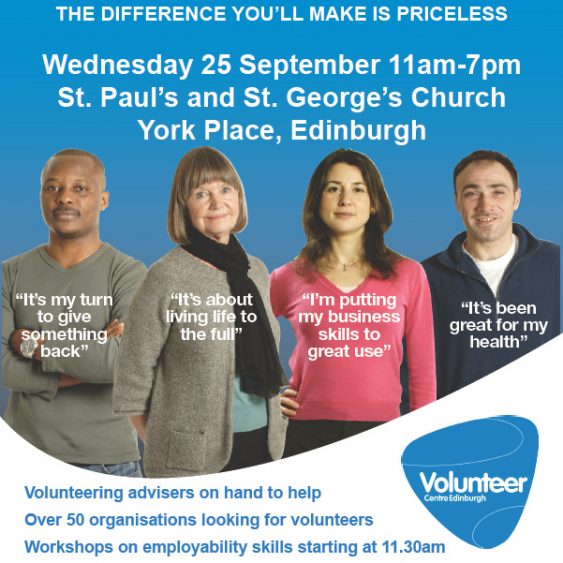
If you’re considering volunteering, come and meet us in Edinburgh this Wednesday at the Volunteer Recruitment Fair. Volunteering is a great opportunity to build skills, experience and contacts. We could use your help in our helpline, media department, policy department, audio transcription, fundraising, and the Listeners and Readers Panel.

Find us at the fair to learn more about these opportunities.

More information on volunteering in Edinburgh is available at the Volunteer Centre’s website.

Peer Support. Join the community

“Having chronic pain is very lonely.”

Join the community

Subscribe to Pain Matters

Everything you need to know about how to live with chronic pain

Subscribe


In pain? Don’t understand what’s happening?

“Having someone to help you prepare for your life through pain”

Our Pain Education Sessions

Fundraise for Pain Concern

Help us to help others

Fundraise


Colin Rae, Andy Crockett and Lars Williams will be running the Loch Ness marathon, September 29th 2013, to raise funds for Pain Concern.

lochness

The runners:

Colin Raegazelle-like natural

Colin moves with a gazelle-like grace that would appear to lend support to the notion that humans are, as the book has it, ‘born to run’. Indeed, he already has one marathon under his (slim-fit) belt. While he lacks the determination and grit of his Antipodean team-mate, there is no doubt that he will complete the distance with ease – the only question is, will he beat his former time? (Colin is, of course, too modest to divulge what this might be). (**breaking news** to add some dramatic tension to the proceedings, Colin has gone and injured his knee! Will he recover in time for the race???? Watch this space! And watch his limp, if you see him.)

Andy Crockett – sports-mad Ozzy

As everyone knows, Australians are world-beaters at sport, and Andy is no exception. This is a man who moved to the middle of nowhere just so he could rack up the miles running into work. Has been known to conduct clinics dressed in full sports attire, interviewing patients whilst doing one-armed press-ups. Competitive and driven, Andy might not have run a marathon before, but expectations are high that he will not only complete the distance, he will do it in such a manner as to restore at least some sporting glory to his once-proud nation.

Lars Williamssporting outsider, runs funny

Formerly sports-aversive Lars spent his schooldays sitting out PE classes and his indolent youth sneering at the physically active. Then he had a mid-life crisis and, following the well-trodden route for paunchy 40-somethings who want to get fit but are too tight to fork out for gym membership, he started running. Well, ‘running’ is maybe a generous description for what he actually does, but it does involve forward motion at a pace faster than walking, accompanied by flailing arms and a comedic flick of his lower leg in the manner popularised by Eric Morecombe and Ernie Wise (see also Phoebe from Friends). This method of locomotion has seen him through two 10Ks and a half-marathon, but is his ungainly running form compatible with a full 26.2 mile race?

Colin has set up a JustGiving page here. Any donations are gratefully received.

Peer Support. Join the community

“Having chronic pain is very lonely.”

Join the community

Subscribe to Pain Matters

Everything you need to know about how to live with chronic pain

Subscribe


In pain? Don’t understand what’s happening?

“Having someone to help you prepare for your life through pain”

Our Pain Education Sessions

Fundraise for Pain Concern

Help us to help others

Fundraise


The James Lind Alliance‘s Priority Setting Partnership have published a new 10-minute survey to investigate the gathering uncertainties about hip and knee replacements for osteoarthritis.

If you have or know someone who has osteoarthritis of the hip or the knee, or you are a healthcare professional, take the survey here. You can learn more about it here. The survey closes on the 27th of September 2013.

Peer Support. Join the community

“Having chronic pain is very lonely.”

Join the community

Subscribe to Pain Matters

Everything you need to know about how to live with chronic pain

Subscribe


In pain? Don’t understand what’s happening?

“Having someone to help you prepare for your life through pain”

Our Pain Education Sessions

Fundraise for Pain Concern

Help us to help others

Fundraise


The Royal College of Paediatrics and Child Health (RCPCH) has received funding to develop an online training course for doctors and senior healthcare professionals who are responsible for managing Children and Young People’s Pain.

In order to ensure the training course enables doctors to meet the needs of children, young people and their families, they would like to know what competencies, skills, knowledge, attitudes and beliefs you would expect from a doctor or senior health professional managing pain in a baby, child or young person.

They have issued two online surveys in order to find out more about the experiences of patients, parents and carers.

The RCPCH would like you to tell them about your own experience of pain, and the interventions that you have found to be helpful or difficult in relation to your overall care.

https://www.surveymonkey.com/s/pain-management-in-children

They would also like to find out about your experience of caring for a child who has either experienced or is experiencing pain, and the interventions that you found to be helpful or difficult in relation to their overall care. Pleas note that in this survey the term ‘child’ refers to all ages from birth to 24 years.

https://www.surveymonkey.com/s/pain-management-in-CYP-parents-carers

Both surveys take about 10 minutes to complete and the results will help to write the brief for the development of learning content.

Peer Support. Join the community

“Having chronic pain is very lonely.”

Join the community

Subscribe to Pain Matters

Everything you need to know about how to live with chronic pain

Subscribe


In pain? Don’t understand what’s happening?

“Having someone to help you prepare for your life through pain”

Our Pain Education Sessions

Fundraise for Pain Concern

Help us to help others

Fundraise


Empowering patients from GP’s surgery to pain management programme

To listen to this programme, please click here.

Healthcare professionals and people with pain need to work together to manage chronic pain conditions, but how is this achieved in practice? Paul Evans speaks to a GP, physiotherapist and clinical psychologist to find out more. We begin by hearing from, GP and pain specialist, Neville McMullan about his work with Ulster Hospital to improve access to pain management programmes by bringing them out of the hospital and into the community and giving people the skills to manage their own pain. Dr McMullan stresses the importance of getting patients out of a cycle of inactivity and physical deterioration.

This is where physiotherapy comes in as we hear from Ashley Montgomery, a physiotherapist at Ulster Hospital. Montgomery describes how understanding the reality of chronic pain, being believed and getting the balance between rest and activity right can give people the confidence to take the first steps towards self-managing their condition.

Consultant Clinical Psychologist Jenny Maguire explains how acceptance and commitment therapy (ACT) builds upon CBT (cognitive behavioural therapy) to help people adjust to living with pain as a long-term condition.

Issues covered in this programme include: Physiotherapy, accessibility, community healthcare, activity, exercise, ACT: acceptance and commitment therapy, CBT: cognitive behavioural therapy, psychology, multidisciplinary, pain toolkit, activity-rest cycle, pacing, social life, confidence, flare-up, painkillers and alternative therapy.

Paul Evans: I’m Paul Evans and welcome to Airing Pain, a programme brought to you by Pain Concern, the UK charity providing information and support for those of us living in pain. This edition has funded by the Big Lottery Fund’s ‘Awards for All’ programme in Northern Ireland.

Dr Neville McMullan: We’ve been criticised, whether rightly or wrongly, that ‘My previous GP only did this, and only gave me painkillers and only did X, Y and Z or the dose of the painkiller was increased.’ That’s not necessarily the right way to manage pain appropriately and we need to get the message across to the patient that the way to manage your pain is not always to go up to next dose of painkiller or that stronger painkiller, but it’s really to assess their pain fully and then to educate them that there may well be more than just the pain involved in their experience of the pain.

Ashley Montgomery: A lot of people come and they ask, ‘What is wrong with me? How long is it going to take to get better and what can you do?’ And there’s very few people that actually say to us, ‘What can I do?’

Evans: In this edition of Airing Pain we’re looking at how pain cannot be dealt with in isolation; how pain management professionals can be key to helping us help ourselves. And how a pilot scheme in Belfast could make pain management programmes more accessible. We’ll start at the doctors’ surgery, which is more than likely the starting point for most of us when chronic pain hits. Now a GP with a special interest provides additional services while still working within the community so, for instance, your local health centre may have GPs with special interests in diabetes, epilepsy, headache, cardiology or, if you’re really lucky, pain management.

Dr Neville McMullan is one of just two such GPs in Northern Ireland. He works out of Cherry Valley surgery in Belfast, but also with the pain management team in the Ulster Hospital.

McMullan: I’ve been involved with the Ulster Hospital for the last three to four years. I do a weekly clinic there every Wednesday and I was brought in initially to try and improve the very long review times that a lot of these patients were experiencing. They had their initial consultation and then it could’ve been upwards on three years before they had their review with the pain clinic, and that’s an unacceptable time limit. So, along with myself and the staff over the last three years, within about nine months we had that down to about a 6-month review.

The problem with chronic pain patients is that there’s no cure and I always try and compare it with the diabetes model: there’s no cure for diabetes but we have to try and manage them as best we can. So these patients do need to be reviewed and again, we can argue about what the best setting is to review these patients – they don’t all need to be done in a hospital setting. But you know, your goal for a number – but not all patients, this doesn’t hold true for every single pain patient – would be to give the patient the tools to manage their condition themselves, as best as possible, and can dip in and out of some specialist resources if they need to in the future. But ideally, they would be given the empowerment and the tools to manage their pain rather than just getting more and more cocodamol from their GP.

Evans: What sort of tools would you give them?

McMullan: We actually have a thing called the ‘pain tool kit’ which is a lovely wee handbook that is written in very simple language that they can use. It talks about very basic concepts of pain management, which they can manage themselves whether it’s through pacing and goal-setting and setting themselves realistic achievable targets. It talks about physical activity and how important it is to keep things moving and keep things mobile. It’s the old adage: ‘If you don’t use, you lose’. We would use physiotherapists quite a lot through the Ulster Hospital to encourage patients to break through this chronic pain cycle where they get into this chronic misuse of the limbs or whatever it may be, and the muscles then waste away and they don’t have any support for their spine or whatever the pain may be.

Evans: Dr Neville McMullan, GP with a special interest in pain management. Ashley Montgomery is a physiotherapist at the Ulster Hospital. She works with its pain management programme led by consultant clinical psychologist Jenny McGuire

Jenny McGuire: The pain management programme in the Ulster is an eight-week grid-based programme; it’s three hours every week over eight weeks, and it’s multidisciplinary so I work into it, Ashley works into it from the physiotherapy end of things, and one of the pain consultants works into it as well from the medical end of things. So it’s a multidisciplinary treatment programme based on acceptance and commitment therapy.

Evans: Acceptance and commitment therapy?

McGuire: Acceptance and commitment therapy is one of the newer third wave cognitive therapies so it has sort of built, if you like, on the foundations that were there in traditional CBT, and what we found is that this type of therapy can have better outcomes and work better with long-term conditions.

Evans: Now CBT, cognitive behavioral therapy, these are talking therapies but if we’re in pain, we don’t need to talk about it, we need it fixed.

McGuire: I think in an ideal world if it was that straightforward, that’s exactly what would happen, but I think as you probably know Paul, from your own experience, pain is a very, very complex thing to live with. It’s not just the physical component of pain: pain impacts on you emotionally; it impacts on you psychologically; it impacts on the choices that you make in your life; it impacts on the reality of what you can and can’t do in your life. So pain is not just a physical experience. So, if you consider all of that, then clinical psychology has a lot to bring when you think about living with a chronic condition like pain, like chronic pain.

Evans: But I’ve said this many times over, I’m probably boring people to death with this: when you feel low and as you say incredibly depressed and the pain is doing all these other things, the last thing you want to be told is to see a psychologist because we’re not mad; we’re perfectly normal people but we’re in pain.

McGuire: I think that’s one of the things clinical psychology comes up against in chronic pain: sometimes the assumptions that are there about psychology and as soon as psychology is mentioned, I know we’ve had people in our programmes that have said to us when they’re sitting there in the consulting room and the pain consultant says, ‘Maybe you should think about having a talk with our clinical psychologist.’ The automatic assumption is, ‘Is he trying to say this pain is all in my mind? Do they think I’m making this up?’ It’s almost like their pain experience is invalidated in some way and, actually, that couldn’t be further from the truth of what it is. I think there is a recognition now, and if you look at most of the pain services across the UK, there will be clinical psychology attached to them, that this is a long-term condition that is very, very difficult to live with and it spills out into different types of areas in your life: it impacts on your self-esteem; it impacts on relationships; it impacts, as you’ve said, on your mood, on your functioning. So it makes sense that there would be a clinical psychologist involved in your care as part of a multidisciplinary team.

Evans: Many people as they start their pain journey, they will not be seeing you at the very beginning. In fact, it’s very, very late in the pain journey.

McGuire: That’s something that we are very aware of and it’s something we do talk about as a team. By the time a person gets to a pain clinic – and the gateway to our pain management programme is through the pain clinic so it’s not widely accessible – and by the time people sometimes get to the pain clinic, they maybe try different medications for a while or there’s other investigations to be done before there is a clear diagnosis of chronic pain or a condition with chronic pain and it’s then that the pain management programme is talked about. So it is late in the journey and I think that’s something that comes back to maybe resources and where certain healthcare professionals are being placed in the pathway of care for chronic pain. I certainly think in our team, the nursing staff and the doctors are more and more now having that conversation about self-management and about the pain management programme earlier, even though the referral might not happen until other investigations and things like that are done. But I do think overall it needs to be moved earlier in a person’s experience of pain.

Evans: Ashley, you’re a physiotherapist. Are people sent to see you too late in their pain journey?

Montgomery: I work in a service that is an acute service, so I work in a hospital site: so I would see people very early on in their journey, in other words: people directly from the emergency department, directly from orthopaedics. Then the other side of our service is people who come along with chronic pain conditions and that’s via the pain clinic or through the rheumatology service. So I see two types of patient groups: I see the acute presentations and also I see people who are already on the pain journey, who are already experiencing chronic pain over a long period of time, and they’re very different groups of patients. And my management of that patient and the care of that patient is very different.

Evans: Tell me if I’m wrong, but I suppose the difference being a physiotherapist with somebody with acute pain is that you’re helping them get better, whereas somebody with chronic pain, you’re helping them just manage it?

Montgomery: Yeah, if somebody was to come to me from the emergency department after having sprained their ankle, I’m there to help them to get better. Somebody that comes through the pain service that has been round many services probably by that stage and they’ve been diagnosed with a chronic pain condition, whether it be a rheumatology-based condition or fibromyalgia or chronic low-back pain, it’s a very different management of that condition and the journey for that patient is very different accordingly. And my approach would be very different because it’s not about curing, it’s not that biomedical ‘motto’ where you’re going to make them better, it’s more about helping them to understand their pain and introducing self-management strategies and tools to help them on that journey.

Evans: What sort of self-management strategy tools would you introduce?

Montgomery: I think a lot of people come, hopefully you’ll agree Jenny, and they ask, ‘What is wrong with me? How long is it going to take to get better and what can you do?’ And there’s very few people that actually say to us, ‘What can I do?’ I actually introduce it that way: ‘Well, this is my understanding of your condition, how your presenting, this is what I can do and this is what I think we should proceed with in terms of self-management.’ In self-management, I think there’s different aspects to it – certainly people actually understanding what chronic pain is, understanding that it’s not in their head, that’s a really real experience for them and that their pain is real is very important. I think also, not just that understanding but the fact that somebody can actually understand and believe them that they actually are experiencing pain – that’s very important in terms of them accepting their own condition. Then there’s different aspects in terms of activity: pacing. Physios have got a reputation I suppose in terms of ‘Get people with pain moving; they’ll feel better for it.’ [Laughs] But I come from a more balanced approach in terms of the balance between rest and activity – it’s important with patients that are experiencing chronic pain.

The other thing is, with self-management, it’s not just the understanding, but it’s actually the patient learning to accept where they’re at. It’s not a sign of defeat, it’s not them giving in, ‘Now, OK. I’ve got this condition.’ It’s actually the start of a process that helps them live with their pain. That’s why we follow the ACT principles because, for them to actually commit to that and start to make changes and to make adjustments, that’s the first step. That’s really, really important and whether that be in relation to physical activity or whether that be in relation to emotions or feelings or fears, it encompasses both of those.

Evans: ACT is acceptance and commitment therapy, we’ve talked a little bit about accepting it, but how much of a barrier is that to accept something… .

Montgomery: That you don’t want?

Evans: Or that we think that the doctors are there to make us better, accepting something that is making your life worse?

Montgomery: I think it comes back to what acceptance means and I think sometimes acceptance gets confused with resignation, putting up with, and in ACT acceptance is not that. Acceptance is more around how you make room for this change that has come into your life. You don’t have to like it, you don’t have to want it – if somebody came along with a magic wand and said, ‘We can get rid of this’, you can absolutely say, ‘Yes please, I’ll take it.’ But it is about making room, I suppose, for some experiences in your life that are unwanted and unasked for. Sometimes those are negative things and sometimes they’re positive things and it’s about making room for all of those experiences, whether you see them as positive or whether you see them as negative. And it is very difficult because when you’re in pain, your normal response is to do something to make it stop and if you can’t do that by yourself, you seek medical input. And we’re in a culture, I suppose, where there’s an expectation that the doctors will at some point find something to fix us, to ease it or to make it go away. I think it’s a very hard reality, sometimes, with chronic pain particularly when people sometimes have seen so many different doctors and they’ve tried so many different medications and the pain is still there. Sometimes they’re also living with quite bad side effects from the medication that they’re on.

I think it can be a real crossroads really with chronic pain to get to a point where you realise that the doctor may not, at this moment in time, the doctor may not be able to do anything more. Different people get to that point at different stages and some people may never get to that point – everybody’s journey is different and I suppose where we would work from is with the acceptance end of it. It’s about making room for this thing in your life that you didn’t ask for and you don’t want and it’s having quite a lot of impact on your quality of life – on working life, on finances and all that kind of thing – but how can you make room for it and try and live your life alongside it. So as well as accepting and making room for this condition that has come into your life, it’s also about reconnecting with your values, with those things that are close to your heart. Very often we find with chronic pain, in your effort to try and manage the pain or to try and reduce the pain or try to have some control over the pain, all of a sudden the things that really matter to you in life are the things that start getting cut out: so you don’t see your friends, you become less active, you may be saying no to things that you could do just in case it would be a bad pain day or it might flare things up, so you start actually disconnecting from things that are precious to you. So ACT is about both of those things: it is about making room for something that maybe is difficult to live with, exploring your relationship with your pain, but also reconnecting to those things that actually matter to you, with your values.

Evans: In those conditions, pain is ruling your life, pain is managing your life – it’s moving away from that so your life is managing the pain?

Montgomery: That your life is living with the pain; there will be times where the pain feels more dominant. So if you’re in the middle of a flare-up, the reality of that is you have very minimal choice if you’re in the middle of flare-up pain but if you’re maybe at other points, we talk about ‘wiggle room’. Your wiggle room might increase on other days compared to the amount you might have on flare-up days, so it’s increasing your flexibility and living with the pain so that day-in, day-out, depending on how your pain is, you can still make choices that are in the direction of your values, that are in the direction of what actually really matters to you, rather than it being an ‘either or’ – ‘I either have to do the things that really matter to me or I’m in pain and I can’t.’ It’s not, it’s a ‘both and…’.

Evans: One of the things that must go along with that – you mentioned ‘pacing’. ‘Boom and bust’ is an expression that everybody with chronic pain will have experienced?

McGuire: Yes we often touch on this. We discuss it very openly in the group as well. I very much come from an understanding where people with chronic pain, it literally impacts not just on everyday life in terms of their emotions and the psychology side of it, I suppose, but also physically. In other words, when people withdraw they become less physical in terms of they don’t go out walking, they don’t socialise – even the simplest things like breathing can be affected by their chronic pain. And posture because they’re sitting down more, they’re afraid to move. Things like balance – some people become more dependent on walking aids because as they withdraw, as they become more sedentary, and because their pain has dictated that to them, all the time what’s happening is they’re becoming more de-conditioned.

But some theories would say, ‘Right, get people going, get them moving, get the adrenaline going, get the serotonin released, it’ll make them feel better, it’ll give them confidence, it’ll impact on their pain and that will be well and good’. And that is true to some extent, but a lot of people with chronic pain, particularly by the time they’ve come along to the Pain Management Programme, I think it would be very unprofessional of me to suddenly get people up and moving when they haven’t moved in maybe 5–10 years and they’re still on a zimmer rollator and I’m expecting them to do step-ups. So I introduce very much the basics; I call them my building blocks and we talk about breathing and about improving their breathing pattern, we talk about posture, we talk about balance, we introduce that, we allow them to self-assess that for themselves. It’s not about coming along and doing lots of exercise, but it’s introducing these basic tools or these basic aspects of physical activity first of all, and then hopefully that allows people to get more confidence and get the basics right. There’s no point in me encouraging people to go for a walk if they find that even going up a few steps is difficult because their balance reactions are down. So it’s very much, rather than ‘boom or bust’, it’s very much ‘I’d like to get the basics right’, building that and allow people to gain confidence in their own ability and then introduce other strategies like the benefits of more physical work like going out walking, like going swimming, because that’s where the other aspects of, I suppose whether you call it pain control or the ‘pain gate theory’ come in, and how moving can impact on your pain experience as well as the psychological talking therapies.

Evans: Well that’s easy, that’s absolutely settled now, we all know how to do it. The problem is that when somebody with chronic pain feels well, they want to do it all today. How do you break that barrier?

McGuire: We actually spend quite a long session talking about flare-ups and we talk about the impact of a flare-up. That impact can be very emotional and it can be very physical. We strip it right back and oftentimes people with a flare-up can get warning signs and also triggers, so it’s actually taking it back and allowing people to become more familiar with those warning signs and start to read them and take action, because, like you said, a lot of people with chronic pain think, ‘Oh this is a good day, I have to do this, I have to get the house cleaned or I have to go meet somebody’ and then they suffer for it for another 2 weeks. So it’s actually talking about getting that balance again. It’s actually being more aware of what your body is telling you, but also then putting it into practice so that instead of, yes maybe that day you get a sense of achievement, you feel good for it and maybe someone says to you, ‘Well that’s great, you got that all done.’ But then for two weeks you’re off kilter and you feel miserable and you’re sore and you can’t do anything then. It’s about giving people the tools to recognise that, but also talking them through in terms of those management strategies and that’s in relation to that commitment to actually take onboard what they’re telling themselves. Patients are the experts in this; they recognise very familiar patterns, particularly in groups, they’re very quick at saying, ‘That’s me, I can understand that and I do exactly the same.’ And they actually come up with very good coping mechanisms and coping strategies and give very good examples. And some of them actually challenge each other in terms of, ‘Well, why did you do that? You could do it this way or do it that way’. So that’s not just from a physio head, that’s from a psychological head in terms of being, you know, looking at it and stripping it back and looking at how it impacts you, not just physically but emotionally as well.

Montgomery: I think sometimes it is about very much handing choice back to people that are living with the condition and, as you’re saying, if you have a good day then the pressure’s on to do everything in that good day and then inadvertently you do too much, your pain flares up and you’re out of action for whatever length of time. And sometime it’s about handing that back as a pattern and saying, ‘How much does that way of doing things fit with your values?’ Yes, on that one day you might get all of your ironing done and you get your house cleaned and you get your…whatever tidied out but for the rest of the two weeks you’re too sore to see your friends, you’re too sore to play with your children. So think about how you’re managing and what way of managing fits best with what actually matters to you.

Evans: But you see, one of my strategies – you can tell me whether I’m right or wrong – is that I will do what I want to. I will take the hit just for that afternoon climbing a mountain, or something like that.

Montgomery: And is that something that’s close to you heart, that getting out and climbing the mountain and actually going, ‘Yes I’ve done that. I know I’ll pay for it but it’s something that’s really precious to me.’ Is that a strong value?

Evans: Yes, it is.

Montgomery: And that’s, again that’s some of the choices that you make and we’ve had examples in our group where people will sometimes do things – maybe it’s an activity, maybe it’s something with children – where they know they are going to be very, very sore after it but they will do it because the value and the importance of that in their life overrides what the pain is telling them about the negative consequences of doing it. And it’s really important to hold on to stuff like that because the pain will still be there. What you’ve just talked about there, that’s the stuff that makes life worth living.

Evans: How much pain does one need to be in to come to a pain management programme?

Montgomery: We don’t put a level on it. As far as we’re concerned, your pain is whatever you tell us it is so we very much come from, as Ashley said, you are the expert in your pain. We might have ways of thinking about your relationship with pain or provide a space in the programme to maybe critically evaluate and reflect on that a bit, and we certainly have hints and tips around what you can do to get going again, but you’re the expert in your own pain so you take the parts that fit for you, that have meaning for you. It’s not prescriptive; it’s very much led by people’s own pain knowledge and pain experience.

McGuire: Yeah, and it’s not about the level of pain or the frequency of pain, it’s more how that person is feeling the impact of that pain on their life, so it’s not just that unpleasant physical experience, but it’s that unpleasant emotional experience they’re having alongside that. And when that’s starting to impact on their everyday life that’s when we feel the pain management programme can be beneficial for the patient, so it’s not about how severe it is or how frequent it is, it’s more the impact that pain is having on that person’s day-to-day life.

Evans: Physiotherapist Ashley Montgomery and consultant clinical psychologist Jenny McGuire at the Ulster Hospital. I’ll just remind you that whilst we in Pain Concern believe the information and opinions on Airing Pain are accurate and sound, based on the best judgments available, you should always consult your health professional on any matter relating to your health and wellbeing. He or she is the only person who knows you and your circumstances and therefore the appropriate action to take on your behalf. Don’t forget that you can still download all the previous editions of Airing Pain or obtain CD copies direct from Pain Concern. If you’d like to put a question to Pain Concern’s panel of experts or just make a comment about these programmes then please do so via our blog, message board, email, Facebook, Twitter or pen and paper. All the contact details are at our website which is painconcern.org.uk.

Now, back to what I said earlier about GPs with special interests able to work within the community. Dr Neville McMullan with his special interest in pain management and links with the Ulster Hospital pain team has his own view on bringing pain management services closer to the people who need them.

McMullan: Of the patients I would see regularly in the hospital setting, and certainly the review clinics, they could be managed equally well in a community setting and with multidisciplinary input, which would probably appeal more to the patient rather than having to trek up and find parking at the hospital and the hassle of getting an appointment and so on. So if we could do it in a more local and neutral setting, a neutral venue with appropriate people seeing the patients, then my feeling would be this would be the right way to go.

Evans: What are you talking about? Church halls? Leisure centres? Sport centres?

McMullan: I’d have no problems with any of those! Neutral territory means it doesn’t have to be in a healthcare setting. We are certainly keen to push the physical activity side of things for health prevention in lots of other disease areas: where there’s cardiovascular or diabetes or obesity, so certainly a leisure centre would be an ideal setting to run clinics from. Why not?

Evans: How is that progressing?

McMullan: There are pain management programmes in place within the Ulster Hospital. There are some pilots that GPs are now able to refer into which are hopefully going to develop into more permanent programmes, but we’ll have to wait and see on that. There are other pain management programmes running in the Belfast Trust as well and they are multidisciplinary in nature too, but they are currently in a hospital setting and not in the community. So there’s work to be done; there’s definitely scope for those clinics to be built upon or developed. One of my other big, burning issues is to get nearly a public health campaign going about educating – certainly in the musculoskeletal field – of the need for patients to be physically active. We touched upon that earlier, that they need to be engaging in a form of activity to keep their muscles and joints working. But there’s a real need to educate healthcare professionals. I think one of the worst things that can happen to any patient is to go along to their GP and their pain isn’t taken seriously. I was at a meeting recently with some patients with endometriosis and one of the biggest problems with seeing their GP was that they felt they weren’t being believed. And I think that’s very important that the patient’s word is taken as this is their pain and this is how the pain affects them. I think if they can be listened to and believed and then we can come to some sort of way to manage their pain better, then patients will get a lot more out of that rather than being dismissed with a stronger or an alternative painkiller.


Contributors:

  • Dr Neville McMullan, GP, Belfast
  • Ashley Montgomery, Physiotherapist, Ulster Hospital
  • Jenny Maguire, Consultant Clinical Psychologist.

Peer Support. Join the community

“Having chronic pain is very lonely.”

Join the community

Subscribe to Pain Matters

Everything you need to know about how to live with chronic pain

Subscribe


In pain? Don’t understand what’s happening?

“Having someone to help you prepare for your life through pain”

Our Pain Education Sessions

Fundraise for Pain Concern

Help us to help others

Fundraise


1 38 39 40 41 42 49