Information & Resources

Find information and resources to help manage your pain.

Get Help & Support

Find the tools you need to
help you manage your pain.

Get Involved

Help make a real difference to people
in the UK living with chronic pain.

About Us

Find out about Pain Concern and how
we can help you.

Empowering patients from GP’s surgery to Pain Management Programme

This programme was funded by the Big Lottery Fund’s Awards For All programme in Northern Ireland.

Healthcare professionals and people with pain need to work together to manage chronic pain conditions, but how is this achieved in practice? Paul Evans speaks to a GP, physiotherapist and clinical psychologist to find out more.

We begin by hearing from GP and pain specialist Neville McMullan about his work with Ulster Hospital to improve access to pain management programmes by bringing them out of the hospital into the community and giving people the skills to manage their own pain.

Dr McMullan stresses the importance of getting patients out of a cycle of inactivity and physical deterioration. This is where physiotherapy comes in as we hear from Ashley Montgomery, a physiotherapist at Ulster Hospital. Montgomery describes how understanding the reality of chronic pain, being believed and getting the balance between rest and activity right can give people confidence to take the first steps towards self-managing their condition.

Consultant Clinical Psychologist Jenny Maguire explains how acceptance and commitment therapy (ACT) builds upon CBT (cognitive behavioural therapy) to help people adjust to living with pain as a long term condition.

Issues covered in this programme include: Physiotherapy, accessibility, community healthcare, activity, exercise, ACT: acceptance and commitment therapy, CBT: cognitive behavioural therapy, psychology, multidisciplinary, pain toolkit, activity-rest cycle, pacing, social life, confidence, flare-up, painkillers and alternative therapy.


Contributors:

  • Dr Neville McMullan, GP, Belfast
  • Ashley Montgomery, Physiotherapist, Ulster Hospital
  • Jenny Maguire, Consultant Clinical Psychologist.

Peer Support. Join the community

“Having chronic pain is very lonely.”

Join the community

Subscribe to Pain Matters

Everything you need to know about how to live with chronic pain

Subscribe


In pain? Don’t understand what’s happening?

“Having someone to help you prepare for your life through pain”

Our Pain Education Sessions

Fundraise for Pain Concern

Help us to help others

Fundraise


Pain experienced by the very young and very old, and the similar issues arising when dealing with these very different types of patient

To listen to this programme, please click here.

This edition has been funded by the Big Lottery Fund’s ‘Awards for All’ programme in Northern Ireland.

In this edition of Airing Pain, Paul Evans speaks to experts from Belfast and London about the similarities, differences and challenges in treating pain in infants and the elderly.

Maria Fitzgerald, Professor of Developmental Neurobiology at University College London, mentions the outdated theory that babies do not experience pain and how this misconception has been disproved. She raises the issue of communication, perhaps the biggest problem with babies and the elderly (particularly those with dementia) – if they cannot communicate about their pain effectively, their pain often cannot be adequately addressed. She also discusses the scientific research she and her team are carrying out as well as the importance of treating pain at an early age.

Paul speaks to Dr Pamela Bell, Chair of the Pain Alliance of Northern Ireland and former Lead Clinician for Pain Services at the Belfast Trust. She discusses how pain treatments work for infants and the consequences of not managing pain during the early stages of their development.

Peter Passmore, Professor of Aging and Geriatric Medicine at Queen’s University Belfast, talks to us about the large number of dementia patients who are thought to live with pain and the need for medical staff and carers to be able to recognise changes in patients’ behaviour and therefore become more able to address their pain.

Issues covered in this programme include: Elderly people, children and young people, infants, communicating pain, nervous system development, in utero, during gestation, premature babies, EEG, non-invasive procedures, brain activity, pain history, pyloric stenosis, keyhole surgery, dementia, memory, nursing homes, surgery and observing behaviour.

Paul Evans: Hello, I’m Paul Evans and welcome to Airing Pain, a programme brought to you by Pain Concern, the UK charity providing information and support for those of us living with pain. This edition has been funded by the Big Lottery Fund’s ‘Awards for All’ programme in Northern Ireland.

Maria Fitzgerald: It is estimated that some preterm infants will have 20-25 such procedures a day in their period of intensive care.

Peter Passmore: The people who seem to do badly as far as pain is concerned are the very elderly, so over 85: it would be men, racial minorities and those with memory problems.

Evans: From cradle to grave: the extremes of life when, for some of us, we will be or have been at our most vulnerable. How is pain assessed and managed in those two groups and what common issues do they share for the healthcare professionals?

Dr Pamela Bell is Chair of the Pain Alliance of Northern Ireland and a former Lead Clinician for Pain Services at the Belfast Health and Social Care Trust. She’s an anaesthetist and some years ago she, and some of her colleagues, set up a Masters course at Queen’s University Belfast in the science and practice of pain for healthcare professionals. One of the modules they teach covers pain for those vulnerable groups at the extremes of life.

Pamela Bell: When one tries to assess pain for most people, it’s a question of asking some questions and receiving answers. For those who are very young and preverbal, the neonate and the infant and very young children, that is not a very reasonable way to proceed. Similarly, those who have dementia may not be in a position to communicate their pain in the way that is easily assessed using commonly used pain tools, and as such we felt that there was perhaps a discrimination against those at the end or the beginning of life, in that their pain was not being addressed in the way that it would be were they able to communicate their pain in the usual way.

Evans: So basically, I as a middle-aged man, and for the last fifty-odd years, I have been able to tell you about my pain. Before that, I would’ve had problems?

Bell: Before that you would’ve had a lot of problems, and in fact there was a belief that, for example, newborn infants did not suffer pain in the way that we do. Infants of course cry: crying per se is not necessarily an indication of pain – it could be hunger, or being too hot or too cold. So, healthcare professionals and doctors must take some responsibility for this and anaesthetists, I might add, were often very reluctant to use painkillers, particularly strong painkillers when infants had surgery.

This was really a state of affairs that existed even as late as the 1970s to 1980s and, in fact, one of the things I read to my students when they first come on the course is a little paragraph from an American book, in fact, where a mother writes about her experience of having an infant who needed to have heart surgery and speaking to the anaesthetist afterwards about his distress and why he hadn’t had more pain relief. And the anaesthetist said ‘Well, I don’t really think that children this young have much by way of pain, therefore they don’t get much by way of pain relief.’

We now know from research that this is far from the truth, and that the consequences of pain in very young infants can be more than for similar operations in older children because the neonates have a very immature nervous system and respond more dramatically to pain than older children and adults will.

Evans: Pamela Bell. Now, I want to return to that discredited thought that babies do not experience pain. Neuroscientist Maria Fitzgerald is Professor of Developmental Neurobiology at University College London. Her main research interest is in how the central nervous system develops in infants and children.

Fitzgerald: It was considered that since we have no overt memory or recall of events that take place when we’re young, and among that we do not recall any tissue-damaging or noxious or painful stimulation, that really meant that it wasn’t a concern that if a baby did experience pain they certainly didn’t remember it so that maybe didn’t matter very much. But the early 1980s brought a series of really pioneering studies carried out by scientists, mainly in Canada, actually, but also in the UK and elsewhere, that showed that there were a range of behaviours in very, very young infants that were specific to what we would describe as a ‘painful stimulus’, and it became clear that really even premature infants, and by that I mean infants at the earliest viable age: is I suppose 24-25 weeks gestation, so from that age onwards infants were clearly able to show a set of behaviours which were special to a painful stimulus.

And that really changed the whole climate if you like, the recognition that this could not be ignored and because we don’t remember something doesn’t mean that it isn’t important that it’s taking place. Importantly also, it could be that those painful events may be altering the normal development of the nervous system and that’s a very important aspect of thinking about this.

Evans: So, talking about premature babies, it’s in that period in the special care units that they get poked and prodded, tubes pushed down them, needles, blood tests, a lot is happening?

Fitzgerald: Exactly, and in fact a number of papers have very carefully monitored the number of interventions that these tiny premature infants get. If you simply ask medical staff ‘Which of those interventions do you consider painful? Would you feel pain if it was carried out on yourself?’ It is estimated that some preterm infants will have 20-25 such procedures a day in their period of intensive care. Now I want to emphasise, I’m sure everyone will realise this isn’t being done callously or deliberately in any way. This is as the result of the clinical care that the babies require in order to stay alive and certainly to develop normally.

The difficulty is, we don’t understand enough about this pain and we also don’t understand enough about how to alleviate it, how to treat it in a way that is safe for a very young baby. So for instance, filling the baby up with morphine may not be a good idea, it may affect their respiration, it may affect other aspects of their physiology so it’s a question of the medical and scientific community facing up to this, learning how to measure it, and thinking of good ways to try and alleviate the pain.

Evans: So what research do you do and what does it show?

Fitzgerald: OK, so there are two strands to my research. In the laboratory we use animal models of infant pain and also we look at individual neurons and circuits and we study the development of the pain circuits, but we also have a whole branch of research where we collaborate with neonatologists and we try and measure in these preterm infants, what it is that’s actually going on in their brain when they are undergoing what we would consider ‘painful procedures’ and these procedures have to be done, they’re done for clinical reasons and we would never ever stimulate a baby just experimentally.

So we tap in to the existing clinical procedures and we measure activity in the brain and we measure it in two ways: one is by using a technique called ‘EEG’ or electroencephalography which many people would have come across already where electrodes are put on the scalp, they don’t hurt, they’re not invasive, they’re just placed on the scalp and the activity that’s going on in the brain underlying the scalp can be monitored – that’s one method. And the other method is the ‘hemodynamic method’ where infrared optodes are placed, again, just on the scalp, they’re not invasive in any way, and they measure the blood flow and the oxygenation of blood under the optodes, but that’s the blood in the brain that they’re measuring. So these are two techniques that can be used at the cot side on the ward and they can directly measure brain activity.

So I mentioned earlier that a lot of work has been done on the behaviour of these babies but this is a more direct measure of what activity is going on in the brain as a response to, let’s say, for example, a needle puncturing the skin or a lance, such as the kind of lance that diabetics have to use, is a procedure that is often used on very young babies because they need to have blood samples taken really often and their blood gases measured. So this is a routine, painful procedure that we can tap into, if you like, and see what kind of activity is occurring in the brain.

And we’ve been able to show that even the very youngest infant shows a very strong activity in the neurons in their brain, very immature brains, but very strong activity to every noxious stimulus, but the pattern of that activity changes as they grow up, which is not surprising, so the research that we do is to try and unravel those changes to understand them better and, hopefully perhaps, to be able to use those as a way to monitor their pain and investigate methods of alleviating that pain.

Evans: I can’t remember having blood tests taken from me when I was a baby, we can’t remember it, but is it being imprinted in the brain that will affect us later?

Fitzgerald: That’s a very good question. Neuroscientists think of memory in two ways: there’s the memory that is normally used in general conversation, and actually what that means is ‘active recall’ that you can actively recall an event, but you’re quite right: there’s another type of memory which you call ‘imprinting’ which is a good way of thinking about it, which is that changes have been made in the nervous system which do not involve active recall but which will lead to altered patterns of activity in future life.

In animal models, because we don’t know it happens in man, but in animal models a small noxious stimulation in the early part of life does have an imprinting effect on the nervous system such that if when the animal grows up and has the same stimulus again, it reacts in a more exaggerated way than the animal that’s never had it before so it’s as if a ‘pain history’, if you like, from a critical stage of development stays with you in the nervous system. So that is a form of memory even if you can’t recall it: it has changed you and it stays with you.

Evans: But are you saying that what happens at that early stage in life can affect things like neuropathic pain?

Fitzgerald: This we don’t know and I think it’s a very interesting question. Is it possible that your developmental history, ‘pain history’ if you like, might actually influence your propensity to develop chronic pain? And that is a big research question that we simply don’t know the answer to, so I wouldn’t like to speculate on that but it’s a reasonable hypothesis. It wouldn’t be the only factor: there’d be genetic factors and many other factors, but it’s possible that your early life pain experience does make you possibly more or less vulnerable to the onset of chronic pain, but there isn’t strong evidence either way.

Evans: That’s Maria Fitzgerald, Professor of Developmental Neurobiology at University College London.

Now 56 years ago I had an operation for a condition called pyloric stenosis. Today it’s done by keyhole surgery but the scar down my abdomen is evidence of a procedure that was considerably more invasive. So how would the doctors have judged my pain? Anaesthetist Pamela Bell.

Bell: I think they would have listened to your crying and I think your parents would have noted how your behaviour changed, for example some children who have just had surgery on their tummies don’t move because it’s just too painful and so therefore they lie very still.

And if your mum and dad were used to you kicking your arms and legs they would notice a difference and, in fact, some of these changes which weren’t always interpreted as pain made their way into the form of assessment of pain in infants and children, so while there are many, many different pain assessment tools out there, those that are used after surgery look at things such as crying, such as facial expressions, such as screwing up the eyes, or the shape of the mouth, the general movement of the body: whether the legs are kicking or not, and these are scored by the healthcare professionals – the nurses, usually – looking after the infant and, as a result, a determination is made of the likely level of pain that that child is experiencing and the best of these scales have been rigorously tested in a number of institutions, and show that when pain relief is then given, the score falls.

In other words, the behaviours, the crying, the grimacing alter in the direction of a lower score. So we think that many of these scores have been well validated, so now if it were to happen that you had an infant undergoing similar surgery you would work with the nurses to assess that pain.

Evans: Because most mothers and fathers can recognise the different cries of their baby as feeding, tiredness, wet nappy, pain and so should work with the anaesthetists.

Bell: Oh absolutely, absolutely. And the more experienced the parent, the easier that will be. [Laughs] I know that first-time mums often find it difficult to know what’s happening in terms of the cry at first and it is a learning process, so as they observe their infants they learn for themselves to distinguish the type of cry that is likely to indicate pain in their infant.

Evans: Can young children like that develop chronic pain conditions?

Bell: What has been shown by some studies, for example of circumcision in infancy, is that if pain is not well managed at the time of operation, in later life the child can go on to experience more pain, with a given procedure, than they would have, had their pain been well managed at the time. And there are other studies looking at vaccination pain and so on and so forth. So there is some evidence out there that failing to care for pain in young infants has a long-term impact.

Evans: Anaesthetist, Dr Pamela Bell. I’ll just remind you that whilst we in Pain Concern believe the information and opinions on Airing Pain are accurate and sound, based on the best judgements available, you should always consult your health professional on any matter relating to your health and wellbeing. He or she is the only person who knows you and your circumstances and therefore the appropriate action to take on your behalf.

Now this edition of Airing Pain is looking at pain management of those at the extremes of life. Moving from those at the start of life’s journey to those approaching the end, similar issues are faced by those trying to assess and therefore manage a patient’s pain. Professor Peter Passmore is professor of aging and geriatric medicine at Queen’s University Belfast. His main clinical and research interest is dementia.

Passmore: It’s fascinating to hear how Pamela deals with those very, very young children. There are difficulties eliciting from them, whether they’re in pain or not, how bad it is or what might be going on and you put it in [the] context of somebody that I see, particularly with dementia where if they seem to be not right shall we say, for whatever reason, one of the causes for that can be pain and I think it’s very important to be aware of that and to detect it and try and deal with it if you think that’s what the problem is. The issues around management in children and in very old people are slightly similar because when it comes to management, you like to be able to refer to an evidence base and for older people, in general, for many treatments we don’t have a decent evidence base with good clinical trials; that’s particularly the case for pain. And the same can be said for the pain and dementia issue.

Evans: I suppose a major part of that are for people in nursing homes with dementia and the staff looking after them?

Passmore: Aye, that’s absolutely right. I mean, I think it’s about having an awareness that pain could be a problem. It involves a number of people, and you’re absolutely right, it does depend on the location that older people find themselves, so it applies to people at home, and again if they have cognitive impairment or memory difficulties or dementia, it might be the carer that you’re relying on that knows them and who one would look to to get an indication of what might be going on. But equally well, there are large, large, large numbers of older people now in the independent sector in nursing homes and many of them have dementia, but many haven’t been diagnosed with dementia and we know for a fact that the statistics would seem to indicate that perhaps in those people, two-fifths to a half might be in pain at any one time and about two-fifths are on any form of treatment.

So from a medical perspective we can treat the situation if it’s brought to our attention and this is where you’ve mentioned the staff in the nursing homes; to have them educated and up-skilled in some way about this awareness thing and also maybe how to assess pain a little so they can bring it to medical attention in case medication is required, but also it could be if it’s not medication, it may be that the physiotherapist might be important or the occupational therapist, so it’s a multi-disciplinary approach and it doesn’t always mean drugs; it often does mean medication, but it doesn’t always mean that. But the key thing at the outset would be that there’s this awareness detection thing needs to be there, and I think the problem is that’s very variable.

Evans: If I were looking after one of my parents, I’ve known my parents for 56 years, I would recognise different things from them, as Pamela was saying with babies, they would recognise different noises, different movements, things like this, that and the other. My father was in a care home and he’d been looked after by various people coming in who don’t know the real person.

Passmore: You’re absolutely right when you say it’s about knowing people. I think if you take the person with dementia for example, and the pain assessment guidelines that are there, what is key is that we should look at the patient first and attempt to illicit from them whether they’re in pain or not, and certainly with people with even more advanced dementia can often indicate whether that is or isn’t likely to be the case but if you’re not able to get this, if communication is a problem, then you’re moving to a more observation sort of mode and you’re absolutely right when you say it’s the change in the person that’s key. It’s the change in some sort of behaviour, some of which are easier to think they’d be associated with pain, perhaps the fidgeting, or people being noisy or shouting. But equally well, people can go from loud to quiet and this can be a feature of old people.

There can be atypical responses to pain and I think this is where the knowing of the individual is probably fairly critical and I think, for example, in the home situation and the carers are there, it would be foolish to ignore if a carer comes along and says, ‘I think they’re in pain’ and it is often the case that the pain doesn’t suddenly arise; these are chronic painful conditions so we know probably in quite a percentage of people that there is a pain-causing condition there in the background. Therefore, if there is a change I think what one normally looks at, what is the list of complaints here or what are the medical complaints and if there’s a pain-causing condition it seems a bit daft to ignore what’s staring you in the face, really.

Evans: Is it all too easy to put somebody down as a ‘grumpy old man’? They put me down as a grumpy irascible old man when in actual fact I’m a mild-mannered man who was turned grumpy, but they can’t see that?

Passmore: [Laughs] I think that’s right. It comes back to knowing about the patient. I think the efforts aimed at trying to deal with say, people who have behaviour abnormalities or people that are behaving irrationally, for want of a better word, that’s also where it comes to knowing about the patient so you’d like to think if you were somewhere, people might have some sort of a dossier about you: what are your likes/dislikes; what were you like, and then if it comes over clearly that here is someone who has been mild-mannered all the way along and then there is an overt change. Again, that should set you to thinking. It’s interesting – the people who seem, from an American study a few years ago, to do badly as far as pain is concerned is the very elderly, so over 85 – it would be men, as you mentioned about being a grumpy old man, racial minorities and those with memory problems. I think you ought to be in a situation where you are looking out for those as the odds seemed to be stacked against people to start with.

You may well be a grumpy old man but the number of times people say to you, ‘Look, I’m in pain again but sure you know, it goes with the territory. It’s part and parcel of where I’m at age wise and what should I expect.’ Chronic pain – that’s often what we’re talking about, which will flare up but chronic pain in the background, in the older people there’s such an influence on things like mood, things like sleep, things like wanting to get up and walk around and do the things you normally do or be able to get yourself dressed and that sort of thing. The actual pain itself has an impact way beyond, so in terms of when you’re trying to deal with it, in dealing with the pain you’re also hoping to have an impact (and some studies have shown this) on peoples sleep, peoples function, peoples mood and you can see when you’ve had an effective pain approach. When it works, it does make a huge difference – people right across those facets, not just easing the pain but it’s also the sequely of that pain. I think it’s much more profound in older people than in younger people.

Evans: You’ve been heavily involved in educating nursing home staff in how to recognise pain in people. What’re your conclusions there? What can you tell?

Passmore: They do seem very keen to want to learn. If you run a study day for nursing home staff, if you’ve got so many spaces, you’ll probably have to turn people away and I think they really, really, really appreciate that and let’s face it, they have their continual professional development to do as well as the rest of it. I’m just not sure how well it’s normally catered for, so you welcome their enthusiasm. They are busy people so it’s maybe working with them to try for them and come up with some sort of solution in terms of a more valid way of assessing people for pain and one that can be done fairly quick and fairly practical. You know, it’s not detracting from their working day because they’re very, very, very busy people as we know, so I think it needs to be some sort of scale that is quick and easy to apply and that does have some meaning and then if it flags up some possibility of pain, further assessment would happen.

If one intervenes, it would be nice to go back and look at the same thing and see that it’s improved. You know, you may get a subjective view – the patients not doing this or not doing that, or they’re sleeping better so we think we’ve done it – if there is a pain assessment situation there and it’s possible to re-do it or re-apply it after you’ve gone with any intervention then I think that’s good. So I think those are the general messages to try and get over and point out of course that, they are dealing a lot with dementia and these people don’t have the communication so it’s vey important to treat them in a special way to try and get the information from them. Those would be the sort of areas or principles you would try to get across.

Evans: Peter Passmore, professor of aging and geriatric medicine at Queen’s University Belfast.

Don’t forget that you can download all the previous editions of Airing Pain or obtain CD copies direct from Pain Concern. If you’d like to put a question to Pain Concern’s panel of experts or just make a comment about these programmes, then please do so via our blog, message board, e-mail, Facebook, Twitter or pen and paper. All the contact details are at our website which is www.painconcern.org.uk.

To end this edition of Airing Pain, I asked anaesthetist Dr Pamela Bell for her advice to a parent whose child has had or is facing the prospect of surgery.

Bell: Talk to the doctors and nurses who are going to be looking after the child. Ask them what tools they use to assess pain and ask how you can help in the process of monitoring your child after surgery and helping to highlight how you feel your child’s pain is. You will have noticed with your infant that their behaviour changes when they are in pain and if you can reflect that to the healthcare professionals looking after the child, then you will be well on your way to ensuring that the pain is well assessed and therefore well treated.

Evans: And advice to a health professional: listen to Mum and Dad?

Bell: Absolutely. Absolutely. They will have monitored their child’s behaviour over time and since you can’t ask the infant how their pain score is, utilise the parent’s experience as part of your assessment tool when you’re dealing with this child after surgery.


Contributors:

  • Maria Fitzgerald, Professor of Developmental Neurobiology at University College London
  • Dr Pamela Bell, Chair of the Pain Alliance of Northern Ireland and former Lead Clinician for Pain Services at the Belfast Trust
  • Peter Passmore, Professor of Aging and Geriatric Medicine at Queen’s University Belfast.

Peer Support. Join the community

“Having chronic pain is very lonely.”

Join the community

Subscribe to Pain Matters

Everything you need to know about how to live with chronic pain

Subscribe


In pain? Don’t understand what’s happening?

“Having someone to help you prepare for your life through pain”

Our Pain Education Sessions

Fundraise for Pain Concern

Help us to help others

Fundraise


Pain experienced by the very young and very old and the similar issues arising when dealing with these very different types of patient

This edition has been funded by the Big Lottery Fund’s Awards for All Programme in Northern Ireland.

In this edition of Airing Pain, Paul Evans speaks to experts from Belfast and London about the similarities, differences and challenges in treating pain in infants and the elderly.

Maria Fitzgerald, Professor of Developmental Neurobiology at University College London, mentions the outdated theory that babies do not experience pain and how this misconception has been disproved. She raises the issue of communication, perhaps the biggest problem with babies and the elderly (particularly those with dementia) – if they cannot communicate about their pain effectively, their pain often cannot be adequately addressed. She also discusses the scientific research she and her team are carrying out as well as the importance of treating pain at an early age.

Paul speaks to Dr Pamela Bell, Chair of the Pain Alliance of Northern Ireland and former Lead Clinician for Pain Services at the Belfast Trust. She discusses how pain treatments work for infants and the consequences of not managing pain during the early stages of their development .

Peter Passmore, Professor of Aging and Geriatric Medicine at Queen’s University Belfast, talks to us about the large number of dementia patients who are thought to live with pain and the need for medical staff and carers to be able to recognise changes in the patients’ behaviour and therefore become more able to address their pain.

Issues covered in this programme include: Elderly people, children and young people, infants, communicating pain, nervous system development, in utero, during gestation, premature babies, EEG, non-invasive procedures, brain activity, pain history, pyloric stenosis, keyhole surgery, dementia, memory, nursing homes, surgery and observing behaviour.


Contributors:

  • Maria Fitzgerald, Professor of Developmental Neurobiology at University College London
  • Dr Pamela Bell, Chair of the Pain Alliance of Northern Ireland and former Lead Clinician for Pain Services at the Belfast Trust
  • Peter Passmore, Professor of Aging and Geriatric Medicine at Queen’s University, Belfast.

Peer Support. Join the community

“Having chronic pain is very lonely.”

Join the community

Subscribe to Pain Matters

Everything you need to know about how to live with chronic pain

Subscribe


In pain? Don’t understand what’s happening?

“Having someone to help you prepare for your life through pain”

Our Pain Education Sessions

Fundraise for Pain Concern

Help us to help others

Fundraise


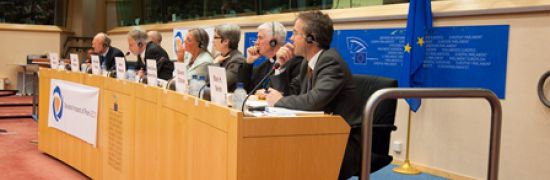
Pain experts from across the European Union met in Brussels in May for a meeting of the Societal Impact of Pain. The group is a lobbying platform which aims to improve pain management across the EU. This year’s meeting focused on two topics: how best to measure the quality of pain management services and helping people with chronic pain remain in or re-enter the workplace.

This video features brief interviews with some of the most influential people at the meeting talking about the reasons for holding it and their aspirations for the future of pain managment in the EU.

Peer Support. Join the community

“Having chronic pain is very lonely.”

Join the community

Subscribe to Pain Matters

Everything you need to know about how to live with chronic pain

Subscribe


In pain? Don’t understand what’s happening?

“Having someone to help you prepare for your life through pain”

Our Pain Education Sessions

Fundraise for Pain Concern

Help us to help others

Fundraise


Airing Pain business card

Airing Pain is ‘an excellent resource that gives good information and support’ and ‘makes you feel part of the pain community’, according to feedback from listeners. These comments were recorded in a recent evaluation of Pain Concern’s radio show to assess how far Airing Pain has been successful at reaching out to and helping people with pain.

Airing Pain first aired in September 2010 with the aim of taking support into the homes of people living with pain and over forty 30-minute episodes have now been broadcast. The broadcasts bring together people with pain and top specialists to talk about the resources that can help. All programmes are available for download from painconcern.org.uk and iTunes. New programmes are broadcast via Able Radio.

The evaluation found that on average just under 350 people have listened to each of the first thirty-six programmes and that each edition is downloaded on average 35 times a month. The most popular programmes include ‘Power over Mind and Body’, which looked at the importance of combining psychological and physiological approaches to pain, as well as programmes on ‘Effective Communication’ and ‘Growing Older with Pain’. Older programmes are still attracting a steady stream of listeners, suggesting that their content continues to be useful long after the time of broadcast.

The team also invited listeners to participate in a survey designed to capture information on the age and location of listeners as well as their responses to the show both positive and negative. One hundred and twenty people responded allowing us to discover, for example, that the majority of listeners (87 per cent) live in England or Scotland and that 83 per cent are aged forty or older.

Listeners were asked what they liked about Airing Pain with many appreciating that the programmes, in the words of one respondent, ‘highlight the issues that concern people with chronic pain’. Airing Pain was also praised for its high production standards, for being ‘interesting and lively’, for featuring the voices of a broad range of healthcare experts and people living with pain and for giving tips on self-management. Many listeners found that the programmes helped them to feel part of a broader ‘pain community’; a particularly important result as pain can often lead to people feeling isolated and misunderstood.

The evaluation has also provided the Airing Pain team with information about areas where there is room for improvement. The old website came in for some criticism from respondents to the survey and with this in mind the developers of the new website worked to provide easier access to the programmes. Perhaps the most important suggestion came from the researchers, who urged Pain Concern to improve awareness of the show to ensure that more listeners can benefit from this resource in the future. The listening figures from the latest programmes released after the study’s completion suggest that progress has been made as programmes 37 to 42 have already had between 1800 and 3500 listeners each.

Peer Support. Join the community

“Having chronic pain is very lonely.”

Join the community

Subscribe to Pain Matters

Everything you need to know about how to live with chronic pain

Subscribe


In pain? Don’t understand what’s happening?

“Having someone to help you prepare for your life through pain”

Our Pain Education Sessions

Fundraise for Pain Concern

Help us to help others

Fundraise


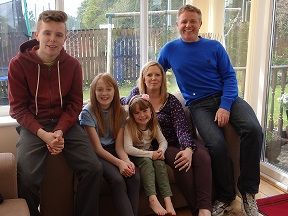
Tom Ellis developed chronic pain after falling on ice. His father Richard describes how the family pulled together to get through their ‘year from hell’

At the start of 2012 the nation was full of optimism, anticipation and great expectation for the forthcoming year: a year that would allow us to witness the greatest sporting spectacular live on our very own doorstep; a royal celebration that would lift our spirits from the economic gloom and a summer of record breaking heat (again!). For my Team Ellis (GBR) it was the start of the Year from Hell: a year of unknowns, questioning and soul searching.

In March my son fell on the ice on his way to school. Reaching out to steady his fall he injured his right wrist, which he had broken the previous year. He was taken to Leeds General Infirmary and he spent the next fortnight with his wrist in plaster.

Towards the end of the fortnight Tom began to complain about shooting pains in his wrist and tingling sensations he had not felt before. He also expressed concern regarding his fingers which had become rigid and unable to grasp. At a review meeting with the consultant it was decided that the cast was too tight and a new one was applied. The next day Tom’s school contacted us to advise that his right wrist had developed a claw like distortion for no reason. We immediately raced down to the casualty department to search for urgent medical treatment and comfort for our frightened young son. Throughout this time various tests were conducted: was the new cast too tight? Was he calcium deficient? The questions, unlike the answers, were endless.

Frightened and bewildered, it was at this time that we were introduced to a new acquaintance of Tom’s: one who was most unwelcome; one who would be at his side and plague our family for some time to come. This acquaintance was called Chronic Pain Syndrome.

The initial tests showed no results and he was admitted to a general ward. During this time Tom had several complete body spasm attacks of agonising pain. Grasping hold of the bed with his left hand he would scream out whilst his new acquaintance introduced himself. We as parents looked on helplessly, reaching out for support from the medical staff who were also in a state of confusion.

When the spasm attacks faded Tom would sleep and we would look in at our son, who earlier had shouted “Why can’t you make this stop, Daddy?!” as loud as he could. We as parents felt helpless and unsupportive to our son in his hour of need. What was causing this unprecedented pain in our boy? Why were the doctors not racing to his bedside with a “golden pill” for him to take? Would he wake from his sleep and this nightmare for us all be over? The answer would be “No”. Tom would wake from his silence only to announce that he could feel another attack looming.

Once again we were forced to watch on from the sidelines as Tom battled for peace and normality. After several days in hospital we were summoned to meet with the consultant in charge of Tom’s case. This was it! A solution had been found; our prayers had been answered. No more watching my little pal screaming whilst shrouded in agonising pain. My wife and I sat in the consultant’s office and we eagerly awaited the news that the results had come back and we were homeward bound!

The news that we were greeted with turned our world upside down in an instant …. “There is nothing we can do for Tom in the short term”….. “He has Chronic Pain Syndrome with distortion”….. “The medication we will prescribe will be trial and error and will not work for at least 3 months”…. “There is no medication that will stop his attacks other than our prescribed treatment…. Nothing”. Even though I tried at no stage did I hear him say that we would be going home to a takeaway and a night in front of the T.V!

Tom eventually was discharged as little else could be done for him in hospital and it was then that we began our journey of managing Tom’s condition as a family.

His attacks would come at any time of day, wherever we were. His new acquaintance was not afraid to wake him through the night as school was now not an option for Tom. The attacks were just as regular, lasted longer and were accompanied with involuntary arm and leg movements. Tom’s sisters would often witness him writhing around in pain in the lounge or, in one instance, a car park floor. Trips to the rugby match would be cut short as he was “going to have a do!” Ambulances were called on several occasions (and often refused to come) and we’d be greeted at the A&E with the question “Chronic Pain Syndrome??”

One of the most poignant instances was when Tom was celebrating his birthday, obviously a key date for Tom. This was a big day for him; a new start, new clothes, new outlook… only to be rushed down to A&E with a new spasm attack.

During this time I also lost my job and my father-in-law was left paralysed as the result of a stroke. Our precious world as we had known it was beginning to crumble but this was a time when the family needed more support than ever. Days were spent managing Tom’s condition, supporting my father-in-law (who was in a separate hospital), looking for work and ensuring that our two daughters maintained some form of routine. It was chaotic and spiritually draining. The royal celebrations and Olympic Games were lost for us in a sea of confusion, self-analysis (why us?) and suffering. Sadly my father-in-law later passed away.

It was key to remain positive throughout the dark times and to adhere to prescribed medication. During our dark days spirits were low and many a tear was shed, but we were Team Ellis (GBR)! We had to remain strong.

We used a number of techniques and strategies to remain positive throughout this time. Not just for Tom’s benefit but also ours as we were a team and a force to be reckoned with!

This coping strategy can be best described as MUCHness:

M – Music
The strength that music can provide during dark times can never be underestimated. The only condition is that “moody” music was banned in the house. The music we played had to be upbeat, fun and joyous: any song that would lift our spirits. Try it! It works! It’s funny how your mood can turn with a song from The Life of Brian!

U – Understanding
Fighting the situation and circumstance was never going to have a positive outcome. It was important to understand Tom’s condition, to accept and appreciate that the medication would eventually do its job. We needed to understand the situation in order to move on. “What lies behind you and what lies in front of you pales into comparison to what lies inside you” (Ralph Emerson).

C – Celebration!
Our journey has been rocky and certainly uncharted. Each day has been a challenge. We have however ensured that each achievement, however small, has been acknowledged and celebrated.

H – Humour
Our strongest ally in our fight against the year from hell! We have tried to laugh and find happiness in everything that we have done or seen. The ability to smile and laugh about the smallest of things should never be underestimated. A smile is a curve that sets everything straight!

I am delighted to say that Tom is now on the road to recovery and is making great progress. He, just like us, is now beginning to rebuild and take control of his life again. Would we re-live 2012? Not on your life! Will we take the learning and knowledge we have gained from it? Definitely!

The key message – keep smiling even when you are crying!

Richard

Peer Support. Join the community

“Having chronic pain is very lonely.”

Join the community

Subscribe to Pain Matters

Everything you need to know about how to live with chronic pain

Subscribe


In pain? Don’t understand what’s happening?

“Having someone to help you prepare for your life through pain”

Our Pain Education Sessions

Fundraise for Pain Concern

Help us to help others

Fundraise


Involving pain patients in health services and learning how to self-manage pain whilst working

To listen to this programme, please click here.

This programme was funded by the Big Lottery Fund’s Awards For All programme in Northern Ireland.

In this edition of Airing Pain, Paul Evans travels to Northern Ireland to visit a patients’ organisation, the Patient and Client Council. The Council provides patients with an independent voice in the health and social care system by involving those who live with chronic pain in the decision-making process and supporting patients who wish to make a complaint, with the overall aim of improving patient services in Northern Ireland.

Louise Skelly, Head of Operations at the Council, describes her organisation’s work promoting information and advice across the healthcare system and using patients’ experience, suggestions and stories to raise awareness of chronic pain. She highlights some of the advances and improvements that the Council has brought about in recent years.

Paul also speaks to pain patient and member of the Patient and Client Council’s pain strategy group, Jay Flood Coleman, who shares his own personal experiencesof chronic pain which has been complicated further by a series of health issues.

Board member of the Patient and Client Council, Rena Shepherd, who herself lives with chronic pain, contributes with her first-hand expertise and explains that with little adjustment on the part of employers, employees suffering from long-term pain conditions can still work full-time and be productive, with self-management pain courses proving very beneficial.

Issues covered in this programme include: Patient voice, patient experience, social care system, educating healthcare professionals, gaps in the health service, GP access, policy, opioids, making complaints, discrimination, urogenital pain and cancer.

Paul Evans: Hello! I’m Paul Evans, and this is Airing Pain, a programme brought to you by Pain Concern, the UK charity providing information and support for those of us living with pain. This edition’s been funded by the Big Lottery Fund’s ‘Awards for All’ programme in Northern Ireland.

Louise Skelly: There’s nothing as powerful as the patient’s story. And what surprises is that people in the system don’t always stop and listen to what are the real issues. They talk to their colleagues, they talk to other people, but sometimes they forget to talk to the people who actually use the service.

Evans: Not so very long ago, the idea of a patient being involved in his or her own pain management, or even having an opinion on it, would have been as likely as a flying pig. Doctor, as they say, or said, knows best. Attitudes for the most part have changed, but sometimes a catalogue of errors, be they clinical, administrative, or all to do with some policy change, compound to make a patient’s experience of the National Health Service at best –stressful, at worst – catastrophic.

Who then will champion the lone voice? In this edition of Airing Pain, I’m looking at one such patients’ organisation in Northern Ireland. The Patient and Client Council was set up in 2009 as a powerful and independent voice for people. Its Head of Operations is Louise Skelly.

Skelly: The Patient and Client Council is an independent body which is actually set up to be the independent voice of patients and service users in Health and Social Care, and our independence lies in that voice, and having that evidence base, and what are the issues for people. And we work with the Health and Social Care system to try to bring about improvements in services for people. And we support individuals who wish to make a complaint, we do a lot of work around involving people in decision making, so that’s one of the reasons we’ve got involved with people who have suffered from chronic pain.

Evans: Are there any ways that Northern Ireland differs from mainland UK?

Skelly: One of the big advantages that we have here is that Health and Social Care is integrated, so it should, theoretically, be a seamless service for people – that’s debatable. But one of the other things that is a particular gap for patients here is that we don’t have a single advice and information service unlike in Scotland where you have NHS 24 and you have – in England – you have NHS Direct, so they have a single advice and information service. That’s a big gap here in Northern Ireland: what people tell us repeatedly – they don’t have the advice that they need. So we’ve been working on and we’ve now got a scoping paper which has been approved by the permanent secretary, and actually this morning I was in a meeting where we’re moving forward with the business case for that.

Other things that happen across the ‘water’ which we don’t have here is – there’s not the walk-in centres, the 24-hour walk-in centres for direct access. And again, that’s an issue, and what we’ve found is a lot of our patients end up in A&E, totally inappropriately. We have been campaigning for an improvement in GP out-of-hours, and GP access. There’s an element of blaming patients for being in A&E, but the reality is they don’t have an awful lot else – nowhere else to go to. When they’re worried, that’s where they end up.

Evans: So would you act as a kind of ombudsman?

Skelly: Well, to an extent, yes. But there is a very discreet role, which is the role of the parliamentary ombudsman. Our role is very much around working in the system, working with individual patients, working with groups of patients who have issues, and in the whole broader involvement agenda. And we provided information and advice. We also promote the provision of information and advice across the system. So we have provided a range of services which are around patients and service users. And Northern Ireland’s quite different in that we have Health and Social Care under the one umbrella organisation, under the one department.

Evans: It sounds as if there might be a gulf between those who provide and the customers, if you like, the patients.

Skelly: Well, there can be. And one of the things we do is we work with the providers, as well as the patients, to promote the whole involvement agenda. There’s nothing as powerful as the patient’s story, and what surprises is that people in the system don’t always stop and listen to what are the real issues, they talk to their colleagues, they talk to other people, but sometimes they forget to talk to the people who actually use the service. And that is when the real experience comes to the fore that is of so much value for everybody to learn from. And we do a lot of work in that, promoting that right across the system.

Evans: Do you have an example of a patient’s story that might influence the profession?

Skelly: We have lots of stories. But one that sticks to mind is recently I was working with a young man who needed to get into genito-urinary medicine services, and he came to us because he had a very poor experience: first of all of finding out about the service, and when he got there, getting into the service, he didn’t realise that there was a big queue which ran out and up the street. And the whole experience he found very degrading. And he came to us because he felt this was a big issue. Once he got into the service, and the actual treatment carried out was actually very good, but the issues were around access, information and simple things like if you needed to come back and you needed to phone in to change your appointment, the phone didn’t work. So lots of simple things around how the system wasn’t working from a patient’s perspective. And as a result, I encouraged him and supported him to meet with the manager of the service, with the people who commissioned the service, and we were able to facilitate him to tell his story.

And when I spoke to the nurse manager who’d been managing the service for many years, I said to her ‘Did you ever, you know, ask the patients what it was like to stand in the queue or what it was like, you know, to try to get information about your service?’ she said ‘We’ve made a number of changes to the service, but we talk to the other staff’, and that was so fundamental to me that they hadn’t actually asked all these people who stand in the queue outside the door, for maybe an hour or two every morning. But, you know, the fact that she hadn’t stopped to ask them what’s that like, what’s that experience like, and as a result we were able to work with them to bring about a number of very significant changes, not the least of which was a new phone system.

Evans: In terms of pain, you have a pain steering group, what does that do?

Skelly: We have a small group of patients, and there’s a doctor on that as well, and some other people who have an interest in this area, local advisors. And what we’ve been working [on] for the last year – to raise awareness of chronic pain and how that affects people’s lives. It became clear to us that there are individuals who, for a variety of conditions, suffer from chronic pain, and some people who have no condition at all that has had a diagnosis, but certainly pain is a big part of their everyday life, and we felt that they had a voice which was unheard in the system. So we have been working with the MLAs [Members of the Legislative Assembly] in the Assembly. We had an event up in the Assembly where patients were able to speak directly to the Minister for Health and the Health Committee. We then held – worked with the Pain Alliance around the Pain Summit.
Evans: That’s Louise Skelly, Head of Operations of the Patient and Client Council in Northern Ireland. And you can hear more about the Northern Ireland Pain Summit that she was talking about in Airing Pain programme number 35, which, like all editions of Airing Pain, is available for download at https://painconcern.org.uk.org.uk. Jay Flood Coleman is a member of Patient and Client Council’s pain strategy group.

Jay Flood Coleman: When the Patient and Client Council was initially setting up local advisor committees, I became interested because I always thought that for people who have been through a lot of health experiences, there must be a way of feeding that experience back into the system. I thought I would like to apply to see if there was anything I could contribute on a local basis. And I was interested to see what would happen, and how it would actually filter through to the health boards, if you were to actually try and give information on the ground about what you thought was affecting people locally.

Evans: So you committed as a patient?

Coleman: As a patient, yes. My pain would have started initially with probably my second brain haemorrhage, because I had two brain haemorrhages, and after the second one I had about a year in hospital and rehab unit, 5 years in an electric wheelchair. And I lost my dominant side: I used to be left-handed, and that’s the side I lost, and also I lost a quarter of my brain. And I found after that time that I had a series of health issues which affected my pain levels, so what started off as a medium pain quickly seemed to accelerate the more I tried to become independent.

Evans: So you’re in the pain strategy group of the PCC [Patient and Client Council]?

Coleman: Yeah, I haven’t really thought about it being a pain strategy group as such. Yes, initially what was happening was I was bringing up chronic pain repeatedly as an issue at my local advisory committee, because I thought that it was affecting a lot of people within the population in Northern Ireland, and I thought that it was something that needed to be addressed.

Evans: How does your experience then and your thoughts, how does that help the strategy?

Coleman: It helps if you can share your personal experiences about the difficult road of how you actually handle pain, the ‘tunnel vision’ that you can get, and the depression that can actually come in from trying to just do it medically, and trying to fathom out what else might be available to help you ‘see the light at the end of the tunnel’.

I think, basically, like a lot of people you would go to your local GP to try and see what can be done about the pain levels you are experiencing. And the most important thing for us is to actually be believed, because some of the pains that you are experiencing may not be detectable on an X-ray machine, but they are very vivid within your own experiences. And then you quickly find that you accelerate within the pain medication, not always knowing exactly what it is you’re taking, I think, at times, which is a very dangerous thing. And then after you get to a certain level, you actually realise, as well, from the interchange you’re having with your family that you’re maybe not even contributing in the same way as you used to, as a member of that family, and that can be quite scary. So, for a lot of people, I think they’re trying to find a way out of that experience, to a ‘new dawn’, if you like, to what they can do about it, rather than what’s been done about it in the past.

Evans: How do you mean, trying to find a ‘new dawn’?

Coleman: Well, I think for a lot of people it is – they do find that they’re in a very dark place, because all they can do is – a lot of people are on what I would call opioids – or they are called opioids – and I find that they have a damaging result to a lot of people. I know quite a few people who are on such a large dosage they should not be out and about sometimes. Some of them are still driving, they shouldn’t be out driving. But I think the main thing is that you don’t realise what these are doing to your body, you don’t realise how your body then adjusts to the medication, and you don’t realise what effect they are having, if any, after a long term of many years’ medication. And it’s then trying to figure out, what can you do about that?

Skelly: We are all service users, at the very minimum are all registered with their GP, so we need everybody to get involved and have a say what’s – Health and Social care is the one service that we’re all going to use at some stage in our lives, and as we get older, the chances are we’ll use it more. But some people, even children, are very heavily involved, right from the start, just because of, if you like, whatever hand nature has dealt them. And we want to provide that avenue for people to have a say which is appropriate to them. So yes, we do have those people who have maybe a single issue, and are very passionate about that issue, and we welcome them. But at the other end, we have people – the whole spectrum.

And of course then we also have the complainants. Some of those cases who come to us are very difficult cases, and very harrowing cases, and of – the service works really well for many, many people, but for some people, things go wrong, unfortunately, and we’re here also to support those people. Most people don’t actually want to complain, but they do need help when they really have a complaint, and sometimes the cases that we are dealing with are at the very hard end of the scale, and they need that support. Sometimes that support is as simple as helping them to write letters, other times it’s attending meetings, there’s the whole – and we can be working with them maybe over a period of months to help them to get some issues resolved. Some are resolved quite quickly.

Evans: I suppose a big problem for people – and for health authorities – with complaints is the authority you’re complaining against or the person you’re complaining against becomes frightened of talking to that person, in case he says something that costs a lot of money. Sometimes people don’t want to go down that route, they just want either a ‘sorry’, or ‘please, can you get me a phone number, please, can somebody speak to me at the other end of the line’.

Skelly: Yes, it is an issue: the system can be defensive. And what we are doing is we are working with the providers and the commissioners to change that culture, but that’s going to take some time. We do think there has been a change. I think there’s now a recognition, for example, that a lot of complainers – actually all they want is for someone to say ‘sorry’, or quite often what they say ‘We want some sort of reassurance that my experience is not going to be the experience of another person or another family’. That’s really, really important to complainants. So if we can work with them early on in their process to get that – sometimes that’s as good an outcome as they can have.

We’ve had, for example – recently, we’ve been working with some women who had an issue with pain relief and maternity services, and they had a very bad experience with one particular hospital here in Northern Ireland in terms of – quite, almost draconian attitude to pain management: ‘Oh, you’re having a baby, just get on with it’ type of thing. And there was an attitude amongst some of the midwives in that particular unit. And what we did was we worked with the Trust and we got some of the ladies involved with training the staff to tell them what their experience was like.

And as a result, there was a new programme put in around pain management in that particular area. But what one of the service users, one of the ladies came back and said ‘You know, thank you so much I’m now able to get on with my life!’ Because she had such a dramatic time that, you know, she wanted to have another baby, she wanted to go back to work, all of that, but because she couldn’t get past this bad experience, being supported to get past it and move on with her life that made such a difference, and she felt somebody had listened to her and then had provided her with a way to try to make a difference for others, and quite often that’s what people want. If they have a bad experience, they want some reassurance that that’s not going to be repeated for other patients, and that’s very important to them.

Evans: Louise Skelly. Of course, dealing with the NHS is just one part of life with chronic pain. For those still in the workplace, an employer’s attitude can make all the difference between sinking and swimming. Rena Shepherd lives with chronic pain, and she’s also a board member of the Patient and Client Council in Northern Ireland.

Rena Shepherd: As a board member, I advocate for and represent the patient, ensuring that the patient or the service user’s voice is heard by all the commissioners, by the providers of services.

Evans: So you’re that link, if you like, between what the patient says and making sure it gets to where…

Shepherd: It gets to where it’s heard. It needs to be heard.

Evans: You also have a business background.

Shepherd: I started my life out in Price Waterhouse, and I then moved to the oil industry, I was marketing manager with BP Oil. I then went to work for a publishing company, and of late I worked at an executive level in Royal Mail.

Evans: And that experience must be invaluable dealing with the suits of the NHS.

Shepherd: Yes, absolutely. The experience has been invaluable. The experience has taught me that with a little modification on employers’ parts, a lot of people with long-term conditions, not only with chronic pain, but with various other long-term conditions, can actually work full-time and be very, very productive.

Evans: Are you involved in talking to businesses and to employers about this?

Shepherd: Yes, I am currently working with a group to try and get an organisation together that will link employers with healthcare providers, and get employers more inside the head of people with disabilities, and with the providers of healthcare in order that the two can be brought together to work better for the service users. Yes, I have spoken to a number of employers, I will give of my time if employers, for arguments sake, want to set up some self-management courses. That’s the thing that I have found very, very beneficial. Very, very beneficial. And the scientific evidence is out there for people who have completed self-management courses: they see their GP less often, sometimes they can reduce their medication, their sick absence decreases, they become more productive, their self-esteem goes through the roof, and various other benefits that will have a knock-on effect on productivity.

Evans: Have you had any success with employers taking on a self-management group?

Shepherd: The employer that I’ve had best success with was with Royal Mail. When I was with Royal Mail Group, Royal Mail were very, very accommodating for people with disabilities of any description. Royal Mail also had a Disability Action Centre which they set up, which is an online service for anyone who had a long-term condition themselves, for anyone who was managing an individual with a disability or long-term condition.

Evans: I guess nobody wants to disadvantage somebody with pain. But it’s knowing how to do it.

Shepherd: It’s knowing how to do it, it’s knowing how to do it, and again, as I said earlier on, it’s the modifications and the adjustments can be so small, I mean, so much can be gained for such a small adjustment. I think it’s about two things: it’s about getting people, like myself, to be honest about their condition, and that’s very, very difficult. You know, Northern Ireland is a very, very small place. There’s always the scary factor, if people do know that you are living with chronic pain that it can make you tired, will they worry about your performance, will they worry about employing you? I think personally I’m in a very lucky position that I’ve proven myself. I’ve lived with chronic pain for years, and years, and years, and I’ve proven I can do the work and manage my pain. But for other people, I think we have to work harder to make people not be so scared of coming forward and talking about their conditions.

Evans: In many situations, it’s a ‘black and white’ thing. If you tell your employer that you have chronic pain, immediately they say ‘Right, we will sort this out, we will manage this’, whereas in actual fact, it’s the person with pain who wants to manage it in his own way.

Shepherd: You tell them what you have, and then they will put their solution on it, where in actual fact all you need is to tell them how you need to manage. And I think that’s just from fear. They’re running scared of DDA.

Evans: DDA?

Shepherd: Disability Discrimination Act. A lot of employers are running scared of that. A lot of employers feel that we’ve got this policy so we must adhere to the policy, strictly to the policy, not realising that most people who are living with a chronic condition of any description are best placed to manage it. And if they can come to the employer, if you can come to your employer with your management plan, and say look ‘Can you fit in with this?’, you’ve a much better chance of being allowed to manage it yourself. But more progressive employers will absolutely hand it over to the employee in question. You know, they’ll say ‘Look, you know what’s best, it’s your condition, you know how best to manage it, and you know what’s best for you’. So I think it’s about being brave enough to come forward.

Evans: Rena Shepherd, board member of the Patient and Client Council in Northern Ireland. At this point, I’ll just remind you of Pain Concern’s usual words of caution that whilst we believe the information and opinions on Airing Pain are accurate and sound, based on the best judgements available, you should always consult your health professional on any matter relating to your health and well-being. He or she is the only person who knows you, and your circumstances, and therefore the appropriate action to take on your behalf. Back to the Patient and Client Council, and its Head of Operations, Louise Skelly.

Skelly: Health and Social Care is such a big system here in Northern Ireland, and there are 77 000 staff; the Patient and Client Council have only 30 staff, so we’ve got to prioritise, and we’ve got to think what are the issues that we can actively have an impact on. So each year we work with the patients to tell us what are the priorities with them, and then we make those into our priorities.

And again, because we’re small we have to think of ways of punching above our weight, so we have developed a membership scheme which is for people right across Northern Ireland. We would like 1% of the population on our membership scheme, [that] we launched it in 2011. We now have 9000 people, and they are people who are actively interested in what’s happening to Health and Social Care, who keep in touch with us via e-mail, via a whole range of ways, and they tell us what are the issues for them, and we use that information to feedback into the whole system. That’s a really effective way of how people can get involved here in Northern Ireland.

Evans: So how would a patient become involved in this?

Skelly: The membership scheme is open to everybody. You can register online, you can ring in to the office here. Northern Ireland has a legacy of community and voluntary groups: there’s about 7000 community and voluntary groups here in Northern Ireland, which is huge in size. But not everybody, especially people who are carers of people who have maybe long-term diseases and chronic illnesses – they can’t always get involved in groups. So the membership scheme, as well as having some groups on it, is a way for the individual to get involved.

Now they can get involved as little or as much – people, when they sign up, they tell us what their area of interest is in. And they can keep in touch through e-mail, they can come to meetings, conferences, workshops, whatever’s going on around that particular issue – very much their choice what it is they’re interested in. And we find their interest changes depending on what their needs are. We may not hear from them for a while and then suddenly something happens within their family, or whatever that they’re interested in, and they get involved in that particular issue. So it’s very much led by the people.

Coleman: I’ve input my experience basically by first trying to make people aware of how extensive I think chronic pain is, within lives, within the community, and how insular I think lives have become because of it. But also how narrow I find the opportunities are for trying to get out of that ‘tunnel’ experience, and I think that’s been thankfully vindicated by other people’s experiences in other areas.

Evans: Are you optimistic for the future?

Coleman: I am optimistic. I wouldn’t even be here if I wasn’t optimistic. I was optimistic when a consultant first told me that I would never walk again, and I had to prove him wrong. And I’m optimistic when people tell me that things will only get worse within the economy. And I’m always optimistic because I think that unless you have optimism, then that affects so many things, not just your health, and we need to have a positive attitude in order to move forward in our lives.

As well as being an optimist, I’m also a realist, and I know that there’s only a certain amount of funds – funding that’s available. But one of the things that I personally would have a dream about is that, for some aspects of chronic pain –not all – that we would have locally facilitated chronic pain groups, because a lot of people in pain don’t want to travel very far because it is painful to travel. So if we could have locally, cheap groups of chronic pain management, facilitated by people who themselves have been in pain, and I think that would go a long way towards actually helping the system without costing a lot of money, but then of course there has to be a wider education programme going on as well.

Evans: The Patient and Client Council has been running since 2009. What difference have you made?

Skelly: We’ve provided people with a voice. We’ve also provided a very good evidence base over the last 3 years in terms of what are the real issues for people. And we’re feeding that into the system. For example, we have produced somewhere in the region of about 35 to 40 reports which are a very clear evidence base. Those cover issues from what are people’s priorities in terms of things that should be addressed through to issues around urgent care, transport, access to GPs, and all of that. And what we find is that the commissioners and the trust boards when they’re developing their plans, they rely very heavily on that information, so that has begun to filter into the system, and bring about changes.

We’ve made a lot of changes for individuals in terms of their care, but as well as that, with groups of patients, a bit like GUM [genito-urinary medicine]. And for example in cancer where we’ve been working with chemotherapy patients, who, when they become unwell between episodes of chemotherapy, find themselves in A&E. You know, here’s a situation where you are a chemo patient, and you were told ‘You’re not allowed to go to your granddaughter’s christening, because you can’t mix with the crowd, stay away from people’, and all of that, and all of a sudden you find yourself sitting in an A&E department for 5 or 6 hours with everybody, from flu to whatever around you. It just didn’t add up: why is this very ill patient sitting here?

So we worked with the system, we got two beds in the cancer unit for direct access. We got some improvements to the help line in terms of the advice and information they were getting. And now the numbers of cancer patients who go through A&E have dropped about 90% in the last couple of years. That’s one area where we have made a fairly significant difference, and there are quite a few examples like that.

Now what we’re doing – we’re just about to launch a questionnaire which we’re going to issue through the membership scheme. It’s a fairly big piece of research where we’re going to hold focus groups as well with the interested groups, and what we’re hoping to do is get many thousands of people through the membership scheme and through the wider population, who will come forward and tell us what their experience of chronic pain is here in Northern Ireland, what their experience of the services are, but also what their experience is in terms of how that impacts on their lives, because we want to take that information, and then take that back to the commissioner and the Trust and say ‘Look, what are you doing about this? How are you going to make a difference for pain?’ We would like to see a regional strategy around pain management, and we would like to see an improvement in the services. But until we get a really good evidence base, we think we will be [un]able to do that better. So that’s why this questionnaire, and this research project, is so important.

Evans: Louise Skelly. And you can find out more about how to get involved with the Patient and Client Council in Northern Ireland at their website, which is http://www.patientclientcouncil.hscni.net.

And don’t forget that you can download all the previous editions of Airing Pain or obtain CD copies direct from Pain Concern. If you’d like to put a question to Pain Concern’s panel of experts, or just make a comment about these programmes, then please do so via our blog, message board, e-mail, Facebook, Twitter, or pen-and-paper. All the contact details are at our website, which is https://painconcern.org.uk.org.uk. Last words from Jay Flood Coleman.

Coleman: I think people have become quite despondent with the health system as a whole, and don’t know how to be effective and how to make a valuable contribution. And I think the Patient and Client Council is one of the first small organisations – because in health terms, they’re quite small. They are trying to make a real difference, and they are trying to do things at an intelligent, fundamentally realistic level. Rather than just trying to do things for their own reasons. They’re trying to make a real difference, and that’s why I like to be part of it.


Contributors:

  • Louise Skelly, Head of Operations at the Patient and Client Council
  • Jay Flood Coleman, Patient and Client Council strategy group member
  • Rena Shepherd, board member of the Patient and Client Council.

Peer Support. Join the community

“Having chronic pain is very lonely.”

Join the community

Subscribe to Pain Matters

Everything you need to know about how to live with chronic pain

Subscribe


In pain? Don’t understand what’s happening?

“Having someone to help you prepare for your life through pain”

Our Pain Education Sessions

Fundraise for Pain Concern

Help us to help others

Fundraise


Involving pain patients in health services and learning how to self-manage pain whilst working

This programme was funded by the Big Lottery Fund’s Awards For All programme in Northern Ireland.

In this edition of Airing Pain, Paul Evans travels to Northern Ireland to visit a patients’ organisation, the Patient and Client Council. The Council provides patients with an independent voice in the health and social care system by involving those who live with chronic pain in the decision-making process and supporting patients who wish to make a complaint, with the overall aim of improving patient services in Northern Ireland.

Louise Skelly, Head of Operations at the Council, describes her organisation’s work promoting information and advice across the healthcare system and using patients’ experience, suggestions and stories to raise awareness of chronic pain. She highlights some of the advances and improvements that the Council has brought about in recent years.

Paul also speaks to pain patient and member of the Patient and Client Council’s pain strategy group, Jay Flood Coleman, who shares his own personal experiencesof chronic pain which has been complicated further by a series of health issues.
Board member of the Patient and Client Council, Rena Shepherd, who herself lives with chronic pain, contributes with her first-hand expertise and explains that with little adjustment on the part of employers, employees suffering from long-term pain conditions can still work full-time and be productive, with self-management pain courses proving very beneficial.

Issues covered in this programme include: Patient voice, patient experience, social care system, educating healthcare professionals, gaps in the health service, GP access, policy, opioids, making complaints, discrimination, urogenital pain and cancer.


Contributors:

  • Louise Skelly, Head of Operations at The Patient and Client Council
  • Jay Flood Coleman, patient and Council strategy group member
  • Rena Shepherd, board member of the Patient and Client Council.

Peer Support. Join the community

“Having chronic pain is very lonely.”

Join the community

Subscribe to Pain Matters

Everything you need to know about how to live with chronic pain

Subscribe


In pain? Don’t understand what’s happening?

“Having someone to help you prepare for your life through pain”

Our Pain Education Sessions

Fundraise for Pain Concern

Help us to help others

Fundraise


Since 2010, improving European pain management has been the key objective of the Societal Impact of Pain (SIP) lobby group. On 14-15 May 2013, the SIP’s annual meeting will continue its mission of raising international awareness of the impact of pain. The meeting, hosted by the EU Economic & Social Committee and the EU Parliament in Brussels, will be centred on two main topics:

• The objective of SIP Focus Group 1 will be to develop and agree upon a set of indicators for chronic non-malignant pain management.

• SIP Focus Group 2 will aim to develop a ‘Proposal for Action’ for reintegrating chronic pain patients returning back to work.

‘It is important to make chronic pain visible as a medical, economical and societal disease. Chronic pain has a big influence on someone’s daily life, working life and family life.’ Explains Professor Hans Georg Kress, President of the European Federation of IASP® Chapters (EFIC®). ‘We want to make sure that politicians and policy-makers in Europe and in the member states are aware of the societal impact of chronic pain. Therefore, the outcomes of both focus groups shall give concrete suggestions on how we can effectively change pain management and thus improve the quality of life for our patients.’

Created in 2010 as a joint initiative of the European Federation of IASP® (International Association for the Study of Pain) Chapters (EFIC®) and the pharmaceutical company Grünenthal GmbH, the SIP facilitates the exchange of pain management information and practices across Europe. By promoting the adoption of common strategies and activities amongst member countries, the SIP continues its work towards achieving better standards of pain management within the EU.

For more information and for details of the outcomes of these meetings, please contact

Societal Impact of Pain (SIP) Platform
Tel: +49 241 569 1878
Fax: +49 241 569 5 1878
Email: sip‐platform@grunenthal.com
www.sip-platform.eu

or

European Federation of IASP® Chapters
Medialaan 24
1800 Vilvoorde – Belgium
Tel: +32 2 251 55 10
Fax: +32 2 251 48 10
Email: secretary@efic.org www.efic.org

Peer Support. Join the community

“Having chronic pain is very lonely.”

Join the community

Subscribe to Pain Matters

Everything you need to know about how to live with chronic pain

Subscribe


In pain? Don’t understand what’s happening?

“Having someone to help you prepare for your life through pain”

Our Pain Education Sessions

Fundraise for Pain Concern

Help us to help others

Fundraise


Learning to manage endometriosis and how support groups can help

This programme was funded by the Big Lottery Fund’s Awards For All programme in Northern Ireland.

Paul Evans visits an endometriosis support group in Belfast, and interviews founder Anna Jaminson and guest speaker gynaecologist Dr David Hunter.

Dr Hunter discusses the research about how endometriosis develops and people living with the condition describe their experience in depth, including the impact upon personal relationships with family and friends. Members of the support group talk of their immense relief at finding people with similar stories to share.

We hear about the difficulties in diagnosing endometriosis – often mistaken for other conditions such as Irritable Bowel Syndrome – but also about some recent improvements to its diagnosis and management and the crucial role of sympathetic healthcare professionals.

We also learn more about surgical treatments and their likely prognoses, including hysterectomy, and we hear about the physical, psychological and emotional impact of such surgery.

Issues covered in this programme include: Endometriosis, peer support, support groups, family, friends, relationships, hysterectomy, women’s pain, pelvic pain, vagina, bowels, adenomyosis, uterus, womb, nausea, vomiting, sneezing, coughing, diaphragm, periods, menstruation and IBS.


Contributors:

  • Dr David Hunter, gynaecologist
  • Anna Jaminson, founder of Belfast endometriosis support group
  • Linda Harris, group member
  • Nuala Campbell, group member
  • Robin Atchison, group member
  • Louise, group member.

Peer Support. Join the community

“Having chronic pain is very lonely.”

Join the community

Subscribe to Pain Matters

Everything you need to know about how to live with chronic pain

Subscribe


In pain? Don’t understand what’s happening?

“Having someone to help you prepare for your life through pain”

Our Pain Education Sessions

Fundraise for Pain Concern

Help us to help others

Fundraise


Learning to manage endometriosis and how support groups can help

To listen to this programme, please click here.

Paul Evans visits an endometriosis support group in Belfast, and interviews founder Anna Jamieson and guest speaker, gynaecologist, Dr David Hunter. Dr Hunter discusses the research about how endometriosis develops and people living with the condition describe their experiences in-depth, including the impact upon personal relationships with family and friends. Members of the support group talk of their immense relief at finding people with similar stories to share. We hear about the difficulties in diagnosing endometriosis – often mistaken for other conditions such as irritable bowel syndrome – but also about some recent improvements to its management and the crucial role of sympathetic healthcare professionals. We also learn more about surgical treatments and their likely prognoses, including hysterectomy, and we hear about the physical, psychological and emotional impact of such surgery.

Issues covered in this programme include: Endometriosis, peer support, support groups, family, friends, relationships, hysterectomy, women’s pain, pelvic pain, vagina, bowels, adenomyosis, uterus, womb, nausea, vomiting, sneezing, coughing, diaphragm, periods, menstruation and IBS.

Paul Evans: Hello and welcome to Airing Pain, a programme brought to you by Pain Concern, the UK charity providing information and support for those of us living with pain. This edition’s been funded by the Big Lottery Funds award for our programme in Northern Ireland.

Nuala Campbell: Every single month I was brought into A&E and every month I was just told that ‘You have a low pain threshold. This is what it’s going to be like to be a woman, you better get used to it. There’s nothing wrong with you, it’s just wind.’ I was kind of treated like I didn’t know my own body.

Evans: Now there are two aspects to today’s edition of Airing Pain: one is to explore a condition that affects 1.5 million women in the UK, and the other is to see how belonging to a support group can be a valuable aid to managing any chronic condition.

Earlier this year, I went along to the monthly meeting of the endometriosis support group in Belfast. Their guest speaker, gynaecologist Dr David Hunter, was conducting a question and answer session.

Dr David Hunter: Endometriosis is a chronic progressive condition which can develop at any stage throughout a woman’s reproductive life. It’s more common in women in their thirties and forties, but can present much earlier, and when it presents earlier it’s often very severe and aggressive. So it’s a disease that affects extra-uterine organs, the ovaries, the side walls of the pelvis, sometimes the bowel, and the area at the top of the vagina the pouch of Douglas. The symptoms that it causes are chronic pain, pain with intercourse, pain with bowel motion and sometimes crippling menstrual pain.

It’s often associated with a very similar condition called adenomyosis, whereby the lining of the womb, rather than growing outside the womb or within the lining of the womb cavity itself, grows into the muscle wall of the womb. That’s a condition that presents a particular management difficulty because the only truly effective treatment for this condition is hysterectomy. Endometriosis per se, being an extra-uterine disease, can be treated by excision of the endometriosis and conservation of the womb. But when adenomyosis is present the improvement in pain scores is often much less, in the absence of a hysterectomy.

Evans: Dr David Hunter. And – dare I say it – something of a knight in shining armour for the Belfast endometriosis support group’s founder and driving force for 27 years, Anna Jamieson. The condition, as I mentioned earlier, affects at least 1.5 million women in the UK.

Anna Jamieson: We like to think of it as 1 in 10, because to us that means an awful lot. If you think that [for] each one of us here, there’s another nine ladies out there who have endometriosis. One patient has written ‘I feel like I am being hollowed out by a brillo pad.’ I don’t know if anybody else has had that experience, but I know I felt as if somebody was running a grater over my insides. One and a half million, 1 in 10 of us, suffer with endo and the same number of ladies suffer with diabetes, and yet look how widely diabetes is known about!

Seventy-three per cent of women have reported relationship problems: 10% within ordinary friendships; 11% say it has caused breakups in friendships or in relationships; 11 % find it difficult to look after children; and 39% say that it has caused significant problems between them and their partner – and that again is very sad. But in this little group I don’t think we allow that to linger – do we girls? We don’t. We are an upbeat group, we like to think that there are better days coming, and with the help of Dr Hunter who’s been absolutely fantastic to the girls here in this group. I think he knows more about our insides than we know. [Laughter]

Evans: Just tell me in simple terms so I can understand this: the tissue from the womb actually grows, spreads, outside the womb – is that right?

Hunter: Yes. There are a number of theories about how endometriosis develops, and the oldest of those theories is called Samson’s theory: at the time of menstruation, in addition to menstrual effluent being expelled through the cervix, some of the menstrual effluent is expelled through the fallopian tubes into the tummy cavity or pelvic cavity. In a number of women that tissue retains the ability to survive and plants into the tissue that lines the tummy cavity and then becomes viable. It then responds to the hormones that the ovaries produce on a cyclical basis and obviously each month bleeds, causes inflammation and may cause adhesions or scarring which tends to make things stick together.

Evans: Can it spread beyond the abdomen?

Hunter: Yes. One of our patients this evening had [this] disease very close to her lung. It can also be found in abdominal wounds or actually within pulmonary tissue, and that is not in keeping with Samson’s theory of development of endometriosis, which is one of the reasons why other theories have been postulated.

Linda Harris: I’m Linda Harris and I’ve suffered with endometriosis for about 8 years now. Mine caused extremely severe pain, with vomiting, with sneezing, with coughing, with hiccupping… And I had already suspected at that stage myself that I had endometriosis – in my diaphragm – and subsequently I found out I had it quite extensively in my pelvis and in part of my body wall and my diaphragm as well.

Evans: With so extensive a spread, what’s the treatment for that?

Harris: Initially to help diagnose it Dr Hunter did an MRI on the pelvis and again he knew that… he didn’t think that the endometriosis on my diaphragm was likely to be visible on the MRI, so they found it extensively on my pelvis but couldn’t see anything on my diaphragm; had that removed and was sent home hoping that the pain in my side was sort of maybe referred pain or that hopefully the surgery would improve that, but three weeks later the pain in my side was just the same – the surgery hadn’t helped that pain.

I had had some pelvic pain before but really nothing compared to the pain in my side so I went back and then got a further MRI which showed up the endometriosis on my diaphragm and in my body wall as well. Then I got referred via a cardio-thoracic surgeon to a liver specialist who did my surgery 6 months ago and my life has improved beyond recognition.

Hunter: The thing with your suspicions was you knew what you had long before I diagnosed it.

Harris: Yes. Yes.

Hunter: And it took a little bit of a while for me to get to the bottom of you.
[Everyone laughs]

Harris: Yes. The only thing I would say is that Dr Hunter at least believed: I think that was probably the most important thing after so many years for somebody. It may have taken a bit of work to get there and it certainly wasn’t a straightforward presentation or maybe a more normal presentation, but I suppose all I would’ve asked was for somebody to listen to me and to believe my symptoms rather than maybe, really, probably dismissing them for a long time.

So I think, yes, with endometriosis it’s not always simple by any means, but to just believe in your patients and, you know, together you can get there and the improvement in my quality of life, I would say also for my husband and my family: the improvement in his quality of life is really beyond belief. He would never really have known me as a well person, and for him not to be running about at three in the morning with a bucket for me to be sick in and waking up has been a huge help for both of us. So thank you very much to Dr Hunter and the team.

Hunter: One of the most important things that I’ve learnt in my medical career is the importance of listening. People know their own bodies. If you listen carefully then people will tell you what’s wrong. There’s nobody who can diagnose endometriosis without either looking at it directly or having a biopsy specimen confirm it, but patients will often direct their clinician to their diagnosis, and it’s listening to the direction that I find very important. And listening as well to what the patient wants from her treatment because not everybody wants the same thing. And again, another blunt question that I ask sometimes is ‘What do you want to take from your treatment?’: because we can’t always fix everything.

Nuala Campbell: I’m Nuala Campbell, I’m 30 years old, and I have been suffering from endometriosis since I was 15. It affects everything, it affects – like I have chronic fatigue along with endometriosis, so it affects my ability to do a lot. I can’t go out and do all the social things that someone at 30 years old might want to do. I can’t have children, I was told around when I was 26 that I would never have children naturally. At 15 I was being brought to hospital either by ambulance or by a parent who was totally freaking out, so every single month I was brought into A&E.

Evans: Every month?

Campbell: Every month, every month. And I was just told that, ‘You have a low pain threshold, this is what it’s going to be like to be a woman, you better get used to it’, you know, ‘there’s nothing wrong with you, it’s just wind’. I was kind of treated like I didn’t know my own body. Even after I had my first laparoscopy to diagnose, they drained a lot of internal bleeding from my pelvis, so I lost around a stone and a half of weight when I came out of surgery, and they still didn’t diagnose me with endometriosis; they let me go home. It was another 3 years after that before they said it was endometriosis.

Robyn Atcheson: My name is Robyn Atcheson, I’m 24, and even my doctor was so convinced that there was nothing wrong with me that whenever I had the operation I was told, on my way into theatre, that there wouldn’t be anything wrong with me, that I would wake up and I would still not have an answer [Laughs].

I should point out that I asked for this operation specifically to get an answer, whether it be positive or negative. And whenever I came round from the operation and it turned out that I did have endometriosis, there was actually too much of it to remove at the time, so I had to wait a further 6 months to get it removed. I’m still recovering from that, it’s only been about 6 or 7 weeks – 7 weeks now. But just having that diagnosis makes a world of difference. You can tell people, ‘This is what I have that’s wrong with me’, it’s not just a generic ‘I’m in pain a lot of the time and nobody knows why.’ This is my condition, you can look it up on the internet, you can read blogs about it, you can look at what other people are saying about it and people can then start to understand and get a bit of an awareness of what it is that you’re going through.

Evans: Do your friends understand?

Atcheson: The friends that I have now do. Whenever I first got ill, I have lost a lot of friends since then. You have to cancel a lot of social things, you maybe have to alter your lifestyle a bit, you can’t do as much as you used to be able to. And some friends can’t really see that whenever you look the same on the outside that there’s something different that’s happened to you that you’re struggling with, maybe behind closed doors, behind the smile that you wear every day.

For a condition like endometriosis, a gynae condition, it’s not always the easiest thing to talk about and some people don’t like talking about it. My best friend is a boy – it’s been interesting educating him about it, but he’s actually been one of the most supportive of my friends and he really tries to understand where I’m coming from. And he would be the one that would help me out the most: he would notice when I’m having a bad day and would help me carry things or would walk me to my car and things like that. So I think that the friends that I have now are probably the truest friends I’ve ever had because they’re the ones that know me, pain and all, and accept me for that.

Evans: Is diagnosis a problem?

Hunter: A diagnosis is very problematic, and there is a delay in diagnosis of 10 years on average between the onset of symptoms and diagnosis within the UK.

Evans: Ten years is an awfully long time.

Hunter: It’s dreadful.

Evans: Why is that – just because it’s a problematic diagnosis or because people have to wait too long?

Hunter: I think it’s because the symptoms that women get with endometriosis tend to be non-specific and there isn’t a single symptom or group of symptoms that patients would have that would prompt GPs to initiate a diagnosis and treatment. Fortunately, that is changing and GPs are becoming more aware. I spoke with a group of GPs just this evening and one of their primary concerns was when they should refer patients with chronic pain. So I think GPs are becoming more aware of the diagnosis.

Evans: So how could it be misdiagnosed, then? What other things could it be?

Hunter: We often see girls who are told that their periods are just as they are, that that is their lot. We see girls who are told that they have irritable bowel syndrome, and we see patients who’ve advanced quite far through an infertility, investigative network without having diagnostic laparoscopy to confirm or refute a diagnosis of endometriosis.

Evans: As a teenager, knowing that you have problems, what did it feel like to be told that you have wind, or ’You’re a woman, get on with it’?

Campbell: Frustrating. You kind of lose the will a bit, you know? You’re kinda, like, well, if that’s right and this really is what it’s like to be a woman, I don’t want to be a woman anymore, I don’t want… like, this is me until I hit menopause at whatever age. It’s so disheartening to think that you’re just going to be left like that for the rest of your life and you just have to deal with it. So it’s quite scary. It would depress you quite quickly if you didn’t have the right people around you.

Evans: When did you start to have the right people around you?

Campbell: I suppose I did a lot of online research myself, and I only discovered this endometriosis group maybe 4 months ago –a I was never told about it by any GPs or any gynecologists, nothing. So I was part of endometriosis groups online and got to read a lot of stories from other women who were going through the same thing, so I got a lot of reassurance from that. Because when you’re sitting in pain all the time you have thoughts and you think you’re going mad, like I used to think ‘I wish I could give this pain to someone else for a day, to see if it really is this bad!’ or ‘Do I have a low pain threshold?’ and then you hear that all these women are thinking the same thing.

Evans: You say you’ve only been coming to this endometriosis group in Belfast for 4 months.

Campbell: Yes.

Evans: How important is a group – a physical group – rather than meeting online?

Campbell: So important. I really, really enjoy coming here. I look forward to it every month. It gets frustrating sometimes in life and sometimes you just need somebody to go‚ ‘Yeah, I’m feeling the same way’ and you’re like ‘Oh, great, I’m not alone!’ And even just coming in, being surrounded by so many women who try to remain positive about the disease and do their best to kind of stay on top, it has such a lovely impact on y­our life and your ability to cope.

Louise: My name’s Louise and I am new to this endo pals group. I just went last week, having read an article on endometriosis, and I got in touch with Endo UK, or Endometriosis UK, and saw that there was a support group nearby. I’ve been living alone with this for a very long time, so this is quite new to me.

Evans: Tell me how endometriosis affects you.

Louise: It, basically, is like somebody stretching my whole bowel area: actually as well as even below that – but as far up as my bowel area – like a huge elastic band to the point where it’s almost ready to break and then basically searing a hot poker over it. In fact I’ve fantasised at the time of going down to the kitchen and getting out a knife and literally just cutting a big square in my tummy and just lifting out this block of a problem, because it is just so excruciating. And I know the pain is so strong that I wouldn’t actually feel it if I did that, because of the pain of endometriosis.

Evans: And how long have you had it?

Louise: I’ve had it for 22 years. I’m 34 now, and just like Dr Hunter said, it was about 10 years before I got diagnosed and I diagnosed myself. I saw it in Company magazine when I was about 20 and it said ‘Period Pain Put Me in Hospital’ – it was one of their front stories. I grabbed it from the shelf and I got in touch with what was then the National Endometriosis Society. They were able to give me a referral to somebody in my area here in Northern Ireland.

Evans: You’ve just joined this endometriosis support group in Belfast, this is your second visit – how useful is it?

Louise: I’m still taking on board everything that I have learned about endometriosis, so that is just mindblowing and I just think it’s amazing to be meeting all these girls who have such a wealth of information but are so determined to promote endometriosis awareness and to actually try and improve the services that are out there. I wish, to be honest with you, I’d known about them – well, the second I had endometriosis, because I’ve lived in the dark with it for so long. And to be in a room where there are actually other people who have gone through that… I’m still taking it in, actually, but it does give me hope, and I know I’m not alone and I know that it means I can still manage to have a family at some point and maybe I can have a job: things that I had written off.

Evans: How many women are offered hysterectomies too early, do you think?

Hunter: I can only comment about what happens at my clinic. And obviously the choice to undertake a hysterectomy is a very big decision that a woman has to take in terms of fertility aspirations and loss of femininity – these things will have to be considered. And I know that women who have a hysterectomy younger tend to have a very high incidence of post-treatment mood disturbance (depression) because of regret about undertaking the hysterectomy. So, I can’t give you a figure, but certainly we counsel women very thoroughly and don’t rush to hysterectomy in most cases [Laughs]. We have a young lady here who was unsure for many years, actually, about whether or not she wanted to have a hysterectomy.

Evans: There was a lot of laughter.
[Women laugh in the background]

Hunter: Mmmm! There wasn’t a lot of laughter for many years.

Jamieson: There were a lot of tears the morning of the surgery, believe me.

Evans: [Turns to Jacqueline.] Do you mind sharing this? What you went through?

Jacqueline: From the age of about 15, I’ve been in severe pain and for many, many years, I was misdiagnosed with everything under the sun. I struggled for a long, long time, and I was one of the lucky ones: I had my family. The morning of the surgery, I still was in tears, but I am now 11 weeks post-surgery, and I’m pain-free for the first time in 23–24 years.

Evans: Can you explain to me what you struggled with?

Jacqueline: For probably 3 weeks of the month: severe, severe pain. Now I can sneeze without being doubled in two and have pain in my pelvis. I can straighten up and hold my children. My children don’t have to say, ‘Oh no, you can’t do that because Mummy’s belly’s sore or Mummy’s tummy is sore.’ I can walk up the stairs on good days – there’s not a problem. That pulling, dragging, horrendous pain is not there anymore and I’m just so thankful that, touchwood, it won’t come back.

Evans: Does that mean that Jacqueline no longer has endometriosis?

Hunter: Well 90% of people who undergo the type of surgery that Jacqueline has undergone will remain disease-free at 5 years, and Jacqueline’s case demonstrates very clearly that women who suffer with endometriosis don’t fully appreciate the impact that their disease has on their quality of life until after they receive treatment. When they’re better and they can look back, they realize how poor their quality of life was. People do accept it, because they’ve been told, ‘This is your lot’, and they accept that this is [their] lot. It’s only after treatment, when life is better, that they can look back and say things were miserable.

Jacqueline: You get to a certain time – it builds up and builds up throughout the month, and you get to a certain point where you say, ‘I cannot do this anymore; I can’t take this pain anymore’. Then you get a bit of release because you have your period and that sort of gives you a bit of release, and then it starts to build up again. The only other time that I was pain-free was [during] my three pregnancies, but I can honestly say I put off the hysterectomy from when I was about 28/29, and Dr Hunter didn’t want to do it either because I was so young and I hadn’t had my family. Now that I’ve had it, I just say it was the best thing – because I’ve had my family I can say that. I know others that are trying for it, [for whom] it’s not the best option; it’s not the right option, but for me, it has been.

Hunter: One of the first questions that I ask people when they come into the room is, ‘Have you finished having your babies?’ It’s a very blunt question, but it helps to direct treatment. Jackie wasn’t sure. So if someone isn’t 100% sure, then we can’t do a hysterectomy.

Evans: So what are the options for those people?

Hunter: Well the options then are either to treat surgically and conserve the uterus, and then add in some Antivert medical therapy, or just to treat medically by turning the ovaries off and effectively rendering patients temporarily menopausal.

Evans: But that is temporary?­­

Hunter: That is temporary. It doesn’t work for everybody. And if treatment is discontinued about three-quarters of patients have a flare-up of their symptoms.

Jamieson: I set this group up over 27 years ago because when I had endometriosis and [was] facing a hysterectomy, like Jackie, I kept putting the hysterectomy off. Every time I was told in that room over there that I had to have a hysterectomy, I would come out and say to the nurse, ‘I’m not going to have a hysterectomy.’ So I set the group up because I was actively looking for somebody in the same situation. I just needed to talk to somebody and that is why this group was set up – just so that we could talk to one another.

Anyway, I set the group up, and one by one, we all came, and it was called the Hysterectomy Support Group in those days. And then one after the other after the other girl coming in was having her hysterectomy because of endometriosis, and she was in the same situation as I was, saying ‘No, I’m not ready for a hysterectomy.’ Please let me make you understand tonight that unless you are, you never have it. Anyway, we had to find a way around, supporting each other and supporting the girls who come in. I’m just looking tonight at Jackie, and I can tell you the night that Jackie walked through the door there, another lady and myself had to go down to the door and help her into a seat. We were using the kitchen in those days – do you remember that? Jackie could hardly walk. Now look at her! I am a firm believer in the fact that if you can find somebody else to talk to, that is really one of the best things that you can do.

We are here because we have been helped. Carine and Lara…and Tracy’s been here since she was 19. And I’ll not tell everybody how old you are now; I know you. But Tracy came here when she was a 19 year old, having been told then that she would have to have a hysterectomy. Tracy, with David’s help, was able to get through life. Tracy was really very, very bad. We shared the same GP. We have our meetings on a Thursday night, and I had to see him on a Friday for a blood test, and I walked in, and I said, ‘Before I get this blood test, I want to tell you that there’s a wee girl who comes to our group and her name’s Tracy, and she really needs to see somebody else.’ When Tracy went for a letter for a second opinion, she got it and she was able to go to Middlesbrough. When she came back a couple of weeks later, I went to visit her, and she said, [Gasps] ‘I met this lovely young doctor and he’s from Belfast!’ [Laughter] That was David, and when he came over here and got his consultancy post, and even before that, [he] was always very willing indeed to come along and support us as we supported each other.

Evans: How important is it for you to meet patients like this in this informal gathering?

Hunter: I love coming along here. [Laughter]

Evans: And not just for tea and cakes? [Laughter]

Hunter: Not just for tea and cakes. [Laughter] I think it’s great to get the feedback that we get from a group like this because we have patients here – some of the girls here haven’t done as well as others. Some of them continue to suffer and it’s good to have that feedback as well as the positive stories. And it’s heartening for me to see the fruits of my labour because it’s great to know that I can make a difference.

Evans: My thanks to David Hunter and the ladies of the Belfast endometriosis group for letting me sit in on their meeting. If you’d like to find a support group in your area, then check out the Endometriosis UK website, and that’s at endometriosis/uk.org. My usual words of caution are that whilst we believe the information and opinions on Airing Pain are accurate and sound based on the best judgments available, you should always consult your health professional on any matter relating to your health and well-being. He or she is the only person who knows you and your circumstances, and therefore the appropriate action to take on your behalf.

Don’t forget that you can still download all the previous editions of Airing Pain, or obtain CD copies direct from Pain Concern. If you’d like to put a question to Pain Concern’s panel of experts or just make a comment about these programmes, then please do so via our blog, message board, email, Facebook, Twitter, or pen and paper. All the contact details are at our website, which is painconcern.org.uk. I’ll leave you with the ladies of the Belfast Endometriosis Support Group.

Member of the Belfast Endometriosis Support Group: I haven’t been able to wear jeans in 4 years, and yesterday, I wore jeans for about 10 hours. It was the best feeling in the world, just being able to wear jeans, because I’ve been wearing loose-fitting clothing for 4 years, in fear that [jeans] will hurt me. I haven’t reached the ultimate goal, which is to wear jeans while eating pizza, because eating cheese triggers my pain. It isn’t a very exciting goal for a 24 year old, but to just wear jeans and eat pizza would be great.

Member of the Belfast Endometriosis Support Group: Anna, not being well herself, nor her husband, came up on the morning of my surgery, and she sat on the bed while I cried my eyes out. She was a lifesaver when I came here 15 years ago. She’s never let any of us down. I just want to say thank you, and I’m sure the rest of the girls want to say thank you too. [Applause]


Contributors:

  • Dr David Hunter, Gynaecologist
  • Anna Jamieson, Founder of Belfast Endometriosis Support Group
  • Linda Harris, Group Member
  • Nuala Campbell, Group Member
  • Robyn Atcheson, Group Member
  • Louise, Group Member
  • Jacqueline, Group Member.

Peer Support. Join the community

“Having chronic pain is very lonely.”

Join the community

Subscribe to Pain Matters

Everything you need to know about how to live with chronic pain

Subscribe


In pain? Don’t understand what’s happening?

“Having someone to help you prepare for your life through pain”

Our Pain Education Sessions

Fundraise for Pain Concern

Help us to help others

Fundraise


A look at how experts from different backgrounds work together in multidisciplinary pain teams

To listen to this programme, please click here.

Presenter Paul Evans travels to Northern Ireland to meet a multidisciplinary pain team at Craigavon Area Hospital, including doctors, psychologists and physiotherapists, led by Dr Paul McConaghy. We find out how cases of chronic pain are discussed by experts of different disciplines and how management strategies are then put into place.

The importance of educating GPs about chronic pain is discussed, as well as the need for empathic and respectful professionals.Paul Evans sees how the team works by sitting in on a meeting about an example patient: Dr Sam Dawson presents the case of a 38-year-old woman with chronic lower back pain. Referred by her GP, treatment so far has not led to improvement and she is now experiencing depression.

The team discusses the strategies they would use in working together with such a patient. Psychologist Dr Nicola Sherlock stresses the importance of treating depression as it not only hinders the management of a person’s pain but worsens the symptoms, and she and physiotherapist Michele McGeown explain the importance of dealing with psychological issues, particularly fear of movement, in helping patients improve their physical fitness.

The team also talk about how they could use TENS (transcutaneous electrical nerve stimulation) machines to help some patients and how medical doctors and psychologists can work together to understand how a patient is likely to respond to injections. Finally, Dr Jim McMullan explains how GPs can learn from and complement the multidisciplinary approach by listening carefully to the patient and taking into account psychological and social as well as physical aspects of their condition.

Issues covered in this programme include: Multidisciplinary team, psychology, physiotherapy, healthcare professionals, management strategies, lower back pain, depression, TENS, pharmacology, radiography, tailored treatment, combined clinic, fear, anxiety, exercise, the biopsychosocial model, managing appointments and communicating pain.

Paul Harvard Evans: Hello, and welcome to Airing Pain, a program brought to you by Pain Concern, the UK charity providing information and support for those of us who live with pain. This edition has been funded by the Big Lottery Fund’s ‘Awards for All’ Programme in Northern Ireland.

Today I’ll be examining the workings of a multidisciplinary pain management team to find out how cases of people with chronic pain conditions are discussed between experts of different disciplines and how management strategies are then put into place. I visited the Craigavon Area Hospital in Northern Ireland where the team is led by Consultant in Anaesthetics and Pain management, Dr Paul McConaghy.

Dr Paul McConaghy: At the present time our team consists of three doctors, three clinical psychologists, four nurses, and four physiotherapists, together with secretarial and typing support, as well as the interventions of a radiologist whenever we need it. We also have the support of a pharmacist and radiographer. So I’m delighted that we have such a comprehensive team and, certainly in my view, chronic pain is best managed within a team rather than by individuals. We don’t say we have a complete team yet. Patients with chronic pain can be quite challenging. They’re referred to us because no one else has managed to get on top of their pain.

We’ve also spent a lot of time educating GPs and we have very little problems with how our GPs manage things in this area. But the result of that is we now get much more difficult patients, patients who even GPs, who have more knowledge and more ability now, that they can’t manage. So we’re getting more complex cases, cases which have a lot of psychological and social issues, as well as complex physical issues. And it’s for this reason that we, for most patients, we involve our whole team. We meet up on a regular basis, we discuss our patients, and we decide on a treatment plan.

Evans: Can I see how your team works?

McConaghy: You’re very welcome to. We’re just about to start our meeting and you’re very welcome. Come in, and we’ll give you an example of a patient that we’d like to present.

Okay, so we’ll start the meeting and Dr Sam Dawson, one of our registrars, has done a clinic recently and would like to present one of the patients that he’s seen. He has some concerns about this lady. Sam.

Dr Sam Dawson: Okay. I saw a 38-year-old lady who for about eight years has had a history of pain in her lower back. She’s referred to us by her GP, who’s concerned that she’s become a little bit depressed by this situation. She hasn’t responded to any changes in the medication that the GP has made. He’d like a little bit of advice about the use of morphine in her case and whether or not there are any injections we can perform that might help her.

The pain is present all the time and gets worse whenever she does housework, that kind of thing. She’s afraid then that if she does anything strenuous, she’ll be sore afterwards. She’s quite convinced that there’s something seriously wrong with her, wrong with her back particularly, despite the fact that an MRI scan recently showed nothing seriously wrong, just some bulging discs.

So far her GP has treated her with tramadol, paracetamol, anti-inflammatories, and also tried amitriptyline, but she did have some side effects. They then tried pregabalin and physio, neither of which helped this lady.

She lives at home with her husband and three children. She’s struggling to sleep and wakes up stiff and sore, usually taking her a few hours to get moving. She lives at home on her own during the day, because her children are at school and her husband’s at work. During this time, she’s pretty inactive because of pain and because of fear about being sore afterwards. She feels quite lonely and is perhaps a bit socially isolated. I examined her today and she’s got quite restricted movement. Mostly, I think, because she’s afraid of provoking the pain. The tenderness is fairly general all over her lower back, but it’s mostly concentrated there.

McConaghy: Okay. Thank you very much, Sam. That’s a fairly comprehensive history. There are quite a few issues there that we see quite often in patients at the pain clinic. There are a number of things I think we can look at. First of all, Nicola, Sam mentioned that this lady’s been calling her GP, also mentioned that she’s becoming depressed. Dr Nicola Sherlock, Consultant Psychologist, do you think that there’s anything you could offer this lady?

Dr Nicola Sherlock: Yes, I think it would be very important to have a look at her depression, because what we know is that depression is a significant barrier to effective pain management. That’s certainly an area that we could get involved in as a pain team and would be a particular role for myself.

So what I would like to do with this lady is maybe invite her to attend myself for assessment, if she was willing to do that. During that assessment, I would take a full history in terms of her pain but also looking at other aspects in terms of the impact that the pain is having on her life and obviously a mental health assessment as well. If we think that depression is a significant problem, one of the treatments for depression would be to offer her a number of appointments for her to attend psychotherapy. Hopefully, that would help her manage her depression, which then in turn would help her manage her pain more effectively.

Evans: Psychologists and doctors talk about the pain circles.

Sherlock: Mm-hmm. Psychologists tend to like the term ‘vicious circles’. I think that in chronic pain, there are a lot of vicious circles, in that people can develop a pain problem and often there can be a lot of losses associated with that pain over time. I suppose initially when someone develops a pain, there’s a hope that in a couple of weeks—‘I’ll go to the GP, maybe get some medication. In a couple of weeks, it’ll begin to feel better.’ And then as time progresses and the months progress, it becomes apparent that this pain remains, and it’s still there. There can be a lot of confusion as to why this pain hasn’t resolved: ‘why is it still here?’ And that can have a significant impact on people in terms of mood as well and levels of frustration.

So that’s kind of the start of the pain cycle where the mood can go down. It can be the sense of frustration. Then, potentially, it can begin to impact on work, on social life, on relationships with people in the family because no man or no woman is an island. We all live within a context of other people in some sort of family relationship or in friendships. Pain can have an impact on all of those areas.

Over time, things can really, really spiral, where people can become more and more down about their pain, more frustrated, more angry ­– more angry that there’s not a cure for the pain, more frustrated that they can’t find the right doctor or can’t find the right treatment to take the pain away. There can be all of those losses associated with pain, which then can impact on mood.

Then we have, again, the fear that I talked about earlier – the fear of movement, the fear of exercise, which can lead to people becoming quite deconditioned physically. That can have an impact then on the things that they’re able to do. It can spiral and become a vicious circle where people can become very low, very down, very anxious, very worried and frustrated about their pain.

We know that those types of emotional responses are very natural and normal. But we know that they can enhance the amount of pain the person faces; it can make the pain worse. I think when I started in the field of pain about 10 or 12 years ago, I would have thought, ‘well, it’s that the person thinks that the pain is worse.’ But the newest research would show that the pain actually is worse, and that the part of the brain that processes pain – when people are feeling very frustrated, when people are feeling very angry, when people are feeling very low – that the pain is actually really worse, genuinely worse.

I suppose, as you were talking as well, Sam, I was conscious of you saying that this particular lady has a fear of activity and that her activity at home is quite limited in that when her partner and when her children are away from home during the day, she’s on her own. She’s spending quite a lot of time not really being particularly active. And again, that’s very, very common. We would see that in a lot of people who present to our clinic would be very fearful of activity.

The difficulty is that people can then become very inactive, and then that can, I suppose, exacerbate any pain problems that’s there. And also if she is inactive, then she’s maybe not going out socially, which will have an impact on her depression.

So, for so many people, it can become like a vicious circle. I think that in this particular lady’s case, I would say probably a role for myself in terms of the management of her depression would also maybe help her to overcome some of those fears and whatever social fears are there, as well, which are maybe helping maintain her difficulties at the moment.

McConaghy: Thank you very much, Nicola. One of the other things, Sam, which you mentioned was that this lady is not very active, and Dr Sherlock mentioned about having a fear of it worsening her back pain. I’d like to ask Michele McGeown, who’s a pain physiotherapist: :f this lady’s already been to physiotherapy, is there any point in her being seen by a specialist in pain physiotherapy again?

Michele McGeown: Absolutely. I think it’d be really worthwhile for her to attend physiotherapy again. I think the core thing that came out with me was the MRI scan and her understanding of the bulging discs, which suggests to me – even from the information that you’ve told me – that this may be playing on her mind whenever she’s not moving. Is she afraid of the movement because of the bulging discs? Is she afraid that, regardless of what movement she does in any particular direction, this will make her pain worse?

So a core approach that I would use with her would be, first of all, understanding, giving her the education of how chronic pain persists and what drives that chronic pain. Then that would be one of the core aspects for her to understand, even to normalise the disc bulges, which would hopefully impact on her fear and get her moving better. Even within physiotherapy, we have one-to-one treatment for those who maybe need specific exercises and will manage with a treatment approach tailored to them.

But, also, one of the services that we offer is the pain management program – so that’s the disciplines of physiotherapy, psychology, and nursing combined. The way we work at the minute in the Southern Trust is that we offer a pain education class, where all patients who are interested in attending combined therapies meet and are given information about their pain.

After this session, some people are happy to manage independently just with the advice and education about self-management. Others, then, will go on to our multidisciplinary pain management program, and some, then, will undertake the pain plan, which is an approach where they’re given a booklet, or a work booklet, that they work through under the guidance of one of the health professionals – a psychologist maybe seeing them once a month for three months. It goes through all the information to help them manage their pain.

So, the big thing with this lady we’d be working on is getting her more confident to move by education, by lowering all her worries and her fears in relation to movement, which hopefully will interact on her depression. And we know that for mild to moderate depression, one of the three things that is offered and is recommended by the NICE guidelines, along with medication and psychotherapy that Nicola’s already mentioned, is exercise, and how important it is for her to exercise. If we decrease her fears of exercise, and encourage her independent exercise, that hopefully will impact on her depression as well as her pain.

McConaghy: Can I just ask, Michele, are there any exercises that you think this lady would not be able to do because of the MRI results?

McGeown: Absolutely not. I think the idea is giving her an exercise that suits her and giving her the confidence to exercise. So there’s no reason at all that she can’t. It’s just finding what suits her and suits her best. But again, it’s dismissing those fears and maybe information that she’s been told in the past where she’s been anxious.

McConaghy: It sounds as if it would be very useful for this lady to attend your combined clinic…

McGeown: Absolutely.

McConaghy: …which I know you run, which has certainly been very productive for this team and for the patients in this area.

Evans: If I were one of Michele’s patients, Michele being the physiotherapist, and she was having problems with me, or I was not exercising and having trouble with that – ‘No, I can’t exercise ‘cause it gives me pain,’ you know, ‘I cannot do it’ ­­– how would you help her help me?

Sherlock: I think that one of the best ways of kind of conceptualising that worrying and thinking about it is to think about it nearly in terms of an anxiety or a phobia. Most of us will be familiar with what a phobia is, so it’s like an intense fear: people could have a phobia of spiders or snakes. Most of us are familiar with that. But I think that with a lot of patients, they can have a really significant fear about activity and physical exercise, and making their pain worse.

So the way that we would treat that kind of thing is to begin a graded exposure. To use the analogy with the snake, if you were very, very fearful of snakes, and if you felt that you needed to overcome that – hopefully you wouldn’t because hopefully you don’t encounter too many snakes in your life – but if that was a significant problem for you, what we would begin to do is maybe initially start by talking about snakes and you would learn to tolerate and cope with that anxiety. Then we’d maybe show you pictures of snakes, then maybe have you close to a box containing a snake and, so forth, until eventually you are holding a snake.

And really, it’s the same analogy that we would use in terms of management of fears of exercise, so it’s very, very slow, very gentle introduction to exercise so that people see that their greatest fears don’t come to pass.

I think all of us avoid what we’re fearful of. It’s human nature. We avoid what we’re fearful of. Really, the only way of overcoming those fears are by actually doing it. So I could say to you, ‘don’t worry, that snake won’t harm you.’ But you’re not going to believe me because that’s so deep-rooted with you. But the only way that you really come to see that for yourself is by gradually doing it. So it’s not about me throwing a snake at you, it’s by moving gradually through a process of exposure to that fear. And it’s the same with activity.

So for Michele to go in and say, ‘absolutely ridiculous. You’re absolutely fine, just go out and do the activity’ – that doesn’t work because those fears are so deep-rooted. So it’s about gradual, graded exposure and building people’s confidence. So myself and Michele, the physiotherapist, would liaise quite closely in doing that work.

McGeown: We have an idea of the impact of the pain’s physiology, but what I really, really learnt from psychology over the years is really getting down to how it really impacts on their depression, how it impacts on their mood, their feeling of self-worth. Having the empathy for the patient, telling the patient that you understand, is half of the battle. Giving them the confidence that you can help them manage their pain, it’s giving the respect to the patient. But at the same time, knowing your boundaries, and knowing that as a physiotherapist, you can help them with their managing their pain. But what I’ve really learned from psychology is knowing when to signpost on, and saying, ‘okay, there’s maybe significant barriers here, that your depression is too high. You need to be signposted onwards.’

Evans: And that’s presumably where a team meeting like this comes in.

McGeown: Absolutely. It’s great that we meet once a month, and if there [are] any patients that we’re concerned about, that we can discuss them at a team meeting. Sometimes just talking it out loud and having the support from the other members of staff and getting their feedback really helps.

I think even the patient being able to say to them, ‘are you happy for us to discuss at a meeting?’ – they’re thinking: ‘This person really understands the impact this pain is having on me.’ Then again, you feed back to the patient that you’ve discussed them at the meeting and then the outcome. So it is – it’s great.

McConaghy: There’s one other thing for back pain that is sometimes used and that’s a TENS machine, which some people find useful. Sister McInerney, who’s a pain sister, runs her own TENS clinic and also makes changes to medications as well as giving a lot of cognitive behavioural advice. Bríd, would you be interested in having a look at this lady?

McInerney: Yes, I would be interested in seeing this lady and trying a TENS machine. TENS may well be of benefit. It’s a drug-free device and simple to use. I also would like to talk to her about self-management and stress the importance of self-management.

A TENS is a TENS machine: transcutaneous electrical nerve stimulator. It’s a battery-operated device which can relieve pain.

Evans: You see, I’ve got a TENS machine. They’re around the size of a packet of cigarettes, really.

McInerney: Yes.

Evans: There are four little dials on it, one with squares and one with triangles, if I remember rightly. I have no idea how to use it other than if it’s making me uncomfortable, then it’s doing something good. Is that right?

McInerney: Not particularly. [laughs] And often that is the case, you know. So it is very worthwhile to have it explained properly, because it is only when it is explained properly that the benefits are achieved.

Evans: I haven’t used mine for some time. I didn’t find it particularly effective. Perhaps that’s because I’m not using it correctly. But from memory, there are, like, paddles that you stick to yourself or electrodes that you stick to yourself.

McInerney: Correct.

Evans: And I guess the electricity pulse travels from paddle to paddle, and you get like a tingling effect across your shoulders… [McInerney: Yes.] or across wherever you’ve done it. And if you turn it up, it actually gets sharper and sharper and sharper, like pinpricks.

McInerney: Yeah, there are controls on the TENS machine. It’s very simple. Basically, there’s the on switch, the off switch, and you can increase the pulse width or the frequency, basically, which is increasing the intensity. The electrodes, the sticky pads, are placed over the appropriate area and this tingling is delivered to that area. There’s not every type of pain that we would suggest you use it for. It can work very well for muscular type pain or localized pain.

McConaghy: In relation to the two points that our GP mentioned, which I think we have to address specifically, namely the use of morphine and the place for injections, Dr Jacek Sobocinski is a consultant at the pain clinic who has a special interest in spinal injections. And I’d be very interested, Jacek, if you thought there was a place for injections in the management of this lady’s pain, from what you’ve heard.

Dr Jacek Sobocinski: Obviously injections certainly play a significant role in treatment of patients with pain conditions. But as we heard already from Nicola, Michele, and Bríd, that is so important to look at the patient not only as part of the body which suffers the pain but to see the patient as a whole person and manage the situation: before we even think about the injections we seek opinion from psychologists, physiotherapists, or TENS clinic.

As what I’ve learned over the last fifteen years, that injections however they’re really a strong and important tool in treating pain conditions, they work far better and they are more successful if there is a combined treatment with psychological approach, physio, and TENS treatment. Obviously, there is need for medication – yes, this is very important – but I would like to just highlight the importance, that injections, however they are available in pain clinic, they’re not the only tool, and they’re not the tool that all the time gives relief. This is very important, that I would like to pass this message on all the patients. Okay.

McConaghy: Thank you very much, Jacek. So injections may have a role, but we need to wait on an initial assessment by our colleagues first. That sounds reasonable.

The final point that was mentioned by the GP was the use of morphine, which is obviously a very strong pain killer. We’re delighted to have as part of our team Dr Jim McMullan, who is a GP with a special interest. Jim, do you believe that potent drugs like morphine have a place in this lady’s case?

Dr Jim McMullan: This lady, not to use too much jargon, seems to have a lot of yellow flags: lot of warning signs, that there could be mental health problems, she has signs that she’s got a depressive illness: she’s having poor sleep; she’s tired all the time; she’s having fear-avoidance; possibly some catastrophisation behaviour… all of which would make me very reluctant to move up to potent opioids.

She has been tried on co-codamol and tramadol, which are of the more weak opioid variety, with poor response. And certainly my gut feeling, without a proper bio-psychosocial assessment of this lady, would be to avoid strong opioids. I think we may be making this lady’s condition worse rather than better, and of course, the long term evidence for use of opioids in chronic, non-malignant pain is very weak, particularly over, I think, over a year and a half long.

[phone rings]

The thing I teach at Queens University at Belfast is communication skills, and I was always told that if you didn’t ask the right questions, you wouldn’t be told the right answers. And if you didn’t listen to those answers, you would certainly never pick up on the story. We still believe that 80% of the diagnosis would be made from the history. Examinations and scans are all very helpful, but the vast majority of our diagnoses will be made from a history taking; if you don’t take a good history, you’re not going to get it right.

So, communication skills, listening to the patients, believing the patients, listening to their ideas, their concerns, their expectations. Of course, in primary care, we’re much more used to dealing with the chronic disease model than perhaps some of our hospital colleagues, much more through the bio-psychosocial aspect of chronic pain rather than, “Oh, drug X didn’t work. Let’s try drug Y.” Let’s look at why drug X didn’t work; let’s see what’s going on at home; let’s find out how they’re coping financially; let’s see what their mental health’s like, find out how their children are keeping: the big picture. Not just another tablet.

Evans: Yes, but you do communication skills for health professionals.

McMullan: Yes.

Evans: What about communication skills for patients? How should I as a patient speak to you?

McMullan: I think every patient should speak to the doctor the way they feel most comfortable. I think it’s up to the physician to put the patient at their ease and we always talk about the golden use of silence. Ask a good question and sit back, say nothing, and see what happens. Sometimes you can be surprised: you’ll get a 20-minute answer; sometimes it could be a 20-second answer. But certainly, you should be silent and let the patient tell their story in their own words.

Evans: Many patients with chronic pain will feel sometimes let down by their GPs. They have their four-minute, their ten-minute consultation appointment. I’m thinking that the GP, doctor then says goodbye and the paper gets closed until the next appointment: “See me again in 10 days’ time,” whatever. It’s quite interesting to see a team working in here. What do you bring to that?

McMullan: Well, again, I say, we’re used to a chronic disease model in primary care. We’re used to teamwork. For example, if we use the simile of diabetes, like diabetes, the doctor, the GP can prescribe the correct drugs, but he’s going to need help from the podiatrist. He’s going to need help from the ophthalmologist, to make sure there’s no eye problem. He’s going to have the clinic talk, if it was a particularly difficult case, to a diabetic specialist or a diabetic specialist nurse. You may even have to, if their control is so poor, we may even have to refer them up to the hospital for their input as well, as regards [to] perhaps injections and insulin surveys.

But ultimately, the patient has to take their responsibility as well. There’s no point in me giving the best of treatment and the patient then going out and not sticking to the diet, lifestyle and exercise and completely ignoring what they’re told. So it’s time to get everybody on board and everybody involved.

And you’re absolutely right. In secondary care, I have half an hour for a new patient and 20 minutes for a review. In primary care, I have 10 minutes. It’s very hard to cover everything in one 10 minutes. The one thing I will say is this: as the patient’s GP, I may be far more aware of their social isolation or their financial situation and I certainly will be a lot more aware of their family history of problems and what’s going on, so I might be in a better position to make that comment and to find out whether this is a… somebody who requires more close follow up or someone who doesn’t.

Evans: We say during all these Airing Pain programmes that you should always consult your own GP or your own medical professional on any matter relating to your health. And that’s what you’re saying, isn’t it? You know them better than…

McMullan: Absolutely, we’re in a very privileged position. These might be people whom you have known from birth, or from preconception, right the way through to their adolescence to their marriage to their having children of their own. You’re in a very privileged position. And that’s an awful lot that’s not in their notes. A lot of that’s not on the computer screen. It’s in your head.

And again, I know one of my colleagues in secondary care will not prescribe an opioid without having a psychological assessment done and that’s because he quite honestly and rightly says, “I’ve only known this person for half an hour.”

In primary care, we would be much quicker to make that decision because we will know about their social situation, we will know if there [are] yellow flag issues in the house, if there is alcoholism, if there is addictive personality, if there is a gambling issue or if there’s something else going on. We will probably know that, and we don’t have the privilege of having a psychologist to refer to for that assessment. We go on our own gut instinct and our experience from knowing the patients so well.

McMonaghy: So we’ve arranged this lady to be seen at the combined clinic of Dr Sherlock and Michele McGeown at the physio and psychology. We’ll arrange for Sister McInerny to see her at her TENS clinic. Then we’ll discuss her at our next meeting and decide if there’s been any progress and, very importantly, of course, what this lady has agreed to in terms of future treatments.

Evans: You’ve just discussed the case of a patient who, I have to say, is not a real patient but a typical patient.

McConaghy: That would be a fairly typical patient with a pain problem, but around that, there are other psychological and social issues, and the whole thing is ingrained. They’re all interlinked and trying to disentangle it does involve a team approach, as you have heard.

Evans: Dr Sam Dawson presented this patient to you, hopefully that the team could sort out a plan, really, for the patient. What happens next?

McConaghy: The next thing would be to offer the patient some appointments. Initially, she would be seen at a… be offered an appointment at our combined clinic between our psychologist and our physiotherapist. Now this can come as quite a surprise to patients because they’ve come with a physical problem, yet they’re being asked to see a psychologist. Patients quite often wander: “Does this doctor not believe me? Do they think I’m mad?”

Now, if I had seen this patient individually, I would normally explain my reasons for this. Indeed, it’s because I believe that the patient has genuine pain and is not mad that I’m asking our clinical psychologist. If I thought she did have a psychiatric issue or wasn’t in significant pain, I would not involve our psychologist.

Soon after that or around the same time, she would see Sister McInerney, and Sister McInerney has got many years of experience in chronic pain, not only in dealing with the physical problems, but in talking to people and working out exactly what is going on. There may be other issues in relation to this lady’s case, marital issues, for example, stress at home, financial issues, if she can’t work. And all of those will have to be brought to the surface. We won’t have the cures for any of those, but we will have advice. And if the patient is open, then the outcome can be surprisingly good.

Now, when this patient’s been seen by my three colleagues, we will re-present her at the meeting and we will have an update. If she has responded well, I suspect strongly that my colleague, Dr Sherlock in clinical psychology, will want to see this lady reasonably frequently over the course of three or four months, and will perhaps suggest to the group that she’s allowed to treat this lady for that time before re-presenting her. At the end of that, she will give us an update on how this lady’s doing, and that will include issues around her quality of life, depression, activities, social phobias, as well as her pain.

She will then offer the group the chance to contribute, or whether one of the doctors would like to see her, perhaps to change the medication or to consider an injection. At that point, we’d be very keen to do that. Our physiotherapist Michele would then be in a position to tell us what her function is like and, as a specialist in the management of chronic pain, Michele has particular expertise and has been able to help the doctors on the role of injections. She’ll quite often come back to us and say that a particular injection would be beneficial, and it would not be unusual for us to book the patient for the procedure after sending them a letter to let them know without actually seeing the patient and seeing them for the first day because we have that much faith in our physiotherapy colleagues who have had training in the management of chronic pain.

We’re delighted to be able to offer almost all injections that are available for chronic pain, whether it’s simple joint injections through to implanting spinal cord stimulators. But we’re careful about [to] whom we do that, and injections are part of a treatment plan. For some people, they are a big part of it; for some people, they are just a minor part. But we consider all of the options in all of the patients.

Evans: My thanks to Dr Paul McConaghy and his team at Craigavon Area Hospital in Northern Ireland for that fascinating insight into the workings of a multidisciplinary pain team.

Now don’t forget that you can still download all the previous editions of Airing Pain, or you can obtain CD copies direct from Pain Concern. If you’d like to put a question to Pain Concern’s panel of experts or just make a comment about these programs, then please do so via our blog, message board, email, Facebook, Twitter, or pen and paper. All the contact details are at our website, which is painconcern.org.uk.


Contributors:

  • Dr Nicola Sherlock, Clinical Psychologist with an interest in Pain Management
  • Dr Sam Dawson, Registrar
  • Dr Paul McConaghy, Consultant in Anaesthesia & Pain Management
  • Mrs Michele McGeown, Specialist Pain Physiotherapist
  • Sister Bríd McInerney, Pain Sister
  • Dr Jacek Sobocinski, Consultant in Pain Management & Anaesthesia
  • Dr Jim McMullan, GP and lecturer at Queens University.

Additional Information:

  • Red flags – clinical indicators of possible serious underlying conditions requiring further medical intervention. Red flags were designed for use in acute low back pain, but the same principle can be applied more broadly in the search for serious underlying health problems in assessing a patient with any kind of pain.
  • Yellow flags – psychosocial indicators suggesting increased risk of progression to long-term distress, disability, and pain. Like red flags, yellow flags were designed for use in acute low back pain but can also be applied more broadly to assess the likelihood of the development of persistent problems in patients with any kind of pain.

Peer Support. Join the community

“Having chronic pain is very lonely.”

Join the community

Subscribe to Pain Matters

Everything you need to know about how to live with chronic pain

Subscribe


In pain? Don’t understand what’s happening?

“Having someone to help you prepare for your life through pain”

Our Pain Education Sessions

Fundraise for Pain Concern

Help us to help others

Fundraise


1 39 40 41 42 43 49