Information & Resources

Find information and resources to help manage your pain.

Get Help & Support

Find the tools you need to
help you manage your pain.

Get Involved

Help make a real difference to people
in the UK living with chronic pain.

About Us

Find out about Pain Concern and how
we can help you.

How chronic pain in adolescence requires different pain management strategies. 

To listen to this programme, please click here.

In this edition of Airing Pain, Paul Evans looks at the issues concerning pain amongst adolescents, including the impact on parents. First-off, Paul speaks to Dr Jeremy Gauntlet-Gilbert, principal clinical psychologist at the Bath Centre for Pain Services, to talk about the “end of the road” residential pain management programme the Centre has for young people from across the UK who have not had success at other institutions. 

Paul also speaks to Amyra and Taylor, who have first-hand experience of the programme, about their time in Bath. They also discuss how chronic pain has affected their personal lives, including their performance at school and in exams. 

The parents’ experience is also explored as Paul speaks to Taylor’s mum Sandra McCann and Louise Bailey, the mother of another patient. They describe how the Bath Centre for Pain Management has made a positive impact on the ability of their children to have a more regular life. Paul also discusses with Louise and Dr Gauntlet-Gilbert about the wider impact on siblings and the rest of the family. 

Dr Gauntlet-Gilbert also talks about the Centre’s commitment to transitional support for individuals between adolescence and adulthood as well as beyond. This edition concludes with the parents and young people delivering their verdict on the Bath Centre for Pain Services’ programme. One that indicates it is a very hard but rewarding process, with the young people clearly finding enjoyment in their time there. 

Issues covered in this programme include: Children and young people, CRPS: complex regional pain syndrome, development, education, family, flare-up, friends, homeschooling, hypersensitivity, independence, mindfulness, pacing, physiotherapy, residential programme, school and stomach pain. 

Paul Evans: This is Airing Pain, a programme brought to you by Pain Concern, the UK charity that provides information and support for those of us living with pain and those who care for us. I’m Paul Evans. 

Amyra: I did not realise how awful I can be on one of my bad days. Honestly, it was weird because I had two people playing me. I didn’t realise how I actually am on my bad days  

Louise Bailey: They were shouting in the morning to say, ‘Come on, you got to get out of bed’ [but], I can’t get out of bed, I haven’t slept, I can’t move my arms, etc. And then it’s the crying – it’s affected the whole family. 

Evans: Adolescence, that transitional period from the onset of puberty, roughly from the age of eleven or twelve, is when children grow physically and mentally into adults. It can be a stressful time, not just for the young person going through it, but for parents and siblings. Now, throw chronic pain into the equation, and there’s a whole new set of issues to deal with. The Bath Centre for Pain Services runs pain management programmes for people of all ages, including young people from the age of nine. They can attend a three week, group-based, residential pain management programme accompanied by their primary carer, who’s usually a parent. It’s a national service so people from all over the UK could be referred there. So obviously apart from helping young people manage the pain in their lives, why is it so important to deal with what are probably lifelong conditions so early in life? Dr Jeremy Gauntlet-Gilbert is Principal Clinical Psychologist at the Bath Centre for Pain Services.  

Jeremy Gauntlett-Gilbert: If you can set things back on the right track in this terribly important developmental period, then you’ll have done the right thing at the right time. You don’t want to be doing this late. Some of the physical developmental changes and the mental developmental changes have become concreted in. And equally you feel the pressure of not wanting to miss opportunity, at fourteen, fifteen, thirteen, you’re doing things with your peers at school, you’re having independence experiences that are very hard to make up for later in life. You know, it’s very hard to sort of claw that back. There are critical moments developmentally, obviously, physically if you want to think biologically, but truly in terms of the development of independence, and your ability to socialise with people. So, we do feel the pressure breathing down our neck as paediatric clinicians that we really need to get young people back on track at the right time. The good part is that at least there is a track to get back on to – school and education do provide a sort of natural developmental support, you know, they can get back into something and get back on it in a way that it’s harder to as an adult.  

Evans: Who do you see then?  

Gilbert: We are in a funny service, it’s a little bit like being, for example, at Great Ormond Street, so we only see the people who have struggled to benefit anywhere else. So we’re very much the end of the line, in a sense. So we see young people who been through paediatric services, have perhaps tried some local physiotherapy, tried some medications, there’s usually a mix of experience, people have usually seen quite a few clinicians, a proportion of people feel slightly disappointed with what they’ve been through. By definition, it hasn’t worked. Otherwise, they wouldn’t have to come to us, would they? But also, you know, you know, as well as anybody that pain services are patchy across the country and patchier for children and young people. And sometimes people have had unfortunate messages given to them, something along the line of, ‘Well it’s all in your head and your parents shouldn’t be so anxious and I really can’t see why you’ve got this much pain, because your scans look fine.’ Now this is the same in adolescent and adult conditions, only [in this case] you’ve got the kid and their parent responding to these sometimes slightly disappointing treatment experiences. So, we’re trying to take people who’ve usually had pain for a long time, and missed a chunk of school as a rule. This is usually not their first rodeo in terms of treatment experiences, and we are trying to hopefully provide a level of intensity and specialism that can nonetheless move things on.  

Evans; You’re residential?  

Gilbert: That’s right. Yeah. So, children and their parents, or one parent come and stay with us for three weeks, so they can come from all over the UK. So they usually, as you can imagine, arrive fairly nervous and terrified into the group. And one of our measures of success is the amount of noise and rowdiness we can achieve by week three in the group of young people. 

Evans: That’s Dr Jeremy Gauntlett-Gilbert. Well, I joined the last day of one of the pain management programmes in Bath earlier this year. So, you can measure the rowdiness index at the end of this edition of Airing Pain. Two of the young people I spoke to were Amyra and Taylor, Amyra first. 

Amyra: I have chronic pain in my stomach. So, I have chronic stomach aches, controlling the pain has been difficult, and I’ve been quite withdrawn from life. So, Bath was the last resort to help me just get back on track and [I] thought it would be perfect for me. 

Evans: Tell me something about your pain. I mean, how long has that been affecting your life? 

Amyra: Since February 2017. So, it’s been about two and a half years. 

Evans: How old are you then? 

Amyra: Seventeen, turning eighteen soon. 

Evans: Has it affected your social life, your education? 

Amyra: I’ve not been in education in two and a half years, since I’ve had the pain, like proper education at hospital, home schooling. And social life is pretty limited, [I] don’t have much of a social life. 

Evans: Taylor, tell me something about your pain. 

Taylor: So, I’ve got CRPS in my left foot. I’ve had it since September 2017. So, it’s just coming up for two years since I’ve had it. It’s been like a constant thing since I got it. Some people have breaks from the pain but I’ve just like had it full on, luckily mine hasn’t spread though, because it can spread. 

Evans: How has that affected your education? 

Taylor: I’ve stayed in education, but I’ve like… my attendance isn’t as great as it used to be. It is getting better now, but then obviously, you do get bad days where you just can’t physically go in. 

Evans: That’s Taylor, now as we’ve heard she and each young person is accompanied by a parent, and parents are not there just as chaperones, but as participants. So, do they work separately from their children? Dr Jeremy Gauntlett-Gilbert. 

Gilbert: It’s a little bit of both. Most of the time we have them in with the kids. That doesn’t mean that they’re working with their child every microsecond of the time. Sometimes, although they might all be in the same room, we have parents working with parents and kids working with kids, or parents working with other people’s kids, which is quite an eye opening experience for the child and the parent. But of course, we give the parents a little bit of time to themselves because there are absolutely things which people will want to say and want to discuss and want to put out there, which they wouldn’t say, right in front of their child. And it’s really important that people have the space to do that. 

Evans: Well, we heard earlier from Taylor and Sandra is her mum.  

Sandra McCann: For the first week, we were in all the classes that the young adults were in as well. We sat through the activity, the physio, the psychology, the specialist kind of sessions that we had. We also partake in the physio side of things, body conditioning. And then the second week less so, we basically had free time which was amazing. And then [in] the third week, we were back in all the classes along with them. I think it gives you a better insight into what your own child is going through but then also what chronic pain entails for children at that age.  

Evans: It seems very forward-thinking to bring mum or dad along as well. But I’m just thinking, is it always productive to have a parent there, or can a child, you know, be cloistered by his mum or dad? 

Gilbert: That’s a good question, I’d stick my neck out and say that it’s always helpful to have a parent there. Now, obviously, you want parents to be co-therapists, we want them to look and see the skills and techniques [that] their child’s learning. We want them to do the exercises, if it’s a physio so that they can support that at home and do it alongside their kid. And as you point out, it’s also the case that some parents have been so kicked about by having the experience of having a child in pain, not being able to help, not always getting the services that they would have wanted, that it’s helpful for the parents to reflect on what they can do to help the child move forward. We don’t really see parents as the problem, but we definitely see them as part of the solution. And so, if you do have a parent who is – it’s a horrible phrase – overprotective. Anybody who’s been a parent will be sympathetic to that one; it’s not a critical term. Then having them there, [which helps] that parent to gain the confidence to step back, to be able to see that their child has more capacity than they feared up until that point, is a nerve wracking but really important and valuable piece of therapy. 

Evans: It can be overlooked that pain affects every member of the family, not just the person within pain, and the overbearing parent is not doing it out of spite.  

Gilbert: Good Lord no. 

Evans: It’s because their lives are in turmoil as well. 

Gilbert: Yes, the whole family is in turmoil. I think we’re becoming increasingly aware of the less visible siblings, as well, who are trying to live their lives whilst a lot of parental energy and attention is diverted on to the to the young person who is unwell. And it’s sad to say this is usually gendered, isn’t it? It’s usually mum who ends up having the burden of providing a lot of the emotional care and doing the heavy lifting in that area, and very often being the person who takes the young person to appointments, negotiates with consultants and physiotherapists and things like that. And I’m sure that’s not quite how they envisaged their life panning out at this stage. So yeah, it’s a family that takes the hit, not just the child. 

McCann: It brings you closer with your child being here. Obviously, you’ve got your child in a one-to-one basis for three weeks. There’s no distraction from work, or time pressures through anything else, so therefore, you’re spending the time with them, you can see exactly what’s happening with them. It gives you that insight that probably nobody else [has]. So, we’ll head back up to Aberdeen today. However, Taylor and I know what’s going on here, but like [to] communicate that three weeks back to the people that you live with the people that you’re close to. It’s going be quite a struggle, I would imagine. 

Evans: Are you helped with that here, of how to reintegrate with your own family? 

McCann: Definitely, yeah, there was a lot of time spent yesterday especially going over the experiences that other people have had. And we did some role plays yesterday, which were very insightful too, I think, to both the adult and the child. 

Evans: In what way? 

McCann: Well, yesterday we were set up as a parent with somebody else’s young person. And basically, that young person had to explain to you how they were feeling [and] how they dealt with things normally, then you had to act as that young person. And then they had to try and bring you out of where you were on your bad days, and let them have an insight into how they acted and how it was perceived to other people, while at the same time allowing them to think what would actually help them going forward and how they could talk themselves out of just saying flat no to doing things or using the strategies that they’ve learnt here over the last three weeks.  

Taylor: It’s weird having someone else being you, you realise how difficult you can be on your really sore days. And even just explaining how, like to the other person how, what you would do and how you would react. It’s weird, and it makes you realise what you’re doing. So, I think like, you kind of feel a bit stupid, but then we had to try and talk the person who was playing us out of, like, ‘Oh come on, let’s go do something.’ So it was weird. You realise how difficult you actually are. 

Amyra: I did not realise how awful I can be on one of my bad days. Honestly, it was weird because I had two people playing me. I didn’t realise how I actually am on my bad days. It’s kind of a weird feeling because this [was] even explained [to me] before the role play. You don’t really know how you act, even when you start explaining how you act. It doesn’t seem nice to know how you act, but then it’s kind of helpful because you realise okay maybe I’m quite angry, frustrated, quite nasty, snappy on my bad days. 

Evans: So, people playing your character, how do they know all this? 

Amyra: We have to tell them how we act and then they can also pick up on how we’ve been acting here. So, then they got some of the posture, some of the facial expressions and some of how we speak and we had to explain to them how we are. It was a bit uncomfortable because it’s weird because you don’t know how you act unless someone else does it for you, so it is like a mirror. That is mind blowing because you don’t realise how you actually are on your bad days, what type of person you can be. 

Evans: The other thing that occurs to me to do something like that. You’re not the only people in the partnership if you like, having a role play – your parents have to role play as well. So, did you find out something about how your mother or her alter ego, the person playing your mother if you like, perceives you? 

Amyra: I think I realised how difficult it is for my mum on my bad days to me, I’ve just realised how difficult I can be and how difficult it is when you know your loved one’s in pain and you’re trying to just get them to do things and try to give suggestions, but I also think my mum has realised what it is like having pain and how we act. 

Evans: Louise Bailey is mum to Jasmine who’s had Complex Regional Pain Syndrome- CRPS- since she was ten. 

Louise Bailey: With Complex Regional Pain Syndrome, she gets the sensitivity, so she couldn’t wear clothes. It was coming to winter, so she couldn’t wear long sleeves or if she could it would only be for a short amount of time. She missed a good 50% of her school and with it being a main GCSE year, obviously, it was a grave concern. 

Evans: GCSE. So, she’s fifteen now? 

Bailey: Sixteen 

Evans: Sixteen, [so, are the] results out? 

Bailey: Results, yes, she got [them] yesterday, yes. 

Evans: How did she get on?  

Bailey: She done really, really well. The school allowed her to drop a couple of GCSEs because obviously with the amount of schooling she missed. They had a scribe for her. So she only managed to sit six exams. Lucky enough with the other seven exams, apart from one, she’d covered over 25% of the coursework. And because we’d actually managed to get an appointment with the consultant, and he could see the amount of pain [she was in], and [that] there was no way possible for her to actually sit the exams.  

Gilbert: The good thing for a thirteen or fourteen or fifteen year old is, you can get back into school. And if you can get back into school that provides so much momentum, all of a sudden your day is structured, you have social contact, whether you like it or not, you’re rubbing up against your peers. You’ve got sensible adults around you who are pushing you kindly and noting where you’re at. So school is just the most tremendous asset for young people. 

McCann: Taylor is exceptionally driven, [she] wants to go on and be a paediatric doctor, but Taylor has a tendency to over-push herself. She pushes and pushes and pushes with school with everything. And then she has a massive crash. And those periods where she crashes, she misses a lot of school. She’s very distracted at school, she struggles to study sometimes in the evenings revising for exams, and all that kind of things as well. So, her school has been varied with regards to her time off. But obviously, the emphasis has been on Taylor to catch up. If she wants to continue on the courses that she’s doing.  

Evans: Your mum was saying that you’re pretty driven. 

Taylor: Yeah, I definitely am. I used to think it was a good thing to be so driven, but then since coming here, they’ve all said, ‘Right, you kind of need to slow down a bit.’ And it has made me realise that I keep going and going until I’m at the point where I’m like, physically sick with pain. So it’s a good and a bad thing because it’s gotten me to where I am today, like for a while I was in, like I used crutches for a year and a half, was in a wheelchair for going out. I had a cast on, I had a boot on, so I am a lot better than what I was like because of my drive. Then at the same time it gets you to bad places as well, where I like… end up being physically sick. 

Evans: What have you learned here that might help you? 

Taylor: I need to slow down and appreciate the things that I have rather than keeping on going and that sort of things. 

Evans: That’s booming and busting, isn’t it? Yeah. 

Taylor: Yeah, [I’m] quite bad for that, definitely. 

Evans: Jasmin’s mum Louise 

Bailey: The last flare up in September caused a lot more pain. And [there were] sleepless nights. There was shouting because in the morning – I’d say, ‘Come on, you’ve got to get out of bed.’ [And she’d say,] ‘I can’t get out of bed. I haven’t slept, I can’t move my arms,’ etc. So, it’s the shouting and then it’s the crying. So it has affected the whole family. 

Evans: Does she have brothers and sisters? 

Bailey: Yes, she’s got a brother.  

Evans: How old is he?  

Bailey: He is a year older, he is seventeen. 

Evans: So, they’re very, very close in age.  

Bailey: Yes, yes. 

Evans: How has it affected him? 

Bailey: Even though we don’t always show it, it’s a case of going to school, when he’s already been listening to shouting in the morning. So, he’s just finished doing his AS Levels. So sometimes saying it’ll be a great start in the morning, [but] waking up to screaming and shouting.  

McCann: Taylor has a ten year old sister. So, obviously it restricts what you can do as a family. It also means that sometimes Taylor is your main concern when she’s been physically sick with pain. That kind of takes over from pretty much everything else that’s going on at the same time, so it does definitely impact every part of family life. 

Evans: Your mum was saying you’ve got a younger sister. How do you think your chronic pain has affected the family as a unit? 

Taylor: Obviously you have bad days. It means that you can’t do things that you’ve planned to do. So, it can affect your family life and like your family activities, going out with your family. So, then you stop socialising with them as much and it causes arguments. So, it had a detrimental effect on the family, I’d say. 

Evans: How do you think it’s affected your ten year old sister? 

Taylor: She tries her best to understand it, but she doesn’t. So, I feel like she sometimes feels a bit left out possibly because mum will be dealing with me, and she’s just by herself, like if my step dad is out, so I feel like it has a big effect on her. 

Evans: Have you learned anything here about how to sort of, well… live with or integrate with the family? 

Taylor: On a Friday we were making weekend plans and one of the weekends, Jason and Luna came down and I planned to do family activities and I’m quite a structured person, and  if I’ve got a plan in place I’ll do it. So because of that, we went out to the beaches and we were out. So, it shows you what you’re missing sort of thing. And it encourages you to spend more time with them, that you’re going to be in pain anyways. So, there’s no point sitting around feeling sorry for yourself, you’d be as well getting up and getting on with it as much as you can. Yeah, take breaks, that’s another thing that I have learnt, is like taking breaks because before I just push myself to extremes. So, like taking breaks whilst with family, so you can do more with them. It’s the boom and bust again, you don’t take a break so you don’t go too far.  

Evans: Amyra? 

Amyra: Yeah. Boom and bust. I do that a lot. It’s when I push myself too much. And then I become flat out on the other days where I physically just can’t get up. Because I’m just driven and just like to succeed in everything and just not take breaks because I just tend to too much on the rare good days I get and then I’m just flat out. Well, since coming here teaches you to be a bit more… not to do too much, just keep at a steady level.  

Evans: That’s pacing, isn’t it? 

Amyra: I like the satisfaction of doing something well. So pacing is very, very difficult for anybody but especially if you want satisfaction in every single thing you do, 

Evans: How have they helped you here, if they have helped you? 

Amyra: Mindfulness, we do a lot of checking in. And that can just help your body tell you if you just did too much or [not enough]. But also some of the exercises – the physiotherapy side of everything does help. 

Evans: You are in the middle of Bath, some of these kids might not have been outside for a long time, they get a shopping experience. 

Gilbert: That is exactly a central piece of the rehab. In a way we want to make our rehab very un-hospital-like, because the rest of the world isn’t like a hospital, we want kids to go into shops, go and get coffee, go and get strange like – juice mixes and things like that from the juice bar. You know, we want them to go out with each other. And you’re absolutely right. These can be, for some young people, very new experiences and can be very nerve wracking. But they’re absolutely a key part of the therapy. We try and use the city as a kind of rehab playground, so that young people can choose carefully graded tasks and go out and for example, be in a crowd of people, lots of young people with pain and adults with pain  are very afraid of being in a crush, being in a crowd, being shoved up against other people because they’re going to get jostled, bumped and looked at as well. And these are risky, difficult situations but they’re things that in a sense need to be mastered. Otherwise, the young person will really never leave the house. So, we’ve got a chance to, you know, ‘purpose design’, little experiments and moments of risk taking that young people can do in Bath. 

Evans: It’s a very strange age, isn’t it because you’re a child up until the 364th day of your 17th year, the following day, you’re an adult, and the whole world changes for you. 

Gilbert: Even worse, the transition challenge in services is very often that paediatric services will stop seeing people when they are sixteen. And adult services will not see anybody until they are eighteen. And you could argue that those are two pretty important and sensitive years of your life. So sometimes there is actually a genuine transition gap where young people sort of dangle for lack of services. Now, people have recognised this problem for quite some time, and particularly in acute illness. So, people treating young people who have survived cancer or have chronic conditions have recognised that they can’t have this disastrous gap and have made attempts to close it. But for young people with chronic pain in particular, there are very few specialist paediatric pain centres so most of them will be seen by paediatricians and paediatric rheumatologists whose remit will stop around sixteen. And then adult pain services, who to be fair, are not always best equipped to deal with nineteen year olds and their parents, because that’s usually what happens. So yes, to a degree we know about it as a service community and people are trying to do something about it. But it’s still a huge risk for some young people at some parts of the country, there is this big service gap. 

Evans: So as a national specialist service, people from all over the UK could come to see you. 

Gilbert: That’s right. They need to have been well worked up by local paediatric colleagues for it to be convincingly clear that people have done all the sensible and appropriate things that can be done locally. But after that point of view, NHS England takes the view that yes, if that’s been done, then after that point any region can refer to us. 

Evans: Now Amyra you’re seventeen. And in terms of the health service now, you’re not an adolescent, and you’re not an adult. It is a two year gap between sixteen and eighteen, where you’re a nothing. 

Amyra: It’s a very hard transition, it’s very hard. They might have kept me on longer with the children side, but what happened is the doctor said, ‘I can’t find out what’s wrong with you, bye-bye’. So, I moved on to the adults and I’ve still not fully transitioned, I’ve been with adults for a year but it’s very hard because we’re so young, because they say, ‘Oh, the adult medicine side can open everything for you.’ And it doesn’t. And especially being with chronic pain, and the chronic pain service is hard when you’re sat amongst eighty year olds, and you’re seventeen and people don’t get [to grips with the fact] that young people can have pain too. So, for me, I find it very hard, I prefer being in the children’s side. 

Gilbert: We’ve always had an eleven to eighteen adolescent programme. But then we realised that there was a group of young adults, people in their early twenties, who’d had pain since adolescence, [and were] really super struggling, [who] never really managed to get beyond their parents’ house. In a sense, it’s hard enough, I think in these days to get a job and be independent [and] if you’ve got a pain problem as well, it’s double tricky. And they didn’t seem to fit too well on a standard adult programme. You know, the demographics are pretty consistent, it’s usually people in their forties and fifties, with back pain who’ve kind of had a life to a degree. And then we have these twenty-one, twenty-two year olds who just didn’t seem in the same place, but weren’t children anymore. So we run young adult programmes for as it were, the eighteen to thirty range as well. So we like to think we can do the transition work all the way through. 

Evans: That’s Dr Jeremy Gauntlet-Gilbert, Principal Clinical Psychologist at the Bath Centre for Pain Services, and you can find more about them and the services they offer at their website which is: bathcentreforpainservices.nhs.uk, and as always, I’ll remind you the small print that whilst we in Pain Concern believe information and opinions on Airing Pain are accurate and sound based on the best judgments available, you should always consult your health professional on any matter relating to your health and well-being. He or she is the only person who knows you and your circumstances and therefore the appropriate action to take on your behalf. Don’t forget that you can download all additions of Airing Pain from Pain Concern’s website which is: painconcern.org.uk. And from the website you can tap into all the support leaflets and information on managing your chronic pain, including details of Pain Matters Magazine, which is now available in electronic and of course paper format. So, to end this edition of Airing Pain recorded on the last day of a young person’s pain management programme at the Bath Centre for Pain Services. What’s the verdict? Parents? 

Bailey: It’s made her realise [that it’s] not always, ‘I can’t do’, it has made her think, ‘Well yeah, perhaps I can do this’. It has helped me realise that I need to step back, because as a parent when your child is in pain you want to basically wrap them up in cotton wool.  

McCann: Taylor and I are extremely close anyway. But it’s given us both ways to articulate ourselves to each other, especially [in] that role play yesterday, I think all the young people seen how they acted by somebody else acting like that, I think opened everybody’s eyes, adults and young people as well.  

Bailey: It’s a hard course – mentally it’s hard – it’s draining. But what I would say is that to all children who are listening to this, stick it out, because my daughter could have quite easily have walked, you know, a few times during the course where she started talking about how she didn’t like it, but she stuck it out and she’s benefited from it. 

Evans: So that’s what the parents think of it, what about the young people? Do bear in mind Jeremy Gauntlet-Gilbert’s rule of thumb from the start of this edition of Airing Pain

Gilbert: They usually as you can imagine arrive fairly nervous and terrified into the group. And one of our measures of success is the amount of noise and rowdiness we can achieve by week three. 

Evans: When I came here this morning, and went into what I guess is your common room, you were on one of these big inflatable balls, I won’t say you were completely out of it. 

Amyra: [Laugh] how do I explain that?  

Taylor: I don’t know, just, we were messing about but at the same time…  

Amyra: I was in my Zen, it was calming. 

Taylor: Yeah. 

Amyra: It was calming just sitting on the ball. 

Evans: So, you were using a relaxation, you say Zen – relaxation, visualisation. 

Amyra: How did we get on a ball and it turned out to be relaxing? [laughing] 

Contributors: 

  • Dr Jeremy Gauntlet-Gilbert, Principle Clinical Psychologist at the Bath Centre for Pain Services 
  • Louise Bailey, parent 
  • Sandra McCann, parent 
  • Amyra, young person 
  • Taylor, young person. 

More information: 

Transcribed by Owen Elias 

Peer Support. Join the community

“Having chronic pain is very lonely.”

Join the community

Subscribe to Pain Matters

Everything you need to know about how to live with chronic pain

Subscribe


In pain? Don’t understand what’s happening?

“Having someone to help you prepare for your life through pain”

Our Pain Education Sessions

Fundraise for Pain Concern

Help us to help others

Fundraise


How chronic pain in adolescence requires different pain management strategies

In this edition of Airing Pain, Paul Evans looks at the issues concerning pain amongst adolescents, including the impact on parents. First-off, Paul speaks to Dr Jeremy Gauntlet-Gilbert, principal clinical psychologist at the Bath Centre for Pain Services, to talk about the “end of the road” residential pain management programme the Centre has for young people from across the UK who have not had success at other institutions.

Paul also speaks to Amyra and Taylor, who have first-hand experience of the programme, about their time in Bath. They also discuss how chronic pain has affected their personal lives, including their performance at school and in exams.

The parents’ experience is also explored as Paul speaks to Taylor’s mum Sandra McCann and Louise Bailey, the mother of another patient. They describe how the Bath Centre for Pain Management has made a positive impact on the ability of their children to have a more regular life. Paul also discusses with Louise and Dr Gauntlet-Gilbert about the wider impact on siblings and the rest of the family.

Dr Gauntlet-Gilbert also talks about the Centre’s commitment to transitional support for individuals between adolescence and adulthood as well as beyond. This edition concludes with the parents and young people delivering their verdict on the Bath Centre for Pain Services’ programme. One that indicates it is a very hard but rewarding process, with the young people clearly finding enjoyment in their time there.

Issues covered in this programme include: Children and young people, CRPS: complex regional pain syndrome, development, education, family, flare-up, friends, homeschooling, hypersensitivity, independence, mindfulness, pacing, physiotherapy, residential programme, school and stomach pain.


Contributors:

  • Dr Jeremy Gauntlet-Gilbert, Principle Clinical Psychologist at the Bath Centre for Pain Services
  • Louise Bailey, parent
  • Sandra McCann, parent
  • Amyra, young person
  • Taylor, young person.

More information:

Peer Support. Join the community

“Having chronic pain is very lonely.”

Join the community

Subscribe to Pain Matters

Everything you need to know about how to live with chronic pain

Subscribe


In pain? Don’t understand what’s happening?

“Having someone to help you prepare for your life through pain”

Our Pain Education Sessions

Fundraise for Pain Concern

Help us to help others

Fundraise


The World Health Organization (WHO) has updated the International Classification of Diseases (ICD-11). For the first time, they have included chronic pain and provided specific pain diagnoses. Under the new system, chronic pain is classified as either chronic primary pain or chronic secondary pain.

Chronic primary pain is defined as pain that persists for longer than three months and is associated with significant emotional distress or functional disability and that cannot be explained by another chronic condition. This new definition applies to chronic pain syndromes that are best conceived as health conditions in their own right.  Examples of chronic primary pain conditions include fibromyalgia, complex regional pain syndrome, chronic migraine, irritable bowel syndrome and non-specific low-back pain.

Chronic secondary pain syndromes are defined as pain that may initially be regarded as a symptom of other diseases having said disease being the underlying cause. However, a diagnosis of chronic secondary pain marks the stage when the chronic pain becomes a problem in its own right. In many cases, the chronic pain may continue beyond successful treatment of the initial cause; in such cases, the pain diagnosis will remain, even after the diagnosis of the underlying disease is no longer relevant. Examples of chronic secondary pain are chronic pain related to cancer, surgery, injury, internal disease, disease in the muscles, bones or joints, headaches or nerve damage.

More detail can be found in the online edition of Pain: The Journal of the International Association for the Study of Pain:

journals.lww.com/pain/Fulltext/2019/01000/Chronic_pain_as_a_symptom_or_a_disease__the_IASP.3.aspx.

Peer Support. Join the community

“Having chronic pain is very lonely.”

Join the community

Subscribe to Pain Matters

Everything you need to know about how to live with chronic pain

Subscribe


In pain? Don’t understand what’s happening?

“Having someone to help you prepare for your life through pain”

Our Pain Education Sessions

Fundraise for Pain Concern

Help us to help others

Fundraise


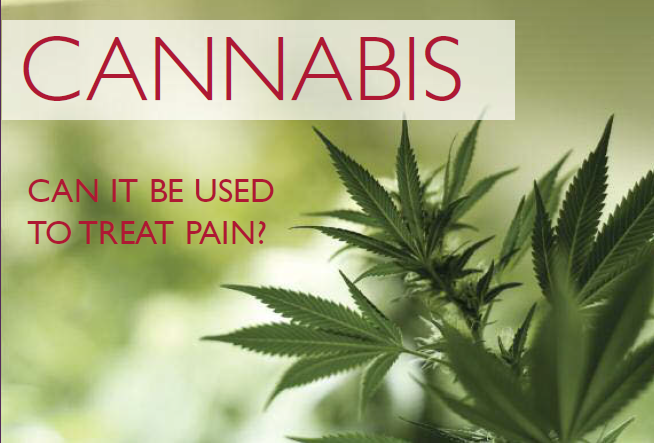
NICE guidance on cannabis-based medicines out for consultation

The National Institute for Health and Care Excellence (NICE) has issued draft guidance for the use of cannabis-based medicines considering the evidence for their use in intractable nausea and vomiting; chronic pain; spasticity and epilepsy. It covers other related topics, such as prescribing, and the economic aspects. NICE guidelines apply only to England unless adopted by devolved governments. Doctors are expected to take the guidelines into account in their clinical practice. However, it is not mandatory for doctors to follow them where they believe they are not in the best interests of a particular patient. The evidence review for chronic pain runs to nearly 262 pages and reviews data from 20 trials. There are no headline grabbing conclusions.

The committee noted that most of the trials were limited in scope and of poor quality. There is some evidence that some cannabis-based products reduce chronic pain in some patients. However, the benefit is small compared with the cost of the treatment. NICE noted that cannabis-based medicines would have to be 10 times more effective or 10 times cheaper to have an acceptable cost/benefit. However, the committee acknowledged the many patient reports of benefit and has recommended further research be done, particularly in fibromyalgia and persistent treatment-resistant neuropathic pain in adults, and chronic pain in children and young people. Notes will keep an eye on developments.

Read the draft guidance here

What is Cannabidiol?

Cannabidiol (CBD) is a natural compound extracted from the cannabis plant. It is freely available in the UK as a food supplement and the market for it is growing. The products for sale do not claim any medical benefit and some products do not contain a sufficiently high dose to be likely to have any benefit. They are not cheap. Cannabidiol does not get you ‘high’, but some formulations available on the internet (from US sites for example) contain tetrahydrocannabinol (THC) which is the chemical that does make you high. Possession of formulations with THC is likely to be illegal in the UK. Synthetic cannabinoids such as Nabiximols are available for some conditions under medical prescription having been tested and shown to be both effective and safe. For more information, we recommend the NHS website: nhs.uk/conditions/medical-cannabis/.

Peer Support. Join the community

“Having chronic pain is very lonely.”

Join the community

Subscribe to Pain Matters

Everything you need to know about how to live with chronic pain

Subscribe


In pain? Don’t understand what’s happening?

“Having someone to help you prepare for your life through pain”

Our Pain Education Sessions

Fundraise for Pain Concern

Help us to help others

Fundraise


The World Health Assembly (WHA) – a subsection of the World Health Organization (WHO) – has declared September Pain Awareness Month. This month is dedicated to raising public awareness and understanding of pain. Many organisations around the world contribute, including the U.S. Pain Foundation, the International Pain Foundation and the American Massage Therapy Association (AMTA).

During September, the U.S. Pain Foundation will be sharing 30 stories of people living with pain over 30 days, while the AMTA has posted resources to inform people of the role of massage therapy in pain management strategies. Here at Pain Concern, we will be posting regularly on social media.

Everyone can play a part during this month by using the hashtag #PainAwarenessMonth.

You can also get involved by ‘liking’/‘following’ Pain Concern on Facebook and Twitter to stay up to date and share the cause.

Links:

Peer Support. Join the community

“Having chronic pain is very lonely.”

Join the community

Subscribe to Pain Matters

Everything you need to know about how to live with chronic pain

Subscribe


In pain? Don’t understand what’s happening?

“Having someone to help you prepare for your life through pain”

Our Pain Education Sessions

Fundraise for Pain Concern

Help us to help others

Fundraise


The International Association for the Study of Pain (IASP) has made 2019 their ‘Global Year against Pain in the Most Vulnerable’. The groups included in IASP’s Global Year against Pain in the Most Vulnerable are: older persons (including pain in dementia), infants and young children, individuals with cognitive impairments (non-dementia-related) or psychiatric disorders, and pain in survivors of torture. Alongside healthcare professionals, patients and other members of the public IASP have created a campaign to highlight the needs of individuals who cannot articulate their pain in ways that health professionals can easily understand or whose pain problems are underestimated and so they are more likely to receive inadequate pain control. IASP president, Dr Lars Arendt-Nielsen, discussed how that this year was created because he feels that ‘so much needless suffering could be alleviated if only the right clinical approaches were applied, the right policies adopted, and the right partners engaged, including patient advocacy organizations’.

The Airing Pain episodes that address these issues are listed below:

Peer Support. Join the community

“Having chronic pain is very lonely.”

Join the community

Subscribe to Pain Matters

Everything you need to know about how to live with chronic pain

Subscribe


In pain? Don’t understand what’s happening?

“Having someone to help you prepare for your life through pain”

Our Pain Education Sessions

Fundraise for Pain Concern

Help us to help others

Fundraise


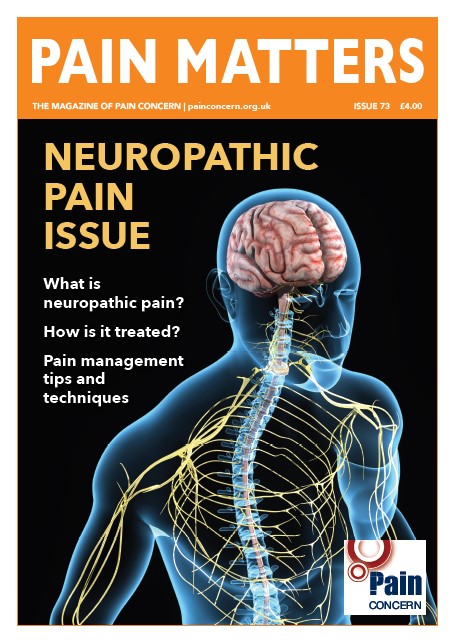
Buy or Subscribe here

We are delighted to announce the return of our digital version of Pain Matters.

Pain Matters, the magazine for people living with chronic pain, is now available digitally! You can order the latest edition and all previous edition back to issue 48 now. Subscribe quarterly or annually, or just buy a single issue as and when you choose.

For more information, click here.

Buy or subscribe now: https://pocketmags.com/pain-matters-magazine

Or search for ‘Pain Matters’ or the Pocketmags app via the Apple store, Google Play or Amazon Newsstand.

Peer Support. Join the community

“Having chronic pain is very lonely.”

Join the community

Subscribe to Pain Matters

Everything you need to know about how to live with chronic pain

Subscribe


In pain? Don’t understand what’s happening?

“Having someone to help you prepare for your life through pain”

Our Pain Education Sessions

Fundraise for Pain Concern

Help us to help others

Fundraise


Involving patients in researching their own condition – it seems logical, so why is it not more common? 

To listen to the programme, please click here.

This edition was facilitated by the British Pain Society and recorded at their Annual Scientific Meeting 2019.

In this edition of Airing Pain, Paul Evans investigates the potential for patients to play an integral role in research, alongside the professionals. Through discussions with patients John and Mark, both of whom are part of research groups, he sheds light on the importance of patients shaping the research and treatment of their own condition. From patients being included in directing their own treatment plan to actually influencing the direction of original scientific research, there are many benefits to their involvement.

Louise Trewern, a member of the BPS Patient Liaison Committee, speaks of her journey from coming off opioids to working with doctors in order to help others in similar situations. She highlights the need to break down the ‘language’ barrier between professionals and patients.

Margaret Whitehead and Julie Ashworth explore how the BPS and the University of Keele, respectively, are encouraging patient involvement. Specifically, Julie talks about the University of Keele’s efforts to improve primary care with their programme PROMPPT.

Finally, Paul discusses the future work required to challenge the ‘doctor knows better’ attitude excluding patients from influencing the treatment of their condition for future generations.

Issues covered in this programme include: Opioids, educating healthcare professionals, fibromyalgia, research, patient voice, patient involvement, peer support, placebo, social media, epidemiology, Twitter and volunteering.


Paul Evans: This is Airing Pain, a programme brought to you by Pain Concern, the UK charity providing information and support for those of us living with pain and for healthcare professionals. I’m Paul Evans.

Margaret Whitehead: It is a paradigm shift in the way that research will develop. And we have to see it as a long journey – ten, twenty, thirty years, before everybody’s adopted – I hope it’s not that long. What we’re trying to raise is what it could be like and how do we plot that path to get there. So there’s a very small number of people at the moment involved in it. But, increasingly, there are people who are skilled at involving patients and mediating, really, between the scientists and the patients. At some point in the future it will be [that] everybody’s talking the same language.

Evans: In the previous edition of Airing Pain [116 – available here], I talked to leading international scientists about their ground-breaking research into neuropathic pain. In this edition I want to turn the tables, so to speak, and move the spotlight on to what patients themselves can contribute, not as subjects or guinea pigs to be studied, but as integral members of the research team. Now it is recognised that involving patients as research partners has a significant impact not only on improving the methodology and research outcomes but gives credibility to the results and, let’s face it, in terms of ethics, patients should have a say in decisions that will impact on their daily lives. So, in this year’s British Pain Society Annual Scientific Meeting, a group of patients spoke to delegates about their role as research partners. It was chaired by former Co-Chair of the British Pain Society’s Patient Liaison Committee, Margaret Whitehead, and I spoke to her, along with fellow patients who had taken part in the session, Louise Trewern, Mark Farmer and John Norton. John first:

John Norton: I have long experience of being a patient representative in north-west London. We founded a group as long ago as six years ago, really to do with working towards integration of Health and Social Care, which we are still working towards and we’ll hopefully get there.

In the course of that I got the opportunity to join Imperial’s, what’s called the Patient Safety Translational Research Centre – [catchy] – yeah, now there’s a name for you. I was very privileged to do that – a wonderful group of about a dozen patients and carers from a variety of different backgrounds, and we worked over two years with, probably by now, about twenty researchers, helping them to organise their research with patients and public in mind and, more than in mind, directly involved in the planning and the carrying out of the research. And I find that a very rewarding, very rewarding activity.

Evans: When I saw the talk about involving patients in research I thought, well there is no research without patients, that’s the whole point of research.

Norton: That’s a fully understandable reaction but it was pointed out today that there are two sides to patients being involved in the research – those who are suitable to be participants in the research, as what I would loosely call ‘guinea pigs’ [with] research being carried out on them. But the growing thing, and the thing that is now mostly required to obtain grants for research, is that patients should be involved in a sense at the other end – in the planning and the organisation – to help the researcher carry out their research in a patient-centred and patient-sensitive way. And I think that distinction, I’m sure, is still going to confuse matters for some time yet, that your reaction to it is a very natural one. We probably, mostly sensibly, have to point that out, that there is that distinction. I mean, I have been, when I had an incipient cataract many years ago, I was in a research project for a drug by a rather well-known drug company. I’m pretty certain I was taking the placebo because it did nothing for my cataract but a surgeon did happily after that [laughter]. But I delayed having the operation for about five years to be in the research. But now I’m the other end of things and, happily, I’m well, even though way, way beyond my allotted span in this life and trying to put what I have left to use for the benefit of the next generation or the one after which is what research is really about.

Evans: Sitting next to John is Mark.

Mark Farmer: Yes, I’m Mark. I suffer from fibromyalgia, arthritis and hemiplegic migraines, which have been very disabling. I’m more of a fan of medication than some people are because I think it has helped me a lot, actually, to be able to live a sum of a life – I’d put it that way. I also sit on a number of local NHS bodies like Healthwatch, I’m a member of, and the reason I am mentioning that is because we are the statutory body for patient representation in every local area and that’s our legal power that we have. And we get lots of reports about how patients are not really properly involved with research. But, most worryingly, with that kind of treatment plan, there’s still too much of ‘the doctor knows better than the patient’ rather than it being a, you know, fifty-fifty partnership: ‘here’s a toolkit that you could use as a patient’. And I think that’s what concerns me on a national level, is that we need to push that message out a bit more about what concerns people have around pain at a local level.

Louise Trewern: I’m Louise Trewern and I’m part of the Patient Liaison Committee – new member really. I became involved through my story with opioids because two years ago I was the first in-patient to come off opioids at Newton Abbot Hospital and, since then, it’s completely altered my life – drastically.

Evans: How do you mean it changed your life when you came off opioids?

Trewern: Drastically – and the day before I went in to hospital to come off I had clocked up something like twenty-five steps on my pedometer, probably that was from the bed to my chair, the chair to the bathroom and then back to bed. And I was touching twenty-five stone in weight and my life was pretty non-existent by this point. I’d been on opioids for over twelve years – high dose.

It was suggested over a period of time that I needed to come off this medication because, in actual fact, it wasn’t helping me – which took a long time for the message to get through. And then I suffered a couple of quite severe medical episodes which meant I was an emergency admission to hospital – which met the criteria to have me in and get me off these opioids. Since then, we’re talking two years now, I’ve lost seven stone in weight, I now walk up to five miles a day, still live with pain on a daily basis, but I deal with it without medication, apart from perhaps a couple of paracetamol. And so I’m trying to get the message out there that there are other ways, not for everybody, but there are other ways of coping with your pain other than just taking painkillers.

Evans: Louise – are you involved in research?

Trewern: I am working with the doctors that helped me come off the opioids. About twelve months after that, because I needed that long to recover as it were. I’ve been working with a multidisciplinary group on a committee called the Rational Use of Opioids. I’m helping the team make patient leaflets and videos for the website, this is in Torbay, for proper use of opioids, which will hopefully help those that don’t seek help – and those that do – in-patient and out-patient leaflets. So they’re in Torbay and we are lucky because I don’t think it’s across the country yet. But Torbay really are engaging, or trying to engage, with patients. They are taking my experience, plus putting it together with the medical side and physiotherapy – all the different areas are coming together to make these leaflets that will be circulated in GP surgeries and on the website. And so, yeah, it is working. And I’m sure, with Torbay, it’s not just in this with opioids it’s with other things as well. And so, yeah, it’s hopeful that that will continue and it needs to be countrywide I think.

Evans: So, when you ceased opioid use, how was it put to you that you should stop?

Trewern: It was gradually, over a period of months, suggested to me that the dose I was on was not helping me – it was making me worse. And that a lot of the symptoms I was suffering [were] as a result of my opioid use. And definitely hyperalgesia was one of my biggest problems. I couldn’t have dental treatment properly. I had to have multiple injections because they couldn’t numb me. I couldn’t have the cats walk over my legs because the pain was intense. And all this gradually ceased after I came off the opioids.

Evans: How was that experience used to help others?

Trewern: My initial week in hospital was where I came, they halved my dose overnight, and the doctor said to me that ‘in the morning your pain will not be any worse, I can guarantee that’ and I had to put my trust in him and it was true. It wasn’t worse. The things I experienced, both before and after, are not all in the journals. It’s not all written down. Some things they’ve heard about but they didn’t know for sure that it was happening. And it’s not just me, there’s several patients now in Torbay that they’ve helped since and it’s just that I was the first in-patient that they did this with. So, whereby certain things they thought would happen they’re now going to put this in a warning in the leaflet. You know, ‘if you come off opioids too quickly this could happen’. And ‘we’ve been told this happens and not necessarily to everybody but it can happen’. Just so that people are aware of the dangers – you can’t just stop these drugs – but not everybody knows this.

Evans: So – rather than like the leaflets that we get in all our packs of medicines and tablets that list all the … everything that could happen to you and more, at least it’s coming from your voice ‘this has happened to me and this is what can happen after’.

Trewern: Yes that’s it. And one of the key things that we’ve gone out of our way to make sure of is that, between the team, the language is what can be understood by the person taking those opioids.

Norton: That’s great. Your group has been a research project in itself, but it’s going to benefit other people. I mean, what can be better? Patient-led, patient-experienced, patient-communicated. Fantastic. [Laughter]

Evans: Margaret, what can the British Pain Society do to encourage this? How could patients get involved in research projects themselves?

Whitehead: Well, the British Pain Society is looking at facilitating a ‘network’, I suppose, of patients who might become involved in pain research. Obviously, we don’t want to trip over other things that are happening because there will be research units like Imperial and at University College and all over the country who will also be doing this – growing this network of patients who offer support and are available. It is a priority for them. It’s really how to take it forward and this is what the Patient Liaison Committee will be prioritising, we hope, in the next couple of years. It will take time. What the British Pain Society is looking for is patients who are interested in the work of the British Pain Society to sign up to the reference group and get involved in the Patient Liaison Committee. And then, in due course, there will be a research network – a panel of patients, with particular types of pain – who will either get involved themselves or will use their networks of other patients to help get them involved in research. But this is happening all over the country in all sorts of organisations.

Evans: That’s Margaret Whitehead, former Co-Chair of the British Pain Society’s Patient Liaison Committee.

Well, one organisation that’s currently, current that is in the Autumn of 2019, looking for people to take part in an important research study is the University of Keele. They’re looking to recruit people who live with long-term pain or care for someone who does. People who have experience of using medicines for long-term pain now or in the past and who’d like to share their experience and views to take part in a study to help understand how clinical pharmacists working in GP surgeries can help improve care for patients with long-term pain. Julie Ashworth is a senior lecturer at the University of Keele and an honorary consultant in the Community Pain Service with the Midlands Partnership Foundation Trust. And the study goes under the heading PROMPPT.

Julie Ashworth: PROMPPT is an acronym that has a very long title behind it. So it is ‘Proactive Review of Patients taking Long-term Opioid Medicines for Persistent Pain led by Clinical Pharmacists in Primary Care Teams’. And out of all that we’ve picked a few capitals to give us a nice catchy…

Evans: Honestly there’s no need that’s very, very clear [laughter].

Ashworth: Our aim is to try and improve care for people with long-term pain, persistent pain, chronic pain – all the different names that are given to it because we know that most of these patients are managed in primary care. Most drugs are prescribed in primary care. Even if that’s not where they were started that’s where they continued. And we know that a lot of people continue on drugs that aren’t really helping them, but may be causing them harm, because they don’t know what else to do. Often they’re not reviewed as, perhaps, the guidelines say they should be because the opportunity doesn’t arise or there isn’t time in a routine consultation – often people with long-term pain have lots of other problems. It’s sometimes difficult to discuss all of the pain medicines in a routine appointment. So our idea is that we don’t need more guidelines. We kind of know what we should be doing. We need to do it.

And so to do it we need somebody who’s got the time, the skills, the expertise to do that and we need to know what we should be doing as well. So what would people who are struggling living with long-term pain, who take lots of drugs that maybe aren’t helping very much, what would they want from their GP practice in terms of review? What would they want that to be like, I guess. We need to find that out first of all. So the research I’m involved in is a five-year programme. And the first year is all about finding that out. So we have interviews with patients, we have interviews with clinical pharmacists as well. And we have interviews with GPs because we need to know what clinical pharmacists think they might need in terms of training to make them be able to do this. Alongside that we’re going to have a slightly novel way of doing research with an online research blog. And that’s going to be called the Q PROMPPT Blog. And, basically, that’s going to be an online discussion forum which we set up just for the research – just for twelve weeks. And, in a way, it will be like having twelve focus groups but with an online group of people. And the reason for doing that is it allows us to get the views of a much wider range of people including the sort of people that don’t often volunteer to take part in individual interviews or maybe they can’t, maybe they have other responsibilities that they have to take care of. So it hopefully will allow us to just check that the sorts of things we hear from patients who will come and talk to us on a one to one basis are the main issues for other people.

Evans: Just explain to me what you mean by a blog?

Ashworth: I’m also learning a lot from my younger and more technically-minded colleagues. Essentially, it’s like a discussion forum, like Facebook, where you can post a comment and then someone can reply. And the idea would be that to get a conversation going we will have an area of the research that we’re interested in finding more about. We will put out a short video presentation, setting the scene if you like, and asking a question or two to get the conversation started and then we’ll ask people to share their views, their experiences, tell us what they think. There will be researchers supervising the whole process. So moderating, if you like, but also chipping in, if needs be, to keep the conversation going, or following up with a question if someone says something really interesting. We’ll try and keep each discussion focused around one area but then move on to another area. Some of the areas we know for sure the sorts of things we’re going to be discussing now, but some of them may arise out of the discussions. So if the people in the blog say things that we find are really interesting, that we hadn’t thought perhaps were so important, then we can create a whole topic about that to follow up on it. So we’ll leave that flexibility for the end.

Evans: One thing that occurs to me, and I might have given the game away by saying ‘what is a blog’, is that a certain generation who have chronic pain do not use social media.

Ashworth: We explored this with our research users’ group – many of whom are from that very generation. It was true – they found that they weren’t particularly social media-minded or were a little bit wary. But what they found was if they were led to it from a trusted source, so that might be something like the Pain Concern website, it might be the University’s research page – then they were comfortable with it if it came from, say, the NHS in some way. So they were okay with that. And we work with them on our plans for the advertising campaign for recruitment, so that’s one area. But we know there will be some people that don’t want to take part in online research but we are having individual interviews as well. And we will be looking at other work that’s been done by other people. We will pull it all together and then take the whole picture. So the online research is about confirming findings in a much wider population – it’s not a standalone thing.

Evans: So it’s setting the agenda in many ways?

Ashworth: Yes, yeah. And it will help us. What we’ll do is take the information to a stakeholder group, which is comprising lots of different healthcare professionals who have some relevant experience, but also patients with relevant experience of pain. We’ll take those findings along with the literature and the guidelines. And it will give us this picture that allows us to decide how we should structure clinical pharmacists reviewing these patients, what sort of training would need to happen. And then there are other stages to the development, so we’ll test it out with some willing clinical pharmacists that we will recruit – a small number in three different GP practices – and some real patients to do observed reviews and learn from that and then improve things with each stage of testing. And we’ll also do some focus groups with clinical pharmacists just to find out a little bit more about the training needs.

Evans: So it’s a five year project – Q PROMPPT?

Ashworth: Q PROMPPT is four studies – one of which is the Blog. It includes the interviews, individual interviews, the blog, the in-practice testing –with the small number of pharmacists and patients and the clinical pharmacists’ focus groups – and we’ve put these four things together and call them the Q PROMPPT study.

Evans: Will they get to meet each other face to face at some point?

Ashworth: The patients on the blog? No, it’s all anonymous. And we’ve done that because [of] the feedback we got from our research users’ group, that was something that would make them feel more comfortable about joining in, but also because we don’t want to keep people’s personal data with this blog. So they will sign up with an email address, but they won’t have to give their real name, and their email address will just stay with the website administrator. And at the end of the twelve weeks all of that data will be deleted and it won’t exist anymore. And all we will get is an anonymised transcript. There is a personal messaging system where they can contact the website administrator but it’s not like Facebook where you can get to know new friends.

Evans: What are you looking for at the moment?

Ashworth: What we would like to have is that people are aware that we are looking at this area of research and that we are really interested in the views of people with pain. And if they were to follow us on Twitter, if they do that sort of thing, or look at our website, www.promppt.co.uk, that’s PROMPPT with three Ps – so P-R-O-M-P-P-T. The Twitter is @keelepain. If they follow us on there then they’ll find out, from the horse’s mouth as it were, when we’re ready to go live with this blog and they can be in right from the start. But even if they don’t pick it up right at the start they will be able to go back and join in all the initial discussions later. So really we want people to understand what we’re doing and then they’ll be able to follow the progress of our research through the website for the five years and to the point where we get our results.

Evans: That’s Julie Ashworth of the University of Keele. And that website again is promppt.co.uk. And PROMPPT, as Julie says, has three Ps and is spelled P-R-O-M-P-P-T – promppt.co.uk. And the Twitter address is @keelepain and Keele is spelled K-E-E-L-E.

John Norton, of the British Pain Society Patients as Research Partners Group:

Norton: The other thing which is growing is patients initiating what the research should be. I’m certainly involved with one new project which is in the digital world, which is founded on that idea that patients actually are going to be involved in co-creating, or whatever you’d like to call it, the actual subjects that are going to be researched and I think that’s a development. Margaret, would you agree that’s a development that I think we’re hopefully going to see more of?

Whitehead: Absolutely. So the ideas don’t just come from professionals, they will still come from professionals as well, but from patients, and in every area of pain there needs to be more research and that’s where the patients’ organisations themselves have a massive role. It’s the patients’ organisations who already have that network of those people living with that particular type of pain. They are a group of people who could really accelerate this change by talking to their members – ‘where do you think the research needs to be?’. I think there’s an open door as long as there’s some money behind all this because money is required to involve patients properly in research and for it not just be ‘come along to a meeting.’ and then because people come along to a meeting they feel that box is ticked – it has to be involvement at every stage – a lot of it will be.

Another point is about language: ‘I’ve been involved in an application for a grant’ is professional speak. They’re talking a completely different language. And a patient goes in and really is disempowered by feeling really quite stupid. Even though the professional knows that that’s not the case but you feel, ‘I can’t say what I want to say because I really don’t understand what they’re talking about and I’ll just sound silly, and it’s probably best if I keep quiet’ and that’s the role of patient researchers a lot. I don’t know if you’ve found that John, is going at the very beginning saying, ‘well that doesn’t really make sense’. And if you give that to a patient they’ll just say ‘Oh okay, because you’re the professional, it must be okay’. But, in fact, they do want to know a lot more. And it’s just the way that the information is communicated so having patients at the very beginning, going through everything, going through the lay summary – but not just that – going through everything that’s involved in the research, and also advising them on the amount of time that patients may want. So just because a researcher will understand their area completely, they may well be the world expert in this particular field, and think that they can send something to a patient and expect them to turn it around within a week. So that’s where the patient thing can come in.

Norton: I think there’s no doubt that if patients and professionals are going to work successfully together that they have to speak a language that both can understand and scientific terms – you know – it’s only recently, very strange, amazing, I’m sure you probably all saw this, it is only within the last six months or so that doctors were told by the GMC or the BMAF, or whatever, that they had to write to their patients in language that the patients would understand. It’s just … just … that’s almost amazing isn’t it really [laughter].

Evans: This seems like a good time to remind you of our small print that whilst we in Pain Concern believe the information and opinions on Airing Pain are accurate and sound, based on the best judgements available, you should always consult your health professional on any matter relating to your health and well-being. He or she is the only person who knows you and your circumstances and, therefore, the appropriate action to take on your behalf. So, to end this edition of Airing Pain on ‘Patients as Research Partners’ – does it have a future, other stumbling blocks and what is needed to provide a good future for it?

Margaret Whitehead and John Norton. Margaret first:

Whitehead: It’s the beginning of a long journey. It’s very difficult for everybody to conceptualise it, it is a paradigm shift in the way that research will develop. And we have to see it as a long journey – ten, twenty, thirty years – before everybody’s adopted. I hope it’s not that long. But it could be because that’s how long these shifts in the way of thinking take to really embed themselves.

So it’s absolutely true that there’s a lot of, let’s say it’s tokenism, because involving patients, the people who do it really think they’re involving patients but they don’t necessarily know how to do it. And because they’re so busy, and there’s so many other pressures on their time, it’s not been done as well as it could be. So not the right language, not the right support, etc. What we’re trying to raise is what it could be like and how do we plot that path to get there?

There’s a very small number of people at the moment involved in it but, increasingly, there are people who are skilled at involving patients and mediating, really, between the scientists and the patients. And it shouldn’t really need mediation but, at some point in the future, it will be everybody’s talking the same language.

Evans: How important is it that you know how you’ve contributed to that research project?

Norton: To me, greatly important. I don’t like wasting my time. And I like to feel that I’m doing somebody else some good but, in saying that, for any of this patient participation, lay partnership and getting involved in whatever project in the medical world, it is equally important that it’s doing good for you yourself. There’s no harm, indeed I think there’s every merit, in having a modicum of selfish motive in getting involved in volunteering work that helps one feel satisfied. It’s very important to feel satisfied about what you’re doing but what you’re referring to, about knowing about the outcomes, is an important part of that satisfaction as well. I think my colleagues would agree. It gets you out of bed in the morning doesn’t it?  

Evans: I always think of it, as a research project comes up – well in twenty years’ time this will be fine, but I won’t be here in twenty years’ time, I don’t think, but you have to think of it in another way as well – twenty years ago the research was being done that is making me feel a little bit better now. [General agreement]

Norton: I think of my first great granddaughter who was born in April. I think of her generation. That’s where the benefit is. It doesn’t worry me, and I think most of the people who get involved in this, by and large, are not worried that it’s not for them that they’re doing this. It will help them in various ways of course but, essentially, the research is not for their benefit. It’s for those down the line and I think we get satisfaction from feeling that we’re pushing something that is going to help in the future.


Contributors:

  • John Norton, patient
  • Mark Farmer, patient
  • Louise Trewern, member of the BPS Patient Liaison Committee
  • Margaret Whitehead, past co-chair of the BPS Patient Liaison Committee
  • Julie Ashworth, Senior Lecturer University of Keele and Honorary Consultant at the Community Pain Service with Midlands Partnership Foundation Trust.

More information:

Peer Support. Join the community

“Having chronic pain is very lonely.”

Join the community

Subscribe to Pain Matters

Everything you need to know about how to live with chronic pain

Subscribe


In pain? Don’t understand what’s happening?

“Having someone to help you prepare for your life through pain”

Our Pain Education Sessions

Fundraise for Pain Concern

Help us to help others

Fundraise


Involving patients in researching their own condition – it seems logical, so why is it not more common? 

This edition was facilitated by the British Pain Society and recorded at their Annual Scientific Meeting 2019.

In this edition of Airing Pain, Paul Evans investigates the potential for patients to play an integral role in research, alongside the professionals. Through discussions with patients John and Mark both of whom are part of research groups, he sheds light on the importance of patients shaping the research and treatment of their own condition. From patients being included in directing their own treatment plan to actually influencing the direction of original scientific research, there are many benefits to their involvement.

Louise Trewern, a member of the BPS Patient Liaison Committee, speaks of her journey from coming off opioids to working with Doctors in order to help others in similar situations. She highlights need to break down the ‘language’ barrier between professionals and patients.

Margaret Whitehead and Julie Ashworth explore how the BPS and the University of Keele, respectively, are encouraging patient involvement. Specifically, Julie talks about the University of Keele’s efforts to improve primary care with their programme PROMPPT.

Finally, Paul discusses the future work required to challenge the ‘doctor knows better’ attitude excluding patients from influencing the treatment of their condition for future generations.

Issues covered in this programme include: Opioids, educating healthcare professionals, fibromyalgia, research, patient voice, patient involvement, peer support, placebo, social media, epidemiology, Twitter and volunteering.


Contributors:

  • John Norton, patient
  • Mark Farmer, patient
  • Louise Trewern, member of the BPS Patient Liaison Committee
  • Margaret Whitehead, past co-chair of the BPS Patient Liaison Committee
  • Julie Ashworth, Senior Lecturer University of Keele and Honorary Consultant at the Community Pain Service with Midlands Partnership Foundation Trust.

More information:

Peer Support. Join the community

“Having chronic pain is very lonely.”

Join the community

Subscribe to Pain Matters

Everything you need to know about how to live with chronic pain

Subscribe


In pain? Don’t understand what’s happening?

“Having someone to help you prepare for your life through pain”

Our Pain Education Sessions

Fundraise for Pain Concern

Help us to help others

Fundraise


Half a century worth of research exists on neuropathic pain but what are the latest developments?

To listen to this programme, please click here.

This edition of Airing Pain is facilitated by the neuropathic pain special interest group (NeuPSIG) of the International Association for the Study of Pain (IASP).

With the previous edition of Airing Pain focusing on the ‘psycho’ and ‘social’ of the bio-psycho-social model, this programme tackles the ‘bio’ component.

In this second instalment in a mini-series on neuropathic pain, Paul Evans delves into the latest scientific developments on the condition and the ways in which the gap between research and treatments could be bridged.

Following on from Airing Pain 115, which concentrated on targeted Pain Management Programmes, this edition discusses the ‘bio’ element on dealing with neuropathic pain. Speaking to Professor Srinivasa Raja, Paul discusses what exactly is going on in the brain with neuropathic pain. Professor Raja provides a valuable explanation of the science behind the condition.

Patrick M. Dougherty, Professor at the Department of Pain Medicine at The University of Texas MD Anderson Cancer Centre then shares with Paul the latest advances in neuropathic pain research. He examines the link between cancer treatments and the condition as well as the potential for treatments such as immunotherapy to combat neuropathic pain in the future.

Issues covered in this programme include: Neuropathic pain, the bio-psychosocial model, allodynia, nerve injury, post-herpetic neuralgia, pain after shingles, pain after amputation, differences between men and women, chemotherapy-related pain, cancer, multidisciplinary pain teams, and personalised pain management therapies. 


Paul Evans: This is Airing Pain, a programme brought to you by Pain Concern, the UK charity providing information and support for those of us living with pain, and for healthcare professionals. I’m Paul Evans, and this edition of Airing Pain has been supported by the International Association for the Study of Pain.

Patrick Dougherty: The idea that you could use immunotherapy for chronic neuropathic pain – that’s a completely new vista. This sort of research has only come up now over, like, the last three or four years. So this is a whole new vista.

Paul Evans: This is the second of two editions of Airing Pain about neuropathic pain, a condition caused by nerve disease or nerve damage. The biopsychosocial model for managing chronic pain recognises that the biological, psychological, and socio-environmental factors all feed into each other and affect the pain. And that’s why multi-discipline pain teams made up of psychologists, physiotherapists, occupational therapists, physicians and other disciplines can be so effective in helping people live with their pain.

In the previous edition, we looked at how the psychological and social elements of people’s neuropathic pain are addressed at the National Hospital for Neurology and Neurosurgery Pain Management Centre in London, and I recommend you listen to that. In this edition, I want to look at the biological component of the biopsychosocial trinity, and in particular, to the progress or otherwise, that’s been made into the understanding of neuropathic pain, and what developments and treatments might be just around the corner.

In May of this year, that’s 2019, the International Association for the Study of Pain brought together the world’s leading experts on neuropathic pain in London to share experience and knowledge. One of those is Professor Srinivasa Raja of Johns Hopkins School of Medicine, Baltimore, in the United States. He’s internationally recognised for his research into neuropathic pain.

Srinivasa Raja: One of the earlier things that we were seeing is that in patients who had nerve injuries, they had chronic pain, they would have pain long after their, quote-unquote, tissue injury healed. And they would come up with this sensation, where they would say, you know: ‘Just touching that area, or even rubbing of things bothered me.’ This phenomenon is called allodynia, or pain to sensations that are normally not painful. So we were wondering, you know, what could be causing this, you know, is it because of change in how the normal pain signalling nerves or pathways change? Or is it something else?

So we brought some of these patients, and a simple experiment we did was we applied a tourniquet around their arms. So, after the tourniquet, the sequence of loss of sensations in nerves of different sizes are variable. So the touch fibres are often lost first, and then the pain fibres. So as soon as these touch fibres were lost, you know, these patients lost the sensation of this hypersensitivity, which told us that what’s happened is, there were changes occurring at the level of the central nervous system, such that this touch sensation – which in the spinal cord at higher centres, has a common termination with where the pain fibres go – there were changes in the level of the spinal cord resulting in a phenomenon called central sensitisation. That is, it’s almost like the amplifier or the volume has been increased at the level of the central nervous system, such that now even kind of activating these fibres, which on normal individuals we would call as touch, now those individuals feel that as pain. So, this is one of the clinical aspects of understanding that injury to nerves changes how the central nervous system now perceives different sensations. And this also led to a lot of investigation by numerous investigators, looking specifically at the level of the spinal cord and even the brain, [at] what we now call the neuroplasticity [of the brain], or how these signalling mechanisms change. And now we know the molecular biology, we know a lot about it. And this has led also to possibly identifying targets for treating patients with this type of presentation.

Paul Evans: Let me go back a little bit to see if I understand this: a tourniquet on my arm, and I will lose touch sensation. Lots of us will have experienced that, [for example] when we say: ‘oh my foot has gone to sleep’. At what point do you stop the pain signal?

Srinivasa Raja: These patients, when they lost the sensation of touch, could still feel a pinprick, so their pain was still intact. But what they lost also was that hypersensitivity phenomenon where their touch resulted in the sensation of pain. And this is something we commonly see, particularly with patients with post-herpetic neuralgia or pain after shingles. You know, the common site for shingles is often the chest wall. And women are much more prone – two-to-one, almost – [to experience this] than men. And the common complaint that they’ll present to us is that [they] can’t wear a bra, you know, clothes are very uncomfortable. That rubbing of the clothes on that skin is very uncomfortable.

Paul Evans: Explain to me now – we’ve gone through the putting the tourniquet on and losing touch. What is going on in the brain with neuropathic pain?

Srinivasa Raja: This is a challenging question, because we’re talking about half the pain research community, working for almost half a century trying to understand this. The good news is that we have made enormous progress in understanding the science, the molecular biology, the neuro-physiology or the changes in the nervous system. The unfortunate sad news is, it hasn’t been translated into new treatments for patients with neuropathic pain. So there’s a big gap between the advances in research versus what we call translating that into new treatments for patients. A significant new area of research is to try to understand why this gap [exists] and what may be causing it. But to go back to answering your question, what we have understood is that changes occur at every level of the pain signalling pathway. In certain cases, this occurs at the level of the periphery at the site of injury itself. Again, I’ll come back to the amputation example, where a nerve is often cut at the time of the amputation. And these cut nerves form what’s called a neuroma, which is a nerve trying to grow back to its original site. And these neuromas are very sensitive, they are active, and they fire spontaneously, almost like seizure activity of a peripheral nerve. And these signals, [which are] constantly going from the periphery to the nervous system, are sending signals to the brain saying [that] there is a problem somewhere in the periphery. So the first thing – and this phenomena is called peripheral sensitisation, or changes in the peripheral nervous system. These, kind of, ongoing signals in turn cause changes at multiple levels in the central nervous system, at the level of the spinal cord, the level of the thalamus in the brain and the cortical levels, where this constant barrage of signals changes how the central nervous system perceives the signals. And it’s altered in a number of ways, which globally is called a central sensitisation. So this combination of peripheral and central sensitisation in various degrees can occur at different brain states.

Paul Evans: So with an amputation, those nerves [which are] firing off at the amputation, [are] looking for where they were, presumably, and [are] maybe overloading circuits in the brain?

Srinivasa Raja: You said that better than I explained. It is overloading the system in some ways, resulting in changes. Some of these changes seem to be more persistent than others. So, the struggle has been to see how we can revert this process, how we can reverse these changes occurring at the level of the central nervous system, and that’s been a significant area for research.

Paul Evans: That’s Professor Srinivasa Raja of Johns Hopkins School of Medicine in the United States. Professor Patrick Dougherty is professor of pain research at the MD Anderson Cancer Institute in Houston in the United States.

Patrick Dougherty: I’ve been interested in neuropathic pain, basically, ever since I was a postdoc or graduate student. And I was really very interested in how activation of the immune system impacts us in such a dramatic fashion. So imagine the last time you were really sick, how just godawful you felt, and that biology to me was extremely fascinating. Well, that carries straight over then into what happens to the nervous system following peripheral injury. And so, ultimately, that leads to what we know now is neuropathic pain. Any type of injury that either leads to some sort of a chronic maladaptive response in the nervous system, or direct injury to the nervous system that then leads to maladaptive responses, resulting in pain. Any of those would fit the category of what we call now neuropathic pain. And so, initially, our work was focused on trying to tie [in] specifically what we call psychophysics. Psychophysics means what people report when you apply energy to skin. And we want to model how human psychophysics is reflected in the activity of specific neurons within the central nervous system. And that was very successful, then led to an appointment at Johns Hopkins University, where I became interested there in changes in neurons in the brain related then to neuropathic pain.

That group of patients, now imagine the type of patient you’re looking at, they have neuropathic pain that has been inadequately treated to the point where they’re willing now to have a hole drilled in the top of their head, and put instrumentation inside their brain to try to treat this pain. This is how far down the road they’ve suffered, basically, and what they’re now willing to try. And [when] I’m looking at that I’m thinking, you know, these folks are so complicated, we’re never going to be able to figure out mechanisms in this condition. That then led me to think [about] neuropathic pain, [in which] we know the patient starts off basically normal, as far as pain goes, and then we cause neuropathic pain. And that’s those folks that are getting cancer treatments. Those people are basically neurologically fine. They had cancer, obviously, but they don’t have neuropathic pain. We know exactly what the insult is, it’s the cancer treatment. So the thought was, we could basically follow those people from before they get treatment, all the way to the end, [and then] we’ll be able to profile a whole natural history of neuropathic pain. Then we can start to come back to other folks that have neuropathic pain, we can stage them in and apply rational therapies. That was the idea.

Paul Evans: So you’re going down a known route, [which is] people with cancer, who’ve had treatment for their cancer. Some get neuropathic pain and some don’t. And you’re backtracking, then, for people who get neuropathic pain, and you don’t know where it started.

Patrick Dougherty: That’s basically the idea. It doesn’t really work out all that well. Because even cancer treatment-related neuropathic pain becomes very heterogeneous very quickly. In other words, there’s a lot of branch points in the road. And so again, to try to back up to anybody becomes complicated, but in any case, we can gain a lot of insights to the underlying mechanisms. And there’s been a particular advancement here lately, that is really exciting to us. And that is, we found that you have a group of neurons that innervate your skin, those are called primary efferent neurons. And those primary efferent neurons have cell bodies that basically are what give them sustenance, and metabolic support, and those are called dorsal root ganglion neurons. So the dorsal ganglion neurons are those that send their axons out to every tissue in your body.

What we discovered is that in basically every model of neuropathic pain now – and so this is where the road seems to converge – [in] every model of neuropathic pain that we’ve looked at so far, these dorsal root ganglion neurons become spontaneously active. They shouldn’t be spontaneously active, particularly if they’re a pain fibre. Pain fibres should be quiet, unless you’re having pain. To find out that if we give animals chemotherapy drugs, and we go in and deliberately injure nerves to try to produce a neuropathic condition, these dorsal root ganglion neurons become spontaneously active in animal models. Lo and behold, in the course of just simply talking to people at MD Anderson, it turns out that there’s a cohort of patients where their dorsal root ganglion neurons are going to be taken out in the course of trying to treat their cancer, so they get cancer into the spine, which is where near where the dorsal root ganglion lives, and sometimes to treat that cancer in the spine, those dorsal root ganglion neurons are taken out in order to get to the tumour.

What we found out is that if those ganglion neurons in human beings come from a part of the body where that patient is experiencing neuropathic pain, lo and behold, they are also spontaneously active. So now we can take animal models of the spontaneous activity, and we can directly line them up to the spontaneous activity that occurs in human neurons, and move back and forth, looking at those mechanisms that are shared or different between humans and the animals. This is really exciting, and a number of different labs now have confirmed that finding, and this is probably one of the biggest new movements in the field.

Paul Evans: Let me see if I can understand, ‘dorsal root ganglion’ – explain to me again what that is.

Patrick Dougherty: You may also hear it called, particularly in the UK, ‘posterior root ganglion’. The posterior root ganglion and the dorsal root ganglion are what are called the cell bodies; the centre of the neuron that leads to all of the peripheral endings that innervate your skin. So, when you move a hair on the back of your hand, there’s a neuron that’s back along your spinal cord that’s being activated by that. It has an axon that goes out and it wraps around the bottom of that hair cell, you move the hair, that causes that axon to discharge, that action potential goes back past the ganglion neuron and then into your spinal cord, [it] makes a synapse, [which is] a connection to another neuron. That then eventually sends that information to your brain and you realise: ‘Aha, a hair’s moving on the back of my hand, something’s happened!’ And then every sensation you can think of, for every part of your body, has a separate dorsal root ganglion neuron that has an ending in that part of the skin, muscle, bone, tendon, etc.

Paul Evans: So for cancer patients having treatment, that pathway was broken?

Patrick Dougherty: Not broken – let’s describe what happens to cancer patients when they get chemotherapy drugs. There’s a number of chemotherapy drugs, not every chemotherapy drug [results in neuropathic pain], but there’s many chemotherapy drugs. So for example, those used to treat breast cancer, prostate cancer, most every cancer of a solid tissue and some blood cancers, get sets of drugs that ultimately result in what’s called neuropathic pain. And what happens for all of these classes of drugs, and many people out there can attest to this. They probably will be nodding their head: ‘Yes, that’s me.’

You get these drugs, first, it leads to numbness in their hands, that progresses to tingling. That’s probably three quarters of patients [who] get those sensations as they get those drugs. And that’s fine. Again, mostly everybody’s going to get that, [and] mostly everybody that gets better. But [for] some of those patients, that numbness and tingling progresses to the point where their hands and feet feel like they’re on fire. Unfortunately, in about one-fifth of patients, that burning sensation, that numbness, that horrible pins and needles feeling, persists long after the cancer treatment’s over and now they would fall into the category of neuropathic pain patient.

Paul Evans: So you follow that track with certain patients having cancer treatment, and you try and replicate that.

Patrick Dougherty: Right, we can give animals chemotherapy drugs, though, we have to change our measurements a little bit, because obviously, the animals can’t tell us that they have ongoing pain, but there’s different behavioural measurements that we can put the animal in. So for example, folks that have gotten Taxol, often what they’ll tell you is that cold applied to their skin feels like it’s burning. So you can give animals Taxol, now put them in a little room, and you [make] part of the floor cold, and part of the floor [not cold], and what you’ll see is that the animal won’t go over to the cold floor, it’ll stay over on the warm floor. But since again, [with] the behaviour in the animal, you’re always kind of guessing what that means. I’m always really interested in what we can objectively measure. And that’s why I say when we find that you get this ectopic spontaneous activity of the neurons that otherwise should be quiet. And you can see the same thing in people. That’s what I like to zero in on, we don’t have to guess what it means: either that cell is discharging, it’s on, or it’s off. And then [with] people it’s either on or it’s off. And if we can figure out how to take the cells that are on and make them shut off, then the idea is that that’s what’s going to relieve their symptoms.

Paul Evans: Go on, then, can you?

Patrick Dougherty: We are making a lot of interesting progress. So the physiology gets to be really complicated really fast. But there are a number of potential therapeutic avenues that have been uncovered, that now we need to figure out how can we operationalize. There’s questions that have arisen that are very surprising. So there’s a paper we published a month ago or so, where what we did in that paper – we had these human neurons. In my lab, we did the physiology, and we determined which of these ganglion neurons that we had were in samples associated with pain and with the spontaneous activity. The human ganglion is big enough that we could divide it, and we can share part of that tissue with another laboratory in Dallas, headed by a fellow named Ted Price. Ted’s group broke those ganglion neurons apart and started looking at what we call their transcriptome. And the transcriptome is basically an output from their DNA. In other words, what part of the DNA were those cells activating, that we think would be related to the generation of the spontaneous activity. So we wanted to know, then what sorts of proteins are being made that either weren’t made before, or that used to be made that aren’t any longer being made. Again, the idea that we can reveal potential new therapeutic targets. And so, Ted did all this analysis. And what we did initially is we took all the ganglion neurons that we had from dermatomes, or segments of the body where patients had pain. And we compared the genetic information coming from all of the neurons from dermatomes without pain. And we run the analysis, and lo and behold, we got almost nothing, we couldn’t believe that – that couldn’t possibly be the right answer. Finally, we decided, you know, let’s just go ahead and we’ll pull all the women out, we’ll just separate men from women.

Then what we did was, we ran all of the neurons from men, segment pain; men segment no pain, and voila, we got a huge number of results. What that tells us is that men and women are actually changing different gene signals differentially with pain. So in other words, men are from Mars, and women are from Venus. In fact, we have quite distinct mechanisms by which our bodies, in this case, our neurons, respond to this insult – the toxic chemotherapy drug that then results in different ways of expressing pain. Now, what [does] that therapeutically mean? Well, that means that if you give a given drug to a man, that might work, [but] that same drug given to a woman may not. And then if you further follow the logic to that, even for a given man, there’s going to be variability within the male cohort. So even a drug that works in man number one may not work in man number two. It’s leading to the prospect that what we’re really going to need to do is come up with sets of what we call biomarkers, and these gene signals are a type of biomarker, there’s others. But we’re going to probably need to get sets of biomarkers for each person, and then thereby come up with specific therapeutics for each individual person.

Paul Evans: Wow, how or when will that impact on people with neuropathic pain?

Patrick Dougherty: That’s a hugely convoluted question, I think, you know. So number one, there are numbers of compounds that are out there that are available now. Most pain clinics have a set of drugs, and they try different sets for different patients. Some folks respond to one type of agent, others respond to another. So the pain clinics already understand that you have to tailor each pain therapy specifically to each patient. So that concept is already in place. What our research is showing is that we need a broader palette of therapeutics to address given folks, my lab is not alone in this approach. So there are a number of labs here in the UK that also are doing very similar work to us, in that they’ve got the same tissues, they’re also doing these same kinds of analyses. And one of the other things that we’ve discovered in these ganglion neurons that’s really important is that part of what causes these neurons to become active, is that when the ganglion becomes damaged, becomes inflamed, you get immune cells that go in there – and this is kind of funny, because it closes the loop on my whole career – that’s what it began with: how immune cells impact the brain.

It turns out that these ganglion become infiltrated by sets of immune cells, some are your angry uncle, and others are your soothing grandmother. And you can actually train the grandmother cells to go in and quiet everything down. And so with that idea being that you have immune cells that actually get into the ganglion that can either make things worse or better with one potential biomarker, and there’s other labs that are doing this, you could take a blood test, and from what’s in your blood – the immune cells that are in your blood – you may be able to get a picture of what potentially has gone into your ganglion that’s either driving that disease or that we can manipulate to try to make that disease go away. So the idea that you could use immunotherapy for chronic neuropathic pain, that’s a completely new vista that again, has been revealed by these new studies on ganglia and what’s going on in those ganglia.

So this sort of research has only come up now over like the last three or four years. So this is a whole new vista and what we simply need to do now is build up the sample sizes, I would say, you know, optimistically, as rapidly as biotech and the rest is advanced, let’s say five years, we can start actually having some real insights of what may be really good players to follow. And then it will be up to the pharma outfits and the new biotech outfits to operationalize those targets and come up with therapeutics. My side of the ledger is what’s called target identification. Once you get targets that are well validated, then you get into the legalistic part of bringing a drug to market. And so, I can’t tell you how long that might take based on which government you’re working with. If it’s in the US, it can be very slow, other countries move faster. So it’s hard to predict once you get into the actual regulatory process for each place, but I think as far as target identification goes, I would say within five years, we are going to have a very good idea of some promising new targets. I would say today, you know, our data says that a number of those that we could follow, but we need to validate the targets that we’ve identified. Other labs are identifying other targets, those should be mature enough, within five years, that you could start to operationalize those into therapeutics, and then you get into the therapeutic regulatory process, so that I can’t give you a handle on.

Paul Evans: That sounds very exciting, very positive. I guess it shouldn’t really come as a surprise that the same drug will work differently on different individuals. When we open our tablets, we see the list of the side effects, which could be diarrhoea, it could be constipation, it could be one of a hundred things, you know. Personalising designer drugs sounds really exciting.

Patrick Dougherty: Yeah, and it goes beyond just drugs, right? People need to be aware that pain, particularly a chronic pain condition, is not probably going to be treated by any magic-bullet drug. I mean, you’re going to need to go into whatever you can possibly do, that might work for you. Is that walking? Is it swimming? Is it yoga? Is it meditation? You know, there’s a whole number of different – both medical or drug – therapies and then non-medical therapies.

So MD Anderson, that is one of the pain treatment centres – what’s called a multidisciplinary pain centre – where basically whatever works for a given patient is what you’re going to try. And it’s probably not going to be one thing, there’s probably not one magic bullet. Number one, the patient has to decide they want to get better. It’s all about patient buy in: if you give up, the chances of being fixed are small. So you have to be focused, that you are going to get better, this is a disease you’re going to overcome. Then you find the combination of medications that work, the combination of exercise, the combination of nutrition, etc., that works for you to get you back, so that you’re in the game and you’re functional again.

Paul Evans: That’s Professor Patrick Dougherty, of MD Anderson Cancer Institute in Houston. And I was speaking to him and Professor Srinivasa Raja, at the International Association for the Study of Pain Neuropathic Pain Special Interest Group conference earlier this year, in London. I will just remind you that whilst we in Pain Concern believe the information and opinions on Airing Pain are accurate and sound, based on the best judgments available, you should always consult your health professional on any matter relating to your health and wellbeing. He or she is the only person who knows you and your circumstances and, therefore, the appropriate action to take on your behalf.

Well, in this edition of Airing Pain, we’ve been focusing on the ‘bio’: the biological elements of the biopsychosocial model for chronic pain. And please do listen to the previous edition of Airing Pain to learn more about these psychological and social elements.

Patrick Dougherty: They’re crucial. They’re absolutely crucial. If a person has chronic pain, and they become socially withdrawn, isolated, that quickly leads to depression, and an erosion of the spirit. And that person then is going to suffer even more. You have to get yourself back engaged into social environments, working as hard as you can to get yourself back to a normal level of activity. Meanwhile, we’ll be in the lab trying to come up with as many magic bullets as we can come up with. But I would be very surprised if we find anything that I say is the golden ticket, so to speak. It’s going to be a combination of things. Everyone’s going to have to sort out what specifically is going on with them in concert with their medical providers. What we’re hoping to do is come up with the tools and resources that, number one, we can [use to] better ascertain for that particular person what’s going on with them. And then, again, have the agents that can be then implemented.


Contributors:

  • Patrick M. Dougherty, Professor at the Department of Pain Medicine, Division of Anaesthesiology and Critical Care, The University of Texas MD Anderson Cancer Centre, Houston.
  • Professor Srinivasa Raja (John Hopkins School of Medicine, USA).

More information:

Peer Support. Join the community

“Having chronic pain is very lonely.”

Join the community

Subscribe to Pain Matters

Everything you need to know about how to live with chronic pain

Subscribe


In pain? Don’t understand what’s happening?

“Having someone to help you prepare for your life through pain”

Our Pain Education Sessions

Fundraise for Pain Concern

Help us to help others

Fundraise


Half a century worth of research exists on neuropathic pain but what are the latest developments? 

This edition of Airing Pain is facilitated by the neuropathic pain special interest group (NeuPSIG) of the International Association for the Study of Pain (IASP).

With the previous edition of Airing Pain focusing on the ‘psycho’ and ‘social’ of the bio-psycho-social model, this programme tackles the ‘bio’ component.

In this second instalment in a mini-series on neuropathic pain, Paul Evans delves into the latest scientific developments on the condition and the ways in which the gap between research and treatments could be bridged.

Following on from Airing Pain 115, which concentrated on targeted Pain Management Programmes, this edition discusses the ‘bio’ element on dealing with neuropathic pain. Speaking to Professor Srinivasa Raja, Paul discusses what exactly is going on in the brain with neuropathic pain. Professor Raja provides a valuable explanation of the science behind the condition.

Patrick M. Dougherty, Professor at the Department of Pain Medicine at The University of Texas MD Anderson Cancer Centre then shares with Paul the latest advances in neuropathic pain research. He examines the link between cancer treatments and the condition as well as the potential for treatments such as immunotherapy to combat neuropathic pain in the future.

Issues covered in this programme include: Neuropathic pain, the bio-psychosocial model, allodynia, nerve injury, post-herpetic neuralgia, pain after shingles, pain after amputation, differences between men and women, chemotherapy-related pain, cancer, multidisciplinary pain teams, and personalised pain management therapies. 


Contributors:

  • Patrick M. Dougherty, Professor at the Department of Pain Medicine, Division of Anaesthesiology and Critical Care, The University of Texas MD Anderson Cancer Centre, Houston.
  • Professor Srinivasa Raja (John Hopkins School of Medicine, USA).

More information:

Peer Support. Join the community

“Having chronic pain is very lonely.”

Join the community

Subscribe to Pain Matters

Everything you need to know about how to live with chronic pain

Subscribe


In pain? Don’t understand what’s happening?

“Having someone to help you prepare for your life through pain”

Our Pain Education Sessions

Fundraise for Pain Concern

Help us to help others

Fundraise


Many people living with chronic pain are daunted by the prospect of long term or even permanent drug therapy. What are these drugs, are they safe and how do they work? Concerns such as these can stop people persevering with medicines that may offer a real, life-enhancing solution to their condition. Dr Mick Serpell explains how amitriptyline works and gives reassurance about the side effects that you might experience, especially in the early stages

The aims in managing chronic pain are obviously to relieve or to reduce the pain as much as possible, but this is not always achieved to the level patients would wish. Just as important then, is to improve overall quality of life by improving physical function, sleep, mood and psychological function. There are four main approaches to pain management:

1) physical therapy (physiotherapy, acupuncture, TENS (transcutaneous electrical nerve stimulation), etc.
2) drug therapy
3) regional analgesia (injection of drugs around nerves, joints or other tissues)
4) psychological therapies (techniques which improve coping with the pain).

Two types of pain

Doctors describe pain as either nociceptive (tissue damage), neuropathic (nerve damage), or a combination of the two. It is important to distinguish between the two types of pain, as they respond to different medicines. Nociceptive pain is the most common form of chronic pain, and examples include mechanical low back pain and degenerative or inflammatory joint pain. Although these pains may begin as purely nociceptive, over time there may be changes within the nervous system. Neuropathic pain often results from nerve damage that makes the nerve overactive. Therefore the drugs used for neuropathic pain are aimed at stabilisation or ‘calming’ of these nerves. Perhaps it should be no surprise, then, that drugs used in other conditions where nervous tissue is overactive or ‘excited’, such as epilepsy or depression, have turned out to be useful medicines for chronic pain.

Drug therapy

Conventional painkillers such as codeine and ibuprofen are used for nociceptive pain. They are often not effective for neuropathic pain. Most of the drugs used for the relief of neuropathic pain were originally developed to treat different conditions. For instance, amitriptyline is an antidepressant drug but is now used much more commonly for pain than for its original use. The situation is the same for some anticonvulsant drugs, such as gabapentin, which are used more frequently for neuropathic pain than epilepsy.

Change your lifestyle

Always remember that the medicine alone will not be enough. While drug therapy can play a role in the management of pain, changing your lifestyle (such as building up your fitness and getting more exercise), as well as learning to manage and cope with your pain better, are also vital to a successful outcome.

General principles of drug therapy

Your doctor will start you off at a low dose of your medicine and this is increased up to a suitable dosage and taken for sufficient duration until you obtain noticeable pain relief (or experience severe side effects). This procedure of increasing the dose step by step while monitoring the effect is called ‘titrating the dose’. If there is insufficient pain relief or troublesome side effects, the drug will be stopped. Your doctor is likely to gradually wean you off the medication over several weeks, in order to avoid potential sudden withdrawal effects. If you get partial, but inadequate pain relief, sometimes your doctor will add in another different drug, because ‘combination’ therapy can be more effective for pain than single drug therapy. However, there is an increased risk of side effects when more drugs are taken.

Once you are on the right dose and drug combination, then you may continue on the medication indefinitely. However, this should always be reviewed by you and your doctor, every three to six months. It may be that you decide the medications are no longer helping enough, or that you are now experiencing problematic side effects. In this case you should wean yourself off the medications gradually (one at a time) to ensure they are still benefitting you.

Most doctors agree that medication for chronic pain should be taken regularly ‘round the clock’ rather than ‘as required’ for breakthrough pain. It is easier to keep pain at bay rather than trying to chase it after it has been allowed to get out of control.

Antidepressants

The tricyclic antidepressants, such as amitriptyline, are the ‘gold standard’ for neuropathic pain as they are the most effective and best-known drugs for this condition. They can also be useful for chronic nociceptive pain, especially if there is a neuropathic component to it. They appear to work in the nervous system by reducing the nerve cell’s ability to re-absorb chemicals such as serotonin and noradrenaline. These chemicals are called neural transmitters. If they are not reabsorbed they accumulate outside the nerve cell and the result is suppression of pain messages in the spinal cord.

All in the mind?

The way antidepressants give pain relief is completely separate from the anti-depressant effect. The dose required for treating depression is much higher (150-250 milligrams (mg) a day) rather than the doses used for pain relief (25-75 mg/d). Amitriptyline also works in patients who are not depressed. Also, there are over twenty different antidepressant drugs available for treating depression, but only a small number can also be effective pain killers.

It is important that the patient is given a full explanation of the rationale for using antidepressant therapy. It is not the case that the doctor believes your pain is due to the depression. So do not think that you are not being taken seriously, or that the pain is ‘all in your mind’.
Depression can occur with chronic pain, it is usually ‘reactive’ or in response to the pain, suffering and loss of function, and often improves as the chronic pain improves. However, if severe, it may require simultaneous treatment with other antidepressant therapies such as psychology techniques or another antidepressant drug.

Starting amitriptyline

One in four people will get significant pain relief with amitriptyline. This is regarded as an excellent result for chronic pain conditions. It is started at a low dose (10 or 25 mg a day) and gradually increased in 10 or 25 mg increments each week up towards 75 mg if side effects are tolerable. Your doctor may advise you to go higher than this dose. The tablets are small and difficult to cut in half, and will often produce numbness of the tongue due to a local anaesthetic effect, but it is available as a syrup. It is better to use the syrup if small increases of dose are required during the titration (dose build-up) phase.

Keep taking it!

You may notice pain relief as quickly as two weeks after starting, but often amitriptyline requires to be taken for six to eight weeks at the optimal dose level before one can say the drug has been given a fair trial. Many people stop taking the medicine because they experience side effects early on but do not feel any benefit. However, if you can persevere, you will often get tolerant to most of the side effects after a few days to weeks and you may then start noticing the benefits of the medicine.

Although there are a number of side effects associated with amitriptyline most of them are extremely uncommon. The most common ones, experienced by only 5-15% of people, include dizziness, drowsiness, dry mouth, nausea and constipation. These side effects are generally harmless and, provided you do not exceed the dose, will not cause any damage. Most people find they adapt to these and eventually they go away. Amitriptyline is not addictive but if discontinued, it should be withdrawn slowly over several weeks in order to avoid withdrawal symptoms of headache and malaise. Your doctor can advise on this.

Not for everyone

Your doctor will not prescribe this drug for you if you have had an allergic reaction to amitriptyline or related drugs; a recent heart attack; or recent administration of drugs that can interact with amitriptyline.

When should I take it?

Amitriptyline is long acting, so only needs to be taken once a day. As one of the most common side effects is drowsiness, it is best to take it one to two hours before bedtime. This effect can be particularly useful if you suffer lack of sleep from your pain. Sometimes there is a ‘morning after’ type of hangover feeling, but this usually wears off with time. Occasionally amitriptyline can cause insomnia; if this happens it is better to take it in the morning.

Worth trying

If side effects are a problem, there are other similar drugs (for example, nortriptyline, imipramine, and now duloxetine) that are worth trying as they are nearly as effective, and often have less side effects,. Many of the patients I have seen have stayed on amitriptyline for years and say that it has transformed their lives. When dealing with pain, it is worth giving drug therapy a chance. Best results are achieved in combination with the non-drug therapies mentioned above. It is important to work with your doctor to try the different approaches so that you find the particular approach that is right for you. The optimal result is rarely complete pain relief. It is often that which brings you the best balance of pain relief, improved function, and minimal side effects, to give you the quality of life that you and your doctor both want.


Further Resources


Mick Serpell is a Consultant in Anaesthesia & Pain Medicine for Greater Glasgow & Clyde NHS, and Senior Lecturer at Glasgow University. 

If you would like to know more about the sources of evidence consulted for this publication please click here.

Amitriptyline © Michael Serpell. All rights reserved. Revised April 2019. To be reviewed April 2022. First published April 2013.

Peer Support. Join the community

“Having chronic pain is very lonely.”

Join the community

Subscribe to Pain Matters

Everything you need to know about how to live with chronic pain

Subscribe


In pain? Don’t understand what’s happening?

“Having someone to help you prepare for your life through pain”

Our Pain Education Sessions

Fundraise for Pain Concern

Help us to help others

Fundraise


1 18 19 20 21 22 49