Information & Resources

Find information and resources to help manage your pain.

Get Help & Support

Find the tools you need to
help you manage your pain.

Get Involved

Help make a real difference to people
in the UK living with chronic pain.

About Us

Find out about Pain Concern and how
we can help you.

Airing Pain 148 Trailer | Links between hypermobility and neurodivergence

To be broadcast 5th March 2025

Transcript begins

Paul Evans: Do people with neurodivergence experience pain differently to those who are neurotypical? And what’s the link between neurodivergence and hypermobility?

Speaker 2: The concept that everybody experiences pain in the same way has to be thrown out. Because many people with neurodivergence perceive pain in very different ways. For neurodivergent individuals, their pain may well take quite a different shape to that of somebody who’s neurotypical.

Speaker 3: We notice some differences in brain structure that had been reported in ADHD and autism. So we were thinking, what’s the relationship between joint hypermobility and anxiety? It made us think, is there a relationship between joint hypermobility and neurodevelopmental conditions like ADHD and autism?

Speaker 4: I have got autism, I’ve got hypermobility syndrome, I’ve got fibromyalgia, I suffer from chronic pain – none of that was considered alongside my autism diagnosis ‘til I was in my late 50s.

Speaker 5: If you’ve got Ehlers-Danlos, you’re over 7.5 times more likely to be autistic and 5.6 with ADHD.

Speaker 6: I can clearly remember the moment I was officially told I was autistic. I felt a huge weight lift from my shoulders. I’m not weird, I’m not abnormal and there’s nothing wrong with me. And it feels amazing to know this.

Speaker 7: Children who are neurodivergent have strengths as well as challenges, but when a child is distressed because we haven’t met their needs, they’re not going to show us their strengths. They’re more at risk of self-harm, eating disorders, challenging behaviours and emotional dysregulation.

Evans: That’s Pain Concern’s “Airing Pain” on links between hypermobility and neurodivergence, available from the Pain Concern website, painconcern.org.uk, from the 26th of February 2025.

End

Transcribed by Alisa Anokhina

© 2025 Pain Concern. All Rights Reserved.

Registered Charity no. SC023559.

Company limited by guarantee no. SC546994.

Pain Concern, 62-66 Newcraighall Road, Edinburgh EH15 3HS

Peer Support. Join the community

“Having chronic pain is very lonely.”

Join the community

Subscribe to Pain Matters

Everything you need to know about how to live with chronic pain

Subscribe


In pain? Don’t understand what’s happening?

“Having someone to help you prepare for your life through pain”

Our Pain Education Sessions

Fundraise for Pain Concern

Help us to help others

Fundraise


Airing Pain 148 | Links between hypermobility and neurodivergence

First broadcast: 5th March 2025

Listen to AP #148

This edition of Airing Pain explores how neurodivergent individuals experience pain, potential links to hypermobility, and the need for better education to support conditions like autism and ADHD.

The edition is presented and produced by Paul Evans.

Edition features:

Dr. Clive Kelly, Consultant Physician and Rheumatologist, James Cook University Hospi-tal and University of Newcastle-upon-Tyne

Dr Jessica Eccles, Reader in Brain-Body Medicine at Brighton and Sussex Medical School

Ren Martin, neurodevelopmental specialist

Ceri Reid, neurodivergent mother and founder of Parents Voices in Wales

Imogen Warner, student with lived experience of autism and chronic pain

Jane Green MBE, founder of SEDSConnective

We are immensely grateful to The British Humane Association and The Heather Hoy Charitable Trust whose generous grants made this podcast possible.

Transcript Begins

Paul Evans: This is Airing Pain, a program brought to you by Pain Concern, the UK charity providing information and support for those of us living with pain, our family and supporters, and the health professionals who care for us. I’m Paul Evans.

New Voice:
What’s the relationship between joint hypermobility and anxiety? Is there a relationship between joint hypermobility and neurodevelopmental conditions like ADHD and autism?

New Voice:
If you’ve got Ehlers-Danlos, you’re over 7.5 times more likely to be autistic, and 5.6 with ADHD.

New Voice:
The autism affected how I felt the pain, and also how I kind of reported the pain, and how I just accepted a doctor telling me “no, there’s nothing wrong with you, go away.”

Evans: The term ‘neurodiversity’ simply means that there are natural variations – not deficits, disorders, or impairments – in the way people’s brains process information and behaviours, and how they see and process the world. So, those whose brains work in a standard way – let’s not use the word ‘normal’ – are described as neurotypical. Neurodivergent describes those whose neurological conditions mean that they are not neurotypical. Conditions include, but are not limited to, autism spectrum condition, attention deficit hyperactivity disorder or ADHD, development coordination disorder, DCD also known as dyspraxia, but can also include Tourette’s syndrome and more. So, do people with neurodivergence experience pain differently to those who are neurotypical? Doctor Clive Kelly is a consultant physician and rheumatologist at James Cook University Hospital in Middlesbrough, and he’s Senior Lecturer at the University of Newcastle-Upon Tyne.

Clive Kelly: The concept that everybody experiences pain in the same way has to be thrown out because many people with neurodivergence perceive pain in very different ways, and the assumption that one person’s pain is the same as another person’s pain is entirely untrue. And I think for neurodivergent individuals, their pain may well take quite a different shape to that of somebody who’s neurotypical.

Evans: That’s a difficult concept for many people because pain is pain, how I feel pain is because it hurts.

Kelly: I often ask my patients, if I believe that they do have a neurodivergent condition, if they can relate to the following little cameo, and this is what I ask. So, I say “look, I’m going to cycle home from the hospital tonight, and I’m going to fall off my bicycle and break my leg, and I’m going to be in a lot of pain and I’m going to need some very strong painkillers. But within six months, I’ll be back on my bike and I’ll be off those painkillers because my leg will have healed. The alternative is that I get all the way home, I don’t fall off my bike, but I find that when I get home my partner has run off with the next door neighbour and isn’t coming back, and six months later she’s still not coming back. And none of the painkillers in the world have relieved that pain, and that pain continues.” And then I ask “do you relate more to one of those pains than the other?” And very often the answer I get favours the second manifestation of pain. So what we’re looking at there is a significant emotional contribution to pain, it’s not necessarily the pain that we or I would expect somebody to mean when they use that word, but it often rings bells and patients will sometimes say “so that’s why my painkillers aren’t working”, which is really eye opening. So, about one in five of the patients I see in rheumatology clinics I think is neurodivergent, and I started noticing about five years ago a very strong association between neurodivergent traits and the presence of chronic pain, which is often related to their joints and muscles but may actually take a number of other forms. The commonest co-existing conditions that they report include things like migraine, irritable bowel, changes in their circulation, and a variety of, if you like, softer subjective symptoms around anxiety, fatigue, and an inability to adapt to change. We started to notice an awful lot of patients were young, younger than they used to be, particularly those patients who
were referred with musculoskeletal pain and met criteria for fibromyalgia. And the common
threads that ran through included the fact that most if not all of these people exhibited
hypermobility.

Evans: That’s rheumatologist Doctor Clive Kelly. So, what is hypermobility? Doctor Jessica Eccles is a clinical academic, she’s an Associate Professor Reader in Brain-Body Medicine in the Department of Clinical Neuroscience at Brighton and Sussex Medical School. She also works within the NHS in the adult service diagnosing ADHD, autism, and Tourette’s syndrome. And she’s investigating the link between body and brain particularly as it relates to hypermobility.

Jessica Eccles: Hypermobility is a common variation in how the body is built, in terms of the building blocks that form something called connective tissue. And connective tissue is everywhere in the body, it’s a kind of cling-film that is around organs and is everywhere around bones and joints, and in the lungs and in the gut. And there are lots of different ways to define it, but if we’re just looking for people with widespread joint hypermobility, about 20% of the population actually have flexible joints. Now, having flexible joints itself can be an advantage, Michael Phelps, Simone Biles, as athletes and Olympians, they
have joint hypermobility. Interestingly, they both also have ADHD. Not all people with flexible joints have problems, but the first recognised problems were things like joints slightly coming out of socket, widespread pain, things like hernias, bruising, the list goes on and on. But what we have realised now is that joint hypermobility is associated with pain conditions, it’s associated with fatigue conditions, it’s associated with troublesome gastro symptoms, so what you might think of as irritable bowel syndrome, gastritis, all sorts of things, even things like asthma are more likely if you are hypermobile. And pain is
one of the biggest issues. In recent years there’s been a lot more interest in how hypermobility might affect more brain things, so thinking about things like anxiety, depression, and also increasingly things like ADHD and autism. So, it sounds like a bit of a leap but when we were first looking at hypermobility when I came to Brighton and Sussex Medical School with Professor Hugo Critchley, he asked me to investigate the link between hypermobility and anxiety by looking at brain scans. So we took seventy-two people who had been in the Brain Imaging Centre having had research brain scans, we worked out if they were hypermobile or not, and we found that the hypermobile ones had different structure to a part of the brain called the amygdala, which is responsible for fear and emotion processing. But not only did we notice that, we noticed that the greater the number of hypermobile joints, the smaller a part of the brain that’s involved in where you think you are in space, so proprioception. We noticed some differences in brain structure that had been reported in ADHD and autism, so we were thinking “what’s the relationship between joint hypermobility and anxiety?” It made us think “is there a relationship between joint hypermobility and neurodevelopmental conditions like ADHD and autism?”
We took 110 people who were in our neurodevelopmental service here in Sussex, and we assessed them to see if they were hypermobile, whether they experienced pain, and whether they experienced symptoms of abnormalities of the involuntary nervous system, so the autonomic nervous system. Those symptoms are things like feeling dizzy or light headed, or heart beating when you stood up. Of those 110 people, they had a variety of diagnoses, some had ADHD, some had autism, some had Tourette’s syndrome, some had combinations of that. We found that 50% of the neurodivergent patients had hypermobility, compared to only 20% in the general population. And when you do the maths on that, that means that if you had ADHD or an autism diagnosis that you were four times more likely to be hypermobile than the general population or the comparison group. But what was really striking was that in the female patients diagnosed with ADHD or autism, nearly 80% of them were hypermobile. And then what was interesting was that the neurodivergent patients had much higher symptom levels of pain, musculoskeletal problems, and also the problems with the involuntary nervous systems, the feeling dizzy and light-headed on
standing.
And when we put that all together into a mathematical model, what it suggested to us was the relationship between being neurodivergent, so having an ADHD, autism, or Tourette’s syndrome diagnosis, and experiencing physical health symptoms was because of underlying joint hypermobility.

Evans: What is going on in the brain, then, to link these things?

Eccles: What I suspect, and we do have some studies that help support this idea, is that during the process of development, the features that are affecting how the connective tissue develops are also affecting how the nervous system develops. So, we know that both hypermobility and neurodivergence runs strongly in families. Just as in autism, there are some rare conditions where there are single genes that are identified that might be related, it’s the same thing in hypermobility. There are some very rare forms of the Ehlers Danlos syndromes in which there are known genes that are affected. But what we know is that the vast majority of cases, there isn’t a single identifiable gene but it’s very clear that these are hereditary conditions. So I suspect that the processes affecting connective tissue development are also affecting neuro development, and that what this might be particularly doing is affecting the development of the sensory system. So, a lot of neurodivergent people experience sensory differences. We think of sensory stuff as taste, touch, smell – it’s also the internal sense of what’s happening in our body and the sense of where we are in space, and sensation is obviously so important in pain conditions. So I suspect that this is where the common thread is through the structure and functioning of the sensory systems.

Evans: Jessica Eccles. Clive Kelly again.

Kelly: We see the same traits in males as we do in females, but it’s fair to say that something around 85 to 90% of the patients that I see with these features are female. Which of course is the opposite to the ratio of autism within the community, as measured by traditional standards. Up to recently, the quoted ratio was four to one, male to female, so 80% of people with a diagnosis of autism would have been male five or ten years ago. Whereas what we’re seeing is that when you look at the pain manifestations we’re seeing quite the opposite ratio with at least 80% of our patients being female. And that itself leads
to the question of why this is a reverse ratio.

Evans: Could it be something to do with how, firstly, who is diagnosed as being neurodivergent, and that males express it in a completely different way to girls?

Kelly: Yes, I think it could. And what we recognise is many girls will subconsciously hide their diagnosis through masking or camouflaging. They’ll suppress some of their more overt autistic traits in order to fit in with social mores. But that’s at a price, and that price is often one that leads to a rebound negative effect on their condition in later life. And in many respects, that can take the form of not just psychological difficulty and trauma, but physical pain and trauma. And what I mentioned a little while ago, the bicycle story, I think epitomises that because many of these young women will accept that much of the pain that they perceive is a reflection of their camouflaging, and that pain is expressed as much
emotionally as it is physically.

Evans: Clive Kelly. Ren Martin is a learning disability nurse who’s worked with autistic young people and autistic offenders. She’s autistic herself, and is an assessor for Healios, an autism and ADHD assessment company.

Ren Martin: We get children coming to us who have got a range of differences or difficulties that they’ve experienced, someone will have suggested neurodiversity at some point, so they come to us and we’ve got assessment tools, the ADOS, the ADIR, that are universally recognised, and we interview the parents, we interview the child, and we make a diagnosis or not diagnosis as it needs.

Evans: You’re autistic yourself?

Martin: Yes.

Evans: But how do you recognise that in somebody?

Martin: When we’re doing an assessment with the child, we have set scripts that we use but what we’re looking for is social communication, any sensory differences, any repetitive behaviours. So, you might get a child who doesn’t make eye contact, has limited gestures, facial expressions can be quite neutral. We use conversational cliffhangers, so we might say “oh, my cat was at the vet yesterday, I’m going on holiday on Friday”, and a lot of autistic people won’t respond to that. If you’ve ever chatted to somebody at a bus stop and they’ve told you a fact even though you’re not really invested in the conversation, you’ll go “oh, really? Oh, that’s nice.” But we tend to find that autistic people don’t do that, they just kind of look at you, “that’s not relevant to me.”

Evans: We’ve been talking for over an hour before, and we’ve talked about absolutely everything, families, weather, even the rules of rugby, you were part of that conversation, so what were you doing especially to be part of that conversation?

Martin: I was copying what everybody else does, I guess. It’s masking. It’s trying to fit in. Girls are usually a lot better at that than boys. I know nothing about rugby but I nod and smile when people are talking about it because I know that’s what’s expected of me, because when you’re at school and people think you’re weird because you don’t do things, you quickly learn how to do them so people stop perceiving you as weird. I’d like to say it’s a skill [CHUCKLES] but it’s more of a survival thing, to be honest. You’ve got to fit in, otherwise you are the weirdo, unfortunately. And a lot of my younger life, I was the weirdo
because I didn’t get it. And now I fit in.

Imogen Warner: I’m Imogen, I’m sixteen years old, and discovered that I was autistic at the age of thirteen. I hadn’t attended school for two years. I live in South Wales with my parents, younger sister, two house rabbits, and a tortoise. I aspire to be a writer, and I feel it is important for people to see and understand the reality of being a young autistic person.
I went through my primary school years knowing that my mind worked very differently to those that surrounded me, knowing that I was experiencing life in a much more viscerally confusing level than my peers, and yet I could find no explanation or term for this. I was the child playing with the younger children because my classmates could not understand me. I was the child laughed at and mocked by a few of my teachers. I was the child who was so affected by insults intended as humorous remarks. And most of all, I was the child with such a strong sense of justice and equality, but I could not for the life of me understand why those I was growing up with didn’t see things the same way.
Masking is a survival skill autistic people very commonly develop in order to hide their traits, usually to avoid mistreatment or mockery. Masking is never the solution to anything, especially when it comes to mental health and anxiety, or fear surrounding school. Schools should encourage students to accept and work with their worries, not suppress them. You can never suppress or mask something forever, I know that from my own experience.

Evans: Masking is very important for people on the autistic spectrum, but is it damaging
as well?

Martin: It is really exhausting to do it. If you imagine going to work tomorrow and pretending to be a different person, you don’t know the rules, you don’t know what’s going on in the situation but you have to pretend that you know what’s going on. Autistic girls might have different interests, and they have to pretend that they’re interested in their friends’ interests, in fashion or boys or whatever it is when really they just want to go home and organise the crystals or line all the books up in the right order. Even in the workplace, personally I used to check the cafe in work to make sure nobody I knew was in before I went in, because I didn’t want to have to sit and talk about inane things that they’d done for the weekend, so I used to avoid people, really. It’s just really exhausting having to think about everything that you’re do and say that other people just seem to be able to do it.

Evans: To the outsider, to the uninformed, you would just be considered as a loner or antisocial or “oh, don’t bother with her, she’s not bothering with us”.

Martin: [CHUCKLES] Pretty much. That’s how I’ve always been viewed, at school and in the workplace. It’s only over the last maybe ten years that I’ve actually told people that I’m autistic. And then they’ll say “oh, but you don’t look autistic.” Then “hmm, how can I do an autism for you?” But if I didn’t say I was autistic, they’d just think I was rude. I don’t go to social events, I don’t go to work nights out, I don’t do birthdays, I don’t do any of that because it’s so exhausting for me and such a social struggle. But then when I tell them I’m autistic, they think I’m not autistic because I’ve got a job and I can make eye contact,
which is a big thing apparently.

Evans: How did you deal with having chronic pain and the autism?

Martin: It’s really difficult, and I think having the autism affected the way I thought about The chronic pain. Not having that insight into how other people felt when I was younger Meant that I didn’t know how I felt. So, I often don’t recognise if I’m excited or anxious, and I will still have an event coming and say “I can’t go to that because I’m too anxious”, and My husband will be like “no, you’re excited. That’s what you’re feeling.” And I think the Autism affected how I felt the pain, and also how I kind of reported the pain, and how I just accepted a doctor telling me “no, there’s nothing wrong with you, go away.” A lot of my mental health when I was younger was around the fact that I was in pain, didn’t know why, and nobody believed me, so I actually thought I was imagining it for a long time when I was younger. My mum used to tell me that I was making it up, so then I was like “am I making it up? Am I really in pain? Does it really hurt?” It can be very, very difficult when you don’t fully understand emotions and feelings yourself to kind of work out what’s real and what’s not when other people are telling you it’s not.

Evans: Ren Martin. She has four children, three of whom are neurodiverse. So, could that be coincidence, or is there evidence of a genetic link? Clive Kelly again.

Kelly: There is. If one looks at the literature on inheritability, certainly we’ve shown that within fibromyalgia it’s something that tends to run in families, and if you’ve got a mother who’s got fibromyalgia, your risks of developing it are probably increased by a factor of three to four. I think when one starts to look at the links with neurodivergence within families, those links become even more statistically significant, so that you could be looking at a factor up to fivefold increased risk in a neurodivergent mother of any one of her offspring being neurodivergent. And then there’s the order of birth, there’s some evidence, for example, the first born is more likely to be overtly neurodivergent than
subsequent siblings. There’s also a link with autoimmunity, so if a mother develops thyroid disease, there seems to be a strong connection with her next child having autism in particular. There are also links with other autoimmune disorders like lupus, Sjogren’s syndrome, and rheumatoid arthritis. So there are clearly links but they’re not linear and they’re not simplistic in terms of dealing in inheritance. So, much more complex, and they’re related to a number of other factors, including early life experiences and environment. But I think that this correlation between pain, in its most widely interpreted use of the word, and neurodivergent traits is fascinating not just because of the two being linked together, but at the top end of that correlation what we found was that those with the most pain and the most neurodivergent traits also exhibited a number of other fascinating features; they were more likely, for example, to have food allergies or intolerances – which leads us ultimately into a discussion around the links between neurodivergence and eating disorders – but they were also more likely to have gender identity issues. And the interesting thing I think for us was at the top end of the correlation, the majority of people
who did have severe pain in association with quite significant autistic traits were far more likely to identify as either non-binary or transsexual. And nobody’s really explained why, but I think that that’s a consistent observation that’s now come through the literature. And if you look at the gender identity clinics that were set up in The Tavistock, a very high percentage of the young women in particular referred to those had expressed concern around their interaction socially, and many of them carried a diagnosis of suspected or confirmed neurodivergence. So that’s another element to this which although it may not
seem directly relevant to physical features it plays such an important part in an individual’s life and identity that I think it would be wrong to neglect that. And there’s another element which relates to something called mast cell activation syndrome, it presents often with asthma, eczema, itch or allergy, and this range of symptoms which are mediated by the release of a chemical called histamine from mast cells is something that seems to be also quite strongly associated with neurodivergence in general and pain in particular. But it is worth saying that the combination of a Histamine 1 and Histamine 2 blockade is highly effective in treating many patients with mast cell activation syndrome. But I’ve also noticed
that in some individuals, it can lead to a reduction in other manifestations, including pain. So that’s another area of great intrigue, is by reducing the availability of histamine by blocking the receptors, both H1 and H2 receptors, then you can reduce not just their allergy and their itch, but perhaps their anxiety and their discomfort.

Evans: Clive Kelly. Jessica Eccles again.

Eccles: We found that four-fifths of the patients with fibromyalgia and ME/CFS diagnoses
in fact had hypermobility. But only a fraction, I think less than a fifth of them, knew that they
were hypermobile. So, knowing that you’re hypermobile is so important because it might
be that a physio works with you in a slightly different way, that you might be prone to over-
extending your joints, but you also might have quite a weak middle, the core stability. And
so working in a strengthening way about building up your core could make a big difference
to pain elsewhere. The other thing about hypermobility is there’s a lot of people with
hypermobility, particularly when they walk, have flat feet. Now, that seems a bit odd,
doesn’t it? And you think maybe that’s not particularly important, but actually having the
right arch support can make a huge difference to back pain, hip pain, knee pain, even neck
pain. So making sure that the joints are properly supported can make a huge difference.

Evans: But for those who don’t know they’re hypermobile, don’t know they have hypermobility, how do you test that?

Eccles: To be diagnosed with hypermobility, you need to be examined by a medical professional. But there is a five part questionnaire designed by Rodney Graham and Alan Hakim that indicates whether you might be hypermobile or not. So there are five questions: can you now or could you ever place your hands flat on the floor without bending your knees? Can you now or could you ever bend your thumb back to touch your forearm? As a child did you amuse your friends by contorting your body into strange shapes or doing the splits? As a child or teenager did your shoulder or kneecap dislocate on more than one occasion? And do you consider yourself double-jointed? So, if you answer two or more to those five questions, there’s 80% likelihood that you are hypermobile. So there are lots of people who might actually be autistic or have ADHD but have no idea, and with the difficulties with waiting lists, the likelihood of getting an assessment is actually quite difficult. So, we use the same thing. We use some screening questionnaires to see whether people had traits of ADHD and autism.
In a large study, we looked at 3000 people who had COVID, and we looked to see whether they had recovered from COVID or not, and whether there was any relationship between being hypermobile and having recovered from COVID. And interestingly, we found that having hypermobility didn’t mean that you were more or less likely to catch COVID but it meant that unfortunately you were less likely to recover from COVID. So hypermobile people were 30% more likely to have not recovered from COVID, so to develop Long COVID.

Evans: Okay. So if you think you’re hypermobile, what should you do?

Eccles: The best thing is to try and discuss it with your GP, but there are some really useful resources that may help you have that discussion. The Ehlers-Danlos Society in the UK has produced something called the EDS GP Toolkit. Now, that’s for all hypermobility diagnoses, not just Ehlers-Danlos. There are really useful patient organisations, so SEDS Connective, and also the Hypermobility Syndromes Association, HMSA, they have useful resources. So that would be the first thing that I would do if I was wondering if I was hypermobile, would be to read some of these resources and then go and have a conversation with my general practitioner. There is also a really good book that is available on the internet by a woman called Claire Smith, it has a very long title but it’s essentially ‘Understanding Hypermobile Ehlers-Danlos Syndrome and Hypermobility Spectrum Disorder’.

Evans: Jessica Eccles. And you’ll find all those links on the Pain Concern website, I’ll give you more details later. SEDS Connective is a neurodivergence and hypermobility charity, it advocates in national health programs in education, health, social care, employment, and transport accessibility. Jane Green, its founder, is autistic and disabled. An ex-Assistant Head Teacher, she’s worked in all sectors of education – schools, local authorities, and on a national level. She led the content for the first school toolkit, a free resource for staff to help support pupils with joint hypermobility syndrome, or the Ehlers-Danlos syndromes. So, what are the main issues that members of SEDSConnective come up with?

Jane Green:The one questions usually is how to get a diagnosis for themselves, or how to get a diagnosis for their children, and help in school, or be believed, “can anyone believe me?” That’s so key. And when people say “do we really need a diagnosis?” I go back to my years as a teacher and say I remember when a SENCo, a Special Education Needs person brought me in to do training – this was decades ago – and I did the training and they loved it, it was fairly standard in those days, it didn’t have hypermobility in. And this was a primary school I was training in, she said “my child is at a secondary school, I need to see the Head Teacher for a big formal meeting because they’re getting in trouble. Should we bring him along?” And I said “well, does he want to be there? Would it be helpful?” And she said “I don’t know, but we’ll be talking about his diagnosis and we haven’t told him yet.” And I said “how old is he?” I was trying to be neutral. They said “fourteen.” And I said “well, if he’s getting in trouble and you haven’t told him why, I think it might be a good idea.” I didn’t want to say “of course you should.” And I was quite surprised as a SENCo she didn’t understand the huge belief in yourself by having a diagnosis, that you’re not making it up. I was called a hypochondriac nearly all my life. Imogen Warner: Why wasn’t I given an autism assessment sooner? A diagnosis is something incredible for someone with autism. It’s not only an explanation, but it’s also a way to seek support. I can clearly remember the moment I was officially told I was autistic. I felt a huge weight lift from my shoulders. I’m not weird, I’m not abnormal, and there’s
nothing wrong with me, and it feels amazing to know this.

Evans: Imogen Warner, definitely not weird. Ren Martin of the autism and ADHD assessment company Healios.

Martin: We get a lot of parents saying the school can’t put in additional support unless they’ve got a diagnosis, that some parents and schools feel like the child will be better off in a non-mainstream setting, but again those aren’t available without a diagnosis in all areas. Sometimes for the child, if you’ve got a child that’s grown up feeling different, feeling that they don’t fit in, then a diagnosis can help them kind of validate their own feelings, make sense of how they’ve felt growing up. It can be a safety net for them when they’re older, a lot of our neurodiverse females have mental health difficulties, have pain difficulties that are linked with the condition, and it can kind of get them seen instead of just somebody with pain or mental health issues, the autism diagnosis tends to get other things considered.

Evans: But all those issues you talk about, about pain, about mental health issues, quite often a young person, a parent with a young person, will be sent around all the different departments, rheumatology, psychology, pain, goodness knows what, and there may be no joined up thinking between all these different departments to say “actually, this is all part of one issue; autism.”

Martin: Yeah. Unfortunately, there’s still a lot of work to be done in that area. I personally have got autism, have got hypermobility syndrome, I’ve got fibromyalgia, I suffer from chronic pain, none of that was considered alongside my autism diagnosis until I was in my late fifties. But I’ve always had chronic pain, I’ve always had these difficulties, but none of them were actually linked. While I say that a diagnosis is useful for those things, there’s still a lot of research that needs doing in those areas, a lot of awareness raising, a lot of GPs and consultants don’t actually make the link. We get a lot of females coming in with
really bad period difficulties and not being able to cope with them, and we’re finding more and more autistic females have these difficulties but they’re not always linked together, so this is still an area where it’s kind of whether your GP or whether your consultant makes that link or not.

Evans: Ren Martin. Parents Voices In Wales is a social enterprise company supporting families where children have neurodivergence. It campaigns for improved mental health and neurodiversity services by working collaboratively with all sectors in Wales. Ceri Reid is its founder.

Ceri Reid :From Senedd research, we know that post-COVID especially we’ve had a massive influx of school based avoidance. There’s been massive demand on ND services, neurodevelopmental services, across Wales. We know that there’s issues with school exclusion. We know that 70% of those kids excluded from school are neurodivergent. We know that school exclusion leads to an increased risk of school offending. We know that 5% of the population have ADHD in the general population, whereas in the prison service they have 30%. We know that offenders who’ve been excluded from school, a 60% rate of exclusion from school. So we’ve got a systemic problem. We’ve not met the needs of kids, we’ve excluded them, and they are then the product of our criminal justice system. Children who are neurodivergent have strengths as well as challenges, but when a child is distressed because we haven’t met their needs, they’re not going to show us their strengths, they’re going to be in distress. They’re more at risk of self-harm, eating disorders, challenging behaviours, emotional disregulation. There’s a paper by Professor Ann John at Swansea University who in 2021 looked at the rates of school avoidance, and
she found that there’s a higher rate of neurodivergent learners experiencing school avoidance, and if they’re not in school they have a higher risk of self-harm and suicide.

Evans: Imogen Warner who we’ve been listening to also has chronic pain and she’s missed a great deal of her schooling.

Warner: An educator’s duty is to look after their students and to notice signs that they are struggling, particularly when it comes to autism. Trying to mask and ignore my concerns may have worked for a while, until it didn’t. Not only did I have to deal with school work, I had to deal with my own masking experience, perfecting facial expressions, learning how to react appropriately, learning how to laugh when needed even though it grew exhausting. It’s like an extra workload. And even though no one was asking me to do this, I hadn’t had my autism diagnosis, which led me to believe that I had to blend in with social standards at the risk of being deemed weird or unapproachable. Had I been diagnosed earlier, I may
have felt differently.

Reid: It’s not easy teaching thirty kids in a room. Six of those children will be neurodivergent, looking at our current data, so 20% of the population. You can’t expect teachers to differentiate in their instruction and curriculum for six children so what we need to do is differentiate for everybody, and that means that you deliver an inclusive curriculum. But we also understand that our environment can impact the regulation of a child and increase the anxiety levels. We know that from our trauma informed research and practice.
We have to understand that every interaction – and these are the words of Doctor Karen Trisman, who’s a trauma informed specialist – and she says make every interaction an intervention. Where we start focusing on our calm relational approaches with these kids, giving them a voice, “what do you need? What do you need from me, how can I help you?” And sometimes they won’t know. But if you build a good relationship with them and they have an autonomy in their environment, they will soon be able to tell you, the ones that can. For the ones that can’t, please listen to the parents. They know them best, they’re the experts in their child. And schools are the experts in education. But together, it makes a
great team.

Reid: And very often, we just need a point of contact from home to school, a trusted adult that that child can identify with in school the parents can relate to and say “look, the child has had a problem this morning, they’re coming in a bit disregulated, can they sit with you for five, ten minutes before they go to lesson?” And then that child would transition to lesson. It’s much easier to act preventatively like that

Evans: That was Ceri Reid of Parents Voices in Wales. Ren Martin, autism and ADHD assessor for Healios again.

Martin: I can remember having pain when I was in infant and junior school and being told it was for attention, or being told it was because I didn’t want to go to school, which I really didn’t. And just the fact that you’re going back to the doctors and nobody believes you, you’re constantly saying “I’m still in pain”, and they’re like “well, we can’t find anything wrong, so you’re not.” And then when you get to fifty, they say “oh, it’s probably the menopause”, and it’s like they’re grateful to have something to blame it on then. It really impacts on your confidence, you start to think that you’re actually imagining it, that are you feeling pain that nobody else feels? Like am I actually mad? Sometimes when the pain is so bad and nobody can find the cause for it, you really start questioning yourself.

Evans: Now, you’re a mother, your children are…

Martin: I’ve got four sons, three of them are neurodiverse.

Evans: So how did you manage those three going through schooling? And the one who’s not neurodiverse?

Martin: School was really, really difficult for my oldest son. He started running away from school when he was about seven. So I would take him in the door, I would get to work, and I’d have a phone call from the school saying “he’s on the roof, come and collect him.” So, he was very challenging to keep in school. A lot of his difficulties could have been helped if school had been more understanding at that point. He had a lot of sensory difficulties, he couldn’t wear the uniforms, didn’t like the tie, didn’t like the shirts, and they would not allow him to wear a different uniform from the other children, so his answer to that was just not to go into school. He got to a point where he would wear a tracksuit under his uniform, and school wouldn’t tolerate that either. I was actually a lecturer at that point, and I got so frustrated by the lack of service and the lack of support with the difficulties that we were experiencing that I retrained as a nurse, and at that point I was researching lots about parenting techniques and what we could do to help. But it was really challenging to raise children with more needs than mine when the services involved, the education system involved, wouldn’t back down on anything. It was like there was no compromise for
somebody who couldn’t cope with the noise in the classrooms, who couldn’t eat in the dinner hall, and who couldn’t wear a uniform. Those things were not backed down on by schools.

Evans: Do you think things have changed?

Martin: would like to say yes, and I’m sure some people have really good experiences with some schools. From the families that I work with, I’d say it’s not changed that much, to be honest. A lot of families are coming to us for a diagnosis because school won’t support them, won’t accept that the child might be neurodiverse. A lot of parents come to us whose children have been out of school for years because they can’t eat in a dining hall or they keep being given detentions for things that they can’t manage.

Evans: So, education for educators, for the teaching staff, how do you think that should progress?

Martin: My husband’s a lecturer, and he gets autism awareness training, he knows a lot About autism obviously because we’re all autistic in the family, and he comes home and we often joke about the autism training that he’s had. It’s inadequate, it really is. We’re still on old stereotypes, we still don’t recognise that girls mask, we still don’t recognise that boys can have sensory difficulties. They don’t recognise the difficulties, it’s very much they might not make eye contact so don’t force them to make eye contact, and they might appear rude but they’re not being rude. But it doesn’t take anything else into account like
the sensory difficulties if somebody behind a child is tapping on the desk and they cannot cope with that noise anymore. Or the sensory difficulties of a child that cannot wait to go to the toilet but they’re not allowed to go to the toilet. And this is where we see the behaviours in our children, and schools aren’t aware of those differences.

Evans: So how do you change that?

Martin: With more education. We need more healthcare workers to be aware of autism. We need the training to be actually meaningful and not outdated. There’s a lot of NHS Trusts are doing training by experience, so they get experienced people with autism who have experienced autism and ADHD to come in and give talks on what it’s like to be an autistic person in the services, and I think that is really valuable. I think that should be in schools as well, we should have autistic children telling teachers, teaching the teachers what’s difficult for them and what isn’t.

Evans: Ren Martin. In 2018, Senedd Cyrmu, the Welsh parliament, published ‘Mind Over Matter’, its report on the step change needed in the emotional and the mental health support for children and young people in Wales. One section addressed what it calls the missing middle children, those children and young people who need support but do not meet the threshold for specialist CAMHS , that’s Child and Mental Health Services, or neurodiversity support. Ceri Reid again.

Reid: These are the kids in mainstream school, the ones that actually Parents Voices in Wales advocate for the most. These are the kids who are considered lazy or troublemakers or the chatterbox in the class or the child who’s always daydreaming, or the difficult child, the child who might be experiencing isolations and exclusions in mainstream, the kids who are not engaging in education. And just because their challenges haven’t been met, haven’t had the support that they require. So, missing middle kids are the kids who are not severe enough maybe, or haven’t failed enough in school. They won’t be two years behind like was previously required in order to get assessment, for dyslexia, for example, you’d have to be two years behind. Two years behind with a mental health condition, why are we doing that? Why did we ever do that? So now we’re looking at kids who have potential putting in those extra study skill sessions, having the small groups to support them, being aware that some transitions are going to be difficult, let’s make accommodations for them. It’s not rocket science, it really isn’t. It’s just being flexible and not assuming that just because they’re little people that they don’t have emotions and they don’t react the same.

Evans: But how do you educate teachers to recognise what is going on with these missing middle children?

Martin: Teachers need a better understanding of neurodiversity. I think if they’ve got a child that’s got sensory issues or that can’t cope in the classroom, or is having tantrums or is overwhelmed, they need to recommend that that gets investigated, the causes of that. If a child is being disruptive in the class, explore why they’re being disruptive, don’t just accept what you’re seeing at face value, look at what the cause of that behaviour is. I appreciate that when you’ve got thirty children in a class, it’s difficult to do that, and that’s for the government to work out, but I really do think that more training, more current
training, and teachers being empowered to actually question why does a child behave like that in a class, and is there somewhere I can go for advice? Would be really useful. Evans: And maybe the kids that lose out on this are what’s been described as the missing middle kids who are not disruptive, but just quiet, maybe.

Martin: Yeah. And that’s always going to be the case, the kids who mask really well, who are compliant, who don’t have any problems, who are really helpful and always want to help the adult, and then when they transition to secondary school it usually goes disastrously wrong, they’re the children that we need to be exploring why has it gone wrong for them so dramatically, instead of just ignoring the problem until it becomes a crisis. We often get young people, eleven, twelve, thirteen, who have managed one term
at secondary and then either stop attending or start self-harming or start having anxiety and depression, and nobody ever looks at what caused that difficulty in the first place.

Evans: That was Ren Martin of the autism and ADHD company Healios. There are written transcripts of all editions of Airing Pain on Pain Concern’s website, which is painconcern.org.uk and there you’ll find a full list of all the organisations who have contributed to this edition of Airing Pain, and more. I’ll just remind you that whilst we in Pain Concern believe the information and opinions on Airing Pain are accurate and sound based on the best judgements available, you should always consult your health professionals on any matter relating to your health and wellbeing, they’re the only people who know you and your circumstances, and therefore the appropriate action to take you your behalf. Now, it’s important for us at Pain Concern to have your feedback on these podcasts so that we know that what we’re doing is relevant and useful, and to know what we’re doing well, or maybe not so well, so do please leave your comments or ratings on whichever platform you’re listening to this on, or the Pain Concern website, once again, it’s
painconcern.org.uk, and that’ll help us develop and plan future editions of Airing Pain. I’ll leave you with Doctors Jessica Eccles and Clive Kelly on the challenges faced by their colleagues in primary and secondary medicine in recognising that link between hypermobility and neurodivergence.

Eccles: Hypermobility associated problems and issues probably constitute a considerable amount of GP consultations, particularly repeat GP consultations, and things like pain and fatigue are definitely in the top five for GP consultations. And when you throw in things like anxiety, and queries about autism and ADHD, this is going to be a huge bit of general practitioners’ work. But the real challenge is to work out how we change the medical school curriculums, how we gear up general practice and other doctors to recognise this. I think if we did a research study, if we went into general practice and basically said “how
many of these consultations are actually to do with hypermobility?” I think we’d probably find at least a third, if not half. But whether that is actually understood and acknowledged is a completely different kettle of fish.

Kelly: We’ve identified a whole range of physical as well as mental health issues linked to being neurodivergent, and I think that because in the past girls have so often gone under the radar, the cumulative effect of this on physical disorders on women is huge, and we see, for example, an increased instance of obesity, diabetes, and coronary heart disease as a consequence occurring twenty years earlier in neurodivergent women than in neurotypical women. So, I think for the global physician, it’s really important to have an appreciation of that association, and therefore to be aware of the clues that might indicate neurodivergence in an individual because that could impact on the threshold at which you investigate for these other conditions.

Transcript ends

Transcribed by Transcription Scotland

Links Referred to in this Episode

© 2010-2025 Pain Concern. All Rights Reserved. 

Registered Charity no. SC023559.  

Company limited by guarantee no. SC546994.  

Pain Concern, 62-66 Newcraighall Road, Edinburgh EH15 3HS. 

Peer Support. Join the community

“Having chronic pain is very lonely.”

Join the community

Subscribe to Pain Matters

Everything you need to know about how to live with chronic pain

Subscribe


In pain? Don’t understand what’s happening?

“Having someone to help you prepare for your life through pain”

Our Pain Education Sessions

Fundraise for Pain Concern

Help us to help others

Fundraise


First broadcast: 04 December 2024

This edition of Airing Pain focuses on person-centred care. Person-centred care is based on the individual rather than on a generic group of patients.  

The edition is presented and produced by Paul Evans. The interviews were recorded at the British Pain Society’s Annual Scientific Meeting, 2024. 

Edition features:

Vicky Sandy-Davis, Lead Nurse for Independent Health and Social Care, West Midlands 

Ian Taverner, Chair of the Public Advisory Group of CRIISP (Consortium to Research Individual, Interpersonal and Social Influences in Pain) 

Sarah Harrisson, Research Associate in Applied Health Research at Keele University, Specialist Pain Physiotherapist with the IMPACT Community Pain Service (Midlands Partnership NHS Foundation Trust) in Stoke-on-Trent 

Professor Nicole Tang, Director of the Warwick Sleep and Pain Laboratory, Academic Co-Lead for the Warwick Health Global Research Priority Mental Health Theme

Jenna Gillett, PhD student at Warwick University and Lecturer in Psychology at the University of Buckingham. 

Transcript begins

Paul Evans: This is Airing Pain, a programme brought to you by Pain Concern, the UK charity providing information and support for those of us living with pain, our family and supporters and the health professionals who care for us. All the interviews for this edition of Airing Pain were recorded at the 2024 annual scientific meeting of the British Pain Society at Nottingham University. Each year it’s a major platform for pain management professionals, researchers, clinicians and industry leaders to come together to exchange insights and explore the latest developments in the field of pain. And we’re grateful to the British Pain Society for their support in providing facilities for us to record at these events. I’m Paul Evans.  

Nicole Tang: When an animal is being attacked, at which point they would declare defeat by showing the defeat behaviour, like head stooping down and showing, you know, signs of okay, now I’ve been defeated, stop the attack – some would just say “okay, I am giving up!” after, let’s say, ten bites. And some would not stop fighting back until, you know, they have been bitten a hundred times.  

Ian Taverner: When you’re living with pain to be asked by a researcher is quite a novel thing, but it’s so important. I think the session we had today just proved that; how important it can be and how it can change the trajectory and the direction of your research just by having people within it right from the beginning who live with pain.  

Evans: We are all different. I know, not earth-shattering news, but is it too convenient to lump individuals together under banners that suit researchers and healthcare professionals whilst ignoring the unique makeup of an individual? Here’s an example: a person living with chronic pain has a learning or intellectual disability. They’re also in the criminal justice system. That’s three boxes to tick: learning disability, prison and pain.  

How do these three interact with each other? Person-centred care – that is, a care plan or treatment based on the individual rather than on a generic group of patients – has been gaining traction for some years and in the meeting the term cropped up in several presentations. In one of them, Vicky Sandy-Davis, who is a qualified learning disability nurse, spoke about person-centred assessment of people with intellectual or learning disabilities.  

Vicky Sandy-Davis: The definition of learning disabilities has changed over the years. It used to be that we’d look at somebody’s IQ and if it was below 70 they would have. If it was between about 60 and 70 they would have a mild learning disability and then there were different stages of learning disability going down to profound learning disability, which is someone with an IQ of around 20, 10 to 20. Now, a learning disability, in terms of definition, we look at somebody’s comprehension skills, somebody’s social skills, everyday living skills… all of those things together will mean that somebody may have a learning disability and might need support. A much higher proportion have healthcare needs compared to the rest of the population. There can be behavioural issues, there can be issues with accessing healthcare and accessing generic services. Education … they might have problems getting employment for example, because I think about 7% of people with LD are in employment, and that employment might not be meaningful. So really a learning disability nurse will support a person with a learning disability in every area of their life. It’s a really holistic way to support somebody and it’s about empowering them and helping them to live independently.  

Evans: Ok, we’re speaking at the British Pain Society Annual Scientific Meeting 2024. What are you speaking to the delegates about?  

Sandy-Davis: I’ve been speaking to them about diagnostic overshadowing which is about misattributing a presentation. So, for example if somebody with a learning disability can’t communicate verbally and their behaviour changes, quite often that’s attributed to their learning disability when actually it could be that person communicating that they’re in pain. So diagnostic overshadowing is one of the things that I’ve spoken about. But also person-centred assessment, which is really important in terms of pain assessment. So, it’s about getting to know the person, working out how they communicate and how you can identify that they’re in pain.  

Evans: So diagnostic overshadowing, I mean, that means that if I have a learning disability and I do something out of character, this, that, the other, because I’m in pain, somebody might think that’s because of my learning disability and not because I’m in pain?  

Sandy-Davis: Yes. So, the scenario that I’ve used today is a person on a low-secure unit – because that’s my area of practice, really – whose behaviour changed. And it’s based very loosely on someone from my distant past, so not really identifiable at all. Somebody whose behaviour changed, and he was punching himself in the face and that resulted in him being restrained on several occasions, on his psychotropic medication being increased. So, in learning disabilities it’s been found that something like 30 to 50,000 people have been prescribed psychotropic medication with no clinical indication that they need it. And when someone’s behaviour changes for whatever reason, it’s often assumed that it’s because of their learning disability or because of an accompanying mental health problem and their psychotropic medication will be increased. So, something like antipsychotics for example will be increased. So, the problem is not tackled, the behaviour continues and they suffer the outcome. And that’s what happens with diagnostic overshadowing.  

Evans: People with chronic pain have invisible conditions.  

Sandy-Davis: Absolutely.  

Evans: How you get that understanding over can be really, really, difficult, especially when there’s a learning disability involved.  

Sandy-Davis: Exactly. If you consider for example someone with autism who also has a learning disability, they might respond to pain in a completely different way to everybody else. And trying to work out what it is that they’re responding to can be incredibly difficult, and unless you get to know that person really well you’re not going to be able to ascertain what’s causing that behaviour change. And that’s why it’s so important that we get to know the person that we’re working with, get to know the subtleties and nuances, in order to be able to ascertain how their behaviour’s changed, what their behaviour would look like in an everyday situation. I think the first question that I also ask is whether we really need that behaviour to change, is it causing anyone any problems? Is it because we don’t find it tasteful? Does it not meet our societal norms? Do we really need to change that behaviour? Is it threatening in any way? And then, is this person trying to communicate something that needs to be dealt with? 

My interest actually, over the years, has been in forensic learning disability. So, I work mainly with offenders with learning disability or intellectual disability, from the modern term. When I did work in practice as a forensic community charge nurse people would be referred to me by various means; they might have come through the police, they might have come through the courts, they might have come through families or other professional settings. The main aim of my role really was to keep them safe in the community and keep people in the community safe. And a lot of the stuff that I did was around monitoring them, making sure that legislation was being implemented correctly. Supporting them holistically as well, so if there’s any healthcare needs or anything like that, I would be there to support them. Since I worked as a community charge and a forensic community nurse I’ve actually worked in education for 13 years and then came into the Royal College of Nursing. But my interest has always been in working with offenders with learning disabilities and mental disorder.  

Evans: Why is that important to you?  

Sandy-Davis: There’s been lots of research around offenders with learning disabilities that come into contact with the criminal justice system. Prisoners with learning disability… the statistics change from around 20% of prisoners have a learning disability – and that can go up to 70% – but because learning disabilities aren’t effectively identified in the prison service, in the criminal justice system, you find that a lot of people are overlooked. So, there are a lot of people with learning disabilities that come into contact, they’re very vulnerable, they don’t get the support that they need. 

And then there’s the important aspect of miscarriages of justice. So, someone with a learning disability might not understand the process of the criminal justice system, they can be prone to suggestibility, so if they’re not interviewed in the right way, for example by the police, then they can admit to things that they don’t really understand. That can be passed all the way through the criminal justice system and then they can be incarcerated for something that they haven’t necessarily done. That’s not always the case; people with learning disabilities can be guilty of all sorts of crimes, but they’re very vulnerable in those kinds of situations.  

Evans: That’s really interesting, that the learning disability is not identified at the start of a legal process.  

Sandy-Davis: Absolutely. Yeah. It’s a big problem and it’s an ongoing problem. So, until the police receive really good effective training in identifying people with learning disabilities or get the right support from health services or learning disability specialists they’re not going to be able to identify people. And the really tragic thing in a way is that if a learning disability isn’t identified at that first point of contact with the police, that will go with them all the way through the criminal justice system.  

But one of the main ways to identify someone at the moment is from their previous record. So, if they’ve lived in residential care, for example, or they’ve received support from healthcare services that’s one of the only ways to identify someone. But of course, not everyone with a learning disability has lived in those environments or has that kind of support. So yeah, there’s some incredibly vulnerable people in the criminal justice system.  

Evans: But you’re not working within the legal system, you’re working within the healthcare system.  

Sandy-Davis: Yeah, absolutely, yeah. There are different professionals that are employed in healthcare settings that are working in partnership, I suppose, with criminal justice. So, for example there are liaison and diversion nurses that will identify people with learning disabilities and then divert them to the healthcare system. A lot of the healthcare that’s delivered in the prisons is run through private healthcare services or through the NHS. So, there are different roles for nurses in the criminal justice system and learning disability nurses especially. I mean, there have been a few pilots of learning disability nurses and mental health nurses, for example, going out on the beat with police to identify people in the community that might present with learning disability or mental ill health.  

Evans: But you’re a nurse, what’s the medical side of this?  

Sandy-Davis: Well – and that’s the big question, because a learning disability isn’t an illness, and it can’t be treated. So, learning disability nurses – although they’re trained in clinical procedures, I suppose, the same as an adult nurse and trained in dealing with healthcare problems, that’s the nursing aspect – but actually a learning disability nurse looks after all sorts of other things as well. So, some people say it’s a misnomer because we’re more of a specialist I suppose than a nurse. But we do have that clinical aspect.    

Evans: Because people are more than a health condition.  

Sandy-Davis: Exactly.  

Evans: Person-centred help is what they need.  

Sandy-Davis: Of course, yeah absolutely. And you can’t really implement a person-centred approach without getting to know the whole person and that’s what learning disability nurses are really good at, I think.  

Evans: We’ve just been through two years of COVID.  

Sandy-Davis: Yeah.  

Evans: I mean, how has that affected your area of work?  

Sandy-Davis: People with learning disabilities during COVID were at a huge disadvantage for lots of different reasons. The mortality rate was twelve times higher in people with learning disabilities. There was some really questionable practice: for example, care homes were given blanket DNR orders. So whole care homes full of people with learning disabilities were told that they didn’t need to resuscitate them because they had a learning disability. And it doesn’t get much more unfair than that. That was a big problem in COVID. I worked with people who weren’t given the right treatments. For example, a lady who was put at the bottom of the list for a respirator, even though she had respiratory problems because of COVID, who later died – passed away – because of COVID. She wasn’t given the right treatments. 

So COVID really brought out the inequalities in the way that people with learning disabilities are treated in our healthcare system. And there are other examples, things like the Francis report that resulted in deaths of people – avoidable deaths of people – with learning disabilities. The list goes on and on. And until people start to really recognize the value that someone with a learning disability has and the fact that they can contribute as much to the community as the next person, that’s always going to be the case.  

Evans: Disability is not an inability to do something. It’s society’s inability to allow that person to function.  

Sandy-Davis: Absolutely. And that sums up the role of a learning disability nurse to overcome that problem.  

Evans: That was learning disability nurse Vicky Sandy-Davis. While still focusing on the individual rather than on a generic group, in this case, all people with chronic pain, are the first hand, the lived experiences of those of us living with chronic pain adequately represented by researchers and healthcare professionals. “Beyond tokenism: Working with patients and public contributors in pain research” was another seminar at the British Pain Society Annual Scientific Meeting. Two of those presenting the session were Ian Taverner, who has chronic pain and chairs the public advisory group of CRIISP. That’s the Consortium to Research Individual Interpersonal and Social Influences in Pain. And Sarah Harrisson, who’s a clinical academic at Keele University and a physiotherapist in the community pain service in North Staffordshire.  

Sarah Harrisson: People who I know through my clinical experience, the people living with chronic high impact pain, find it really hard to engage in the things that matter. Their pain causes a lot of distress. They have a lot of disability. Asking them to take part in public involvement work or other research related activities is almost impossible. But actually, it’s really important because they are underrepresented in public involvement and in research. So, actually, the research that we do have doesn’t represent them. It represents people with less pain and less disability. So, what we need to do is we need to involve those people at that time when they have severe pain and disability and find different ways of doing that, that’s acceptable, that’s meaningful, that’s relevant to them. And I think by doing that what we hope is actually the future research will also be relevant and acceptable to this group who have really severe pain. 

Evans: I was involved with research in Warwick University and as a professional, as I’m doing now talking to you and making these podcasts for Airing Pain, I also took part as a subject. It’s a completely different feeling! I find it really good, being able to talk about things that actually I haven’t said to other people beyond my family.  

Harrisson: Yeah, and I think that’s what we’ve found just from today but also in some of the work that we’ve been doing. But actually involving yourselves in public involvement in research, helps people develop the way they self-manage their own pain conditions because they learn from other people, that actually there is no “best clinician” or there is no “new way” or “magic pill”. That helps them on that journey of living with pain, which is really difficult isn’t it?  

Evans: Ian, have you been involved as a subject in research?  

Taverner: No, I haven’t. So being involved in CRIISP was the first time I’ve done anything like this before. But it came about because when my life changed with what happened with my illnesses, I ended up at the Pain Centre in Bath, on a four-week programme there and then one of the people there contacted me and said, “CRIISP are looking for someone to be in the public advice, I think you’d be good for it.” So, I applied, thinking I don’t know where this will go, but  then I got the job, and then it really sparked this whole public involvement work for me. And with my other role that I do with helping people around cooking, they do cross a lot, because the more you listen to people and share and understand the different types of pain that people live with and how it… because I know how  it works with me, but I don’t know how it works with other people. So, once you start to get that it broadens your knowledge so much and therefore seeing how that goes into research –it’s obvious but not obvious, if that makes sense? 

Evans: What always surprises me coming to these things, is actually I hear so much common sense spoken by you lot and everybody else. Are you talking to the converted?  

[Harrisson and Taverner laugh] 

Harrisson: It makes sense doesn’t it, we do this for patients it makes sense to involve them in the research. But… it’s not widespread through research, but it is becoming more important. And we really wanted it to be visible at the conference, which is why we organised this workshop.  

Taverner: A lot of people will say, yes, we do use public contributors, but how they’re being used is really variable. So, what we were talking about today was very much about really investing in them and putting people at the centre of this rather than the periphery.  

Evans: Absolutely. It’s one thing to take part in a research programme, but not to be used as a statistic. Keep feeding back to us what the research has done, what the results are, how you’ve helped. I think that’s ever so important.  

Taverner: It’s not good enough to say, “this is what we’ve done.” It’s right, isn’t it? The people who are living with pain should be involved in the process to get to that point, not at the end of it, and that’s the big shift that it’s hard to make.  

Evans: Ian Taverner. Well, the research programme for which I was a subject is the University of Warwick Study of Mental Defeat in Chronic Pain. You can hear all about that in Airing Pain Edition 134, available from the Pain Concern website, which is painconcern.org.uk. The study’s now at the point where the data collected, including mine, is being analysed. I caught up with the study’s lead, Nicole Tang, who’s director of the Warwick Sleep and Pain Laboratory, and Jenna Gillett, who’s a PhD student at Warwick and lecturer at the University of Buckingham. Let’s just remind ourselves of what mental defeat is. Nicole Tang.  

Nicole Tang: Mental defeat is a cognitive construct that we are trying to apply to understand the psychological experience of so many patients with chronic pain sometimes have. Essentially, it’s a concept that helps us to see and feel, to understand the impacts of the daily assault of chronic pain on a person’s sense of self and identity. So, I have spoken to many, many patients with experience, how they struggle with getting on with their life.  Sometimes they feel like the pain has really taken over, that the pain has taken away the identity of who they are. They can’t do the things that they used to be able to do. They can’t do things right in front of them. And at that point when they’re struggling with pain, they can’t really see through pain into the future. 

So, I think it is a concept that helps us to understand how a person interprets their own situation in relation to the pain. And it just sort of gives us a window to understand that psychological experience. It is a concept that has been studied in other areas of psychopathology, including depression, post-traumatic stress disorder, and psychosis, and particularly in the area of suicide. So, there are lots of major theories of suicidal thoughts and behaviours that have used the concept of mental defeat to try to understand how our thoughts and interpretation of a situation, and how yourself relates to the wider context, could help us predict suicide risk. And so that is the concept that we’re trying to employ to understand particularly those people who are feeling a high level of distress when they are struggling with chronic pain.  

Evans: Well defeat signifies that it’s a battle lost. Having chronic pain is a grind, I know that. I’ve never really thought of it as a battle, something to fight against. It’s more accepting that it’s there and it will be there. But at what point does that daily grind, yearly grind, the battle, if you like, turn into defeat?  

Tang: Yeah, that’s a great question. I mean it is a highly personal question, I would say, because from the animal research where they use social defeat as a model to understand, you know, when an animal is being attacked, at which point they would declare defeat by showing the defeat behaviour – like head stooping down and showing signs of, “okay, now I’ve been defeated, stop the attack” by the attacking animal. So, it highly depends on the animal [laughs]. Some would just say, “okay, I am giving up” after, let’s say, 10 bites, and some would not stop fighting back until they have been bitten a hundred times. So, it depends. And I think a lot of different factors would determine how a person would feel at any single point. But for people with chronic pain, the daily grind really takes a toll on them, and they are particularly vulnerable to be, you know, feeling defeated by the pain when they can’t do the things that they want to do, when they can’t become the person they want to be in the first place.  

Evans: That’s a particularly graphic image, especially for those of us who watch the natural history programmes. When you see the point when the chased animal, the meal, if you like, gives up, rolls over, and that is it. And putting that into human terms, Jenna, well, I don’t know how to describe it.  

Jenna Gillett: [laughs] It’s quite difficult to describe, so you’re not the only one. Yeah, we use the animal models of social defeat because obviously it is a very difficult thing to look at in people. And as Nicole said, there are so many different factors that would influence… if you have two people with the exact same chronic pain condition, they’re still going to experience that condition very, very differently. And there’s so many different psychological factors, biological factors, and social elements as well, that are all going to play into how one experiences their pain. Even within the same person, it will maybe be different across when you first – if you get a diagnosis – when you first experience that, compared to, maybe, two, five, ten, twenty, fifty years later. You know, there’s always going to be this level of fluctuation and change. So, it is genuinely a very difficult thing to pinpoint and say, “this is exactly what mental defeat looks like in everybody”. 

The important thing is to sort of look at the big picture of mental defeat. Whether you are a clinician and you’re, you know, you’re seeing patients all the time, whether you’re someone living with chronic pain – a lot of people can relate to the experience, but people don’t necessarily put together that that’s mental defeat. So, it can look quite different in everybody. But one of the key elements to it is this powerlessness of it. So, it’s about an attack on who you feel you are as a person because of the pain. So, your sense of self might be intertwined with, you know, your experiences of chronic pain and that – as you say – that daily grind, that yearly grind, the persistent-ness of it, that takes a toll on a lot of people.  

Evans: So, I guess from one extreme, we could be just, “I’ve had enough, I’m giving up work. The things that keep me ticking over mentally, that’s my lot”. It could well be giving up and saying, “I’m going to sit at home and stare at four walls.” And at the extreme, it could be suicidal thoughts.  

Tang: Yeah. That’s why we’re trying to use the presence of defeat, mental defeat, to help us to understand that difference. Why some people may behave differently or just respond to chronic pain differently than the other one, who may be experiencing the same level of pain. You know, apparently similar pain intensity, similar pain situation, why one person will respond with a higher level of distress and disability and then the other person may be, “okay, yeah, I’ll just get on by.” But by understanding that difference, we can perhaps try and do something. Because, I mean, by saying that you feel defeated, there’s nothing to be ashamed of. Because it’s highly understandable, given that situation – if suddenly, you know, I have a lot of pain and that just won’t go away, I will think the worst, I will be very worried and I will feel like, “oh, I’m incapacitated”. So, this is highly understandable, it’s nothing to be ashamed of. 

But I think the important thing is to understand that that feeling of defeat can be changed. And so, we are looking into how to do intervention that could help people to get themselves from that deep hole that they feel there’s nothing that they can do about the pain. There’s nothing that they can do to improve the quality of life. So, we want to be able to help people change that. 

Gillett: So, some of the work that we presented at this conference was looking at the risk factors for that one end of the spectrum where, you know, the people who we can identify that they have got particularly high, maybe, levels of mental defeat and then we’re looking also at their levels of suicidal behaviour as well. So obviously this is a very at-risk group of people. So, one of the things we were looking at in the mental defeat study was those predictors of, okay, so what’s going to be these markers, these risk factors for this group of people? And some of the risk factors that we found, for example, were around obviously like the depression levels as well… You know, I mean, it sounds, okay, yes, that’s logical, that would make sense. But prior to this, there’s not been much research looking specifically at, you know, the mental defeat in the chronic pain context and tracking that across time. And then also there were some other risk factors as well. So, we looked at things initially over six months and then we repeated things again over twelve months to again see: are things staying the same? Are they slightly fluctuating? And yeah, we found that consistently with the risk factors for suicidal behaviour, it’s your mental defeat scores that are coming out as relevant, and also those depression levels as well that we looked at across twelve months.  

Evans: So, the research experiment that I took part in, suddenly living with chronic pain, was to try and work out what my attitudes were to pressure and pain? 

Gillett: A lot of the time people do research by, you know, just doing survey, cross sectional. “What happened in one single time point?” We have also done that to try to understand the relationship at the superficial level. When you joined us as a participant, that was the time when we were doing experiment to see if we can activate the sense of mental defeat, and would that have a direct and immediate effect on people’s pain responses? So, we’ve done some pain testing, get you to put your hands in a bucket of cold water to see your cold pain threshold, et cetera, et cetera, and also conditional pain modulation. So that was a fun experiment, but it’s really, really hard to carry out those experiments. So, we’ve done that and we are still looking at the data, but we have collected more data by asking people to give us some in-the-moment rating of the sense of defeat, the mood, the functioning when they’re at home, doing their own thing. So, we want to have that very realistic sense. What happened? You know, if you’re feeling defeated a little bit, what will happen to your physical activity during the day, your use of medication, whether or not you’re engaging in social activity and seeing friends, doing things that you want to do, et cetera, et cetera. 

So, we’re analysing those data in a more dynamic, temporal sense. And what we’re seeing right now at the very preliminary [laughs] analysis level is that the way how mental defeat works may be a little bit more indirect than direct.  It will affect your mood, the way how you pay attention to things, but there seems to be a rather stable association with the level of functioning during the day in different contexts. So, we are quietly excited about that, but we can only say some more once we have completed the analysis and reported that. But I think it is operating in a way that would translate from, you know, just the thought of defeat to our actual behaviour.  

And so that is largely aligned with the generic cognitive behavioural therapy model, the way how we interpret our situation, our psychological state could have an influence on our emotions, the way we feel, and also our behaviour, the way we respond to a situation.  

Evans: To me, it would be fairly obvious that the results you would get from coming to the lab and being at home, day-to-day life would be completely different. I mean, after doing the stuff in the lab… [Jenna and Evans laugh] Firstly, I was very nervous. Secondly, you come away thinking, “did I give the correct answers?”  

Gillett: Yeah, there are no correct answers.  

Evans: “What did I say? Did I mean that?” 

Gillett: [laughs] Yeah, there are definitely no right or wrong answers with these things. And that’s why it took so long for us to do because we wanted to make sure we’re capturing all these different ways of looking at mental defeat. So, in an artificial lab, highly controlled experimental setting, which was what you did when you came and joined us, that’s one way of looking at it, where you can really pin down, OK, like you say, “can we activate this sense of mental defeat?” Because if, in theory, if we can activate it, then maybe down the line, we can look at how we deactivate it. And that would, you know, obviously help people that are going to experience defeat.  

Tang: You are absolutely right. You know, there are trade-offs in an experimental setting.  

Gillett: Yeah.  

Tang: Although we have very good control of the confounding variables, but we also perhaps, you know, make you feel a little bit anxious and you are reacting to the situation as well. So, we understand that. But I have to say, Paul, you have done really well. [laughs] And I hope that our safety procedure… And I just want to have a shout out to all the participants who have come from further afield to come into the lab and really show an interest to what we are doing and help us out with doing the research. We are very appreciative of the time and effort.  

Evans: It was an amazing experience. I’m a participant in lots more research projects, mostly online now, since doing that. Because it’s such a worthwhile thing to do! 

[Tang and Gillett laugh] 

Evans: Honestly, there’s going to be no progress in anything if people don’t take part in research programmes. So, I did find that very good. And I was really well looked after. And I would do it again a hundred times over.  

Tang: Aww, thank you Paul! 

Gillett: Thank you! 

Evans: And I would encourage anybody to get involved with these things. Somebody has to do these things for science to move on. 

Gillett and Tang: Mm, yeah. 

Evans: As in any research project, there’s no point in doing it and then locking your findings in the bottom drawer. How do you put this across to – not just to people with pain – but the people who manage the pain, the physicians, the psychologists, the psychiatrists, the physios? How do you get that knowledge out there?  

Tang: So, one common point that has come up from our discussion during the symposium is that we need to have a tool to help us assess and identify those patients with high level of mental defeat with suicide risk. And so we would like to make that questionnaire freely available so that more clinicians, if they’re interested in the concept, they can just register and download the questionnaire. We will have information about the psychometric properties of the questionnaire freely available as references. So hopefully that will be a useful resource for the whole community.  

Evans: That’s Professor Nicole Tang. Just put the words Warwick Sleep and Pain Laboratory into your search engine to find out more about the Warwick Study of Mental Defeat in chronic pain. Now, if we’ve whetted your appetite for taking part in the study, those at the Warwick Sleep Lab are currently, that’s in late 2024, recruiting volunteers to take part in the study into the relationship between pain and sleep and to investigate the feasibility of new approaches with a modified version of CBT. Go to the same website or email: sleeppainstudy@warwick.ac.uk for more details.  

And I’ll remind you, as I do in every edition of Airing Pain, that whilst we in Pain Concern, believe the information and opinions on Airing Pain are accurate and sound, based on the best judgments available, you should always consult your health professionals on any matter relating to your health and well-being. They’re the only people who know you and your circumstances and therefore the appropriate action to take on your behalf.  

Now, it’s important for us at Pain Concern to have your feedback on these podcasts, so that we know that what we’re doing is relevant and useful and to know what we’re doing well and maybe not so well. So do please leave your comments or ratings on whichever platform you’re listening to this on or the Pain Concern website, of course, which is: painconcern.org.uk. That’ll help us develop and plan future editions of Airing Pain. But to end this edition of Airing Pain, I leave you with Vicky Sandy-Davis on the importance of recognising the value of person-centred care.  

Sandy-Davis: There is a much wider picture than somebody’s behaviour. And people who don’t communicate verbally, for example, will communicate through their behaviours quite often. And it’s easy to react to those behaviours rather than proactively work with those behaviours. We tend to look at a person who behaves in a way that we don’t find acceptable, doesn’t meet our social norms. We try and change that behaviour instead of thinking about the reasons for that behaviour and changing the environment around the person. And that’s the basis for positive behaviour support. So, we need to make sure that we’re properly assessing a person’s behaviour in a person-centred way to work out what the causes of that behaviour are and to see what we can change to enable that person to live as a valued member of a community. 

Transcript ends

Transcribed by Owen Elias

© 2010-2024 Pain Concern. All Rights Reserved. 

Registered Charity no. SC023559.  

Company limited by guarantee no. SC546994.  

62-66 Newcraighall Road, Edinburgh EH15 3HS. 

Peer Support. Join the community

“Having chronic pain is very lonely.”

Join the community

Subscribe to Pain Matters

Everything you need to know about how to live with chronic pain

Subscribe


In pain? Don’t understand what’s happening?

“Having someone to help you prepare for your life through pain”

Our Pain Education Sessions

Fundraise for Pain Concern

Help us to help others

Fundraise


“A life-changing experience” – Lindsay McLean, Airing Pain #150

This episode of Airing Pain explores the transformative impacts of pain education classes.

Featuring excerpts from a live education session, here we look at how a brief, free course—delivered by trained volunteers with lived experience—is empowering people to navigate life with chronic pain.  

Listen to hear how patients are learning more about their pain and the toolbox of techniques available to manage it. 

These sessions are the result of a unique collaboration between Pain Concern and the NHS. They are available both online and in person (in Glasgow, run by NHS Greater Glasgow and Clyde’s pain management team). Find out more in ‘Additional Resources’ below. 
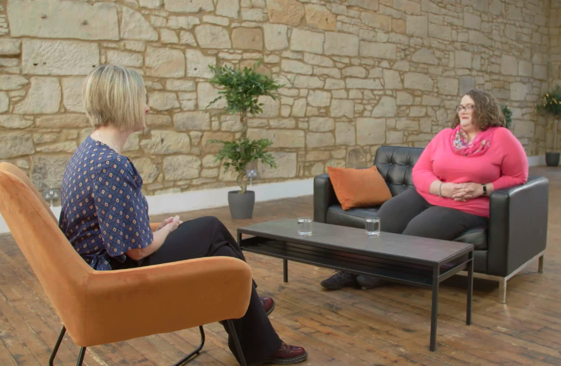
“[The sessions] offer hope” 

“If you can learn to turn the volume of pain down, you can bring back joy and an ability to participate in life” 

“Now I’m in control of the pain instead of the pain being in control of me” 

Watch Lorimer Moseley’s ‘Why Things Hurt’, as highlighted by educator Joan Melville, here – https://youtu.be/gwd-wLdIHjs?si=ckR6O4CN7LPM9a9K.

Professor Moseley also features on Airing Pain #37, where they explain the relationship between chronic pain and the brain – https://painconcern.org.uk/airing-pain-programme-37-what-is-pain/


Contributors: 

Dr David Craig

Joan Melville

Georgina McDonald

Mairi McWilliams

Lindsay McLean

Heather Wallace


Thanks

Pain Concern thanks the following funders for their unrestricted educational grants: Richer Sound; NHS Lothian Charity, The National Lottery Community Fund; The Hugh Fraser Foundation; The Trades House of Glasgow Commonweal Fund.


Additional Resources: 

If you have any feedback about Airing Pain, you can leave us a review via our Airing Pain survey  

____________________________________________________________

Peer Support. Join the community

“Having chronic pain is very lonely.”

Join the community

Subscribe to Pain Matters

Everything you need to know about how to live with chronic pain

Subscribe


In pain? Don’t understand what’s happening?

“Having someone to help you prepare for your life through pain”

Our Pain Education Sessions

Fundraise for Pain Concern

Help us to help others

Fundraise


This Airing Pain Short is an interview by Christine Johnston with the artist Jason WIlsher-Mills.


Contributors: 

Jason WIlsher-Mills, is an artist from West Yorkshire who creates work about disability and childhood trauma. Jason has lived with pain, chronic polyneuropathy, since he was a child.


Additional Resources: 


If you have any feedback about Airing Pain, you can leave us a review via our Airing Pain survey  

____________________________________________________________

Peer Support. Join the community

“Having chronic pain is very lonely.”

Join the community

Subscribe to Pain Matters

Everything you need to know about how to live with chronic pain

Subscribe


In pain? Don’t understand what’s happening?

“Having someone to help you prepare for your life through pain”

Our Pain Education Sessions

Fundraise for Pain Concern

Help us to help others

Fundraise


This edition of Airing Pain looks at the research into why pain persists, how we can identify people at risk and whether we could prevent it happening.

In this episode:

  • How does acute short-term pain turn into chronic, persistent pain? Kathleen Sluka explains that people who experience psychological trauma at young ages are more likely to have chronic pain later in life. What scientists think is happening is that psychological trauma or other stressful events actually change your immune system.
  • Shafiq Skikander adds that a lot of patients with fibromyalgia may have had early life stressors. In addition, when they come to clinic presenting with fibromyalgia, they usually have a history of depression.

So how does this happen?

  • Gareth Hathway explains that slowly but surely, our understanding of the basic mechanisms is advancing. We now understand that babies do feel pain, young people do feel pain. It has a long-term consequence. We need a specialist approach to managing pain at every part of the life course. We need to think about how we measure that pain and how we treat that pain.

The interviews were recorded at the British Pain Society’s Annual Scientific Meeting, 2024.


Contributors: 

Shafiq Sikander, a professor of sensory neurophysiology at the William Harvey Research Institute, Queen Mary University, London.

Gareth Hathway, professor of neuroscience at the University of Nottingham’s’ school of life sciences.

Kathleen Sluka, a professor in physical therapy and rehabilitation science at the University of Iowa in the United States.


Thanks

The interviews were recorded at the British Pain Society’s Annual Scientific Meeting, 2024. 


This programme describes research using laboratory animals that is consistent with Pain Concern’s Humane Care and Use of Animals in Medical Research Policy:


Additional Resources: 

You can join our Airing Pain online community:

If you have any feedback about Airing Pain, you can leave us a review via our Airing Pain survey  

____________________________________________________________

Peer Support. Join the community

“Having chronic pain is very lonely.”

Join the community

Subscribe to Pain Matters

Everything you need to know about how to live with chronic pain

Subscribe


In pain? Don’t understand what’s happening?

“Having someone to help you prepare for your life through pain”

Our Pain Education Sessions

Fundraise for Pain Concern

Help us to help others

Fundraise


This edition of Airing Pain focuses on advances in understanding and managing chronic pain, from neuroimmune mechanisms to new diagnostic and treatment approaches.

In this trailer for AP 149, listen to excerpts from the full program on:
– how does acute, short term pain turn into chronic, persistent pain? 
– Why do early life experiences affect later life pain? 
– And why do existing tools for measuring pain fall short? 

The interviews were recorded at the British Pain Society’s Annual Scientific Meeting, 2024.


Contributors: 

Shafiq Sikander, a professor of sensory neurophysiology at the William Harvey Research Institute, Queen Mary University, London.

Gareth Hathway, professor of neuroscience at the University of Nottingham’s’ school of life sciences.

Kathleen Sluka, a professor in physical therapy and rehabilitation science at the University of Iowa in the United States.


Thanks

The interviews were recorded at the British Pain Society’s Annual Scientific Meeting, 2024. 


If you have any feedback about Airing Pain, you can leave us a review via our Airing Pain survey  

____________________________________________________________

Peer Support. Join the community

“Having chronic pain is very lonely.”

Join the community

Subscribe to Pain Matters

Everything you need to know about how to live with chronic pain

Subscribe


In pain? Don’t understand what’s happening?

“Having someone to help you prepare for your life through pain”

Our Pain Education Sessions

Fundraise for Pain Concern

Help us to help others

Fundraise


This edition of Airing Pain explores how neurodivergent individuals experience pain, potential links to hypermobility, and the need for better education to support conditions like autism and ADHD.

Neurodiversity refers to the different ways a person’s brain processes information.It is an umbrella term used to describe a number of conditions including Autism or Autism Spectrum Conditions; ADHD; Dyscalculia; Dyslexia; Dyspraxia, or Developmental Coordination Disorder (DCD), and more.

In this episode:

  • Dr. Clive Kelly discusses research on co-occurring conditions in neurodivergence, highlighting varied symptoms and how pain perception differs among individuals.
  • Dr Jessica Eccles talks about her research into the relationship between joint hypermobility and neurodevelopmental conditions like ADHD and autism.
  • We hear from Ren Martin, an autistic learning disability nurse and mother of three neurodivergent children, and Ceri Reid of Parents Voices in Wales, advocating for better neurodiversity and mental health services.
  • Throughout the episode, we hear excerpts from Imogen Warner’s protest letter, which challenges the UK Government’s school attendance campaign and highlights the reality of being a young autistic person.

Contributors: 

Dr. Clive Kelly, Consultant Physician and Rheumatologist, James Cook University Hospital and University of Newcastle-upon-Tyne

Dr Jessica Eccles, Reader in Brain-Body Medicine at Brighton and Sussex Medical School

Ren Martin, neurodevelopmental specialist

Ceri Reid, neurodivergent mother and founder of Parents Voices in Wales

Imogen Warner, student and author of a protest letter in response to the UK government’s School Attendance Campaign

Jane Green MBE, founder of SEDSConnective


Thanks

We are immensely grateful to The British Humane Association and The Heather Hoy Charitable Trust whose generous grants made this podcast possible. 


If you have any feedback about Airing Pain, you can leave us a review via our Airing Pain survey  

____________________________________________________________

Peer Support. Join the community

“Having chronic pain is very lonely.”

Join the community

Subscribe to Pain Matters

Everything you need to know about how to live with chronic pain

Subscribe


In pain? Don’t understand what’s happening?

“Having someone to help you prepare for your life through pain”

Our Pain Education Sessions

Fundraise for Pain Concern

Help us to help others

Fundraise


This edition of Airing Pain explores how neurodivergent individuals experience pain, potential links to hypermobility, and the need for better education to support conditions like autism and ADHD.

Neurodiversity refers to the different ways a person’s brain processes information.It is an umbrella term used to describe a number of conditions including Autism or Autism Spectrum Conditions; ADHD; Dyscalculia; Dyslexia; Dyspraxia, or Developmental Coordination Disorder (DCD), and more.

In this episode:

  • Dr. Clive Kelly discusses research on co-occurring conditions in neurodivergence, highlighting varied symptoms and how pain perception differs among individuals.
  • Dr Jessica Eccles talks about her research into the relationship between joint hypermobility and neurodevelopmental conditions like ADHD and autism.
  • We hear from Ren Martin, an autistic learning disability nurse and mother of three neurodivergent children, and Ceri Reid of Parents Voices in Wales, advocating for better neurodiversity and mental health services.
  • Throughout the episode, we hear excerpts from Imogen Warner’s protest letter, which challenges the UK Government’s school attendance campaign and highlights the reality of being a young autistic person.

Contributors: 

Dr. Clive Kelly, Consultant Physician and Rheumatologist, James Cook University Hospital and University of Newcastle-upon-Tyne

Dr Jessica Eccles, Reader in Brain-Body Medicine at Brighton and Sussex Medical School

Ren Martin, neurodevelopmental specialist

Ceri Reid, neurodivergent mother and founder of Parents Voices in Wales

Imogen Warner, student and author of a protest letter in response to the UK government’s School Attendance Campaign

Jane Green MBE, founder of SEDSConnective


Thanks

We are immensely grateful to The British Humane Association and The Heather Hoy Charitable Trust whose generous grants made this podcast possible. 


Time Stamps: 

00:43 Understanding Neurodivergence and Pain

04:46 The Relationship between Hypermobility and Neurodivergence

12:06 Gender Differences in Diagnosis and Pain

13:49 Ren Martin’s Personal Experience

32:27 Diagnosis for Neurodivergent Individuals

35:18 Challenges in Education for Neurodivergent Children

42:40 Training for Educators and Healthcare Workers


Additional Resources: 

Links Referred to in this Episode

If you have any feedback about Airing Pain, you can leave us a review via our Airing Pain survey  

____________________________________________________________

Peer Support. Join the community

“Having chronic pain is very lonely.”

Join the community

Subscribe to Pain Matters

Everything you need to know about how to live with chronic pain

Subscribe


In pain? Don’t understand what’s happening?

“Having someone to help you prepare for your life through pain”

Our Pain Education Sessions

Fundraise for Pain Concern

Help us to help others

Fundraise


This episode of Airing Pain focuses on person-centred care. Person-centred care is based on the individual rather than on a generic group of patients.  

In this episode: 

  • Vicky Sandy-Davis, Lead Nurse of Independent Health and Social Care, talks about the importance of recognizing the value of person-centred care, specifically for people with intellectual or learning disabilities 
  • Ian Taverner and Sarah Harrisson discuss the importance of involving people living with chronic pain in research studies so that researchers can be guided by those with experience of chronic pain 
  • Professor Nicole Tang and Jenna Gillett share findings from their research on mental defeat.  For people living with chronic pain, mental defeat can be a way of characterizing how the pain impacts a person’s perceived loss of autonomy which can lead to a loss of identity when experiencing repeated episodes of pain.  

Contributors: 

Vicky Sandy-Davis, Lead Nurse for Independent Health and Social Care, West Midlands 

Ian Taverner, Chair of the Public Advisory Group of CRIISP (Consortium to Research Individual, Interpersonal and Social Influences in Pain) 

Sarah Harrisson, Research Associate in Applied Health Research at Keele University, Specialist Pain Physiotherapist with the IMPACT Community Pain Service (Midlands Partnership NHS Foundation Trust) in Stoke-on-Trent 

Professor Nicole Tang, Director of the Warwick Sleep and Pain Laboratory, Academic Co-Lead for the Warwick Health Global Research Priority Mental Health Theme

Jenna Gillett, PhD student at Warwick University and Lecturer in Psychology at the University of Buckingham. 


Thanks

The interviews were recorded at the British Pain Society’s Annual Scientific Meeting, 2024. 


Time Stamps: 

[00:00] Introduction by Paul Evans
Overview of Pain Concern’s work and the British Pain Society’s Annual Scientific Meeting 2024 as the context for the interviews.

[00:45] Professor Nicole Tang on Mental Defeat
She explains how chronic pain impacts identity and self-perception, drawing analogies from animal behavior. Discusses mental defeat as a predictor of distress and its relationship with suicidal behavior.

[02:27] Vicky Sandy-Davis on Person-Centred Care
She explains diagnostic overshadowing and highlights the importance of personalized care for individuals with learning disabilities and chronic pain. Shares challenges in supporting offenders with learning disabilities in the criminal justice system.

[16:26] Ian Taverner and Sarah Harrisson discuss Patient Involvement in Research
They discuss the value of integrating lived experiences of chronic pain sufferers into research.
They highlight the gap in representation of individuals with severe pain in public involvement initiatives. and advocate for meaningful participation of patients in shaping research.

[19:25] Nicole Tang and Jenna Gillett discuss the Warwick Mental Defeat Study and how mental defeat impacts pain management and affects levels of suicidal behaviour.

[30:00] Nicole Tang and Jenna Gillett discuss challenges in communicating research outcomes – the importance of making tools and findings accessible to clinicians and researchers. They talk about plans to share the mental defeat questionnaire for broader use in healthcare.


Additional Resources: 

If you have any feedback about Airing Pain, you can leave us a review via our Airing Pain survey  

____________________________________________________________

Peer Support. Join the community

“Having chronic pain is very lonely.”

Join the community

Subscribe to Pain Matters

Everything you need to know about how to live with chronic pain

Subscribe


In pain? Don’t understand what’s happening?

“Having someone to help you prepare for your life through pain”

Our Pain Education Sessions

Fundraise for Pain Concern

Help us to help others

Fundraise


We are delighted to announce that we have been awarded funding by the People’s Postcode Lottery. This will go towards our core costs which helps us with our activities to support people living with chronic pain.

Peer Support. Join the community

“Having chronic pain is very lonely.”

Join the community

Subscribe to Pain Matters

Everything you need to know about how to live with chronic pain

Subscribe


In pain? Don’t understand what’s happening?

“Having someone to help you prepare for your life through pain”

Our Pain Education Sessions

Fundraise for Pain Concern

Help us to help others

Fundraise


Sam Mason from Pain Concern discusses NHS Fife’s Chronic Pain Management Initiative on BBC Scotland’s The Nine

One of August’s highlights was the appearance of our very own Sam Mason on BBC Scotland’s news program The Nine. She offered insights into NHS Fife’s Chronic Pain Management Initiative to reduce the use of strong painkillers.

NHS Fife’s Chronic Pain Management Initiative
Clip from BBC Scotland’s The Nine about NHS Fife’s Chronic Pain Initiative aired on 15 August 2024

NHS Fife’s approach focuses on educating patients about the limited effectiveness of strong painkillers and promoting alternative pain management techniques. The initiative encourages collaboration between patients and healthcare professionals, such as physiotherapists and occupational therapists, to explore non-drug interventions that can help manage pain more effectively and sustainably.

Sam Mason Discusses Pain Management Alternatives

In the second clip, Sam discusses the broader implications of NHS Fife’s initiative. She emphasises that while painkillers have a role, they are only one part of a comprehensive pain management strategy. Sam highlights the benefits of alternative therapies like mindfulness, breathing exercises, and movement activities. She also touches on the importance of community support, sharing how peer-support groups can provide invaluable emotional and social benefits to those living with chronic pain.

The Need for a Holistic Approach to Chronic Pain

This discussion on BBC Scotland underscores the need for a holistic approach to chronic pain management. NHS Fife’s initiative serves as a model for reducing dependency on strong painkillers and encouraging the use of alternative therapies that can lead to more sustainable and effective pain management. By educating and empowering patients, initiatives like this can significantly improve the lives of those living with chronic pain.

Resources

Pain Concern provides many free, high-quality resources to educate and empower individuals with chronic pain.

Explore over 130 Airing Pain Podcasts to help you learn more about managing chronic pain:

Find out about our Pain Education Sessions

Explore how the Pain Navigator Tool can improve communication with health professionals

Peer Support. Join the community

“Having chronic pain is very lonely.”

Join the community

Subscribe to Pain Matters

Everything you need to know about how to live with chronic pain

Subscribe


In pain? Don’t understand what’s happening?

“Having someone to help you prepare for your life through pain”

Our Pain Education Sessions

Fundraise for Pain Concern

Help us to help others

Fundraise


1 2 3 4 5