Information & Resources

Find information and resources to help manage your pain.

Get Help & Support

Find the tools you need to
help you manage your pain.

Get Involved

Help make a real difference to people
in the UK living with chronic pain.

About Us

Find out about Pain Concern and how
we can help you.

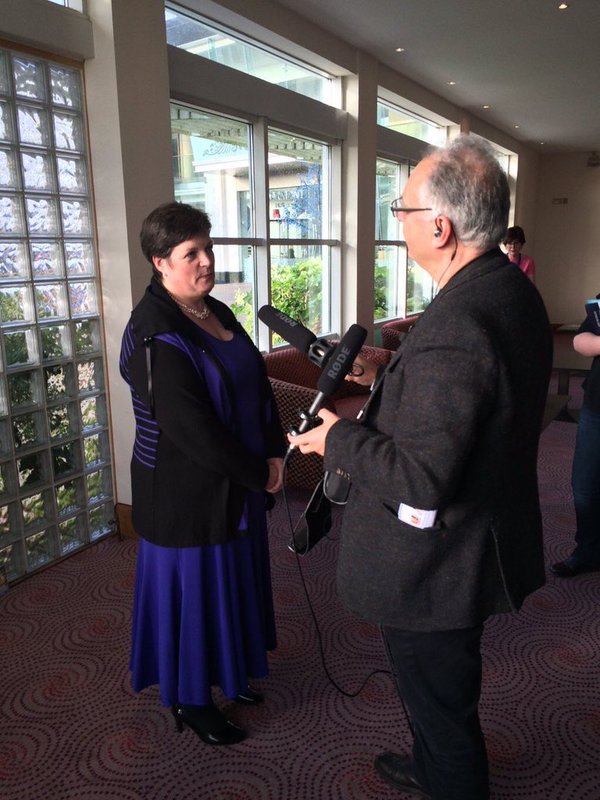
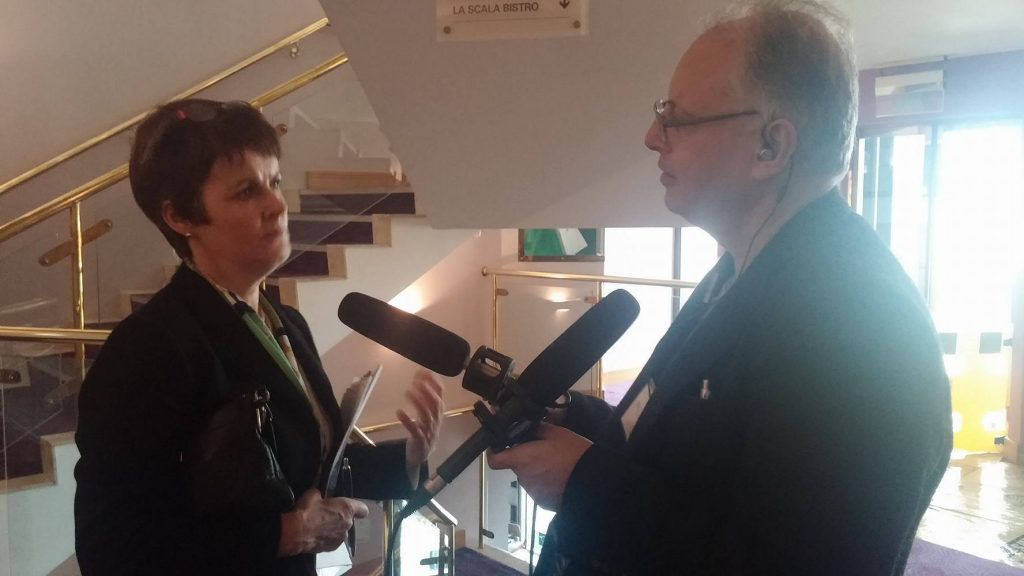
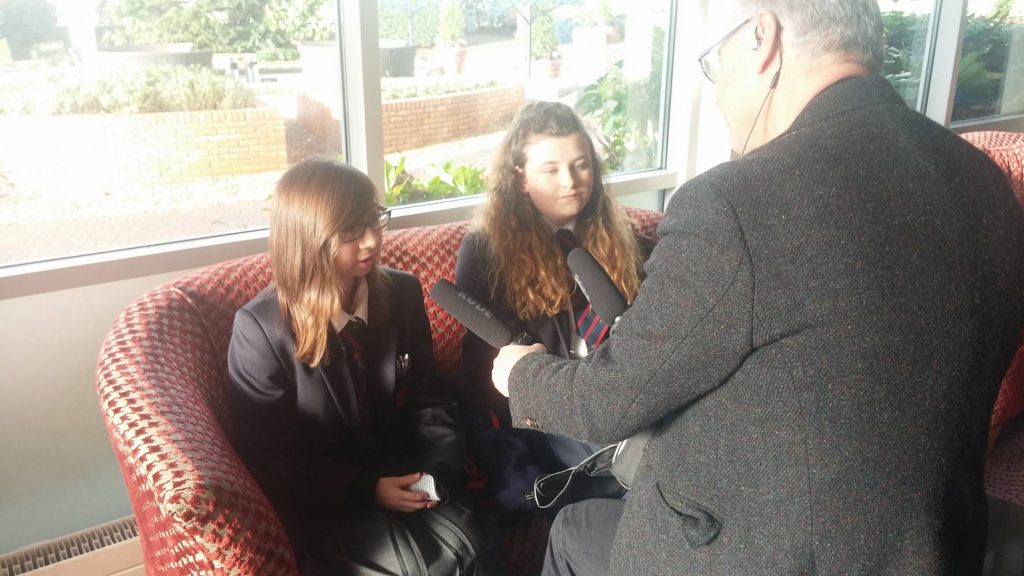
The winners for the 2015 Radio Productions Awards have been announced, with Airing Pain’s very own producer and presenter Paul Evans taking home the Best Nations & Regions Producer prize!

Paul won the award (sponsored by Quattrain) for not only all of his invaluable work for us at Pain Concern; including our AP71: Protect our Girls programme (that is now also available on YouTube) but all of his freelance work with BBC Radio Wales.

The ceremony hosted on Tuesday evening (24th November) at London’s Hippodrome Theatre, and was organised by the Radio Independents Group (RIG), with the continued support from the Radio Academy. It was hosted by BBC Radio 1 presenter Gemma Cairney and the guests presenting the awards included fellow presenters Goldirocks and Clara Amfo, as well as Dotun Adebayo, Roger Bolton, Sue McGregor and journalist and presenter John McCarthy.

Now in their sixth year, the RPAs recognise and celebrate the production skills of radio and audio producers based in the UK or supplying UK-based broadcasters from overseas. This year’s nominees included a total of 26 different indie shows, with 12 nominations for the BBC and 10 for commercial radio.

To find out about all the winners in full: Click here!

Edited on 30.11.2015

Paul’s category is new and is ultimately designed to recognise outstanding achievement from a UK based producer in any genre whose primary working base is outside the Greater London area, or in Scotland, Wales or Northern Ireland. Where possible entries should highlight the way in which the producer has benefited from, or reflected either a regional outlook, or alternative national outlook, in their programme-making. The award was presented to Paul by Dotun Adebayo.

Paul’s entry was engaging throughout, but it included a ‘stop what you’re doing’ moment with Airing Pain – a podcast for Pain Concern about Female Genital Mutilation. This incredibly powerful production dealt with the subject with great honesty and sensitivity. This is really important programme making. The rest of Paul’s entry demonstrated how rooted his programmes are in Wales; with intelligent and well-crafted stories about events in Welsh history. In his programme reflecting on the Gresford Colliery disaster, Paul beautifully helps to keep the memory of those who perished alive. The breadth of material shown in Paul’s entry, demonstrate an ability to bring his talents as a presenter and producer to bear on many different kinds of radio project. The judges felt that this versatility combined with his excellent storytelling ability made him the deserving winner.” ~

Award Judges Panel on Paul’s submission

Peer Support. Join the community

“Having chronic pain is very lonely.”

Join the community

Subscribe to Pain Matters

Everything you need to know about how to live with chronic pain

Subscribe


In pain? Don’t understand what’s happening?

“Having someone to help you prepare for your life through pain”

Our Pain Education Sessions

Fundraise for Pain Concern

Help us to help others

Fundraise


How to move from sick leave to ‘good work’

To listen to this programme, please click here.

As many as a quarter of people with chronic pain go on to lose their jobs, so what can be done to make staying in work more achievable? We look for answers in this first of two episodes focusing on employment.

‘With the right support, many people on sick leave, could be in work or helped back to work faster’, says Dame Carol Black, independent expert advisor to the government. She explains why ‘good work’ – work where people are listened to, respected and have some control – is not only important for our mental well-being, but can even prevent back pain.

The result of Dame Black’s report into this issue was the government’s Fit for Work scheme. Occupational therapist Gerry McFeely describes how the programme aims to help those on sick leave to develop a Return to Work Plan.

Issues covered in this programme include: Employment, mental health, role of employers, accessibility, barriers to the workplace, CBT: cognitive behavioural therapy, sickness absence, occupational therapy, society and policy.

Paul Evans: This is Airing Pain, a programme brought to you by Pain Concern, the UK charity providing information and support for those of us living with pain and for healthcare professionals. I’m Paul Evans and this edition’s been supported by a grant from the Moffatt Charitable Trust.

Louise Coupland: Forty per cent of people in Scotland live with long term conditions. The majority of those will be in the working age bracket, so it’s not about recruiting, it’s actually about supporting the employees you already have who will possibly in the future get a condition, or be diagnosed with a condition or several conditions. Or their home circumstances might change where they become an unpaid carer. And it’s not about recruitment, it’s actually looking at the workforce that is already out there, you know, in 2020 when we’re looking at so many more carers and people with diagnosed conditions. It’s going to be a real problem if people aren’t proactive and changing their mindset in what employers should provide.

Evans: That’s Louise Coupland, the Employability Development Officer of the Health and Social Care Alliance Scotland. And she’s setting out the stall for this the first of two programmes about employment issues for people living with chronic pain. And we’ll be hearing more from her in the next programme.

But first, Dame Carol Black, she’s expert advisor on health and work to Public Health England in the Department of Health and she chairs the Nuffield Trust for Health Policy.

She did an independent review of the health of the working age population in Great Britain back in 2008 and that brought the relationship between health and work into sharp focus. She and David Frost were then commissioned by the government to do a further independent review of sickness absence. This was published back in November 2011.

Black: The report that David Frost and I did for the government in 2011 had background of a rising figure for sickness absence both short term and long term and the government was worried about that and wanted to understand it.

It has always been worse in the public sector than the private sector. So we were charged with looking in detail at sickness absence and the really big issue overall is that sickness absence – whether it’s in the public or private sector – is very damaging to the British economy, because of course when people are not at work we have a reduced productivity. So it is first and foremost a big issue for the country and when you look at it in depth there are many people who are taking sickness absence, who with the right amount of help and support could either be in work or could be helped back to work much faster.

So we were looking at those things which cause people to be absent from work and what were the things that we could do things about. And the whole topic of work and whether it’s good or bad needs to be taken in the context of ‘are you in a good workplace?’ and ‘do you have good work?’. And if you have those two things then a lot of sickness absence due to stress and anxiety and depression or musculoskeletal problems would be able to be reduced.

Evans: So you talk about good work and not good work. Is good work purely to benefit the worker, if you like?

Black: Good work benefits everyone, because if you are in good work yourself, it will obviously be of benefit to the individual, it’s quite likely to be of benefit to your family because you’re likely to be in a much better condition both mentally and physically. It will be a benefit to your employer. It will be of benefit to your community because the more people we have in good work, probably the more stable that community is. And of course it will be of benefit to the economy and the government. So good work starts by benefitting the individual and then goes on to actually benefit a whole lot of other people.

A lot of people perhaps think good work is earning lots of money, or being in a nice building, but good work really is about whether you have any sense of control at work – that’s crucially important – do you feel you’re trusted? Are you given some autonomy? It’s crucial. Are you listened to? Are you respected? If you wish to have some flexibility in your work, is that at least considered as seriously as possible.

So, I want people to understand that good work is not about just the building or how much you’re paid. And does your employer care about your health and wellbeing? So that really is what good work is about.

Evans: That seems fairly straightforward to us, but that’s not always the case is it?

Black: No, no I mean, quite a lot of people are not in good work and if you take good work and good work places together, the essential thing is to have somebody healthy – mentally and physically – and in work are, one, senior managers, so does the chief executive of the organisation take health and work seriously? Does the board of an organisation have a non-exec on it, whose responsibility is to report to the board on the health and wellbeing of the employees?

So you have a board member communicating with the employees and any committee that they may be running, but brings it back to the board of the organisation. Have you trained your managers in people management and mental health? I don’t want people to be psychiatrists or psychologists, but I’d like them to understand when people are not themselves.

So in order to get these things right, they’re the first absolutely fundamental things and they’ve been very well expressed in a recent report from NICE (National Institute for Health and Care Excellence) in June 2015, which talks about the organisation of work. So I think if you get those things right then you can think about people’s physical health. So have you provided good food in the canteens? Have you looked at your vending machines? Have you cared for people’s physical activity? Have you made necessary adaptations at work if someone has a disability? All the very practical things. Do you help people if they wish to stop smoking? Have you got policies in place about alcohol? To help people understand what safe drinking is. That’s what a good employer is.

Evans: It all sounds very, very reasonable. I do know companies like that, but I know of companies that are not like that.

Black: No, of course there are companies that are not like that and our job is to really spread the word and make them see it’s the business case and that’s why I really started with the economy. Because the way you will get an employer to take an interest is ‘does it meet their bottom line?’ They won’t do it because it’s nice, soft and fluffy, but does it meet their bottom line? Will it add to their productivity? Will it give them a return on investment? That’s what their finance director asks. So you need to be able to make the business case, and I think that’s the way most successful companies have approached it. They’ve said ‘what is in it for us as a business?’

So if you take the NHS, investing in the health and wellbeing of staff will give you better quality of care for patients. You’re not producing a machine, you’re not running a business, but you do have a product. Your product is people and people’s health. So it’s perfectly reasonable to ask the question of ‘are you actually meeting your bottom line?’ And that bottom line doesn’t have to be material things.

Evans: Dame Carol Black. Of course, that bottom line for an employee with chronic pain can mean anything, from just getting through a day’s work, to long term sickness absence, or even permanent unemployment.

Black: The longer you are out of the workplace, the much less likely you are to return to it, and after 20 weeks of being away from work, you really are moving a long, long way away from the workplace. So the first thing I would say is, we have to turn the tap off. We don’t want so many people becoming long term sick, but of course we do have people who are long term sick and then it’s a really very difficult balance of how do you first of all get their general practitioner to ask the question ‘how do we get you back to work?’ rather than just issue another sick note. And that is a very difficult cultural issue because they’d been writing sick notes, they’re doing often what the patient requests. It is the patient-doctor relationship and to change that culturally is a very big problem.

When people say they’ve got back pain for example, you shouldn’t just take at face value that they’ve got just back pain. They may have back pain, but the important question to ask is why and to ask whether there is anything going on at work that exacerbates the back pain. And in a very good survey and study – a research study – in Denmark it was shown that the most likely predictor of severe back pain was lack of control at work. So, you have to take pain as a holistic thing for which there may be a physical reason, but there may be a social or psychological reason and you’ve got to address that as well.

Evans: Lack of control, that sort of implies an unhappiness in the workforce.

Black: Well of course it does, and that’s exactly what it is, but often a person will go to their GP and say ‘I’ve got back pain, I’ve got neck pain, I ache’. But these are somatic manifestations of something going on somewhere else. So you need to be quite careful that you investigate pain both for pain itself and any physical reason for the pain, but also that you examine if you like, other reasons for pain and if you’ve got lack of control at work, most of us feel pretty unhappy. I mean you may not need a great deal of control, but if you have no control over your day, if today I had absolutely no control, if I had to do that day after day, I think I might get quite fed up.

Evans: I have chronic pain and I know that pain keeps you apart in some ways from the organisation, from your colleagues, it’s invisible.

Black: It is invisible, but I think if you can be with people and you have pain the things that will take your mind – if possible – a little bit away from it, and enable you to join in, I think makes life that bit better. Because if, let’s say, you know, you may have to put up with chronic pain, you know, perhaps for several years, you don’t want to be isolated for several years. So I think the real art is how do you enable that person even with their chronic pain to participate, because, for example, if you had an amputated leg, you have a disability, but that shouldn’t stop you participating.

It will be a bit more difficult because you will need a wheelchair and you’ll need some support, but many of us have disabilities – some of it is pain, some of it is other types of physical or indeed mental disabilities – but what you want is an environment in which we all try to make it as inclusive as possible.

Evans: The trouble is that many chronic pain conditions are invisible – we don’t have our legs cut off – you talked about being in control, how do you give some of those people the control in the workplace?

Black: Well, alright, I happen to have a chronic facial pain that I’ve lived with for quite a long time. I know that with the help of certain drugs, and a certain approach to it I can quite easily manage. I wish it wasn’t there, it’s not there so badly all the time and sometimes I forget it, but it, it almost becomes part of your life. But if you’ve got diagnosable illnesses that are associated with pain, you may well need the advice of a good pain clinic, of how to live with pain, how to minimise it as best you can. Some people find CBT helpful. Some people find drugs helpful. Some people find a variety of things helpful, but often to really get to grips with chronic pain associated with illness you need a multidisciplinary approach. And I think that, if it’s used well, ought to enable someone to return to the workplace. It depends how well it’s done.

Evans: I’m not sure anybody would disagree with you but, CBT in my area for instance is an 18-month waiting list and in 18 months, an awful lot can happen.

Black: No, I agree with you. We could all say the waiting list for all kinds of things, physiotherapy, CBT are certainly too long. I think we can all come to a conclusion about what would make a difference and then of course the job is persuading those in power or within our hospitals or within our local communities, whoever is responsible for the budget, to at least put some of the budget in that direction. I mean you know, everybody’s fighting for resources.

Evans: Your report came out in 2011, it’s 2015 now. What has happened since then?

Black: Well it took the government almost two years to respond to it, so their response came out, I think, 2013. Since then they have been designing and have set up the Fit for Work service. And the whole point of that service when David and I thought about it and wanted it was that people would be treated holistically. You weren’t being sent there just because you were collecting a sick note. You were being asked to be assessed in that service, to make sure your health needs were being tended to, that your workplace relationships and needs would be attended to and that maybe if you had debt or you had carer responsibilities… we saw it as dealing with problems that keep you from work. You know, what has to be done to help you return to work and we said it should be very early. The later your leave it the more difficult the problem, the less likely you are to solve the problem.

Evans: I believe the take-up in Scotland is pretty low. GPs just aren’t referring their patients.

Black: Well, you probably know figures that I don’t know. I would expect to start with that the figures will be low. I expect they will be. I think anything that is new and different and innovative, and you’ve got to do something different in practice and you may not know whether or not this is going to be helpful, you make take a while to get people to refer in to it. I think if you can get a group of GPs that really buy into this, then you start to get traction.

Evans: One obstacle I can see is with all the welfare reforms going on at the moment, that this is just another scheme to crank up the ante, if you like, against the unemployed.

Black: Well of course if people are on sick leave they’re not the unemployed, they’re not in the benefits system and I’ve met very few people early on in their journey that don’t want to go back to work.

Of course, we’re not talking about people with cancer or serious illness. We’re talking about people who’ve got stress, anxiety, depression, back pain and there are very large numbers of those people. And most people do not go to their doctor thinking ‘I’m getting my sick certificate to leave work’. I think most people hope they will be helped sufficiently to return to work.

And what we’ve said in our review was that this needs to be early intervention. And if it was obvious when the case manager spoke to the person, that they were in a job to which they were not suited – we called it ‘square pegs in round holes’ – you know the ‘never going back’ syndrome – ‘I dislike that job, I’m not going back’ – then what the Government should consider is should you try as in one of the Scandinavian countries to have a job matching service. That if someone says, ‘I want to work, but not that job’. Now, it may be that your company is too small to offer you a different job, but you are in the labour market, you are employed. How do we maintain you there?

So one needs to be positive about this. We have a welfare state and if we want to maintain a welfare state we have to have enough people, healthy and in work, to be paying taxes, to look after those people who genuinely cannot be in work or who are children, or in education etc. So I’ve always seen my job and the work I’ve done for government and in advising them, how do I keep as many people as possible as healthy as need be both mentally and physically to be in work, so we can have a welfare state.

Evans: Dame Carol Black, Expert Advisor on health and work to Public Health England and co-author of the 2011 Health at Work independent review of sickness absence.

Now, acknowledging that early intervention can prevent long-term sickness absence. One of the recommendations in her 2008 report was for the Fit for Work service that she mentioned earlier, to help individual employees in the early stages of sickness absence return to work.

Gerry McFeely is Macmillan Consultant Occupational Therapist for Cancer and Long Term Conditions specialising in vocational rehabilitation. He’s based at the Astley Ainslie Hospital in Edinburgh.

Gerry McFeely: Fit for Work has been around in Scotland for some seven, eight months now and my staff here manage that service. It’s a government service – DWP (Department of Work and Pensions) – managed through the Scottish Government. And, in essence, it offers a case management support service for people who have a job, who are absent from that job, trying to go back to that job.

It’s not designed to see people who are at work, but those who are off work, with a reasonable expectation that they will be returning, hence the referral from the GP to the service. And it is GP referral (it’s not self-referral). There’s a reasonable expectation that they will be returning to work and that this service can aid that through case management.

Evans: So, would I be right in saying you might see somebody who’s been off work for three months, six months, who wants to go back to work, but at the moment can’t go back to work.

McFeely: Depending on the person and their situation, you can see somebody who’s been off work two to three weeks heading towards four weeks, so in the expectation that the service can help, and then those kinds of patients that GPs see a lot, who may have been off for longer who now may be returning and need that assessment. And it can be three months, it can be six months.

I think the current practice is that there is to be an expectation that there’s a return to work and if GPs aren’t referring people, it’s probably because the expectation is not strong and the service isn’t perhaps designed with the more difficult, challenging, fully three dimensional cases which require an interventionist approach because Fit for Work at the current time has a case management telephonic approach largely, towards the need. Whereas, some patients need to be seen face-to-face and need therapeutic intervention, or more extended involvement.

Evans: OK. If I were a patient with chronic pain – and I am a patient with chronic pain – and my GP referred me to you what would I expect?

McFeely: The Fit for Work service would, in that first call, see if they could with you evolve a return to work plan after that first call, because the key output for Fit for Work is a return to work plan. And if we can do that, they would issue that to you and, with your consent, for you to share it with your GP, or for them to share it with their GP and employer.

So if you were referred to us with a chronic condition, the key outcome of the service – the Fit for Work service – would be to try and put together a return to work plan with you on that first call.

If we couldn’t do that, your case would move from being a simple case after that first call, to a complex case. You would be allowed two more telephone calls, exchanges with us, to try and, again, over time to get you back to work.

Evans: That’s not a lot.

McFeely: That’s the service as it currently stands and it might be because you weren’t ready to return to work or because the service is too limited to meet your needs. And you might have to go to other services to get support.

Evans: But what could you possibly achieve with me or with someone else over three phone calls?

McFeely: The intention is, if someone has a readiness to work, that it might be possible to put together a plan – which is what the key output of the service is – to get you back so that you can share that plan with your employer. But I accept that for some patients that would not be sufficient to meet their needs.

Evans: I was quite interested in something you said earlier, about seeing people at an earlier stage who might develop a long term absence from work.

McFeely: The early intervention preventative service is going to stop people drifting towards chronic work related problems and also is going to assist an employer earlier to engage with the employee and have that interactive conversation that literally nips things in the bud, or at least manages them better, much earlier and has a common sense and a common good at the heart of that discussion, rather than allow relationships to fester and for difficulties to get stronger and absence to then occur. Because we know that the longer someone’s absent –and Dame Carol in her research found that someone absent at six months has a 50 per cent chance of not returning to work at that point – so the longer it goes on the disengagement from the work culture gets stronger and the likelihood is stronger month on month that there will be no return, or the person has drifted so far from work that they can’t envisage their return with a long term or painful condition. So it’s really important that early intervention and prevention is at the heart of this.

And in some countries around the world that’s normal, but in the UK we tend to leave it to the free market to evolve a response and we know from the number of people who have been on benefits for many years that there’s not much intervention going on at that point.

Evans: Fit for Work, especially in this current economic climate could be confused with a hammer to beat somebody who is out of work.

McFeely: Fit for Work is potentially a very good news story. We’re in the early stages and, speaking as Chair of the College of Occupational Therapists specialist section of work now, we have made representations as a college that this service will evolve and probably needs to evolve to take in more interventions for those cases that need a three dimensional response, because the problem is a three dimensional one. It involves the environment of work, it needs more engagement with the employer, it needs more attendance to the person’s employment rights, because often times having a right requires a remedy and also requires more therapeutic interventions, when it’s required.

And by that as an occupational therapist I would mean more functional capacity testing, more work conditioning and more worksite services to support the employer.

Evans: Gerry McFeely Consultant Occupational Therapist at the Astley Ainslie Hospital in Edinburgh. At this point I’ll remind you as always that whilst we in Pain Concern believe the information and opinions on Airing Pain are accurate, sound and based on the best judgements available, you should always consult your health professional on any matter relating to your health and wellbeing he or she is the only person who knows you, your circumstances and therefore the appropriate action to take on your behalf.

Don’t forget that you can download all editions and transcripts of Airing Pain from Pain Concern’s website which is painconcern.org.uk.

Now, as we’ve heard, the Fit for Work service is to help people in the early stages of sickness absence to return to work. In the next edition of Airing Pain, I’ll be speaking with those where chronic pain has prevented them from taking up full-time employment. People like Kieran McGee:

Kieran McGee: I worked full-time.

Anne Marie McGee: You went to university.

Kieran McGee: I was on a career trajectory…

Anne Marie McGee: You were doing a PHD.

Kieran McGee: I was, yeah, I effectively had a whole career planned out in front of me.

Evans: His wife Anne Marie: do you miss work?

Anne Marie McGee: Yes.

Evans: So one illness has cost two careers?

Anne Marie McGee: Yeah.

Evans: Have you had any help in getting back to work or freeing yourself up a little bit?

Anne Marie McGee: No.

Evans: And nurse Angela O’Neill.

Angela O’Neill: I had to keep attending the job centre, even though I’ve got a job. The works and pensions office, places that I’ve never been before. It was just so difficult and not feeling well and having to go through that. It was very difficult, for my husband as well who took me. And he was very angry, he felt intimidated, didn’t you?

And when I came out sobbing – I’m not a person that cries very easily – and I came out of the office absolutely sobbing, he just was really upset and frustrated by the whole process.


Contributors:

  • Louise Coupland, Employability Development Officer and ‘My Skills, My Strengths, My Right to Work’ Programme Leader at the Health and Social Care Alliance Scotland
  • Dame Carol Black, Expert Advisor on Health and Work to Public Health England in the Department of Health
  • Gerry McFeely, Macmillan Consultant Occupational Therapist for Cancer and Long Term Health Conditions Specialising in Vocational Rehabilitation, Astley Ainslie Hospital, Edinburgh.

Peer Support. Join the community

“Having chronic pain is very lonely.”

Join the community

Subscribe to Pain Matters

Everything you need to know about how to live with chronic pain

Subscribe


In pain? Don’t understand what’s happening?

“Having someone to help you prepare for your life through pain”

Our Pain Education Sessions

Fundraise for Pain Concern

Help us to help others

Fundraise


How to move from sick leave to ‘good work’

This edition is funded by a grant from the Moffatt Charitable Trust.

As many as a quarter of people with chronic pain go on to lose their jobs, so what can be done to make staying in work more achievable? We look for answers in this first of two episodes focusing on employment.

‘With the right support, many people on sick leave, could be in work or helped back to work faster’, says Dame Carol Black, independent expert advisor to the government. She explains why ‘good work’ – work where people are listened to, respected and have some control – is not only important for our mental well-being, but can even prevent back pain.

The result of Dame Black’s report into this issue was the government’s Fit for Work scheme. Occupational therapist Gerry McFeely describes how the programme aims to help those on sick leave to develop a Return to Work Plan.

Issues covered in this programme include: Employment, mental health, role of employers, accessibility, barriers to the workplace, CBT: cognitive behavioural therapy, sickness absence, occupational therapy, society and policy.


Contributors:

  • Louise Coupland, Employability Development Officer and ‘My Skills, My Strengths, My Right to Work’ Programme Leader at the Health and Social Care Alliance Scotland
  • Dame Carol Black, Expert Advisor on Health and Work to Public Health England in the Department of Health
  • Gerry McFeely, Macmillan Consultant Occupational Therapist for Cancer and Long Term Health Conditions Specialising in Vocational Rehabilitation, Astley Ainslie Hospital, Edinburgh.

Peer Support. Join the community

“Having chronic pain is very lonely.”

Join the community

Subscribe to Pain Matters

Everything you need to know about how to live with chronic pain

Subscribe


In pain? Don’t understand what’s happening?

“Having someone to help you prepare for your life through pain”

Our Pain Education Sessions

Fundraise for Pain Concern

Help us to help others

Fundraise


Tune in and turn down the volume on pain

To listen to this programme, please click here.

Could music be a key resource for managing pain? The results of a survey on music and chronic pain are promising, according to psychologist and musician Prof Raymond MacDonald. Meanwhile, most of us are already using music to influence our own psychological wellbeing.

We don’t need to wait until the research is in, says Dr Don Knox – people in pain can already ‘build music into their everyday pain management strategies’. He explains why whether it’s Tchaikovsky or the Ramones, our own tunes make the biggest impact on pain.

Finally, Producer Paul Evans gets a singing lesson from composer Gareth Williams, who explains why most of us are not breathing well and how vocal exercises can help.

Issues covered in this programme include: Culture, alternative therapies, music, memory, association, vocal exercises, breathing exercise, psychology, anxiety, relaxation and cystic fibrosis.

Paul Evans: This is Airing Pain, a programme brought to you by Pain concern, the UK charity providing information and support for those of us living with pain and for healthcare professionals.

I’m Paul Evans and this edition has been supported by grants from the Sylvia Waddilove Foundation and the Scottish Government.

Now, everyone listens to or at least hears music, well not everyone, actually, there is a neurological condition called amusia, where a symphony – described in the late Oliver Sachs excellent book Musicophilia – a symphony sounds like the clattering of pots and pans. That’s not relevant to what we are talking about now, because such is the power of music to affect the way we behave, that it’s used in the retail industry to help us part with our money, on the battlefield – the so-called psychological operations to wear down the enemy – and even as an instrument of torture. So could music be used for our health and wellbeing rather than our destruction?

The Scottish Music and Health Network is a collaboration between Edinburgh and Caledonian Universities. I went along to their second ‘mapping the future of music and health research in Scotland Conference, where I met Professor of Music Psychology and Improvisation, Head of the Reed School of Music and saxophonist Professor Raymond McDonald.

Professor Raymond McDonald: The network is funded by the Carnegie Trust. The goal is to bring together researchers, clinicians, teachers, music therapists, musicians, community musicians, anybody with an interest in the relationship between music and health and wellbeing. And we want to bring people together to discuss their work, discuss their ideas and talk about the effects that musical participation can have on health. And today’s focus is on developing new research, so it’s a big challenge for the area because there’s been a real huge growth and interest around the relationship between music and wider health parameters, but there’s a real need for research, robust reliable research that can shed light upon the process and outcomes of music interventions that are focused upon health and wellbeing.

Evans: Well, you see, it doesn’t take an academic genius to know that music can make you feel better and can make you feel worse.

McDonald: I think that’s a really good point. We all have an intuitive feeling, if you like, that music can in the right circumstances, make us feel better. When you’re in the car, you can pick a piece of music to listen to, when you select that piece of music, you’re making a number of very sophisticated psychological assessments. How do I feel right now, how do I want to feel in five minutes, what music is going to help me reach those goals, do I want to change the mood I’m in, do I want to enhance the mood I’m in?

So yes, we are all very sophisticated users of music and we use music to regulate our moods. But in terms of using music for wider, more specific benefits, so, for example, can doctors use music to alleviate the symptoms of depression? Can listening to music and performing music, help slow down cognitive deterioration for people with Alzheimer’s disease? Can listening to music reduce our pain perceptions? While, you’re absolutely right, there’s lots of anecdotal evidence that people feel very passionate about their music, there’s not so much reliable scientific evidence, that allows us to, on the one hand, predict the outcomes of listening to music interventions and, on the other hand, tailor particular interventions to target specific needs.

And that’s one of the aims of the research network and that is to develop a body of research that is investigating the relationship between music listening and health outcomes so that we can predict more reliably what the outcomes of music might be in particular situations.

Evans: Well, you took part in a survey to look into the effects of music and chronic pain?

McDonald: Uh huh.

Evans: What did you find?

McDonald: The survey found that people who listen to music and use music more, listen to their preferred music, have higher quality of life measurements and had reduction in pain perceptions. This work came out of a number of studies looking the effect of music on acute pain, because what we found was listening to your favourite music, for example, while undergoing chemodialysis in a hospital environment, listening to your favourite music reduced your feelings of pain in that hospital environment and reduced your feelings of anxiety.

We also had another study where participants put their hands in cold water and what we found was that listening to your favourite music, people felt less pain when they had their hands in cold water. Putting your hands in cold water doesn’t sound particularly painful but actually cold water gets painful quite quickly. We just simply asked them to take their hands out of water when it got too painful, but when they listened to their favourite music, they kept their hands in the water for much longer.

Evans: So this was their choice of music, not yours?

MacDonald: Yes, and that’s a very important point for all the work we’ve done, looking at, the effects of music on pain. The most significant results were found are for people picking their own music, listening to their preferred music.

Evans: So, forget about the musician in you, I’ll talk to the psychologist in you, what’s going on?

MacDonald: Well, I think when we listen to our favourite music, we are cognitively engaged, neurologically engaged. There’s research to show now that the brain engages with music, is changed by music. When we listen to our favourite music we may feel more, if you like, psychological control over our environment and when we listen to our favourite music we can be cognitively, emotionally distracted from a particular stimulus or distracted from other thoughts. So I think these key psychological processes are at play when we listen to our favourite music.

Evans: I suppose looking at it from a layman’s point of view, you are picking, well, I should hope, you are picking music that you like and that means something to you, whatever that means.

MacDonald: Exactly, that’s a key point. So, music is very subjective, no matter what emotion I want to imbue a piece of saxophone music that I’m playing or no matter what intention a composer puts on a piece of music, the listener filters everything they hear through their own preferences, their own listening experiences, their own cultural background, their own family, educational and social experiences. Therefore, all music is essentially ambiguous because we place our own meaning on it.

And, of course, we all have our own very strong attachments to our favourite music. That’s why Desert Island Discs is such a phenomenally interesting and successful programme, because we can, if you like, display our identity, our personality through our musical choices. Like I say, ‘I’m Raymond and I like these types of music’, it tells you something about me and I feel very close to my choices of music.

And what’s interesting about that is that it’s not just musicians or people whose careers are in music, but we all have a very close personal relationship with our music. Therefore, it affects us psychologically, it engages us, it moves us and it’s a really important process.

Evans: Raymond MacDonald. Dr Don Knox is an audio lecturer at Glasgow Caledonian University. His background is in audio technology and music analysis and processing and he’s been working with music psychologists studying the emotional effects of music on our everyday lives.

Dr Don Knox: There’s still some significant disagreement on whether you feel genuine emotions through listening to music or we simply recognise the emotion expressed by a piece of music. So there’s still some fairly theoretical discussions going on and around that particular topic, but I think what’s indisputable is we have an emotional connection with our favourite music that makes music a very important part of our lives.

Evans: In what way?

Knox: Well, for a lot of people experience is inextricably linked to their music listening preference, so a major part of why you might prefer particular types of music or artists is linked to your life associations with that music. There are several what we call musical or extra-musical factors that influence your relationship with it. So, certainly your knowledge or your connection with particular artists or composers would certainly enhance that kind of emotional engagement with music, yes, that’s certainly one factor. However, what comes up more often is this concept of a soundtrack to your life. So, there are major life events, there are pieces of music that people will associate with those events, your personal experiences and the music that was around at the time. And also there’s the music itself and the content of the music, the musical attributes and we can’t disregard that as it’s a very important part of our relationship with music.

Evans: A good tune means something on one day, if it’s raining one day and sunny the next day, it means something completely different.

Knox: Absolutely and I think that is true also of the individual, between individuals and also within the individual. Different pieces of music can have different effects on different individuals at different times. And this gives the lie towards this concept that there must be one type of music. The Mozart effect is a great example of this, that it will just be inherently calming and relaxing for everyone – and that’s just not the case. This personal, complex relationship with music is what counts and that can change from day to day.

Evans: The Mozart effect is one particular piece of Mozart, I can’t remember exactly what it’s number is but people who are played that become more intelligent, supposedly.

Knox: Well, that’s commonly… in the original research’s defence, it was always misrepresented. So, they didn’t make a particular claim that it was Mozart’s music per se that had this particular effect, so, Mozart goes out of the window a little bit and the particular effect was something they called ‘spatial intelligence’. So it was always one particular cognitive task that people showed an improvement with in a music condition compared with a no music condition. So we might as well say it was the effect of music on that particular task and since then it’s been blown up out of all proportion.

Evans: What do you mean by cognitive? Just explain what cognitive means.

Knox: A good example is, I guess, things like distraction, so that will come into effect in lots of aspects and studies of music listening. So, for example, I’m particularly interested in the positive effects of music on the effects of pain. Now, what we are talking about there is digging into the mechanisms that are underpinning the positive effects of music. We can demonstrate that listening to music might have a positive effect on certain aspects of the symptoms of pain. However, what are the positive aspects that underpin that. So one might be distraction. Are we focusing on pain? Are we being distracted from pain by listening to our music? How well are we distracted from pain by our music and is that increased by the greater connection we have with a particular piece of music?

Evans: Now pain as we know is very complex and so is music, so what are you finding out?

Knox: Well, some work I’ve already done at Glasgow Caledonian was look at the content and structure in music that has been found in my colleague’s research on acute pain to reduce the overall pain intensity and also increase feelings of control of pain. And, there again, that was in an acute setting and I was very interested in that study, in that the focus of the study was that people preferred the music that they brought along to those studies. And there’s a wealth of evidence out there, that suggests the fact that you like the music is a key factor.

However, we can’t throw the content of the music away because the content of a piece of music that you listen to has very direct effects on you. Now, that might be something that influences your preference for music – you might like loud and raucous music – they can have very direct effects on our arousal levels, for example, so things like the startle effect on our autonomic nervous system are directly affected by the intensity of music and music with a very intense tempo. So we need to think about these things in the context of your preference for certain music and how that very complex situation, as you say, might be unpicked so we may better understand its key mechanisms.

Evans: That’s Don Knox. Well, it goes without saying that music is not just for listening to but for performing. Since 2013 Gartnavel General Hospital Cystic Fibrosis Service has been collaborating with Scottish Opera to explore whether learning classical music singing techniques can improve the wellbeing of cystic fibrosis patients. Gareth Williams is the composer with the Breathcycles project.

Gareth Williams: Cystic fibrosis is genetic and incurable and it’s a disease that causes mucus to build up in the lungs. So you can imagine the kind of health complications that would arise, so we get lung infections are very common, breathing problems, shortness of breath, coughing. And over time, then the lungs tend to scar and get damaged and lead to life threatening complications.

Evans: So where does a composer fit into this?

Williams: Before I came to Edinburgh I was at Scottish Opera. I was the composer in residence there for three years. Before that I was writing a lot of operas, it just seemed to be somewhere I found I could really scratch an itch because I really found it interesting to work with those big, powerful voices.

And there is a tradition when you think of operas, like La traviata where Violetta has tuberculosis and her lungs are in terrible condition, but she still soars gracefully, just before her death and her vocal fireworks go off, or Mimi for that matter in La Bohème. There is a kind of trope there where these people can rise above their symptoms to create something glorious as a swansong. And I wonder was it that, there is something there that made me think I’d actually like to explore what happens when you put someone with a genuinely fragile voice and a genuine health condition with their lungs in an opera.

Evans: Because singing, requires the lungs, the diaphragm and your breathing part have to be perfect, have to be Formula One.

Williams: Absolutely, I often compare opera singers to almost being like being the professional athletes of breathing and singing. They have that daily ritual of practice, of keeping this instrument in their chest in top health. They can do remarkable things with it, they can fill auditoriums, they don’t use microphones and they can cut across massive hundred piece orchestras. It’s kind of remarkable, but these voices are something of an artefact from the past aren’t they but when you are actually in the same room as one, it’s quite staggering.

Evans: It’s like standing in the ring next to a boxer.

Williams: Completely, yes.

Evans: So, ok, tell me we have the Formula One of voices on the operatic stages of the world and then on the opposite end we have people with cystic fibrosis, so how do you bridge that gap?

Williams: On our first day of meeting people with cystic fibrosis, before we started on that journey of giving singing lessons and starting to teach some vocal techniques, I ask them all to sing a holding note for a long as they absolutely could. Would you like to try?

Evans: Go on then.

Williams: I’m going to count to three. I’ll give you a note. [Sings] Aaaaaaah. So give me a nice ‘aaaaaaaaah’.

Evans: [Sings] Aaaaaaaaah.

Williams: And there it is [laughs]. It disappeared like a spirit at the end there and even though you didn’t prepare very well.

Evans: [laughs] No I didn’t, I’m slouching, I’m leaning on my equipment.

Williams: Your diaphragm was not engaged. I think singing is just beautiful breathing. It’s all prepared, that’s the secret of the whole thing, it’s in your posture and in your diaphragm.

Evans: So posture wise, somebody once told me that if you want to see how breathing should be done, you should look at a new born baby. It’s not the chest going out taking up the breath, it’s below the diaphragm, it’s all controlled from there.

Williams: And we just gradually get terrible at breathing as we grow up and it ceases to be a natural thing. I’m terrible at breathing, I think I’m always trying to kind of keep my middle in a little bit when you should really let it all hang out I suppose. I do have a very close friend with cystic fibrosis, she said on a very bad day it feels like she has to remind herself how to breathe altogether and that sounded like a lot of hard work.

Evans: That’s a difficult concept to get hold of isn’t it?

Williams: Uh huh, it didn’t seem in any way like a natural subconscious thing, she always had to be conscious of.

Evans: Ok, we’re in the least medical scientific lab I can ever imagine because there’ a lovely grand piano in there. You also got your audience in this conference to do some vocal exercises, now there’s no way I’m going to do this by myself, so I’m asking Rowena, another musician to help me out with it now.

Williams: Ok, this is easy, this was a little exercise we came up just to get people in starting to sing. It’s a call and response, I sing and then you sing that back and it’s just to develop a sense of pitching and a sense of timing but also to just to start beginning work on developing lung function and developing your breath. So nice big long breaths.

Evans: So this time I going to try not to slouch or lean against anything,

Williams: Yes, sit up straight.

Evans: Head forward, chin in, think about my diaphragm and it’ll go okay.

Williams: I hope so, I haven’t played this in a while. You ready.

Evans: Yep.

[Williams plays the piano and sings; Paul Evans and Rowena Jacobs sing]

Evans: There’s been some great operatic duos in the past. Paul Evans and Rowena Jacobs aren’t amongst them [they laugh].

Williams: [Laughs too] I don’t know, I’m impressed, I see potential. I think when you go into a clinical space and you bring something kind of warm and fuzzy, there is a huge effect and Dr McGregor and his staff said on the days when they were singing in the wards, things did feel very different and there was a specialness. In doing something like making music together, that’s hard to quantify actually.

Evans: So, does increasing people’s breath power, if you like, through breathing properly and through singing, does that help their condition?

Williams: From our pilot project, I can tell you that we had some really encouraging results. Most patients showed an improvement in lung function, which is good especially in the marker of the FEV1 marker which is forced expiratory volume, so that’s the amount of air you can blow in one second and we found an increase there of 14 per cent on average. Now five per cent would be considered a significant statistical result, so this is really encouraging. It’s almost too good to be true, we were really shocked by that wonderful result.

I know that they trialled a drug in the hospital round about the same time, which came up with a result of an 11 per cent increase and that was considered a massive success, so we beat the drug that cost £200,000 a year, which I was very pleased about [all laughed]. Well I need to reinforce that we’ve been through this trial with 24 people. For medical results that are significant, we need 330 people now over the next few years with cystic fibrosis to get to the bottom of what’s really going on. Also we need to extend out time, we did 12-week blocks and measured at the start and end but I’d like to double that now so we really need 24, so we really get a look and see what happens over a slightly longer journey.

Evans: What’s important about your study and what’s important about the Scottish Music and Health and Wellbeing Network conference we’re at today is that music has a very, very real role in medicine.

Williams: We hope and dream out of this project is that someday, singing and vocal techniques will be part of the way we think about and treat and care for people with cystic fibrosis and it could be part of their daily life. I want music to be as widely recognised as possible for its benefits to everybody’s health and wellbeing.

Evans: Composer Gareth Williams. And you read and you can hear more about the Breathcycle project at breathcycle.com.

Don Knox again:

Knox: My particular focus is on people listening to music because I think that’s gaining, I guess, more importance nowadays where we have what we might call a soundtrack to our lives, where you have large collections of music, thousands and thousands of tracks, access to that kind of music all day every day. And evidence is telling us now that people are listening to music in very different ways. We rarely now sit down in a room and listen to music as a main activity. People are using music to accompany other activities in their everyday lives and it’s used in a very goalorientated way. So people are making complex decisions about the music they listen to achieve particular goals. That may be mood regulation and to accompany specific tasks.

Evans: Supermarkets have been doing that for an awful long time choosing what we call ‘Muzak’ – rubbish, if you like – to alter our purchasing moods.

Knox: Yes, [laughs] there’s some great examples, David Hargreaves and Adrian North have done some excellent research in that regard. So I think some of their research has shown that if you play louder music, faster music people move through supermarkets more quickly. In clothes shops for young people, the music they play in those settings is about projecting this identity, this lifestyle you might want to aspire to and that’s ingrained in the clothes you might want to buy as well. So that’s linked to how you view yourself and how you want to be viewed. And there was a great study by Hargreaves and North that looked at playing archetypically French and German music while there was French and German wine on sale and they noticed a significant effect of the amount of wine from each country that was sold while they were playing music from those countries.

Evans: And maybe a subtle soundtrack of waves breaking on a shore underneath.

Knox: [laughs] Yes, I think it’s becoming increasingly important because we are starting to see evidence that music has significant effects on how we feel and how we behave. So the music you encounter in everyday life, in public settings, where the music may not be of your choosing can affect us and it can affect how we act. So people are starting to take an interest in what those affects might be and what the music might be to achieve a certain end.

Evans: That’s a good point because in your research, people who bring their own music in that they think is their favourite music is one thing, but if you prescribe your music if you like, what you think might help, is there a difference there?

Knox: Well that’s really important, that’s part of research that I am trying to develop at the moment. This concept of being able to prescribe music to an individual is absolutely not about your preconceptions about what that music should or shouldn’t be. It is about that individual’s needs and preferences. And again that’s a very complex relationship and we do not yet fully understand it. So the things I’m interested in are: their particular preferences, familiarity and associations; but also the content of the music – its acoustical content, how loud, how intense it is etc.; and our emotional engagement with it and the emotion expressed by the music.

So, three very big things in the mix there already that combine to create a very complex and sophisticated relationship and that affects the beneficial effects of music in the studies we’ve seen.

Evans: And I’m sure it’s the same with you as me and with everybody else, the music I bring today may not be the music I bring in tomorrow.

Williams: Exactly, yep, and the range of music, the studies that I analyse the music from a few years back at Glasgow Caledonian it was just an enormous range. And, overall, it was seen to have the same beneficial effects overall on the intensity of pain people felt and their focus on pain and it varied from Tchaikovsky to the Ramones. So, really, really a broad range of music with functionally similar effects on the listener.

Evans: Yes, with me it would be Mahler, Beethoven and Johnny Cash.

Williams: [laughs] There you go.

Evans: But only late Johnny Cash?

Williams: [ laughs] Alright, alright – a purist.

Evans: How do you measure people’s reaction to music?

Williams: What doesn’t happen often is the more physiological responses, so things like your heart rate, and galvanic skin responses. That’s something that we’re fairly confident… I have to say, it’s not discredited in the literature, it really doesn’t pin down the causality of the effects of music listening. Having said that, there are some studies look at salivary cortisol, which is a key indicator of levels of stress in the body, so those pseudo-experimental music-listening studies that I’ve seen certainly have proven that there are physiological indicators like cortisol levels that indicate very clearly, the beneficial effects of music listening.

So we can use physiological direct measurements in that way, but often we might take self-report measures of experienced stress, or self-perceived well-being, mood etc. Which is often quite reliable data, because it comes directly from the participant. And then we can take that another step further and do more qualitative studies where we do very in depth face-to-face interviews and really dig into people’s experience of music listening that underpin their experiences of music listening and the beneficial effects it might have had.

Evans: So people with pain conditions, they don’t really have to wait for your results to come out, they can try music now – it’s not going to hurt.

Williams: Exactly, and I think the key thing is something we can say for sure is that you can listen to a programme of music listening, preferred music of your liking, and it can have direct effects on the pain you may be experiencing or symptoms of that pain. I think what needs working on and, again, this is something I’m particularly interested in, is moving this research on from acute pain to looking at how people manage the effects of chronic pain and long term effects, because I think it’s a really important part of how people might build programmes of music listening into their everyday existing pain management strategies.

Evans: Don Knox. And I’ll just remind you that while we in Pain Concern believe the information and opinions on Airing Pain are accurate and sound, based on the best judgements available, you should always consult your health professional on any matter related to your health and wellbeing. He or she is the only person who knows you and therefore the appropriate action to take on your behalf.

Don’t forget that you can download all the editions and transcripts of Airing Pain from Pain Concern’s website, which is painconcern.org.uk. And you can read more about the subject of today’s edition of Airing Pain in issue number 63 of our sister magazine Pain Matters. Once again all details are on our website.

And, finally, for this edition of Airing Pain let’s consider whether GPs and other health professionals would prescribe music for chronic pain patients in the future. Raymond MacDonald.

MacDonald: There already are medical practitioners that are using music in clinical context. Now, they have developed their own way of working, they’ve developed their own practice, they have their own body of research to support its use. So there is no doubt music is currently being used by medical practitioners in explicitly clinical contexts. Whether or not music becomes used by GPs the way in which specific drugs are prescribed for depression, I think we are a long way off that type of use of music. But I certainly think that in the not too distant future, music will be available for specific types of ailments, depending upon which situation you are in.


Contributors:

  • Raymond MacDonald, Professor of Music Psychology and Improvisation, Edinburgh University
  • Dr Don Knox, Senior Audio Lecturer, Glasgow Caledonian University
  • Gareth Williams, Composer, Edinburgh University.

Peer Support. Join the community

“Having chronic pain is very lonely.”

Join the community

Subscribe to Pain Matters

Everything you need to know about how to live with chronic pain

Subscribe


In pain? Don’t understand what’s happening?

“Having someone to help you prepare for your life through pain”

Our Pain Education Sessions

Fundraise for Pain Concern

Help us to help others

Fundraise


Tune in and turn down the volume on pain

This edition is funded by grants from the Sylvia Waddilove Foundation and the Scottish Government.

Could music be a key resource for managing pain? The results of a survey on music and chronic pain are promising, according to psychologist and musician Professor Raymond MacDonald. Meanwhile, most of us are already using music to influence our own psychological well-being.

We don’t need to wait until the research is in, says Dr Don Knox – people in pain can already ‘build music into their everyday pain management strategies’. He explains why whether it’s Tchaikovsky or the Ramones, our own tunes make the biggest impact on pain.

Finally, producer Paul Evans gets a singing lesson from composer Gareth Williams, who explains why most of us are not breathing well and how vocal exercises can help.

Issues covered in this programme include: Culture, alternative therapies, music, memory, association, vocal exercises, breathing exercise, psychology, anxiety, relaxation and cystic fibrosis.


Contributors:

  • Raymond MacDonald, Professor of Music Psychology and Improvisation, Edinburgh University
  • Dr Don Knox, Senior Audio Lecturer, Glasgow Caledonian University
  • Gareth Williams, Composer, Edinburgh University.

Peer Support. Join the community

“Having chronic pain is very lonely.”

Join the community

Subscribe to Pain Matters

Everything you need to know about how to live with chronic pain

Subscribe


In pain? Don’t understand what’s happening?

“Having someone to help you prepare for your life through pain”

Our Pain Education Sessions

Fundraise for Pain Concern

Help us to help others

Fundraise


“When it comes to opioids the dangers of physical dependance are well known. So why are doctors now handing out more than 22 millons presciption a year?”

Declan Lawn in Panorama’s “Hooked on Painkillers”

Did you happen to watch BBC Panorama​ last night? In their latest episode BBC reporter Declan Lawn met with chronic pain patients and also GPs and specialists in a well-balanced discussion over the rise of prescription painkiller usage by patients dealing with long term pain.

Amongst others, Dr Cathy Stannard (Consultant in Pain Medicine at Frenchay Hospital in Bristol) and Dr Martin Johnson (Royal College of GPs) spoke candidly about the research into the growingly controversial area. Bringing Opioids and chronic pain back in to the media spotlight, this programme follows only 6 weeks after the launch of the Opioid Painkiller Addiction Awareness Day (OPAAD) on the 22nd September, and highlights the need for further research into the area itself; so that everyone is made aware of the difference between effective and non-effective Opioid referral.

“One of the things is we have to be aware of is when to say no and when to try and bring in other resources. We are not saying no enough at the moment because GPs like to help their patients.”

Dr Martin Johnson

Both Cathy and Martin have been involved in multiple Airing Pain programmes since 2010; including the discussion over the difference between Opioid addiction and dependency.

Know the Difference (Dr Stannard, AP21 – 2011)

  • Dependence: you have been on the drug for a long time; you can’t stop it suddenly because you will feel quite unwell with withdrawal effects. And what that means is that we would take somebody off opioid drugs very slowly, to avoid withdrawal effects and dependence is a normal expected effect for anybody taking this class of drugs.
  • Addiction: much more of a behavioural thing, which is to do with the way that patients take drugs and the features of addiction are craving, continued use despite harm, behaviours focused towards drug seeking and inability to control drug use.

You can listen to all of the podcasts that both Martin and Cathy have been involved in by simply typing in their names in our search bar. Alternatively, click the links below for our programme’s focussing on Opioids.

In Airing Pain Programme 21: Opioids and managing pain in remote areas

Paul Evans talks to Jackie Milburn, Dr John Macleod and also Dr Cathy Stannard, outlining the use and misuse of opioids in chronic pain management. Dr Stannard points out that whilst opioids are a useful analgesic for some people, they can have a detrimental effect on others due to their strong side effects. She emphasises the need for healthcare professionals to be aware of how to use opioids effectively as a pain management resource.

In Airing Pain Programme 54: Opioids, memories and prison healthcare

Paul speaks to Dr Cathy Stannard, Dr Rajesh Munglani and Dr Ian Brew about healthcare within prisons. Stannard reveals some problems in this area, saying that some medicines are a tradable commodity in prisons and that often prisoners’ account of pain are treated with mistrust. She reports that the situation is improving, as the healthcare needs assessment that prisoners receive when they arrive in prison now includes a section on pain, alongside the original sections on substance misuse and psychiatric disorders.

My view is that opioids probably are currently over-prescribed. I think there is a poor recognition with opioid drugs that they may not always be effective for persistent pain and there is a strange way that these drugs are prescribed compared to other drugs. Many patients will have the experience that they will go to their doctor and they will be given an opioid drug and if it doesn’t work, they will be given a bigger dose and a bigger dose and actually one of the things we are trying to encourage in terms of guiding prescribers is to think of opioids like any other painkiller and if it’s going to work, it will work in a sensible dose and once a prescriber has to start escalating a dose, to get an effect, one should start wondering whether that really is the most effective tool for treating that particular pain.”

Dr Cathy Stannard

Pain Concern’s helpline is also listed on the Panorama “Information and Support” page for the episode and we’re here to help you manage your pain. Please also consider reading our leaflets on managing medications and watching our self-management videos.

Peer Support. Join the community

“Having chronic pain is very lonely.”

Join the community

Subscribe to Pain Matters

Everything you need to know about how to live with chronic pain

Subscribe


In pain? Don’t understand what’s happening?

“Having someone to help you prepare for your life through pain”

Our Pain Education Sessions

Fundraise for Pain Concern

Help us to help others

Fundraise


Taking care of our feet, plus, why we need toes

To listen to this programme, please click here.

About ten per cent of the adult population experience disabling levels of foot pain. Producer Paul Evans hears from the experts about professional help, self-management and why we need toes!

Gordon Hendry explains what podiatrists do – and it doesn’t involve using a hammer and chisel to lop off a bunion – and why we should appreciate the complex and clever structures that are our feet (and toes). More women than men are affected by foot pain. Jody Riskowski weighs up whether tight-fitting shoes are to blame.

As a former elite athlete retired because of injury, Riskowski shares her experiences of rehabilitation and gives tips for finding the middle ground between overdoing it and over-resting, while Kathryn Martin tackles the issues around getting active despite foot pain.

Issues covered in this programme include: Foot pain, feet, shoes, podiatry, foot orthoses, aging, elderly people, exercise, occupational therapy, activity-rest cycle, pacing, risk factors, bones, knee pain, sports injury and tissue stress.

Paul Evans: This is Airing Pain, the programme brought to you by Pain Concern, a UK charity providing information and support for people with pain, our families, friends and healthcare professionals, through campaigns, these podcasts, literature, research projects and its helpline.

This edition has been funded by the footwear retailer Schuh, which is highly appropriate because it’s about foot pain.

Gordon Hendry is a podiatrist and a lecturer in musculoskeletal rehabilitation with the Musculoskeletal Health Research Group at Glasgow Caledonian University. The group collaborated with the University of Aberdeen’s epidemiology centre to present a foot pain workshop at the 2015 British Pain Society’s Annual Scientific Meeting.

Now I suppose I take my feet for granted, even though – I’m sure I’ll be corrected if I’m wrong – they’re probably the most used and pressurised part of my body.

Gordon Hendry: You would be pretty correct in saying that actually. There is a quote out there, I think it was Socrates: ‘if your feet hurt, you hurt all over’. And there is this idea now, the foot being the key load-bearing structure of the body, that’s subject to a lot of high stresses and strains.

We know from epidemiological research there’s probably about ten per cent of the adult population that will have disabling foot pain, disabling being that for at least a day in a month they will be unable to perform a task due to the level of foot pain. We know that far less seek care for that disabling foot pain and we don’t really understand why that is – it’s either people aren’t aware of what help they can get, or they just carry on regardless and they power through, or they perhaps self manage to varying degrees of success.

From my own professional background maybe we’re at fault slightly, in that I think if you asked everyone at this conference what a podiatrist is probably very small percentages would be able to tell you what they are and what they do, relative to maybe physiotherapy, which is very well known by comparison.

Evans: Okay, what’s a podiatrist, what does he or she do?

Hendry: I’d left the door open for that. Well, I suppose in terms of mechanical foot pain, a podiatrist is an allied health professional that will be capable of performing a diagnosis to determine the cause of your foot pain and apply non medical, conservative management strategies to relieve that foot pain. Podiatrists also have many other roles related to diabetic foot care, for example, foot ulceration’s a key problem, but in terms of foot pain from my perspective, the role is very much based around mechanical, conservative therapies for improving posture and function, such as normal human ambulation and walking.

Evans: Gordon Hendry. So who gets foot pain and why do they get it? Jody Riskowski of Glasgow Caledonian University:

Jody Riskowski: In general, we see women typically get more foot pain; in general, people who are older tend to get more foot pain; in general, people who have made poor footwear choices – and some of that still is questionable – tend to have more foot pain. So the poor footwear choices might be women with high heels – some studies say that is a problem, other studies say that’s not a problem and a lot of that is because we ask them when they have foot pain, ‘what shoes did you wear?’ So they think of all the bad things, it’s called a ‘recall bias’ – you think of all the bad things, things you feel guilty about, ‘oh, maybe I shouldn’t have worn heels 16 hours a day when I was 20’.

Evans: Other than wearing high heels, which I don’t [laugher], what can cause foot pain?

Riskowski: We think of it as being a loading issue, so how you’re putting force onto the foot, wearing ill-fitting shoes may play a role, wearing high heels – that may play a role. With regard to how does it arise, we don’t have good answers, because you can look at people, say, you can’t run all the time, but then you go to some marathoner and you go, ‘but they’re putting in hundreds of miles a week but they don’t have foot pain and I can’t run for three miles without doing it’.

So clearly, somehow, somebody is doing something different, but we just don’t have a good understanding of what that something is that they are doing to be able to allow them to run without pain, or what they’re doing that brings on foot pain when they run.

Evans: I think the answer is we’re all built differently.

Riskowski: Yes [laughter], I do think there’s something to do with that.

****

Hendry: We would expect that the majority of patients coming to a podiatry service – and any NHS podiatry service – they would have foot pain and the goal would be to manage that foot pain. But there are some situations where there is pain higher up in the connecting chain, so whether there is back pain, knee pain, where there is some evidence to suggest that perhaps realigning the foot can result in benefit.

So I know from colleagues that I know from Australia that have used foot orthoses – that to you and I would be an insole – and the insole is being used to correct foot posture to try and relieve back pain that has supposedly been caused by some disruption to the connecting chain. Also foot orthoses have been known to be used for relief of knee pain, and there is a specific mechanical target that looks as if it could be modified by using a foot orthotic and you’re effectively changing the direction of a force going through the knee joint to prevent further deterioration in terms of osteoarthritis and relieve pain.

Evans: You mentioned the term realigning the foot. [Hendry: Yes.] What do you mean? My foot sits on the bottom of my leg and it points forward.

Hendry: Yes, that’s right, well compared to the knee joint, which is effectively a single hinge, the foot is a far more complex structure. So you’ve actually got 33 joints in the foot, so in terms of adequately and concisely describing realignment it is actually very difficult. But if you take a heel bone and you look at it from behind, one of the key movements of that heel bone, if you think about it moving in a clockwise or anti-clockwise rotation when you’re walking, there is some evidence suggesting that extremes of that rotation, in either direction, might result in development of foot pain via various different tissue stresses and strains. And the idea is that by building up on one side of the heel bone we can alter that rotation and bring the big hand closer to the 12 o’clock position.

Evans: That’s Gordon Hendry of Glasgow Caledonian University, which as I mentioned, is collaborating with the University of Aberdeen’s epidemiology centre, where Kathryn Martin is a lecturer.

Kathryn Martin: I lead a programme on physical activity research, which is part of the rheumatic and musculoskeletal programme. And I’m interested in understanding and exploring the patterns and problems of physical activity and, actually, sedentary behaviour among older adults as well as those who have rheumatic and musculoskeletal conditions. Additionally, I’m interested in developing theory based interventions, behavioural interventions, to increase individuals participating in physical activity, as well as finding ways in which we can support individuals who want to be more active in maintaining their physical activity through different transitional periods in their life.

Evans: Physical activity is one of the big issues faced by people with chronic pain conditions.

Martin: Yes and physical activity is a wonderful way where individuals who have chronic pain, or different pain as a result of other conditions, can actually manage their symptoms, and especially fatigue as being another symptom. Unfortunately, individuals with chronic pain face this cycle – it’s fear, avoidance, pain, then a continuation where they just keep not engaging in physical activity – so it’s important to break that cycle and have individuals engage so they can really manage their symptoms well.

Evans: The cycle being, ‘I have pain, if I exercise it will make me worse, so I exercise even less, therefore my pain gets worse’ [Martin: That’s right.] and it spirals.

Martin: And there’s a deconditioning element as well in that. But you’re absolutely right, where individuals are fearful of pain and they avoid that activity that they believe might cause them pain, so then individuals can become de-conditioned if they stop being physically active, which then brings on more pain and so forth.

Evans: So how do you break that circle?

Martin: That’s a really great question and one which I think many of us are interested in really understanding and researching further. I think that it’s complex and individuals, even without chronic pain, face many different barriers to being physically active, and getting off their sofa and stop watching television.

Evans: You see the biggest thing that’s made me start exercising, I have chronic pain, I have fibromyalgia, but the biggest thing that has got me off my backside is being diagnosed with type 2 diabetes.

Martin: Interesting.

Evans: It’s the fright.

Martin: Of what would happen with that additional condition? [Evans: Yeah] And have you found that it has improved your fibromyalgia symptoms? Less fatigue, less pain?

Now, I’ve turned the interview onto you, Paul.

Evans: It has actually. I still pay for it.

Martin: Sure, overdoing it?

Evans: Overdoing it, yeah.

Martin: Activity pacing tends to be a type of management strategy that is often encouraged by clinicians like occupational therapists or physiotherapists, even podiatrists, where individuals are encouraged to sort of adopt a strategy where they don’t over exert. So they’re doing enough where they are getting themselves to engage in more activity, but up to a threshold where they know if they cross that threshold, they will induce pain. So it’s finding a right balance and pacing oneself into doing activity, so if one can adopt an activity pacing strategy oftentimes that might help.

The evidence is lacking, especially in the foot pain area so often in public health and clinicians will say the simplest way to get active is to get out and go walking. It’s usually very low impact, it’s easy to do – individuals can simply go out their door and walk. But for individuals with foot pain I think that this is a very complex and not an easy activity to do, because it causes pain. And so, not everyone has access to a swimming pool, which is recommended for a lot of adults, especially those with chronic pain and foot pain in particular, so access to swimming pools is not always easy, so walking is one of those activities that for many people without foot pain is easy to do, but if you have foot pain you may not be as inclined to do.

Evans: And it’s incredibly easy to give advice to somebody who doesn’t walk, who doesn’t do any exercise, but actually putting yourself into that person’s mind-set [Martin: …or shoes], or shoes [laughter] is quite difficult.

Martin: Yes, I think so. I think foot pain is complex in that there are a lot of different ideologies, ways in which a person may have foot pain. Sometimes it’s brought on by trauma and over time goes away. The natural history of foot pain is not very well understood, so once someone has started to develop foot pain, what sort of goes on at the soft tissue, or even at the bone and the joint, that’s not very well known. And spontaneous resolution, or how things resolve, even without intervention or any sort of clinical intervention, is still not known. But if you don’t have that knowledge about how things progress and you just say to someone ‘just go out and walk’, I think that can be complex and hard for that person.

****

Hendry: There’s an awful lot of risk factors associated with foot pain – so the obvious ones are: obesity; lack of physical activity; aging just generally with loss of skeletal muscle, that kind of thing and footwear is the big one as well, poor footwear. So one of the key points of the talk today will be, people tend to go to a podiatrist, say with a bunion – that’s one of the most common problems – and they’ll go with a bunion and say ‘I’m having some problems with this’.

There does appear to be a lack of understanding that a podiatrist, they’re there for relief and get you back on your feet and get you back doing what you want to be doing. Some people think that a podiatrist is maybe going to get the hammer and chisel out and make drastic changes and make that toe nice and straight again. It’s just not going to happen, so I suppose the key thing about what we try and do is, it’s managing the whole person; it’s if weight is the problem, weight loss would be a target, whether that be through exercise or controlled meal portions or whatever. There’s certainly lots of exercises that people can do, so self-managing is becoming very important. That’s the point – that just providing an insole or a mechanical device, in most cases, won’t be a cure all. It’s just part of something that’s going to be an overall management package that we can advise upon.

Evans: What is a bunion? I’ve seen a bunion, so what is it?

Hendry: The traditional thought behind a bunion was that it was a bursa overlying the big toe joint. The technical term that we use is hallux abducto valgus and that’s just a bit long winded. And in very basic terms, it’s when the great toe, let’s say on the left foot, deviates towards the left hand side even further, leaving you with a bony prominence that can then cause a whole load of other problems. So instead of load going to your big toe, it tends to move to the smaller toes and they can’t withstand those forces and they can tend to claw and you get high pressure areas and areas of friction and particularly at that bony prominence. That becomes very problematic for shoes, particularly for females as well, who want to wear pointy, narrow, dolly shoes and it can become very uncomfortable. In a lot of people it’s not painful – to throw that curveball out there – and it’s just an aesthetic issue, but that tends to be the people who have got good accommodating footwear, that otherwise keep fit and well and that kind of thing.

Evans: How important is the big toe?

Hendry: Do you know, I’ve got some friends that would actually laugh at that because they always wind me up and say that – as a podiatrist – you don’t need toes, they just seem pointless. You do need toes, absolutely. The key thing I would say is that if you’ve ever come across a diabetic patient, who for various reasons has ended up having a toe amputated, one of the main issues there is, because they lose the ability to roll off of that toe, you’ve got five toes worth of stress and strain going though four remaining toes, so therefore they can’t withstand that and then further problems occur in terms of deterioration of overall foot function.

So toes are very vital. And a good way to think about it is if your foot was just a solid block with toes attached, your foot would be rolling off of that solid block and there would be incredibly high areas of pressure where you would be rolling off. But the extension of having toes there means you’ve got these little flexible structures that have got muscles that can control both above and below to push down and withstand those forces, so, yes, they are very important and we do need them to walk properly.

Evans: Which brings us neatly to the mechanics of walking – Jody Riskowski:

Riskowski: Most of my area has been around foot pain. And so we’re looking at what are appropriate loading strategies. So, when you walk how is it you’re actually putting weight onto the foot and what’s a good amount of weight and what’s a bad amount of weight and how many times are you doing that? So again, somebody who walks a lot is doing that a lot and somebody who doesn’t walk a lot is doing that less. And so we’re looking at what are these cumulative loading and how does that influence pain trajectory.

Evans: Hang on, you’re losing me now. When I walk I put one foot in front of the other. [Laughter]

Riskowski: Yes and how do you do that, what lands on the ground first?

Evans: I’ve no idea. I’ve never thought about it. It’s my heel first and then it follows through onto the ball of my foot, but it’s something I don’t have to think about, is it?

Riskowski: But do you have foot pain?

Evans: No, I don’t, but I have knee pain.

Riskowski: Ah, even those people walk differently and will modify how they walk at the foot level to handle how the force is then transmitted up to the knee. And so there are a lot of foot interventions and therapies that are actually acting to modify the knee. And when you have foot pain, again, you’re going to walk differently. So if you have pain in the heel, you generally won’t always walk with the heel touching down first, you’ll walk more with the arch touching down first and the forefoot, the ball of the foot, but you still need some bit of loading on the heel. So you need to have a normal gait strategy where the heel loads, but you’re also bringing down the midfoot and the forefoot as well. Versus if somebody has fore foot pain they’re not going to push as much, so their gait speed, their walking speed will be lower and then how do you act to have an intervention – an orthotic type of intervention and/or manual muscle massage or trigger point release – what does that actually do to help relieve some of the pressure and tension that’s felt during walking?

Evans: Well I’ve noticed with my knee pain – which is not a chronic condition, I’m hoping it will go after physiotherapy in a couple of weeks’ time, but I’ve had it for a couple of weeks – what I’ve noticed is my walking has changed completely. I’m putting much more weight onto the good leg and altering my posture. That’s what you’re talking about, everything is linked.

Riskowski: Yeah, and noticing there’s a song something like the thighbone’s connected to the leg bone, connected to the hip bone. I think sometimes we forget that as researchers, you know like my area’s the foot, but actually the foot is connected to the ankle, which is connected to your tibia, your calf, which is connected to the knee and the hip, seeing the whole piece together, it’s hard, it’s complex. [Laughter]

Evans: Complex indeed. Now, as I record this edition of Airing Pain the 2015 Rugby World Cup is in full swing and, as with any sport played at the top level, the science and expertise to get and maintain those elite athletes bodies in top shape never ceases to amaze me.

So, can anything be learnt from how the bodies of the super fit are managed, to help those of the super unfit? Well Jody Riskowski was an elite athlete in the United States, until an accident ended that side of her career. Since then she’s worked with people right across the fitness spectrum, from Olympic athletes to those who may do little, or no exercise as a result of chronic pain.

Riskowski: Some people, on both ends of the spectrum, if you will, of physical activity and physical function, are like, ‘but if I just push through it. I know that if I continue to do it…’ and what they’re continuing to do might not actually be something that helps, or may lead to other further complications. And then there are the people on the other end that are like, ‘I can’t do it because it hurts, I can’t do things.’

And you go, ‘actually it’s a balance’. There’s always, when you have pain, you want to limit that pain, of course. But there’s always, if you’re doing something new, you can get new types of pain, muscle that hasn’t been used before might actually become painful, it’s just delayed onset muscle soreness (DOMS), and it’s a normal part of developing a skill or activity, or in your day-to-day activities. So if you haven’t, for example, cycled for a long time, yeah, your muscles might hurt the next day, but it’s not a bad thing. It’s a good thing that you went through that.

So there is having that understanding of what is pain and what does it actually tell you about what’s happening within the body and it’s hard, it’s hard to know. [Laughter]

Evans: One thing with people with chronic pain who have been physically fit at some point in their life, trying to get back to that is a huge obstacle, because they will never get back to that. How do you change somebody’s expectations?

Riskowski: We were just having this conversation about, what is the mental health side of chronic pain and of pain in general and that goes right alongside – even just with aging and, again, working with athletes, you watch athletes that at some point, no matter what, there is always going to be a drop off in performance. And you see it along the spectrum with masters athletes that train and train and train, there’s always going to be a drop with aging. And it is the biggest part, they think, ‘oh I just need to train harder. I just need to do this more, I just need…’ You know, and it’s again going into that cycle where it actually is not the healthy thing to do.

But it is working with the mind and saying what are reasonable expectations, with regard to, again, athletes, or with regard to just the general population, of what are reasonable expectations in terms of the amount of activity that you should be doing. One thing we talk about is activity pacing – so how much activity you should be doing at one particular set of time. And then rest is important, you know, taking whatever appropriate rest is needed, not prolonged rest.

But, doing the right amount of activity at the right bite-sized moments, and that’s an important area to start looking at. We have a lot of ways to measure activity, most people who have a smartphone have capabilities of measuring activity. But the challenge is – how do you get the right bite-sized activity and should your smartphone then be saying, ‘wait a minute, take a rest’. Or giving you the, ‘wait a minute, you should be doing something right now’.

And so, how can we look at activity pacing, with individuals with chronic pain and then working with the mindset of it – what is appropriate and how do you handle what limitations you may have as a part of your disease or condition?

I broke my back when I was 17, so I was a national level athlete in the US, to the next day not being able to get out of bed. How do you deal with that mentally? And I think that needs to come right alongside with chronic conditions, is the mental side of it. And it’s often, I think, pushed under the rug or you want to be brave and you don’t need that piece, but most people do need that piece, of how do you develop resiliency when you have those types of conditions, or you have something that’s a chronic condition that you can have for the rest of your life.

Evans: An elite athlete, say, a marathon runner, you often hear the term ‘going through the pain barrier’, as if that’s a good thing. At the other end, my end if you like, that is a bad thing. So you having been there, and having broken your back, how did you adjust your mind?

Riskowski: I went through the same thing probably everyone would do. It’s like, okay so I can’t use this, so I’m going to transfer and I’m going to go all out at something else. So when I was doing my rehab we did these arm ergometers, that’s just the cycling with your arms. And I remember some of the therapists saying to the coaches, ‘she went all out, she’s going to be hurting tomorrow’, because nobody was telling me ‘that’s enough’, they would just say ‘here’s what you should do’. And so I did that, but then I thought ‘I need to do a little bit more because I can, you know, I’m fit I should be able to’. That’s where we get into, should a smartphone be able to, should there be an external monitoring system within it that lets you know what the appropriate amounts of activity are and how you should be working with, what you should be doing and should not be doing?

Evans: I have a smartphone app and I have one of these things on my arm, which I’ve taken off at the moment, which tells me that I must walk ten thousand paces a day. It doesn’t tell me, ‘well, some people should walk that, but, actually, you’d be better off with a thousand today and maybe five thousand tomorrow,. How do you set that limit?

Riskowski: You know that’s the thing that we need research for, because we don’t know and we don’t know exactly how those limits should be applied across conditions, or across different populations. So somebody that comes in and is very fit and active, prior to some either traumatic conditions, or a new onset, those are going to be different than somebody that’s not as fit and active coming in. And then how do you get them to be a little bit more fit and active, whereas the individual that was already active, how do you then say ‘here’s what a lesser degree of activity might be for now, at least to get you through a flare up condition or an ideally short, acute period where you just need to get, as they say, over the hump and back to a place where you’re more in that normal state’.

Evans: I, half-jokingly, said to the physiotherapist who’s working on my knee, if I was an elite athlete, I’d have a team of 12 people around me, if I was a racehorse, I’d be shot. [Laughter] Or put out to stud…

That was Jody Riskowski of Glasgow Caledonian University.

I’ll just remind you that whilst we in Pain Concern believe the information and opinions on Airing Pain are accurate and sound, based on the best judgements available, you should always consult your health professional on any matter relating to your health and wellbeing. He or she is the only person who knows you, your circumstances, and therefore the appropriate action to take on your behalf.

Don’t forget that you can download any edition of Airing Pain – and this is number 73 would you believe, videos that we’ve produced for our barriers to self management in primary care research project, resources and information from our website which is painconcern.org.uk

Now going back to the start of this edition of Airing Pain, you’ll recall that I was speaking with podiatrist Gordon Hendry as he was preparing to run a workshop at the British Pain Society Annual Scientific Meeting. So what was he about to tell them?

Hendry: I’ll certainly be highlighting that we don’t know everything, yet, and there’s a lot of work still ongoing. It does appear that foot pain appears to be a problem that is managed reasonably well, but it could certainly be improved substantially. And one of the things I’m going to be talking about today is the fact that a lot of foot problems have these horrible umbrella terms, so one of the obvious ones is ‘heel pain’. Now heel pain can be 50 different things, in terms of actually what’s going on beneath the skin when you get down to cellular level. And the management strategies will have varying degrees of success based on what the actual problem there is. But the main focus will be trying to give the audience a greater perspective about what podiatrists try to do and it’s very much about altering mechanics of the foot, centred on tissue-stress theory, which is if there is a threshold by which a kind of tissue starts to damage and becomes inflamed and painful, there must be an element of prevention possible, so we can prevent that damage from taking place and relieving pain by proxy almost, indirectly.


Contributors:

  • Gordon Hendry, Lecturer in Musculoskeletal Rehabilitation, Glasgow Caledonian University (GCU)
  • Dr Jody Riskowski, Lecturer, Institute for Allied Health Research, GCU
  • Dr Kathryn Martin, Lecturer in Epidemiology, University of Aberdeen.

Peer Support. Join the community

“Having chronic pain is very lonely.”

Join the community

Subscribe to Pain Matters

Everything you need to know about how to live with chronic pain

Subscribe


In pain? Don’t understand what’s happening?

“Having someone to help you prepare for your life through pain”

Our Pain Education Sessions

Fundraise for Pain Concern

Help us to help others

Fundraise


Taking care of our feet, plus, why we need toes

This edition is funded by a grant from the Schuh Trust.

About ten per cent of the adult population experience disabling levels of foot pain. Producer Paul Evans hears from the experts about professional help, self-management and why we need toes!

Gordon Hendry explains what podiatrists do – and it doesn’t involve using a hammer and chisel to lop off a bunion – and why we should appreciate the complex and clever structures that are our feet (and toes). More women than men are affected by foot pain. Jody Riskowski weighs up whether tight-fitting shoes are to blame.

As a former elite athlete retired because of injury, Riskowski shares her experiences of rehabilitation and gives tips for finding the middle ground between overdoing it and over-resting, while Kathryn Martin tackles the issues around getting active despite foot pain.

Issues covered in this programme include: Foot pain, feet, shoes, podiatry, foot orthoses, aging, elderly people, exercise, occupational therapy, activity-rest cycle, pacing, risk factors, bones, knee pain, sports injury and tissue stress.


Contributors:

  • Gordon Hendry, Lecturer in Musculoskeletal Rehabilitation, Glasgow Caledonian University (GCU)
  • Dr Jody Riskowski, Lecturer, Institute for Allied Health Research, GCU
  • Dr Kathryn Martin, Lecturer in Epidemiology, University of Aberdeen.

More information:

Peer Support. Join the community

“Having chronic pain is very lonely.”

Join the community

Subscribe to Pain Matters

Everything you need to know about how to live with chronic pain

Subscribe


In pain? Don’t understand what’s happening?

“Having someone to help you prepare for your life through pain”

Our Pain Education Sessions

Fundraise for Pain Concern

Help us to help others

Fundraise


Why self-management isn’t working and what we can do about it

To listen to this programme, please click here.

We know that supported self-management reduces the impact of chronic pain on daily life, but many people in pain feel that they are not getting that support from their GPs. Pain Concern’s research shows how simple things like short appointment times and long waiting lists for pain management services combine with more complex problems of communication and culture to hamper self-management.

And it’s not only people in pain who are frustrated with the system – GP Dr Graham Kramer outlines the problems with a medical approach that tries to fix problems that can’t be fixed. That means a difficult journey towards acceptance for people with pain and a transformation in the way doctors interact with patients from being ‘parent’ to ‘coach’.

Issues covered in this programme include: Primary and secondary care, accessibility to health services, patient voice, patient experience, educating healthcare professionals, raising awareness, culture, policy, waiting time, GP, community healthcare, support group, focus group and communicating pain.

Paul Evans: This is Airing Pain, the programme brought to you by Pain Concern, a UK charity providing information and support for people living with pain, their families, friends and healthcare professionals through campaigns, these programmes, literature, research projects and its helpline.

Now, it’s accepted that supported self-management is a powerful tool to help reduce the impact of chronic pain on daily life but a substantial number of calls to our helpline speak of difficult relations with their GP and a perceived ignorance of the benefits and techniques of self-management. With this in mind, Pain Concern obtained funding from the Health and Social Care Alliance and the Edinburgh and Lothian’s Health Foundation to undertake a two-year project into the barriers to self-management of chronic pain in primary care.

The first phase of the project – that is, gathering the data, the evidence that there is indeed a problem and the extent of it, is now complete. So, this edition of Airing Pain will look into the background and findings of the research. Katy Gordon is Pain Concern’s researcher for the project:

Katy Gordon: We basically found four main categories of barrier and then under each one of those categories, there were various sub-themes.

So the four categories were… the first one was the Patient-Healthcare Professional Consultation, so things that happened as part of that consultation that maybe become a barrier to self-management, that was the first kind of main category.

The second one was called ‘Patient Experience’, so their sort of experience of pain and the emotions which might be attached to having chronic pain might be one barrier.

The third category was called ‘Limited Treatment Options’, so that kind of covered the tendency for people – doctors and patients – to expect their pain would be treated with medication and nothing else, so they didn’t really look into some self-management strategies that they might want to use.

The fourth category was ‘Organisational Constraints’, so the sort of thing like really short appointment times, very long waiting lists… that makes it harder for people to do self-management.

Evans: How have you devised the subjects, the topics that you will study?

Gordon: We had the sort of anecdotal evidence that something was happening in primary care that was making it difficult for people to self-manage. Some anecdotal evidence from the helpline and that sort of sowed the seed to get the ball rolling. We then presented the idea to some advisors who we have got for Pain Concern, who are GPs and psychologists and they thought it would be a really interesting topic to look into. We gathered momentum with it that way and refined what we should look into.

We had two different sets of focus groups. We had patient focus groups or healthcare professional focus groups. Overall we had 18 focus groups and spoke to 101 participants: 38 healthcare professionals – that was mostly GPs and physiotherapists, some practice nurses, some occupational therapists, one community pharmacist; and then it was 59 patients and carers as well.

Evans: That’s Katy Gordon, the project researcher. One of those advisors that she mentioned is psychologist Martin Dunbar, he is Clinical Lead of the Glasgow Pain Management Programme.

Martin Dunbar: It partly came out of my experience of seeing the patients who come through the pain management programme here and them talking about the difficulties they have had, for example, in exercising and the help that they might have had in primary care. A frequent comment from patients is that they ‘wish they had known all this stuff years ago’. They will often say that they tried physiotherapy and have been encouraged to exercise more – but, frequently, their experience was that they were being asked to do too much and that was flaring up their pain. As a consequence, it wouldn’t be surprising if people rejected exercise then, as being too dangerous or too sore or too difficult.

Certainly, that was one of the things that got me thinking. And I think because it is a medically managed problem at most stages of somebody’s ‘pain career’, if you like, the emphasis is always on the medical approaches and they are frequently limited. There is a limit to the number of analgesic medicines there are and they frequently come with their own difficulties as well of side effects and so on. I think it was thinking about what might help people earlier and why aren’t they being helped earlier. I was aware that that wasn’t working very well and rather than just diving in with a solution, I think we thought we need to know a lot more about this.

Evans: Martin Dunbar. The NHS in Scotland recommends supported self-management for chronic pain in their guidelines for patients and healthcare professionals. So what does self-management really mean? Dr Graham Kramer is a GP in Montrose. He is seconded to the Scottish Government as national Clinical Lead for Self-Management and Health Literacy.

Kramer: Self-management really is health and well-being, the way people live their lives when they are away from a healthcare professional which actually is 24/7 and their contact with a healthcare professional is just a very tiny fraction of that time. I suppose their contact with the healthcare professional is very much about what the healthcare professional can do to support that person to self-manage, to live all the other times they are not with the healthcare professional as well and as productively that they can, in a way that they wish.

Evans: You work for the Scottish Government. Why does the Scottish Government see this as an important point?

Kramer: One of the main reasons is that we know that people who are enabled to be in the driving seat of their care tend to not only live better, live healthily; they often have less exacerbations of their chronic condition and they often require less medication; they often require less hospital utilisation and, fundamentally, in a health economics term – it saves money. If you can invest in supporting self-management, not only do you have improved personal outcomes, you get improved medical outcomes as well – so it’s a win-win – you also get a much healthier functioning health economy.

Evans: It seems to be a no brainer [Kramer: yeah]. Why do we need somebody like you to push it, to emphasise it.

Kramer: It is a very good question and I think one of the main reasons is that healthcare has evolved ever since the earlier part of the twentieth century from huge successes in the advance of medical science and it has been fundamentally fantastic at curing acute illnesses that people would have died from previously (with the invention of antibiotics, anaesthesia, immunisation programmes), we’ve managed to save huge amounts of life.

A by-product of that is that, although we are saving lives, people are living with chronic conditions. The whole healthcare system has been designed around the acute model, the acute curative model and trying to look after people and support people living with long-term conditions, is incredibly difficult – almost impossible – to do well in that acute model.

So what we are needing to see, is a transformation to what I call ‘the curative compliant model’ of healthcare, that we currently work in to one which is focused on empowerment and enablement. That is a fundamental change. It challenges a huge amount of values and attitudes of healthcare professionals. We are all trained in being doctors – or I’m certainly trained as being a doctor [laughing] – I haven’t been trained in being more of a coach, an enabler, a healer and that requires an entirely different skillset as well.

Evans: That was Graham Kramer. Here’s researcher Katy Gordon again:

Gordon: Doctors and physios as well – quite a few said that they didn’t really feel like they got that much training in chronic pain or self-management techniques as well. The groups that we ran in Edinburgh, those physio-therapists had done some kind of extra, specific chronic pain training, felt like that they had really benefited from it and felt much more confident dealing with the patients they had. So training was one that came under Limited Treatment Options.

So the fourth one was Organisational Constraints, which I think would apply to any condition not just chronic pain. So, appointment time, specifically, for the doctor – maybe 8/10 minutes – and even the doctors who had really bought into self-management said that they actually don’t have time to talk about chronic pain in the detail it needs – ‘I don’t have time to talk about self-management, so at the end of an appointment, I give a prescription.’

Long waiting lists as well, particularly, physiotherapy and psychology – so patients are waiting a long, long time and in that time, their pain is probably getting worse. The professionals that would be able to help teach them about self-management – they are not seeing them for such a long period of time, they can’t get started with self-management while they are waiting nine months to see their physiotherapist.

The third one in that category was Inconsistency – so possibly different doctors giving different messages about self-management depending on their own kind of opinions on it and patients just feeling that they would get sent somewhere for a scan and they wouldn’t find any problem in the specific thing they were looking for, so you would get sent back to the GP who would refer you somewhere else and then they didn’t find anything specific. Each specialist looked at one single thing, ruled it out, sent you back.

So, it’s that real kind of search for a diagnosis first of all and then search for a cure. And a lot of the time there is not really a cure, so that makes it worse. So every time you get sent somewhere, you get a little bit of hope – ‘maybe they are going to find out what is wrong with me, maybe they are going to find a cure’ ­– nothing happens so you feel a little bit lower again. And just a kind of ongoing cycle of being sent round and no one actually being able to find a cure and at that point you have to say, ‘we are probably never going to find a cure but we can manage this as best, we can’.

Kramer: I think one of the difficult conversations I have with my patients is getting them to some sort of acceptance that I don’t particularly have a solution but trying to be very positive, that I think there is a lot that we can do to help and that we can help by working through this problem together. And I think that I want to emphasise that I see myself… often the patients I have, we have a very strong, positive relationship anyway, so we can begin to use that and build on it, to try and work through the quite intolerable suffering that they are experiencing so that we can find ways of reducing that suffering and allowing them to move forward and live their life as fully as they possibly can, within the limitations that they have.

Evans: That was GP, Dr Graham Kramer. Now what the research indicates is that yes, patients in our sample are frustrated at primary care level but so are the GPs. Martin Dunbar again:

Dunbar: Time is part of that frustration, I think. But, I think, it is not knowing what to do – how to move people on, I think, is probably one of the things that would be most helpful. If that is done clumsily and I am sure that is done clumsily sometimes, then those consultations can become difficult and GP’s experiences can then be coloured by a few difficult consultations and it puts them off, I guess.

Evans: What advice would you give to GPs in those situations?

Dunbar: Well I do think GPs know a lot of this already. Certainly, the whole field of motivational interviewing can be really helpful here. It is putting these things in a certain way to people, putting the onus on them, letting them provide the answers to their problems, rather than, dictating to people, who already in their own mind – they are aware of the difficulties of making changes in their own life, so somebody suggesting that they should go swimming three times a week when, people may have tried that in the past.

I think if you use kind of motivational interviewing approaches, you will understand that that has been a difficulty and get people to think about what things might help them to get around those problems. I think GPs are often trained in using motivational interviewing approaches – more and more these days – but I think it is something that you need refreshers in, you need to keep on top of – I think, a couple of days training in how to encourage patients to make behavioural change isn’t probably enough.

Gordon: What we find a lot of, in all of the healthcare professionals is ‘we really want to help, that is why we went into this as a profession’, but there is only so much they can do in 10 minutes and with chronic pain, they are probably never ever going to be really able to find a cure.

And, yeah, that was quite interesting – the effect that the patient had on the healthcare professional’s emotions was something that I hadn’t really thought about before, but quite often, they say well, ‘I feel like I am letting the patient down because we haven’t been able to find that cure’ and all those sort of emotions that are attached with them. They are also thinking ‘well I’m the doctor, so I should be able to fix this’. Sometimes, they talked about chronic pain patients being quite, perhaps a difficult group to deal with and that was one of the reasons why, because they are not able to do the sort of job that they really feel they should be able to do.

Evans: Is one of the barriers to self-management, the fact that as you are saying, you didn’t have that training; you don’t have the time in a 10-minute appointment to look at everything in the patient’s life. Is that a barrier to self-management?

Kramer: It is huge, a huge barrier. As I say, the system does not cater for it at the moment. I think there needs to be a fundamental change and one of the reasons that I have gone into this job is – it has come about from an interest in looking after people with long term conditions within primary care. And all we have been able to focus on is the medical management of people with long term conditions and it is very, very limited. I think it is creating a huge burden of complexity in terms of multiple medications and things for people. The evidence suggests that it is socialising our patients into being passive recipients of care almost sub-socialising them into being in a relationship of learnt helplessness on the healthcare system.

Evans: By that you mean – patients go to the doctor to be fixed?

Kramer: Yes, absolutely, absolutely. And of course there is frustration on both sides when we are faced with an unfixable problem and we can end up doing more harm than good, trying to fix unfixable problems with our current medical approaches. It requires more than medicine and I don’t think that the current system is able to cater for those additional things that people with chronic conditions need.

Gordon: It was really, really common for people to say ‘I was made to feel it was all in my head’. People saying that they felt like if they had gone for a scan and they didn’t find a lump or something then, it was basically ‘well there’s nothing wrong with you, kind of go away’ that sort of thing, that was really common.

But then on the flipside the doctors said that they often found it quite difficult to talk to patients, perhaps because maybe there is not necessarily a specific medical reason that they can pinpoint for having their pain – so if the doctor started exploring wider aspects of their life and some of the psychological aspects, that was a very difficult conversation to have with a patient, because as soon as you start talking about that sort of thing, the patient would be like ‘he doesn’t believe me, he said it is all in my brain’.

So, quite an interesting kind of contrast between the two sets of focus groups that we ran. So the doctors saying ‘we can understand why patients think that is what we are saying, but it is actually not what we are saying, but we do need to explore the kind of wider psychological aspects of pain’.

Kramer: I’ve certainly never encountered a healthcare professional who says ‘I think you are making this up or malingering’. I don’t think they do that. And often people turn around and say that, you know, ‘the doctor’s turned round to me and said it is all in your head’. And I don’t think doctors do turn around and say that it is all in your head, but I think that is often what people hear. And so it becomes really, really complex and then people begin to think that they are not being heard or understood and I think it ultimately can easily slide into a very dysfunctional relationship and a dysfunctional experience of frustration and anger with the healthcare system that they can’t be fixed.

And that is a real, real challenge. And it is how you begin to move people on and you begin to discuss with them, that they may have a problem that we can’t fix, that they may have to live with for the rest of their days, that may affect them and is going to completely fundamentally change the way they see themselves, their lives and their relationships and their work and everything else. It can be quite a devastating conversation to have but at the same time, it is a conversation where you want to also convey to the person in front of you that there is also a huge amount that can be done, that can be gained through supported self-management, helping people address all the other aspects in their life as well so that they can achieve what they want to achieve.

Dunbar: Those consultations can become difficult and I think when people have had pain for a long time and they have only had limited benefit from medical management, they can become a bit cynical and a bit wary and a bit concerned that they may be being fobbed off. So it is a bit of a two-way street and I think managing those difficult conversations is maybe something that people, like myself, secondary care pain specialists could help with.

Evans: One of the comments from the research was ‘some patients want to please their doctors’.

Dunbar: That is true. They want to convey that they are compliant with the instructions that the doctor is giving them; they don’t want to report difficulties; they don’t want to be seen as difficult – as somebody who is not trying. I think that is true, across lots of aspects of self-management in pain conditions – that self-management is difficult – they have been given a simple clear instruction to exercise more, why haven’t they been able to do it? They will maybe blame themselves. They don’t want to be seen as somebody who is not trying.

Evans: Martin Dunbar, Clinical Lead of the Glasgow Pain Management Programme. Graham Kramer again:

Kramer: It is a two-way street as I say, it is a fundamental shift in the relationship – it requires I suppose, healthcare professionals to be less what I call ‘parental’ in their approach to their patients and it is a fundamental sea-change for the role that the patient traditionally sees them as playing and that can be as challenging, if not more challenging, I think, for some people. But it seems to be when you can get that transformational shift in both the healthcare professional and the patient, the person with the chronic condition – that is when, the potential of self-management is released and that is when we see the best results.

Evans: So how do you do that? How do you bring the two sides together?

Kramer: Many ways, there is no simple answer. But, I think that for healthcare professionals, we need to have space to reflect on our own values and what we are doing. I think we need to have more training in having these different types of conversations with our patients.

I went to a workshop recently – a group of very experienced GPs and we were looking at changing the approach to the management of people with diabetes. The doctors found it very, very hard to change from their traditional role of being in control and they were trying not to be and they couldn’t help leaping in at certain times and taking control, asking closed questions for instance, trying to set the agenda rather than encouraging the person to set their own agenda and that’s years of training, year of medical enculturation, if you like – that’s the way we’ve done it.

For people, how you increase their activation – not sure I like that word – but how they become engaged in this new side of the relationship. I think some of the wins are around peer support, I think that is very enabling when people see people like them, taking on that new role – so peer support. Structured education is important, but I would advocate that peer-delivered structured education is probably much more effective than professional-delivered structured education.

Evans: And that is where voluntary or third sector charitable organisations like Pain Concern, in fact, can have such a valuable role. But what the research shows, is that some GPs still need convincing.

Gordon: Our patient groups really, really valued third sector support groups and the healthcare professionals were sometimes a little bit more wary about referring – well, not referring, but signposting patients to these groups – because of a whole host of reasons: they didn’t really know what the groups covered; because they are often run by charities, they could never be sure that they were an ongoing thing…

Evans: I guess some people don’t go to support groups because they don’t want to – for want of a better word – wallow in their pain with other miserable people?

Gordon: Well, yeah, that’s right and that was one of the things that the healthcare professionals did have some concern about – are they signposting people to groups that almost collude and then agree that ‘Oh, I don’t want to do that because of my pain’ and then somebody else saying ‘yeah, you shouldn’t do that, because of your pain’. So that kind of collusion against things that they maybe not do. But having been to the support groups, I didn’t really see any kind of evidence of that. The support groups were really positive and, actually, I think were, a good vehicle for getting people to self-manage, because they share tips about ‘Oh, well that worked for me and that worked for me’ that sort of thing. It was quite a good contrast between the patients’ groups and the healthcare professional groups in that respect.

Evans: One of the responses from the survey was that some GPs are very, very loathe to get their patients involved with third sector organisations because it is losing control. They don’t know what advice the patient is going to come back with – ‘well doctor, I want it done this way’.

Kramer: Yeah… I don’t think we need to be worried about what people may be told or any false expectations that they may get outwith the health service because they will get that anyway. And I think giving people information so that they have exactly the same information about them that their healthcare professional has, so it completely levels the playing field. Now some of that information may need to be presented in a more person-friendly understandable format, you know, the information I have about someone would be meaningless to them, it would be gobbledygook. But if we can present the same information in more meaningful ways, I think that would go a long way to levelling the playing field.

And another key thing is that before people are prepared to see themselves in that role, they will need to have a lot of perhaps emotional and psychological support as well and I think that is a very important fundamental need for a lot of people. I think there needs to be a period of acceptance that they actually have a long term problem, for which there isn’t a cure that they are going to have to live with for the rest of their life which can be, a huge ask for a lot of people, because people are wanting to get back to the life they previously had. The whole narrative of their life has fundamentally changed. So I suppose what it involves is some sort of support to get them off that narrative of wanting to go back to where they were to a narrative of acceptance of where they currently are and begin to look at meaning. And I think that is a very important thing that we need to do – to help people find meaning in how they are and how they can begin to move forward.

Evans: The business of someone accepting a long term, a chronic condition – that needs expert communication skills from the GP, the healthcare professional. You are talking about not letting the patient see the notes, but translating the notes – that has to be done very expertly not to spook a patient.

Kramer: And it is really difficult. I have been interested in this for 20 years or so and I wouldn’t begin to think that I am any good at it. I think it is incredibly difficult as a healthcare professional. In my training, six years at medical school, I have learnt an entirely new language which has now become my first language almost. They say that the average medical student learns more new words than the average French language student would learn. It is a whole new language.

And I have probably spent the next 20 years after graduating from medical school trying to unlearn that language and begin to understand and use the language that people most commonly speak in. The only way of learning that language is by listening to the voice of people, the patients and I think one of the things that is missing in our medical education and there needs to be more of is the input of people living with the lived experience of long-term conditions and us hearing their language.

Evans: That’s Dr Graham Kramer – the Scottish Government’s National Clinical Lead for Self-Management and Health Literacy. I’ll just remind you that whist we at Pain Concern, believe the information and opinions on Airing Pain are accurate and sound, based on the best judgements available, you should always consult your health professional on any matter relating to your health and wellbeing. He or she is the only person who knows you and your circumstances and therefore the appropriate action to take on your behalf.

So that is the background to our barriers to self-management in primary care project. As part of the project, we have produced a series of six supporting videos, each one featuring an issue raised in the research. So, patients and leading healthcare professionals in the field of pain share their experiences and offer advice on self-management, coping with the emotional impact of pain, medical management of your condition, GP consultations and pain management programmes. All these and links to resources and of course the research itself are on our website which is painconern.org.uk.

Last words to project researcher, Katy Gordon:

Gordon: I actually got a really nice email from one of the physios, who participated in a focus group. And she said ‘Off the back of your report, I have changed my practice and I am just trying to work a little bit harder and listen a little bit more’. So that was really nice and I was really pleased with that. And if nothing else, if one physio is perhaps listening more than she used to, I think that is a pretty good result.

But, we’re trying to send it out to as many people as possible and just raise awareness for one thing and help, and hopefully use that to change practice. We got another email from someone who participated and said she’s hoping to set up community pain groups in Rothesay and she thinks the report will give her a good backing to do that – she will be able to say, these are some of the reasons, we should be doing this.

Evans: So the evidence is there [Gordon: yes]. It is up to people to use it.

Gordon: Yeah, so I always think that knowledge of what the barriers might be, has to be the first step to overcoming some of those barriers. Hopefully, the report will give the people the knowledge and they might be able to use it to work on the barriers.


Contributors:

  • Katy Gordon, Researcher, Pain Concern
  • Martin Dunbar, Clinical Lead, Glasgow Pain Management Programme
  • Graham Kramer, Scottish Government Clinical Lead for Self-management and Health Literacy.

Peer Support. Join the community

“Having chronic pain is very lonely.”

Join the community

Subscribe to Pain Matters

Everything you need to know about how to live with chronic pain

Subscribe


In pain? Don’t understand what’s happening?

“Having someone to help you prepare for your life through pain”

Our Pain Education Sessions

Fundraise for Pain Concern

Help us to help others

Fundraise


Why self-management isn’t working and what we can do about it

This edition is part of a project funded by the Health and Social Care Alliance.

We know that supported self-management reduces the impact of chronic pain on daily life, but many people in pain feel they are not getting that support from their GPs. Pain Concern’s research shows how simple things like short appointment times and long waiting lists for pain management services combine with more complex problems of communication and culture to hamper self-management.

And it’s not only people in pain who are frustrated with the system – GP Dr Graham Kramer outlines the problems with a medical approach that tries to fix problems that can’t be fixed. That means a difficult journey towards acceptance for people with pain and a transformation in the way doctors interact with patients from being ‘parent’ to ‘coach’.

Issues covered in this programme include: Primary and secondary care, accessibility to health services, patient voice, patient experience, educating healthcare professionals, raising awareness, culture, policy, waiting time, GP, community healthcare, support group, focus group and communicating pain.


Contributors:

  • Katy Gordon, Researcher, Pain Concern
  • Martin Dunbar, Clinical Lead, Glasgow Pain Management Programme
  • Graham Kramer, Scottish Government Clinical Lead for Self-management and Health Literacy.

More information:

Peer Support. Join the community

“Having chronic pain is very lonely.”

Join the community

Subscribe to Pain Matters

Everything you need to know about how to live with chronic pain

Subscribe


In pain? Don’t understand what’s happening?

“Having someone to help you prepare for your life through pain”

Our Pain Education Sessions

Fundraise for Pain Concern

Help us to help others

Fundraise


New award-winning research reveals self-management as a key route to improvement for people with chronic pain!

Pain Concern has just released a new and unique study offering hope to the one-in-five people affected by and living with persistent pain in Scotland.

Launched as part of Self-Management Awareness Week, (28 September-2 October), the new resources aim to dispel the myth that self-management of lifelong conditions such as persistent pain is a lonely, last resort option.

“We have known for a long time, based on medical evidence and Scottish Government guidelines that people with chronic pain cope better if they can be empowered to self-manage their condition. It’s not a cure, but in many cases it can help provide a better quality of life. The Barriers study first set out to identify problems and challenges that can arise for both healthcare professionals and people with chronic pain in a clinical or community setting.”

Katy Gordon (Pain Concern Researcher)

The team behind the ‘Barriers Project’ – a two-year study which initially identified issues preventing people getting the best support from their GP – later developed a series of resources and videos, based on the latest recommendations to guide people towards the benefits of self-management of chronic pain.

The project was funded by the Health and Social Care Alliance and the Edinburgh and Lothians Health Foundation and we are working in association with Alliance Scotland on a larger media campaign focusing on the Self-Management Awareness Week 2015.


Self-Management Week takes place each year to celebrate the variety of self-management projects throughout Scotland and raise awareness about people living well with long term conditions. The Self-Management Awards celebrate achievement, innovation and inspiration in self-management. Click here for more information!


All the videos from the project are free to watch now within our Resources section.

Peer Support. Join the community

“Having chronic pain is very lonely.”

Join the community

Subscribe to Pain Matters

Everything you need to know about how to live with chronic pain

Subscribe


In pain? Don’t understand what’s happening?

“Having someone to help you prepare for your life through pain”

Our Pain Education Sessions

Fundraise for Pain Concern

Help us to help others

Fundraise


‘Self-management’ doesn’t mean being abandoned to ‘get on with it’ alone. Support can come from healthcare professionals, family, friends, voluntary organisations or support groups.

If pain is having a big impact, pain management programmes can help people to get their lives back on track. This involves focusing on what’s most important in life – this could be relationships, activities, work – and learning how to be more involved in them without flaring-up the pain.

Top tip: control the pain by finding your baseline. That’s a level of activity you know you can do without flaring-up the pain. From there you can build up slowly.

Find out more: listen to participants and healthcare professionals on the Glasgow Pain Management Programme sharing their experiences on Airing Pain 32: Pain Management Programmes.


Click here for the main Breaking Barriers page.

Peer Support. Join the community

“Having chronic pain is very lonely.”

Join the community

Subscribe to Pain Matters

Everything you need to know about how to live with chronic pain

Subscribe


In pain? Don’t understand what’s happening?

“Having someone to help you prepare for your life through pain”

Our Pain Education Sessions

Fundraise for Pain Concern

Help us to help others

Fundraise


1 29 30 31 32 33 49