Information & Resources

Find information and resources to help manage your pain.

Get Help & Support

Find the tools you need to
help you manage your pain.

Get Involved

Help make a real difference to people
in the UK living with chronic pain.

About Us

Find out about Pain Concern and how
we can help you.

This edition of Airing Pain centres on rethinking the traditional clinician-patient relationship in pain management and exploring alternative approaches to bringing pain management back into the community.  

Dr Barbara Phipps, GP and Lifestyle Medicine expert, discusses the development and benefits of group consultations for pain management. 

Dr Jackie Walumbe sheds light on the pervasive inequalities in chronic pain services, highlighting the value of communities and member-led collaboratives in building and shaping self-management. 

Dr Mark Johnson, Dr Kate Thompson, and Kerry Page talk through the benefits of de-medicalising pain management, shifting the focus to a community setting. 

We hear about the fantastic work of Rethinking Pain, a community-based pain support service in Bradford and Craven, and the inspiration this can serve for future chronic pain services and self-management initiatives. 


Contributors: 

Dr Barbara Phipps, Practising NHS GP and Teaching Fellow at the University of Edinburgh, currently running a community based Chronic Pain management service within the NHS. Barbara has a special interest in Lifestyle Medicine, and is a trustee of the British Society of Lifestyle Medicine. 

Dr Jackie Walumbe, Clinical Academic Advance Practice Physiotherapist in the Complex Pain Team at University College London Hospitals NHS Foundation Trust and Honorary Research Fellow at University of Oxford. 

Professor Mark Johnson, Professor of Pain and Analgesia and Director of the Leeds Beckett Pain Team (Centre for Pain Research) at Leeds Beckett University. 

Dr Kate Thompson, Senior Lecturer and Researcher at Leeds Beckett University, with a background in physiotherapy and special interest in pain research. 

Kerry Page, Programme Lead for Rethinking Pain, the chronic pain community service based in Bradford District and Craven. 


Thanks

The interviews were recorded at the British Pain Society’s Annual Scientific Meeting, 2024. 


Time Stamps: 

01:58 Paul introduces Dr Barbara Phipps, Practising NHS GP and Teaching Fellow at the University of Edinburgh, currently running a community based Chronic Pain management service within the NHS. Barbara has a special interest in Lifestyle Medicine, is and is a trustee of the British Society of Lifestyle Medicine. 

02:27 Dr Barbara Phipps discusses the development of group consultations for people with long-term primary pain. 

07:28 Paul and Barbara discuss the importance of people being believed about their pain, perception of pain experiences, and detection on functional MRI scans. 

10:41 Paul draws upon issues the funding in pain management services and who decides whether a treatment programme is value for money or not. 

10:53 Paul introduces Dr Jackie Walumbe, Clinical Academic Advance Practice Physiotherapist in the Complex Pain Team at University College London Hospitals NHS Foundation Trust and Honorary Research Fellow at University of Oxford. 

11:04 Dr Jackie Walumbe discusses her research on understanding how the term and practice of Self-Management is understood and acted on by people living with chronic pain, particularly those who don’t have ongoing contact or access with specialist pain services, and the relationship between this and policy makers’ decisions. 

14:42 Paul and Jackie discuss key findings regarding issues of inequality, and a report by Versus Arthritis (Unseen, Unequal and Unfair: Chronic Pain in England), reflecting issues of policy and politics and the importance of other communities in filling the gaps.  

18:09 Paul introduces Rethinking Pain, a community-based service for adults living with long-term pain, in Bradford District and Craven.  

18:28 Paul introduces Dr Mark Johnson, Professor of Pain and Analgesia and Director of the Leeds Beckett Pain Team (Centre for Pain Research) at Leeds Beckett University.  

18:37 Paul introduces Dr Kate Thompson, Senior Lecturer and Researcher at Leeds Beckett University, with a background in physiotherapy and special interest in pain research. 

18:40 Paul introduces Kerry Page, Programme Lead for Rethinking Pain, the chronic pain community service based in Bradford District and Craven. 

18:47 Kerry Page discusses the Rethinking Pain service, its background, services, and success. 

19:57 Dr Kate Thompson explains how Rethinking Pain’s approach differs from other community pain management programmes 

20:58 Dr Mark Johnson talks about how pain is a context driven experience, and the importance of understanding how the narrative matters when it comes to managing pain. 

25:49 Kerry Page recalls the importance of giving time to listen to the pain community and those living with chronic pain, and the way that Rethinking Pain’s initiative provides this through Health Coaches.  

35:53 Kerry page discusses how pain management services can help to reach more people and connect people and organisations from across pain community.  


Additional Resources: 

Rethinking Pain  

Inequalities in Chronic Pain Report – Versus Arthritis 

https://www.healthallround.org.uk/

If you have any feedback about Airing Pain, you can leave us a review via our Airing Pain survey  

____________________________________________________________

Peer Support. Join the community

“Having chronic pain is very lonely.”

Join the community

Subscribe to Pain Matters

Everything you need to know about how to live with chronic pain

Subscribe


In pain? Don’t understand what’s happening?

“Having someone to help you prepare for your life through pain”

Our Pain Education Sessions

Fundraise for Pain Concern

Help us to help others

Fundraise


This edition of Airing Pain focuses on the challenges that researchers must overcome when researching pain and developing new treatment approaches.

Many questions remain unanswered in the field of pain research. For example we might know that a treatment works for some people living with pain, but we might not know how it works or why some people benefit and some do not.  So there is a lot of research being done to try to better understand pain.

This leads to another problem: how to cope with the amount of new information emerging from research and trials? It is important that new research data is made more accessible for clinicians, healthcare workers, patients, and researchers. Data is no use unless it can be assessed and summarised so that doctors can understand how to use it to benefit their patients.  Our contributors for this edition are leaders in this field and they discuss some of the issues they have encountered whilst conducting their research into pain and how to treat it. 


Contributors: 

Professor Robert Brownstone, Brain Research UK Chair of Neurosurgery, Department of Neuromuscular Diseases, UCL Queen Square Institute of Neurology.  

Dr Neil O’Connell, Reader in Physiotherapy, Brunel University, Chair of the International Association for the Study of Pain (IASP) Methods, Evidence Synthesis and Implementation Special Interest Group. He is an advisor to Pain Concern.  

Dr Kirsty Bannister, Neuroscientist and Associate Professor at King’s College London.  


Thanks: 

The interviews in this edition were recorded at the British Pain Society’s Annual Scientific Meeting, 2023. 


Time Stamps:  

1:22 Paul introduces Professor Robert Brownstone, Brain Research UK Chair of Neurosurgery at University College London.  

1:32 Prof. Brownstone explains what a spinal cord stimulator is, the lack of progress made with this form of treatment, the varied results the treatment gets, and why some people experience long-term pain following back surgery.  7:40 Paul talks about Cochrane, a global independent network of health practitioners, researchers, and patient advocates who review research findings to provide a more precise estimate of the effects of a treatment.  

7:54 Paul introduces Dr Neil O’Connell, a Reader at Brunel University who was the Co-ordinating editor of the Cochrane Pain, Palliative and Supportive Care (PaPaS) group.  

8:35 Dr O’Connell discusses how Cochrane reviews research and clinical trials, and the complexities involved in gathering and interpreting evidence when developing interventions.

17:04 Paul introduces Dr Kirsty Bannister, a neuroscientist and Associate Professor at King’s College London who specialises in neuropharmacology and runs a research group that uses animals to examine the mechanisms of pain processing.  

17:22 Dr Bannister talks about why animal models are useful for researching the responses people may have to different pain processes and researching chronic pain by measuring neuronal responses to pain.  

21:44 Paul and Dr Bannister discuss the limitations of using animals to research chronic pain.  

23:48 Paul and Dr Bannister explore why looking at a patient’s experience of pain first can better inform lab research on animal models for understanding and researching pain.

30:03 Prof. Brownstone gives some advice for those considering a spinal cord stimulator as an intervention they want to try.  

If you have any feedback about Airing Pain, you can leave us a review via our Airing Pain survey  

Additional Resources: 

Cochrane

Pain Matters 73: Neuropathic pain issue 

Pain Matters 79: Navigating pathways to live well with pain 

Pain Matters 80: What treatment really works 

New Information On Spinal Cord Stimulation   

Peer Support. Join the community

“Having chronic pain is very lonely.”

Join the community

Subscribe to Pain Matters

Everything you need to know about how to live with chronic pain

Subscribe


In pain? Don’t understand what’s happening?

“Having someone to help you prepare for your life through pain”

Our Pain Education Sessions

Fundraise for Pain Concern

Help us to help others

Fundraise


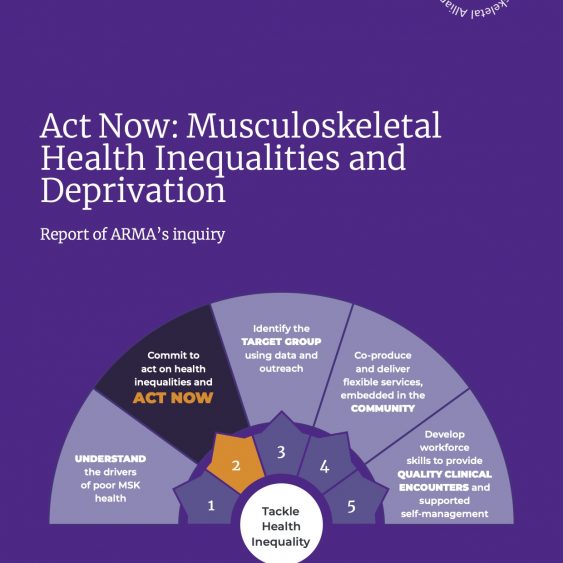
The Arthritis and Musculoskeletal Alliance launched an enquiry into musculoskeletal health inequalities – it was the first of its kind nationally.  
(Musculoskeletal conditions broadly means that which affects bone, muscles and joints).

According to ARMA, musculoskeletal conditions linked to deprivation or age, are more prevalent in women, and disproportionately affect some ethnic groups. The inquiry took a deep dive into this to highlight the issues and hopefully create recommendations for improvement.

As of March 2024, the report was published; setting out the evidence for inequalities in MSK health alongside potential solutions and possible reasons.  

Where can I access the report?

You can read the full report at the ARMA website as well as a summary of the report for a more bitesize look at the findings.

We are proud to be a member of the ARMA and are excited to promote this groundbreaking report.  

Peer Support. Join the community

“Having chronic pain is very lonely.”

Join the community

Subscribe to Pain Matters

Everything you need to know about how to live with chronic pain

Subscribe


In pain? Don’t understand what’s happening?

“Having someone to help you prepare for your life through pain”

Our Pain Education Sessions

Fundraise for Pain Concern

Help us to help others

Fundraise


Pain Concern is recruiting for two new roles, Media Assistant and Social Media Coordinator – here is your opportunity to join a small team, dedicated to improving the lives of those who have lived experience of chronic pain.

About Pain Concern 

Pain Concern is a charity providing information and support to people with pain and those who care for them, whether family, friends or healthcare professionals. On our website you’ll find out more about what we do, including our Airing Pain radio programme, Pain Matters magazine, information helpline, community pain education sessions and our research and campaigning work.   

Media Assistant

You will be part of the Airing Pain production team in which you will help in the initial research foreach programme, and you will help facilitate its success after broadcast.

Read full role description and find out how to apply

Social Media Coordinator

We are seeking highly motivated individuals to join our social media team to help raise awareness of chronic pain and the work of Pain Concern to reach more people in need of the support we offer.

Read full description and find out how to apply

Peer Support. Join the community

“Having chronic pain is very lonely.”

Join the community

Subscribe to Pain Matters

Everything you need to know about how to live with chronic pain

Subscribe


In pain? Don’t understand what’s happening?

“Having someone to help you prepare for your life through pain”

Our Pain Education Sessions

Fundraise for Pain Concern

Help us to help others

Fundraise


For more information or to book your free Pain Education session place


Learn more about pain and what you can do to manage it yourself at our 2-hour pain education session

Watch this short video to learn about our free 2-hour Pain Education sessions.
Want a deeper explanation? Watch the full 10-minute Pain Education video.

The Pain Education Session is for anyone who has had pain for more than 12 weeks. The session will give you a better understanding of your pain to help you manage your condition more effectively in the long term.

What’s does it involve?

We cover the following topics:

  • Understanding pain
  • Managing your activity
  • Managing stress
  • Sleep
  • Managing flare-ups

How will it help me?

The session is an introduction to help you develop a way of dealing with your pain and should allow you to:

  • Know more about your pain
  • Learn how to better deal with stress
  • Be able to enjoy life more
  • Be able to do more

Who will be there?

Two trainers, who have chronic pain themselves, and a small group of people who have long-term pain.

How long will it last?

The session is 2 hours long with a short break in the middle.

Where does it take place?

Online: You will need access to a smartphone, tablet or computer that is connected to the internet. We will email you joining instructions before the session starts.

In-person: In-person sessions are offered at selected locations.

NHS Greater Glasgow and Clyde run in-person pain education sessions in Glasgow. These sessions are held on the second (Clydebank Health Centre, 17:00–19:00) and last (Easterhouse Health Centre, 10:00–12:00) Thursdays of each month. To book onto a Glasgow session, call 0141 355 1493.

In-person sessions outside of Glasgow can be prebooked on Eventbrite when available.


“An excellent help. I loved the whole session”


Participant

“It gave an insight into pain and many ideas for coping strategies”


Participant

“Offering a patient hope, support and education”


Link Worker, Edinburgh

Pain Education

Pain Concern’s Community Education Sessions are a fantastic resource, delivered by people with lived experience presenting evidenced based information, supported by NHS staff working in Pain Services. A great example of collaborative working with people experiencing persistent pain at its centre.

Lyn Watson, Ayrshire and Arran’s Pain Service Clinical Lead, Chair of the North British Pain Association and Pain Concern’s Pain Education Steering Group

Book your place now on Eventbrite!


Zero Tolerance Approach

Pain Concern operates a zero-tolerance policy towards any discrimination, harassment, physical or verbal abuse directed at our colleagues or volunteers.


Acknowledgements

The Pain Education Sessions were developed by NHS Greater Glasgow and Clyde and are used by the NHS.

The Pain Education Sessions are funded by:

  • The Astor Foundation
  • Conundrum Charitable Trust
  • The Hugh Fraser Foundation
  • Richer Sounds Foundation
  • Stirling Council
  • The Trades House of Glasgow Commonweal Fund
  • The National Lottery Community Fund

We thank them for their generous contributions.

The Trades House of Glasgow Commonweal Fund logo
The National Lottery Community Fund logo
Richer Sounds Foundation logo

Looking for local support groups?

If you’re looking for pain support groups near you, we have a directory on our Community Support page.


Photo by Timur Shakerzianov on Unsplash

Peer Support. Join the community

“Having chronic pain is very lonely.”

Join the community

Subscribe to Pain Matters

Everything you need to know about how to live with chronic pain

Subscribe


In pain? Don’t understand what’s happening?

“Having someone to help you prepare for your life through pain”

Our Pain Education Sessions

Fundraise for Pain Concern

Help us to help others

Fundraise


This edition of Airing Pain focuses on the treatment of pain, the importance of catering treatment to a person’s individual genetic makeup, and why addressing the psychological dimensions of pain is crucial in treating it effectively.

The process of finding a medication or treatment that works for a person often involves a lot of trial and error, which can be a frustrating process for someone to go through. This process can be side-stepped through the use of personalised medicine, where information about a person’s genetic makeup is used to tailor and optimise their treatment so it is as effective as possible.

Although medication is oftentimes a vital part of treating pain, incorporating psychological treatment alongside medication can be hugely beneficial when it comes to making pain management better for those living with acute or chronic pain. Changing how someone thinks about pain can enhance their response to the physical components of the treatment they receive.

Our contributors for this edition discuss the ways in which the treatment of pain can be made more effective for people by incorporating personalised medicine or psychological treatments into a person’s care plan.


Contributors:

Professor Tony Dickenson, Professor of Neuropharmacology at University College London

Dr. Beth Darnall, PhD, Professor of Anesthesiology, Perioperative and Pain Medicine at Stanford University School of Medicine. Director, Stanford Pain Relief Innovations Lab.

Professor Irene Tracey, Vice Chancellor of the University of Oxford and a Professor of Anaesthetic Neuroscience in the Nuffield Department of Clinical Neurosciences.


Thanks:

This edition of was made possible thanks to funding from the Guy Fawkes Charitable Trust and support from the British Pain Society.


Time Stamps:

1:11 Paul introduces Professor Tony Dickenson, a professor of neuropharmacology at University College London.

3:21 Professor Tony Dickenson discusses ‘precision medicine’, ‘personalised medicine’, and how looking at peoples’ genetic makeup can help medical professionals treat pain more effectively.

14:21 Paul introduces Dr Beth Darnall, a psychologist and scientist from the School of Medicine at Stanford University, who he spoke to at the British Pain Society Annual Scientific Meeting 2023.

14:54 Dr Beth Darnall explains the psychological components of how people experience pain.

20:24 Paul introduces Professor Irene Tracy, the Vice Chancellor of the University of Oxford, who he spoke to at the British Pain Society Annual Scientific Meeting 2023.

20:57 Dr Irene Tracy discusses the work she’s done on neuroimaging and how the human brain constructs the experience of pain.

23:22 Paul and Dr Tracy talk about what neuroimaging tells us about the multidimensional way the human brain reacts to pain.

26:06 Beginning of discussion about Empowered Relief, a psychology-based intervention that provides people with skills and tools to help manage their acute or chronic pain.

26:31 Dr Beth Darnall discusses the psychological side of treating pain and how empowered relief is used to help people manage their pain.

29:10 Dr Beth Darnall talks about the psychological tools people learn through Empowered Relief and how they help with pain management.

If you have any feedback about Airing Pain, you can leave us a review via our Airing Pain survey.


Additional Resources

Airing Pain 100: Glasgow Pain Education Sessions

Empowered Relief

Pain Matters 80: What treatment really works

Peer Support. Join the community

“Having chronic pain is very lonely.”

Join the community

Subscribe to Pain Matters

Everything you need to know about how to live with chronic pain

Subscribe


In pain? Don’t understand what’s happening?

“Having someone to help you prepare for your life through pain”

Our Pain Education Sessions

Fundraise for Pain Concern

Help us to help others

Fundraise


First broadcast: 10 April 2024

This edition is presented and produced by Paul Evans, and includes interviews with:

Professor Tony Dickenson, Professor of Neuropharmacology at University College London

Dr. Beth Darnall, PhD, Professor of Anaesthesiology, Perioperative and Pain Medicine at Stanford University School of Medicine. Director, Stanford Pain Relief Innovations Lab.

Professor Irene Tracey, Vice Chancellor of the University of Oxford and a Professor of Anaesthetic Neuroscience in the Nuffield Department of Clinical Neurosciences.

This edition of Airing Pain was possible thanks to support from the British Pain Society.

Transcript begins

Paul Evans: This is Airing Pain, a programme brought to you by Pain Concern the UK charity providing information and support for those of us living with pain. Our family and supporters and the health professionals who care for us. And this edition of Airing Pain, was made possible thanks to the continuing support of the British Pain Society. I’m Paul Evans.

Dr. Beth Darnall: We want to start to disentangle what pain has taught us in order to survive, because those hardwired responses overtime actually amplify pain. This is like the cruel irony of having a human body. Our body stores responses that end up working against us.

Evans: We are, of course individuals. Each of us is unique, all be it with common factors in our makeup. So why should medicine work on the one-size-fits-all principle? In this edition of Airing Pain, I’ll be exploring why personalised medicine, that is medicine tailored to the individual is the way forward. So, let’s go back to basics, the science behind how the body reacts to a painful stimulus. Professor Tony Dickenson is a professor of neuropharmacology at University College London. His research has hinged around trying to understand pain in patients and to take that back to the basic science of pain mechanisms and how treatments work. So, if I hit my hand on the table [bang sound] the pain is in my fist. What happens to it then?

Professor Tony Dickenson: So it kicks off yes, in your fist that’s stimulus, and in this case it’s a mechanical one, but it could easily be too much heat, too much cold. We have a whole set of specialised pain endings that tell us about the nature of the stimulus and they transmit electrical impulses up nerves into the spinal cord and the spinal cord doesn’t sort of treat these passively at all. It often enhances them, if that pain input from your fist continues the pain message that’s sent onto your brain, gets bigger and bigger, something called sensitization. Winding up of the pain and the messages from the spinal cord enter the brain. And they go to the sensory parts of the brain. So, we know that it’s your fist, and you might say, well, that’s seven out of ten, ten is the worst ever. This is pretty bad, but equally you find it unpleasant. You don’t like it and pain produces an emotional response as well. Our brain puts those together. The sensory and the effective emotional component of pain and builds up a pain experience for each individual and it’s different. The messages in the brain also interact with what we call descending pathways, so pathways that come back from the brain to the spinal cord and the brain is able to switch that off. So, if you’re in the middle of a podcast and you’ve injured your fist, you might say I need to kind of put this this pain aside if I can, but equally in other occasions your brain can make that pain worse. So, it’s a network of pathways that we’re very interested in and trying to place those mechanisms into the context of pain in particular patients.

The overall aim is really, I mean people have kind of called it personalised medicine, which is a kind of strange term, and it mostly relates to, you know, genetics in a sense. You know, you have your personal genes, and does that relate to pain, and that’s pretty tough. What we’re trying to think about is more what’s been called precision medicine. So, can you target that pharmacological therapy, but it would be true for other therapeutic approaches to particular individuals, because for neuropathic pain, pain from nerve injury so many studies have been done looking at particular agents and you can pull them together and so you can build up a huge group of patients who’ve been treated, compare the treatment to placebo and it’s incredibly disappointing that maybe one in four or one in five patients get a benefit from a particular agent, and so we’re kind of interested in what’s, what’s going on? Why is this this? These agents work, but they don’t work in everybody. So can we identify who they work in and that then becomes what we call precision medicine then, you know you don’t just give somebody something for two months, hope it works and then try something else. You might be able to pinpoint a therapy and match it to a patient.

Evans: That seems very advanced to me because there are things called the pain management pathway. So you start off on one thing, doesn’t work as you say. Then you go on to the next thing, then the next thing, and you end up at the very top of that with something that’s still not working. So how do you work out…

Dickenson: Right, OK.

Evans: That’s the big question [laughs].

Dickenson: Yes, so this is coming from both the kind of basic science and the patient, and much of this work has been done again in, in neuropathic pain, things like osteoarthritis and inflammatory pains are kind of lagging behind in, in terms of our knowledge. But the principles are exactly the same. So what a group of German colleagues did was to do sensory testing in in their patients with neuropathic pain. So, there’s a like a, a kind of kit you can get, which is like, you know, what’s your response to cold, to warm, to mechanical. All these stimuli and you build up a profile. They just took patients with neuropathic pain, did this testing and it was so thorough and so comprehensive. Thousands, probably of patients in the end, and what they found is that there were three subgroups of patients. Their sensory responses were different from each other, and it didn’t matter what the cause of their pain was, the so-called aetiology was absolutely immaterial. But there were three subgroups.

So, the premise was then if you take these patients and they’re in subgroups, presumably those different sensory profile sensory responses, mean they’ve got different mechanisms, and if they’ve got different mechanisms, they might well need different treatments. Having established that, what is now going on is looking at drugs for neuropathic pain and saying, do they work in particular subgroups? And if that turns out to be the case, and there’s a couple of good examples where it is the case, then you can be much more precise with your treatment.

Evans: So there’s no point in giving somebody such and such a drug because they don’t have the make up for that.

Dickenson: That could well be the case. Yes, that’s why not everybody responds exactly. They haven’t got the mechanism that that drug targets and so it doesn’t work. Whereas if you can find patients where that mechanism is active, then you can. So, there’s a very good example of a very old drug, something called oxcarbazepine. It was a study done in Northern Europe and in Scandinavia and they just took patients and gave them the drug, gave them placebo and it didn’t work. It was no better. This was all a bit mysterious because this drug is widely used by GPs in these countries. And they said, well, why are the GPs giving people something that clearly doesn’t work. It’s no better than placebo. But if you pulled out a subgroup of patients, ones who complained that their, their pain was much worse when stimuli were delivered, it wasn’t like an ongoing pain. It’s a, you know, if the bedclothes touched their painful foot, that caused pain. Then in that subgroup the drug worked really, really, well.

So, that’s one example. And that came out a few years ago and the European Medicines Agency, on the basis of this, said from now on, you can do a clinical trial, a study of a drug and look at subgroups. This is sort of harnessing this idea that there’s different mechanisms and we should start to see the results from these trials in in the next couple of years, I imagine where a number of other drugs will be looked at and saying do they work in everybody? No, they don’t. And can we identify who’s going to respond?

Evans: I guess the number of subgroups and sub subgroups should be infinite. We’re all different.

Dickenson: Well, yes, that’s quite possible. But if you do these studies in this mixed group of patients, it’s clear that it it does work in some of those. And so the idea is to sort of try and get this sorted out, and there’s another example of this which is complicated, but I find absolutely remarkable. So these pathways that come from the brain back to the spinal cord are deep in our brain stems. You know, they’re completely invisible. You could do an F MRI scan and you could see activity, but that’s never going to happen routinely. But what you can do, and it was based on science that’s been taken into the patients. If you have a pain somewhere in your body and you apply a second one, the second pain will inhibit the first. And so it must be some sort of mechanism for the brain to focus on one pain when there’s two. But if one pain can inhibit another, it turns out that this is using these descending pathways, the inhibitory one and so the identity of the transmitter in those pathways was done.

It was where we actually did in basic science, so we said, OK, so you apply a painful stimulus. It inhibits the second one. It’s a transmitter called noradrenaline. It’s in the descending inhibitory pathway and this of course can be applied very easily to subjects and patients. All you do is apply a second painful stimulus and quite often you know it’s, I don’t know, heat on the hand or ice water on the foot or something. And in patients this pathway is lost. It’s gone. This descending inhibitory control has disappeared, and it’s in many patient groups, patients with neuropathic pain, patients with osteoarthritis, migraines etcetera, etcetera. So, this now enables you reasonably simply one pain against another in the patients. Does your descending pathway work, or not. And there’s two drugs that elevate enhance noradrenaline levels and they were tried in these patients and interacted with this mechanism, so we can start to say now we have a mechanism that’s gone wrong, we’ve lost it. It’s failed in patients, but we can bring it back with the correct drug that elevates this missing transmitter nor adrenaline. So that becomes a very, very sort of precise way of looking at a mechanism in individuals.

Evans: So you’re not treating the initial pain with further pain, you’re actually changing the chemistry.

Dickenson: Yeah.

Evans: The Processes.

Dickenson: You’re putting back the normal chemistry that should be there with the correct pharmacological agents. And if you take drugs that don’t work on noradrenaline, they do nothing to it. So, it enables you to kind of like focus in on what’s going on. And then one of the arguments has been well, you know if you have to do this sensory testing to try and get these profiles of patients and if you’re giving one pain against another, it’s complicated. You can’t use it routinely. But the clinicians who’ve been working on these have produced very simple bedside versions of these. Which should be much more widely applicable, so I think we’ll start to see, you know, in a number of different contexts. The use of this idea of kind of profiling and homing in.

Evans: So the very basic kits, if you like, that you’re talking about and what do they consist of, how do work?

Dickenson: Right, so there’s these kits. So, you basically have like a cold roller, a warm one. You have a brush, you have a pokey [laugh] stick kind of thing. The other one has, as I said, you just kind of need a heat source on the hand for example, and then you go how painful is that? Put cold, ice cold water on the foot. In a normal individual, one inhibits the other. In these patient groups very often this system has failed, so you can do it sort of relatively sort of simply now, and I think that’s the way that pain medicine is going to be going.

Evans: I’m going to go back to the explanation of pain that we started earlier. Are you saying there’s just one spot in the brain that is the pain bit?

Dickenson: No, it’s been called the pain matrix and the idea is that it’s a number of areas that become activated by pain and some of them are to do with where is my pain? How bad is that pain in in terms of that sensory input? And then we have all the emotional parts of the brain, the kind of fear, the anxiety, the worry that the pain causes, the aversion, the unpleasantness. And so it’s a combination of all of these events, and so in a very kind of focused way, theoretically you could do lots of brain scans on individuals and see what this pattern of activity is.

The trouble is it’s no good for kind of routine work at all. So, the idea is to use these sort of sensory tests to apply stimuli and get the patient to tell you, and again the same German group but a French group did the same, and again it’s for neuropathic pain, but it needs to be done with osteoarthritis, post-surgical pain, you know other pains as well, but they just produced a questionnaire and so it’s a very simple questionnaire. You could give it to somebody if they’re waiting for a GP appointment or something and say just fill in this questionnaire, it takes a few minutes and it just says, you know, what is your pain like? Is it burning pain? Is it there all the time? And so you can build up a profile by questionnaires as well as using the more sort of complex techniques.

Evans: That’s Professor Tony Dickenson, who I spoke to in 2022. He touched upon the role of brain imaging to identify areas within the pain matrix. We’ll return to that a little later, but for now, we’ve talked about the pharmaceutical elements of pain relief. Well, what about the psychological elements? Psychologist and scientist Doctor Beth Darnall is a professor in the School of Medicine at Stanford University, where she directs the Pain Relief Innovations Lab. She’s been involved through practise and research into the best ways of tapering or reducing the level of opioid medication the patient is taking using a psychological approach, I spoke to her at the British Pain Society annual scientific meeting in 2023 and the question I put to her was that, surely relief is pain relief. There is nothing psychological about pain relief.

Darnall: And yet everything is psychological about it. So I mean, if we look at, you know, even the definition of pain from the International Association for the Study of Pain, it’s both a noxious sensory and emotional experience. So, psychology is baked into our experience of pain, and the intensity of pain that we experience and how much we suffer from it can be influenced by our history, by our gender, by our biology, by our expectations, our beliefs, our thoughts.

So, I’ll give you an example, because this is involves opioids. So, Irene Tracy famous researcher right here in the UK, she and her colleagues did a really cool experiment and they brought people into the laboratory and everybody in the experiment in this study got two things. They got heat pain on their hand and they had an IV placed in their arm, and what they were getting in the IV was Remifentanil, which is a powerful opioid medication. So, you’re getting pain and you’re getting opioids, but there’s three conditions. Condition one, people are told, OK, you’re going to feel the heat pain, but no problem. You’re going to get the medication, so you’re not going to feel anything. Condition two. There was deception and condition two. And they said, well, you know, you’re going to feel the pain. We’re just giving you salt water in your solution, so be prepared that you’re going to have discomfort. You’re going to feel the pain. In condition three, they said you’re going to feel the heat pain and we’re going to give you a medication that’s going to worsen your pain. So, we promise you won’t be harmed. But be prepared that you’re going to have more pain, now in all three conditions. They’re getting the pain and the opioids. The only thing the researchers are manipulating is people’s expectations, their belief about what they’re getting in the IV. Fascinating studies.

So what the researchers found was that when people really and truly believed and were getting Remifentanil, the analgesic benefit of that medication was doubled relative to when people believed they were getting the placebo, the salt water, and when people believed that they were getting something that was going to increase their pain, it completely abolished the analgesic benefit of the Remifentanil all they were manipulating was a person’s beliefs. So that’s just one example of how powerful our mind is it. It doesn’t just influence how much pain we may feel. It can influence how well our medications work. You know, that’s just one example. But you know, look, you’re right. I mean, any of us, any of us, you know, we place our hand on a hot stove. We’re all going to have a universal experience. We’re going to feel pain. We’re going to feel shock. We’re going to have automatic withdrawal responses that’s universal.

Evans: With that experiment where you’re basically lying to the patient about what’s going in them and telling them this will work. This won’t work.

Darnall: Yeah.

Evans: In the boldest sense of that, physicians should just lie to patients and say this is gonna be brilliant.

Darnall: Well, I will tell you I am not a fan of lying. I mean, I’m a very staunch advocate of informed consent always. Here’s a caveat though. One of the ways in which we will do medication titration in the hospital settings is let’s say people are on a, you know, a mix of high dose medications and there’s a need for whatever reason to reduce those medications, decades of research has shown that one of the best ways to do this is using a blinded cocktail. So, what that means is that the patient isn’t told what changes are going to be made to the medication, but the doctors know. Now, the caveat, though, is that the patient knows going into the hospital that they’re going to have medication changes and they will not know what those changes are.

So, it’s not that we’re doing something without people’s consent. Patients are consenting to have their awareness in the medication titration process removed. And what the literature shows is that when we remove our awareness, there can be some pretty stunning results. It’s expensive, it’s not scalable. Very few people have access to this type of, you know, it requires a lot of physicians and sensitive changes to medication. So that’s, you know, an interesting truism, but I’m not an advocate of lying to patients.

Evans: Of course not. Well, Beth Dunnell mentioned the work of Professor Irene Tracey. And as luck would have it, she was at the same British Pain Society annual scientific meeting. She’d just been appointed Vice Chancellor of the University of Oxford and the British Pain Society wanted to publicly recognise her pioneering work in the field of pain.

Professor Irene Tracey: I am delighted to be at the British Pain Society to receive an honorary membership, which I’ve just been awarded just about half an hour ago and this fills me with enormous pride and I feel very honoured that I’ve been recognised in this way for the work I’ve done over the years and my team. So, for the past twenty-five years, the research team and I have been trying to unravel the mysteries of how the human brain constructs the experience of pain. Whether you’re everyday, you know, acute pain that helps protect you as a warning signal, and then more challenging the problem of chronic pain, and how the central nervous system, particularly the spinal cord, in the brain. How that again puts the signals together to give the patient their experience of pain and also how the brain and the spinal cord contribute to the maintenance and the worsening of chronic pain states.

So what are the mechanism that are holding people in these persistent pain states and amplifying the experience. And so we’ve used brain imaging tools and other types of tools to try and look non-invasively inside humans to see what’s going on. And it’s been an amazing journey and I’ve been very fortunate to work with extraordinary people over those twenty-five years.

Evans: I can remember we did meet many, many, years ago I have fibromyalgia and the debate does it exist or does it not exist? I can remember straight away you saying I’ll show you it.

Tracey: Yeah, so I mean, although that’s one of the few conditions we haven’t really focused on ourselves, I think what I was showing you was some of the amazing new imaging work done by other groups. In fact, just this week, I’ve had Dan Claw from Michigan in the USA who’s been a real pioneer in the newer imaging of fibromyalgia come and visit us in Oxford and stay with us. He’s a dear colleague and friend. And I think what I showed you there was unarguable data that showed that the brains of people who sadly suffer with fibromyalgia are miserably different to those people without a pain condition and fibromyalgia. And that is both using data that looks at the structure of the brain and its and its wiring, as well as its, you know, its chemistry and that then becomes very difficult for people to argue against. When you can see it. And that’s, I think, the beauty of imaging is, you know, it’s so visible and it’s more understandable I think for people than other types of scientific data.

And I think that helps again, give people who are patients who’ve maybe been felt that they’ve not been believed a sense of you know, finally here’s some proof for what I’ve been saying. And you know, just giving that ability to give that visualisation and that objective data can be very empowering. And then we can move the conversation on and start to say, right, what are we gonna do about it? Let’s stop arguing about whether it exists or not. It clearly exists. Now, why is it there and how can we fix it?

Evans: An interesting thing, not just fibromyalgia, but with all chronic pain conditions. What fascinated me was that through your imaging, you can see that when there’s a pain stimulus, it’s not just a pain area that lights up even if there is such a thing as a pain area, it’s all sorts of things. Emotions.

Tracey: All sorts. That’s right. So it’s this incredible set of brain regions that becomes active even just to a little pinprick on your hand, both sides of the brain activate. It’s all the bits of the brain that you need to activate so that you know it’s on my right hand. It’s a short stimulus. It’s a long stimulus. It’s a mechanical as opposed to maybe a thermal, you attend to it, so you need to grab the attentional system. If the stimulus is still continuing, you are gonna activate other systems in the brain that are gonna tell you what to do about it. You know, take your hand away or remove yourself from the situation that’s hurting. Remember what caused it. Of course, you’ll have an emotional reaction about it as well, so all of those different things, even just to a very simple you know, pinprick have to be processed by different brain regions and that’s why it’s such a huge area. And then the complexity in that is how in all those different regions, how can we sort of disambiguate, which are the set of regions and networks that are encoding the hurt elements of it.

So, although those other areas are really important, because that’s all part of the multi-dimensional experience of pain, the fact that it commands your attention and all these other features. In essence, you still want to try and track down where’s the hurt bit of it, and that’s still a bit of a mystery. You know, we got sort of various regions and networks that we think are really important and one can do preclinical studies to be more causal in verifying, you know where those bits are. So, the progress is coming along fantastically well now and it’s been a great journey and it’s a great area for young people to come into because there’s plenty more really fantastic questions to pursue.

And so I shall, even though my role as vice chancellor, I will not be able to run the lab. And so I’m handing the, you know, the lab. The lab will continue. And obviously I’ve trained lots of people. So there’s wonderful people carrying on with the work. And that’s the most important thing. And I’ll be cheering them on from the sidelines and doing everything I can maintaining my membership of the British Pain Society and championing pain in the role I have as vice chancellor. So, I’ll be involved more from the sidelines and we’ll be watching with interest. You know how the field progresses particularly in the neuroimaging space, which is where I’ve largely sat.

Evans: Well, congratulations on the recognition you’ve received today and it’s greatly deserved.

Tracey: Thank you very much, Paul. And once again just you know a huge thanks to the British Pain Society and the council for the election and the honour, and I wish everybody all the very best going forwards. And keep up the good work.

Evans: Absolutely. Professor Irene Tracy, Vice Chancellor of the University of Oxford. Now, Empowered Relief. It’s a psychology-based intervention that provides individuals with essential pain relief skills. It was created by Doctor Beth Darnall of Stanford University, who we heard earlier to be delivered by certified clinicians as a resource for those seeking relief from acute or chronic pain. So as we’re finding out, there’s more to pain relief than just medication.

Darnall: Look, we’re humans and it’s true. That there’s more to everything than the thing itself. And what I mean by that is there’s us. We’re interacting with everything. Whether that thing is a person, whether it’s an activity, whether it’s a medication, but we bring ourselves in our current state into that interaction with people, with treatments, with what have you, I mean in this is why we have individual treatment response. You know, everyone’s different. We’re bringing ourselves into the equation, but because we’re bringing ourselves, I have always felt very strongly that we need to set people up for success. And that’s why when it comes to something like opioid tapering, we want to make sure people feel safe. They feel comfortable, they feel in control because from that foundation you have the best chance of that treatment working and this case, it happens to be a tapering intervention, but it’s true for surgery too. So, we focus on giving people treatments before and after surgery to enhance their surgical outcomes.

Evans: You’ve used the word empowered relief. Does the patient have a role in their own pain relief?

Darnall: Yes, they do. That’s essentially where I focus on is on helping people either reclaim or cultivate, you know, their own empowerment within the context of managing pain. So, there are things that you and I can do to help ourselves. We’re not born knowing how to do that. It must be learned. This is true for all of us. With Empowered Relief, for instance, I just put together an efficient toolkit or intervention so that ideally people can get that information, acquire some effective skills and tools, and then be able to use those to begin to alter neurobiological, physiological patterns. That without that skill set, we’re going to respond to pain in a very predictable way, and it doesn’t necessarily, it’s not a helpful way.

Evans: So what are those tools that a patient can tune into?

Darnall: So several key ingredients. One of the first and foremost foundational principles is to provide education information. What is this? Why does it matter? How can this help you? So we just provide that general rationale because most people don’t necessarily understand that or you know how and why would they? Right so, providing that foundational information, providing information on the connection between how pain naturally impacts us, how stress naturally impacts us, the connection between the two.

And then three core skills. These are pain management skills that are commonly taught in treatments such as cognitive behavioural therapy for chronic pain, acceptance and commitment therapy. These are treatments that typically a psychologist would deliver one-on-one or in a group format, covering a variety of topics. This includes people learning how to decrease hyper-arousal that stress and tension, that pain naturally causes. So, if you or I experience pain right now, we’re going to have a response to that. That’s neuromuscular, but it’s also going to change our thought. You know, our attention is going to be grabbed by it. So, we want to start to disentangle what pain has taught us in order to survive and to be able to reverse some of that because those hardwired responses overtime actually amplify pain.

This is like the cruel irony of having a human body. Our body stores responses that end up working against us, so it’s learning a simple skill set where we learn to calm the nervous system, where we identify our unhelpful patterns of responding to pain. So for instance, if I have migraines, I might just sort of start to feel something coming on and then I might start to focus on it and worry about it. I’m not going to be able to finish this interview. I won’t be able to do my session this afternoon. I might, you know, start to ruminate about it, that process, while we can understand that why I would do that makes perfect sense. And yet that actually can bring to bear the thing that I’m concerned about.

Evans: That’s called catastrophising, isn’t it? Worrying about things that may never happen?

Darnall: They may never happen, but they might happen too, so catastrophising can be rooted in deep learning. You know, this always happens so. I’m justified in thinking this way, and so I’m always here to validate people. Of course you’re thinking that way. And of course this, that or the other. So it’s there’s no judgement about it. It’s just simply recognising we have one goal and that’s to help you get relief as quickly as possible, the strategy is to interrupt that thought pattern as quickly as possible. There’s scores of studies that have shown that our thoughts and our attention can serve to amplify pain or we can de-amplify it. We can calm it.

So, I’m just invested in moving people as quickly as possible to relief by extinguishing unhelpful patterns that are not serving us because they’re not helping us. They’re backfiring against us. So, the focus of Empowered Relief is about extinguishing things that are unhelpful. The neuromuscular patterns that are unhelpful. OK, let’s start to extinguish those cognitive and emotional patterns that are …let’s extinguish those and then interrupting those using some key tools.

Evans: But for people starting out on their chronic pain journey, it’s a huge leap of faith. People will go to the doctor and they want that pain relief. They want those tablets and it’s a huge leap of faith to jump from that to seeing a psychologist who says now we’re going to change the way you think about your thing.

Darnall: Totally, absolutely. And I’ll tell you that is the main reason why it’s called Empowered Relief. It’s not pain psychology 101. You don’t have to be a psychologist to deliver Empowered Relief. So, I certify healthcare clinicians of any discipline. So, you can be a physician, a nurse, a physical therapist, you know, mental health practitioner you name it. Ironically, as a psychologist, one of my main goals is destigmatising the psychological elements of pain and the psychological treatments or those aspects. It’s not psychological treatment, it’s pain treatment. We’re treating pain. We’re treating pain proper. We’re not just helping people cope with the pain they have. Our research shows that pain intensity decreases four months after people receive this treatment.

Evans: So, they have that before the operation. It’s part of the complete process.

Darnall: It’s part of the complete process. They may or may not receive it before, some people receive it right afterwards. It depends on the person and what they want. For some surgeries, it’s better to get it right after surgery because before surgery there may not be time if it’s an emergency surgery. Also, people are very focused on the surgery. There’s a lot of details. People’s minds are more focused on the surgery than anything else. However, after the surgery, they have nothing but time. They’re focused on their recovery and they want to get better as quickly as possible. They’re more motivated and so we find, you know, we can give people an iPad in the hospital after surgery. They can engage with this or they can take an online class from home. And get the information and then begin using those skills.

Evans: Doctor Beth Darnall. You can find out more about Empowered Relief at the website: www.empoweredrelief.stanford.edu . As in every edition of Airing Pain, I’d like to remind you of the small print that whilst we in Pain Concern believe the information and opinions on Airing Pain are accurate and sound based on the best judgments available, you should always consult your health professionals on any matter relating to your health and well-being. They’re the only people who know you and your circumstances. And therefore the appropriate action to take on your behalf.

Now it’s important for us at Pain Concern to have your feedback on these podcasts so that we know that what we’re doing is relevant and useful to know what we’re doing well and maybe not so well. So do please leave your comments or ratings on whichever platform you’re listening to this on, or the Pain Concern website of course, which is: www.painconcern.org.uk that will help us develop and plan future editions of Airing Pain. Last words to Beth Darnall.

Darnall: The most exciting aspect in my recent career is that medical institutions and surgical hospitals and clinics have adopted Empowered Relief as standard care. So, anybody who goes to Cleveland Clinic to have spine surgery, they get Empowered Relief, as part of their spine surgery care pathway, it’s not separate, it’s not psychological. It’s pain care.

Transcript Ends

Transcribed by Owen Elias

This edition of Airing Pain has been supported by an unrestricted educational grant from The Guy Fawkes Trust.

© 2024 Pain Concern. All Rights Reserved.

Registered Charity no. SC023559.

Company limited by guarantee no. SC546994.

Pain Concern, 62-66 Newcraighall Road, Edinburgh EH15 3HS

Peer Support. Join the community

“Having chronic pain is very lonely.”

Join the community

Subscribe to Pain Matters

Everything you need to know about how to live with chronic pain

Subscribe


In pain? Don’t understand what’s happening?

“Having someone to help you prepare for your life through pain”

Our Pain Education Sessions

Fundraise for Pain Concern

Help us to help others

Fundraise


Charles Patterson is Digital Facilitator at Powys Living Well Service

The Powys Living Well Service supports individuals across the rural county of Powys. Charles Patterson explains the importance of providing consistent, high-quality care and support as close to home as possible

Supporting independence with local care

Care and support close to home enables individuals to live well independently for as long as possible. Most of our care is now delivered using digital solutions, with some people requiring additional support to get connected. Our support is delivered by our own digital facilitators who consistently receive great feedback with service users commenting that they have felt looked after and understood. This is especially when they felt worried or uncertain when faced with digital options to connect.

A farmer’s journey to connectivity

As digital facilitators, we meet people from many walks of life. A North Powys sheep farmer provides a good example having been referred by his GP to help with his chronic conditions. He had an initial telephone consultation with a clinician and was introduced to digital support that allowed him to attend online consultations and virtual group programmes. He was automatically emailed a link to an online appointment.

Overcoming technological hurdles

As he did not appear in the virtual waiting room, we gave him a call. It was clear he was very frustrated and stressed. He had been struggling to connect using his phone, being plagued by persistent pain. His sheep were in the middle of lambing, which added extra pressure to an already tense situation.

We took some time to gently engage and put him at ease before attempting to resolve his connection issues. He really appreciated the opportunity to chat and became calmer and more open to trying something new after discussing life as an isolated farmer, and the stresses and strains of modern life.

Step by step approach

Our approach is to spend some time talking through the process and ensuring the service user feels ready to have a go. The user is guided through each step carefully and concisely. Once online, we walk through the functionality and ensure they understand how to get online for their future consultations. In this situation the user felt more comfortable and was very grateful for the opportunity to have a good chat.

Overcoming isolation

Another example involves a lady who has lived in and around Brecon in south Powys all her life. Since her husband of many years died, she had been struggling to manage life on her own and with persistent conditions. She completed her initial one-to-one appointments over the phone and was referred by her clinician for digital support to help her join a virtual programme of learning.

During her appointment with our digital facilitator, she advised us that she wanted to use her late husband’s laptop but had no personal email address. She was unsure how to get started; she told us that she was not confident with technology. As the appointment proceeded it became clear that she would need additional support, and the laptop was rather out of date.

Ensuring access to digital resources

A joint project with Powys County Council’s library service allows people to borrow iPads to connect to their appointments. She attended the library to collect an iPad and receive a detailed briefing.

An in-person digital service session, Powys Library

Building confidence through training

She was very nervous and needed reassurance to overcome her fear of the technology.  We arranged for two further briefing sessions with the experienced team at the library. These sessions were one of the first times she had been out of the house since the pandemic, and she was delighted with the social contact.

Following completion of her briefing sessions she felt confident enough to proceed with her online programme. She successfully completed the whole programme of learning. Nowadays, she meets up with her daughter online, does her banking via an app, and orders her groceries online.

Empowering through digital learning

Delivering digital support early in the process has allowed people to access a much wider range of information and this can lead to better shared decision-making. Making sure that people can join virtual group programmes has accelerated their access to support and negates the need to re-establish face-to-face programmes post pandemic.”

Scaling up care through digital solutions

Across our services, digital support has been key to scaling up our provision. Virtual appointments and clinical programmes have allowed us to help more people, achieve a better outcome, and clearly contribute to living well.

This is an excerpt from our magazine Pain Matters 86.

Peer Support. Join the community

“Having chronic pain is very lonely.”

Join the community

Subscribe to Pain Matters

Everything you need to know about how to live with chronic pain

Subscribe


In pain? Don’t understand what’s happening?

“Having someone to help you prepare for your life through pain”

Our Pain Education Sessions

Fundraise for Pain Concern

Help us to help others

Fundraise


Dale Rockell listens to, and reviews, edition 142 of Airing Pain: Societal Inequalities and Disparities in Pain Management.

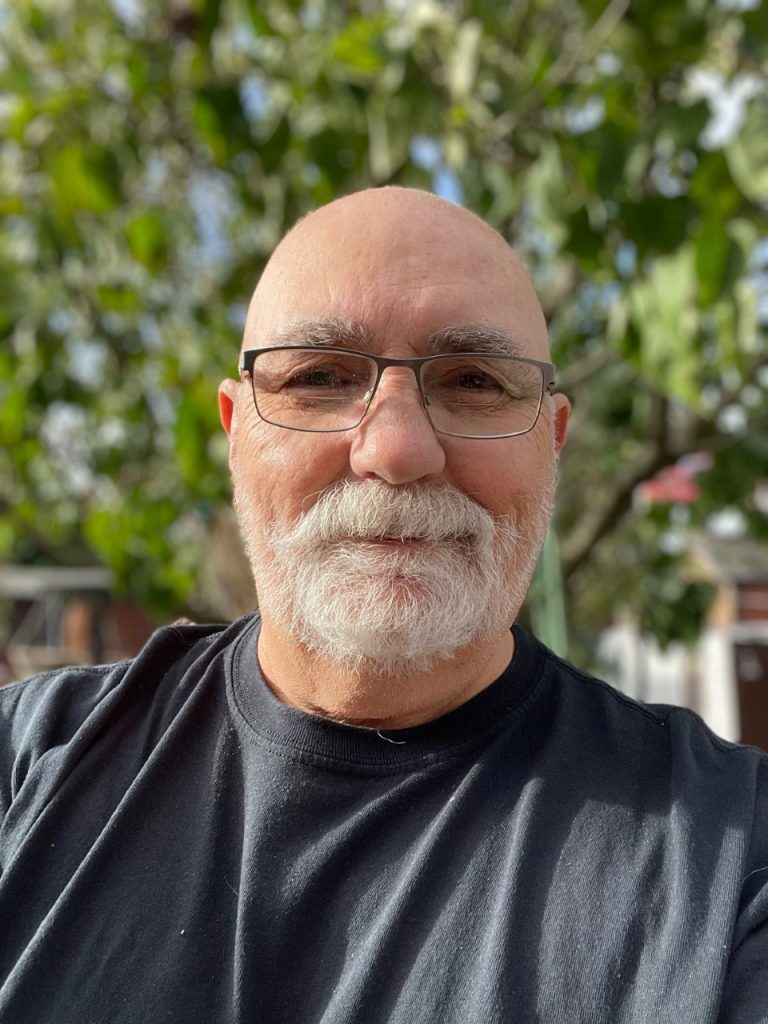
A profile image of Dale Rockell.

Dale Rockell is a photographer, blogger and Airing Pain listener who lives with fibromyalgia.

As someone living with Fibromyalgia, I have an active interest in learning to live better despite chronic pain. I welcome each episode of Airing Pain, hosting experts in pain management and research, conversations with others living with pain, and how the overall approach to supporting those living with chronic pain may develop. Presenter Paul Evans also lives with chronic pain, and this brings a strong element of understanding and personal experience to the interviews.

Exploring inequalities

It won’t be news to those living with chronic pain that there are inequalities in support and understanding across the UK health care sector, which still exist in 2024. We must be grateful that research is able to pinpoint this, and that Airing Pain attend events to speak with those undertaking such important work and bring it to the attention of a wider audience. Many may have experienced inequality in their care firsthand, I have certainly experienced the disbelief and reluctance of medical professionals when trying to discuss my challenges with Fibromyalgia.

Musculoskeletal pain care

In episode 142 of Airing Pain, Paul investigates how societal inequalities in gender, ethnicity, disability and locality, impacts access to consistent levels of care for pain patients. While the episode and research discussed is looking at care for musculoskeletal pain, the outcomes, we would hope, would create improvements for other chronic pain support. With high-quality reporting and production style, the conversations highlight the shortfalls in support from GPs to Pain Clinics, and across all medical professions that may interact with pain patients.

Professor Jonathan Hill presents research that paints a picture of how diverse and significant inequalities, and even discrimination towards those with pain can be, based on the above factors. He also discusses the underlying causes and possible solutions; from upskilling requirements at GP practices to taking time to listen to what matters to

patients, with empathy and understanding. Dr Hill also identifies that there needs to be a level of care for pain patients more akin to other conditions like diabetes, where patients receive structured education about their condition and experiences, and ongoing support to manage and live with chronic pain.

Discussing stigma and cultural differences

Another key point for me was Dr Whitney Scott highlighting that stigma of one’s condition, enabled by societal and cultural narratives, can lead to an internal stigma of self and feeling invalidated by others.

Dr Ama Kissi discusses her research into why education is essential in how cultural differences affect how pain may be expressed by patients and why racial biases influence how this information is interpreted. She also shares her personal experience in this area, allowing the listener to relate to her and what is being discussed.

Putting findings into practice

While those living with pain will welcome insights into research being undertaken in these areas (and be extremely thankful to Airing Pain for bringing them to wider attention!) they will also be wondering how such improvements would be rolled out through the medical community, given the current extreme pressure to deliver services. The episode highlights that while the UK health sector is struggling to provide support to pain patients, digital solutions may provide opportunities in cost and time efficiency.

It’s vital that Pain Concern, The British Pain Society and other pain organisations continue to ask these key questions and bring to light the individuals researching, presenting and proposing avenues to educate and improve the support provided to all of us living with chronic pain, as well as the knowledge of medical professionals.

Importance of advocacy

I am someone who has felt driven to engage in advocacy with the Fibromyalgia community and have become increasingly encouraged to be vocal for men with chronic pain, I have found that raising awareness and understanding of pain issues is an uphill challenge, and mostly confined within our communities.

This episode emphasises chronic pain is a medical condition that is overshadowed by other conditions in terms of research and improvement in support available, and in some cases by outdated beliefs and attitudes. Airing Pain, Pain Concern, and The British Pain Society understand this, the least those of us living with pain can do is take a listen. We must learn to better advocate for ourselves from the information provided, share episodes with our online communities, contacts in medical professions and loved ones, increase awareness, and hopefully improve our own quality of life.

Peer Support. Join the community

“Having chronic pain is very lonely.”

Join the community

Subscribe to Pain Matters

Everything you need to know about how to live with chronic pain

Subscribe


In pain? Don’t understand what’s happening?

“Having someone to help you prepare for your life through pain”

Our Pain Education Sessions

Fundraise for Pain Concern

Help us to help others

Fundraise


Living with chronic pain can be a heavy burden. Indeed, people with chronic pain face double the risk of death by suicide compared to individuals without pain. And so it is vitally important to identify those at risk in order to get them the right help and support.

Warwick University, one of our partners, is a key contributor to chronic pain research. They’ve explored factors contributing to suicide risk in chronic pain patients and pinpointed “mental defeat” as a potential predictor.

Mental defeat can occur when individuals with chronic pain view their pain as an ‘enemy’ which takes over their life and removes their autonomy and identity. By identifying it as a prospective predictor of suicide risk, it can enable health professionals to intervene before a crisis occurs.

The downloadable poster below outlines the findings from this research, if you have been affected by this topic, help is available from the NHS.

Peer Support. Join the community

“Having chronic pain is very lonely.”

Join the community

Subscribe to Pain Matters

Everything you need to know about how to live with chronic pain

Subscribe


In pain? Don’t understand what’s happening?

“Having someone to help you prepare for your life through pain”

Our Pain Education Sessions

Fundraise for Pain Concern

Help us to help others

Fundraise


A mid-shot of Beth, looking at the camera with one hand under her chin.

Narrated and introduced by Beth Evans, editor of Pain Matters.

First published in Pain Matters 85.

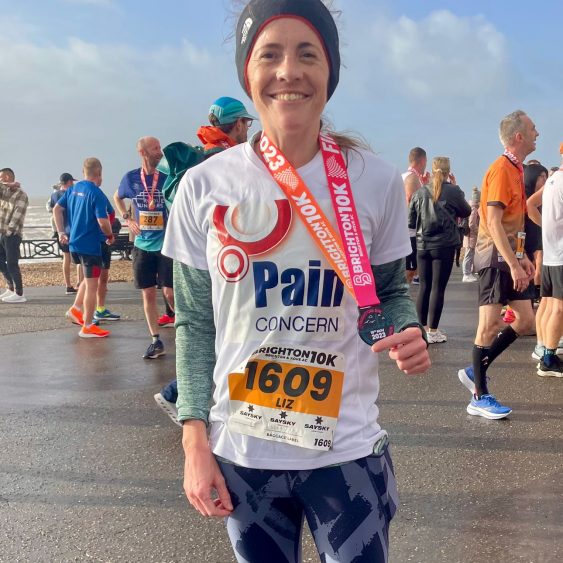
In November of last year, Liz, 33, ran the Brighton 10k to fundraise for Pain Concern. She was inspired to do so because of her friendship with Vicki, 33 an office administrator for Pain Concern who has lived with persistent pain for many years.

I sat down with the two of them to chat about how the run, the supportive nature of friendship and what Liz doing the run meant to the two of them.

Beth: How long have you guys been friends for? How did you meet?

Liz: We were discussing this. We’re like, how long has it been? We met in second year of university which would have been 13 or 14 years ago now, which seems mad that we’ve known each other that long! We met through some friends of friends, and we all ended up living together in our third year. We kept in touch over the years after we graduated.

B: What university did you both go to?

Vicki: University of Nottingham.

Liz: Yeah, this is the clever one, she did maths!

B: So you’ve known each other a long time then?

V: Yeah…and many more to come.

B: When did this journey begin? When did you start having these conversations and how did it manifest into running a fundraising 10k for Pain Concern?

L: I’ve been doing a bit of running since having Jake just to get back into physical fitness and it’s good for my mental health. I’ve been talking to Vicki throughout her volunteering at Pain Concern and then more recently having a role there and appreciating how important it is for Pain Concern to continue doing what it does. I thought there’s a 10K that I can do to sort of challenge myself and give me something to work towards, but I can also do what I can to try and help Pain Concern at the same time and raise some money.

B: How do you both feel on the run up (pun intended) to the 10k? What are your hopes, any dreads?

L: The dreads one is easy because it’s November and I’m going to be running along Brighton sea front and at the moment we’ve got that Storm Ciarán here. So I’m really worried it’s going to shut it down with rain or it’s just really windy and I’ll be running into the wind, which won’t be fun but hopefully I can raise some good amount of money which will be useful for Pain Concern. I’m just hopeful that I can finish and in a good time as well.

V: I’m feeling excited for this because I know that she enjoys running and it’s great that she’s getting back into something that she’s enjoying. And I think about the training, so recently going from a 5K to training to a 10K, I think that’s great.

B: How do you both feel about it in terms of supporting Pain Concern?

V: Liz is great fun and it just generally shows how much of a supportive friend she is. The fact that she’s willing to do it. But if I’m honest, it doesn’t surprise me because I know she’s amazing. But yeah, very grateful.

L: Yeah, I feel quite nervous coming up to a race. But on the day, when you’re running and if you’re doing it for a good reason, you can think about that as you’re going along and it sort of stretches you from the “ooh, I can’t breathe!” to the “yeah, there’s a good reason that I’m doing this.” That’ll get me through the finish line.

B: What can you tell us about your journey with pain, Vicki?

V: So my pain began literally overnight 24/7 in 2013. I had many years where I’d seen various different specialists but didn’t have a diagnosis; I had a lot of experience of healthcare professionals disbelieving me and making me feel like it was in my head. At one point I was actually referred to psychiatry but was discharged from them immediately. They said it wasn’t the right place to be.

Over the years I was diagnosed with fibromyalgia and endometriosis. I’ve had a few surgeries for endometriosis and two years ago I had a hysterectomy for a condition called adenomyosis.

It was a long recovery but since then, working on self-management and then therapy to help with the mental health side of things. I’ve accepted the pain and through accepting it, that’s helped me move on in life and get back into sort of, I guess what you would call a more “standard life”; working and not everything being affected by pain. Difficulty leaving the house, I don’t have that anymore. I feel like I don’t see pain as my identification anymore, which I did before.

L: I’d like to add to that because of my perspective, living with Vicki at university and knowing Vicki then. We had a good time; we would go out and we would drink and dance. And then I remember back in 2013 when she started getting the first symptoms and I think you were saying you got pain in your hands.

Then sort of gradually seeing it; her telling me about it progressing and you can’t really do anything to help and it just gradually getting worse. And then we’d be talking, and she’d be saying how she’s been going back and forth to specialists and GPs and it would be a very long and frustrating process and you can’t do anything.

We would try and meet up near Sheffield and it would be “how’s your pain today, Vicki? How are you feeling?” And it may be that we don’t meet today, we’ll catch up another time and then if we could meet up, it was really difficult to see Vicki not being able to do much because the pain was so bad that she just needed to sit down, and that was quite upsetting as a friend watching her go through that.

It’s been really great to see her gradually, like she said, getting her life back on track and back together and now seeing her being able to do things, go to the theatre and come and visit us in Brighton. That’s been really nice. It’s been a long journey for her and I think if I was in that situation, I don’t think I would have been as resilient and as strong as she has and as positive.

V: That’s really kind Liz. I’m not just saying that you honestly did help. I always find as well as the support you’re fun and upbeat, finding humour. For me to see the funny side of things has really helped. I think humour is a good, well at least for me, coping mechanism.

B: If you could be at the finish line with Liz, what would you say as she crosses that line?

V: Well, other than the obvious of well done and thanks for raising money for Pain Concern to just say thank you generally, she’s helped me a lot living with pain. I’m in a lot of a better position now in terms of self-management and being back in work and exercising, but just generally throughout the years when I’ve had a tough time, often with pain, you end up losing friendship.

So, for example, you might not be able to attend events, so people stop inviting you and you just generally lose touch. But that’s not been the case at all with Liz. She’s always been really understanding and supportive. So, I just wanted to show my appreciation to her because I really do value it.

L: Ooh, that’s lovely. Thank you.

Liz completed her run and raised £550 for Pain Concern – if you’ve been inspired by Liz and Vicki’s story, please consider fundraising or donating to Pain Concern:

Peer Support. Join the community

“Having chronic pain is very lonely.”

Join the community

Subscribe to Pain Matters

Everything you need to know about how to live with chronic pain

Subscribe


In pain? Don’t understand what’s happening?

“Having someone to help you prepare for your life through pain”

Our Pain Education Sessions

Fundraise for Pain Concern

Help us to help others

Fundraise


Pete Moore

Senior Trainer in the NHS Expert Patient Programme and Pain Champion

A free interactive resource developed using cutting-edge technology to help millions living with persistent pain has been launched in collaboration with Teesside University.

AI Pete: Interactive Support for Persistent Pain

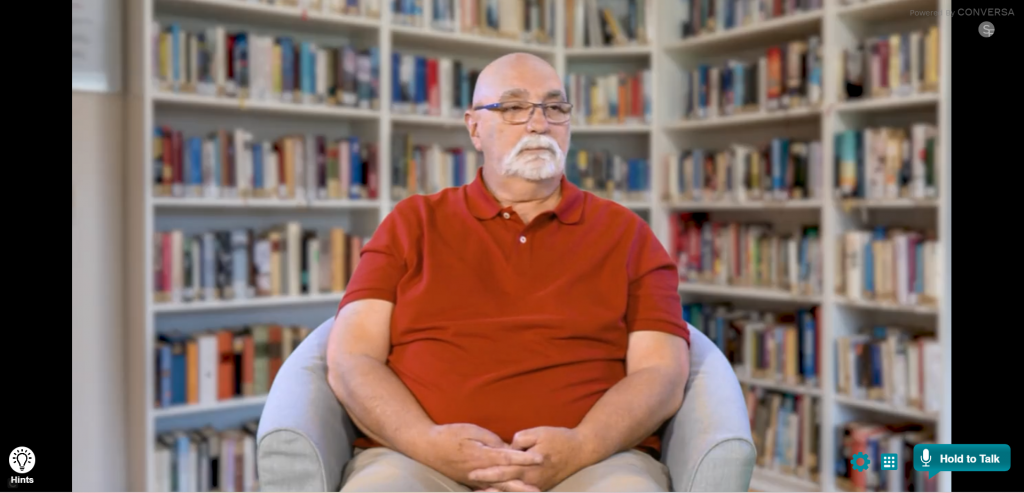
Academics from Teesside University’s Centre for Rehabilitation worked alongside artificial intelligence (AI) specialist StoryFile to develop a fully interactive digital version of internationally renowned pain management expert Pete Moore.

Described by StoryFile as a ‘conversational video,’ AI Pete can interact with viewers, answer questions about persistent pain and how it can be managed, and share his first-hand experiences of living with it.

Living with persistent pain can feel very isolating, but this resource provides around-the-clock access to information, advice and support whenever it is needed, and that is a game changer.

Pete Moore
Trained with Over 300 Questions

Pete was filmed answering over 300 questions in the rigorous interview stage of the development process. The AI recognizes questions from viewers and plays the relevant response in real time, as in an ordinary discussion.

It has the potential to help millions of people living with persistent pain to access support, discover new pain management techniques, and improve their quality of life.

Pete’s Personal Journey

Pete, 69, from Essex, worked as a Senior Trainer in the NHS Expert Patient Programme. He has been living with persistent pain for more than 20 years and was named a Pain Champion UK in recognition of his efforts to drive positive change.

AI Pete: A Game-Changing Resource

“I’m fed up with talking about my pain,” Pete smiled. “Now AI Pete can do it for me. Living with persistent pain can feel very isolating, but this resource provides around-the-clock access to information, advice and support whenever it is needed, and that is a game changer. I know how much a tool like this would have helped me back in the day, so I’m incredibly proud of what we have achieved.”

Pete joins Star Trek’s William Shatner, a NASA astronaut, and Holocaust survivors, who have all used StoryFile to record their experiences and leave a legacy.

Integration into the Pain Toolkit

The project has been incorporated into the Pain Toolkit, a resource developed by Pete with useful guidance around persistent pain and self-management used worldwide by patients and medical professionals alike.

People can ask AI Pete to explain more about the different tools in the Pain Toolkit, which include patience, planning, relaxation, and exercise.

Empowering Through Cutting-Edge Technology

Denis Martin, Professor of Rehabilitation and Director of the Centre for Rehabilitation at Teesside University, who led the project, said:

“Teesside University is committed to transforming lives and leads by example when it comes to showing how innovative technologies can be applied to tackling real-world issues.”

“That is exactly what we are doing through this groundbreaking project. There are millions of people out there with persistent pain who will be able to take control of that aspect of their lives by engaging in a conversation like never before. “

“It would be lovely for each and every one of them to have personal contact with Pete, but it is not feasible. So, we’re using cutting-edge technology to find a way to bring Pete and his expert advice on self-management techniques to them.”

AI Pete is an older man, sitting in a comfortable chair in front of a full book case. He is casually dressed wearing a dark orange, short-sleeved polo shirt with light-coloured trousers. He has a short, silver, well-trimmed beard and is wearing glasses.
AI Pete via Storyfile
Importance of Lived Experiences

“While it is very important for patients to get guidance and information from medical professionals, we acknowledge the undeniable benefits which they get from hearing from those with lived experiences of persistent pain as well. That’s where AI Pete comes in.”

Pete’s Perspective on Self-Management

Pete added: “Self-management is a partnership between a healthcare worker and patient, and it can be hugely beneficial. “But healthcare professionals aren’t often given the opportunity to focus on the idea of self-management during their training. This new resource and the Pain Toolkit are raising awareness around the positive potential of self-management in all aspects of healthcare. “The University has been incredibly supportive in the development of this project and the enhancement of the Pain Toolkit. I’ve never had so much support from any other institution.”

Leadership by Teesside University Team

Professor Martin worked with fellow Teesside University academics Professor Cormac Ryan, Dr Sophie Suri and Dr Andrew Graham on the project.

Peer Support. Join the community

“Having chronic pain is very lonely.”

Join the community

Subscribe to Pain Matters

Everything you need to know about how to live with chronic pain

Subscribe


In pain? Don’t understand what’s happening?

“Having someone to help you prepare for your life through pain”

Our Pain Education Sessions

Fundraise for Pain Concern

Help us to help others

Fundraise


1 5 6 7 8 9 49