Looking into one of the most globally prevalent types of pain, back pain, and exploring different cultural attitudes towards pain.
This edition of Airing Pain was created in association with the International Association for the Study of Pain (IASP) and has been funded by the Plum Trust.
Back pain is one of the most common types of pain that people report. It can arise due to any number of causative factors and can occur in any part of the back. Lower back pain and Sciatica are particularly common and affect approximately 577 million people globally.
In this episode of Airing Pain we have collaborated with the International Association for the Study of Pain (IASP) who are dedicating their global year 2021 to back pain. 2021 Global Year About Back Pain – IASP (iasp-pain.org) We also dedicate a portion of the episode to useful pain management advice that will benefit anybody living with pain, including those with back pain.
Issues covered in this programme include:pain from a global perspective, pain in developing countries, Global Alliance of Partners for Pain Advocacy (GAPPA), chronic condition management, back pain, IASP Global Year about Back Pain, self-management approaches, physiotherapy, therapeutic exercise, pain in rural areas, physical strategies, pharmaceutical strategies, psychological strategies, the ‘3 P Method’, masking pain, pain psychology.
Time Stamps:
2:00 – Pain Patient Advocate Mary Wing from GAPPA speaks: what is GAPPA?
5:25 – IASP Global Year about Back Pain.
6:20 – Physiotherapist Otieno Martin Ong’wen speaks: global attitudes towards pain and therapeutic exercise.
14:00 – Clinical Research Project Assistant Vina Mohabir speaks: Living with long-term pain and attending pain clinics and the ‘3 P Method’.
19:31 – Otieno Martin Ong’wen speaks: on fostering patient empowerment.
22:05 – Vina Mohabir speaks: on communicating your pain and masking pain.
23: 55 – Mary Wing speaks: on her experience with pain, pain psychology and pain management courses.
26:46 – Otieno Martin Ong’wen speaks: on how different cultural approaches impact psychological therapies for the treatment of pain and therapeutic exercise.
39:56 – Final words from Vina Mohabir.
Contributors:
Mary Wing, Pain Patient Advocate, Global Alliance of Partners for Pain Advocacy (GAPPA), Australia.
Otieno Martin Ong’wen, Orthopedic Manual Therapist, Movement Dysfunction Specialist, Physiotherapist, Afyafrica Orthopedic Services, Nairobi.
Vina Mohabir, Clinical Research Project Assistant, The Hospital for Sick Children, Toronto.
This edition of Airing Pain was created in association with the International Association for the Study of Pain (IASP) and has been funded by the Plum Trust.
Back pain is one of the most common types of pain that people report. It can arise due to any number of causative factors and can occur in any part of the back. Lower back pain and Sciatica are particularly common and affect approximately 577 million people globally.
In this episode of Airing Pain we have collaborated with the International Association for the Study of Pain (IASP) who are dedicating their global year 2021 to back pain. 2021 Global Year About Back Pain – IASP (iasp-pain.org) We also dedicate a portion of the episode to useful pain management advice that will benefit anybody living with pain, including those with back pain.
Issues covered in this programme include:pain from a global perspective, pain in developing countries, Global Alliance of Partners for Pain Advocacy (GAPPA), chronic condition management, back pain, IASP Global Year about Back Pain, self-management approaches, physiotherapy, therapeutic exercise, pain in rural areas, physical strategies, pharmaceutical strategies, psychological strategies, the ‘3 P Method’, masking pain, pain psychology.
This is Airing Pain, a programme brought to you by Pain Concern, the UK charity providing information and support for those of us living with pain, and for those who care for us.
I’m Paul Evans and this edition of Airing Pain has been funded by the Plum Trust.
Chronic Pain has no geographical boundaries, so this edition of Airing Pain is truly a global effort.
Vina Mohabir: It’s not just the pain that we cope with, it’s how it impacts our entire life, how it impacts our relationships, our careers, our energy levels, our sleep. It impacts everything.
Otieno Martin Ong’wen: In Africa, and in Kenya, if you look at our education system, it’s more or less the old British system of education where, ‘What I say is rule of thumb, you need to do this.’ There’s not a lot of empowerment in our patients to self-care, or self-manage themselves.
Evans: The International Association for the Study of Pain, IASP, brings together scientists, clinicians, health-care providers, and policymakers across the globe to share experience, knowledge and best practice in pain management. And if you think there’s one missing component to that list of professionals, that is, the millions of us across the globe who live with chronic or persistent pain, under IASP’s umbrella is GAPPA, another acronym I’m afraid, for the Global Alliance of Partners for Pain Advocacy.
Mary Wing in Adelaide, Australia, is a peer educator and patient advocate who’s lived with neuropathic pain for many years. She holds a Post Graduate Diploma in Chronic Condition Management and facilitates chronic condition self-management programmes locally and online in America and Canada. As well as sitting on numerous chronic pain policy panels at state and national levels, she’s a member of the international GAPPA taskforce.
Mary Wing: GAPPA started, in a very small way, in Boston in 2018 at their World Congress, and it expanded in 2019 to twenty-one members. Some of the people are what I call, ‘Plain patients,’ like me [laughs]. Some people are health professionals who also have pain and some are researchers who also have pain. They’re trying to incorporate the patient voice into research and make sure that there’s always a patient voice in everything, and hoping that the rest of the world follows suit. It makes a huge difference. I think they’ve done some studies and they’ve found out that when they involve patients in the planning of research projects and the conducting of [them] as well, they find they get a different result. And interestingly, a lady, a researcher from one of their universities here, asked me last year if I’d go in there and help her with some questions that she was organising for a research programme she was doing. When I got in there-, I don’t know how many you would have filled out, Paul, but I have filled out numerous research projects and often you get to one and you just don’t have an answer for it. And you think, ‘Now, if that wording had been slightly different, I could answer that.’ So, it was very interesting. We went through that and she quite happily changed some of the wording. I had someone else coming in after me and I’ve no doubt that he did the same. So, that’s before they’ve even got started and, you know, if you’re going to ask questions that are more user-friendly, obviously you’re going to get a better outcome. And that’s just one small part of the research before you really get going. The last thing you want to be is the patient that they have to have. You want to be included because they can see the value in having patients included, not because they have to include you.
It’s the same with the congress, the IASP gives us things to do at the conferences [such as] presentations, [a] lived experience area. They’re also trying to make sure that other chapters that they have have patient involvement in their areas as well so that this is a, sort of, ongoing thing and it starts to grow. Instead of being a novelty for a year or two, they want it to keep going.
Evans: IASP, the International Association for the Study of Pain. How important is this international link up of people with pain?
Wing: I think it’s very important because we’ve had, sort of, pockets of people who’ve been keen to include patients in activities, and to have it on a global level means that so many different countries know about it and are involved in it. You know, we have a researcher from Queensland and another one from New South Wales, so we’ve got three people from Australia there, and so there are other countries that have one or two people as well. I think it’s really good to hear other people’s perspectives on things from different countries. It’s amazing to be able to discuss things with other people on that global scale. I’ve found it fascinating. Mind you, you’d be surprised how similar the problems are from country to country. But I don’t think we can really begin to complain when you start to think about developing countries and the major problems that they have accessing pain care.
Evans: That’s Mary Wing in Australia.
The International Association for the Study of Pain has designated 2021-, that’s the year we’re recording this programme-, as its Global Year About Back Pain. Do go to their website at https://www.iasp-pain.org/GlobalYear where you’ll find excellent articles for managing back pain, including Mary’s article, Back Pain: Myths versus Reality.
According to the World Health Organisation, ‘low back pain is the single biggest cause of years lived with disability worldwide,’ occurring, ‘in similar proportions in all cultures.’ So, in this edition of Airing Pain we’ll be crossing continents and cultures to focus on universally accepted self-management approaches, not just to back pain, but to all chronic pain conditions.
Otieno Martin Ong’wen is a physiotherapist and educator in Nairobi, the capital of Kenya, in East Africa. He’s a member of the Kenya Society of Physiotherapists and the Physiotherapy council of Kenya as well as the Physiotherapy ambassador for Kenya in the global Physical Therapy project. He’s [a] mentor to students and graduates across Kenya and a clinical instructor at the Kenya Medical Training College. He’s also a champion for the advocacy of exercise as medicine.
Ong’wen: We pretty much have the same musculoskeletal problems. You know, lower back pain is very common in our out-patient and in-patient clinics. We have patients with rheumatoid arthritis, osteoarthritis, all those musculoskeletal conditions that we do know of. Most of the out-patients are usually just musculoskeletal conditions from foot and ankle pain, knee pain, hip pain, shoulder pain as well. Physiotherapists are a lot more generalist in Kenya, so in the in-patient hospitals you get to see stroke patients. They’re in the ICU department, they’re in the orthopaedic department, where we’ve had people with road traffic accidents. It’s the same problems [as] we [do] have all over the world.
Evans: Tell me about the people you teach.
Ong’wen: I started teaching five years ago. It was more or less like a baptism of fire. I got selected as one of the trainers who were being trained in a programme that was run by the Jackson’s Foundation, so it was almost like a residency programme in orthopaedic manual therapy where we had different lecturers from the US come to Kenya to teach and advance skills and physiotherapy skills. I started teaching because I was enjoying every aspect of being part of that class, so I thought the best way that I could enhance myself, from a knowledge base, was to teach others. I started teaching physiotherapists mostly, so whatever I learnt in class, whatever I learnt either from a podcast or out of my listening to other physiotherapists from different parts of the world, reading research, I thought that would best fill the gap. Because there is a very big gap, in terms of knowledge, of evidence-based medicine’s latest research in Africa. So, we thought, ‘We could do that.’ I teach mostly physiotherapists but over the years we’ve been teaching all sorts of other clinicians; nurses, clinical officers, doctors who attend some of the CMEs that we provide in different rural areas. We teach patients as well. Whenever we go for the medical counts in the rural areas, we tend to have an educative session for the patients, mostly targeted towards non-communicable diseases where it’s more or less a preventative approach rather than a curative approach. Those are my students; patients, medical professionals, and the Kenyan population in general.
Evans: Let’s start with the professionals. You mentioned there’s a gap, or there was a gap, in knowledge.
Ong’wen: If you look at the model of training that we [had] for physiotherapists, it was pretty much 100 years old and the curriculum kind of stayed that way. It was more or less very heavily targeted towards the bio-medical aspect rather than the bio-social aspect, so a lot of the information in relation to psychology, social aspects and social determinants of pain, as well as other musculoskeletal conditions, were missing from our training. For a long time, I felt that we were mostly technicians because you got a referral from a doctor and you were told to do TENS, to provide a heat pack, to provide an ultrasound. [Those were the only things] physiotherapists used to do. The element of getting to talk to your patient to understand what brings them into the clinic, or the element of having a clinical reasoning base and doing a proper assessment on your patient was not there. [You] were handed over a sheet by the doctor and that sheet had instructions. So, the patient would hand you the sheet and say, ‘The doctor told me I have osteoarthritis and these are the things that you need to do for me to get better.’ A lot of the physiotherapists who finished school did not bother to go back to school anymore. None of them were participating really in aspects of continuous medical education. So, there was a gap. And there’s still a very big gap in and around East Africa that we are trying to fill by either providing online CMEs-, because right now, the world has kind of, you know, moved from in-contact sessions to an online platform where I feel there’s access to a lot more people, especially in the urban areas. It’s a little bit of a different story in the rural areas.
Evans: You talk about that patient-doctor relationship, it’s a doctor’s job to prescribe how you get better. How do they take the business of giving a patient his or her own voice?
Ong’wen: A lot of the time, in Africa, and in Kenya, doctors like to take a lot more of an instructor role, or a teacher role. If you look at our education system, it’s more or less the old British system where, ‘What I say is rule of thumb. You need to do this.’ There’s not a lot of empowerment in our patients to self-care or self-manage themselves. A lot of times I’ve had patients who’ve had rheumatoid arthritis, and rheumatoid arthritis, for example, is a condition that patients really need to know how to self-manage. But you have a patient who is diagnosed with rheumatoid arthritis and they’re very dependent on their doctor. They come to you and they don’t have any education whatsoever, [don’t know] what rheumatoid arthritis really is and how to best manage it. Most of the educated patients tend to navigate their own way in terms of understanding what the problem is. But I can tell you that a lot of times, since physiotherapists spend a good amount of time with patients, patients get a lot more education from physiotherapists and nurses because that is where they spend a lot of their time together. So, if you get a good physiotherapist who’s really keen on looking at the evidence, who’s really keen on finding out information about, you know, how certain diseases are managed, then you get a lot of better outcomes as a patient compared to just any other physiotherapist who’s finished school, they show up at work and that’s it. There’s not a lot of information out there that is provided to patients, that can help them grow, or that can help them self-navigate or find out [how] to help themselves. So there is a lot of misinformation, you know, because they want to go onto Google, for example. You get information but you don’t get the best answers out of Google.
Evans: Otieno Martin Ong’wen from Nairobi in Kenya. So, from Africa to Canada.
Vina Mohabir works in patient engagement and pain research at The Hospital for Sick Children in Toronto, Canada. She’s lived with chronic pain since her teens and has been through two pain management programmes, one for adults and a paediatric or ‘sick kids’ one when she was in her teens.
Mohabir: The Sick Kids chronic pain clinic really focused on using the ‘Three P’ method to help with pain management. So, physical strategies, pharmaceutical strategies, and psychological strategies. The pharmaceutical strategies allowed me to have enough control over my pain that I could pursue the psychological and the physical strategies. The psychological shift was probably the biggest change. Coming to the realisation that I was fifteen and I had no idea what the rest of my life would look like with pain, but coming to the realisation I could make an impact on my pain, and I didn’t have to let it take away who I am and who I wanted to be, completely changed things for me. Realising that chronic pain is its own condition and that, although a lot of times I heard from doctors, ‘We can’t see anything physically wrong with you,’ knowing that there were neurological changes in my brain and feeling validated from that almost, that there were things happening, it was definitely this big shift in my mindset about how pain could play out in the rest of my life.
Originally, when I was first referred, I was probably in one of the deepest depressions of my life because I really thought I was insane; I really thought that there was no logical explanation for what I was feeling and maybe something in my brain went wrong and I was imagining the whole thing. You know, you question everything around you. So, all of a sudden, being able to trust myself again was so powerful. Instead of looking at life as, like, a five-year plan, or a ten-year plan, or whatever that may be, the way you think before you have an illness or you have pain, learning to shift my thinking into what today looks like and surviving the day, the next day, and the day after that, recognising smaller changes while, you know, my pain was constant, it wasn’t stagnant. It was dynamic, it was changing day to day, and recognising that experience… I had a physio tell me-, and she was brilliant in my recovery process-, she told me, ‘You know Vina, part of changing your mindset is recognising that yes, your pain goes up, but it also comes down. You have the power to help calm down your body enough to go back down to your baseline level.’
Evans: So how do you do that?
Mohabir: That’s a great question. So, this was in 2010. I think mindfulness and meditation was making its way into healthcare. But it wasn’t, you know, part of that traditional CBT process that you would normally have. I began, actually, with hypnotherapy, funnily enough. So, I had my psychiatrist, who had a wonderful accent like you, kind of guide me through [these, like] getting down into a state of relaxation and being able to relax other parts of my body, and almost, like, find a vacation spot in my body that didn’t hurt as much as the rest. Having a mental break by just focusing on that spot. So, I began with that hypnotherapy element. Then we shifted more into meditation and mindfulness, and mindfulness CBT, and using things like acceptance commitment therapy as well, and that’s really where I found peace again. You’re so uncomfortable in your body, like, all the time. It’s so hard for people to understand what it’s like, I mean, you really feel like you want to crawl out of your skin at every point and you’d rather be anywhere else. But it taught me that I can exist in my body and have it be a comfortable experience. I can be in pain and I can also be comfortable, and I can also find joy and relaxation and all these other things. Being aware of that and being aware of these, like, changing bodily sensations, gave me hope and it helped me stop existing in an all-or-nothing plain. It really helped me exist in my new reality which was that it wasn’t pain or no pain, but it was really finding the techniques that gave me a level of power over what I was experiencing.
Evans: Helping patients get the ‘power’ Vina talks about, to have a role in the management, the self-management of their pain, is not always an easy concept for the healthcare professionals to get over to their patients.
Otieno Martin Ong’wen:
Ong’wen: I tend to try and engage my patients in a manner that makes them feel and own this. I tell them, ‘Consider me as a teacher who’s helping you through your journey, not as an instructor. You only have a limited amount of time with me. But what happens when I am not around?’ So, there is usually-, there’s a book I read when I was, you know, just new in the medical field, of where there is no doctor. This is a conversation that I usually tend to bring to the table a lot with patients because I’ve had instances where I ask my patients, ‘Can I do a physical examination on you?’ Or, ‘Can I [even] take a proper history from you?’ And the patient tells me, ‘How do you not know? The doctor already gave you a prescription. You should know.’ You know, you’re considered a magician or a god of sorts, like, ‘You already know from seeing me. You should already know what to do to me [for me] to get better.’ But of course, I try to bring in conversations of, you know, the right foods to eat, simple exercises and measures to help them. So, it’s usually difficult, especially with patients who don’t have education, like higher education levels. It’s difficult, but since I spend a lot more time with them, it’s a matter of getting them to trust me enough, but also getting them to trust themselves enough with their care to the extent that they change. And you know, changing belief systems is one of the most difficult processes. As a clinician myself, changing my own beliefs is not easy, so trying to really put emphasis on a self-management approach on patients is usually not the easiest way to approach things. But, it’s a collaboration of sorts. I try to show them, I ask them, you know, ‘Can you read?’ I try to translate, depending on the languages that they speak. A lot of the time I tend to involve the family as well. So, you might get that there’s a generation of Kenyans who did not get proper education, but whenever they come to the clinic I ask them, ‘Do you have children?’ and if the children are educated, I educate them to educate the patient in a language that they can understand.
Evans: Children teaching parents is an interesting turnaround but not confined to Africa. Vina Mohabir, in Toronto, again.
Mohabir: When I used to go the doctors my mom would come with me to an appointment. She’d say, ‘Show what the pain is doing to you. Don’t laugh. Don’t brush it off.’ It was a big issue because I learnt how to cope with my pain so well that I would go to the doctor’s, or I would see other healthcare professionals, and they’d be, like, ‘Oh she’s fine, she’s coping well.’ And then I’d go home and I’d be crying or, you know, I’d be in a lot of pain, and my mum was, like, ‘Now you’re not going to get help.’ But it shouldn’t matter that I can laugh and I can smile, and I can have consideration of other people. I can have manners and say, ‘How are you?’ and things like that. Pain doesn’t take away those things. It’s almost this idea of what a pain patient has to be, and I stopped doing that because I want them to know that yes, I can cope with my pain. But I can also live with a tremendous amount of pain and just because I’m coping well doesn’t mean that treatment should stop, or that I don’t deserve adequate medical care, or that I don’t deserve a referral to see somebody to help lower my pain. Just because I can cope with what I have doesn’t mean I should, and it doesn’t mean that I have to stop being myself either.
Evans: The visibility of pain-, do I look like I’m in the pain I say I’m in? Is it OK to smile, laugh even, what sort of message does that send? Many people living with pain will have experienced that dilemma, I certainly have. It’s also the case that when psychological therapy is recommended for what is obviously, well, obviously to you anyway, a physical problem, wires can get crossed.
Mary Wing.
Wing: I’d been told two things. One, that I would be better in twelve months, and then I was told that it was all my fault when I wasn’t. So, by the time it got to 2006, I was really in a dark place because every solitary person in the world that I knew was working, except for me, so I didn’t have anyone to catch up for a coffee or a lunch with, or to talk to on the phone. So, by the end of winter I was pretty down. But then in 2007 all these different things happened to me. I had a doctor who I see, who has nothing to do with pain management, who had been trying to see if he could come up with a solution for me. When he couldn’t, he said to me, ‘How would you feel about seeing a pain psychologist?’ I said, ‘Well, that’s okay with me, but why?’ And he said, ‘Because you’re so frightened.’ And I said, ‘Well, yes I am, actually.’ She was an amazing help.
I also had my eye on a postgraduate university course on chronic condition management that I wanted to study. I knew that I had to do something to distract myself because I was sitting there just wrapped up in this pain day in and day out, and I thought, ‘I like to study’, so I thought if I could study something-, it was distance [education] so it was online, so therefore I wouldn’t have to worry about, sort of, traipsing around massive university campuses. She encouraged me to apply for that, because I’d been too gutless to do that up until then, and once I applied, I got in and that kept me busy for a good two and a half years. That was really fantastic. I also attended a six-week self-management course for chronic conditions which was run, at the time, by a local not-for-profit here in Adelaide. Those three things together that year not only kept me very busy, but I noticed that my pain levels were much better at the end of it. I learned how to pace myself, I learned how to set goals, I learned how to do all those self-management techniques. Plus, I had the distraction of [university] and the psychologist to talk to if I needed her.
Evans: Tell me how the psychologist helped you.
Wing: She helped me to realise that pain doesn’t necessarily equal harm. She taught me to relax. That was the first thing that she taught me to do. She taught me self-hypnosis and gave me some recordings to listen to. She suggested I do that several times a day and I did, and it helped. When I got up in the morning, my pain levels would be a reasonable level. Then it would just, sort of, go up and up and up and by the evening I was just a mess. But, when I started to do all these other things, and in particular the relaxation, I found that the levels were going up and down more in the daytime. So, when it got to the evenings, it was actually much more pleasant for me and obviously then much easier to go to bed and get to sleep.
Evans: Mary Wing.
Now, how psychological therapy for chronic pain is broached depends very much on the patient’s culture.
Otieno Martin Ong’wen in Kenya.
Ong’wen: It’s actually considered a taboo to have mental health problems. When I was undergoing my training and we were talking about mental health screening tools, one of the questions on the mental health screening tool, which was the PHQ-9, was, ‘Are you depressed?’ That was the first question, and the second question was, ‘Are there things in life that you used to do that you don’t fancy doing anymore?’ The first question, when I tried it out in the clinic the first time[s], I got into so many problems with most of my patients because they were, like, ‘What makes you think, or what makes you decide that I am depressed?’ Then I was, like, ‘No, no, this is not me saying that you’re depressed. This is me trying to find out a little bit more about some of the psychology aspects of contributors [as] to why you’re in pain.’ So, I needed to figure out how best to ask that question because of the traditional aspect that you’re not supposed to be depressed, you’re supposed to be a man, you’re supposed to be strong, be a warrior. It’s not been an easy journey. It’s been a lot of learning on the way. And you know, sometimes it’s difficult to incorporate research that is considered evidence-based practice and considered the guidelines on how to manage certain aspects. Yet, the research did not include some of the cultural aspects of African communities. How do you go about some of those problems in terms of addressing them? It’s been a journey of really trying to pick what actually works, kind of like juggling in between trying to make my patients understand these approaches of therapy that could benefit them.
Evans: It’s a very difficult bridge to cross, isn’t it? Somebody might come in with back pain and you explain the role of the mind, the psychology, in pain. Because many patients, in the UK and probably everywhere else in the world, would come away from that conversation saying, ‘The doctor thinks I am mad. I am not. I have a bad back.’
Ong’wen: Yes, I would say me trying to highlight some of the social contributors to some of the symptoms that we feel has been a difficult journey for me. But the beauty of it is the patients, as they move on, and as they journey on, they tend to realise or pick up some of those determinants or contributors to their pain, or contributors to the symptoms of their pain. So, it’s usually a journey of patients, and [then] they come to that self-realisation and self-actualisation that there are certain things in the environment that are actually contributing to the symptoms that they have. And of course, I’ve run into so many problems with patients about patients telling other patients, or their doctors, that, ‘My physiotherapist said I was crazy.’ Because if you look at how a lot of the pain science was taught, it was, you know, ‘Pain is in the brain.’ You try going to tell an African that pain is in their brain. It’ll not go well. [laughs]
Evans: Well, the other thing is that you talk about exercise as medicine. Well, medicine is tablets.
Ong’wen: Yes, I try to really approach that topic in so many different ways. We do know the benefits of exercise and physical activity. I try even not to talk about exercise. I try to address it as physical activity and movement, so the patients get surprised that actually some simple movements can be solutions to [their] problem[s]. I usually tend to lean towards the African culture of movement. You know, Africans have been very keen at moving from one point to another, from the nomadic ways, us living in environments where we needed to walk from one point to another because there was no technology for us to have the luxury of sitting on a motorbike or sitting [in] a car. But if you look at technology, [and] everyday technology one way or another is designed to make work easier for us, but it also takes away a lot of the movement aspects of being human, right?
I try to encourage my patients to, you know, think about grandma. They use [a lot of the] grandparents as examples a lot in a clinical set-up. So I say, you know, ‘Grandma never needed to go to the hospital, and I guess these are the reasons why. First of all, she was very fit. She still cooks while squatting.’ You know, we have, like, a three stone kind of thing where you have one stone at the end, another stone, and a third stone, and you have wood put in between. The only way for you-, you can’t cook while standing, so you need to get into a squatting position to cook, or a kneeling position. I use examples of such movements to encourage that, because sometimes I ask my patient, ‘Is it possible for you to get in and out of a squat?’ Most of them realise that this is a movement [they] haven’t done in so many years, for example. Or it’s a movement that [they] only do when [they’re] in the rural areas because it’s a pit latrine. You don’t have the luxury of having a toilet but we’ve since developed to the extent that you find that in the rural areas. But also, since we are religious, I use a lot of religious examples. So, pick Elijah for example. Elijah used to walk from one point to the other. Moses had to go up Mount Sinai, which is some sort of serious physical activity and also, he needed to carry the stones back down. So, some simple examples from a religious perspective. And dance. Africans like to dance, from a traditional perspective. Dancing at weddings, dancing at marriages, dancing when [we] have certain ceremonies. I don’t tend to use the gym as an area where you are going to get all of your exercise as medicine. I use simple movements that we tend to do on a day-to-day basis. Once they get comfortable moving, I can start the discussion [on], ‘What do you feel about transitioning to a gym set-up? What do you feel about moving, or advancing or increasing, your levels of physical activity? But it’s difficult to convince patients, especially those who’ve never been to a physio, that movement can actually help you feel better.
Evans: I’m just looking at some of the conferences you’ve spoken to around the world. What do people outside Africa-, in America, in the UK, in Europe-, what can they learn from you in East Africa?
Ong’wen: Africans are very resilient people, and the pain culture in Africa is a little bit different, to the extent that sometimes it can be dangerous. You need to be strong no matter what. It’s a resilience culture, which is great. But when it so happens that you have a medical condition that is serious and needs immediate attention, for example, or needs to be looked into, it becomes problematic. Whenever we go to the rural areas, we ask patients, ‘Do you get hip pain?’ [They reply], ‘Why are you asking me that? It’s normal to have hip pain. It’s not a bother for me. Actually, it wasn’t even a bother for me until you asked about it.’ They want to come to the clinic when they cannot move anymore or when there’s actually too much pain. So, on a scale of zero to ten, it’s probably a twenty [laughs]. There’s the elemental resilience, but to what extent? What we can learn is-, and I don’t know whether this is a lack of access to immediate healthcare provision-, but in general, we tend to be very resilient in our journeys, or in our pain journeys. The beauty about it is, of course, our patients are going to move regardless because they don’t have a choice. In some ways you find that that movement in itself actually heals them of the pains that they had. This is not documented. There’s no research in and around that to say that because of this, then that. But I want to believe that the elements of resilience, and the elements of keeping [moving], are beneficial, but they can also be detrimental at the same time because maybe what we’ve transitioned [to] now is to try and teach patients that this looks like a red flag.
There are certain pains that are actually not normal pains. ‘It’s not that you’re bewitched, it’s not that you have some cultural connotation to it, but it sounds like this is cancerous pain,’ for example. So, we tend to teach our patients red flags so that they understand when to come to hospital, especially for the men. If you look at the population of men in Kenya who have some sort of cancer, they die early as compared to the females, because, first of all, they never really talk about it. Maybe it’s the cultural thing, to the extent that when you say you’re in pain you’re told, ‘Take it as a man. Brave it on. Warrior on.’ It’s too painful, and the man in you does not want to bother the rest of the family with a pain that [makes you look weak]. If that is the case, where do they go? I’ve tried on so many levels to encourage men to come out or speak about their pains, because maybe you getting to speak to somebody else or you getting to interact with somebody else who has the same problem makes that problem less of a burden than thinking that you’re in this alone. So, I like to go to patient gatherings and just sit there and listen to patients having [a] conversation.
There’s a group of cancer patients who are female. Whenever they meet, they’re talking, they’re reaching out to one another, they’re encouraging one another. They’re figuring out things, ‘Oh, how did you grow your hair? How did that happen? Your hair looks nice.’ There’s that interaction that makes you feel that [you’re] not in this alone. It makes you feel that [you’re] strong and we’re strong and there’s nurture, and there’s somebody I can reach out to. So, pick a group of men and, you know, tell them, ‘Let’s talk about prostate cancer.’ You can have up to ten minutes of silence before somebody says something. It’s a culture that-, I don’t know how long it will take to change it. I am also learning how to open up, to my friends for example, or even to my patients. Or even having open conversations and feeling vulnerable, or feeling weak, as a man myself. So I guess it’s going to be a journey that we get to understand with a lot more education, but also just understanding, or helping the men understand that we can also share our problems, and by sharing our problems it becomes easier, first of all, to really navigate, but it also becomes easier to understand that we are not in this alone.
Evans: Otieno Martin Ong’wen.
I’ll just need to remind you that whilst we in Pain Concern believe the information and opinions on Airing Pain are accurate and sound based on the best judgements available, you should always consult your health professionals on any matter relating to your health and wellbeing. They are the only people who know you and your circumstances and therefore the appropriate action to take on your behalf.
Do check out Pain Concern’s brand new shiny website at www.painconcern.org.uk where you can download all editions of Airing Pain and find a wealth of support and information material about living with and managing chronic pain.
The International Association for the Study of Pain and Global Alliance of Partners for Pain Advocacy Taskforce has a really good website that brings the latest scientific developments into simple language for the understanding of patients and the wider public at https://relief.news, very simple. And to remind you about the International Association for the Study of Pain Global Year about Backpain, it’s at https://www.iasp-pain.org/GlobalYear
Last words in this edition of Airing Pain go to Vina Mohabir in Canada.
Mohabir: There’s not one part of my life that is untouched by my pain. So, I would encourage anybody who doesn’t have pain, or doesn’t cope with pain, to just talk to the people they know who do. You just have to say, ‘How can I be a better support to you? What would make today easier for you?’
Contributors:
Mary Wing, Pain Patient Advocate, Global Alliance of Partners for Pain Advocacy (GAPPA), Australia.
Otieno Martin Ong’wen, Orthopaedic Manual Therapist, Movement Dysfunction Specialist, Physiotherapist, Afyafrica Orthopaedic Services, Nairobi.
Vina Mohabir, Clinical Research Project Assistant, The Hospital for Sick Children, Toronto.
Each year, Volunteers’ Week acknowledges and celebrates the contributions of volunteers in the community.
Pain Concern could not exist without the hard work and time put in by our dedicated team of volunteers. They are at the heart of everything we do from manning the helpline, to vital and time consuming research, supporting our editorial and production teams and creating impactful campaigns. Volunteers support us every single step of the way in producing materials for people with pain, those who care for them and healthcare professionals.
We have recruited many new volunteers since the start of 2021. Considering the uncertainty and anxiety of the past year or so, the response we have had from so many people willing to dedicate their free time to helping others is heartening.
So, a very warm welcome to those who recently joined us, and a huge ‘thank you’ to all of our volunteers for their compassionate, unwavering support. We appreciate all the time and hard work you put in and we think you’re all wonderful!
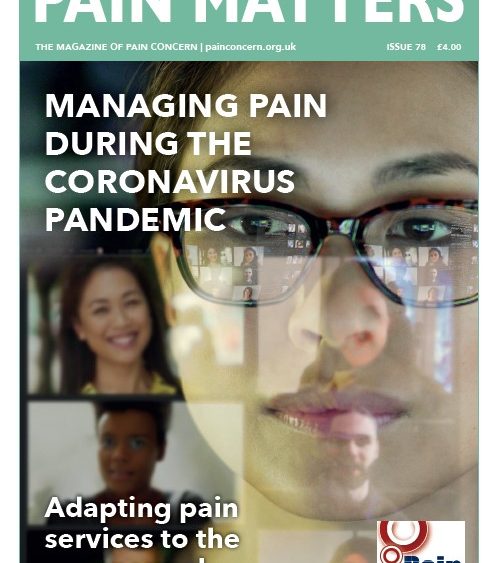
Inside issue 78: Our guest editors come from the North Bristol NHS Trust, where, in the past ten years, Nick Ambler and his team have tried hard to create a more personalised form of pain management and support. During the Covid-19 pandemic, this was obviously harder, but Nick wants to show our readers how they have managed to keep things moving and make ‘the best of difficult circumstances’. We also have updates from some other NHS pain services around the UK, on how they have adapted their services to continue providing care during Covid-19 and lockdown.
Also in issue 78, following on from Airing Pain programme 120 on osteoporosis, back in January 2020, Sarah Leyland from the Royal Osteoporosis Society, who contributed to that programme, gives us an overview of this so-called ‘silent disease’.
This issue of Pain Matterswas guest-edited by the Pain Clinic Team at the North Bristol NHS Trust, based at Southmead Hospital in Bristol.
Pain Concern know from calls and emails to our helpline that these new guidelines are causing distress and anxiety to people living with chronic pain. Whilst we welcome the guidance on collaborative working between patients and healthcare professionals, and are pleased that the guidelines support a patient-centred assessment and encourage clinicians to recognise that chronic primary pain can coexist with chronic secondary pain, we share the concerns raised by Blair Smith and Lesley Colvin, in their letter to the British Journal of General Practice of 2nd February, that “chronic pain has such an important impact on the lives of people who live with it that we need every tool available in our toolbox to help in its management. Now is not the time to reduce our options”.
In addition, Pain Concern broadly agrees with the statement from the Faculty of Pain Medicine, particularly the concerns that the way in which ICD-11 Classification of Disease has been used does not reflect clinical practice or the current research base. As we feel the guidance is based upon crafted-together evidence rather than scientifically-strong evidence, then to remove much of the current toolbox seems to be poor timing in our view.
This edition of Airing Pain has beenfunded by a grant from The RS Macdonald Charitable Trust and The Stafford Trust.
Do you, someone you care for or perhaps your patients, suffer from persistent burning or gnawing pain? Many don’t know that often, neuropathic pain presents as a burning sensation. Persistent pain can impact all areas of our lives. It can stop us from sleeping, working and pursuing the hobbies we enjoy. Unfortunately, sometimes the healthcare professionals we see about our pain are unaware of the multitude of pain management techniques we can adopt to try and minimise the impact pain has on our lives. Different types of pain are widely misunderstood and many of us don’t know much about the conditions that can cause them.
What do you think of when you think of Parkinson’s disease? Many would say a tremor or shaking limbs, but persistent pain can be one of the most debilitating symptoms of Parkinson’s disease. The fastest growing neurological condition in the world is poorly understood and pain is a major unmet need in those who live with it. Ground-breaking studies funded by the charity Parkinson’s UK are shedding new light on the relationship between Parkinson’s pain and neuropathic pain.
In this programme, Paul Evans speaks to Kirsty Bannister, a doctor of neuroscience at Kings College London, who discusses the role that ‘pain-blocking nerve pathways’ and psychological status play for those who experience chronic pain. We also hear from former primary school teacher Janet Kerr, who shares with us her own experience of dealing with Parkinson’s Pain and how she manages it with things like yoga and distraction techniques such as massage.
Issues covered in this programme include: Parkinson’s disease, insomnia and sleep clinics, burning and gnawing pain, pain signals, biomechanics, stress/psychological states and their impact on pain, analgesia, bradykinesia, gabapentin, pregabalin and managing chronic pain.
Paul Evans: This is Airing Pain, a programme brought to you by Pain Concern, the UK charity providing information and support for those of us living with pain and for those who care for us. I’m Paul Evans, and this edition of Airing Pain is funded by the RS MacDonald Charitable Trust and the Stafford Trust.
Janet Kerr: If I was to walk around with a grimace on my face of how I truly feel inside, I wouldn’t want to be with me. But I’m sitting here and the leg is shaking, but it’s also on fire.
Dr Kirsty Bannister: Constant pain is a poorly understood and a major unmet need in people with Parkinson’s disease.
Evans: The banner headline you read on the Parkinson’s UK website at parkinsons.org.uk is blunt. Parkinson’s disease is the fastest growing neurological condition in the world and currently there is no cure. But, and it’s a big but, we’re getting closer to major breakthroughs.
Bannister: This grant got awarded in November, so Ray and I celebrated as much as we could in lockdown because we really believe that this is going to be a project that is going to make a real difference.
Evans: Parkinson’s disease is a condition in which parts of the brain become progressively damaged over many years and I think what most people would associate with Parkinson’s disease is tremor, or uncontrolled shaking, of the limbs. Carol Vennard is Clinical Nurse Specialist in Parkinson’s Disease at the Queen Elizabeth University Hospital in Glasgow.
Carol Vennard: That is a misconception because I do an educational talk and what I have named it is, ‘All that tremors is not Parkinson’s, and Parkinson’s does not always tremor’. About a third, if not slightly more, of the patients do not have a tremor. It is one of the three signs but you often get patients who don’t have tremor at all. So that can make it difficult because often patients will go the GP and the GP will say, ‘Oh you’ve got a tremor, you might have Parkinson’s’. But it could be something else, so you always have to keep that in mind.
Evans: What are the other two signs?
Vennard: So, rigidity. Stiffness in muscles, and what we call bradykinesia which is slowness. And often if you ask them about it, they’re not really that aware. But I often use the analogy-, well, when we could go on holidays [laughs], people will often say to you, ‘Well, I noticed it two times of the year’. At Christmas-time, if it’s a woman, because when she’s gone to write the Christmas cards she’s noticed that her writing is a bit smaller, because we don’t write very much now and that is one of the times of the year when it becomes more apparent. Or the other time is, ‘We were on holiday’, and often people go to the same place on holiday, ‘and last year my husband/wife was able to keep up with me and this year they’re not’.
It’s sometimes something they’ve not done for a while that makes it obvious something’s not right. It’s often subtle things that change, and unless you’re in that frame of mind and putting all the bits of a jigsaw puzzle together it can be very difficult. We often get patients referred to us who have been sent by their GP to see physios because they were told they’ve got a frozen shoulder or they’ve got tennis elbow and it turns out it’s not, it’s just an early sign of Parkinson’s.
Evans: Clinical Nurse Specialist in Parkinson’s Disease, Carol Vennard. Janet Kerr is an ex-primary school teacher and she has Parkinson’s disease.
Kerr: I believe I started to develop subtle symptoms in my early 40s but I was officially diagnosed at forty-six, after going back and forward to the doctor for years. And the very first thing that I went to him about was pain. Now, if you go to a doctor and say you’ve got pain, the last thing they’re going to think is, ‘this person’s got Parkinson’s’. But for me it was my first symptom, and the symptom that is still with me and is the bane of my life. It’s something that’s there all the time, there’s no respite from it. I score it on a scale of one to ten. Very rarely am I under a five. My husband will say, ‘How are you scoring today?’ and I’ll say ‘I’m an eight, nine’. Sometimes I’m a ten and it’s at the forefront of my life.
At first, it felt like a trapped nerve which is stingy and nippy and cutting and biting. It’s a nasty pain, it’s not a dull, throbbing pain. It is a really stingy, nippy, hot, burning sensation. It started in my lower back and my hip and my groin and then it just seemed to progress on down my thigh. When I went to the doctor, I think he thought of sciatica, but that goes down the back of the leg. This was going down the front of my leg. Occasionally, it goes down the side of the calf and down to the foot.
Evans: Is there a problem with diagnosis in primary care?
Vennard: I think if you had asked me that question twenty years ago, I would have said possibly. I think now, because of the education that is done around Parkinson’s by myself and all the other PD nurse specialists up and down the country, we teach in educational centers, so universities and colleges, and we speak to student doctors, student nurses, student physios, student OTs [occupational therapists]… And there are many more Parkinson’s clinics now than there were before so doctors coming through are exposed to it more than they were, say, twenty-five years ago. So, if you look at it that way, they’re more likely to think about it because they’ve seen it, or they’ve attended a clinic when they’ve been doing their training, or someone’s been and spoken to them about it.
I think the other thing that some areas struggle with is the waiting times between when patients are referred into a service and when they’re actually seen. It’s a bugbear of mine that often patients are referred to neurologists, who are great, but they’re not the be all and end all of Parkinson’s care. If you’ve got a seventy-year-old who’s got Parkinson’s disease, they need to be seen by a multidisciplinary team and they’re often within elderly care units. Lots of geriatricians do Parkinson’s as a special interest, so it’s them that are running the clinics. And I’m nowhere near a geriatric but if I was to have Parkinson’s that’s where I would want the center of my care to be. But I don’t necessarily know that you would want that if you were twenty or twenty-five years of age.
Kerr: I wouldn’t even take a paracetamol when I was ill. If I had a sore head, I had a sore head. I was not a pill-taker at all. So, when I, almost literally, crawled into the doctor’s surgery because I’d had the pain for a couple of years, it was one of those things where you think, ‘Oh I’m a hill-walker, I do a wee bit of exercise. It’s a trapped nerve and it’ll go away’. I was training; I had a career change and I was training to become a teacher. My husband said, ‘If you don’t get up to the doctor’s, I am going to throw you in the car myself and take you up there’. I think I just had it in my head that it was going to go away. Two years later it hadn’t. So, he gave me gabapentin and I had to try it for a few weeks. I went back and said, ‘Look, it’s not touching it’. He would up the dose. We had a bit of toing and froing until I hit a dosage level that took the sting out of the tail, that’s how I described it. I ended up going on to the top dose with a baseline of eight paracetamol [doses] a day. And it did work initially. Then I noticed that I was in so much pain. I was describing it as a level ten and that’s whilst I was on the gabapentin. I thought, ‘I’m crying myself to sleep here’. Because sometimes it just becomes overwhelming that you put on a brave face and you try your hardest to just carry on with life. But occasionally it just overpowers you and I’d end up crumpling into a heap and I’d just cry. I started to wean myself off it and after a few months I came off it altogether because it wasn’t working for me.
Vennard: If I have a Parkinson’s patient who’s complaining of pain, one, it might not be the Parkinson’s that’s causing it so you always have to rule out other things. Two, a really good history of type of pain. Is it stabbing? Is it there all the time? Is it gnawing? What time of the day is there? Or is it in the morning? Does it come and go? What helps it and what doesn’t help it? Whatever analgesia they may happen to be on, are they taking the correct dose? Because one of the big things I get is, ‘My GP gave me co-codamol and it’s not helping’. And I’ll say to them, ‘How many are you taking?’ ‘Oh, I’ve just taken one twice a day’. Well, that’s not the correct dose of co-codamol. So, the first thing I’ll say to them is, ‘Well, if you go back to your GP all they’re going to say to you is you’re not taking the right amount. You need to get yourself up to the right amount and then if it’s not working you can go back and say, “I’ve had this and it’s not helping”’.
Sometimes it’s not analgesia that they need. It might just be that they’ve got a bit of muscle cramp, or a bit of dystonia because their Parkinson’s medication is wearing off. So that’s why it’s really important to get a good history from the patients. But the consultant I work with is very good. He’ll take them so far and then think, ‘Do you know what, this is not working. They really need a bit more help’. We also use the pain clinic. But sometimes the waiting list for the pain clinic can be long, so at least we can start to do things while they’re waiting on that and then if the appointment comes in and they don’t actually need it that’s fine, they can cancel it. Rather than fiddling about, for want of a better word, and then six months down the line they’re no better and then we put the referral in. We would rather do that ahead of time and try and manipulate therapy while we’re waiting.
Kerr: I went to the pain clinic. I had an appointment there for six weeks and it’s where you see all different specialists. And they don’t just concentrate on pain; they look at sleep, different medications, and devices like a TENS machine. I ended up buying one of those to see if that would help. Little acupuncture things you can put in your ear… Nothing was working, but what the pain clinic did was; sleep is an issue. It can be a symptom, for people with Parkinson’s, that they don’t sleep very well. There’s a lot of insomniacs in Parkinson’s. We seem to survive on-, well, I survive on average on four hours’ sleep. So, I used to fight against it and it used to stress me. Which possibly was not conducive to suppressing pain when you’re in a state of stress as well. But it was because I was thinking, ‘I’ve only had three hours’ sleep and I’ve got to get up and teach a class of thirty-odd children and cope with this condition’. The sleep clinic had said, they taught you about the sleep patterns. They asked, ‘How much sleep do you need?’ and we all sort of said, ‘Seven or eight hours’, and he said, ‘Well, who said you need that?’ They said if you have four hours then it’s obviously quality four hours that you feel enough to function throughout the day. Four hours is all your body needs. And I thought, ‘Do you know what, I’ll just make peace with the fact I don’t sleep’. That was like a lightbulb moment.
That did actually change my quality of life, just coming to terms with the fact that it’s okay to have four hours’ sleep. It’s not an issue, don’t make it an issue. If you’re making it an issue, you’re stressing yourself out. We had a chance to speak to a pharmacist as well. So, the pharmacist tried me on the sister drug of gabapentin which is called pregabalin. It didn’t do anything at all, it didn’t even take the sting out of the tail. But it was good to be able to have a one-to-one session with these specialists. They really did want to help, and I had a session with a physio. But since then, I’ve been trying meditation, hypnotherapy and massage. They’re not really helping to eliminate the pain or anything like that. They’re a distraction, and they feel good at the time.
Evans: So the pain is still there, but it’s helping you manage that pain?
Kerr: Yes. It’s just given me a little bit of respite to think about something else.
Evans: We’re recording this in the middle of the second lockdown crisis in February 2021. So, even though you’re in Fife and I’m down in South Wales, a couple of hundred miles away, we can do this over a video link. Now I can see that you’re smiling. You don’t look like somebody in pain. Do you think that’s a problem?
Kerr: If I was to walk around with a grimace on my face of how I truly feel inside, I wouldn’t want to be with me [laughs]. But I’m sitting here, and the leg is shaking, but it’s also on fire. And my hand-, I’m trying to think what I’ve done today. I’ll be quite honest; it’s called putting a brave face on it, and the only person that truly sees what happens is my husband. But if I was to sit and go, ‘Oh God, oh ow, oh ow!’ it doesn’t make for good listening shall we say! [laughs]. But you’re not the first person to say that. But normally what happens is, and I can assure you this’ll happen because I’ve been sitting for a while, I am going to be in agony trying to get up and what I’m going to have to do is roll myself onto my side – well, I’ve got a chair next to me -, almost go on all fours [laughs] to be able to stand up. Because this is the longest, I’ve sat for a long time, but it’s because we’re sitting doing this interview [continues to laugh]. There’s a social thing as well, Paul. If I’m in somebody’s company, I try my hardest not to tremor and move about, because I feel embarrassed by doing that, but there’s consequences for doing that as well. So, the consequences are I’ll do my ‘ouch’ and my ‘oh no’, I’ll do all that, when you don’t see it.
Evans: The other thing about that is that, if you and millions of other people who have chronic pain, if we wear our chronic pain on our faces, in many ways it’s the pain that defines us, not who we really are. That is our identity, pain is not our identity.
Kerr: That’s exactly the case. The fact that I don’t sit on the couch, the fact that I’m trying to be proactive, I’m trying to be a proactive host of my Parkinson’s, I’m trying to be a proactive host of the pain rather than a passive host that gives up. I still feel that in order to have as best a quality of life as I can, I have to move. It’s as simple as that. And if it means having an interview or speaking with people with a painted-on face that’s not expressing the pain, or the stinging or nipping or burning that’s going on, that’s how I’m learning to cope with it. It’s how I’m learning to lead as normal a life as possible, a socially-acceptable life, because if I met people and just mumped and moaned about my pain, they would never want to see me again. But, every now and again, they do say to me, ‘Oh Janet, are you alright?’ because I do let my guard down occasionally when, you know, I’ve had no choice, I haven’t meant it. They do show care and concern but I’m sure if they had that all the time, that’s not the fun Janet I want to be!
Evans: Health professionals have traditionally tended to treat people with Parkinson’s disease as if the pain is caused by muscle, joint or mobility issues. Now, neuropathic pain is pain resulting from when the nerves don’t work properly and send the wrong signals to the brain, and this is different from pain caused by, for example: a pulled muscle, a sprain, or indeed Parkinson’s-related mobility problems. You can find out more about neuropathic pain in Airing Pain116 on the Pain Concern website, which is painconcern.org.uk. Here’s Janet again:
Kerr: My first symptom was pain. So, I didn’t know I had Parkinson’s for a few years after having the pain. I started to develop a log-like leg and a heavy foot, and my leg stride was shortening, so the pain was making me limp. And because the leg stride had shortened and because it’s only on one side, there is biomechanical issues that developed. So the biomechanical issues come with their own issues and own problems where there’s pain. For example, my foot doesn’t flex properly. So when I try it, it’s quite painful, so I do avoid walking. I can’t walk distance at the moment because it’s just too painful. If I move the wrong way it’s a sharp pain, but it’s like a stiffness as well. When I try to stand up, it takes me a little bit longer at the moment, but I do make lots of old man noises! [Laughs]. And I don’t mean that in a- [laughs], I suppose I should say old lady noises too, because things are not as naturally flowing. I’d said to the doctor, ‘I know I’ve had x-rays. I know I’ve had scans. Can you please send me for an x-ray?’ I was convinced there was something not right there. And the x-ray came back fine. And I was just like, ‘How? What? I can’t understand how I am in so much pain and for nothing to show up?’ And my doctor said, ‘Right, for neuropathic pain we can do this’. And that was five or six weeks ago and that’s the first time somebody’s ever called it neuropathic pain. I’ve always called it Parkinson’s pain.
Evans: Well, groundbreaking studies funded by the charity Parkinson’s UK are throwing new light on the relationship between Parkinson’s pain and neuropathic pain. Dr Kirsty Bannister is a doctor of neuroscience at King’s College, London. Her area of research and expertise is in the understanding of why pain becomes chronic or persistent. A study she’s just embarking on comes under the catchy name of ‘Investigating the Somatosensory Phenotype of People with Parkinson’s Disease.’
Bannister: Your somatosensory phenotype is really… it’s your sensory profile. If I place a feather on your hand, does that hurt, or not? If I was to bang your hand with, this isn’t part of the test by the way, If I was to bang your hand with a certain kind of force, does that hurt or not? So, your sensory profile is how you, as an individual, respond to a non-painful, as well as a painful, stimulus. And what’s really important to note there is that; you know, I’m very fortunate as a healthy individual who doesn’t suffer from persistent pain. I experience pain differently according to my psychological status. If I’m tired, and if my children have been home and been fighting and I am to bang my elbow as I’m trying to get up the stairs to tell them to stop messing around, that’s going to hurt me much more than in a situation when I’m out with my girlfriends and we’re in a bar, and we’re having some nice dinner and we’ve had some drinks and I bang my elbow and I don’t even notice it. So, when you’re thinking about an individual’s sensory profile, it’s not as simple as, ‘You’re sat in front of me. How do you perceive this non-painful sensation, or how do you perceive this painful stimulus?’ It’s much more complicated than that, and it’s really important that we remember that the way we perceive pain is context-dependent and changes on a daily manner. It fluctuates.
So, my chief area of expertise is actually to understand activity in inhibitory pain-blocking nerve pathways. So healthy people don’t have constant pain, because they have functional activity in these pain-blocking nerve pathways that travel from the brain to the spinal cord to depress the sensation of pain. What we’ve shown is that this pathway is dysfunctional in certain rodent models of chronic pain and in certain chronic pain patients. Therein a mechanism has been discovered as to why certain cohorts experience persistent pain, because if they don’t have the functioning inhibitory pain-blocking nerve pathways then they are going to experience high levels of pain. So, if we bang our elbow, or if we stub our toe, or if we’ve had our Covid vaccine then the tissue aches, the toe aches or our elbow hurts. We rub it. After a while we shouldn’t feel that pain anymore and that’s precisely because of this functional activity in these inhibitory pain-blocking nerve pathways that we have. In an individual who has chronic pain the same pathways don’t function properly, and so what this means is that their pain will persist, and they will experience the pain of a knocked elbow, or a Covid vaccination, or a stubbed toe much worse than someone who is healthy.
Evans: So do you mean with this inhibitory pain pathway, that when we have our vaccine or we stub our toe, it hurts once and then the brain says, ‘Forget about it, it was fine, no problem’?
Bannister: Yes absolutely, because we have to remember that the pain experience manifests not only from sensory discriminatory aspects, so, ‘I’ve banged my toe, I know I’ve banged my toe’, but also from effective motivational aspects. So, issues such as fear, hopelessness, or helplessness can escalate pain levels to an unbearable level. However, in the situation where an individual doesn’t have a persistent pain state and they have a stub to the toe, because of the context of their effective motivational pain processing, linked with that sensory discriminative aspect, ‘I’ve banged my toe’, [it] means that the brain can very quickly equilibrate, if you like, what those brain signals are. And we have this wonderful functional activity in our inhibitory pain-blocking pathways that immediately dampens down all activity in pain processing circuitry that could otherwise escalate the pain. So, we’re very lucky if we’re healthy and our body can very quickly dampen a pain signal. And exactly that, it’s the brain saying to itself, ‘We don’t need to worry about this pain, it’s not going to cause us any serious long-term damage. Let’s inhibit that so we can get on with making our coffee or playing outside with our children’. So, if we consider the project that I’m doing with Parkinson’s UK right now, let me outline to you the background to it to understand how we might translate what we see in the laboratory to what we might see in the clinic with patients.
Because I use animals to research the reasons why pain might be persistent in varied diseased states, I was able to show previously nerve-blocking inhibitory pathways that travel from the brain to the spinal cord to reduce pain. I was able to show previously that these inhibitory pathways don’t work properly in a rodent model of Parkinson’s disease. So, we can use a specific lesion in an area of the brain that induces a Parkinson’s-like state in an animal. Again of course we can’t say that it’s truly representative, it’s as representative as we can get in the laboratory. When I made these observations, I approached Professor Ray Chaudhuri, who’s the director of the King’s Parkinson’s Centre clinic, and proposed to him that we should do a world first bridging study so that the observations made in these Parkinson’s animals could be applied to consenting people with Parkinson’s who suffer from persistent pain. Because ultimately what we would want to develop is successful treatment strategies for those individuals who have persistent pain, while uncovering an underlying cause of the disease. So, an observation is made in an animal and then we extrapolate that to the clinic by using experimental paradigms that are identical enough, that means we know we’re measuring the same pathways.
Evans: Let me go back a little bit. It was thought, not so very many years ago, that pain for Parkinson’s people, was purely down to the aching and the tremors and all the effects from the disease itself. This is fairly new.
Bannister: Absolutely. What we definitely know is that constant pain is a poorly understood and a major unmet need in people with Parkinson’s disease. Our research will provide new information about the mechanisms by which these people with Parkinson’s experience clinical pain, and that’s true for cohorts without pain and for cohorts with pain. The mechanism, importantly, might link to the cause of disease progression. Everyone is unique, everyone is an individual. Not one of us experiences pain in the same manner and this is certainly going to be true for people with Parkinson’s disease. So, we’re first of all going to understand how these individuals’ responses to pain tests differ in terms of, ‘You’re a person with Parkinson’s disease, you don’t have constant pain. You’re a person with Parkinson’s disease, you do have constant pain’. Then we’re going to have all of the healthy age and sex match controls, and slowly but surely, we’re going to build a foundation base of knowledge regarding what these experimental pain phenotypes are in these individuals. This is a step towards personalised pain management. So right now, we are busy preparing pamphlets that will give all of the information an individual would need if they wanted to consent to be part of the study. So far there’s been no recruitment. We hope to begin recruitment in April and the grant will start fully in May.
Evans: Can people with Parkinson’s volunteer themselves for the study? How will they find out about it?
Bannister: Absolutely. So, there’s a brilliant team at Parkinson’s UK who contacted me not long after I was awarded the grant and their precise role is to make sure that the Parkinson’s community is aware of this study, that they can consent to be involved if they so wish. People with Parkinson’s disease are at the absolute core of what it is we’re trying to do, so sharing our findings with them is going to be of great importance. So even if an individual wanted to take part in the study and couldn’t, they will learn the outcome of the study because we really believe that this is going to be a project that is going to make a real difference.
Evans: That’s Dr Kirsty Bannister of King’s College, London. Do go to the Parkinson’s UK website at parkinsons.org.uk to find out more about this and other studies and just about everything you need to know about living with, or with someone, who has Parkinson’s disease. And go to the ‘About Us’ section for Scotland, Wales and Northern Ireland specific support. And on the subject of support, people have told me, and I know this to be true from my own family experience, that if you want to know anything about managing day-to-day living with Parkinson’s, the Parkinson’s clinical nurse specialists like Carol Vennard at the Queen Elizabeth University Hospital in Glasgow are always there to help you.
Vennard: We as nurses have more time with the patients. We can sit with them and talk through whatever they want as many times as they want without the pressure of having a-million-and-one other patients with other disease processes going on. All I live, sleep, eat and breathe when I’m at work is Parkinson’s disease. And there’s not really many doctors who have got that luxury. So, we are able to see the patients back a bit more often, we’re able to phone them back if they have problems. We’re able to go and see them inside their own home or within their care home. They’re able to bring a relative with them etc. I think from the patient’s point of view, that’s what they like, they like the accessibility of a nurse and it’s not always easy for a medic to have that accessibility. I think as well that they get to trust you. They know that if you phone them, and that on my answering machine, if people get my answering machine it says I’ll get back to them within twenty-four hours. They know that there’s a safety net there for them.
Evans: Carol Vennard. I’ll just remind you that while we in Pain Concern believe information and opinions on Airing Pain are accurate and sound and based on the best judgments available, you should always consult your health professionals on any matter relating to your health and well-being. They are the only people who know you and your circumstances and therefore the appropriate action to take on your behalf. Do check out Pain Concern’s brand new, shining website at painconcern.org.uk where you can download all editions of Airing Pain and find a wealth of support and information material about living with, and managing, chronic pain. Last words of advice from Janet Kerr.
Kerr: Every morning I do a basic yoga routine, just mobilisation to lubricate my joints. Now, quite a lot of that is me going, ‘Ow, ow, ow!’ [laughs]. But I do it because I know otherwise I would hardly get out of bed because I’d just be that stiff and sore. But although it’s sore to do, I know it’s beneficial. Because I could be sitting on the couch doing absolutely nothing, in pain. If I go out on my bike, I’m in pain but I’m doing something. I’m not vegetating on the couch doing nothing. That was one thing the pain clinic actually had said, that when people are told they have a movement disorder, or they have a bulging disc in their back, or they have trapped nerves, they sometimes go into protective mode where they think, ‘Oh I’ve got a sore back, I can’t bend over and pick my slippers up off the ground. I can’t reach up to get that’, when they were saying that the complete opposite should happen. Because your body needs movement. It literally seizes up if you’ve not moved. So, I’ve always kept that with me, that despite the pain, I have to move. Now, I do tend to choose things on wheels, but I don’t go out walking because I think in my head, I’ve been a bit too self-conscious which is absolute nonsense. Because in my head people are looking at me going, ‘Oh gosh, she’s needing a walking aid’, when they’re possibly not even looking anywhere near me. And my friend said to me, ‘Janet, if you’ve got walking poles, for all people know you are recovering from a sprained ankle or an injury’. You know, it doesn’t say, ‘I’ve got Parkinson’s’. So, there’s still a bit of acceptance with this condition. You think you’ve met acceptance and then a little bit of turmoil happens. I mean, I’m five years down the line and I’m still coming to terms with… a journey. I’m trying to think of the best way to word it. It is a journey and it’s a rollercoaster. And I just hit a scary moment again with the walking. Because at the end of the day, Paul, I do a lot of exercise in pain and then I’m thinking, ‘Well, why do I not go walking?’ I’m in pain. And it’s to do with the whole-, that I need an aid. So that’s my stupid pride. But it’s just me learning to come to terms with it, that’s what I need to do.
Contributors:
Carol Vennard, Clinical Nurse Specialist in Parkinson’s Disease at the Queen Elizabeth University Hospital, Glasgow
Janet Kerr, ex-primary school teacher and Parkinson’s disease patient
Kirsty Bannister, Senior Lecturer and Principal Investigator at the Institute of Psychiatry, Psychology & Neuroscience, Kings College London.
Examining misconceptions about Parkinson’s Disease and neuropathic pain, and discussing how best to manage persistent pain.
This edition of Airing Pain has beenfunded by a grant from The RS Macdonald Charitable Trust and The Stafford Trust
Do you, someone you care for or perhaps your patients, suffer from persistent burning or gnawing pain or persistent pain related to Parkinson’s Disease? Many don’t know that often, neuropathic pain presents as a burning sensation. Persistent pain can impact all areas of our lives. It can stop us from sleeping, working and pursuing the hobbies we enjoy. Unfortunately, sometimes the healthcare professionals we see about our pain are unaware of the multitude of pain management techniques we can adopt to try and minimise the impact pain has on our lives. Different types of pain are widely misunderstood and many of us don’t know much about the conditions that can cause them.
What do you think of when you think of Parkinson’s Disease? Many would say a tremor or shaking limbs, but persistent pain can be one of the most debilitating symptoms of Parkinson’s Disease. The fastest growing neurological condition in the world is poorly understood and pain is a major unmet need in those who live with it. Ground-breaking studies funded by the charity Parkinson’s UK are shedding new light on the relationship between Parkinson’s pain and neuropathic pain.
In this programme, Paul Evans speaks to Kirsty Bannister, a doctor of neuroscience at Kings College London, who discusses the role that ‘pain-blocking nerve pathways’ and psychological status play for those who experience chronic pain. We also hear from former primary school teacher Janet Kerr, who shares with us her own experience of dealing with Parkinson’s Pain and how she manages it with things like yoga and distraction techniques such as massage.
Issues covered in this programme include: Parkinson’s disease, insomnia and sleep clinics, burning and gnawing pain, pain signals, biomechanics, stress/psychological states and their impact on pain, analgesia, bradykinesia, gabapentin, pregabalin and managing chronic pain.
Contributors:
Carol Vennard, Clinical Nurse Specialist in Parkinson’s Disease Nurse Specialist, NHS Greater Glasgow and Clyde
Janet Kerr, ex-primary school teacher who lives with Parkinson’s Disease
Kirsty Bannister, Senior Lecturer and Principal Investigator at the Institute of Psychiatry, Psychology & Neuroscience, Kings College London.
The British Pain Society, An alliance of professionals advancing the understanding and management of pain for the benefit of patients – https://www.britishpainsociety.org/.
In 2020, at the height of the Covid-19 pandemic, Pain Concern received a grant from the Women’s Fund for Scotland. With this funding we created an extended episode of our podcast, Airing Pain, on the topic of domestic violence and chronic pain. We also published articles written by domestic violence survivors and academics in a special issue of our free online supplement, Pain Press.
You can listen to the programme and read all the articles below.
The above fact sheet contains links to resources, studies, guidelines, research and charities for both health professionals and those who are experiencing/have experienced abuse.
Spotlight on pain and domestic violence: there is more that we need to understand
by Dr Caroline Bradbury-Jones
I was delighted to take part in the recent Airing Painpodcast that explored the relationship between domestic violence and chronic pain. The podcast drew on a number of perspectives regarding the nature of pain, how it comes about, how it is experienced and what can be done to tackle the problem. The invitation to participate was, in part, because my colleagues and I have begun to investigate this issue, specifically the association between domestic violence and fibromyalgia and chronic fatigue syndrome. The podcast provided an opportunity for us to share our insights and, alongside the lived experiences of a domestic violence survivor, give airtime to this complex problem.
The programme explored the links between domestic violence and chronic pain, illuminating particularly the human impacts. Since recording the interview, I have been reflecting on how far we have come within society in understanding the problem of domestic violence. I have asked myself critical questions regarding the many issues that remain poorly understood, and the questions that remain unanswered. I am a researcher, so the issues discussed in this editorial are through a research lens.
I am going to begin by thinking about how far we have come. It is only in the last decade or so that domestic violence has crept from behind closed doors, out into the public domain. It is in this arena that domestic violence is discussed far more widely than it was a number of years ago. It has made its way, as a topic, into contemporary TV programmes, soap operas and coverage in newspapers. Overall, this release into public discourse is a positive move, because it provides opportunity to air the issue and to chip away at ingrained stereotypes and myths about the problem. It means that domestic violence is an issue that is discussable now; we can talk about it. This is important because it is such a significant problem that is a scourge on society. Rates of domestic violence are shockingly high. It is difficult to present an accurate picture of the extent of the problem because it is largely under-reported, but it is likely that one-in-four, or even one-in-three, women in the UK have experienced domestic violence. It is important to acknowledge that men and boys experience domestic violence, and so too those in same-sex relationships, but violence against women and girls, perpetrated by males, is the most prevalent form.
When I first began to research the topic a number of years ago, domestic violence was very much a marginalised subject. Researchers need
funding to support the research they seek to undertake, but that becomes a real problem when funding agencies fail to see it as a priority. While it is well-recognised that domestic violence can, and does, have catastrophic impacts on lives, both in terms of health and social costs, it can be remarkably tricky to secure funding to investigate the problem. My observation that domestic violence has shifted from the margins to the mainstream as regards societal discourse and awareness, is surely indicative of a positive move? I believe this to be the case. Funders are now inviting applications specifically about domestic violence, and to that end, progress has been made. I think though, that some subjects are still at the periphery and warrant far greater attention. The relationship between domestic violence and pain is at the forefront of my mind here, and this leads me to the critical reflections about what we still need to understand.
I have been in the privileged position as a researcher on the topic of domestic violence, to interview many survivors. Real life stories of violence and abuse are powerful and distressing. They leave an enduring print on one’s memory. The reality of living with coercion, control, gas lighting and abuse in its myriad forms is a difficult reality to hear. Yet it is one that I have listened to over the years and from which, I hope, I have learned. One thing that I have heard – repeatedly – is the story of pain. Domestic violence survivors talk of pain a great deal. For some (a minority) the pain arises as a result of physical injuries sustained as a consequence of domestic violence. For most though, the origins of the pain are not physically rooted, but tied up with complex biopsychosocial relationships that are not easily tracked, nor articulated. We know from large cohort studies, such as the one mentioned in the opening paragraph, that fibromyalgia and chronic fatigue syndrome are more common in women with domestic violence experience, than those without. Further studies are required to explore this relationship more fully, including, for example, the risk factors or how some groups may be disproportionately affected. What we need more than ever, though, are studies that focus on the lived experience of pain and domestic violence. We need studies that get right to the heart of the problem, from which we can understand not only what it is like but what can be done to better support survivors. Airing Pain, Pain Press and an emerging body of research may be indicative of the contemporary spotlight on domestic violence, but media and societal discourses peak and wane. It is important therefore to seize the opportunity now, so that we can shed far greater light on the problem of pain and how it is lived, in the context of domestic violence.
Dr Caroline Bradbury-Jones is a registered nurse, midwife and health visitor. She is Professor of Gender Based Violence and Health at the University of Birmingham
Have you ever wondered why victims stay in abusive relationships?
by Kath Twigg
The answer is complex, and the phenomenon which causes victims to become trapped not widely understood: it’s called ‘traumatic bonding’. In toxic and abusive relationships the victim becomes weakened and loses perspective; instead of taking protective measures and walking away, they look to the abuser for the solution to their suffering. They may try endlessly to persuade the abuser to become, once again, the loving person they thought they had met; against clear evidence to the contrary, they persist in the irrational belief that things will turn out OK. The most tragic consequence is the loss of self-regard and self-protection, sacrificed first to the desires and then to the dominance of another.
This is no temporary blip or aberration; often originating in past trauma, it is a deep seated and entrenched psychological process which can defy logic and cloud reasoning. The slightest indication that things may change can cause hope and expectation to re-surface, and dangers which are all too clear to outsiders are rationalised away.
I know first-hand of the terrible imprisonment of traumatic bonding, because it happened to me. I spent my days as a senior manager in the criminal justice field, where I was dealing with the impact of violence and abuse daily. I knew well that most victims had suffered at the hands of a perpetrator who was in a relationship with them. Despite this knowledge and experience I lived in a relationship characterised by coercive control, threatening behaviour and incidents of violence. I was isolated and depressed, trying desperately to maintain an outward veneer of respectability whilst returning daily to a situation which many would have abandoned long before.
It’s hard to leave your home and everything you’ve worked for; it’s even harder to admit to the world that yet another of your relationships has failed. These things, combined with the habitual behaviour I had acquired from many years of trying to mend relationships which were beyond repair, ensured that I stayed for far too long, when all I really needed to do was walk out through the door and ask for support. Even when I found the courage to break away I nearly didn’t make it, due to distorted thinking which re-surfaced and caused me to believe that I could return to my toxic relationship and it could all be put right.
When other people began to notice what was happening to me, I began to recognise that I had lost the person I used to be; the vibrant, passionate and principled person who knew what she believed in and wanted in life had disappeared. I started to grieve for this person, to realise that I had lost myself and sacrificed all that was important to me on the altar of a relationship that could never work. All my energy had been spent trying to regain what was only an illusion of happiness and security. Through the kindness of others, I was reminded of what healthy relationships felt like. At times the poignancy was too much to bear.
and physical health deteriorated, I was in constant pain, I developed lowered immunity and often dragged myself to work, suppressing my distress and attempting to project an image of a capable and confident professional to the world. The strain of doing this for so long eventually caught up with me. I began to be late for appointments and couldn’t concentrate or deal with simple everyday tasks. I took a severance package and walked away from the long-term career I loved. When my relationship finally ended I believed I could simply put all the pain behind me and start again; I was wrong. The road to recovery has been long and hard and, at one point, almost cost me my life when I succumbed to bacterial meningitis, which I put down to years of failing to pause and take care of myself. The answer is not to push forward relentlessly, as I often did; doing so is part of the pattern of behaviour which perpetuates abuse. It’s important to stop, acknowledge what you have experienced and do whatever feels right to help you to heal. I only learned this after many years of pain, when it was almost too late.
There is no quick fix, or panacea. Enlightenment comes gradually, through finding your true self, treating that self as a precious child and recognising that you deserve kindness and compassion as much as anyone else. Love shouldn’t hurt. There is no still point at which everything falls into place, there will always be challenges and it is best to take time for this healing to happen, but with the right support, and by always acting according to your cherished values and beliefs, things will improve.
Thankfully, I’m now free and many years away from these experiences. I’m also in a happy and balanced relationship with a beloved old friend, which came into my life when I stopped trying to make things happen and expending all my energy in the wrong direction. Writing my story proved a powerful therapeutic process. I‘m now a social work lecturer and could have written an academic book on traumatic bonding, but I found that writing more freely allowed me to work through my thoughts, feelings and experiences. As I wrote, the pattern of my life emerged on the paper, and the miraculous events which set me free organised themselves into a story which seems to touch those who read it in a way that academic analysis never could. I found myself describing and processing deep emotions at the same time, subconsciously healing the patterns which had so blighted my life and reinforcing the things I had achieved. I finally knew who I was and was proud of myself.
Through sharing my story I have come to realise that there is much hidden abuse amongst people such as myself. People who often feel a sense of failure and isolation, believe that they should be able to cope and therefore feel ashamed to disclose their suffering and ask for help. If this is you, by understanding the origin of your life patterns, remembering the self that was lost along the way and knowing what kind of relationships you deserve, you can make safer choices and find a happier life.
Kath Twigg is a senior lecturer in social work, trainer, mentor and writer; her book, The Hall of Mirrors, How to Change Life Patterns and Avoid Toxic Relationships, is reviewed by Paul Evans below
One Scottish domestic abuse survivor’s experience of pain
by Jennifer Bowey
I recently spoke to a Scottish domestic abuse survivor who wishes to remain anonymous, we’ve called her Alex. The following is an account of Alex’s experience of abuse in early life, which resulted in health problems and chronic pain that have persisted into her adult life.
Alex details both emotional and physical abuse perpetrated by her biological father. The abuse was directed towards both her and her mother, which Alex regularly bore witness to. She recounts suffering from anxiety, sickness and pain as a result of these experiences:
‘I realised what I feel isn’t universally felt when I began reflecting on the incident and working through things in therapy now that I’m an adult.
I feel anxiety to the point of physical pain in my chest, it aches like the way hunger makes your stomach ache, and I believe this is due to having to ‘walk on eggshells’ at such a young age. After looking into this further with a therapist, I began to notice more specific things that also cause me pain. For example, I always thought that my head/hair was very sensitive and having others brush my hair when I was young used to send me into frenzies and make me physically sick.’
Alex elaborates upon experiencing acute scalp pain whenever somebody touches her head or her hair. This has not only caused her severe personal distress, but has posed problems when having routine haircuts:
‘I always experience pain when I visit hair salons, to the point where I’ve had to ask them to stop. I despise people touching my head and feel
happy wearing a hat. I always chalked this down to an individual quirk, something too trivial or silly to talk about. But in reality, it’s not.’
Having discussed her pain with a therapist in adulthood, Alex discovered that an adverse childhood experience of physical abuse was the root cause of these intense feelings of pain:
‘When I was about seven my dad became very displeased at the mess of my room and proceeded to pin me down (his knees on my arms) and run the hoover nozzle over my skull for some time, threatening to get rid of it. I thought it was going to pull my hair out, I really believed that. I remember screaming in pain and I then froze completely in shock. It was so painful, it ached for so long after and my mum had to sit and de-tangle my hair, which ached also.
So, I often feel the sensation of my hair being ripped out, when I’m fact it’s just the salon worker gently removing knots. This was one incident on one occasion and I feel it as if it’s happening to this day, abuse doesn’t just hurt at the time – it hurts long after too.’
In ourAiring Pain programme on domestic violence and chronic pain, Clinical Psychologist Dr Kate Gillan discusses how abuse can cause heightened sensitivity to pain. She explains how survivors of trauma and abuse often develop a hypersensitive nervous system, which exists in a persistent state of amplified pain. They may experience pain even when somebody is only touching them lightly. The brain does not produce an appropriate, mild response to normal touch, but a heightened pain response.
Jennifer Bowey is Project Co-ordinator with Pain Concern. She has written this case study in collaboration with a Scottish domestic abuse survivor who wishes to remain anonymous. Our thanks go to our survivor for sharing their story.
Review of The Hall of Mirrors: How to Change Life Patterns and Avoid Toxic Relationships by Kath Twigg
by Paul Evans
A new edition of Airing Pain for the New Year (2021) explores, as one contributor describes it, the ‘perfect storm’ in which Covid-19, domestic violence, social isolation and chronic pain converge with potentially devastating consequences.
Research by the University of Birmingham showed that UK domestic abuse victims are three times more likely to develop severe mental illnesses, and a follow-up study by the Universities of Birmingham and Warwick found that women who have experienced domestic abuse are almost twice as likely to develop fibromyalgia and chronic fatigue syndrome (CFS) than those who have not.
In making this programme, I spoke to leading researchers, clinical psychologists in the fields of chronic pain and domestic violence related trauma, and healthcare professionals working with survivors.
However, it is the testimony of a survivor of two abusive marriages, Kath Twigg, which really opens the lid on how persistent physical and mental, coercive abuse, will destroy mind, body and soul.
In her book, The Hall of Mirrors: How to Change Life Patterns and Avoid Toxic Relationships, she tells her story and, with the benefit of experience, offers strategies for other victims of domestic abuse, be they men or women, to take back control of their lives.
However, to treat it purely as a self-help book as the title might suggest, is to do it a great disservice. It is a well written, easy to read, and compelling autobiographical account of her devastating journey through two marriages to men who abused her both physically and mentally.
It is not a ‘rant’ about the failings of two abusive men (the reader must make her or his own judgement on that), but an account of how years of coercive abuse altered the mindset of this professional, intelligent woman
to put up with the abuse and abuser for years, ignoring the warnings and well-meaning advice of friends:
‘He would only have to hit me once and I’d be gone. Why ever do you stay?’
I lost count of the number of times she uses the word ‘ashamed’:
‘I was too ashamed to confide in friends or family, not wishing to be seen as a failure or a burden. I tried to pretend that all was well, a process made easier by isolation.’
‘I told no-one about the violent incident … for many years I had felt ashamed of my failed relationships.’
So, who should read this book?
A self-help book? Yes, there are short ‘exercises’ at the end which are simple questions victims, be they women or men, might ask themselves to gain greater self-awareness of how the abuse is affecting the way they are dealing with it, and therefore how to address it.
But it’s more than just a self-help book. It is for friends, family, care professionals, colleagues, in-fact, everyone in the social circle of the abused to gain insight and understanding of the psychological damage wrought by domestic abuse, and therefore to know how best to support the victim through a toxic relationship.
I found it easy and compelling to read, albeit out of my comfort zone because it made me think about relationships in my own social circle.
The Hall of Mirrors: How to Change Life Patterns and Avoid Toxic Relationships by Kath Twigg is available from Amazon as a Kindle download or paperback. Details from www.kathtwigg.co.uk.
The Coronavirus pandemic has been long and isolating for everyone, but particularly for those who experience abuse. The pandemic and subsequent lockdowns have seen an increase in the level and severity of domestic abuse.
In this episode of Airing Pain, our host Paul Evans discusses the isolating effects of Covid-19, trauma and how this can contribute to the development of debilitating chronic illnesses such as Fibromyalgia and Chronic Fatigue Syndrome.
An article by author and domestic abuse survivor Kath Twigg will accompany this extended episode of Airing Pain. You can read all the articles related to this programme in this month’s issue of Pain Press, our free online supplement.
Issues covered in this programme include: Abuse, chronic fatigue syndrome, covid-19, domestic violence, fibromyalgia, nervous system, peer support, psychological pain, PTSD, social isolation, stress and women’s pain.
Contributors:
Kath Twigg, Senior Lecturer in social work, trainer, mentor, writer, and domestic abuse survivor
Dr Lene Forrester, Clinical Psychologist at Albyn Hospital, Aberdeen
Dr Joht Singh Chandan, Academic Clinical Lecturer at the Murray Learning Centre, University of Birmingham
Dr Kate Gillan, Clinical Psychologist for NHS Greater Glasgow and Clyde
Prof Caroline Bradbury-Jones, Head of Gender-Based Violence and Health at the University of Birmingham.
The Coronavirus pandemic has been long and isolating for everyone, but particularly for those who experience abuse. The pandemic and subsequent lockdowns have seen an increase in the level and severity of domestic abuse.
In this episode of Airing Pain, our host Paul Evans discusses the isolating effects of Covid-19, trauma and how this can contribute to the development of debilitating chronic illnesses, such as fibromyalgia and chronic fatigue syndrome. Throughout the episode Paul speaks candidly with Kath Twigg, senior lecturer in social work, trainer, mentor, writer and domestic abuse survivor, about her experience of abuse and pain.
An article by Kath Twigg will accompany this extended episode of Airing Pain, and her book, The Hall of Mirrors, How to Change Life Patterns and Avoid Toxic Relationships, is available in Kindle and paperback versions on Amazon.
Issues covered in this programme include: Abuse, chronic fatigue syndrome, covid-19, domestic violence, fibromyalgia, nervous system, peer support, psychological pain, PTSD, social isolation, stress and women’s pain.
Paul Evans: This is Airing Pain; a programme brought to you by Pain Concern. The UK charity providing information and support for those of us living with pain and for those who care for us. I’m Paul Evans, and this extended edition of Airing Pain has been funded by the Women’s fund for Scotland.
Joht Singh Chandan: If we think even in a pre-Covid world, domestic abuse is unfortunately an experience which affects one in three women globally. In the UK we’re thinking about one in four women, but there’s always a hidden burden of domestic abuse which is not being reported to services or through surveys. So, if anything, the number could be much higher.
Caroline Bradbury-Jones: When we went into lockdown in the spring of 2020 there was speculation about how lockdown and isolation would impact on the numbers of domestic violence incidents that were taking place. There’s very clear evidence that it’s increased dramatically.
Evans: As we record this edition of Airing Pain in the week leading up to Christmas 2020. [Due to] the discovery of a new variant of the COVID-19 virus along with a sharp increase in infections, The UK’s devolved governments have imposed new stricter social isolation lockdown rules to try and stem infection rates whilst we wait upon a full vaccine rollout. For women, because it is mostly women, lockdowns and social isolation heighten the level and severity of domestic abuse. A 2019 study by the University of Birmingham showed that UK domestic abuse victims are three times more likely to develop severe mental illnesses. A further study by the University of Birmingham at Warwick found a link between women who are subjected to domestic abuse and the long-term conditions fibromyalgia and chronic fatigue syndrome. Dr Caroline Bradbury-Jones is professor in Gender Based Violence and Health at the University of Birmingham. She is a co-author of the study.
Bradbury-Jones: What the study found was that there was an association between fibromyalgia and chronic pain amongst women who had had domestic violence experiences. We found in separate studies, associations with poor mental health [and] dental issues. Also, in other work that I’ve undertaken, and more recently interviews with women who’ve experienced domestic violence, the narrative about the experience of pain is a really strong one. So, when you’re hearing about survivors talking about their experiences, they talk about pain.
Kath Twigg: I was constantly in pain all the time.
Evans: This is Kath Twigg. She’s a survivor of two abusive marriages. In her book, The Hall of Mirrors How to Change Life Patterns and Avoid Toxic Relationships, she chronicles her abuse and the pathway through it. We’ll be hearing her story throughout this edition of Airing Pain.
Twigg: I remember just before I left my long-term job, I’d been in it for 26 years, I was doing quite a senior role and asked to go down to London one day, to Bristol the next day, up to the northeast another day literally. And I remember, on one occasion, going on a train up to Durham from the Peak District, where I live, and not being able to sit down on the train, I was in so much pain. I had to stand up and move around as much as I could, I was in so much pain. And on another occasion, I remember coming back from London, and I’ve got to go somewhere else the next morning and leave about six o’clock, and all I could do was go and lie on the bed. I was in so much pain, it was awful, and this didn’t get much better. I had all kinds of ailments and illnesses and rashes and all sorts of odd things [for] about two years after I left that job, and I think it was because of the pushing and pushing and pushing. I had bacterial meningitis and very nearly died. My family were told that I had no higher brain function and the life support machines would need to be turned off, and it was just miraculous that I came out of that. And I put that down to an accumulation of pain and stress, psychological pain as well as physical pain.
Evans: Kath Twigg. DrJoht Singh Chandan is a specialist Registrar in Public Health, and he’s an academic Clinical Lecturer at the University of Birmingham, and he too is co-author of that study showing the relationship between domestic abuse and chronic pain.
Singh Chandan: When you sort of experience abuse or maltreatment or traumatic experiences on a regular basis. There’s a huge body of research which is showing that actually these experiences can result in a dysregulation of the hypothalamic pituitary adrenal axis. In simple terms, that axis, that system that I’m referring to there, is our central stress response system. When we see that disruption of that system, we can actually see that these effects alter our normal functioning of the immune system, of our metabolic system, neuroendocrine system, and actually quite a few bodily systems. So, the knock-on effect of having alteration in these areas can lead to our bodies sort of being in a heightened state of, what I described as, a very inflamed state. And actually, that’s very visible even if we just sort of do blood sampling from survivors of abuse and trauma. There are a few blood tests that we use in hospital, for example, which check for inflammation. We normally use them in cases of infection or if somebody comes into hospital acutely unwell, but we also see in survivors of abuse is some of these levels are just raised at baseline. So, there’s something going on, an inflammatory process being proven, actually from experiencing abuse. So that’s just one element to it. That’s one reason why there could be an association with ill health and domestic abuse.
Evans: Dr Kate Gillan is a Clinical Psychologist within the Acute Psychology Service, and working in the NHS Greater Glasgow and Clyde Pain Service. She has a particular interest in the relationship between trauma and pain.
Kate Gillan: There’s a multitude of predisposing factors that are linked to chronic pain, but we like to look at a term called ‘central sensitization’. What we like to see it as is a sort of persistent alarm system that’s going off in the nervous system. We think about it in terms of two main characteristics: this heightened sensitivity to pain and the sensation of touch, so you would get people who might say that there’s pain even though somebody is touching them lightly; or they have a sort of persistent state of heightened reactivity. So, the brain isn’t producing a mild sensation as it should, but it’s more of this kind of hyper-sensitised nervous system. It’s more like this sort of high reactivity, that the nervous system is in this persistent state of pain being amplified.
Evans: A pain that shouldn’t necessarily be painful is turned up.
Gillan: That’s exactly it, the alarm system is going off but it’s not necessary. It’s something that you don’t need to actually act on, but the alarm system is telling you that there is something wrong. So, it’s a different part of your nervous system that’s being activated with chronic pain.
Evans: Now, here’s the big question: What does activate it?
Gillan: There’s a lot interlinked: the biological, the psychological and environmental predisposing factors. A lot of what, as a psychologist, we’re interested in is the stress response; what are the links to do with pre-existing anxiety or something that has predisposed somebody to have this heightened state of their nervous system.
When we see people in the clinic, we usually have two sessions that are focusing on assessment and formulation. Formulation, from psychological point of view, is pulling together the information, the patient story, that has been discussed in those two sessions and hypothesising about what is keeping difficulties going for somebody, and forming the basis for a treatment plan.
Twigg: When I was a young teenager, relationships, particularly with my father, became soured, having been very, very special and close when I was little. And I got stuck in something I would call a ‘traumatic bond’, which means that you keep trying to put relationships right when you can’t anymore. And I tried to do that with my father, and he wouldn’t listen to me, and then we lost each other. He died early and I became pregnant when I was a teenager, and got married very early, which was a great disappointment to him. So, I felt I’d lost him many times during my life, and I’d let him down. That was kind of the pattern so that my first marriage was not good, that was characterised sometimes by violent relationships, and [I] thought that I’d escaped and got married again in my late thirties, and that turned out to be disastrous. That was a really, really damaging relationship, which had all the hallmarks of coercive control and some violence as well, and was deeply hurtful. I, again, got stuck for 12 years in that relationship, and instead of walking away, which I should have had the capacity to do as someone who knew about these things, I still tried to put it right. So that’s been my pattern; instead of recognising when something is wrong, and is never going to go back to the vision you had of that relationship in the first place, like many people I know would do, they would walk away. But in terms of my pattern and the way that I habitually dealt with damaging relationships, I tried to stay, and I tried to argue my case, and I tried to put things right. So, that meant that for most of my adult life, until my late 40s, I’d been in a really damaging pattern of relationships.
Gillan: So, we would really want to pull together this developmental history right through to what’s a typical day like for you so that we can find out, obviously it’s crucial to find out, is somebody experiencing ongoing trauma, and are there safety concerns that you would need to work with that person on alerting them to that and to seek safety.
Evans: But you can’t take away those earlier experiences.
Gillan: But we can help people reframe what’s happened to them. There’s a huge sense of shame that’s attached to complex trauma. If you think about somebody coming in and probably feeling highly vulnerable in a clinical situation. You’re reframing things to not what is wrong with you, but what’s happened to you? That can have a huge impact on somebody’s well-being and ability to adhere to other aspects of the pain service.
Evans: I haven’t counted them, but there’s an awful lot of use of the word shame in your writing. Explain to me, and others, who might not understand why you should be ashamed of domestic abuse.
Twigg: People who get stuck, like I do, tend to have quite a lot of baggage and damage in their relationships right back from childhood. What I found myself doing is comparing myself to other people. I come from a family of stable relationships, where people have been together for a long, long time. My friends had long-term stable relationships, and I had this feeling of being inside a goldfish bowl and looking at the world and everyone else had shining lives and perfect relationships, and that wasn’t the case for me. So, I felt like I couldn’t tell people because that would expose the fact that I didn’t, and it would make me feel even more wretched.
Evans: Kath Twigg. ACE, the Adverse Childhood Experiences study, was a research programme in California in the 1990s, in which thousands of people received a physical examination, and completed confidential surveys about their childhood experiences to do with physical abuse, neglect, witnessing domestic abuse and other social factors. These, the researchers found, were predictive of health problems in later life. Kate Gillan.
Gillan: The study was quite pivotal because it showed that almost two thirds of participants reported at least one ACE. Now we’re continuing to gain insight into how that impacts people later in life. Within the pain clinic, the psychology team are very involved in assessing people for a type two PTSD. So, we have type one PTSD, which people are familiar with, but there’s a different presentation when you have a type two PTSD, and we kind of link that to the central sensitization, the prolonged stress related to adverse events.
Evans: PTSD is post-traumatic stress disorder. Now, I associate that with military veterans, or people who’ve been through terrible things like that. I assume that is what you’re talking about with type one PTSD. So, what is type two?
Gillan: You’re right military veterans, we sometimes have people that we would refer to organisations such as combat stress to receive trauma therapy, but complex trauma, there are military veterans that would experience complex trauma as well. It’s very much about, you know, if you think about traumatic events like a physical or sexual assault, a road traffic accident, a natural disaster. Traumatic events experienced is highly distressing, leaving us feeling out of control, overwhelmed, leaving us with this emotional shock or psychological trauma. And the symptoms are this kind of triad of unwanted memories, flashbacks, nightmares, avoiding any reminders of event, feeling unusually tense, irritable, on edge. These are kind of key indicators that we would be looking out for, for active type one PTSD.
There’s something different with complex trauma, and complex PTSD. You would have the same presentation as type one, but you would have additional difficulties. The reason for that is that with complex trauma, it’s cumulative experience of multiple traumas over long periods of time. Often, they can start in childhood, not always, we might have people who have experienced these events later in life, but it’s this multiple traumatic impact that they’ve had. So, if you think about child physical, sexual, emotional abuse, child neglect, domestic abuse, torture. These events can be especially difficult because they’re all of that interpersonal nature. If you think about where some of the situations that I’ve talked about that are linked to complex trauma, they’re particularly difficult because they might be by people that we should have been able to trust. There’s that kind of power and control dynamic. If people have experienced these events, they are likely to have difficulties with controlling overwhelming feelings, difficulties in relationships, difficulties with sense of self and needs that we all have, as children. We’ve got basic needs, and as adults, basic psychological needs: to feel safe; to feel supported; to have routine and structure; to feel loved and accepted. If we don’t get that we have a challenging upbringing or challenging adulthood, then we’re more likely to develop safety strategies in order to survive. All this is linked to this ‘central sensitization’. In the pain clinic we know that if somebody has PTSD, research has shown that there can be about 80% of people with PTSD are likely to have physical health difficulties as well, such as chronic pain. We know in the pain clinic that if somebody is presenting, particularly with things such as widespread pain, or a pain that you’re thinking ‘why is this person experiencing this persistent unexplained pain?’, we do want to check out for a history of complex trauma. And we know that you’re more likely to have that presentation in a clinical setting with chronic pain than in a non-clinical setting with chronic pain because obviously, we know that chronic pain is common in the general population.
Evans: Kate Gillan. Of course, domestic abuse is not carried out in the clinic, it’s carried out behind the closed doors of a family home. Dr Caroline Bradbury-Jones’s preacademic experience was as a Nurse, Midwife and a Health Visitor.
Bradbury-Jones: The health visiting role in particular takes you into people’s homes. Going into people’s homes in any role is really very interesting, because you then assume the role of a professional visitor, if you like, and the health visiting also is a service whereby you have quite a lot of regular contact with families and with people. That gives the opportunity to build up trust. So, what I was seeing as a health visitor was women disclosing to me about their experiences of domestic violence, but more frequently me being concerned about them in some way and gently asking them, were they okay?
Evans: It occurs to me that going into a home like that, a woman isn’t going to open up straightaway and say ‘I am experiencing violence from my husband’, you have to work out what is going on.
Bradbury-Jones: Absolutely right, for most women in most circumstances. So, through understanding this problem of domestic violence, and through my contact with women and families over the years, and all of the evidence, I’ve read from, really good research on the subject, it’s highly unlikely that women will present at a clinical encounter, whether it’s in the home or whether it’s not, very rare that they would say in an initial contact, ‘I’m experiencing domestic violence’. That’s why that repeated contact with women, the relationship building that I talked about before, is so crucial. They need that in order to feel safe to disclose what’s happening to them. They need that in order to know, or to hope, that when they do disclose that they’re not going to be disbelieved, that they’re not going to be criticised in some way, that they’re not going to be traumatised by what’s going to happen to them. Because women who’ve experienced domestic violence have lived through being controlled, through being coerced, through being told that if they ever tell anybody about what’s happening to them the consequences are going to be such that they may have their children removed, that they’re not going to be believed anyway, that they’re going to be made homeless, they’re going to be judged as being a really bad mother. So, they don’t disclose because of really sound rational judgments and they don’t disclose because of those misbeliefs and misinformation that they’ve been given over a period of time, kind of ‘gaslighting’ as it’s referred to. Understandably, they would very rarely present, or say to somebody who’s going into their home on a one-off encounter, ‘I’m experiencing domestic violence’. It often takes many, many attempts, and they often try it out. You know, when we’re disclosing anything in life, we test out, we drop little hints so that we can get a sense of how this person is going to react, and it’s no different domestic violence,
Evans: I suppose also going into somebody’s home, you’re also going into the home of the perpetrator of violence, who may even be sitting in the next room, or even in the same room.
Bradbury-Jones: Absolutely, because part of the ability to be a perpetrator is based on that coercion and control and the very tight control, physically, of a person’s space. And so, within that home a perpetrator will often be there, deliberately so, so that they can hear what’s going on. So, they can make sure that that woman is not going to disclose. They prohibit it through their very presence. So, for the women who’ve ever disclosed to me, they waited till the perpetrator was out. That’s very important thing for health professionals to understand, and I think most do when they’re dealing with domestic violence. That you would never broach the subject with anybody if there was a risk that the perpetrator could know that you’ve had that conversation, if you have a sense that somebody might be experiencing domestic violence, and that can be really tricky. For example, in maternity care and midwifery practice where there is an encouragement to ask all women who are coming into contact with maternity services, they are to ask a question about domestic violence, and to document that you’ve asked that question. It can be really tricky when you have another person there, and to try and get that woman alone. So, midwives will often say to a partner, ‘would it be okay if I just, I’m going to do a bit of a personal examination now. I just need just need to have this discussion in privacy.’ And then while that perpetrator is out of the way to then quietly ask the woman ‘is everything okay with you? Are you feeling safe at home?’ Those kinds of questions, just with that minute of the window of opportunity to ask about it.
Evans: I would assume that the process of getting somebody to open out in something as personal as that may take many consultations.
Bradbury-Jones: Absolutely, and that’s why it’s so helpful if you are fortunate enough as a health care practitioner to have an opportunity to see the same woman on repeated occasions, because it takes that incremental testing out of the woman to see what the reaction is going to be. And it also takes the opportunity for the health care practitioner to be able to gently probe to be able to say ‘I’m going to come and see you next week’, or to develop strategies to have time for that woman to feel safe to disclose. And then, of course, because disclosure does not necessarily mean leaving, in fact it often doesn’t, women will say that they’re experiencing domestic violence and have no intention of leaving the perpetrator, again, for myriad reasons. But they want to tell, and they want to hear about what their options are, it’s a process. Just earlier on I was talking about the fact that women would rarely disclose a kind of one-off event. The only time when that’s likely to happen is in the most extreme situations, where they are literally fearing for their life, or fearing for the life of their children. It’s on those occasions, an absolute crisis situation where they would present as a kind of one-off. I refer to it, and have written about it as being a crisis event. Where women have often experienced, in those cases, serious physical abuse and are literally fearing for their lives.
Twigg: On one occasion, my husband threw me onto the bed and put his hands around my throat and was banging my head against the pillow. And there were many times when I was afraid to push too far because I knew that he might have just snapped.
Evans: The mental abuse and the physical abuse, which was the worse?
Twigg: Oh, the mental abuse, definitely. That was devastating. Even when I left that relationship, eventually when it ended, I told myself ‘Whoopie I’m out of it. I am okay now, and I’m happy and all the rest of it’. But again, I didn’t stop and give myself time to heal. There were signs that I was becoming very depressed. It could have been Post Traumatic Stress Disorder as well, I think. I wouldn’t open letters for instance, I wouldn’t open bills or I wouldn’t be able to cope with day-to-day things properly and at work. I was late for everything, just not functioning properly, but driving myself forward thinking I must be okay now, but not having that space to stand back and think I’m probably not okay, and I need to get myself some help.
Evans: Dr Lene Forrester is a Consultant Clinical Psychologist at Albyn Hospital in Aberdeen. She, along with a physiotherapist, created the pain management programme for Grampian Pain Service and a peer support group in Aberdeen for people with pain. She has a particular interest in interpersonal violence, and the link between post-traumatic stress disorder, that’s PTSD, and chronic pain.
Lene Forrester: Interpersonal violence is a particular type of trauma, it’s very intimate, it’s very predominantly female, it’s about 80/20. The psychological trauma of that, you know, pain is produced by the brain, it’s in the brain. It doesn’t mean that we’re making it up, it just means that we have susception, we have signals to the brain, and the brain makes sense of it and sends the signals back to produce pain. And that process in the brain is incredibly complex, you know, it’s affected by memory and mood and attention and personality. So, the trauma is relevant in that part, but also otherwise, and in terms of the psychological aspects of trauma. So, there are more physical trauma that’ll have a psychological component in terms of helplessness, like if you have a car accident, say. Of course, there’s psychological aspects of that run helplessness and lack of control, when an accident is an accident. And then you have more deliberate forms of trauma inflicted upon you, like people who have been victims of terrorist attacks or particularly vicious attacks in war, or whether it’s deliberate intent to hurt you, which adds another psychological component to it. And then you have interpersonal violence, where the one person who’s the closest to you in your life, and is meant to provide you with a safe space as an adult, is the person who’s the most dangerous to you.
Evans: Did you have forewarning, if you like, before you married this person that he was like that?
Twigg: Yeah, I rationalised it away. You know, there was jealousy, there was criticism, coldness, very typical things that you get from someone who might be described as a narcissist, I think in the field of domestic abuse. Very little emotional warmth, just wanting to control me and change me into someone I wasn’t, and didn’t want to be. But because of this feeling I’ve had that I couldn’t be alone, and I didn’t know myself and I couldn’t respect myself enough, I felt that I had to be with someone else.
Forrester: I’m using the language ‘domestic violence’ today but often I use ‘domestic abuse’, because ‘violence’ has connotations of being physical, and that’s really unhelpful because a lot of it is not. So, when we look at the imagery around domestic violence, it’s often showing women with black eyes, and yet that is just an unhelpful image because a lot of domestic violence is not physical in nature, but emotional, financial, sexual, coercive, controlling. All domestic violence is underpinned by coercion and control – all of it, and most of it is emotional in nature. Those different forms of domestic violence often intersect, so a woman would experience a number of them. So that’s not to say for one minute that physical violence doesn’t exist, because it absolutely does, but there’s so many women who don’t experience physical violence and therefore are left wondering whether their experiences are really domestic violence. ‘He’s only telling me that I’m not good looking.’ ‘He’s only stopped me from having money.’ ‘That’s not really domestic violence, is it? Because what I’ve seen about domestic violence is women with black eyes. So that can’t really be domestic violence that I’m experiencing.’ But all domestic violence is based on coercion and control.
Twigg: Criticism, jealousy, not liking my friends or my family, criticising my job and my career which was deeply hurtful because that really kept me going. Not wanting me to say much about myself when friends were around, not wanting me to have phone calls with people, becoming aggressive when I was on the phone so that I then didn’t answer the phone at home. Didn’t speak to anyone anymore, moved away from my family incrementally and felt very lonely. This person incrementally took away everything that made my life worth living.
Forrester: Women report that the psychological abuse is worse because it targets yourself and who you are. But, also, it doesn’t have a beginning and an end, and the unpredictability of it is very relevant in terms of development of chronic pain. I’ve seen women who’ve been abused in a very predictable manner, like somebody whose husband, every time his football team lost, he would get drunk and he would come home and he would abuse her. Of course, that was terrible, it was predictable, and she found him pathetic. She could see that it had to do with him and his behaviour, nothing to do with her, and so it didn’t affect her in the same psychological manner. Whilst other women and men, if it’s a real unpredictability around it you never know what’s going to set them off, you never know what will spiral, you never know what’s wrong or what’s right. You’re always on guard, you’re always walking on eggshells, and always tense. And if you live like that, always tensing your muscles, of course something’s going to happen. In fact, I saw a woman many years ago and she told me: ‘of course I developed fibromyalgia, because I lived like this. I was always tensing my body, waiting for the next blow.’
Evans: A friend of yours said ‘he would only have to hit me once, and I’d be gone.’ Why did you stay?
Twigg: It goes back to this phrase ‘traumatic bonding’, the way that you get trapped by distorted thinking, by telling yourself that you can have a decent relationship with this person, you can go back to what you thought you had in the first place. And people like me, with that pattern of relationships into which they get a meshed, tend not to think logically in that way. So ‘traumatic bonding’ is where you have this distorted little bubble around yourself that makes you see the world slightly differently than other people. And you don’t always see the danger with the perspective that other people have. The friend who said it to me very definitely would not have stayed, and I have many friends who I know would not have stayed, but I also know a lot of people who have stayed and do stay. And when I talk to people who are in situations that I was in, there is kind of a glaze that comes over people. When you talk about, you know, how they could remove themselves and make themselves safe. You know when the shutters have come down and they can’t take in what you’re saying. It’s very hard for people who’ve not experienced this kind of syndrome to understand how that works.
Evans: Kath Twigg. The NICE guidelines for trauma and PTSD recommend either cognitive behavioural therapy, that is CBT, prolonged exposure, or eye-movement desensitisation and reprocessing (EMDR), or a combination of the two. Lene Forrester.
Forrester: The CBT prolonged exposure is a very verbal way of processing trauma. So, what happens in trauma is that something happens that is too awful, really, for the brain to let it in, and maybe because of high amygdala involvement, a lot of stress. So, it’s stored in the rear sort of left part of the brain, may be the less verbal part, and it stays there because you try to push it away and not integrate it. And that’s why it leads to flashbacks, or come back in your nightmares, or affect you in other more physiological ways, like in pain. The CBT prolonged exposure is a verbal way of recounting, closing your eyes, recording it and recounting the events and listening back to them every day, which can be quite harrowing of course. Which helps with processing in the brain and perspective, I suppose, maybe we can be a bit more compassionate for the person on the tape than we are to ourselves.
Whilst EMDR is a much more physical and visceral emotional kind of processing and less verbal. So, it involves that the person brings to mind and a traumatic event and the feelings associated with that and cognitions that they have. And they hold that in mind and body whilst they follow your finger back and forth with their eyes really fast. Hence the name, which is to do with alternating stimulation of the left and right brain hemisphere. It helps the brain to process trauma. So, you can see on functional MRIs that the activity goes from the rear right to the higher functioning. From the sort of reptilian part to the basic part, the primal part to the higher functioning left prefrontal cortex, the verbal parts. So, it’s integrated as a normal memory, rather than bad memory, but still a normal memory.
Evans: Clinical psychologist Dr Lene Forrester. As always, I’ll remind you that whilst we in Pain Concern believe the information and opinions on Airing Pain are accurate and sound based on the best judgments available, you should always consult your health professional on any matter relating to your health and well-being. He or she is the only person who knows you and your circumstances, and therefore the appropriate action to take on your behalf.
Now, it’s particularly important to reiterate that this edition of Airing Pain is being recorded just a few days before Christmas 2020. Please bear in mind that between then and whenever you’re listening to this programme, public guidance for dealing with COVID-19 may have changed. So, do keep up with the current NHS and government advice. However, the content of this programme is relevant regardless of the current crisis. Dr Caroline Bradbury-Jones.
Bradbury-Jones: When we went into lockdown in the spring of 2020, there was speculation. I speculated myself about how domestic violence would be exacerbated or how lockdown and isolation would impact on the numbers of domestic violence incidents that were taking place. And since that time, and it’s a relatively short time, there’s very clear evidence that it’s increased dramatically.
When it comes to domestic violence services, they have responded very well to the current situation, and have developed safe ways of engaging with women in a way that is remote and is over the telephone or using Zoom, Skype, etc. So, face to face contact within the domestic violence sector is remote. Similarly, consultations between GPs, between health visitors, midwives, those kinds of clinicians who typically have face to face contact with women are no longer the case. And obviously that’s problematic, because there were opportunities for finding that physical space, finding the closeness are missing, and now that is really very important. When it comes to having a screen, there’s so much about human interaction that you can’t capture. So, for health practitioners who would normally pick up on little cues about something that would be uncharacteristic for a woman, are very difficult in this situation. So, when it comes to offering a service or offering support, the current working from a distance or practising virtually is an additional layer of complexity, and really extends the isolation that a lot of survivors and victims of domestic violence feel.
Evans: Over the telephone or over a Zoom link or a video link, you have no idea who is sitting within a couple of feet of the person you’re dealing with, or tapping into the conversation. You have no idea who’s there.
Bradbury-Jones: No, absolutely, no,you have no idea.
Gillan: The impact of lockdown has not caused the domestic abuse, only the people who abuse are responsible for their actions, but we do know that things have escalated. But, you know, prior to this year we’ve had situations where people, you know, we’ve just actually had to try and signpost them to seek refuge or to contact the police, social services. There are situations that you think ‘this is not the job of the pain clinic’, all we can do is direct that person because if somebody is in quite a dangerous situation, certainly in terms of a traumatic framework, we will look at what we call a window of tolerance. This optimal zone where somebody is able to tolerate emotions and integrate information. They’re curious, they’re able to take on board new learning. When people have a traumatised history, they can present with quite a narrow window, so they might be quite likely to go up into the, what we call the, hyper arousal zone, this fight or flight response, very emotionally reactive, hyper vigilant, all the PTSD symptoms that we’re talking about in the most extreme sense. Or they might be called a hypo arousal zone. So, you’ve got the red zone and the blue zone and they might quite quickly go back and forth, and in this blue zone you might have people that are very quiet, there’s a kind of numbing of emotions, reduced physical movement. And I think in our clinic situation, if you think about going into a busy outpatient service, this kind of over reactivity or under reactivity, people need to be aware of that. As health professionals, we need to be aware of that. And, you know, if you’re running late for an appointment, you need to be able to go and tell that person ‘look, I’m running five minutes late. Are you able to wait?’ You need to be aware that this window of tolerance could result in somebody leaving.
Bradbury-Jones: In GP practices in the UK, there is a wonderful intervention called IRIS (the Identification and Referral to Improve Safety). It is like a national program, it is research-based. For a woman who presents to a GP and discloses domestic violence there is a really clear pathway for referral. So, that GP or the member of the practice staff would know exactly what to do and would know exactly where to refer that woman to for help.They would have, as part of their surgery, a named expert called an ‘advocate’ who can help that woman. That is not in place right the way across the UK, GP practises sign up for it. The benefits being they receive training, all the practise staff get training in how to identify domestic violence, how to ask about it and they have that named person, that named expert, as a point of referral. Which the practise staff, mainly GPs I would say, a really good grounding in what they are looking for and what they dealing and how to deal with it and then it gives that important point of referral. So, they, in some ways, they are not the one who are then having to deal with the situation or finding that support. That is very different to other areas where they don’t have this particular intervention. Where the person asking about the domestic violence or the disclosure situation is then, I’ve heard it being referred to ‘opening a can of worms’ because practitioners are left holding that situation, responsible for it. Often, with very little idea of where to go for help and how to support that woman. Often, quite frankly, not having the confidence or the knowledge on how to deal with it in a helpful way. From listening to women talking about their experiences over the years that I have, reporting that health professionals often get it wrong. Unwittingly, most health professionals want to help that why they’re in that business, but they just do not have the resources internally and professionally to be able to deal with it and they often don’t have the resources physically to refer to, because resources as regards services for domestic violence survivors are under resourced and there were not enough of them.
Evans: That was Dr Caroline Bradbury-Jones, Professor in Gender Based Violence and Health at the University of Birmingham. Dr Joht Singh Chandan, Specialist Registrar in Public Health and academic Clinical Lecturer, also at the University at Birmingham.
Singh Chandan: What we’ve seen in the pandemic is, it was even described by the United Nations as, a shadow pandemic of violence against women and children. So that is referring to things like domestic abuse. It’s very likely that following the pandemic, due to the mental health consequences of the pandemic [and] due to the problems of isolation, there will very likely be an increase of fibromyalgia [and] more demand for services. So, what we’ve got is the perfect storm here brewing away because of the pandemic. We’ve got more people who might be exposed to domestic abuse, hence we’ve also got a greater burden of individuals who may go on to experience symptoms relating to pain or fatigue and dysfunction. As a public health doctor, we are quite worried about the public health burden. What does this mean to greater society? What does this mean to the burden on our services as well? How can we actually plan and restructure services to consider this? This going to be the real challenge for 2021 and beyond. It is very clear in my mind, actually, how do we solve a complex problem such as this? And the only real way to do it is to take a public health approach. It is not something we’ve done before it is something we’ve been campaigning for a very long time but it is very clear that now is the time to do something about it.
What does a public health approach to abuse or maltreatment look like? Well it’s very simple, there are 4 steps to it. A lot of this is being pre-documented by the World Health Organisation, but it is not an approach that we necessarily take in the UK or within Europe. The first element being improving surveillance. That really means defining the violence problem that we have, the abuse problem that we have, through systematic data collection on the prevalence of abuse, how common it is. These figures are not very reliable. Who does it affect? We don’t really have very reliable statistics on this because we have issues in the way that data is collected around this topic. We’ve shown ourselves in a lot of research we’ve done, healthcare data really only captures the tip of the iceberg, police data only captures those who encounter police services and charity data only captures those who are willing to go and engaged with these services, or were aware of them. So, we’ve got a huge problem with under recording. There is a secondary problem with that, which is if we don’t the burden it is hard to plan services going forward, and secondly, it’s hard to understand the risk and protective factors for domestic abuse, unless we’ve got a good population or a good understanding of who’s being affected we can’t really get to the bottom of why they are being affected. Is domestic abuse during the pandemic affecting certain subgroups of people? Is it women between a certain ages or different ethnic groups? An area we really don’t understand is what does domestic abuse look like in different ethnic groups, and that’s something which worries me quite a lot.
So, the Covid-19 pandemic has been disproportionate in the way that is affecting people, particularly different ethnicities. We have no understanding of what that’s meant different ethnicities in term of rates of domestic abuse during this period. So, unless we improve surveillance we won’t get to the second step of understanding risk and protective factors very well.
Also, when it comes to understanding risk and protective factors, because we don’t really have many mechanisms of capturing all this information on people, it is actually very hard to undertake risk assessments. There is a lot of research saying that actually clinicians, even police officers, you know, these professions have the best will in the world, they only really ever want to help people, but this is a very tricky topic to bring up. It is a very difficult conversation to have with someone when we suspect them to be at risk. Can we improve the training in these areas to make sure people feel confident to do so? A lot of research has been published and people don’t necessarily feel confident in asking these questions because they don’t really know what to do next. So, there is clearly something about improving the way we have referral pathways. Then actually the third step really comes into its own which is, can we develop and evaluate interventions that work during this period where we apparently in a state where face-to-face interventions are not being supported in the same way that they would have been? What other sort of services do we have. There is a vast area for remote services that are available, but a lot of these have not been created or developed in conjunction with survivors of domestic abuse, and very few of them have been evaluated. So, to be completely honest, we are a bit stuck in what population-based remote measures we can implement during this time and that’s something which we really need to get to the bottom of. We need more research very urgently. The bit that worries me the most is that we are essentially in month 9 of the pandemic and we still haven’t taken these actions forward. Unless we get good interventions very soon, I think all that we are doing is basically saying that we are not supporting the survivors in the way that they really need. The final step of any good public health approach is, once you identifying and evaluate some of these good interventions, we need to scale them up in policy and to mandate certain actions to happen in areas. But we are very far from that because charities, healthcare services, administrative services, public sector services are definitely doing the best they can but equally there is still a long way to go until we really nail this area, and really just support the survivors the best way possible.
Evans: Did you confide with friends at all?
Twigg: Not for a very long time. I kept to everything to myself. I was ashamed because I’d gone through one marriage that ended. I did not want to be seen as a failure. I got a professional job so I needed to put on a persona and go out and do that. It just didn’t feel right to tell anyone. It took a very long time and the help of some special people before I realise, I needed to do that. Even then it was still hard to go. It is hard to leave what you work for; it is hard to leave your home. Also, the distorted thinking still draws you back and makes you think that somehow, I could put things right and I could take it back to what I thought I had in the first place, which was never real.
Evans: What sort of advice would you give to somebody who feels their friend or family member is undergoing violence at home. How can they get involved? What should they do?
Bradbury-Jones: They can do some practical things and they can do some emotional support things. From the practical point of view, they can find out and get details of resources and points of referral, there is a domestic violence helpline for example, get the details of that and right it down, have something physical. The most they can do is ask when it’s safe. We’ve talked about safety and we’ve talked about the lingering presence of perpetrators, but they not around for ever, you know, perpetrators go to the toilet. Finding the opportunity to ask, that’s just such a crucial thing, and it doesn’t actually matter if you get the wording wrong. It doesn’t really matter if you feel you might have said the wrong thing. The point of asking quietly, gently and in a supportive way is a key to showing that member of the family, [or] showing your sister or your friend that you’re concerned about them and that you’re brave enough to ask. Even though the answer might be ‘of course I am fine. No, no, no I am absolutely fine’, opening up the opportunity to have that discussion again and showing that person that you are there to listen to them and there to help should they need it.
Evans: It is so easy to be judgmental or ‘he’s doing this to you, this that or the other’ You are under his thumb. ‘I told her to get it sorted, she wouldn’t do it, there we are, leave it there.’
Bradbury-Jones: That’s right. Again, referring to some of the women that I’ve spoken to recently, a number told me that after they’d disclosed, after they got help and after they left that relationship that friends and family would say ‘you know I am so glad that you are not with him anymore because we always thought that something going on’, but never, ever mentioned it. Women are angry about that, because they think they have been in the presence of members of their family and their friends who they thought cared for them and yet they couldn’t find the words, and couldn’t find the wherewithal to actually ask them. That, for a lot of women, they find very upsetting.
Evans: It is easy to judgmental and to say ‘what I would do in these circumstances.’
Bradbury-Jones: It is easy to be judgmental and survivors talk about that. They talk about the unhelpful advice they get, often by well-meaning people. Well-meaning friends and family, but also well-meaning professionals as well. Those judgmental elements are hard to contain, and a lot of well-meaning helpers would say that ‘you need to get out of this situation, you need to leave now.’ Which seems like a rational piece of advice, but as I’ve said before a lot of women who disclose domestic violence don’t want to get out there and then. They often do eventually but it takes time and that’s not always the helpful action, and it is not what they want to hear and in some sense that’s why they don’t talk about it or say what is happening to them. They pre-empt that judgmental stance of the person who’s there, but health professionals have the same response as well. I am thinking of one particular study that we conducted a few years ago: health professionals expose a real frustration sometimes, when women are remaining in a relationship they don’t understand it, they don’t get it. You know, ‘you are experiencing domestic violence, get out, leave.’ It’s not that simple, we know it’s not that simple. Frustration, when we know that somebody close to us is enduring something that’s so terrible and yet they’re still there. ‘Why are you still there?’ Is a common question, but it’s not a sensible one. We can talk about the helpful things that one can do, the practical and the emotional support, but we can also talk about the things not to do. The ‘not to do’ are really about not asking when there is any risk that the perpetrator can find out that you’ve asked. Also, withholding more of the advice that you would want to give and just take more of the hearing, listening stance than an advisory one.
Forrester: It is very important to seek professional help, psychological help, for what you’ve been through. This is a massive event or series of events. You’re not going to be okay immediately, in a psychological way, more often than not. Maybe some people are, but most people are not. To struggle on with that because there are other priorities, you don’t value yourselves enough to do something about it, or you think that you can leave it behind and that it won’t affect you, is a dangerous prospect. You do deserve help for your trauma and preventing secondary illnesses to evolve.
Evans: Clinical Psychologist Dr Lene Forrester. There is a list of professionals and third sector resources on Pain Concern’s website, which is painconcern.org.uk.
I’d just like to highlight some important organisations for immediate help. One is Refuge, at refuge.org.uk and the 24-hour National Domestic Abuse Helpline phone number is 0808 2000 247 and Woman Aid office 24/7 Domestic Abuse and Forced Marriage support. Each of the UK nations has its own website with specific information in Scotland is womensaid.scot.
Kath Twigg whose accounts of abuse we’ve been hearing throughout this program runs therapeutic writing courses for survivors of domestic abuse, and workshops for those who wish to escape destructive life patterns and abusive relationships. Visit her website at kathtwigg.co.uk for more details of her work and her book The Hall of Mirrors, How to Change Life Patterns and Avoid Toxic Relationships. Kath is spelled with a ‘k’ and Twigg ends in double ‘g’. She’ll have the last words.
Twigg: You have to find a way of loving yourself. Remember the person that you lost along the way, because in all of this pattern and fluff that you lived through; you forget who you are. So, I married the wrong people.
Evans: Are you in a relationship now?
Twigg: Yes, yes, I am with an old, old friend who I’ve known for 37 years. He was always on my wavelength, who is my soul mate.
Evans: Do you argue or is everything lovey-dovey and sweet and nobody says anything bad about each other.
Twigg: We argue, yes. We have different point of view about things, we get on each other’s nerves. It’s normal, that’s what normal relationships do. People don’t have, you know, a kind of going off into the sunset. We have a normal, up and down relationship, and we’re very happy.
Contributors:
Kath Twigg, Senior Lecturer in social work, trainer, mentor, writer, and domestic abuse survivor
Dr Lene Forrester, Clinical Psychologist at Albyn Hospital, Aberdeen
Dr Joht Singh Chandan, Academic Clinical Lecturer at the Murray Learning Centre, University of Birmingham
Dr Kate Gillan, Clinical Psychologist for NHS Greater Glasgow and Clyde
Prof Caroline Bradbury-Jones, Head of Gender-Based Violence and Health at the University of Birmingham.
Pain Concern is grateful to Professor Lesley Colvin, Dr Paul Farquhar-Smith and the charity Maggie’s for their help and advice.
While opioids are seen as an effective treatment method for acute pain, there is an increasing debate on the efficacy of opioids when treating chronic pain conditions. One of the most common side effects of long-term opioid usage is constipation. Conditions like irritable bowel syndrome are more common in people who are living with chronic pain conditions, so better understanding of the connection between opioids and constipation is key for medical professionals currently working with chronic pain patients.
Following on from Airing Pain 123, this edition sees Paul Evans speaks to Dr Maria Eugenicos, who is a gastroenterologist at the University of Edinburgh. Dr Eugenicos starts by outlining the different conditions that are treated at her gastro-intestinal clinic and how these conditions can present. Dr Eugenicos then discusses the prevalence of opioid-induced constipation in clinical patients and how shifting treatment methods and properly educating patients on their conditions can help to improve their standard of living.
Issues covered in this programme include: Opioids, abdominal pain, amitriptyline, bowels, constipation, side effects, fatigue, fibromyalgia, IBS: irritable bowel syndrome, neuromodulators, painkillers, pelvic pain, stomach pain, stool and tricyclic antidepressants.
Paul Evans: This is Airing Pain, a programme brought to you by Pain Concern, the UK charity providing information and support for those of us living with pain, and for those who care for us. I’m Paul Evans, and this edition of Airing Pain has been funded by Kyowa Kirin. In a recent edition of Airing Pain – that is number 123, which is still available to download, we looked at issues around the use and overuse of opioid-based medications for the management of chronic pain. One of the contributors in that programme was Dr Cathy Stannard, an internationally recognised expert on aspects of pain management, and particularly opioid therapy. I’ll just remind you something she said in that programme.
Cathy Stannard: Do you think the medicines are making much difference? And there is a dawning realisation that it’s just like taking Smarties. [That’s] something that we commonly hear. We know that patients are fearful of reducing because of course, if your pain is bad, and you’re on medicines, what if it’s worse [off medicines]? It’s very difficult, and it depends on the individual’s perceptions and so on. But we do have evidence from a huge number of patient reports that, freed from the many burdensome side effects, people feel much more alert, able to engage with their families and engage themselves in strategies which help manage their pain. So we know that most of the medicines that we prescribe for pain which actually stop the way that nerves talk to other nerves do have side effects which make people sleepy, sedated, giddy and so on. And all those things make it very difficult to start trying to manage people’s lives to try and mitigate the effects of long term pain.
Evans: That was Dr Cathy Stannard, reminding us from an earlier edition of Airing Pain of some of the issues and side effects experienced by those prescribed opioid-based medications for the management of their chronic pain. Well, in this edition of Airing Pain, I want to look at another side effect that’s – judging by the volume of calls Pain Concern’s helpline received – is of particular concern to those using opioid-based medications for the management of their chronic pain, and that is constipation.
Maria Eugenicos: 27% of the constipated patients may relate their constipation to medications. In my last clinical audit, I found that approximately 30% of the patients who present with constipation would be on opioid treatments for [a] chronic pain condition.
Evans: This is Dr Maria Eugenicos. And as we recorded this interview during the Covid-19 crisis – socially distanced, of course, via a video conference line – there are references to the crisis in 2020. So Dr Eugenicos asked is a clinician gastroenterologist and senior lecturer at the University of Edinburgh and Edinburgh’s Western General Hospital. She specialises in functional gut disorders.
Eugenicos: Constipation is defined by several criteria that may include difficult, painful defecation, incomplete bowel-emptying, decreased frequency of emptying [and] manual manoeuvres. And by definition for functional constipation, this should be the diagnosis if there is insufficient criteria to make a diagnosis of irritable bowel syndrome, as in functional constipation. And usually, when we do diagnose constipation, people do not present with loose stools, but with hard, lumpy stools, and may present with loose stools only in the presence of laxatives, if they have been using laxatives probably [due to] their symptoms.
Evans: One question we have to ask is, what does regular mean? What [are] regular bowel movements?
Eugenicos: If I were to reverse the question, I suppose, I would say, ‘Is it abnormal to have less than one bowel movement per day?’ And that perhaps is not necessarily the case, in that when [we] have done a study questioning healthy controls, then their frequency of bowel movements varied from three times per week to six times per week. So just frequency does not define constipation. But if the decreased frequency is associated with several other criteria already mentioned, like straining, difficult emptying, painful emptying, then perhaps this allows you to make the diagnosis of constipation. If you compare that with patients with constipation, the majority of patients with constipation would admit to frequency [of] less than once per week. That’s the majority of patients – about 60% of these patients. About 20% of patients would say once a week, [and] maybe 5% would say twice a week.
So yes, the majority of patients with constipation would have decreased bowel [movement] frequency. The patients with constipation are a great healthcare burden, in that, in previous studies, 80% of the patients attended community nurses requesting treatment for their constipation. So if we track admissions to hospital, where perhaps the primary endpoint, if you like, would be constipation, then it amounts to 70,000,000 in recent studies. The consultant or GP consultations with regard to treatment for constipation management may amount up to 30,000,000 per year, so it’s not a dismissive cost. And furthermore, patients who may suffer from constipation may call more often absent from their work – absenteeism is quite high.
Evans: So how much of a problem is opioid related constipation?
Eugenicos: Now, the opioid related constipation, it is sometimes hard to define, because in a recent study that we performed, we found that patients may be started on opioids without prior inquiring about their symptoms. What we know [is] that 27% of the constipated patients may relate their constipation to medications. Now, opioids are not the only medication that may cause constipation, but it’s the most common medication that [is] prescribed and does cause [constipation]. So it’s not a negligible amount either. Only 46% of patients with constipation may present with a primary, the rest of them are on secondary. So when we have tried to identify how many of the patients develop constipation, once they have started opioids, it was difficult to define because we did not have that information. For those patients that we had the information – it was about 34% [who] may not have had any symptoms whatsoever, and may develop constipation, following opioids.
From anecdotal evidence, though, we know that if we do not treat the constipation, if we do not address that, and people continue to be opioids, then they may develop opioid induced constipation further down the line. And this is what sometimes may perhaps affect the patient’s judgement to say, ‘But I have been on opioids and they didn’t [cause] the symptoms in the beginning, [but] now I’ve developed the symptoms.’ It could be cumulative effect, because the patient may start on a low dose of the opioids, and then they may increase the dose and then may develop further symptoms.
Evans: How do you address that with a patient coming to you saying, ‘I have constipation, and I’m on opioids’, and they’ve already made that link between them – whether it’s a correct link or not? How do you address it?
Eugenicos: That may vary depending on the cause of why the patient was started on the opioids in the first place. Education of patients is very important in these cases. So we try to explain to the patient that the opioids in the treatment of pain perhaps are most successful for the acute pain situation. Yes, we do offer opioid treatment for patients who have got cancer pain, but for chronic conditions, perhaps it’s better to try other neuromodulators rather than go directly to the opioid, for the particular reason that constipation itself may cause pain. So we may be aggravating the ‘syndrome’ – if you like, in inverted commas – of pain, because we’re trying to address one type of pain by replacing [it] with something else. I would go through their lifestyle [and] try to address lifestyle measures, and we address their diet [and] their liquid intake. I advocate water – hot water regimes, [as well as] regulating the bowel habits. Trying to make the bowel habits predictable is very important. Exercising, physical activity, the position on the toilet to facilitate relaxation of the pelvic floor, avoiding straining – all of these play a role [in managing constipation] and we try to identify those.
Once a patient though, has been referred to my clinic, which is [specifically] a tertiary referral clinic, almost always they would have been tried on other medications. So, we do not only address the lifestyle measures, we would address what medications they have, what doses have they had [of] these medicines. And we are addressing this with the simple laxatives – osmotic laxatives, which is the first choice of treatment, or other similar laxatives if they have had something like that. And if they have not been responding to these, then we would go on to prescribing specialist medications to contract the opioid effect on the bowel motility. [There is] a new opiate receptor antagonist that we have got available, which can be prescribed orally, and the patient can take it at home.
Evans: Now, I guess you’re seeing people who are coming to you because they are unwell. Constipation is a problem to them. What would you suggest people do if they know they’re going to be prescribed opioids, to prevent this from the very start.
Eugenicos: We try and educate the patients, in that patients who are on chronic opioid treatment may develop hypersensitivity, visceral hypersensitivity, which is the case in patients who have got IBS, and in particular, in this group of patients, IBS constipation. So if I treat their pain with something that, in the long run, may make their body debilitated to address pain, then perhaps I’m not addressing the question correctly. So what I try and do usually – I would appreciate [that] the patient is in pain, [and] the patient may need to be treated. So I would usually advocate neuromodulators, and the neuromodulators of choice – and these are the medicines that they would be prescribed usually, as a first choice in the pain clinics, especially pain clinics – is tricyclic antidepressants in small doses, either amitriptyline if it’s tolerated or nortriptyline. Nortriptyline has got less sedative effect. And [we] only take the opioid over and above for an acute situation [that it] would work better [in]. Sometimes the patients are prescribed mild opioids when patients present with abdominal pain and they are really trying to control their symptoms and that may lead to constipation. And then we’re dealing with a mixed type of disorder, which sometimes is harder to treat.
Evans: You mentioned IBS, irritable bowel syndrome. Explain what that is.
Eugenicos: The irritable bowel syndrome is a syndrome characterised by abdominal pain, which is associated with altered bowel habits. So it may relate either to diarrhoea [and] the presence of abdominal pain, or constipation [and] the presence of abdominal pain. We would make the diagnosis if the symptoms have been present for at least three months prior to the presentation. So it has to be a continuous type of effect. Anybody may develop abdominal pain. When [someone has] altered bowel habits, it doesn’t mean that [they] have IBS. But if this is persistent presentation over a period of time, then it would make the diagnosis of IBS. People who may have had chronic constipation for years may develop IBS, when especially each time they have got altered bowel habits, this relates to abdominal pain. And we do warn them that sometimes it can fluctuate. The recent Rome IV criteria have defined that discomfort is not part of the IBS as a syndrome. It has to be pain. And the reason for that is that anybody with constipation may have discomfort, when they become bloated, when the bowel distends with faecal loading, etc. But [when] the pain is present, it’s characteristic of the IBS, irritable bowel syndrome.
Evans: You said constipation or diarrhoea. I’ve talked to some people who have both.
Eugenicos: When you make a diagnosis of IBS constipation, the patient presents with hard, lumpy stool. And we define that through our consistency, the bowel movement consistency, because this may reflect more accurately the pathophysiology of the syndrome. But these people may have loose stools, but it should be less than 25% of the time. Now, the patients who present with IBS diarrhoea would have abdominal pain and would have looser, watery stools, they could have harder stools, but it should be less than – again – 25% of the time. Now [though], if people present with alternate bowel habits – [as in] constipation alternates with diarrhoea – and this may happen more than 25% of the time, then we are dealing with mixed type IBS. And we have got… there are subtypes that, at times, present with constipation, at times they present with diarrhoea, and they can fluctuate. So it’s four types. And again, the reason for the differentiation of these four types is because the bowel [movement] consistency would be different. And that reflects different pathophysiology. And as a result, it would mean different types of treatment for these people.
Evans: And the reason why I’m asking about IBS is because IBS, irritable bowel syndrome, does seem to go hand in hand with some chronic pain conditions, like fibromyalgia [and] like other conditions, and in some cases, pharmaceutical treatments are the same. They seem to be working on the same systems, am I right?
Eugenicos: Yes, the pain control for fibromyalgia, for example, or for IBS is neuromodulation. For all the chronic pain syndromes like this, [the treatment] would be neuromodulation. We have come across, more often, patients who may have IBS, and may present with fibromyalgia, or other chronic conditions. We do not really know whether this is because it’s a very common condition, or whether there is a causative effect, or whether pharmaceutical treatment to address one condition may lead to another. It is a very complex and interrelated situation. But in my clinic, I get quite a few patients with IBS who have resistant symptoms, quite a few of them would have fibromyalgia, quite a few of them may have Ehlers-Danlos syndrome, and other conditions.
Evans: Now one of the reasons we’re doing this edition of Airing Pain is because of the number of people who phoned up our helpline about it. But also, because of the controversies over using opioids for the management of chronic pain. Do you get people who come to see you with chronic pain conditions, who are heavily reliant on opioids and have constipation?
Eugenicos: Yes, in my last clinical audit, I found that approximately 30% of the patients who present with constipation would be on opioid treatment for a chronic pain condition. So it’s quite a high proportion of the constipation patients. Whether these people are referred to my clinic because their primary care professionals or physicians would like us to [advise] these people on specialist treatment or whether [it’s] because they are not familiar with a specialist treatment, and the first and second lines of laxative treatment have failed, it is difficult to know.
But yes, I do have a cohort of patients [who] present to my clinic with this problem. A young man – he’s forty-two years old and was referred to my clinic because his symptoms of constipation and pain were not responding [to treatment]. He had a diagnosis of IBS, [which was] constipation-made, and one of my colleagues, a gastroenterologist asked me to see him. I saw him last July, he was a very switched-on patient. So I took him through the pathophysiology of the IBS syndrome [and] of the constipation and explained to him the long term effect of somebody being on the opioids to control the pain, and offered him the modern way of addressing chronic pain through neuromodulators. And when I explained to him that although I’m trying to treat [his pain] – although it was not me who initiated the opioids – but I said to him, ‘I’m your physician, I’m trying to treat your pain, and I’m giving you opioids because they do control the pain. But I have to tell you that in the long run, our studies show that you may develop a hypersensitivity, so I’m giving you opioids to treat the pain, [and they] may make you more hypersensitive to pain and they may not be addressing the pain control at all. He was so motivated, that he went home, studied the information leaflets I gave him on how to gradually reduce and come off the opioids, [and] he managed within three months’ time to stop the opioids. And [he] had a review [with] my colleague who saw him in the first instance, in November – which makes it four months down the line – and declared that, ‘I followed Dr Eugenicos’ advice, I’m off the opioids now, my bowels are back to normal. I do not have much pain, very little pain at all. So I’m feeling much happier.’ So you might say, ‘Oh, maybe this anecdotal, maybe it is different.’ But there is a follow-on story, in that we ran into the [Covid-19] situation. And the patient became quite stressed and quite anxious about his job about this and that, like most people nowadays with the lockdown. And I reviewed him in my specialist clinic only a month ago. And the symptoms, were back to square one. So I was so disappointed. So I said to him, ‘What happened?’ And he said to me, ‘I don’t know what happened.’ And when I took the history of medications and stuff, he was back on opioids. But I said to him, ‘Do you remember when you stopped the opioids, you went and saw so-and-so who wrote to me to say, “Thank you so much, because you managed to advise my patient, and he’s now free of symptoms.”?’
He couldn’t remember it, of course, because he went into the situation, had developed pain – perhaps because of stress, because of anxiety – started the opioids because they were handed to him. So when I reminded him and I read the detail of the letter my colleague sent me he said, ‘Yes you’re right, I was so much better off.’ I did say to him, ‘I do understand why you went back on them, maybe you are stressed.’ But I said to him, ‘If you cannot manage without the opioids, I would suggest we do start the neuromodulators.’ In the past, he managed to cut down the opioids, to stop the opioids, [and] he didn’t even go back to the neuromodulators. But I suppose, because of the current situation, the worries that he had, in particular, he agreed to go on the neuromodulators, and [he agreed] to a regime to try and cut back [the opioids]. And the habits of a few patients like that, that did say, ‘I stopped it, because I decided I didn’t want to be on this anymore.’ And suddenly their symptoms improve. Whether they need to be supported with some form of treatment, either regulating their bowel habits better, or giving them a form of neuromodulator to avoid any of the symptoms coming back. And reinforcing this sort of dependence, if you like, is important as well.
Evans: You mentioned giving out leaflets – education is absolutely crucial.
Eugenicos: I have got special interest in that. We have developed, with medical students, educational leaflets to give to the patient. We did a trial where we have designed the symptoms, lifestyle measures, medications to take, which are safer for long term, which are perhaps less often prescribed long term etc. And when we gave the patient the questionnaire, what we wanted to know more about, was the pathophysiology behind their symptoms. So what they enjoyed coming and listening about when they were coming to the clinic, is myself, showing them a picture of the [CT scan] and explaining [to] them the journey of the food through their stomach, through their small bowel [and] the large bowel, the function of each one of these organs, the function of the rest of the endocrine, if you like, the enzymes that we produce, how our bowel reacts to that [and] why we develop the symptoms we develop.
They were really fascinated, and I think if we allow the patient to be well educated, to know why they get the symptoms they get, what makes their symptoms appear certain times [in the] month, if you like, hormonal changes maybe, stress situations, and they know to address those and prevent their symptoms happening. And if they are in control, this perhaps is the key to successful treatment in general. We manage to know more about how a patient can control their symptoms better through the biofeedback when we were giving the patient the treatment modalities to take home and do it on their own. And because they had to educate themselves, how to work a biofeedback machine: ‘What does it do? What does relaxation mean?’ They were much better [at] controlling their symptoms and much more successful. So I do [routinely] give them leaflets, but nowadays I give them leaflets relating to their own symptoms. What my task in the future [is], is to make a booklet which would contain all the information [they need], so they don’t need to depend either [on] the GPs they’re visiting and [being told] this and that, or [depend on] following any healthcare professional. They need to have ownership of their symptoms, of their treatment [and] know what to do in the future.
Evans: Dr Maria Eugenicos, clinical gastroenterologist at Edinburgh’s Western General Hospital. Now, as always, I remind you that we, in Pain Concern, believe the information and opinions on Airing Pain are accurate and sound, based on the best judgments available. You should always consult your health professional on any matter relating to your health and well-being. He or she is the only person who knows you and your circumstances and, therefore, the appropriate action to take on your behalf. You can find all the resources to support the management of chronic pain, including details of our videos, leaflets, all editions of Airing Pain, of course, and Pain Matters magazine at painconcern.org.uk. And Pain Concern is currently preparing an information leaflet and an article for Pain Matters magazine on how to manage opioid induced constipation. So please look out for that in the future. Dr Maria Eugenicos also recommends the IBS network websites as an excellent online resource for the management and understanding of IBS and other related conditions. The address is theibsnetwork.org. There are no gaps.
Eugenicos: In that website, they would be able to ask any questions. These bodies are linked to specialists and if anybody asked questions, they usually would address them to us, and we would answer back. So it’s a big cohort of patients who usually try to collaborate. It’s more about IBS, but all of these conditions are addressed under this umbrella, it doesn’t have to be only IBS. So people, for example, who may have bile acid diarrhoea [and] may ask questions – nobody would tell them, ‘By the way, this is not IBS’, or if somebody says. ‘I have been commenced on the hydrocodone that develop these symptoms, what can I do? Can we address all of these symptoms?’
This edition of Airing Pain has been funded by an educational grant from Kyowa Kirin.
Contributors:
Dr Maria Eugenicos, Senior Lecturer/Gastroenterologist at the Western General Hospital Gastroenterology Department, University of Edinburgh
Dr Cathy Stannard, Consultant in Pain Medicine and Pain Transformation Programme Clinical Lead for NHS Gloucestershire Clinical Commissioning Group.
We use cookies on our website to give you the most relevant experience by remembering your preferences and repeat visits. By clicking “Accept All”, you consent to the use of cookies. Read More...
This website uses cookies to improve your experience while you navigate through the website. Out of these, the cookies that are categorized as necessary are stored on your browser as they are essential for the working of basic functionalities of the website. We also use third-party cookies that help us analyze and understand how you use this website. These cookies will be stored in your browser only with your consent. You also have the option to opt-out of these cookies. But opting out of some of these cookies may affect your browsing experience.
Necessary cookies are absolutely essential for the website to function properly. These cookies ensure basic functionalities and security features of the website, anonymously.
Cookie
Duration
Description
__cfduid
1 month
The cookie is used by cdn services like CloudFare to identify individual clients behind a shared IP address and apply security settings on a per-client basis. It does not correspond to any user ID in the web application and does not store any personally identifiable information.
_GRECAPTCHA
5 months 27 days
This cookie is set by Google. In addition to certain standard Google cookies, reCAPTCHA sets a necessary cookie (_GRECAPTCHA) when executed for the purpose of providing its risk analysis.
cookielawinfo-checbox-analytics
11 months
This cookie is set by GDPR Cookie Consent plugin. The cookie is used to store the user consent for the cookies in the category "Analytics".
cookielawinfo-checbox-functional
11 months
The cookie is set by GDPR cookie consent to record the user consent for the cookies in the category "Functional".
cookielawinfo-checbox-others
11 months
This cookie is set by GDPR Cookie Consent plugin. The cookie is used to store the user consent for the cookies in the category "Other.
cookielawinfo-checkbox-advertisement
1 year
The cookie is set by GDPR cookie consent to record the user consent for the cookies in the category "Advertisement".
cookielawinfo-checkbox-necessary
11 months
This cookie is set by GDPR Cookie Consent plugin. The cookies is used to store the user consent for the cookies in the category "Necessary".
cookielawinfo-checkbox-performance
11 months
This cookie is set by GDPR Cookie Consent plugin. The cookie is used to store the user consent for the cookies in the category "Performance".
viewed_cookie_policy
11 months
The cookie is set by the GDPR Cookie Consent plugin and is used to store whether or not user has consented to the use of cookies. It does not store any personal data.
Functional cookies help to perform certain functionalities like sharing the content of the website on social media platforms, collect feedbacks, and other third-party features.
Performance cookies are used to understand and analyze the key performance indexes of the website which helps in delivering a better user experience for the visitors.
Cookie
Duration
Description
YSC
session
This cookies is set by Youtube and is used to track the views of embedded videos.
Analytical cookies are used to understand how visitors interact with the website. These cookies help provide information on metrics the number of visitors, bounce rate, traffic source, etc.
Cookie
Duration
Description
_ga
2 years
This cookie is installed by Google Analytics. The cookie is used to calculate visitor, session, campaign data and keep track of site usage for the site's analytics report. The cookies store information anonymously and assign a randomly generated number to identify unique visitors.
_gid
1 day
This cookie is installed by Google Analytics. The cookie is used to store information of how visitors use a website and helps in creating an analytics report of how the website is doing. The data collected including the number visitors, the source where they have come from, and the pages visted in an anonymous form.
vuid
2 years
This domain of this cookie is owned by Vimeo. This cookie is used by vimeo to collect tracking information. It sets a unique ID to embed videos to the website.
Advertisement cookies are used to provide visitors with relevant ads and marketing campaigns. These cookies track visitors across websites and collect information to provide customized ads.
Cookie
Duration
Description
IDE
1 year 24 days
Used by Google DoubleClick and stores information about how the user uses the website and any other advertisement before visiting the website. This is used to present users with ads that are relevant to them according to the user profile.
NID
6 months
This cookie is used to a profile based on user's interest and display personalized ads to the users.
test_cookie
15 minutes
This cookie is set by doubleclick.net. The purpose of the cookie is to determine if the user's browser supports cookies.
VISITOR_INFO1_LIVE
5 months 27 days
This cookie is set by Youtube. Used to track the information of the embedded YouTube videos on a website.